
Sebastian Koch and Martina Gedeck in 2006’s ‘The Lives of Others’
Sony Pictures Classics/Everett


EXCLUSIVE: Keira Knightley (Black Doves), Stephen Dillane (Game of Thrones) and Luke Thompson (Bridgerton) will star this fall in a London stage adaptation of the Oscar-winning German movie The Lives of Others, a love story sublimely wrapped in a psychological surveillance thriller set in Stasi-controlled 1984 East Berlin.
Broadway and West End producer Sonia Friedman confirmed the news to Deadline during an exclusive interview.
Robert Icke, who was represented on Broadway this season with his blistering dramatization of Oedipus with Lesley Manville and Mark Strong, will direct the new work. He has collaborated closely with The Lives of Others film director and writer Florian Henckel von Donnersmarck on the play that will begin its world-premiere run at London’s Adelphi Theatre from October 14 through January 9, 2027.
Tickets are on sale from 9 a.m. UK time today, with 25% of seats during the limited season available for between $39-$47, which is good news considering the way West End ticket prices in some instances are beginning to resemble exorbitant prices charged on Broadway!
Sebastian Koch and Martina Gedeck in 2006’s ‘The Lives of Others’
Sony Pictures Classics/Everett
The picture won the 2007 Best International Film Oscar. Friedman says she’s been “obsessed” with the story ever since.
It’s a potent tale about a playwright, Georg Dreyman (played by Thompson), his actress-girlfriend Christa-Maria Sieland (Knightley) and Gerd Wiesler (Dillane), a master Stasi interrogator instructed to bug — every which way — the couple’s apartment. In the movie, the roles were played by Sebastian Koch, Martina Gedeck and Ulrich Mühe, respectively.
Ulrich Muhe in ‘The Lives of Others’
Friedman notes that Donnersmarck’s being “incredibly respectful” and “very much encouraging Rob and his team and me to sort of find our own voice within it.” She stresses that Donnersmarck “doesn’t want us to do a faithful screen-to-stage adaptation. He’s not remotely interested in that, and neither are we.
“What we’re interested in is taking the characters and the heart of the story and the themes, and then finding our theatrical language. And what’s exciting, is that he wants us to keep digging into the story and go as deep as we can, and take it to places that perhaps the film couldn’t just in terms of how we theatrically manifest the literal surveillance,” Friedman explains.
Knightley and Icke are friends. When he mentioned the project to her last year, she was sent a script “and she read it and within 24 hours she was in,” Friedman reports.
“It’s a remarkable role for her. And she’s not been on stage for a very long time in London,” says Friedman, noting that the last time Knightley trod the boards in London was in a revival of Lillian Hellman’s The Children’s Hour, with Ellen Burstyn, Elisabeth Moss, Carol Kane and Tobias Menzies, back in 2011 directed by Ian Rickson. It was produced, as it happens, by Friedman.
Keira Knightley
Michael Buckner/Deadline
However, the last time Knightley took a curtain call at all was when she debuted on Broadway in an adaptation of Emile Zola’s Thérèse Raquin at Studio 54 a decade ago.
The actress does seem to favour works that deal with the secretive intelligence world and injustice. For instance, films such as Jack Ryan: Shadow Recruit, The Imitation Game, Official Secrets and the Netflix drama Black Doves appear in her file.
Friedman jokes that when she and the show’s creatives discussed the casting of Wiesler, “you go, ‘Well, who we need is someone like Stephen Dillane. Okay, let’s ask Stephen Dillane!’ ”
The actor’s known to be, Friedman attests, “very choosy in the work he does and so it’s a personal sort of thrill to be working with him because I think he’s a genius. And Rob and I are just absolutely cock-a-hoop that he responded to the piece.”
Dillane’s probably best known for his ruthless Stannis Baratheon in Game of Thrones and for his perfectly pitched performances in Darkest Hour, The Tunnel and Sherwood. But he cut his teeth on the stage where he’s been at ease in Shakespeare, Eugene O’Neill, Ibsen and of course Stoppard, where one of his greatest triumphs was playing opposite Jennifer Ethel in The Real Thing in London. They then transferred to Broadway where both won Tony Awards.
Thompson’s known for playing Benedict in Bridgerton but knows his way on the boards having appeared at Shakespeare’s Globe three times; played the Almedia Theatre twice; and starred with James Norton, Omari Douglas and Zubin Varla in Ivo van Hove’s scorching stage adaptation of Hannah Yanagihara’s A Little Life. He was a fine Edgar opposite Ian McKellen and Sinead Cusack in King Lear, and he led the Royal Shakespeare Company’s 2024 production of Love’s Labour’s Lost in Stratford-upon-Avon.
The Lives of Others film has become a classic; one of those movies that rewards in revisiting it.
With a sense of alarm in her voice, Friedman notes that even though it’s set in the 1980s, its story of invading, actually more like penetrating, private lives is totally pertinent now that we live in a chilling age of extensive CCTV coverage of our everyday movements in public and the intrusive monitoring of our every keystroke on our electronic devices.
“It’s become more and more powerful and resonant, and dare I even say it, relevant about surveillance,” Friedman argues.
“And how fragile our freedoms are and how easily our freedoms can be eroded without us even noticing,” she adds with concern.
“And all the themes and the ideas within it, even though they’re very specifically set, are very universal and right now feel incredibly poignant,” Friedman observes.
The combination of surveillance and love makes for “such an unlikely love story,” Friedman says. “And the love story as in the relationship between Weisler, who’s watching them and listening, and through their love, he finds compassion. And so it’s a devastating love story. And at the heart of it, I think it’s about kindness. He finds his kindness through an unbearable situation.”
Sonia Friedman
Baz Bamigboye/Deadline
The producer behind Harry Potter and the Cursed Child and current West End smash hit Paddington: The Musical says that her connection with the material stretches back 15 years to when Donnersmarck approached the late Tom Stoppard to see if the playwright would be interested in working with him on an adaptation of the film. “Tom very quickly said, ‘This isn’t for me,’ ” but he pointed the filmmaker in Friedman’s direction.
The producer finds the film “absolutely astonishing” and has long been a fan. Also, she notes, it has been “a sort of obsession of mine to find a theatrical form for it and a theatrical life,” and the introduction through Stoppard to Donnersmarck gave her the impetus to explore the idea of bringing it to the stage.
A few years ago she approached Icke to see if he might be keen. “He’s been so busy, and he turns so many things down, but he immediately responded to the story and the material and how incredibly theatrical it is,” Friedman recalls.
The reason for choosing the Adelphi, long known as a house for musicals, is because the play is both “so epic and deeply intimate,” Friedman says, while observing that Icke and designer Hildegard Bechtler and their teams “wanted the biggest theater we could find in order to really examine how our lives are sort of surveyed from all corners.”
She says that German-born Bechtler has been “very central to this” because she’s been “a huge driving force to this happening because it’s an incredibly important film for her and I think for so many Germans, as well as cinephiles and anybody who loves great storytelling.”
Lighting design is by Jon Clark, sound design by Giles Thomas, and the acclaimed Max Richter has been charged with composing a score that’s an integral part of the plot.
>
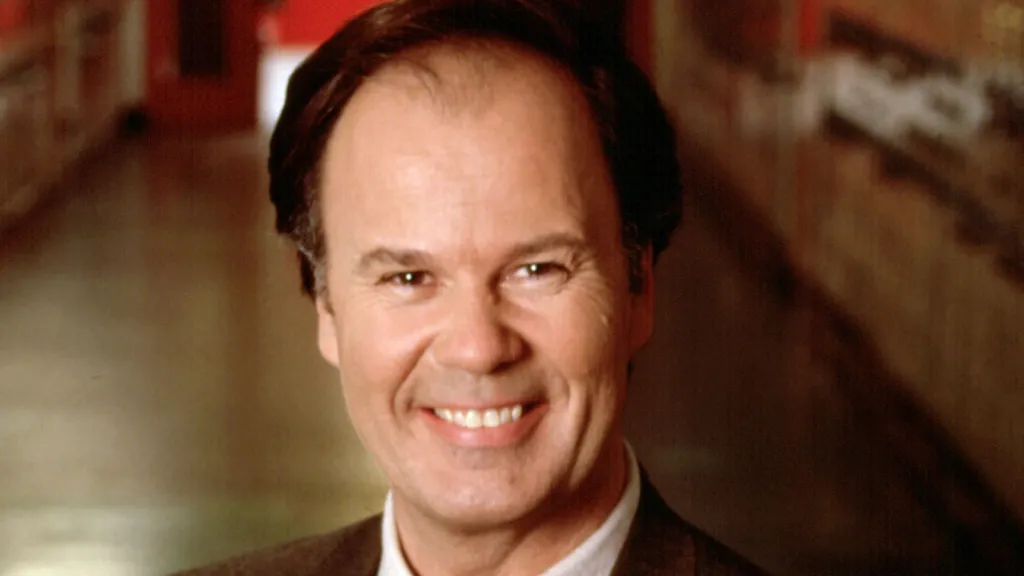
Dennis Haskins, best known for playing Mr. Belding in Saved by the Bell, has died. He was 75.
His agent Jay Schachter confirmed the news to Deadline, saying in a statement, “It’s a tragic loss. Everyone loved Mr. Belding and those of us who got to know Dennis, loved him even more. He was a great person, and he loved, I mean absolutely LOVED his fans.”
“He always had time for them, no matter what. He was my client and dear friend for over 20 years, and I will miss him terribly. I’m heartbroken,” he continued.
Haskins cause of death was not disclosed.
Haskins first played Principal Richard Belding in the Disney Channel series Good Morning, Miss Bliss, opposite Hayley Mills in 1989. After one season, the show was retooled as Saved by the Bell on NBC, where he reprised his role through its four-season run. Haskins returned as Mr. Belding for Saved by the Bell: The New Class in 1993 and played the role for seven more seasons, until the show’s finale in 2000.
Other acting credits for Haskins included Hangin’ with Mr. Cooper, Malibu, CA, The Practice, The West Wing, The Rerun Show, The Stoneman, 7th Heaven, Going Down, Red Water, Tangy Guacamole, An Ordinary Killer, JAG, Dead End Road, It’s Always Sunny in Philadelphia, Men of a Certain Age, The Bold and the Beautiful, Victorious, Mad Men, Emerald Acres, How I Met Your Mother, Destroy the Alpha Gammas, New Girl, Hot In Cleveland, This Isn’t Working, Bill Nye Saves the World, Abstruse, Enigma, A Bennett Song Holiday, among many others.
>
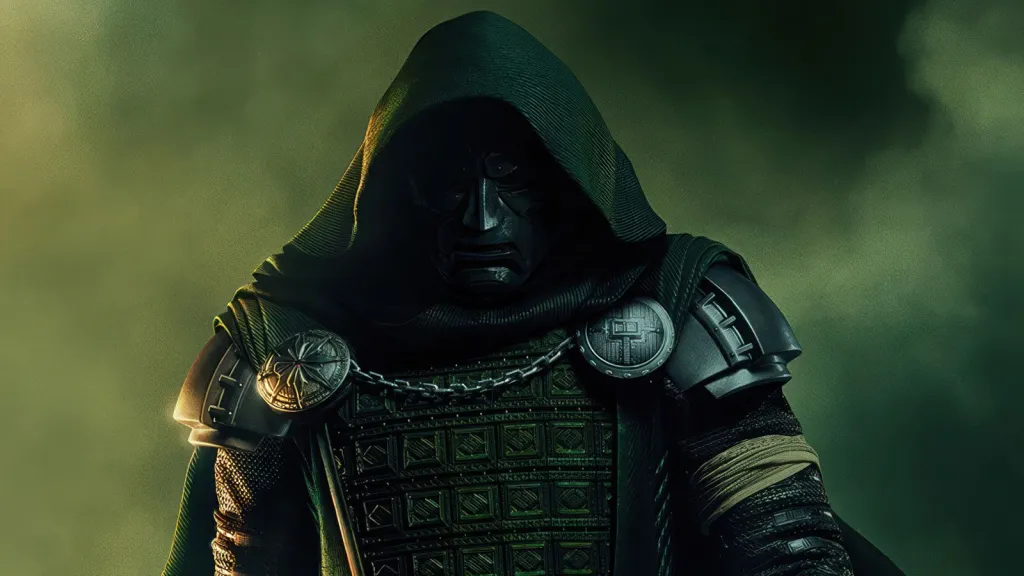
Many questions surround Avengers: Doomsday, and one major one is whether Mark Ruffalo will reprise his role as Bruce Banner.
The actor recently appeared in Spider-Man: Brand New Day as Banner, and the Russo Brothers teased that the Hulk is “certainly involved” in the story around Doctor Doom.
“I think [what] we could say is, [Banner] is certainly involved in the story that revolves around Doom,” Joe Russo told Empire Online. “We will not confirm nor deny his appearance in Doomsday.”
Anthony Russo added, “The farthest we can go is to say, there are characters and actors who have not been announced, who are a part of Doomsday.”
Avengers: Doomsday is set to be released on December 18 as part of Phase 6 of the MCU. The film follows 2019’s Avengers: Endgame, which the Russos also directed.
Avengers: Doomsday will feature different groups of heroes from different universes, including the Avengers, the Wakandans from Black Panther, the Thunderbolts (known as the New Avengers) from Earth-616, the Fantastic Four from Earth-828, and the original X-Men.
RELATED: 15 Movies & Shows To Watch Before ‘Avengers: Doomsday’
In a recent interview, the Russo Brothers said they started filming Avengers: Doomsday without a finished script.
“We’re improvisation-based, rehearsal-based directors,” Joe Russo told AP. “We like to see what the actors bring to the characters, and sometimes you don’t get the actors until a few days or few weeks before you shoot them. And a lot of the time, that’s when the magic happens.”
RELATED: ‘Avengers: Doomsday’ Ticket Pre-Sales Cross $50M Domestically Three Months Out
>
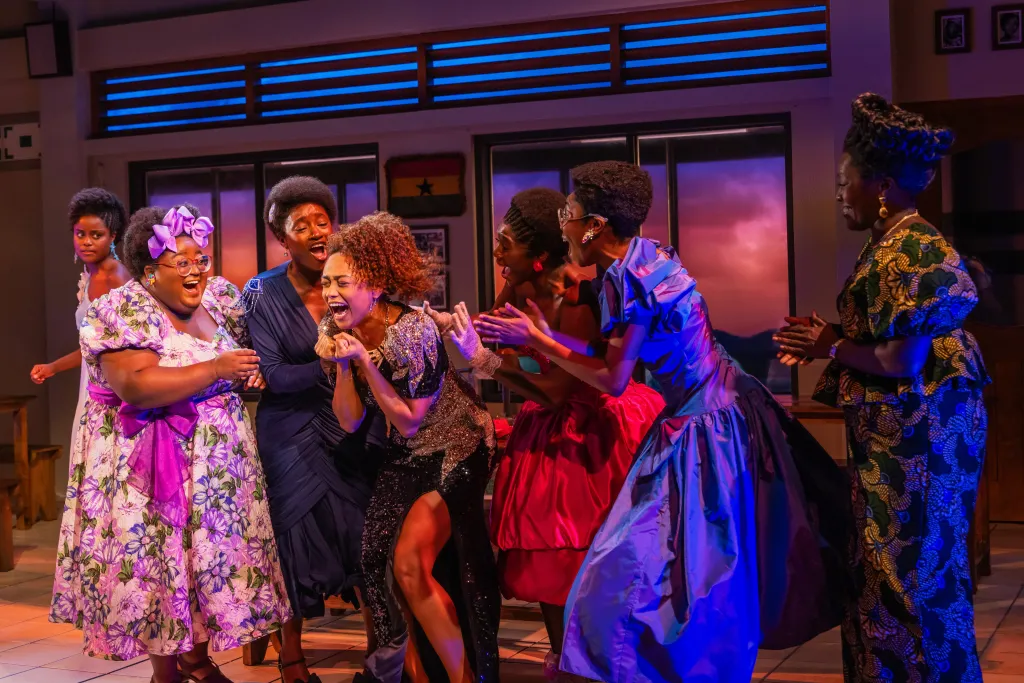
The battle lines are drawn early and definitively in Jocelyn Bioh‘s School Girls; Or, The African Mean Girls Play. The cruelties come fast and cut deep in this Ghana school lunch room where all the unspoken rules of adolescent pick-or-be-picked-upon are as strict as they are in high schools the world over. Or in other plays and TV shows the world over, whether we’re talking Heathers or Carrie or Jawbreaker. And since Stephen King didn’t write this one, we can be pretty sure there won’t blood, but gruesome playground injuries of a more psychic and soul-crushing variety are entirely on the table.
Bioh, perfectly assisted by her sympatico director Whitney White and a no-weak-link cast, has done something quite amazing with this comedy-drama, opening tonight on Broadway at the Samuel J. Friedman Theatre in a first-rate Manhattan Theatre Club production. Bioh takes on the tropes and dramatic conventions of high school claustrophobia, its rebellions and savageries and tendernesses so familiar from ancestors like the franchise that gives this play its subtitle and right up through the newcomer that called John Proctor a villain, that we can only trust a writer of her depth and skills (she wrote Jaja’s African Hair Braiding, after all) to find a new path through the well-trod turf.
And she does. School Girls; Or, The African Mean Girls Play, might well come closest in approach to Kimberly Belflower’s urgent John Proctor Is The Villain in its insistence that homeroom sadism doesn’t just spring from hormones or reindeer game competition. There are larger forces at work, the stuff that hurts people who hurt people, and portraying that hurt (and its goal, escape) with understanding – not to say excuse-making – takes uncommon talent. Belflower showed it, and so does Bioh.
The set up is simple and immediately recognizable. The year is 1986 and the place is a girls boarding school in the Aburi Mountains of Central Ghana. Five of the students – two in their final year, three a year behind – busy themselves with the gossip and whatever else passes for crucial business in the day-to-day, mostly as defined by Paulina (The Gilded Age‘s Denée Benton), the self-anointed queen of the clique by way of her looks, her force of will, her cruel streak and her much admired (if very tenuous) connection to the longed-for America by way of an aunt who lives in New York City and works in a castle there that serves unimaginable culinary delights and who sends Pauline the odd piece of designer clothing that makes her the envy of the school.
We’ll learn that Paulina, far from confident, is so self-conscious of the darkness of her Black skin that she secretly uses toxic bleach products that necessitate frequent trips to the emergency room, that her home life is so impoverished that she unleashes her frustrations on her terrified acolytes. Poor Nana (Erin Morton) gets the worst of the abuse, her large body and constant eating a source of unending bullying from Paulina, who calls her “cow.” Even Paulina’s best friend – a phrase pretty much useless in this milieu – isn’t safe. Ama (Lucia Aremu) pays dearly for the occasional hint of independence, so threatening is free thinking to Paulina.
In the grand tradition of teen movies, the equilibrium of the status quo is disrupted with the arrival of a new student. And Ericka (Jasmine Amy Rogers, all done up in big ’80s hair and a school girl uniform that leaves her unrecognizable from her flapper look in Boop) is not just any new student. She’s lived in America. She has Bobby Brown’s autograph. She has real Calvin Klein fashions, not the Chinatown knock-offs that have fooled Paulina. And she knows White Castle isn’t a white castle – it isn’t even McDonald’s.
Denée Benton and Jasmine Amy Rogers
Matthew Murphy
And she has two other things going for her. She’s kind – the put-upon girls of the Aburi Girls Boarding School take to her like docile puppies to a calming stroke – and she’s naturally light-skinned. No harsh chemicals for her, much to the amazement and envy of her Ghanaian classmates. If the mixed-race Ericka doesn’t quite grasp the significance of her coloring – back home at her all-white school she was, to be sure, Black – the other girls certainly do.
And among the things all the girls seem to sense is that Paulina is no longer the shoo-in for the upcoming Miss Ghana try-outs, a realization driven home when the pageant’s recruiter – a former Aburi student who, 20 years previous, won Miss Ghana 1966 and who retains her own mean girl leanings, especially when in the company of the school’s Headmistress, a classmate from those long ago years. One of Bioh’s most telling bits of stage magic here is showing us just how long-lasting such formative role-playing can be. If the device can seem more than a little schematic in intention, its execution – a few lines of dialogue between the recruiter Eloise (Patina Miller) and the Headmistress (Heather Alicia Simms) – nonetheless conveys both the tenacity and bite of mean girldom. And did I mention School Girls is a comedy? And a very funny one at that?
Patina Miller and Heather Alicia Simms
Matthew Murphy
As School Girls builds to its denouement – that pageant try-out – rest assured that Bioh and director White will not deprive us of bearing witness, and the young actors who play the school girls, some in their Broadway debuts, meet the challenge and then some. As they take turns soloing Whitney Houston’s “The Greatest Love of All” – an inspired choice not only for the technical demands that few of these hopefuls could meet, but for Houston’s haunted ending that they couldn’t possible know – the cast members imbue each character with comic ineptitude that’s as poignant as it is laugh-out-loud funny. Even the cruel Paulina’s misplaced overconfidence and comeuppance merits our charity.
Because comeuppance she gets. When the new girl Ericka takes her turn at the solo, her glorious voice rivals that of Whitney herself (as she proved in the otherwise lackluster Boop, Rogers is a talent to watch and embrace). As the greedy recruiter sees something to exploit, and the proud headmistress hears something finally worthy of pride, and the downtrodden classmates have their ding dong the witch is dead moment, poor Paulina all but crumbles into herself (Benton is a marvel in this scene).
But bullies don’t often go away easy. Her face bleeding from the corrosive bleach, her dreams of escape from poverty dashed, Paulina lashes out with ill-gotten information that will take the talented, seemingly charmed Ericka down with her. In the battle that ensues, no one will go untouched by hard truth and the realization of just how stacked the odds against triumph remain in a system where everything from the shade of one’s skin, the geography of one’s home and the capricious nature of one’s parentage determine so much, and foster all sorts of bad behavior and ruthless survivalism.
The Manhattan Theatre Club has given this excellent play the production it deserves. Costume designer Qween Jean, riding high from her Tony-winning contributions to Cats: The Jellicle Ball, delivers the perfect visuals for this tale – the conformity of school uniforms, the explosion of ’80s prom styles for the pageant auditions, the proud African ethnicity of the Headmistress’ attire and the arriviste Americanism of the made-good recruiter – while Teresa L. Williams’ cleverly efficient school cafeteria set, with its large glass windows offering quick hallway peeks at characters in their privacy – gives these school girls ample room for all their towering ambitions and their outsized insecurities.
Not enough praise can be heaped upon the excellent cast (in addition to those mentioned above, there’s the terrific Nia Otchere-Sarfo and Jordan Rice rounding out the clique). Every one of the school girls is perfectly delineated (kudos to the casting team for an exactingly chosen group), with each actor finding the humor, the humanity and, when necessary, the acidity of characters doing their best in a hothouse not of their making. Or not entirely of their making, anyway. Even the most dehumanizing of systems, from high schools to pageants to poverty and racism, require some human complicity in the building and, if we’re lucky, the undoing. The School Girls; Or, The African Mean Girls Play all but hands us an instruction manual.
Title: School Girls; Or, The African Mean Girls Play
Venue: Broadway’s Samuel J. Friedman Theatre
Written By: Jocelyn Bioh
Directed By: Whitney White
Cast: Lucia Aremu, Denée Benton, Patina Miller, Erin Morton, Nia Otchere-Sarfo, Jordan Rice, Jasmine Amy Rogers, Heather Alicia Simms
Running Time: 1 hr 25 min (no intermission)
>


Search For Canadian TV Actor Stewart McLean Now Homicide Investigation


These ’90s fashion trends are making a comeback in 2017
According to Dior Couture, this taboo fashion accessory is back
Model Jocelyn Chew’s Instagram is the best vacation you’ve ever had
Emily Ratajkowski channels back-to-school style
9 Celebrities who have spoken out about being photoshopped


Rurouni Kenshin: Hokkaido Arc Manga Takes 1-Issue Break – News


HIDIVE to Stream English Dubs for The World Is Dancing, The Forsaken Saintess and Her Foodie Roadtrip in Another World, The Dangers in My Heart: The Movie Anime – News