
Tech
Earth AI is vertically integrating the search for critical minerals

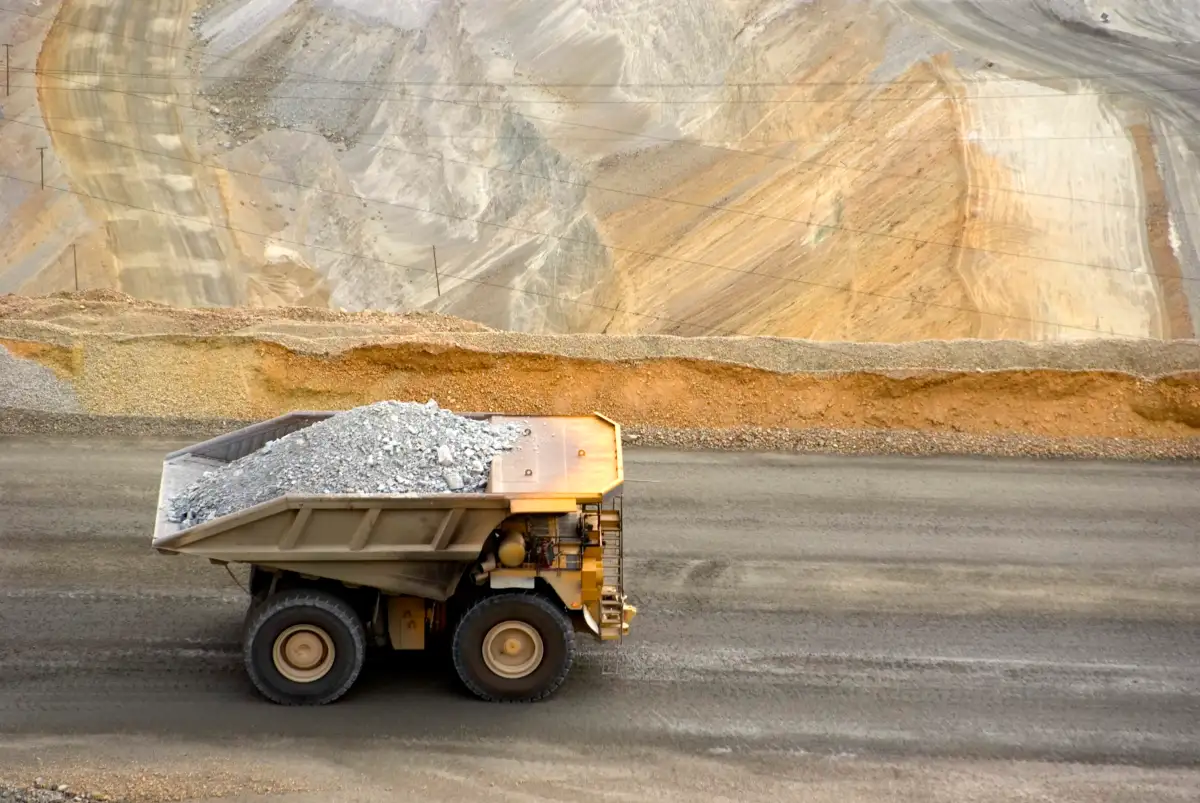
A model is only as good as its data, and for Roman Teslyuk, the data wasn’t coming fast enough.
“I hate delays,” Teslyuk, founder and CEO of Earth AI, told TechCrunch.
For the last few years, Earth AI has been searching for critical minerals like copper, platinum, and palladium in parts of Australia where no one thought there would be any. The startup’s AI models suggested a few spots that have proven themselves promising, but locating rock with the highest concentration of minerals has been slower than Teslyuk would like.
The problem, he said, was the labs.
“Since we ramped up the drilling capacity, we started getting these massive delays,” he said. Typically, labs that process rock samples for evidence of critical minerals have backlogs of around two months, Teslyuk said. But lately, as interest in developing new sources has jumped, the delays have more than doubled. “We’re 7 km behind — 7,000 meters of samples we don’t have data about.”
So Earth AI is setting up its own labs instead, the startup exclusively told TechCrunch, hoping to bring the time down from five months to five days.
Earth AI’s models have been good at highlighting areas with the potential to develop into a mine, Teslyuk said, but once those have been identified, the startup still needs to drill to confirm what minerals lie below and how they’re distributed. Subsurface exploration has come a long way, but there’s still no replacement for drilling.
Once the drill cores have been extracted, they need to be processed by a lab. “We don’t know whether we hit gold or not. We can’t see it with our eyes,” he said.
For final decisions on the economic value of a mine, including those that might influence a sale, Earth AI will still use third parties to validate its discovery. But during the exploration process, a speedy in-house lab has the potential to significantly reduce costs by ensuring the drill is sent to the right spots to obtain the best data for the model.
“If you don’t have the answers in time, you have to wait for five months for the answer, the next question [of where to drill] is not as good as it could be,” Teslyuk said. “To minimize drilling, you want to effectively ask the right questions, to get the information in time so you can narrow down exactly where to go.”
When you purchase through links in our articles, we may earn a small commission. This doesn’t affect our editorial independence.
>
ADB lifted Southeast Asia’s growth outlook as AI-linked investment expands, but infrastructure, skills, and costs are creating uneven gains.
The post ADB Raises Southeast Asia Growth Forecast as AI Boom Builds, but Gains Are Uneven appeared first on TechRepublic.
>
ASUS, Apple, Samsung, and Lenovo offer five credible Surface Pro alternatives with different strengths in performance, portability, software, and price.
The post 5 Best Surface Pro Alternatives for 2026: ASUS, iPad, Galaxy and More appeared first on TechRepublic.
>
Crusoe dropped Boom Supersonic’s $1.25B turbine deal while continuing to secure gas generation, batteries, and grid power for AI data centers.
The post Crusoe Walks Away From $1.25B Boom Turbine Deal as AI Power Race Intensifies appeared first on TechRepublic.
>

Fox News To Launch ‘The Girls’ Podcast
Giants to acquire QB J.J. McCarthy from Vikings for 2027 fifth-round pick
ADB Raises Southeast Asia Growth Forecast as AI Boom Builds, but Gains Are Uneven
-

 movies4 months ago
Search For Canadian TV Actor Stewart McLean Now Homicide Investigation
-

 Fashion9 years ago
These ’90s fashion trends are making a comeback in 2017
-
Fashion9 years ago
According to Dior Couture, this taboo fashion accessory is back
-
Fashion9 years ago
Model Jocelyn Chew’s Instagram is the best vacation you’ve ever had
-
Fashion9 years ago
Emily Ratajkowski channels back-to-school style
-
Fashion9 years ago
9 Celebrities who have spoken out about being photoshopped
-

 Anime4 months ago
Rurouni Kenshin: Hokkaido Arc Manga Takes 1-Issue Break – News
-

 Anime3 months ago
HIDIVE to Stream English Dubs for The World Is Dancing, The Forsaken Saintess and Her Foodie Roadtrip in Another World, The Dangers in My Heart: The Movie Anime – News