
Tech
Uber wants to turn its millions of drivers into a sensor grid for self-driving companies


Uber has a long-term ambition that goes well beyond shuttling passengers: the company eventually wants to outfit its human drivers’ cars with sensors to soak up real-world data for autonomous vehicle (AV) companies — and potentially other companies training AI models on physical-world scenarios.
Praveen Neppalli Naga, Uber’s chief technology officer, revealed the plan in an interview at TechCrunch’s StrictlyVC event in San Francisco on Thursday night, describing it as a natural extension of a nascent program the company announced in late January called AV Labs.
“That is the direction we want to go eventually,” Naga said of equipping human drivers’ vehicles. “But first we need to get the understanding of the sensor kits and how they all work. There are some regulations — we have to make sure every state has [clarity on] what sensors mean, and what sharing it means.”
For now, AV Labs relies on a small, dedicated fleet of sensor-equipped cars that Uber operates itself, separate from its driver network. But the ambition is clearly much larger. Uber has millions of drivers globally, and if even a fraction of those cars could be transformed into rolling data-collection platforms, the scale of what Uber could offer the AV industry would dwarf what any individual AV company could assemble on its own.
The insight driving the program, Naga said, is that the limiting factor for AV development is no longer the underlying technology. “The bottleneck is data,” he said. “[Companies like Waymo] need to go around and collect the data, collect different scenarios. You may be able to say: in San Francisco, ‘At this school intersection, I want some data at this time of day so I can train my models.’ The problem for all these companies is access to that data, because they don’t have the capital to deploy the cars and go collect all this information.”
Becoming the data layer for the entire AV ecosystem is a pretty smart play, particularly considering Uber years ago abandoned its own ambitions to build self-driving cars (a move that co-founder Travis Kalanick has publicly lamented as a big mistake). Indeed, many industry observers have wondered if, without its own self-driving cars, Uber might one day be rendered irrelevant as AVs increasingly spring up around the globe.
The company currently has partnerships with 25 AV companies — including Wayve, which operates in London — and is building what Naga described as an “AV cloud”: a library of labeled sensor data that partner companies can query and use to train their models. Partners, which Uber plans to more aggressively invest in directly, can also use the system to run their trained models in “shadow mode” against real Uber trips, simulating how an AV would have performed without actually putting one on the road.
Techcrunch event
San Francisco, CA
|
October 13-15, 2026
“Our goal is not to make money out of this data,” Naga said. “We want to democratize it.”
Given the obvious commercial value of what Uber is building, that positioning may not last long. The company has already made equity investments in numerous AV players, and its ability to offer proprietary training data at scale could give it significant leverage over a sector that right now depends on Uber’s ride marketplace to reach customers.
When you purchase through links in our articles, we may earn a small commission. This doesn’t affect our editorial independence.
>
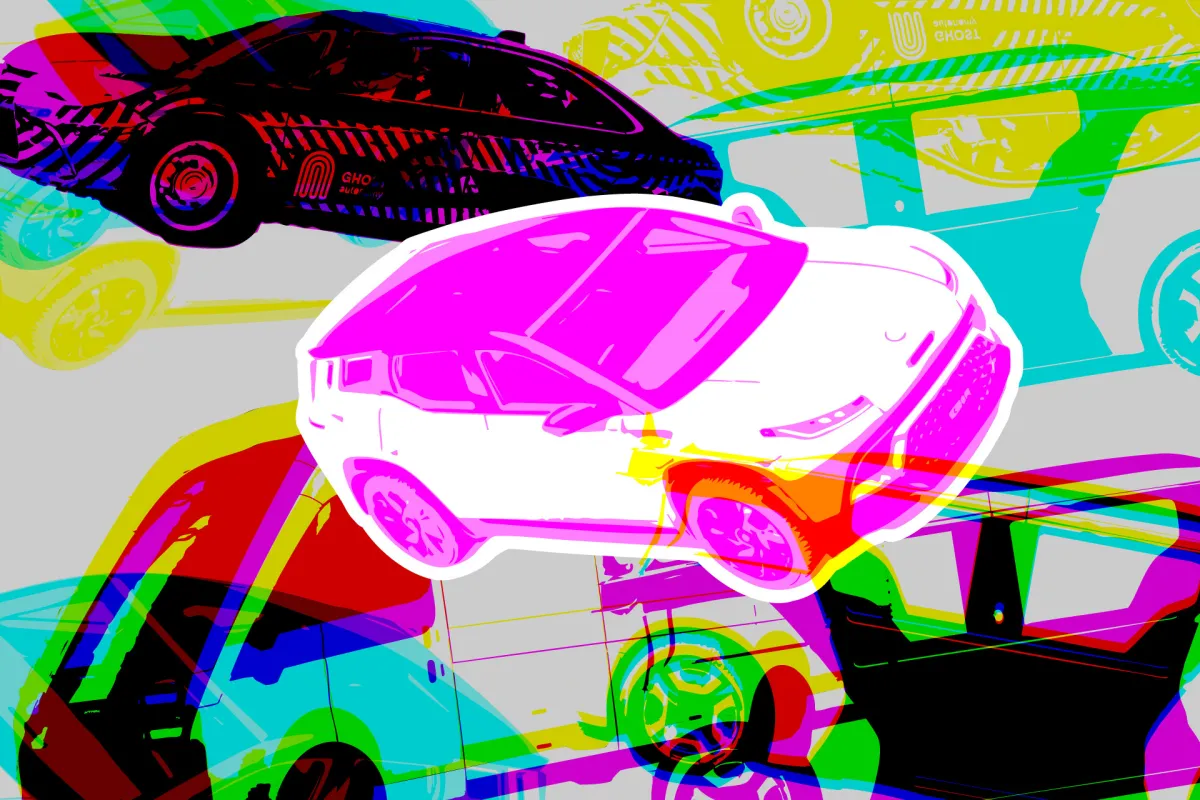
Modern-day vehicles built with connected car technology such as WiFi and GPS collect reams of data about its owners. And that data is not staying private, according to a new study conducted by researchers at Northeastern University.
That conclusion isn’t new — there have been numerous investigations and lawsuits exposing how driving data is collected and shared with third parties, including insurance companies. What the study reveals is just how vast the problem is and how hard it is for consumers to avoid, short of not using the vehicle or its convenient features like remote start and unlock.
Researchers in partnership with Consumer Reports tested 21 late-model vehicles from 17 automakers, including GM brands Cadillac and Chevrolet as well as Ford, Lucid, Rivian, Tesla, Toyota, and more. They also examined 30 companion mobile apps to “understand the privacy implications of the connected vehicle ecosystem.” The peer-reviewed study will be published this week.
The implications aren’t great for consumers, whose data is being shared with tech companies including Adobe, ContentSquare, Google, Microsoft, Meta, Snap, and Yahoo.
Nineteen of the 21 vehicles tested sent traffic to at least one third party and seven of the 30 apps gave sensitive data such as the vehicle identification number (VIN), emails, phone numbers, and precise location to third-party companies associated with tracking and advertising.
This often went a step further with multiple forms of information being sent to the same third party, a scheme that allows advertisers and data brokers to build in-depth profiles of consumers, according to the findings. These profiles can be particularly hard for consumers to shake because they’re sold to a variety of companies including insurers and banks.
When researchers paired the companion app to the vehicle it roughly doubled the exposure to advertising and tracking companies.
The findings were shared with the different manufacturers and all of them, with the exception of Honda, shifted blame elsewhere and often to consumers, the researchers said. (Honda did respond by improving its data collection practices after learning about the findings and ordered its vendor Amplitude to deleta all geolocation data it had received.)
Consumer Reports was told by several automakers that some links in their companion apps opened outside webpages, which might include cookies that collect customer data. Regardless of how this data was collected, drivers weren’t informed.
When you purchase through links in our articles, we may earn a small commission. This doesn’t affect our editorial independence.
>
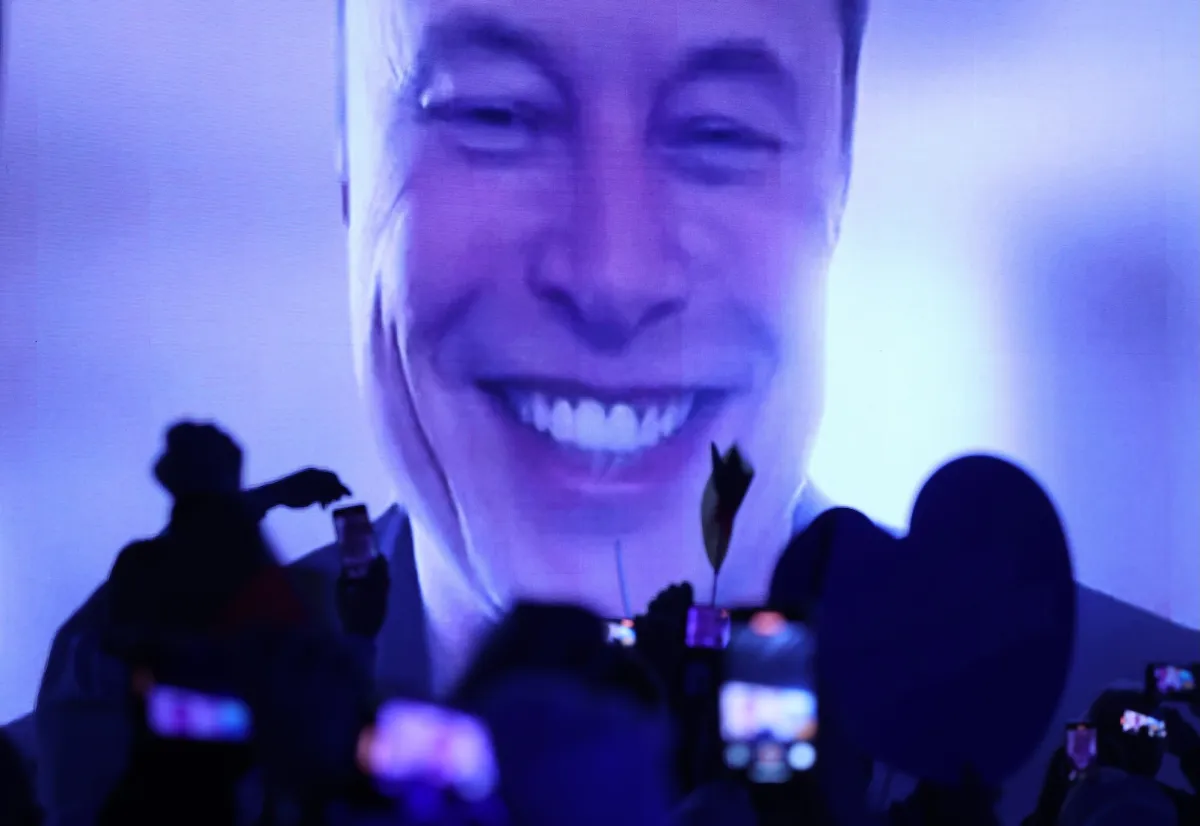
On Tuesday, OpenAI launched a new product called Dots, an always-on AI agent with a bubbly, blobby avatar. While the colorful avatar might evoke a smile, the biggest laugh from the launch is (we imagine) being had by Elon Musk, the former OpenAI founder who left, launched competitor Grok, and unsuccessfully sued.
That’s because the domain “dot.com” belongs to Musk’s xAI, and it currently redirects to the download page for xAI’s Grok chatbot app. According to the Whois domain owner registry, that domain name was just transferred in July.
It is entirely possible that xAI bought the domain for normal domain-buying reasons. “Dot” could be a typo of “bot,” so it nabbed it to grab mistyped searches. We’ve reached out to xAI and asked. But xAI doesn’t own the “bot.com” name, nor does it own other obvious typo domains like “vot.com,” which is listed for sale.
The internet’s theory is far funnier: that Musk (or his team) pulled off a prank, getting wind of OpenAI’s new product and its name and buying the domain name.
In fact, anonymous X user and xAI watcher @birdabo (this person calls themselves “chief shitposting officer @SpaceXAI“) was first to spot the domain name in a now-viral post. Whatever the motivation, the circumstance is funny.
And as for the “dots.com” domain, a more direct fit to the product name, it currently belongs to a long-defunct company. So if a petty revenge prank was really the motivation, grabbing that name, too, would be next level.
>
Google Workspace now lets admins time-limit role assignments for users, security groups, and service accounts. See how expiration works and its key limits.
The post Google Workspace Lets Admins Set Role Expiration Dates appeared first on TechRepublic.
>
As Padres' next generation arrives, Machado and Bogaerts chase another October

‘Degenerates’ Off Broadway Review: Incels Get the Play They Deserve
How to watch the women's China Open: Streaming options for the Round of 128
-

 movies4 months ago
Search For Canadian TV Actor Stewart McLean Now Homicide Investigation
-

 Fashion9 years ago
These ’90s fashion trends are making a comeback in 2017
-
Fashion9 years ago
According to Dior Couture, this taboo fashion accessory is back
-
Fashion9 years ago
Model Jocelyn Chew’s Instagram is the best vacation you’ve ever had
-
Fashion9 years ago
Emily Ratajkowski channels back-to-school style
-
Fashion9 years ago
9 Celebrities who have spoken out about being photoshopped
-

 Anime4 months ago
Rurouni Kenshin: Hokkaido Arc Manga Takes 1-Issue Break – News
-

 Anime3 months ago
HIDIVE to Stream English Dubs for The World Is Dancing, The Forsaken Saintess and Her Foodie Roadtrip in Another World, The Dangers in My Heart: The Movie Anime – News