
Anime
The Quintessential Quintuplets Franchise Gets New TV Anime, New Original Video Anime – News


“The Quintessential Quintuplets Special Event 2026 in Toyota Arena Tokyo” announced on Saturday both a new television anime based on the Gotōbun no Hanayome: Shunkashūtō (The
Quintessential Quintuplets: The Four Seasons) sequel novel and a new original video anime based on the manga chapters that have yet to be animated.

The new television anime adapts Hajime Asano‘s sequel novel under the full supervision of original creator Negi Haruba, and it will cover what happens after the original story. The novel also has a manga adaptation underway.
Source: Press release
>
Side story debuted in January

© Akaza Samamiya, Kadokawa
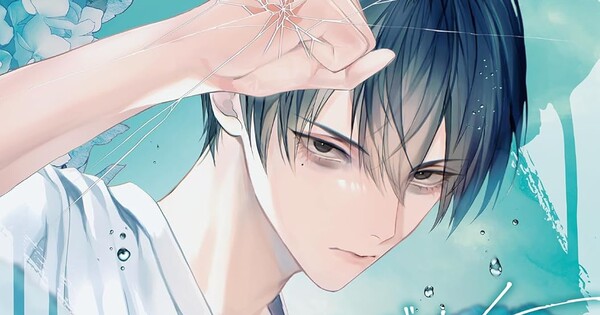
Akaza Samamiya announced on X (formerly Twitter) on Saturday the Mr. Mallow Blue: After The Rain side story to the Mr. Mallow Blue manga will end in the next chapter.
The original series focuses on the meetings of various social outcasts, including a fragile girl, a shut-in, and a handsome man who wears a cold expression as a mask.
Samamiya launched the side story in the March issue of Kadokawa‘s Asuka magazine, which shipped in January.
Samamiya launched the main manga in Kadokawa‘s Asuka magazine in November 2019, and ended the series with the the sixth and final compiled book volume on December 24.
Samamiya launched the Ballad x Opera manga in Asuka in May 2017, and ended it in September 2019. Kadokawa published the manga’s fifth and final volume in November 2019.
Samamiya serialized the Bloody Mary manga series in Asuka from November 2013 until February 2017. Kadokawa published 10 volumes for the manga, and Viz Media published all 10 volumes in English.
Source: Akaza Samamiya‘s X/Twitter account
Disclosure: Kadokawa World Entertainment (KWE), a wholly owned subsidiary of Kadokawa Corporation, is the majority owner of Anime News Network, LLC. One or more of the companies mentioned in this article are part of the Kadokawa Group of Companies.
>

 The 14th and final episode of Mushoku Tensei III: Isekai Ittara Honki Dasu (Mushoku Tensei: Jobless Reincarnation Season 3) television anime announced on Sunday that its second part is scheduled for 2027.
Produced by Studio Bind, the 23-episode first season aired in split cours in Winter 2021 and Fall 2021. The 24-episode second season premiered in two parts, with the first part in Summer 2023 and the second part in Spring 2024. The first part of season 3 aired in 14-episodes in Summer 2026. Funimation and Crunchyroll simulcast the anime series with English subtitles, respectively.
Mushoku Tensei adapts Rifujin na Magonote‘s adventure fantasy light novel, which he penned on the Shousetsuka ni Narou website between November 2012 and April 2015. Kadokawa began printing the novel with illustrations by Sirotaka under its MF Books label in January 2014 and shipped the 26th volume in November 2022.
Yuka Fujikawa began serializing a manga adaptation in Comic Flapper magazine in May 2014. Kadokawa published the 25th volume on September 18.
Seven Seas Entertainment licensed both the light novel and manga in English and published the 26th light novel volume on March 12. The 23rd manga volume went on sale on March 5, with the 24th volume scheduled for a March 2027 release.
Announcement
Source: Dengeki Online
>
It’s no secret that Nostalgia is the lowest-hanging fruit to get juiced into a pulp by many of the recent marketing trends promoting the media we consume, especially when the act of looking back at better times can be a far more enjoyable experience than whatever fresh hell present-day reality is currently cooking up for us. Even so—as lazy as the theme of “remember when…” can be—there are exceptions: like, genuinely evocative works of art that truly understood the assignment and the sentiments they can elicit.
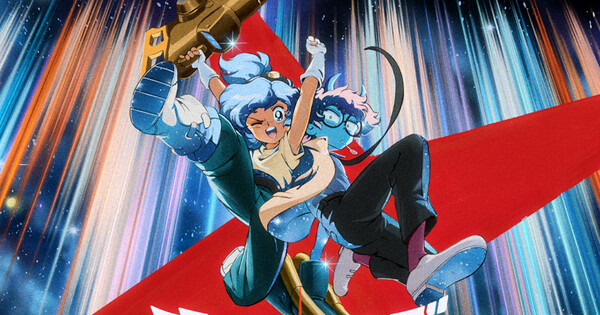
I can’t help but feel somewhat re-experienced a twinge of magical feeling when I watched the extended reveal of Orbitals in the Nintendo Direct: Partner Showcase streamed earlier this year. This beautifully rendered depiction of Bubble Era Style Space Opera involving two kids hopping and bopping through layers of cosmic wreckage in a fashion that’s not all too dissimilar to the output of Josef Fares’ Hazelight games quickly had me under its spell, and I knew I had to get in on that the moment it launched.
Developed by a studio based in Musashino-shi, Tokyo, that’s comprised of a melting pot of folks who had previously contributed to games like Flintlock: The Siege of Dawn and Devil’s Third, and published by Kepler Interactive, the same publisher who brought us Clair Obscur: Expedition 33, Orbitals is the debut game from Shapefarm that aims to deliver a novel experience that accentuates the fuzzy sense of charm I described earlier.

© 2026 Shapefarm KK. “Orbitals”, “Shapefarm”, the Orbitals logo and the Shapefarm logo are all brands of Shapefarm KK. Developed by Shapefarm KK, a member of the Kepler Interactive group. Published by Kepler Interactive Limited. All rights reserved.
For all of the authentic uses of color, Mosquito Noise, haloing, and other broadcast artifacts from the past it indulges in, however, Orbitals‘ commitment to the bit only carries its charm so far and ends up delivering an enjoyable experience that abruptly ends much sooner than it has any right to do.
Before we really dissect what makes the presentation of Orbitals so good beyond the surface level of its “animēshon” aura, I want to get ahead to the gameplay before anything else. The decision to direct a game that hinges so deeply on its sense of spectacle within the conceit of a Hazelike cooperative experience is a bit odd, considering the subgenre itself has seen little exploration from other developers outside of the Swedish studio that pioneered the style of gameplay in the first place. Balancing the teeter between skill-based challenges and cooperative mechanics can foster a delicate tug-of-war between accessibility and engagement. If the puzzle is too hard for the players to comfortably overcome, it’ll only be a matter of time before the duo will hit a wall that’ll discourage them from progressing any further. On the flip side, peppering in too many softball challenges for a pair of seasoned “Gamers!™” to blow through, and the session might be too boring to continue—it’s a formula where who you play it with and how well your personal styles of play complement each other can really make or break the experience.
Thankfully, Orbitals gauges somewhere in between a challenge that’s gripping enough to take seriously and puzzles that don’t drive you into pulling your hair out. One could only guess that Shapefarm must have done their homework on all of those It Takes Two meme videos on TikTok, but the reality is that the lead game director for Orbitals is Jakob Lundgren, the former Level Design lead of Hazelight. Utilizing his experience from his previous work, Lundgren seemingly aimed his focus towards polishing one specific element to set their game apart from the others—and it’s the role that tools play in Orbitals.

© 2026 Shapefarm KK. “Orbitals”, “Shapefarm”, the Orbitals logo and the Shapefarm logo are all brands of Shapefarm KK. Developed by Shapefarm KK, a member of the Kepler Interactive group. Published by Kepler Interactive Limited. All rights reserved.
Maki’s and Omura’s interstellar adventure places a far bigger emphasis on the use of tools and the roles they have in charting the courses ahead. One level, for example, was designed around the obstacle of an erratic temperature that would dole out burning or freezing conditions at any moment, and some instances had the climate shifting in tandem with one another, or even concurrently in later sections of the stage. My partner and I were each equipped with two distinct tools between us: a water cannon that could shoot long pressurized streams of H2O at great distances, along with a laser cannon that provided the option of either firing pinpoint precision beams of extreme heat or short-burst pulse shots with a wide spread blast radius. Given the fundamentals of hot and cold, the premise for the level may have seemed a little too elementary at first, but the section packed a deceptively deep well of gameplay to scour through, and a lot of that was due in part to the excellent pacing that steadily tested our understanding of the tools at hand.
In the first set piece, we had moving platforms to navigate through a sequence of conveyor-belt patterns over a bottomless pit that was positioned within a tight corridor with a series of giant fans on all sides that were constantly blowing frigid air that was powerful enough to send anyone caught in their paths off into a cold oblivion. The player with the water cannon was tasked with using their liquid projectiles to capitalize on the arctic atmosphere by shooting at either the moving platforms or the fans when needed, while the other player would heat them back up with their laser when needed, to manipulate the action between the fans and platforms at just the right moment to advance to the end of the corridor. The next area had us guiding a snowball along a Rube Goldberg-like track, where the snowball would only be able to progress and then later activate contextual trigger switches that were crucial to the solution to the puzzle by dynamically altering its physical size through the use of coordinated expansion of it through the water cannon, or deflation via the laser cannon, and doing so while at the same pace that the ball is rolling along its track before reaching such a checkpoint while still simultaneously avoiding the level hazards in the room that could break your progress. As you could imagine, the next area worked to escalate the concept of switching between hot and cold even further, and the process never ceased to amaze us.

© 2026 Shapefarm KK. “Orbitals”, “Shapefarm”, the Orbitals logo and the Shapefarm logo are all brands of Shapefarm KK. Developed by Shapefarm KK, a member of the Kepler Interactive group. Published by Kepler Interactive Limited. All rights reserved.
When we weren’t hoofing it through floating masses of metal in the cold void of space, we were piloting our space vessel and exploring the orbital zone around our base, dividing the responsibilities between pilot and gunner like some real Star Wars-ass shit. These segments are the closest thing to combat that Orbitals offers, and while we did wish there was a little more to offensively do with our equipment on foot, the spaceship sections of the campaign were more than serviceable palate cleansers to the otherwise ingenious puzzle designs of the on-foot portions of the game.
Overall, Orbitals is FULL of such moments, and there was rarely a moment where my comrade and I didn’t relish the delight of seeing what the game would throw at us next—there wasn’t ever a time where we felt a sense of tedium throughout any of the courses we charted together.
The execution wasn’t always perfect. There were many times when pathfinding in the level became unnecessarily difficult by virtue of our respective waypoint markers that denoted our position in the stage suddenly disappearing from the screen, requiring one of us to either rapidly fire off our tool or obnoxiously spam one of the many character emotes to help signpost our exact location to one another on the map. The other drawback is that some of the physics in the game, specifically momentum and jumping, could be weirdly inconsistent in terms of how responsive the maneuvering was at times, to how sloppy the collision was with crucial objects or platforms, especially when it came to finicky precision of certain contextually-sensitive prompts in certain challenges where a crucial button prompt to complete a puzzle could completely disappear if the player’s camera angle is shifted even one degree out of angle—that shit especially sucked in certain portions of the campaign. The secret collectibles were also a bit ho-hum, as each stage hid a secret mini-game that you could distract yourselves with in between missions. Don’t get me wrong, they ARE fun, but it would have been nice if there were other unlockables, like actual upgrades we could have earned for our arsenal of moves, such as a permanent rocket pack to give players an eternal double jump, or a secret tool with double utilities that could encourage potential future speed-runs.

© 2026 Shapefarm KK. “Orbitals”, “Shapefarm”, the Orbitals logo and the Shapefarm logo are all brands of Shapefarm KK. Developed by Shapefarm KK, a member of the Kepler Interactive group. Published by Kepler Interactive Limited. All rights reserved.
These annoying mechanical hiccups aside, the ebb and flow of Orbitals‘ core gameplay loop still granted a ton of amusement to the action on screen. The excellent pageantry of its presentation carried that feeling even further. If I haven’t made it clear by now—this game is absolute JOY to look at. Even when you take away all of the granular references and homages it’s making to the medium of anime, the visual style of its spectral-soaked Techpunk setting and the characters inhabiting it are vibrantly animated and arouse a sense of wonder that genuinely brings the world of Orbitals to life. Going back to the reverence it has for the era of anime encapsulates, the studio really managed to convey these feelings through carefully implemented “wink and nod” references to the production that subtly hand out their respective Easter eggs to the player instead of obnoxiously shoving them in their face every chance they could get. The fan service is also thoughtful, paying extra attention to the specific era of anime it’s revering and not throwing in pandering nonsense like Fullmetal Alchemist-ass bumpers or slow zoom-ins on the protagonist’s facial expressions. Orbitals opts to apply the effects that are hallmarks of the Bubble Era instead, like City Pop-fueled montages and Itano Missile circuses galore.
Despite the gorgeous veneer, though, the characterization and writing in Orbitals don’t have anywhere near the same amount of gas that everything else in it does.
As far as its premise goes, the plot of Shapefarm’s freshman effort doesn’t do much to establish anything in terms of exposition or reasoning behind the cast’s predicament among the stars. The only gist made privy to the players is that Maki and Omura are children traveling with a colony of folks who are space-faring for, well, whatever reason, and get sidelined by a cosmic calamity, barely surviving the tragedy thanks in large part to the I.M. Machine technology. The device works to house a person’s soul and infinitely “3D-Print” their corporeal body back into existence should anything happen to it (so long as the machines are operational, of course), and naturally, the aftermath left some survivors behind from the machines that were able to withstand the brunt of the interstellar disaster. The plot flashes forward fifteen years, where the pair are now young adults who have endured with the remaining colonists to eke out a living in the dystopian space debris they call home. It doesn’t take long before they receive warning of another storm that’s imminently approaching, inspiring the duo to take charge and scour the space sector for Reactor Cassettes, in the hopes that the power source will strengthen their base’s shield and hopefully weather out the destruction of the impending cosmic storm.

© 2026 Shapefarm KK. “Orbitals”, “Shapefarm”, the Orbitals logo and the Shapefarm logo are all brands of Shapefarm KK. Developed by Shapefarm KK, a member of the Kepler Interactive group. Published by Kepler Interactive Limited. All rights reserved.
With the MacGuffin in motion, would y’all care to guess how many worthwhile characters there are in Orbitals? Six: there are SIX people of note in this story, and without saying too much, that figure is pretty generous considering two of them are more plot devices than characters in their own right. This matters because the narrative pacing of the Orbitals campaign starts okay and does a great job generating intrigue about the plight of the heroes and their world. It doesn’t take long before everything comes to a screeching halt, then shifts the story’s momentum into disorienting overdrive, thrusting players into a confusing final act that effectively skips like three acts in between, where none of the gravitas feels exciting, let alone earned. The world-building does an incredible job of playing the little things that get players invested in a character-action game, like the dynamic between Maki and Omura, and the growing curiosity that resiliently expands in the face of the cruel danger handed to them by an ocean of stars—only for the buildup to cut off at the knees and rush straight for the curtain call. The worst part of it all is that the story and its conclusion could have theoretically achieved what it seemingly tried to do had the story been given time to actually cook and develop to a point where the stakes of the endgame may have actually impacted us, but instead, my buddy and I were just dumbfounded at the brevity of it all.
It took us less than five hours to roll credits on Orbitals, and we weren’t left with a desire to want more—just a small pain of famine instead.
I really want to emphasize that I genuinely enjoyed my time with Orbitals and definitely think it should still be played by anyone looking for a beautiful cooperative experience, especially if the presentation speaks to your Otaku core. Just know that it comes with the expectation that the magic will dissipate into this fever-pitched move towards the finish line well before we’re even warmed up for the weird sprint it throws at you.
>

The Prem: Leicester Tigers 38-40 Saracens – Rotimi Segun double seals Sarries win

Naomi Watts Praises Husband Billy Crudup for Menopause Support
Predicting the College Football Playoff bracket: SEC grabs 6 spots in latest projections
-

 movies4 months ago
Search For Canadian TV Actor Stewart McLean Now Homicide Investigation
-

 Fashion9 years ago
These ’90s fashion trends are making a comeback in 2017
-
Fashion9 years ago
According to Dior Couture, this taboo fashion accessory is back
-
Fashion9 years ago
Model Jocelyn Chew’s Instagram is the best vacation you’ve ever had
-
Fashion9 years ago
Emily Ratajkowski channels back-to-school style
-
Fashion9 years ago
9 Celebrities who have spoken out about being photoshopped
-

 Anime4 months ago
Rurouni Kenshin: Hokkaido Arc Manga Takes 1-Issue Break – News
-

 Anime3 months ago
HIDIVE to Stream English Dubs for The World Is Dancing, The Forsaken Saintess and Her Foodie Roadtrip in Another World, The Dangers in My Heart: The Movie Anime – News