
Tech
‘This is fine’ creator says AI startup stole his art


You’ve seen this comic before: An anthropomorphic dog sits smiling, surrounded by flames, and says, “This is fine.”
It’s become one of the most durable memes of the past decade, and now AI startup Artisan seems to have incorporated it into an ad campaign — an ad for which KC Green, the artist who created the comic, said his art was stolen.
A Bluesky post seems to show an ad in a subway station featuring Green’s art, except the dog says, “[M]y pipeline is on fire,” and an overlaid message urges passersby to “Hire Ava the AI BDR.”
Quoting that post, Green said he’s “been getting more folks telling me about this” and that “it’s not anything [I] agreed to.” Instead, he said the ad has “been stolen like AI steals,” and he told followers to “please vandalize it if and when you see it.”
When TechCrunch sent Artisan an email asking about the ad, the company said, “We have a lot of respect for KC Green and his work, and we’re reaching out to him directly.” In a follow-up email, the company said it had scheduled time to speak with him.
Artisan has courted controversy with its ads before, specifically with billboards urging businesses to “Stop hiring humans” — although founder and CEO Jaspar Carmichael-Jack insisted that the message was about “a category of work,” not “humans at large.”
“This is fine” first appeared in Green’s webcomic “Gunshow” in 2013, and while he hasn’t disavowed the smiling-melting dog entirely (he recently turned the comic into a game), it’s clearly escaped from his control. And of course, Green is far from the only artist to see his meme-able art used in ways he finds objectionable.
Techcrunch event
San Francisco, CA
|
October 13-15, 2026
But some artists have still taken action when their art is monetized or used in commercial ways without their permission, for example when cartoonist Matt Furie sued right-wing conspiracy theory site Infowars for using his character Pepe the Frog in a poster. (Furie and Infowars eventually settled.)
Green told TechCrunch via email that he will be “looking into [legal] representation, as I feel I have to.” Still, he said it “takes the wind out of my sails” that he has to take “time out of my life to try my hand at the American court system instead of putting that back into what I am passionate about, which is drawing comics and stories.”
Green added, “These no-thought A.I. losers aren’t untouchable and memes just don’t come out of thin air.”
When you purchase through links in our articles, we may earn a small commission. This doesn’t affect our editorial independence.
>

Saturday Night Live took on the AI industry’s recent warnings of doom last night, as cast member Jane Wickline offered her impression of Anthropic CEO Dario Amodei.
Weekend Update host Michael Che — who sounded a little uncertain about how to pronounce Amodei’s last name — kicked the segment off by describing the CEO as having “stumbled through a press tour” where he seemingly agreed with a former employee’s claim that artificial intelligence might destroy humanity.
Wickline’s version of Amodei sported an impressive wig and delivered halting answers that occasionally devolved into full-on Gollum-style exchanges with their dark side, at one point confessing, “AI is the devil and I its maker.”
Wickline-as-Amodei assured the audiences that AI executives “are all on the same page here: We do not condone what we are doing.”
“AI is not a weapon, it’s a tool: A tool for building weapons,” she declared. “And I urge you to urge me to stop.”
As for the technology’s supposed benefits, like potentially curing cancer, the fictional Amodei said, “Put it this way: In 10 years, there’s about a 10% chance that cancer won’t be a problem for anyone.”
>
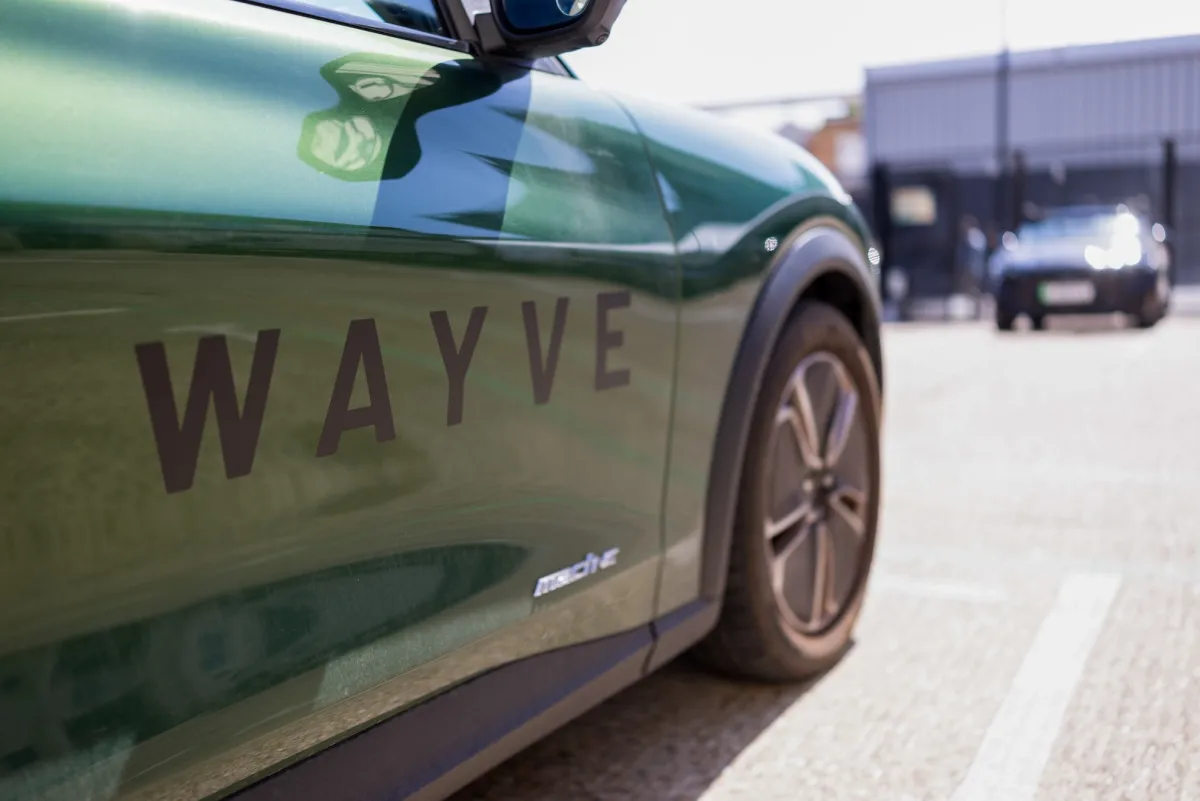
Welcome back to TechCrunch Mobility, your hub for the future of transportation and now, more than ever, the role AI is playing in it. To get this in your inbox, sign up here for free — just click TechCrunch Mobility!
Autonomous vehicle technology is not yet ubiquitous or mainstream. Readers here might shout, “It’s everywhere!” but I can tell you that it is not — although I understand why folks in the San Francisco Bay Area might disagree.
The tech is, however, being commercialized and that transition from testing to commercial product has me thinking about scale. A few strategies are emerging.
Scale through partnerships. A couple of announcements this week highlighted this strategy. Wayve locked in a commercial partnership with Mercedes-Benz to integrate the startup’s automated driving tech into at least one model set to be deployed within the next two years. This is a Level 2 type product, meaning it handles certain driving maneuvers but still requires the human driver to remain engaged. While this is not a Level 4, or fully driverless product, it gives Wayve reach and follows similar deals with Nissan and Stellantis. Those partnerships have also opened doors for its fully driverless product. Earlier this year, Wayve announced a partnership with Nissan and Uber to launch a robotaxi service in Tokyo.
Widespread and concentrated, all at once. As I wrote this week, Waymo’s commercial robotaxi ramp-up looks expansive, both in geographic reach and ridership. And by almost every measure, it is — until you pay attention to where the bulk of those robotaxis are actually showing up.
I looked at vehicle registration data and found that, at least for now, Waymo is concentrating its efforts in just two states. About 80% of Waymo’s roughly 4,000 robotaxis are in California and Texas, and Texas is where the action is now: Waymo’s fleet there has grown by more than 49% in the past three weeks.
Waymo is also scaling by seeking out new kinds of users: teenagers.
I might put Aurora, a company developing and commercializing self-driving trucks, somewhere between these two categories. Aurora is clearly focused on Texas, but it has cast a wide net when it comes to partners. CEO Chris Urmson is also clearly bullish on how the company will scale over the next four years, noting this week that Aurora has “emerged from the building stage.” The company said it’s targeting more than 30,000 driverless trucks in operation by 2030. The company plans to have more than 200 driverless trucks by the end of the year.
A little bird

Our little bird items are typically just that: small yet notable nuggets of insider information from across the transportation industry. But every now and then, a tip turns into something much bigger.
That’s what happened a few weeks ago, when Zoox workers reached out to senior reporter Sean O’Kane about a problem with the company’s test fleet in Atlanta. Workers were getting sick, and they suspected it was from its test vehicles, Toyota Highlander SUVs equipped with Zoox’s self-driving system.
The TL;DR: Zoox grounded its autonomous vehicle test fleet in Atlanta after safety drivers were potentially exposed to carbon monoxide, carbon dioxide, or hydrogen sulfide gas inside its vehicles last month. Zoox says it only ever found evidence of CO2 in the vehicles.The repeated incidents led one worker to file a complaint with the Occupational Safety and Health Administration, which opened an inquiry and told Zoox to investigate the exposures.
You can, and should, read the whole story here.
Got a tip for us? Email Kirsten Korosec at kirsten.korosec@techcrunch.com or my Signal at kkorosec.07, or email Sean O’Kane at sean.okane@techcrunch.com.
Deals!

Wall Street may be preoccupied by whether the buzziest AI companies will go public in 2026, but there is other IPO activity in other industries, including transportation. Many of these are companies located outside of the United States.
For instance, Carro, the used car marketplace backed by SoftBank, is considering dual listing on the Nasdaq and the Singapore Exchange. Two India-based companies — used car marketplace Spinny, which is back by Tiger Global, and electric bus company PMI Electro Mobility Solutions — have both filed confidentially for IPOs. Then there’s EcoCeres, a Hong Kong-based company that produces renewable fuels, which reportedly plans to raise about $1 billion in a Hong Kong initial public offering.
And don’t forget just last week the U.S.-based autonomous vehicle company May Mobility said it planned to go public via a merger with a blank-check company.
Other deals that got my attention …
Ultraviolette, the India-based electric motorcycle manufacturer, raised $85 million and has brought on Intel CEO Lip-Bu Tan as an adviser. Read our previous coverage on Ultraviolette here.
Notable reads and other tidbits

Comma, the startup founded by hacker George Hotz, is facing a federal investigation after five reported crashes involving the company’s aftermarket hands-off driver-assistance tech, two of which resulted in three deaths.
Einride, the Swedish autonomous and electric trucking company, said it plans to use Nvidia’s Hyperion platform to build the next generation of its self-driving system.
San Francisco-based PitPro Automation has developed a robot that can change tires and has now deployed it at a shop in Canada.
The Boring Company is working on “a simple precursor Hyperloop” between Austin and San Antonio that will reduce the journey between the two cities to less than 30 minutes, according to the tunneling startup’s founder, Elon Musk.
Tesla is finally handing over the first of its all-electric Semi trucks to customers. CEO Elon Musk is known for shaky timelines, but when I attended the Semi reveal event in 2017, I didn’t think it would take nearly a decade. One insider note from reporter Sean O’Kane: “Customers will be able to take delivery of the truck whenever they are ready, though charging infrastructure remains a hurdle.”
Does AI need a learner’s permit? MIT researcher Bryan Reimer, whose work I periodically share here, weighs in.
Volkswagen is reportedly delaying the return of its ID Buzz to the United States. Meanwhile, Volkswagen subsidiary MOIA America has partnered with Beep and is now launching its first passenger services in self-driving ID Buzz vehicles equipped with Mobileye self-driving tech in the Orlando community of Lake Nona. There is still a human operator on board.
One more thing …
We’re a couple of weeks away from Disrupt 2026, TechCrunch’s annual tech conference in San Francisco. I am interviewing Rivian CEO RJ Scaringe onstage October 13, and we have a lot of ground to cover. If you recall, Rivian has some lofty plans for its R2, robotaxis, and automated driving. And then there is Scaringe’s other projects, the spinout Also and Mind Robotics.
If you’re in San Francisco during Disrupt, you should come. And I’m offering you a 30% discount with code mobility30 by following this link. There are other interesting talks besides Scaringe, plus dozens of startups to check out. Check out the agenda here, which includes talks with folks from startup Bedrock Robotics, GM, and self-driving trucks company Waabi. Les Karpas, Nvidia’s head of physical AI, and Mark Wahlberg will also be there, among many, many others.
When you purchase through links in our articles, we may earn a small commission. This doesn’t affect our editorial independence.
>
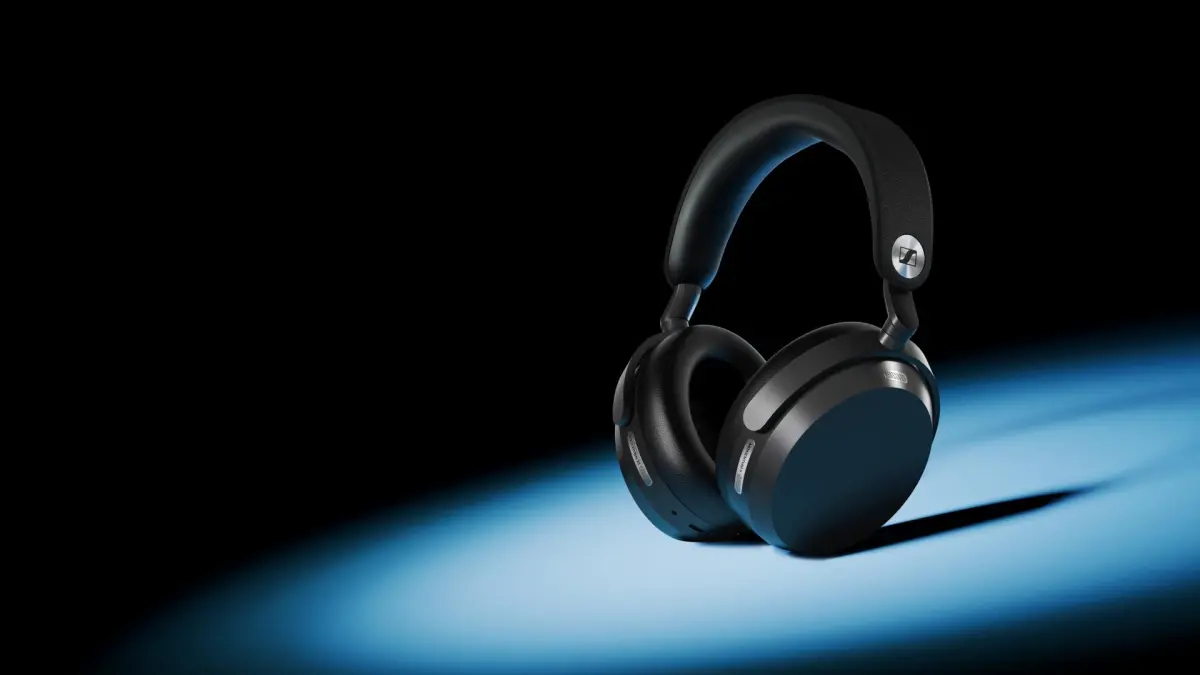
There are a lot of $300-$400 headphones on the market right now, and most of them blur together. I spent the last few weeks with the Sennheiser Momentum 5 to determine if this pair actually stands out, testing everything from sound quality and noise cancellation to comfort and battery life.
At $399.99, the Momentum 5 sit right in the middle of the premium headphone market. That puts them up against the pricier Sony WH-1000XM6 and Apple AirPods Max 2, while offering a more affordable option for anyone looking for high-end headphones.
Starting with sound, vocals sound natural and the bass is strong without taking over. The headphones allow you to start noticing little things in music, like a background harmony or a guitar string that cheaper headphones often tend to miss. If I had to describe the sound in one word, it’d be balanced.
The headphones support Dolby Atmos, which essentially means that music or movies sound like they’re coming from all around you instead of just left and right.

With this generation, Sennheiser doubled the microphone count to eight to improve the active noise cancellation (ANC). Voices and nearby chatter, which are usually the kind of sounds that can cut through weaker ANC, are noticeably quieter. Sennheiser claims this pair is up to three times more effective than the previous generation at blocking this type of noise.
Of course, it’s not quite at the level of blocking out everything like a plane’s engine, but it does the job effectively without making your ears feel weirdly pressurized as can be the case with some ANC headphones.
As for comfort, the headphones aren’t as premium-feeling as Apple or Sony headphones that I’ve tried in the past, but given that the Momentum 5 cost less than its competitors, it’s a trade-off that’s hard to complain about.
The battery life is genuinely impressive. It’s rated for up to 57 hours, and that figure held up in my testing. For context, that’s roughly twice the battery life of the Sony WH-1000XM6 and nearly three times that of the AirPods Max 2.
And when the battery does run out, a 10-minute charge gets you up to seven hours of playback, while a full charge takes about two hours.

A notable difference that the Momentum 5 offers that its competitors don’t is a user-replaceable cell, which means you can swap out the battery once it degrades instead of having to buy a whole new pair.
What I wasn’t expecting, but found surprisingly useful, was how thin the carrying case is. I’ve never really been able to fit a pair of headphones into my medium-sized purses, but the Momentum 5 fit perfectly. It’s also a big plus when traveling, since the case doesn’t take up much space in your luggage.
With the headphones’ companion app, Smart Control Plus, you can adjust a bunch of different settings. There’s an 8-band EQ that lets you tune the sound yourself or choose from one of Sennheiser’s presets. The app also lets you adjust the level of ANC rather than just switching it on or off, and there’s an anti-wind mode you can access there too. The “Sound Personalization” feature walks you through a listening test and creates a sound profile tailored to your hearing preferences.
The app gives you a decent amount of control over the Momentum 5, and I found it pretty easy to navigate as most of the settings are quite straightforward.
Overall, the Sennheiser Momentum 5 is a solid option at this price. They offer great sound, the battery life is excellent, and the downsides are pretty minor. They’re heavier than the Sony WH-1000XM6, and aren’t as comfortable as some Sony or Apple options, but at $399.99, they’re cheaper than both while still delivering where it matters.
When you purchase through links in our articles, we may earn a small commission. This doesn’t affect our editorial independence.
>

Bill Gates Warns AI Could “Cause A Billion Deaths”
Ravens, Cowboys test field conditions, different cleats before kickoff in Brazil
NHL waiver tracker: Best players on the wire throughout 2026-27 preseason
-

 movies4 months ago
Search For Canadian TV Actor Stewart McLean Now Homicide Investigation
-

 Fashion9 years ago
These ’90s fashion trends are making a comeback in 2017
-
Fashion9 years ago
According to Dior Couture, this taboo fashion accessory is back
-
Fashion9 years ago
Model Jocelyn Chew’s Instagram is the best vacation you’ve ever had
-
Fashion9 years ago
Emily Ratajkowski channels back-to-school style
-
Fashion9 years ago
9 Celebrities who have spoken out about being photoshopped
-

 Anime4 months ago
Rurouni Kenshin: Hokkaido Arc Manga Takes 1-Issue Break – News
-

 Anime3 months ago
HIDIVE to Stream English Dubs for The World Is Dancing, The Forsaken Saintess and Her Foodie Roadtrip in Another World, The Dangers in My Heart: The Movie Anime – News