Connect with us

Sports

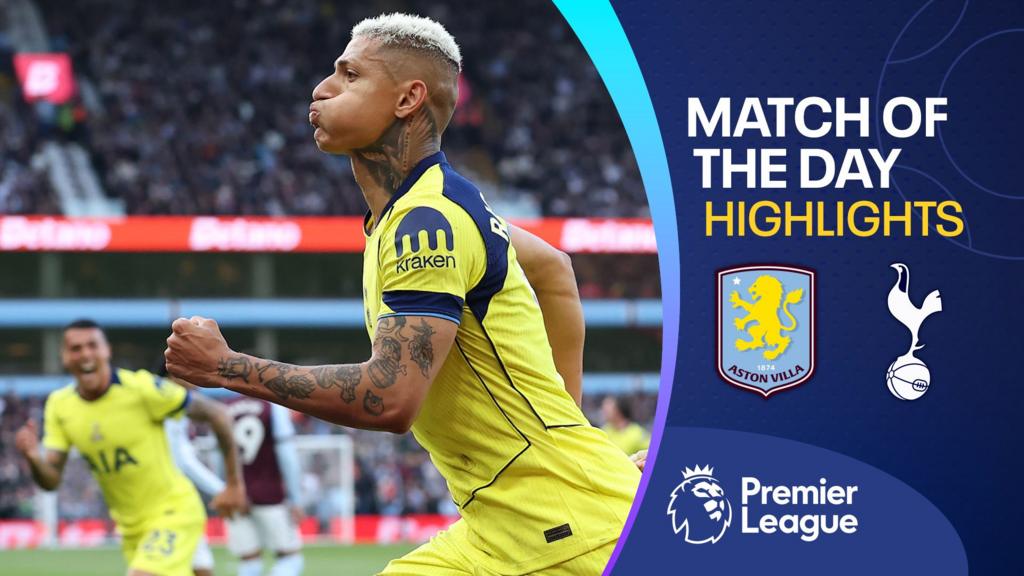
Spurs out of relegation zone with Villa win

Published

on

Tottenham Hotspur propel themselves out of the relegation zone with a commanding 2-1 win over Aston Villa in the Premier League.

>

Continue Reading

Sports

The making of Arsenal signing Bruno Guimaraes, a captivating leader who couldn’t tie his shoelaces

Published

on

A version of this piece was first published in January 2023. It has been updated to reflect the period since then and Arsenal confirming the signing of Bruno Guimaraes from Newcastle United.


It wasn’t a free kick, nutmeg or rousing tackle that convinced Tiago Nunes that Bruno Guimaraes was destined for the stratosphere.

Nor was it one of the midfielder’s through balls, those trademark offerings to the gods of geometry.

It didn’t even happen on the pitch, in fact.

It was September 2019, half-time in the second leg of the Brazilian cup final. Athletico Paranaense had taken a narrow lead into the game — Guimaraes scored the only goal of the first leg — but were clinging on. Internacional, spurred on by a full house at their Beira-Rio stadium, were in pummelling mode.

“The score was 1-1, but they were dominating,” Nunes, Athletico’s coach at the time, recalled in an interview with The Athletic in 2023. “It was a high-pressure game and we were well below our usual level.”

The atmosphere in the away team’s changing room told its own story. The Athletico players knew that another goal for Internacional would take the final to penalties. They were quiet, their eyes fixed on the floor.

Then Guimaraes piped up.

“If you’re scared to play, give me the ball,” he said. “I’ll play for you. You can trust me. But let me tell you this: we are going to leave this stadium with the trophy.”

Guimaraes was 21, still a pup. Nunes already knew about his tenacity and had marked him as a future leader, but this? This was as unexpected as it was welcome.

“It gave me goosebumps,” Nunes said. “It was an extraordinary thing for a kid of his age. It demonstrated his personality and his ambition.”

Those attributes made Guimaraes a firm favourite at Newcastle during his four and a half years at the club. As he makes the switch to the Premier League champions Arsenal, there is a feeling of dread on Tyneside over what life will be like without him, a player who runs himself into the ground every game and adds much-needed composure, quality and incision to their possession play.

Not just on the pitch, Guimaraes has also endeared himself to Newcastle fans with his attitude, embracing life in the north-east of England and leading by example in his role as captain. His mentality from the start had been that of a winner, stating his determination to write his name into the history of the club. He said it was the “best day of his life” when, as skipper, he lifted the Carabao Cup in 2025 — Newcastle’s first piece of major domestic silverware in 70 years.

“When you demand something of him, he gets better,” said Nunes, and that is not an outlier view among Guimaraes’ former mentors.

Speak to those who knew him as a boy and you get the impression he was wired for big occasions.

But even when things have been tougher at Newcastle, Guimaraes has been the standard-setter, stepping up alongside Joelinton in the dressing room as results slipped under Eddie Howe last season, much like he did for Nunes all those years ago.

The result of that cup final speech? Athletico held on to win.

Guimaraes with the trophy after that 2019 Brazilian cup final (Lucas Uebel/Getty Images)


Guimaraes grew up in Engenho Novo, a modest neighbourhood in the endless northern sprawl of Rio de Janeiro. His father, Dick, drove a taxi; Marcia, his mother, worked in a motorcycle dealership. By Brazilian standards, they were comfortable enough.

He had two bouts of pneumonia as a toddler. The family’s doctor recommended swimming. Good for the lungs. But Guimaraes was already obsessed with football, always out in the street, a ball at his feet. Good for the soul, maybe.

At five, he started playing futsal at local club Helenico. There, he first appeared on the radar of Mario Jorge, a young coach with whom he formed a lasting bond. They were together at under-six, under-nine, under-11 and under-12 levels, and they still speak today.

Fun was the main objective in the early days. The Helenico boys played dodgeball and had shoelace-tying races. “Bruno didn’t know how to do his laces, so he’d get very upset,” Mario Jorge told The Athletic in 2023. “He’d go home and beg his mum to teach him how to do it. He was always really competitive.”

Guimaraes was less keen on playing matches. “He liked those little games, but not the actual football,” said Mario Jorge. “He did not want to take part. Sometimes he’d get so nervous that he felt sick. He’d go to the toilet and tell me that he didn’t want to play. Sometimes he couldn’t even speak; he would just shake his head. That was his signal.”

Eventually, Guimaraes found his confidence. After impressing for Helenico, he was invited to play for Flamengo’s futsal team. At weekends, he’d go for barbecues with Mario Jorge, who roped him into three-on-three neighbourhood games.

“It would be me, Bruno and another boy against three adults,” recalled Mario Jorge. “This was on the street. No shoes, no markings. The ball would hit the curb, hit the wall, and you’d continue. There were no fouls. It really was a street game. And we’d win every time.”

When Mario Jorge was asked to start an under-13s team at a local club called Sendas in 2010 (their name changed to Audax-RJ a few months later), Guimaraes transitioned to 11-a-side football. He had previously had trials with Fluminense and Botafogo, but nothing came of them; this was a chance to show what he could do on grass.

“Physically speaking, he was very skinny and slight,” said Gabriel Barreiro, who assisted Mario Jorge during Guimaraes’ time at Audax-RJ, when speaking to The Athletic in 2023. “He was not extremely technical, either. He was never the standout player at that age.”

Mario Jorge echoed that view, recalling a period when he became worried about Guimaraes’ co-ordination. The kid ran as though his arms and legs were having a four-way argument. “You have no idea how bad it was,” he laughed. “We made him do special exercises to tidy up his movement. Today, it’s a bit better. It’s not a particularly pretty way of running, but he gets by.”

Guimaraes in action for Brazil (Nicolo Campo/LightRocket via Getty Images)

While Guimaraes was neither a study in grace nor an obvious genius-in-waiting, he excelled in the intangibles.

“His commitment stood out,” explained Barreiro. “He had a very strong personality, extremely determined. He always did everything we asked of him in training — and then a bit more.

“Even without the physicality, he would surprise us. He would compensate in other ways. He was a fighter.”

Nor was his drive directed only inward.

“Bruno was always a leader,” said Mario Jorge. “He had the posture, the conduct, the intelligence.

“He was not an imposing leader; it wasn’t that he had a strong personality that he would force on his colleagues. It was more natural — a captivating, sweet form of leadership, through easy smiles and politeness. It was part of his upbringing. I think it came from his family.”

Still, the fan club remained fairly small for the three years Guimaraes spent at Audax-RJ. The scouts from the big clubs didn’t talk about Bruno.

“Bruno was far from being the most in-demand player we worked with,” said Mario Jorge. “Some boys had offers from Botafogo, Flamengo, Vasco da Gama, Bahia, Figueirense, but there was nothing for him.”


A futsal interlude.

Guimaraes, like many Brazilians before him, credits futsal — Brazil’s version of five-a-side, played on squeaky indoor courts using a small ball — with shaping the way he plays today. Which is fine, but a little vague. So we asked his former coaches for a bit more granular detail.

Mario Jorge: “Bruno always used the sole of his foot to control the ball. In 11-a-side, you don’t use that technique a lot, because sometimes the ball is wet and it can be slippery. But he always did that a lot.”

Guimaraes was still controlling balls with the sole of his boot years later for Newcastle (Serena Taylor/Newcastle United via Getty Images)

Barreiro: “It taught him quick decision-making in small spaces. He likes doing these little dribbles, even as a midfielder. Even when he is under pressure, he knows how to escape. That comes from playing futsal.”

Nunes: “The nutmegs are from futsal. The one he loves is when you control the ball with the sole of your foot and just nudge it. He always did that. It’s also typical of players from Rio. He’s an expressive guy, a joker, and he likes to bring that onto the pitch with him. He likes to mess with his opponent, to get in his head.”

Mario Jorge: “Futsal is responsible for his decision-making and the dynamism he brings to the game. He had to work out a way to escape pressure from boys who were stronger and taller than him. It made him develop an intelligence which is very visible. When I see him playing today for the national team, I still see that nine-year-old on the futsal court. It’s obvious that the action is much quicker, but I used to see him do the same things.”


When Guimaraes left Audax-RJ, it was not for one of the country’s traditional heavy hitters but for Audax-SP — the Sao Paulo branch of the same group of clubs, higher up in the pecking order of Brazilian football but not a household name.

He made his professional debut at 17, then kicked on after the 2017 Copinha youth tournament, playing eight first-team games under Fernando Diniz, an up-and-coming coach who is now in charge of the first team at one of those domestic big guns, Corinthians.

“He’s a very intelligent player,” Diniz said of Guimaraes in an interview with Brazilian TV show Globo Esporte. “He has immense maturity for his age, particularly in high-pressure games. He presses intensely and has the technical ability to dictate the play. He has the soul of a great footballer.”

Supported by his parents, who ferried him back to Rio at the weekends, Guimaraes started to win admirers — from Brazil and further afield. Audax turned down a bid from a Hungarian club before agreeing a deal with Athletico for a year-long loan with an option to buy.

Initially, it looked like a misstep. Between May and November 2017, Guimaraes played only 58 minutes for the Athletico first team. He expected to be sent back to Audax, but in the final match of the season he produced a sparky cameo off the bench against Palmeiras. “He did really well in those final 15 minutes,” said Nunes, who was Athletico’s B-team coach at that stage. “He made a great final impression, which pushed the club to let him stay.”

There was more good fortune to come. Diniz arrived from Audax as first-team coach, for one. Guimaraes then benefited from Athletico’s policy of ‘splitting’ their squad, allowing youth players to play the state championship so the first team could have a proper pre-season.

Guimaraes saw his chance.

“He had this determination,” said Nunes. “He didn’t want to go back to Audax, who only played in regional competitions.”

Athletico won the state championship with what was essentially an under-23 team. Guimaraes, the standout performer, was promoted to the senior squad proper.

The secret was finally out.

“He knew instinctively where he should be to receive the ball. He knew when he was the spare man, when he had to provide support, when he had to make a run. That wasn’t normal for a player of that age,” Nunes said.

“Bruno was never the kind of player who did stepovers or particularly creative things. He wasn’t that explosive player who would pause on the ball and do a dribble. His technical quality was about keeping the ball moving, the right touch at the right time.”

Above all, Nunes loved Guimaraes’ personality. “Bruno is a Carioca, from Rio,” he said. “Cariocas are known for being warm and open. They love to chat and are always smiling. They come with that software installed. Bruno is like that: a very sweet guy with a big heart.

“What really impressed me was the way he reacted to criticism. I was always challenging Bruno, nagging him. When you give Bruno some stick, he doesn’t give it back, doesn’t complain. He gets really pissed off but keeps it inside and uses the anger to improve.”

(Lucas Uebel/Getty Images)

What did Nunes need to pester him about?

“He sometimes wanted to chase his man all over the pitch. That way of thinking about defending as a collective thing didn’t come naturally to him. I didn’t want to take that aggression away from him, but sometimes he just abandoned his zone. Against the better teams, that left us with a weak point.

“I also nagged him about improving his left foot. I used to call him ‘mop foot’ because when he kicked the ball with his left, there was no power behind it. He hated that. He used the criticism as fuel. It was, ‘Watch this then, you son of a b***h, I’ll show you what I can do’. I used to do it quite intentionally. I wanted him to be pissed off.

“Some players go into their shells when you shout at them, and are unable to perform. Bruno was the opposite. He is at his best under pressure. Maybe that’s one of the things that helped him adapt to European football so quickly.”


A geography interlude.

Nunes: “One thing he’s not so good at is geography. I went to Paris with my wife in 2018 and when I got back, I called each one of my players to check in. I called Bruno and he told me he had seen on Instagram that I had been in Paris.

“He said, ‘Yeah, I saw you were in Paris. I’ve always wanted to go to England.’

“I told his team-mates about that later. It became a long-running joke.”


As Guimaraes’ star rose in Brazil, so too did interest levels abroad. Chelsea scouted him. Benfica phoned Nunes to ask for the inside line. So did Arsenal.

“Edu (then Arsenal’s technical director) called me to ask about Bruno,” Nunes recalled in 2023. “He just wanted to get my view about his characteristics, and see whether I thought he would be a good fit for Arsenal. Their philosophy was changing with Mikel Arteta’s arrival (as head coach and now manager) and they wanted players who could keep possession and interpret space — the exact things that Bruno does perfectly.

“I told him, ‘Sign him up, because he’s got huge potential’. But I don’t know whether Arsenal made an offer in the end.”

What Arsenal have seen in the years since has only convinced them that their initial instincts were correct.

Former Brazil midfielder Juninho Pernambucano, sporting director at French club Lyon at the time, called Guimaraes directly and told him he would make the youngster the best central midfielder in the world. Guimaraes believed him and moved to Ligue 1.

At Lyon, he caught the eye with his ability to run games from midfield. Former Lyon head coach Peter Bosz called him the “thermometer” of the team. Hiring his own personal performance analysts suggested he was taking his career incredibly seriously.

One of those analysts is Eduardo Barthem, who has worked closely with Guimaraes for almost five years, alongside Rafael Marques, Hugo Delfino and Marcos Tanaka and Rio de Janeiro-based consultancy Performa Sports. He has been impressed with Guimaraes’ drive to improve, despite his successful career to date. 

“He’s a 28-year-old player who has already played in two World Cups and has become a cult hero at two different clubs,” says Barthem, speaking earlier this week. “He has had every reason to become complacent along the way, but there is ambition to always want more. He is a real winner, very competitive, and he understands that to compete at this level, he needs to be constantly improving.

“He’s always willing to listen to what he needs to improve on and where he needs to build on his strengths, and that mindset is definitely what has brought him this far.”

Guimaraes with Eduardo Barthem, one of the analysts he works with (Eduardo Barthem)

More specifically, Barthem pointed to Guimaraes’ increased shooting rates to illustrate his desire to add new layers to his game.

Guimaraes more than doubled his rate of shots on target per game last season, while he also doubled the number of actions with his left foot, which would be music to Nunes’ ears.

“He showed that response to our conversations in-game, which is helping him to become more complete all the time,” says Barthem.

“Then there are set pieces. That came from him. It was down to Bruno deciding to step up as a potential set-piece taker. We always said that he has an excellent delivery and that he could work on his free kicks and corners, but this was something that he took on himself, and the result has been very positive.”

Though Barthem and his team were thrilled with his time at Newcastle, they cannot hide their excitement at his next move.

“I am so excited, because Arsenal are one of the best teams in the world, the reigning Premier League champions, runners-up in the Champions League. He’ll be competing for every title. But I also think he fits really well into the midfield, and can replicate some successful partnerships he has had throughout his career.

“For example, I see a potential partnership with Declan Rice where they can constantly switch positions, much like he did with Sandro Tonali at Newcastle. Bruno is an elite player in both the No 6 and the N0 8 positions, so I think at certain moments he can play slightly further forward, at other times he can drop to allow Rice some space to move into.”

Barthem also thinks Guimaraes can click with Martin Odegaard, a player who is always making himself available to receive the ball and offering passing lanes, and who likes one-twos, combining in short spaces, much like Lucas Paqueta for the Brazil national team and at Lyon.

“But above all, I’m excited to see how he plays with Bukayo Saka, who is a player who likes to make runs in behind,” says Barthem. “Those through balls, particularly down the right flank, are his greatest strength — you only have to look at his relationship with Vinicius Junior, Raphinha and Gabriel Martinelli with the national team.”

When asked if he has any advice for Guimaraes, Barthem’s answer is simple: more of the same.

“Stay focused and disciplined, and keep that ambition. He is a player who gives 100 per cent to everything he does with his career, and he is addicted to football, to getting better.

“That flame has been lit for the game, and it is vital for him to keep that feeling alive.”

Guimaraes and Martin Odegaard (left) have gone from Premier League rivals to Arsenal midfield colleagues (Michael Regan/Getty Images)

Nunes holds a similar view. His affection for the player is reciprocated, too: Guimaraes once called Nunes his “godfather”.

“It’s a paternal relationship,” said Nunes in 2023. “Not many players give their manager a chance to get close, but some need that, and Bruno was one of them. He’s no longer just someone I coached; he’s a friend. He’s always in my heart.”

Nunes was never in any doubt about Guimaraes’ ability.

“He’s a player who will create a legacy,” he said. “I told him on many occasions that the sky is the limit.”

>

Continue Reading

Sports

Manchester United’s greatest players: No 5, Roy Keane

Published

on

Who are the greatest players in Manchester United’s history? The Athletic gave Andy Mitten the task of compiling his top 25, and we are counting them down this summer, in reverse order.

He explains his thought process here.


On April 21, 1999, Roy Keane gave the greatest performance from a Manchester United player I have seen in a live game.

Juventus away, the second leg of a Champions League semi-final, following a 1-1 draw at Old Trafford in which the Italians had been vastly superior. Juventus were the best team in the world then, the ones United wanted to avoid after knocking out Inter in the previous round.

When Zinedine Zidane put in an early low cross for Filippo Inzaghi to convert, Juventus were ahead, angering Sir Alex Ferguson, who wrote in his 1999 autobiography, Managing My Life: “Inzaghi was more alert and decisive than our defenders. We should be above surrendering goals like that.”

Speaking about that Juventus side years later, in a Philadelphia hotel for a fanzine interview which was supposed to take 30 minutes but lasted 90 and included two arguments, Keane said: “Juventus are the best team I’ve ever played against. They battered us at Old Trafford in the first leg. Ryan Giggs scored late on, but we should have been 2-0 down at half-time.”

“Juventus repeatedly ripped us open in the first half,” agreed Ferguson.

They had Zidane, Edgar Davids, Didier Deschamps, Inzaghi, Gianluca Pessotto, Angelo Di Livio, Antonio Conte and Paolo Montero, a Uruguayan centre-back Andy Cole said was the hardest defender he ever faced. When Inzaghi slid in ahead of Jaap Stam to double Juventus’ lead on the night in the 11th minute, it looked grim.

But Ferguson had not thrown in the towel. “I was numb, but I did not feel that the match was over.” Most did. Juventus were on their way to a fourth successive Champions League final. United captain Keane, from Mayfield, a suburb outside Cork, in the Republic of Ireland, was also having none of it.

“The most emphatic display of selflessness I have seen on a field,” said Ferguson, a man who had been involved in football for around half a century. “Pounding over every blade of grass, competing as if he would rather die of exhaustion than lose, he inspired all around him. It was an honour to be associated with such a player.”

Keane played it down.

“I don’t necessarily think that it was my best game, but people have since jumped on the bandwagon,” he told me that day in Philadelphia. “But I suppose if you look at the game, the fact we were 2-0 down and the opposition, you might see it differently.”

Keane supposes correctly.

First, he cut the deficit in the 24th minute, glancing a David Beckham corner past goalkeeper Angelo Peruzzi after a spell of pressure. Ferguson’s men continued to outperform their rivals in the middle of the pitch, Keane and Paul Scholes against Zidane, Davids and Deschamps.

Against Juventus in 1999, Roy Keane gave one of the great Manchester United performances (Allsport UK/Allsport)

Beckham crossed for United’s first two goals — the second after 33 minutes, another header, this time by Dwight Yorke.

A minute earlier, Keane was harshly booked for a late tackle on Zidane. It meant he would be suspended for the final should United qualify. Keane did not speak to Jesper Blomqvist, who played him the ball before the challenge, for the rest of the season. Blomqvist, rightly, maintained that it was not even a bad ball.

At half-time, it was 2-2 on the night and 3-3 on aggregate, with United having the advantage on the since-scrapped away-goals rule — and the momentum was with the visitors. They capitalised on that, battering Juventus in the second half to win 3-2, 4-3 on aggregate.

Bayern Munich awaited in the final at Barcelona’s Camp Nou.

Next day in Turin, members of a 4,500 away following, we devoured what we could from the Italian newspapers. Keane had so impressed that he was awarded a rare ‘8/10’ by the notoriously hard to please Gazzetta dello Sport. It was the greatest game I had seen.

How was it viewed in later years? Not to Keane’s satisfaction, anyway.

“It makes me sad when I see players, especially ex-players, looking for that bit of limelight,” he told me five years later. “Please god, don’t interview me in 30 years’ time and talk about Juventus in 1999. I hope in the next 30 years I might achieve something else in my life.”

After playing 480 games for United (13th in the overall list, between ace defender Arthur Albiston and ace striker Brian McClair) and scoring 51 goals, Keane left in late 2005 amid acrimony with Ferguson that has yet to heal. He went to Celtic, but football was taking a toll on his body after years of putting it on the line for Ferguson’s United and he retired from playing seven months later at age 34.

Before United, he had risen not from an academy system but from Irish second-tier side Cobh Ramblers to make his name under Brian Clough at a declining Nottingham Forest.

Keane was such a force that United had to break the British transfer fee and beat Blackburn Rovers to sign him in the summer of 1993, for £3.75million ($5m at today’s rates), ostensibly to replace a 36-year-old Bryan Robson. He joined a team that had just won the league for the first time in 25 years and, within a few seasons and having overcome a cruciate ligament injury, became its most important player and captain.

Roy Keane won seven Premier League titles with Manchester United (Richard Sellers/Sportsphoto/Allstar via Getty Images)

He was a box-to-box midfielder who spoke his mind, sometimes to his cost. He departed from Ireland’s preparations for the 2002 World Cup in Japan and South Korea after a frank expression of his views about how their camp on the Pacific island of Saipan had been prepared.

United fans loved him. Keane always got stuck in, though he was sent off three times in just 14 matches in 1995. He scored some big goals, such as the winner away in a 1993 Manchester derby as United came from two down to beat City 3-2.

He spoke sense and was right in 2000 to call out fans at Old Trafford who did not do enough to support their great team. His two autobiographies were unflinchingly honest bestsellers and he led United to nine major honours, making him the most successful captain in the club’s history.

He was always looking forward, and it is sad he and Ferguson, two totemic figures in United’s history, do not see eye-to-eye. Ferguson dedicates an entire chapter to Keane in his 2015 autobiography.

“Roy Keane was a player of energy, of guts and blood, with a fine instinct for the game and its strategies,” the chapter begins.

“He was the most influential presence in the dressing room in the time we worked together. Roy took a lot of the onus off me in making sure the dressing room was operating at a high level of motivation. A manager could never be dismissive of that kind of help from a player.

“But by the time he left United, our relationship had broken down.”

It is a shame there’s a “but”, yet there could be one for an aspect of the life of almost every player in this list.

The fact is, Keane was one of the greatest Irish footballers and one of the greatest and most uncompromising players to wear the shirt of Manchester United.


Catch up on the rankings

>

Continue Reading

Sports

Inside Man City’s pre-season tour: A change in club culture, ‘unbearable’ heat and making chopsticks

Published

on

It was so hot in Seoul, South Korea, last Wednesday that the players involved in Manchester City’s friendly with the K-League All Stars could barely breathe.

Towards half-time, City left-back Josko Gvardiol had to lean on team-mate Gianluigi Donnarumma for support, and it turned out he was suffering from blurred vision. Marcus Bettinelli, who replaced Donnarumma in goal for the second half and has admittedly not played a minute of football since joining the club last summer, said he was out of breath just from yelling at his defenders.

“The heat was unbearable,” Bettinelli said. “I was shouting instructions and stuff, and it was taking me four or five times to get my breath back, so it was really hard. I don’t know how the (outfield) boys managed to do it, because I was stood still, so a massive credit to the lads.”

The ‘feels like’ temperature was 45C (113F) at 8pm local time, and it was hard enough to sit in the stands and watch that match, let alone play it. Severe heat alerts buzzed on mobile phones every few hours throughout the week City spent in South Korea, but mercifully the temperatures dropped somewhat for their tour’s final fixture, against Atletico Madrid on Sunday.

The weather dominated conversations throughout City’s fortnight in Asia; during the first week, in Hong Kong, a thick, dark cloud hung above the city, as it had done for the previous month, and did not shift.

Hong Kong is always humid and wet at this time of year, but this summer was different; it rained heavily for 80 per cent of each day while City were there and the ‘felt like’ approached 40C.

Somehow, it stopped raining long enough for the launch of their new away kit, which took place at Victoria Harbour and featured a floating football pitch, which had to be repeatedly squeegeed and towelled to avoid any costly slips-ups before City players Phil Foden, Ryan McAidoo and Abdukodir Khusanov stepped onto it.

Foden was the star of this tour, with fans shouting his name loudest at events and open training sessions.

On the first night in Hong Kong, he took a stroll to see the famous Bruce Lee statue, but was immediately recognised and mobbed by fans. When hundreds of supporters queued outside the fancy Rosewood hotel before the trip’s opening game against Inter, he went out and posed for every picture and signed every autograph — he even signed a dog’s sky-blue coat.

In the very first days of City’s time in Hong Kong, a fan asked their new manager Enzo Maresca for his autograph. The only problem was that it was not Maresca at all, but a similar-looking Puma employee wearing club training gear.

While the rain was usually relentless, the city’s new Kai Tak Stadium has a roof and air conditioning, meaning preparations for the match against Inter, and the game itself, went perfectly. A City-themed playlist, featuring Oasis, Inspiral Carpets and club anthems, blared out of the venue’s speakers as the players were put through their paces, with Maresca working on his game plan without a care for who was watching.

There has been a relaxed feel to Manchester City’s tour under Enzo Maresca (May James/AFP via Getty Images)

When the tour moved on to Seoul, City generally had to train in the evening, although temperatures then were rarely any cooler than in the middle of the day. Sessions in the morning were not really an option because players generally struggle to sleep on these trips.

Fans benefitted from Maresca putting on full sessions as he looked to get his ideas across to the players, but the simple fact he is the new man in charge has brought notable changes behind the scenes, too.

There was a much more relaxed feeling around the first team, with a more welcoming attitude to outsiders, including those who work for the club or their sponsors. Even before the tour began, staff had remarked upon how the first-team building at the training ground was a more welcoming place at meal times, and the access granted to players and the manager himself has been vastly different in East Asia, too.

To provide one striking example, in the six years City had been running their ‘matchday live’ show on official channels during the Pep Guardiola era, the staff producing those programmes were never given access to the Catalan or any first-team players. During the very first open training session in Hong Kong, they were able to conduct live interviews with Antoine Semenyo and Maresca himself.

The manager also sat down with travelling journalists for a coffee. The last time Guardiola did that was in 2016, his first year at the club — he told reporters after his final pre-match press conference in Manchester that he decided during his time as Barcelona coach not to do interviews so journalists could maintain their impartiality.

Access to players on this tour was provided in a way that had not been seen since before Guardiola arrived.

In recent years, City staff have had to facilitate interviews by stealth, finding time for Manchester-based journalists to speak to players after contractual obligations with local media and sponsors. On tour in Tokyo in 2023, reporters huddled around a phone at the bottom of a stairwell to ask Nathan Ake questions about his new contract — a call that had been arranged surreptitiously.

This summer, players were brought over to reporters after matches and one open training session, while Foden spoke for 10 minutes after unveiling the new away shirt. Those things simply would never have happened previously.

The chief reason for all of that is Guardiola’s right-hand man, Manel Estiarte, who ensured the players were off-limits to anybody and anything that was not stipulated in their contracts, has departed with him. Estiarte would refer to himself, half-jokingly, as “the bad guy”, with those around the club saying he was the one who says ‘no’, enforcing boundaries around Guardiola and the players.

It was part of a culture that aimed to keep the squad protected from distractions and as rested as possible, and it cannot be argued it was not successful, given City’s dominance on the pitch, but it has been apparent all summer that things have changed.

The atmosphere among the squad is said by one well-placed observer to be as fun and relaxed as it has been in years. Maresca has seemingly made a good impression with his players and the backroom staff he inherited from the Guardiola era, both in Manchester and while on tour.

Players generally got to explore their surroundings while attending the various events that City lay on during these long-haul trips. The club are keen for them to be accessible to fans as much as possible, whether that was Savinho and Claudio Echeverri at a Puma event, Omar Marmoush playing Mahjong in Hong Kong or Gvardiol and Mateo Kovacic making chopsticks in Seoul’s Jongno district.

Omar Marmoush plays Mahjong in Hong Kong (Manchester City)

Mateo Kovacic and Josko Gvardiol make chopsticks in South Korea (Manchester City)

The squad had just two days off during the trip and spent a lot of time in their hotels, playing table tennis and passing the time as best they could. There was scope for some exploring, and opportunities to taste the local street-food, but conditions did make moving around cities difficult, even more so for instantly-recognisable footballers.

Some did squeeze in a quick trip to the Chinese city of Shenzhen for a sponsorship event with car manufacturer BYD, which had paid top whack for access to City’s star players; Ruben Dias and Donnarumma were on the junket and, in previous commercials, the same company has been able to use Rodri, Foden, Rayan Cherki and Erling Haaland.

The high-end mall underneath the Rosewood did present some opportunities to get out and about, to some extent, while Dias made it to Seoul’s Gyeongbokgung Palace, built in 1395, which is a short walk from the Four Seasons hotel where the squad were staying. City brought their own chefs with them and Riyad Pasta — the dish popularised by the club’s then winger Riyad Mahrez during the 2022-23 season, featuring chicken, cheese, onions and peppers — is still on the menu.

During the closing stages of the 3-1 win against Atletico — during which the Spanish club’s players raged at the referee when replays showed that Semenyo was clearly offside in the move that led to them going two up — City fans behind the goal broke out into the Norwegian rowing routine that took this summer’s World Cup by storm.

There was a slightly surreal moment before that game when South Korean singer San did a dance and a ceremonial kick-off, and every one of the 50,078 supporters inside the stadium, City and Atletico, cheered when South Korea international Lee Kang-in came off the bench for Diego Simeone’s men — it was like the ovation Haaland got three years ago, a rare summer when City could call upon all of their big hitters.

What team should you follow after the World Cup?

Laia Cervelló Herrero and more

The stadium announcer regularly shouted out the names of players who had done something notable, which really highlighted how well Semenyo has been playing, while one Korean fan behind the goal had nailed the English accent on an impassioned “Come on Cityyyyy’ that he bellowed every now and again.

Overall, the Atletico match was a livelier affair than the midweek sweatfest against K-League All Stars, where supporters fanned themselves down and were blasted by mist machines. Around 28,000 turned out for that one, a number surely affected by the extreme temperatures, and as the players laboured, one supporter was interviewed on the big screen during the second half and shouted a message of support to Tijjani Reijnders before breaking out into a rendition of Hey Jude.

City are a big pull in these parts, thanks not only to their success in recent years but also to how many events they put on in the cities that host them. These tours are always going to be more valuable to the financial department than the football side of the club, as conditions are usually less than ideal for training and matches, and this summer was a glaring example of that.

Hundreds of fans welcomed the squad when they flew in to Seoul’s Gimpo airport and it was a similar story when they departed for England on Sunday night.

The Maresca era is off and running.

>

Continue Reading

Trending

Copyright © 2017 Zox News Theme. Theme by MVP Themes, powered by WordPress.