
movies
Whitney Leavitt Leaving ‘The Secret Lives of Mormon Wives’


Whitney Leavitt is departing Hulu‘s The Secret Lives of Mormon Wives, the reality television actress-turned-Broadway starlet announced during her final performance in Chicago on Sunday.
Her representative confirmed the departure to Deadline.
Leavitt has appeared in every episode of the hit Emmy-nominated reality show, which follows a group of Mormon mom-influencers who contend with a sex scandal that disrupts their faith, friendships and reputations.
The show, which debuted in September 2024, just recently weathered its own storms, pausing production after fellow main cast member Taylor Frankie Paul was allegedly involved in a domestic violence incident. Charges against Paul were dropped after she was seen on a video throwing a metal stool at ex-boyfriend Dakota Mortensen. Since then, the Disney streamer announced it will resume filming on Season 5, though it did not specify when that will be.
One of the breakout stars of the MomTok phenomenon, Leavitt will soon make her feature debut as executive producer and star of All for Love (wt), a holiday rom-com from production company The Ninth House (Lifetime’s Forever). Leavitt has been very vocal about her acting ambitions, taking to social media to tease the film debut last year.
After competing on Dancing with the Stars Season 34, with Mark Ballas as her dance partner, she made her Broadway debut as Roxie Hart in a revival of Chicago, which began its run Feb. 2 and got an extended two-week window following its biggest ticket sales since 2023’s lucrative holiday haul.
Nellie Andreeva contributed to this report.
>
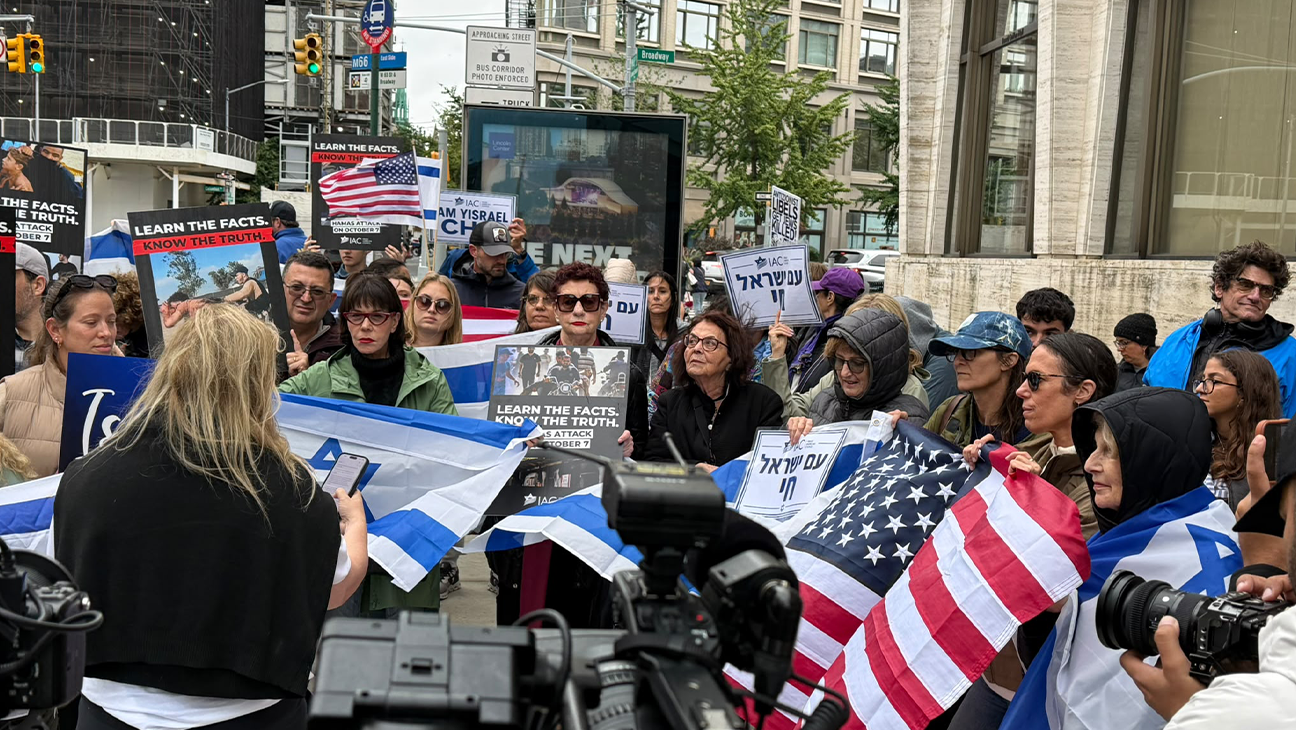
Dozens of Israeli Americans and members of Jewish communities gathered outside the Lincoln Center on Saturday to protest the premiere of NAZA at the New York Film Festival.
The documentary, directed by Yuval Abraham and Rachel Szor, was filmed at night from Tel Aviv rooftops and examines “the systems behind the mass killing of Palestinian civilians” by Israel‘s military operations in Gaza, the filmmakers previously said.
During the protest, demonstrators screened footage from the Oct. 7 attacks on Israel from LED screens mounted on trucks outside the premiere. Nova festival survivors Rom El-Hai and Shalev Biton also spoke to the crowd, sharing their accounts of Oct. 7.
“We’re here not because we’re saying, don’t show the film,” Israeli-American Council (IAC) co-chair Tal Shuster said of NAZA during the rally. “Everyone has the freedom of speech, that’s the United States. We are saying: it’s not all the facts. Show everything else, not just the documentary.”
“We have the trucks here,” Shuster continued. “Let’s each one of us be an ambassador and show people what actually happened. If you screen the film, invite a survivor, let them speak, at a panel. Let them be heard. Don’t just show one side without the facts from the other side. Before you go into the film, or after it, come hear about what happened in Israel on Oct. 7. 1,200 people were murdered. 251 people were kidnapped. Yes, show all the facts.”
The IAC also launched a petition, “calling on cultural institutions, film festivals and movie theaters across the United States to accompany screenings of NAZA with panels, survivor testimony, and background and context materials,” according to a press release.
“We are not here to silence a movie, but we believe people should watch, ask difficult questions, challenge what they see and decide for themselves, but they also deserve to hear the perspectives and facts that this film does not present,” Noa Peri-Jensch, the IAC’s chief communities officer, added during Saturday’s protest.
NAZA, which took home the Special Jury Prize at the Venice Film Festival earlier this month, will start its theatrical release in the U.S. on Oct. 9, followed by a global rollout.
“We made this film out of a sense of obligation to use our position as Israelis to examine the systems behind the mass killing of Palestinian civilians for which our country is responsible,” filmmaker Abraham and Szor previously said of their Israel–Gaza war documentary. “The threats from the Israeli government to revoke our citizenship and the death threats do not change that and will not stop the film. We thank our colleagues for the solidarity and look forward to sharing NAZA all over the world very soon.”
>
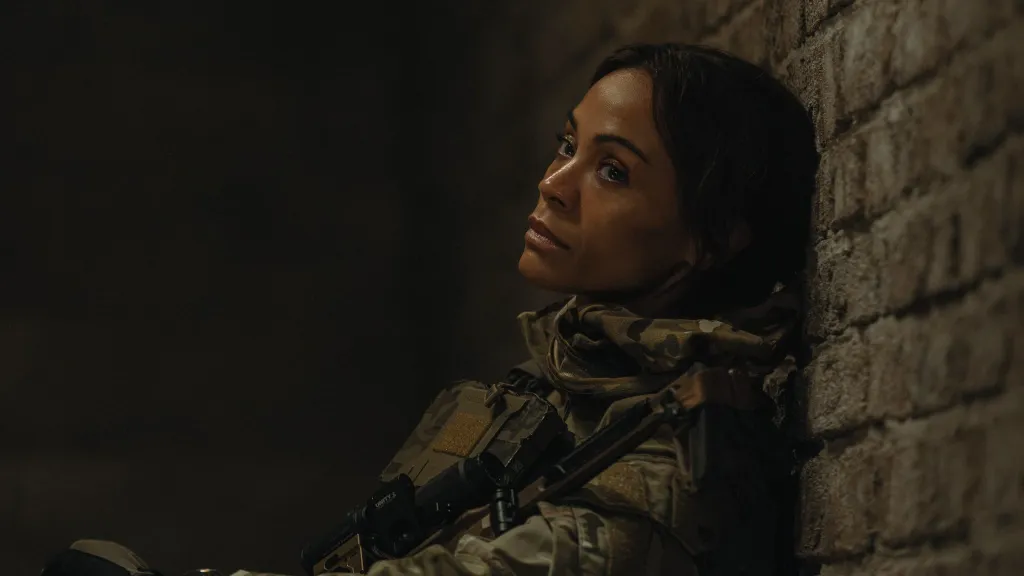
Although Zoe Saldaña speaks highly of collaborating with Taylor Sheridan, don’t expect her to make a trip to Dutton Ranch anytime soon.
The Lioness star recently explained why starring as Joe McNamara “is all that I can handle at this time,” noting she doesn’t have any plans to pop up elsewhere in the Sheridan TV universe after three seasons on the Paramount+ series.
“I’m number one on the call sheet. I am first one in, last one out. I am prepping months before anybody ever is able to prep,” she told People. “So it’s already a lot of work for me.”
Saldaña said she “can’t imagine me taking on more of a Taylor Sheridan world,” adding, “The good takeaway that I’m grateful for is that he knows that I’m reliable, just like Joe is.”
“I have my views, and I come with all heart, all brains, all muscle at all times,” said Saldaña. “So, no, I think I’m good here at Lioness.”
Starring and executive produced by Saldaña and Nicole Kidman, Season 3 of Lioness sees hidden networks, foreign operatives and personal betrayals collide. Joe (Saldaña) walks the line between duty and home as unseen forces circle her world. Patterns appear where they shouldn’t, names vanish and paths rearrange. Guided by Kaitlyn (Kidman) and Westfield (Michael Kelly), Joe confronts enemies operating in the shadows, leaving her to reckon with a war that now reaches into every part of her life.
>
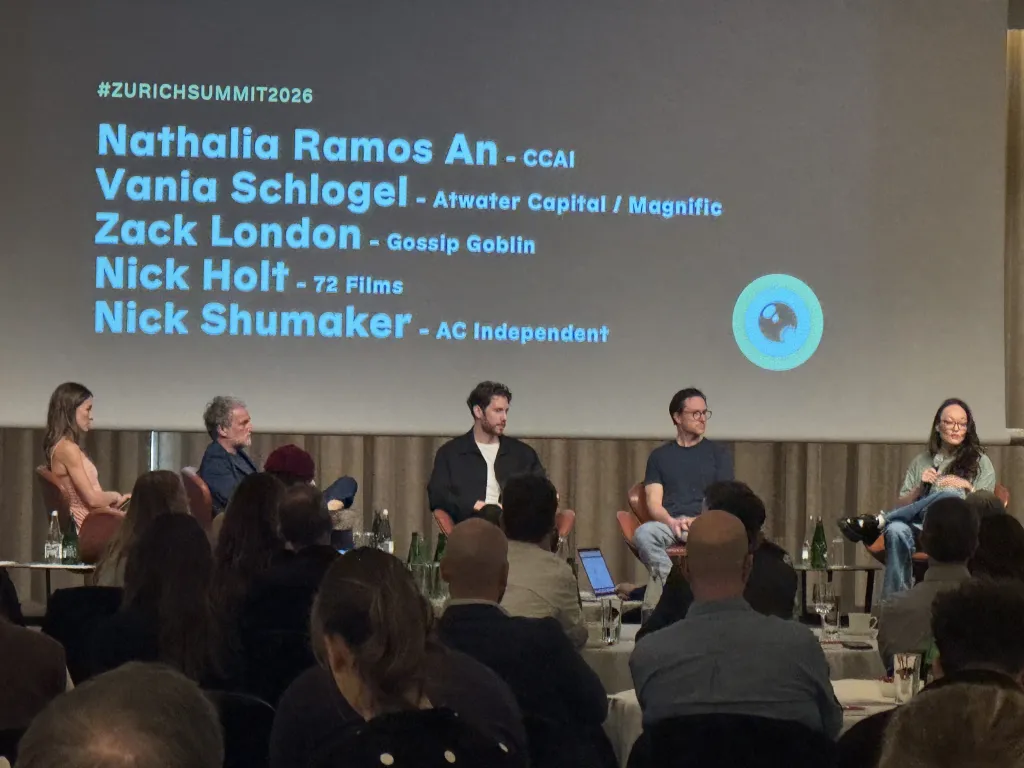
Musk producer Nick Shumaker, Hollywood film financier Vania Schlogel, directors Zack London (Gods Don’t Give Gifts) and Nick Holt (AI: Probably Nothing to Worry About) took to the stage at the Zurich Summit this weekend to dig into the implications of AI for film.
Schlogel, who is founder and managing partner of L.A.-based Atwater Capital, also took up the baton of Chief Strategy Officer at AI creative platform Magnific, formerly known as Freepik, this summer.
The exec said that while her roots were in Hollywood film finance, she had understood it was an imperative for her to get to grips with AI during a board meeting at Magnific.
“In an interview about a year ago with the Financial Times, I’d actually said very publicly, that when all this AI stuff gets really big, I’m just going to go back to Idaho and disappear into the mountains, and that’s always actually been the genuine kind of feeling I espouse, as I’m not a technologist. I’ve always been a traditional Hollywood financier,” she told the panel.
“Our founder showed us videos and images from our largest competitor and how they had become viral, and it was sexualized children’s IP, it was horrible depictions of women, some of them famous, some of them not… some very racist things,” she explained. “I had this light bulb moment that this might not be something that I have necessarily been inured to historically, but I actually do need to be involved in.”
Since embracing the technology, Schlogel said she had seen multiple cases where the use of AI made sense, commercially and ethically, even if there were aspects of the technology she has qualms about such as the way in which the confident tone of AI assistants can encourage “cognitive surrender” in human beings even when their level of expertise on a subject is higher that the LLM they are consulting.
“It really is on all of us to get in front of it so that we can shape the ethical direction it goes. Because this will shape society, is shaping society, is even shaping human empathy and how we view each other. So it’s so important to get in the driver’s seat of it, whether you love it or hate,” she said.
Shumaker, head of AC Independent at Anonymous Content, acknowledged the power of AI as a tool across the cinema chain but said he felt compelled to raise questions around the use of original content by generative AI programs.
“The whole fair use in AI thing needs to be addressed. The lawsuits from New York Times, from every major media outlet, disregarding just stealing things from my perspective and ingesting is totally inappropriate. And I just want to put that on record,” he said.
“That we can say that this is the way things are going, at the same time as there’s theft with regards to intellectual property, it’s not a good thing. The notion that we get clogged up in lawsuits for five or six years to address that is not good for humans, for creators, or frankly, for the future of writers or cinema.”
He clarified that while Alex Gibney’s Musk, on which he is a producer, touches on the way Elon Musk is using AI to shape the future, and not necessarily for the best, the documentary used very little of the technology in its production.
He noted the Elon Musk avatar had been created in CGI by humans at a company, which has collaborated with Gibney in the past, with AI only used at the post-production stage to help lip-synching.
London, who is also known under the YouTube pseudonym of Gossip Goblin, is currently gearing up for the theatrical release of his fully AI-generated sci-fi anthology Gods Don’t Give Gifts.
He echoed Schlogel comments on needing to get ahead of the technology, suggested that the polarisation of views in the creative communities around AI was not necessarily helpful or going to change anything in the outcome..
“The the tricky thing is that people see AI as this monolithic thing. Obviously you have full end-to-end automation on one end of the spectrum, and super light AI augmentation on the other, like tweaking the voice of Adrien Brody in The Brutalist. That’s a pretty vast spectrum,” he said.
“It’s become such a polarized topic, you have kind of radical zealots on both sides of the equation. You have the burn Hollywood to the ground side and you have the fuck AI side that you know basically refuses to even accept that it’s part of the equation,” he said.
“The reality is that it’s happening. It’s coming. There’s no point in human history where we’ve seen incredibly advanced technology and said, ‘No, we’re not going to do it.’ The luddites didn’t succeed, and probably the anti-AI movement won’t either.”
Talking about the use of AI on his upcoming film Gods Don’t Give Gifts, London said it would never have been made without the technology.
“This film would never get greenlit otherwise. It’s way too esoteric and niche and cerebral, and so it’s not that we’re replacing a story that would otherwise get told and hire more people. This story wouldn’t exist otherwise; it wouldn’t get made. “
The trio were joined on stage by director Nick Holt, whose documentary AI: Probably Nothing to Worry About was playing at the summit’s parent event the Zurich Film Festival this weekend
Revolving around interviews with computer scientist Geoffrey Hinton, known as “the godfather of AI,” for his work building artificial neural networks, DeepMind founder Demis Hassabis, as well as Anthropic and OpenAI engineers among others, it explores the question of whether AI will save or destroy humanity. ,
Tapping into questions around how AI will impact creativity, Holt said that, for now, he thought AI tools could make filmmaking more accessible.
“We’ve all got access to a pen and pencil, but not all of us can writer a Booker or Pulitzer award-winning novel. I think there are people with who could use AI to roll out concepts and films that otherwise might not get made. I just hope there’ll be a sense that the best work will always rise to the top,” he said.
“Hollywood studios aren’t shy of making 100 million dollar duds, and then the 14 year old in his bedroom or her bedroom using AI tools could make the next big hit. I think it’s a phenomenal tool for that, but I think the interesting thing that we have to deal with is are these systems grown rather than built, and then where does it go as far as our limitations?
>

Anthropic’s Dario Amodei gets the SNL treatment
How two Canadiens veterans in different situations made the most of training camp

Israeli Americans Protest Outside ‘NAZA’ New York Premiere
-

 movies4 months ago
Search For Canadian TV Actor Stewart McLean Now Homicide Investigation
-

 Fashion9 years ago
These ’90s fashion trends are making a comeback in 2017
-
Fashion9 years ago
According to Dior Couture, this taboo fashion accessory is back
-
Fashion9 years ago
Model Jocelyn Chew’s Instagram is the best vacation you’ve ever had
-
Fashion9 years ago
Emily Ratajkowski channels back-to-school style
-
Fashion9 years ago
9 Celebrities who have spoken out about being photoshopped
-

 Anime4 months ago
Rurouni Kenshin: Hokkaido Arc Manga Takes 1-Issue Break – News
-

 Anime3 months ago
HIDIVE to Stream English Dubs for The World Is Dancing, The Forsaken Saintess and Her Foodie Roadtrip in Another World, The Dangers in My Heart: The Movie Anime – News