
Jaafar Jackson as Michael Jackson in Michael.
Glen Wilson/Lionsgate


With talk ramping up about a second Michael Jackson biopic, the star’s fans continue to push back against some professional critics over the way that the current Lionsgate movie makes them feel.
Director Antoine Fuqua’s Michael was an immediate smash upon opening theatrically April 24, with its $97 million domestic total marking the biggest weekend launch for a biopic en route to a current global sum surpassing $423 million. The late pop star’s nephew Jaafar Jackson plays the lead role, with Colman Domingo, Nia Long, Miles Teller, Laura Harrier and Larenz Tate rounding out the cast.
Michael holds a 97 percent fan approval rating on Rotten Tomatoes, but its critical score stands at just 38 percent. Among the many social posts on the topic was one viral tweet chiding reviewers who had “legit lost the plot” and declaring that “there needs to be a major shift in criticism.” (Needless to say, memes ensued.) Social media users have attributed the disparity to critics taking into account that Michael was intended as a lengthy film spanning the star’s complete life, including child abuse allegations and other scandals, but that the third act was retooled due to legal issues. Instead, the film ends its story in 1988, with a follow-up feature in active development from Lionsgate.
“I do think the critical response seems a bit disingenuous, just compared to the other string of biopics that we’ve seen,” Joe Vogel, author of the 2011 biography Man in the Music, tells The Hollywood Reporter about higher Rotten Tomatoes critic scores for music films like Bohemian Rhapsody, Rocketman and Elvis, all of which spurred discussion over whether they seemed overly sanitized. “They all follow a pretty similar blueprint, so it seems to me that the Michael film is being singled out, in some ways, because of what’s not in the film, as opposed to what was actually in it. In essence, Michael is about introducing him to new audiences. It’s disingenuous for critics to expect this two-hour biopic that goes to the late ’80s to do everything.”
THR gave the movie a generally positive review, calling it “surprisingly affecting” while adding, “The film leaves itself open to accusations of making Michael a saint, which will not sit well with the cancel crowd.” Michael centers on Jackson’s early years as part of his family’s band, the Jackson 5, and the release of his first solo albums.
Jaafar Jackson as Michael Jackson in Michael.
Glen Wilson/Lionsgate
“Filmmakers have the right to make the films that they choose to make and with the subjects that they choose to make. It’s the reason why critics are important,” says Mark Anthony Neal, a Duke University professor who teaches a course on Jackson. “The last thing we want are critics who basically co-sign what an artist is doing, whether or not we’re talking about a music artist, filmmaker or author. That’s not the job of a critic. That’s the job of a publicist, and we cannot turn critics and journalists into publicists for art. That’s not their job.”
Inherent in the debate surrounding the disparity of reactions to the film is the awareness that the Jackson estate has been involved in the making of Michael and has a substantial vested interest in portraying the artist in a favorable light. Analysts see biopics as a key way for those overseeing an artists’ music catalog to increase song sales and streaming numbers.
“Expecting a sanctioned biopic to deliver unvarnished truth misunderstands the dynamics: The estate is the gatekeeper, and the film is a catalog activation strategy — a two-hour advertisement engineered to send audiences straight to streaming platforms to rediscover the back catalog,” says attorney James Sammataro. His law firm, Pryor Cashman, represents Sony Music, which owns a stake in Jackson’s catalog.
Vogel, whose book credits also include biographies on Prince and James Baldwin, notes that there “are always some tensions” when dealing with a public figure’s estate. “There was some back and forth, I would say, because they’re very protective,” Vogel recalls of working on his Jackson book. He points out that his book had a generally smooth path due to his decision to not focus much on the controversies: “In my case, since really, the whole point of my book was to put the emphasis on the artist, there weren’t too many issues.”
Certainly, Michael is hardly the first music biopic to see critics and audiences challenging whether the full story is hitting the big screen. And given that the unsavory headlines surrounding Jackson generally came after the events depicted in the first film, it’s possible that the debate over a second movie could get louder, depending on how the scandals are addressed.
“The controversy surrounding Michael is not new: Bohemian Rhapsody was an estate-endorsed, score-settling session that made $900 million despite critical reception,” Sammataro says of the Oscar-winning film about Queen’s Freddie Mercury. “A slew of musical biopics followed in its path. Bob Marley: One Love, produced and endorsed by the Marley estate, depicted Marley as a beatific figure who frictionlessly moves through a world teeming with conflict — the same glossy template, a different icon. The pattern is structural, not incidental.”
Despite their propensity to fuel debate — not to mention the lukewarm critical and commercial response to last year’s Springsteen: Deliver Me From Nowhere — plenty of Hollywood music biopics remain in the works, most notably Sony’s four-film project about the Beatles that has sign-off from the band and its label. While some observers hope for an ideal world in which independent movies can tell grittier narratives about key music figures while also including the hit songs, there is still an argument to be made that an estate’s involvement does not necessarily preclude a studio biopic from holding value for audiences.
“That a biopic serves the catalog doesn’t mean it fails the audience,” notes Sammataro. “Even imperfect biopics do something streaming algorithms cannot: They restore context. They remind audiences that songs were written by real people, at particular moments in time, often under extraordinary circumstances. For a younger viewer encountering Jackson’s catalog through a playlist, a film — even a flawed, protective one — can be the thing that turns a familiar hook into an artist worth understanding. That’s a real cultural function, even when it’s also a commercial one.”
>

CNN, MS NOW and Politico are warning that the Trump administration will reimpose a “complete ban” on their access to the White House without a judge issuing a preliminary injunction.
Last week, U.S. District Judge Timothy Kelly granted a temporary restraining order, forcing the White House to restore access to the White House to the outlets as he more fully considers the legal arguments. The TRO lasts for 14 days.
In a filing in federal court on Monday, attorneys for the three news outlets argued that the Trump White House actions since then “leave little doubt that it will immediately reinstitute a complete ban of CNN, MS NOW, and Politico if allowed the opportunity.”
The outlets’ legal team, led by Theodore Boutrous Jr., pointed to the White House’s restriction on CNN from access to State Dinner arrivals on Thursday evening. The network then was barred from serving as TV pooler on Air Force One on Trump’s trip to Tennessee on Saturday, with no replacement stepping in, and leaving a dearth of TV images from the trip.
“Because the ban is an unlawful assault on the most fundamental First Amendment freedoms and will inflict irreparable harm on Plaintiffs and the public if not restrained, this Court should preliminarily enjoin its enforcement pending the resolution of this case,” the news outlets’ attorneys wrote.
Kelly cited a lack of due process by the White House when it pulled dozens of credentials of reporters from the three outlets. While the Trump DOJ has cited standards of “professionalism and decorum” and national security concerns, the media outlets’ legal team called that reasoning that “pretextual” and “post hoc,” as well as vague.
In the latest brief, CNN, MS NOW and Politico also again cited violations of the First Amendment. They noted that Trump has explained the ban by blaming their coverage as “Purposely … negative,” among other things.
“His statements also make clear he implemented the ban to coerce more favorable coverage from CNN, MS NOW, and Politico, and to deter other journalists and news organizations from newsgathering and reporting that the President might view as negative,” the news outlets’ legal team wrote. “And his administration has continued to retaliate against Plaintiffs even after the temporary restraining order, only underscoring that Defendants’ motive is to punish and chill journalism they dislike.”
The outlets are asking the judge to prohibit the Trump team from pulling hard pass credentials, or to ensure the reporters of the White House access they had before Sept. 18. In contrast to a TRO, a preliminary injunction would sideline Trump’s ban until a trial is held, or if an appeals court rules otherwise.
Trump initially banned the three outlets on Sept. 18. When the judge granted a TRO last early Thursday, it meant that the White House had to restore hard passes, with reporters not gaining reentry until around noon that day.
The issue of whether the White House can also restrict CNN from the pool is a slightly different, but related issue. It’s also one at the center of another case, involving the Associated Press after it was banned from the pool and other White House events. That case is currently on appeal.
That said, in the latest brief, the three outlets cited the White House’s continued prohibitions on CNN as an example of White House retaliation over protected speech.
For much of last week, there was no TV network pool, meaning that there was little video coverage of Chinese President Xi Jinping’s visit to the White House. The four other networks in the pool — CBS News, ABC News, Fox News and NBC News — initially suspended their participation in protest of the exclusion of CNN. The networks resumed the TV pool coverage this week, but it will be put to the test again on Thursday, when CNN is assigned to that duty.
“Every day, critically important news is breaking at the White House, and the ban will substantially interfere with Plaintiffs’ ability to cover it,” the outlets brief stated. “The ban also inflicts an injury on all news media organizations—which now risk a similar fate if they engage in fact-based, independent reporting the President deems insufficiently favorable.”
The DOJ’s brief in response is due by Friday.
>

The Tokyo International Film Festival will honor filmmakers Mohammad Rasoulof and Mipo O with its Kurosawa Akira Award at the event’s 39th edition next month.
Named for the Japanese master, the award recognizes directors whose work has made an impact on cinema and who are expected to help shape its future. It was revived in 2022 after a 14-year hiatus with support from Capcom. Last year’s recipients were Chloé Zhao and Lee Sang-il.
This year’s honorees were selected by a committee comprising filmmakers Yoji Yamada and Lee Sang-il, cinematographer Akiko Ashizawa and TIFF programming director Shozo Ichiyama.
Rasoulof, one of Iran’s leading dissident directors now living in exile in Europe, won Berlin’s Golden Bear for There Is No Evil (2020), while The Seed of the Sacred Fig (2024) received a special prize at Cannes before earning an international feature Oscar nomination as Germany’s submission.
The committee singled out the two films for “their humanist perspective, which portrays even those who perpetrate oppression as ordinary citizens.” It also praised Rasoulof’s “unwavering commitment to creative expression despite relentless pressure.”
“Receiving the Kurosawa Award is a great honor for me. His films are profound explorations of the human condition and the moral choices we make in moments of crisis. Kurosawa was a dynamic and inquisitive visual storyteller whose unique perspective on humanity, nature, and the world has made his work an enduring source of inspiration in cinema,” Rasoulof said.
O, a Japanese-born filmmaker of Korean descent, made her feature debut with The Sakais’ Happiness in 2006. Her credits include The Light Shines Only There (2014), Japan’s Oscar submission that year, and Being Good (2015), an ensemble drama exploring child abuse, bullying and the possibility of breaking those cycles through human connection.
After a nine-year break from feature filmmaking, she returned with Living in Two Worlds (2024), a family drama starring Ryo Yoshizawa as the hearing son of deaf parents, whose desire for independence complicates his relationship with his mother. Her latest, How Dare You? (2025), takes a more comic approach to childhood, following three elementary school students whose budding environmental activism — mixed with a classroom crush — leads to unintended consequences.
The selection committee praised her “multifaceted perspective on individuals living on the margins of society” and her avoidance of “a simple lens of good vs. evil,” while highlighting her work with child performers.
“To receive such an extraordinary honor on the 20th anniversary of my directorial debut fills me with immense gratitude and deep humility,” O said. “Winning the Shindo Kaneto Award in 2010 provided me with the vital support to keep making films. Though my progress has been slow, reaching the Kurosawa Akira Award is a stroke of fortune that makes me truly savor what a happy cinematic journey I have had. This recognition is by no means mine alone. My heartfelt thanks go to all the cast and crew members I have met along the way, the audience who stepped into the theaters, and the selection committee—led by director Yamada Yoji—who discovered my films.”
Tokyo will also screen 4K restorations of Kurosawa’s Sanshiro Sugata (1943) and Ikiru (1952), alongside Charles Chaplin’s The Circus (1928) and Abbas Kiarostami’s Where Is the Friend’s House? (1987).
Separately, the festival named Alice in Borderland actor Hayato Isomura president of its Ethical Film Award jury. Launched in 2023 with Sumitomo Corporation, the prize recognizes films addressing social issues including the environment, poverty and discrimination. Three members of TIFF’s Student PR team will join Isomura on the jury.
The nominees are Brazil’s Amadeo and the Hypothetical New World, the German-Ukrainian feature I Rarely Wake Up Dreaming and Australia’s Time and Tide. The award ceremony and a talk with Isomura are scheduled for Nov. 2.
“Today, we absorb vast amounts of information in seconds through a small screen. I often feel we fall into the trap of believing we understand something instantly, constantly searching for quick answers. Yet, when it comes to deepening our awareness and understanding of social issues, the process of reaching those answers is what truly matters,” Isomura said. “Cinema possesses the unique power to pause our hurried pace, allowing us to experience that very process through the lives and emotions of others. I am committed to taking the thoughts, hopes, and wishes woven into these films by each filmmaker deeply to heart, and to reflecting on them together with everyone.”
The 39th Tokyo International Film Festival runs Oct. 26-Nov. 4, with the TIFFCOM market taking place Oct. 28-30.
>
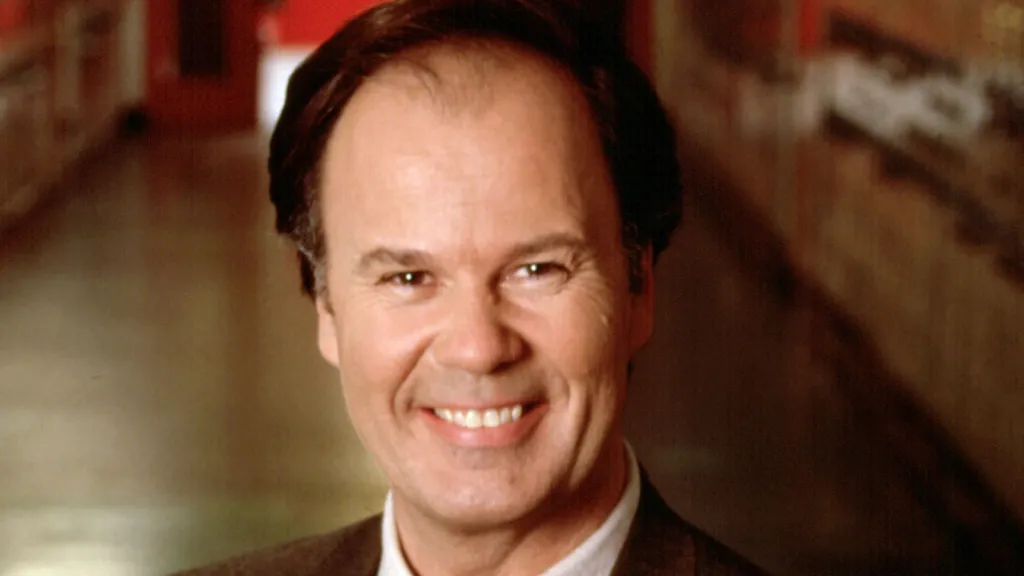
Dennis Haskins, best known for playing Mr. Belding in Saved by the Bell, has died. He was 75.
His agent Jay Schachter confirmed the news to Deadline, saying in a statement, “It’s a tragic loss. Everyone loved Mr. Belding and those of us who got to know Dennis, loved him even more. He was a great person, and he loved, I mean absolutely LOVED his fans.”
“He always had time for them, no matter what. He was my client and dear friend for over 20 years, and I will miss him terribly. I’m heartbroken,” he continued.
Haskins cause of death was not disclosed.
Haskins first played Principal Richard Belding in the Disney Channel series Good Morning, Miss Bliss, opposite Hayley Mills in 1989. After one season, the show was retooled as Saved by the Bell on NBC, where he reprised his role through its four-season run. Haskins returned as Mr. Belding for Saved by the Bell: The New Class in 1993 and played the role for seven more seasons, until the show’s finale in 2000.
Other acting credits for Haskins included Hangin’ with Mr. Cooper, Malibu, CA, The Practice, The West Wing, The Rerun Show, The Stoneman, 7th Heaven, Going Down, Red Water, Tangy Guacamole, An Ordinary Killer, JAG, Dead End Road, It’s Always Sunny in Philadelphia, Men of a Certain Age, The Bold and the Beautiful, Victorious, Mad Men, Emerald Acres, How I Met Your Mother, Destroy the Alpha Gammas, New Girl, Hot In Cleveland, This Isn’t Working, Bill Nye Saves the World, Abstruse, Enigma, A Bennett Song Holiday, among many others.
>


Search For Canadian TV Actor Stewart McLean Now Homicide Investigation


These ’90s fashion trends are making a comeback in 2017
According to Dior Couture, this taboo fashion accessory is back
Model Jocelyn Chew’s Instagram is the best vacation you’ve ever had
Emily Ratajkowski channels back-to-school style
9 Celebrities who have spoken out about being photoshopped


Rurouni Kenshin: Hokkaido Arc Manga Takes 1-Issue Break – News


HIDIVE to Stream English Dubs for The World Is Dancing, The Forsaken Saintess and Her Foodie Roadtrip in Another World, The Dangers in My Heart: The Movie Anime – News