
Entertainment
There’s a Hit Film Lurking Inside George Orwell’s ‘1984’ — Commentary

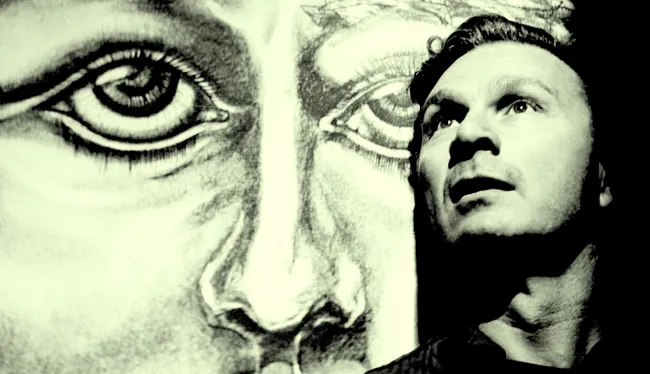
When George Orwell’s now-legendary “Nineteen Eighty-Four” first hit shelves in 1949, it wasn’t only seen as some forbidding work of political theory. Instead, the British author’s first and final novel following his hugely popular anti-fascist fable, “Animal Farm” — which, remarkably, sold more than half a million copies in its first year — “1984” arrived with much of the same buzzy momentum for Orwell you’d expect to find accompanying any novelist promoting a major new book today.
Orwell’s ideological impact maintains even now, because he designed his masterful last work of fiction to be devoured by the masses. A visionary nightmare about two star-crossed lovers trapped inside a total surveillance state, “1984” draws as much of its narrative power from prescient dystopian themes as it does the author’s varied taste in types of emotional horror. Embedding a doomed romance in a slow-burn spy thriller, the heart of fear in “1984” doesn’t fully unlock for readers until Orwell has run you through every last agonizing beat of his vaguely familiar story. It ends in profound betrayal.


That brutal payoff, and the timeless legibility of Orwell’s challenging yet rewarding literary rendering, might help explain why Winston, Julia, and their so-called “Big Brother” carried so far beyond the reach of Orwell’s native U.K. with such impressive speed. Shortly after its publication, “1984” was selected by the U.S. Book of the Month Club, which then reached hundreds of thousands of American households.
Even accounting for Orwell’s expert use of the book’s shifting existential tone — one that, in many ways, made readers doubt the reality of the text itself — “1984” was instantly injected into the mainstream of western culture as a touchstone of such importance that it remains common shorthand.
That broad appeal was foundational to Orwell’s intent as a storyteller then, and in his essay “Why I Write” (released in the gap between “Animal Farm” and “1984,” prior to Orwell’s death at just age 46), the author explained his belief that even the most urgent political ideas needed to first secure the attention of a big enough audience to be meaningfully heard.

“My initial concern is to get a hearing,” Orwell wrote, adding in the same essay that, “What I have most wanted to do… is to make political writing into an art.”
Orwell’s explicit desire, to connect on a deep enough artistic level that his words might inspire real grassroots change and critique in the flawed societies readers saw unraveling around them, is what made him an exceptional storyteller and, arguably, the greatest literary journalist in history.
It’s also why the current state of “1984” adaptations is not just culturally but, frankly, financially puzzling.
A self-destructing epic that has proven to be hugely popular for decades, Orwell’s final novel is more than an essential work of political philosophy. It’s also a crowd-pleaser that many genre fans actively seek out when the world feels unstable. And yet, for all the obvious demand, Hollywood has never dared to deliver a movie version of “1984” that treats Orwell’s words as anything other than a sacred source worth literalizing. That’s a shame, particularly in an entertainment landscape dominated by recycled IP.

Orwell has effectively handed studios and filmmakers the core inspiration for a genuinely immersive, widely attended theatrical event, and there’s never been a better time for the industry to take him up on it.
In the wake of Andy Serkis’ long-gestating but decidedly disastrous animated “Animal Farm” adaptation — regrettably, now in theaters from Angel Studios — the question isn’t so much why that ridiculous project exists… but why the one that Orwell devotees really need still doesn’t.
There’s Never Been a Better Time for a New “1984”
There are already several film and TV adaptations of “1984” available, and we’ll get to those later. But if Hollywood has mostly left Orwell alone since his death, that’s not because his fans lost interest. More likely, it’s because the memory of Orwell and his books never stopped doing the hard work themselves.
Sales for “1984” still regularly spike in moments of political emergency. Most notably, the novel jumped to the top of Amazon’s bestseller list in January 2017 after Kellyanne Conway, then counselor to first-term U.S. President Donald Trump, coined the troubling phrase “alternative facts.” Commercial viability for Orwell also surged after the NSA surveillance revelations of 2013, and search queries for “1984” have continued to see bursts of renewed popularity amid periods of global unrest.
Publishers Weekly reported that “1984” sales surged 192 percent, and “Animal Farm” climbed 136 percent, following the 2025 U.S. Presidential Inauguration. And the he general pattern of interest around Orwell points to something more durable than his novels’ futurist menace or academic nostalgia. Rather, his enduring impact suggests the existence of an audience that not only respect Orwell’s wisdom and words, but repeatedly returns to him for a sense of comfort and clarity in hard times.
Who Owns the Adaptation Rights to “1984”?
Using the fictional framework of “1984” to process the present moment in genuine global conflict makes sense, and that’s all the more reason to translate Orwell’s frequently experimental story arc into an audacious theatrical hit. The legal situation isn’t impossible to overcome, either. While Orwell’s novel is now in the public domain in many parts of Europe, its U.S. rights remain under copyright until 2045. That means any screen adaptation of “1984” would still require coordination with the late writer’s estate.
Generally speaking, that’s the sort of creative process that tends to reward caution over reinvention. But recent trends at the box office suggest the demographic of genre-forward consumers that would be most interested in a new telling of “1984” is ready for bolder interpretations. Reinvigorated franchises like “The Hunger Games” have proven that even intensely familiar storytelling can still generate massive ticket sales when paired with surprising new textures and stakes. And surprise successes, like Francis Lawrence’s “The Long Walk” (taken from a Stephen King book, once thought to be unadaptable), have attracted strong attention for their high-concept premises.

In TV, Netflix’s “Squid Game” is a still-growing phenomenon that turns systemic cruelty into compulsively watchable, episodic entertainment. Reach further still and across the dark realities of the internet, you’ll quickly find 2026 audiences aren’t just willing to try politically charged material but actively showing up for it.
Considering that Serkis was permitted to turn “Animal Farm” into a shallow flick about market capitalism (which, yes, had the blessing of Orwell’s estate), now’s the time for the right “1984” film to strike.
What Would an Immersive “1984” Actually Look Like?
That gaping creative opportunity suggests that, at least right now, the main problem with making a new “1984″ isn’t with Orwell’s original material, but how cautiously it’s been considered by his admirers on screen in the decades since. Famously meticulous and infinitely self-critical, Orwell didn’t write “1984” as a piece of speculative futurism. He wrote it with the precision of someone documenting a real system already in motion, effectively conjuring a universe where language had been engineered to collapse dissenting thought and propaganda threatened to warp even the author’s mind to prevent revolution.
That incisive clarity has had an unintended side effect on the novel’s film and TV legacy ever since. From its earliest TV adaptations, including 1953’s pioneering “Studio One” — to the still-definitive “1984” film from 1984, starring John Hurt, Suzanna Hamilton, and Richard Burton — plenty of writers and directors have approached Orwell’s intimidating universe with near-devotional fidelity. The results have been impressive enough from far away, but examined more closely as a blunted, external force, Big Brother has almost always been too literal in horror cinema.

The real terror of Orwell’s “1984” lives in the slow erosion of certainty and the creeping sense that reality itself can be edited in real time. That’s where most adaptations, for all their faithfulness, come up short. In fact, the most effective modern adaptation of “1984” isn’t a film at all but a stage production.
Directors Robert Icke and Duncan Macmillan brought the novel to Broadway in 2017, with an electric and shocking new version starring Tom Sturridge, Olivia Wilde, and Reed Birney. That take didn’t so much update Orwell’s voice as weaponize it through the inescapable framing of live performance — using strobe lights, overwhelming sound design, and disorienting livestream video installations that transformed the audience’s physical experience of “1984” into magic act-like part of the narrative.
People reportedly fainted, others walked out, and the intense reimagining became, in part, a measure of what its attendees could endure. What that rendition understood, and what cinema has yet to fully embrace, is that “1984” is ultimately less about Orwell asserting control over his audience than it is the material itself silently steering the readers’ perception.

Frustratingly, Hollywood has already solved this problem for other stories. Films like David Cronenberg’s “Videodrome” and David’s Lynch “Inland Empire” distort reality by physically collapsing the distance between the audience and subject until the story structure becomes fascinatingly unstable. And even more accessible dystopian films, from Terry Gilliam’s “Brazil” to Alfonso Cuarón “Children of Men,” prove cinephiles will sit through atrocious oppression so long as its rendered with profound conviction.
Orwell Knew: Why It’s Worth the Risk
The pieces are there. What’s missing is the willingness to assemble them into something genuinely confrontational on film — and it’s not hard to see why. “1984” offers no easy catharsis at the end, resisting internal franchise logic at its very core and confronting controversial political themes so directly that it would be fundamentally wrong to sanitize them. In a risk-averse industry, those are typically red flags. But the broader picture suggests a potentially different outlook for Orwell’s masterpiece.
There’s no shortage of filmmakers capable of doing this kind of compelling work well. Robert Eggers has made a niche specialty out of immersive literary adaptations, including Focus Features’”Nosferatu” and his upcoming take on Charles Dickens’ “A Christmas Carol” for Warner Bros. Meanwhile, other indie auteurs, from Alex Garland to David Lowery, have worked with studios like A24 and Neon to repeatedly deliver punishing films that position cerebral complexity as an event worth visiting theaters to witness.

Movie-goers have already demonstrated an appetite for bleak, idea-driven storytelling — across the rise of contemporary prestige horror films to the booming popularity of archival programs like the American Cinematheque’s Bleak Week. During the COVID-19 pandemic, many streamers flocked to disaster narratives not in spite of their timely subject matter, but because of it. That’s why “1984” works now.
Ask someone what the scariest moment in Orwell’s book is, and they’ll point to the climactic torture scene with Winston and the rat cage. But they’re wrong. The real horror comes after that, when the brulaity is long gone and Julia meet him in the park months later. The couple realizes there’s nothing left between them (“I betrayed you…”) with no anger. Just absence.
A film that truly understands fascism as a vehicle for empirical erasure wouldn’t just show grief and violence. It would make viewers feel that loss happening on a personal level. In an age defined by blurred impressions of reality, that’s the kind of cinematic torture that might just be called for today.
>
>
>
>

No handshakes between Republic of Ireland and Israel players before Nations League game

Hunt Family Fund Walk finish line in sight

Laver Cup: US Open champion Alexander Zverev seals victory for Team Europe against Team World at London’s O2 | Tennis News
-

 movies4 months ago
Search For Canadian TV Actor Stewart McLean Now Homicide Investigation
-

 Fashion9 years ago
These ’90s fashion trends are making a comeback in 2017
-
Fashion9 years ago
According to Dior Couture, this taboo fashion accessory is back
-
Fashion9 years ago
Model Jocelyn Chew’s Instagram is the best vacation you’ve ever had
-
Fashion9 years ago
Emily Ratajkowski channels back-to-school style
-
Fashion9 years ago
9 Celebrities who have spoken out about being photoshopped
-

 Anime4 months ago
Rurouni Kenshin: Hokkaido Arc Manga Takes 1-Issue Break – News
-

 Anime3 months ago
HIDIVE to Stream English Dubs for The World Is Dancing, The Forsaken Saintess and Her Foodie Roadtrip in Another World, The Dangers in My Heart: The Movie Anime – News