
Entertainment
‘Blue Film’ Review: A Pedophile and a Camboy Walk Into an Airbnb…

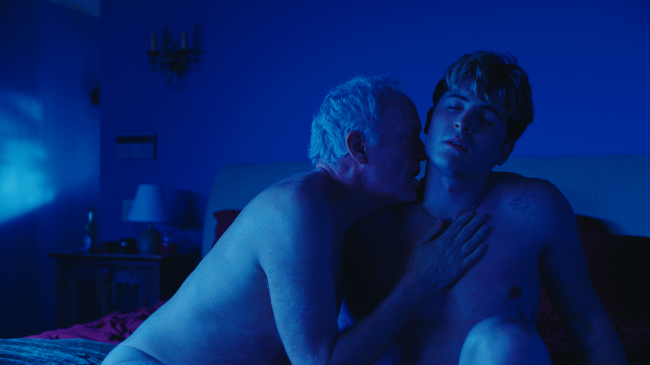

Editor’s Note: This review was originally published during the 2025 edition of NewFest. Obscured Releasing opens “Blue Film” in theaters starting Friday, May 8, 2026.
Few contemporary films about unresolved childhood abuse — which is always unresolved, in the end, anyway — cut as narrowly close to the bone as Elliot Tuttle’s two-hander masked as provocation, “Blue Film.”
Rejected by mainstream film festivals before it premiered in Edinburgh this summer and NewFest in New York in October, this taboo-busting study of a masculine camboy confronted by the pedophile teacher who many years ago desired him holds back little and offers even less that’s palatable to swallow. Its limitations as a stagelike piece aside, the movie wrings emotional complexity from a fraught, ever-shifting dialogue between a convicted child abuser and the student, now a late twenties sex worker, he spared.


“Blue Film,” which takes place entirely in a rented Hancock Park Airbnb in Los Angeles with only two actors, dares to go places I have not seen an American movie travel to in a while. There was an Israeli movie called “Princess” at Sundance in 2014, directed by Tali Shalom Ezer, which freaked a lot of people out. It was about a 12-year-old girl’s “close relationship” with her mother’s boyfriend. There was the 2011 Austrian movie “Michael,” directed by Michael Haneke protégé Markus Schleinzer, about an insurance salesman sexually abusing the 10-year-old boy locked up in his basement. These were shocking. Neither were American.
Tuttle, an American filmmaker himself who received support on the project from Mark Duplass of all possible collaborators, is willing to take you to those same dark places, ones that remind you of European directors who want to shake you with their frank psychosexual provocations. It’s impressive where Tuttle, this second-time feature filmmaker, goes with his surprisingly humanistic and empathetic approach to material about abuse. One where a pedophile teacher’s sexual fantasy about his former student’s talent show performance emerges as oddly wistful.
“Blue Film” stars rising actor Kieron Moore as dom camboy Aaron Eagle (whose real name is Alex McConnell) opposite Reed Birney as his estranged middle school teacher, who reconnect over one night filled with conversations about desire, shame, and guilt. I’m not surprised festivals, allegedly such as Sundance and SXSW, looked away from it. Mainstream audiences will be alienated by this unapologetic exploration of quote-unquote aberrant sexuality, but those looking for a challenge in the vein of ‘90s films from Todd Solondz or Gregg Araki will feel seen in Tuttle’s exploration of how abuse warps memory, and memory warps accounts of abuse.
In asking you to feel sorry for a pedophile while making a gay man his scene partner, “Blue Film” dances on the tricky line from early abuse to later-in-life sexual behavior. When the movie begins, we see Aaron (Moore), sweaty and hairy in white briefs and tattooed top-to-toe, putting on a live stream for his submissive followers. One of his anonymous fans offers $50,000 for an in-person meet-and-greet. Financially desperate, he agrees to spend the night with the client, who greets him sheathed in a balaclava with the promise of even more money and perhaps pizza if Aaron is willing to open up about himself.

That client, it turns out, is Mr. Grant, aka Hank, Aaron’s long-ago teacher, and one who took a special interest in Aaron as a child. Some time while Aaron was in school, Hank was intercepted sexually assaulting a child on campus, was fired from his job, and received a prison sentence. With the mask off and Aaron stripped down yet again, their walls start to come down. Hank, he reveals, has now turned to religion as an atonement for his own torment, but his search for meaning has not been without other attempts at or contemplations of assaulting kids, as he tells Aaron.
Tuttle’s script and camera pass no judgment on the characters, like when Aaron shares a bone-chilling story of childhood abuse while naked in a bathtub that may or may not be true, or when Hank also offers a sickening recounting of molestation he endured at the hands of a relative. The actors are as game as any you could imagine, working from a script that you can imagine a lot of people said “hell no” to.
Birney, 71, and best known for work in television and theater (“The Humans”), invites you to feel all his hurt, even as his world is a morally disturbed one we are made to live inside for the movie’s running time. As Aaron, Moore, meanwhile, conceals deep wounds of his own, while also high on the power imbalance this situation has tipped his way, where Hank wants to know if he “still loves” Aaron. Another wrinkle is that the camera certainly wants us to also desire Moore, who is often next to naked, placing us at least adjacent to Hank’s gaze.
Hank is also curious about whether he can still be attracted to adult whom he once desired as a child. He shaves Aaron head to toe to make him look more physically childlike in one of the film’s queasier implications. What these two actors take on is undeniably brave, even as the movie tilts toward becoming suffocating, which is intentional. “Blue Film” is confined to a single environment, after all.
Cinematographer Ryan Jackson-Healy also shot the equally controversy-starting, Birney-led film “Mass,” about the ramifications of a school shooting for the parents affected. The DP knows his way around a tight room with just a few people, and the visual beauty of this movie (indeed, often cloaked in literal blues as night turns to dawn) helps alleviate the agonies on display.
Tuttle wisely avoids flashbacks or out-of-this-room context. We are stuck with these two people and our discomfort with them, even though we might also feel tenderness toward them. “Blue Film” nudges at a lot of tricky issues, like the question of whether being gay in the present day is somehow the result of inflictions of the past. And the parallel to that question is whether abuse can also beget more abuse, i.e. make you into a pedophile or sex offender. Hank says he knew who he was once his sexual fantasies in middle school, about his fellow same-age classmates, remained the same into adulthood. What Tuttle wants to attack here is this terrible fork-in-the-road notion that pedophilia and homosexuality stem from the same root.
Still, “Blue Film” does the rare work of listening with compassion to a pedophile such as Hank, and as an audience, you can either be curious about that or just let it make you uncomfortable. Hank is tormented by who he is, as is Aaron, but they are not the same person, and they did not come from the same place. “Blue Film” leaves you feeling a little bit ill, and very uneasy about how you’re supposed to feel. But when most films either wouldn’t dare go here at all, or would tell you how to feel about the material, that’s rare and welcome.
Grade: B+
“Blue Film” premiered at the Edinburgh Film Festival and NewFest. Obscured Releasing opens the film in select theaters starting May 8, 2026.
Want to stay up to date on IndieWire’s film reviews and critical thoughts? Subscribe here to our newly launched newsletter, In Review by David Ehrlich, in which our Chief Film Critic and Head Reviews Editor rounds up the best new reviews and streaming picks along with some exclusive musings — all only available to subscribers.
>

>

>
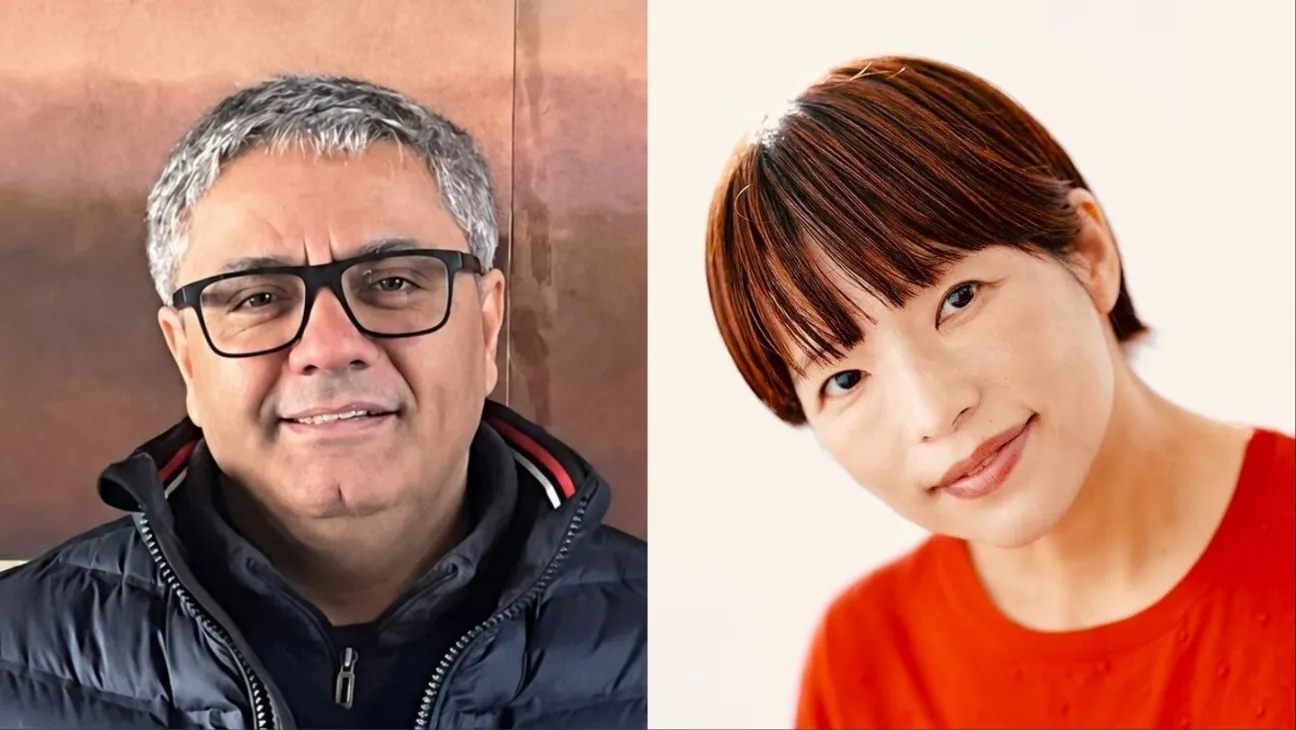
The Tokyo International Film Festival will honor filmmakers Mohammad Rasoulof and Mipo O with its Kurosawa Akira Award at the event’s 39th edition next month.
Named for the Japanese master, the award recognizes directors whose work has made an impact on cinema and who are expected to help shape its future. It was revived in 2022 after a 14-year hiatus with support from Capcom. Last year’s recipients were Chloé Zhao and Lee Sang-il.
This year’s honorees were selected by a committee comprising filmmakers Yoji Yamada and Lee Sang-il, cinematographer Akiko Ashizawa and TIFF programming director Shozo Ichiyama.
Rasoulof, one of Iran’s leading dissident directors now living in exile in Europe, won Berlin’s Golden Bear for There Is No Evil (2020), while The Seed of the Sacred Fig (2024) received a special prize at Cannes before earning an international feature Oscar nomination as Germany’s submission.
The committee singled out the two films for “their humanist perspective, which portrays even those who perpetrate oppression as ordinary citizens.” It also praised Rasoulof’s “unwavering commitment to creative expression despite relentless pressure.”
“Receiving the Kurosawa Award is a great honor for me. His films are profound explorations of the human condition and the moral choices we make in moments of crisis. Kurosawa was a dynamic and inquisitive visual storyteller whose unique perspective on humanity, nature, and the world has made his work an enduring source of inspiration in cinema,” Rasoulof said.
O, a Japanese-born filmmaker of Korean descent, made her feature debut with The Sakais’ Happiness in 2006. Her credits include The Light Shines Only There (2014), Japan’s Oscar submission that year, and Being Good (2015), an ensemble drama exploring child abuse, bullying and the possibility of breaking those cycles through human connection.
After a nine-year break from feature filmmaking, she returned with Living in Two Worlds (2024), a family drama starring Ryo Yoshizawa as the hearing son of deaf parents, whose desire for independence complicates his relationship with his mother. Her latest, How Dare You? (2025), takes a more comic approach to childhood, following three elementary school students whose budding environmental activism — mixed with a classroom crush — leads to unintended consequences.
The selection committee praised her “multifaceted perspective on individuals living on the margins of society” and her avoidance of “a simple lens of good vs. evil,” while highlighting her work with child performers.
“To receive such an extraordinary honor on the 20th anniversary of my directorial debut fills me with immense gratitude and deep humility,” O said. “Winning the Shindo Kaneto Award in 2010 provided me with the vital support to keep making films. Though my progress has been slow, reaching the Kurosawa Akira Award is a stroke of fortune that makes me truly savor what a happy cinematic journey I have had. This recognition is by no means mine alone. My heartfelt thanks go to all the cast and crew members I have met along the way, the audience who stepped into the theaters, and the selection committee—led by director Yamada Yoji—who discovered my films.”
Tokyo will also screen 4K restorations of Kurosawa’s Sanshiro Sugata (1943) and Ikiru (1952), alongside Charles Chaplin’s The Circus (1928) and Abbas Kiarostami’s Where Is the Friend’s House? (1987).
Separately, the festival named Alice in Borderland actor Hayato Isomura president of its Ethical Film Award jury. Launched in 2023 with Sumitomo Corporation, the prize recognizes films addressing social issues including the environment, poverty and discrimination. Three members of TIFF’s Student PR team will join Isomura on the jury.
The nominees are Brazil’s Amadeo and the Hypothetical New World, the German-Ukrainian feature I Rarely Wake Up Dreaming and Australia’s Time and Tide. The award ceremony and a talk with Isomura are scheduled for Nov. 2.
“Today, we absorb vast amounts of information in seconds through a small screen. I often feel we fall into the trap of believing we understand something instantly, constantly searching for quick answers. Yet, when it comes to deepening our awareness and understanding of social issues, the process of reaching those answers is what truly matters,” Isomura said. “Cinema possesses the unique power to pause our hurried pace, allowing us to experience that very process through the lives and emotions of others. I am committed to taking the thoughts, hopes, and wishes woven into these films by each filmmaker deeply to heart, and to reflecting on them together with everyone.”
The 39th Tokyo International Film Festival runs Oct. 26-Nov. 4, with the TIFFCOM market taking place Oct. 28-30.
>
Man Utd and Liverpool have not traded a first-team player in 62 years. Are times changing?

Naruto Gets New ‘Limited’ TV Anime Series – News
Why Tottenham are better than their start to the 2026-27 season suggests
-

 movies4 months ago
Search For Canadian TV Actor Stewart McLean Now Homicide Investigation
-

 Fashion9 years ago
These ’90s fashion trends are making a comeback in 2017
-
Fashion9 years ago
According to Dior Couture, this taboo fashion accessory is back
-
Fashion9 years ago
Model Jocelyn Chew’s Instagram is the best vacation you’ve ever had
-
Fashion9 years ago
Emily Ratajkowski channels back-to-school style
-
Fashion9 years ago
9 Celebrities who have spoken out about being photoshopped
-

 Anime4 months ago
Rurouni Kenshin: Hokkaido Arc Manga Takes 1-Issue Break – News
-

 Anime3 months ago
HIDIVE to Stream English Dubs for The World Is Dancing, The Forsaken Saintess and Her Foodie Roadtrip in Another World, The Dangers in My Heart: The Movie Anime – News