
Entertainment
Mortal Kombat II Review: Karl Urban Livens Up This Sequel

Ed Boon and John Tobias’ original “Mortal Kombat” video game was a flash point for the whole interactive genre, a culturally significant work of art that infused arcade fighting games with relative visual realism and extreme violence. It was also Exhibit B for conservative groups who said video games were corrupting the nation’s youth. (Exhibit A was “Night Trap,” but nobody still cares about “Night Trap.”) And yet, as the decades passed, “Mortal Kombat” lost its revolutionary status and became just another franchise. The original games’ realism gave way to CGI avatars and the violence was no longer revolutionary.
Sigh… sunrise, sunset.
But the vestigial sense that “Mortal Kombat” is important remains, and if you need proof, look how seriously the latest “Mortal Kombat” movies take themselves. Simon McQuoid’s two “Mortal Kombats” are visual effects martial arts movies where almost every character acts like they’re in a powerful prestige TV show, the kind where getting betrayed by the security guard who gave you razor fans for your security guard anniversary is a grand tragedy — the kind that “Mortal Kombat II” equates with the crucifixion. It’s such a portentous universe that it needs not one, but two Han Solos just to take the piss out of it and make it fun.
“Mortal Kombat II” is about an interdimensional fighting tournament between Earth and Outworld. Earth is the good guys, Outworld is the bad guys, and if Outworld wins enough tournaments in a row they get to conquer us, as a little treat. So we’d really rather they didn’t. (Presumably if we win a lot of tournaments we’ll get to conquer them, but nobody asks what that would look like. I assume Outworld’s many lifeless wastelands would suddenly have a lot of Starbucks in them.)
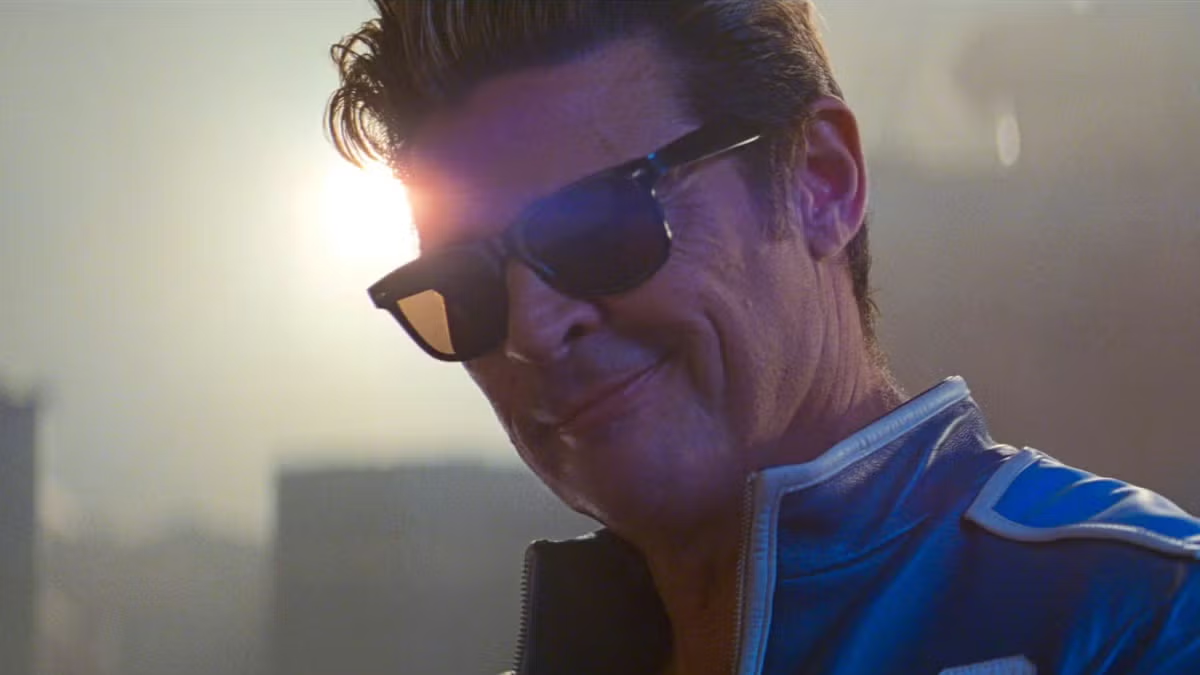
The last movie was about how Earth’s fighters were selected by magic tattoos that can be transferred by killing each other, but this new film doesn’t mention those tattoos, because even by “Mortal Kombat” standards that was silly. Now the tournament is about to begin and Earth’s champions — Liu Kang (Ludi Lin), Sonya Blade (Jessica McNamee), Jax (Mehcad Brooks) and Cole Young (Lewis Tan) — need one more guy, so they track down the former action movie star Johnny Cage (Karl Urban), and tell him the universe is at stake and he needs to fight bad guys for real.

And yes, that is the plot of “Galaxy Quest” if “Galaxy Quest” was based on “Master of the Flying Guillotine” instead of “Star Trek.” But after a whole movie of self-serious posturing, Johnny Cage is a welcome addition. He has different priorities. He’s a little bit of a coward. He gets to significantly grow over the course of the movie, because he starts much lower than the other protagonists. Karl Urban has an excellent sense of this character. He’s amused and amusing, which is good, but never detached and ironic, which would be bad.
Over the course of “Mortal Kombat II” all these characters fight bad guys from Outworld like the gigantic dictator Shao Khan (Martyn Ford), his undead banshee wife Sindel (Ana Thu Nguyen) and his adopted daughter Kitana (Adeline Rudolph). I guess in Outworld fighting to the death counts as a family game night. Good for them.
Between these fights, both Outworld and Earth Realm try to even the odds by screwing with each other, which leads to Shao Khan fusing with a magic amulet that makes him immortal. You would think letting an immortal compete in “Mortal Kombat” would be against the rules, but apparently, there’s no one running this thing, which makes you wonder why Shao Khan follows these arcane laws in the first place. If you can cheat, why play? There are zero consequences for defying whichever elder gods are in charge, at least in this movie, so there’s no reason why Shao Khan couldn’t skip to the end and conquer Earth anyway. (Although come to think of it that’s exactly what he did in the movie “Mortal Kombat: Annihilation,” and that’s one of the stinkiest video game movies — which is saying something — so that’s probably why they didn’t go there.)
Still, it’s a problem for “Mortal Kombat II” that they can’t even get the “mortal” part right. Characters come back to life as evil zombies all the time. Heroes and villains can also travel to the Netherworld whenever they want and hang out with previously murdered characters. At one point two ghosts try to murder each other for several minutes. For a franchise based on the idea that dying is bad and should be avoided, “Mortal Kombat II” kind of whiffs it.

And yet, the movie still mostly works. Simon McQuoid keeps the overstuffed, underbaked story moving so quickly that we don’t have much time to question it. Karl Urban infuses the film with a welcome “why am I here” energy whenever the boring good guys are on screen, and since the boring bad guys get just as much screen time, they also have their own cocky ass, Kano (Josh Lawson), who doesn’t take the plot too seriously either. The drama would be unbearably self-serious without these characters, and these characters would be insufferable without some self-seriousness to bounce off of. It’s a delicate balance and sometimes it sloshes around a bit, but it works. Mostly.
As for the fights, they’re pretty good. None of them reach the zeniths of the Johnny Cage/Scorpion fight from Paul W.S. Anderson’s first “Mortal Kombat” movie, but they’re briefly thrilling and every once in a while someone’s skull gets diced like a Ninja Power Blender, so that’s a good time. I’m not a conservative pundit circa 1993 so I can find no reason to complain. This is a silly franchise in which death has surprisingly little meaning, so the violence has about as much significance as it does in a Looney Tune. And if it’s good enough for Wile E. Coyote, it’s good enough for me.
“Mortal Kombat” may not be culturally important anymore, but unlike some other video game adaptations, this movie cares enough about its audience to actually tell a story with conflict and stakes. (I’m not saying “The Super Mario Galaxy Movie” would have been dramatically improved if Luigi got disemboweled by a razor sharp buzz saw hat, but it would have felt like the story mattered more.) “Mortal Kombat II” isn’t the best “Mortal Kombat” movie, but it’s hard to deny that it comes second. At least with the number “2” and all.
“Mortal Kombat II” opens exclusively in theaters on May 8.

>
>

>
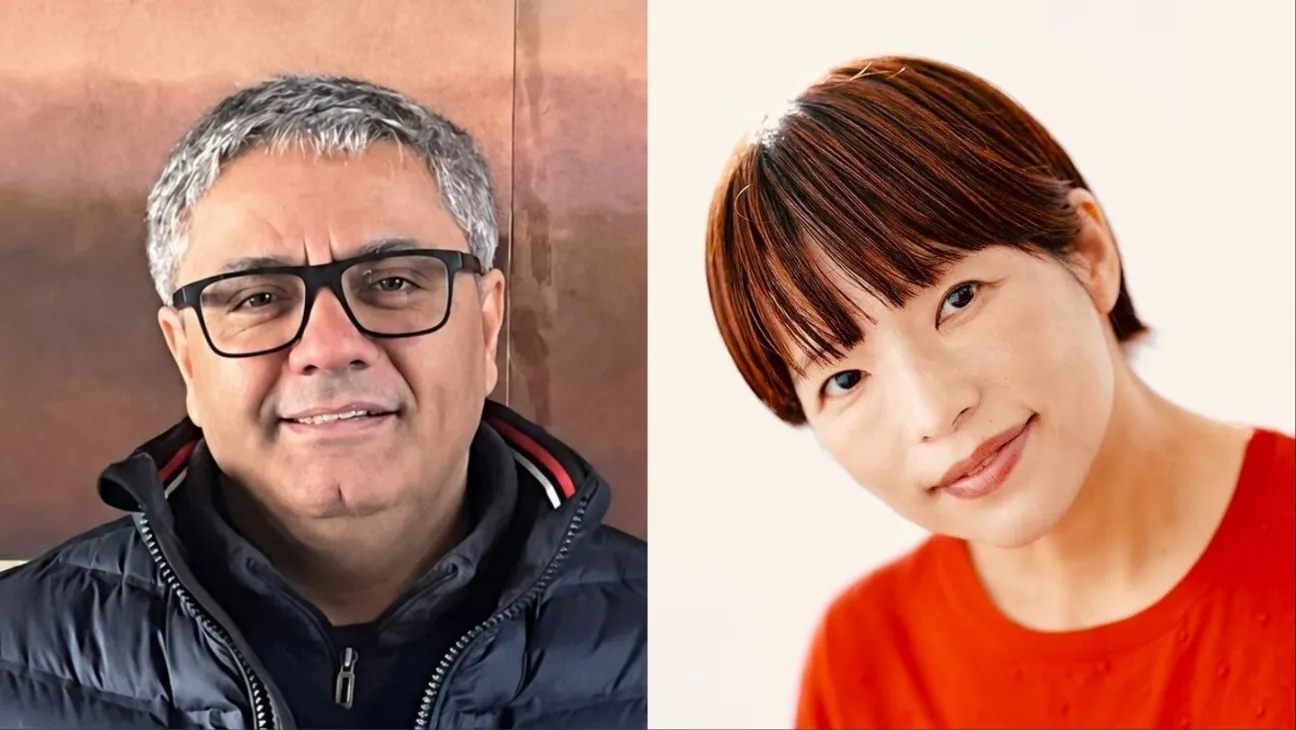
The Tokyo International Film Festival will honor filmmakers Mohammad Rasoulof and Mipo O with its Kurosawa Akira Award at the event’s 39th edition next month.
Named for the Japanese master, the award recognizes directors whose work has made an impact on cinema and who are expected to help shape its future. It was revived in 2022 after a 14-year hiatus with support from Capcom. Last year’s recipients were Chloé Zhao and Lee Sang-il.
This year’s honorees were selected by a committee comprising filmmakers Yoji Yamada and Lee Sang-il, cinematographer Akiko Ashizawa and TIFF programming director Shozo Ichiyama.
Rasoulof, one of Iran’s leading dissident directors now living in exile in Europe, won Berlin’s Golden Bear for There Is No Evil (2020), while The Seed of the Sacred Fig (2024) received a special prize at Cannes before earning an international feature Oscar nomination as Germany’s submission.
The committee singled out the two films for “their humanist perspective, which portrays even those who perpetrate oppression as ordinary citizens.” It also praised Rasoulof’s “unwavering commitment to creative expression despite relentless pressure.”
“Receiving the Kurosawa Award is a great honor for me. His films are profound explorations of the human condition and the moral choices we make in moments of crisis. Kurosawa was a dynamic and inquisitive visual storyteller whose unique perspective on humanity, nature, and the world has made his work an enduring source of inspiration in cinema,” Rasoulof said.
O, a Japanese-born filmmaker of Korean descent, made her feature debut with The Sakais’ Happiness in 2006. Her credits include The Light Shines Only There (2014), Japan’s Oscar submission that year, and Being Good (2015), an ensemble drama exploring child abuse, bullying and the possibility of breaking those cycles through human connection.
After a nine-year break from feature filmmaking, she returned with Living in Two Worlds (2024), a family drama starring Ryo Yoshizawa as the hearing son of deaf parents, whose desire for independence complicates his relationship with his mother. Her latest, How Dare You? (2025), takes a more comic approach to childhood, following three elementary school students whose budding environmental activism — mixed with a classroom crush — leads to unintended consequences.
The selection committee praised her “multifaceted perspective on individuals living on the margins of society” and her avoidance of “a simple lens of good vs. evil,” while highlighting her work with child performers.
“To receive such an extraordinary honor on the 20th anniversary of my directorial debut fills me with immense gratitude and deep humility,” O said. “Winning the Shindo Kaneto Award in 2010 provided me with the vital support to keep making films. Though my progress has been slow, reaching the Kurosawa Akira Award is a stroke of fortune that makes me truly savor what a happy cinematic journey I have had. This recognition is by no means mine alone. My heartfelt thanks go to all the cast and crew members I have met along the way, the audience who stepped into the theaters, and the selection committee—led by director Yamada Yoji—who discovered my films.”
Tokyo will also screen 4K restorations of Kurosawa’s Sanshiro Sugata (1943) and Ikiru (1952), alongside Charles Chaplin’s The Circus (1928) and Abbas Kiarostami’s Where Is the Friend’s House? (1987).
Separately, the festival named Alice in Borderland actor Hayato Isomura president of its Ethical Film Award jury. Launched in 2023 with Sumitomo Corporation, the prize recognizes films addressing social issues including the environment, poverty and discrimination. Three members of TIFF’s Student PR team will join Isomura on the jury.
The nominees are Brazil’s Amadeo and the Hypothetical New World, the German-Ukrainian feature I Rarely Wake Up Dreaming and Australia’s Time and Tide. The award ceremony and a talk with Isomura are scheduled for Nov. 2.
“Today, we absorb vast amounts of information in seconds through a small screen. I often feel we fall into the trap of believing we understand something instantly, constantly searching for quick answers. Yet, when it comes to deepening our awareness and understanding of social issues, the process of reaching those answers is what truly matters,” Isomura said. “Cinema possesses the unique power to pause our hurried pace, allowing us to experience that very process through the lives and emotions of others. I am committed to taking the thoughts, hopes, and wishes woven into these films by each filmmaker deeply to heart, and to reflecting on them together with everyone.”
The 39th Tokyo International Film Festival runs Oct. 26-Nov. 4, with the TIFFCOM market taking place Oct. 28-30.
>
Man Utd and Liverpool have not traded a first-team player in 62 years. Are times changing?

Naruto Gets New ‘Limited’ TV Anime Series – News
Why Tottenham are better than their start to the 2026-27 season suggests
-

 movies4 months ago
Search For Canadian TV Actor Stewart McLean Now Homicide Investigation
-

 Fashion9 years ago
These ’90s fashion trends are making a comeback in 2017
-
Fashion9 years ago
According to Dior Couture, this taboo fashion accessory is back
-
Fashion9 years ago
Model Jocelyn Chew’s Instagram is the best vacation you’ve ever had
-
Fashion9 years ago
Emily Ratajkowski channels back-to-school style
-
Fashion9 years ago
9 Celebrities who have spoken out about being photoshopped
-

 Anime4 months ago
Rurouni Kenshin: Hokkaido Arc Manga Takes 1-Issue Break – News
-

 Anime3 months ago
HIDIVE to Stream English Dubs for The World Is Dancing, The Forsaken Saintess and Her Foodie Roadtrip in Another World, The Dangers in My Heart: The Movie Anime – News