
Sports
Shai Gilgeous-Alexander earns a lot of free throws. That’s by design, and he’s not sorry

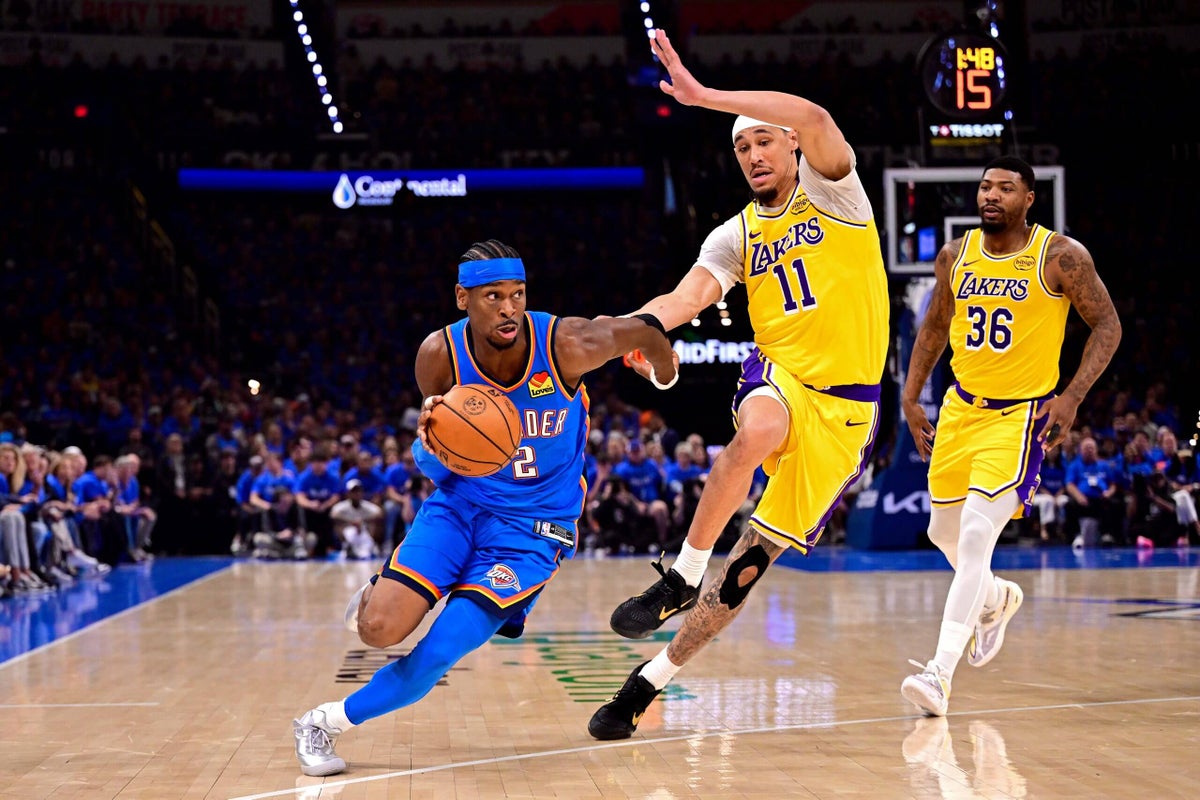
Shai Gilgeous-Alexander knows the label.
“Foul merchant” has become one of the NBA’s most common terms in the 2020s. It is used to describe a player who generates a high number of free throws, especially in ways that draw the ire of fans.
But getting to the free-throw line has long been the lifeblood of great scorers. The top-10 scorers in NBA history — LeBron James, Kareem Abdul-Jabbar, Karl Malone, Kobe Bryant, Kevin Durant, Michael Jordan, Dirk Nowitzki, Wilt Chamberlain, James Harden and Shaquille O’Neal — collectively averaged just under 8.0 free-throw attempts per game over the course of their NBA careers. It’s rare for a championship team not to have a player who gets at least 5.0 free-throw attempts per game.
Gilgeous-Alexander is in that club. The Oklahoma City Thunder star is one of 45 players in NBA history to have a season of at least 10 free-throw attempts per game (10.9 in 2022-23). This season, Gilgeous-Alexander, who averaged 31.1 points per game, attempted 9.0 free throws per game, fourth in the league behind league-leading scorer Luka Dončić of the Los Angeles Lakers (10.1), Giannis Antetokounmpo of the Milwaukee Bucks (9.9) and Deni Avdija of the Portland Trail Blazers (9.2).
Gilgeous-Alexander hears the noise about his game. But it’s not going to change the way he plays.
“Whatever it takes to be the best, is whatever I am trying to go out there and do,” the reigning NBA MVP said. “Free throws is part of the game. And if I get fouled, I get fouled. If I don’t get fouled, try and make the shot. That’s how you play basketball.”
When I’ve asked NBA head coaches about what “foul merchantry” meant to them, they’ve deferred to the history of the game.
“When you got guys who can get to the free-throw line, slow the games down, get your defense set, they’re usually the better teams in the league,” LA Clippers coach Tyronn Lue said. “That’s what the game has become now. You know, guys are smart. Whatever you do, however you change the rules, the guys are so great, they’re gonna be able to figure out ways to still get calls and still figure out a way to manipulate the system.”
Lakers coach JJ Redick stressed that “drawing fouls is a skill.”
“I think if you look at the history of the NBA, most elite scorers have gotten to the line,” Redick said. “You got to MJ. He shoots 10-plus free throws. Kobe shoots 10-plus free throws. That’s how elite scorers can generate more than just 22-24 points. It’s the difference-maker for nearly every 30-point scorer in the history of the NBA. It just happens to have montage videos on Twitter now, that’s all.”
As Redick said, getting to the free-throw line is a skill in itself, but it is also the byproduct of the ability to create or possess other physical advantages. Players with great ballhandling skills, footwork, acceleration, quickness, speed or size can put themselves in position to draw heaps of free throws. The best scorers are going to draw fouls, knowing that a defense has to find a way to stop them otherwise.
And defenses have struggled with that against Gilgeous-Alexander. This season was the fourth in a row that he averaged more than 30 points per game. The only other players in NBA history who have ever averaged at least 30.0 points per game in four consecutive seasons are Jordan, Chamberlain, Oscar Robertson and Adrian Dantley. The only other players who have four separate seasons of 30 points per game are Abdul-Jabbar, Jerry West and Allen Iverson.
That run has come with increased scrutiny on Gilgeous-Alexander’s free-throw numbers. Before the 2021-22 season, he was rarely labeled a “foul merchant.” But his ability to get to the free-throw line at a high rate preceded his establishment as a star. Gilgeous-Alexander’s lone season at the University of Kentucky saw him average only 14.4 points per game, but he also had 4.7 free-throw attempts per game.
After only averaging 2.4 free-throw attempts per game as a rookie with the Clippers, Gilgeous-Alexander rapidly increased his free-throw attempts in each of his first four seasons with the Thunder, peaking at 10.9 in that 2022-23 season.
But the criticism of Gilgeous-Alexander’s scoring methodology began to spike last year in the playoffs. At one point, broadcaster Doris Burke referenced the online slander of Gilgeous-Alexander, stating during Game 1 of the Western Conference finals against the Minnesota Timberwolves that “there’s a reason NBA Twitter calls him the free-throw merchant.” Timberwolves coach Chris Finch has also mentioned the frustration that he and his players have with how Gilgeous-Alexander must be guarded and how he is officiated.
“My favorite thing about that is watching Shai handle it,” Thunder coach Mark Daigneault said when asked about “foul merchantry.” “The narratives outside of the game, we’re just focused on everything that happens in between the lines. But there’s obviously noise around our team, there’s increased attention when you’re in the position that we’re in.
“It’s just impressive to me, his ability to stay above all of that stuff with his performance and his mindset,” Daigneault continued. “He just doesn’t pay it any mind; it doesn’t impact how he plays. It doesn’t impact how he thinks, how he acts, how he behaves. It’s great leadership for our team, because we want to be a team that cuts through all the distractions, and he walks that walk.”
Gilgeous-Alexander and the Thunder are up 1-0 in a West semifinals series against a Lakers team that dominates the free-throw line even more than they do. The Lakers made 298 more free throws this season than their opponents, leading the NBA in that category for the fourth straight season. The Clippers ranked second in free-throw differential this season by making 249 more than their opponents, while the Thunder ranked fifth in free-throw differential, one season after winning the championship despite ranking 27th.
The Lakers were also the only team in the NBA this season that had multiple players average at least 7.0 free throw attempts per game. Besides Dončić, shooting guard Austin Reaves got to the line 7.3 times per game, 13th-most in the NBA and the most of any player in the NBA this season with no All-Star selections.
Like Gilgeous-Alexander, Reaves telegraphed that he could be a source of voluminous free-throw generation in college when he went from averaging 1.3 free-throw attempts in 16.6 minutes per game at Wichita State for two seasons to averaging 6.0 free-throw attempts in 33.9 minutes per game at Oklahoma for two seasons. By his second NBA season, Reaves was capable of generating up to 18 free-throw attempts off the bench in a game against the Orlando Magic.
“It wasn’t really a study; it was just me watching basketball,” Reaves told The Athletic about developing his proficiency at getting to the line as a pro. “I watched James Harden a lot. But it wasn’t like I was watching him and being like, ‘Oh, I can do this and get to the free-throw line.’ I just watch basketball.”
When asked before the second round about Gilgeous-Alexander’s ability to get to the free-throw line, Reaves acknowledged the sensitivity of such a pivotal skill being scrutinized by observers of the game.
“I know that’s a tough topic to talk about because everybody blows it out of proportion,” Reaves said before Game 1. “But at the end of the day, (Gilgeous-Alexander) wants to win. And he’s going to do whatever it takes to win. Shoot 20 free throws, so be it.
“I don’t think that there’s any bad intentions in trying to get to the line. … With how many possessions he has the ball in his hands and how much he does attack, you’re not going to shoot zero free throws.”
Game 1 wound up being Gilgeous-Alexander’s lowest-scoring game (18 points, only three free-throw attempts) and highest turnover game (six assists, seven turnovers) since the 2025 postseason. There were multiple instances of Gilgeous-Alexander trying to draw fouls in the first quarter and costing his team with live-ball turnovers, a rarity for him.
And yet, the Lakers still were outscored by nine points with Gilgeous-Alexander on the floor and by nine points with him off the floor, and he still scored efficiently by making 8 of 15 field goals. Half of the makes were from the midrange, a dominant area of the floor that Gilgeous-Alexander owns just as much as the free-throw line. Only DeMar DeRozan (3.0) made more midrange field goals per game than Gilgeous-Alexander this season (2.9), and of the 21 players who attempted at least 3.0 midrange field goals per game this season, none made a higher percentage than Gilgeous-Alexander (54.9).
If he doesn’t get fouled, like the Lakers refused to do in Game 1, he is still capable of lethal offense.
“It’s the shot that … less people take,” Gilgeous-Alexander said after the Thunder won Game 1. “When I got to the NBA, it seemed like every defense was like, ‘Give up the midrange.’ So I figured it was the shot I would get the most. I just wanted to be good at it, be able to attack those spots on the court. And turn it into a weapon.”
Some players can only get by with the free-throw line. Others use it to break defenses, physically and otherwise. Fans and coaches might complain and lobby for changes. But every team needs a so-called “foul merchant.” The best ones can hurt you, whether they get to the line or not. Gilgeous-Alexander is going to get to the free-throw line. And he doesn’t apologize for any of it.
“Yeah, you just said it,” Gilgeous-Alexander said last month when I mentioned that the best scorers generate a high number of free throws. “All of the best scorers get to the free-throw line. And I happen to be the best. It’s that simple.”
>
Crow-Armstrong came just short of matching Paul Skenes’ MLB Debut Patch record sale.
>
Welcome to Connections: Sports Edition Coach — a spot to gather clues and discuss (and share) scores.
>
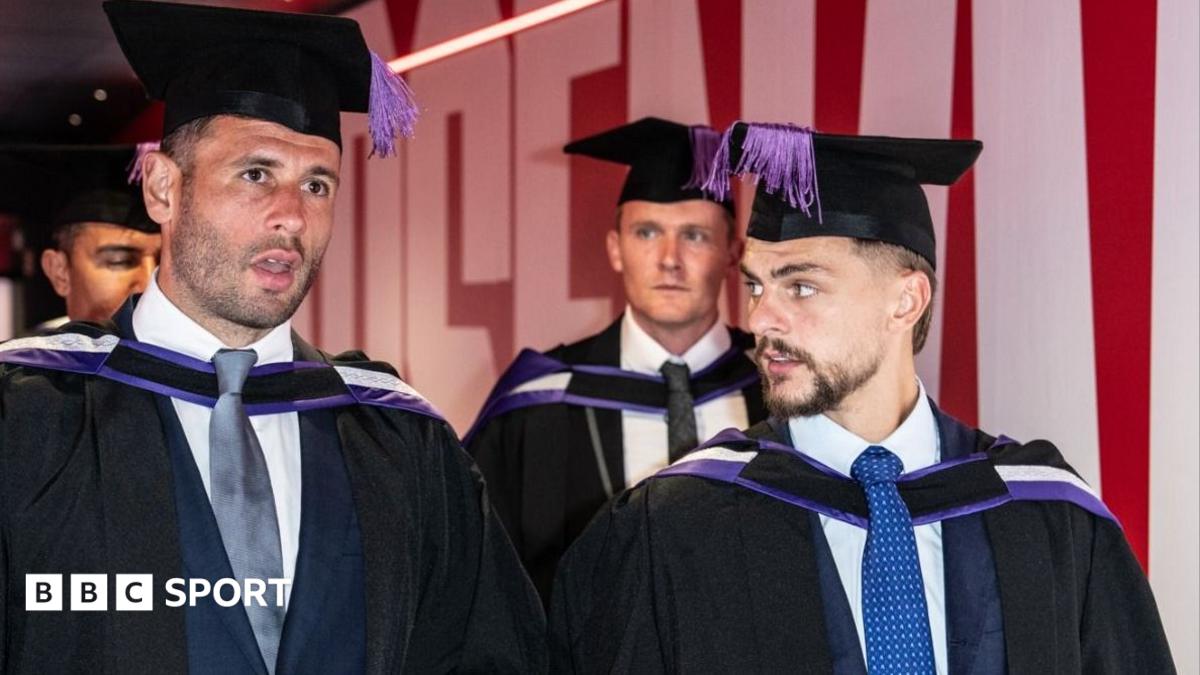
Awoniyi points to the “ups and downs” he has experienced as a footballer, referencing the serious injury he suffered in May 2025 when he was placed in a medically induced coma after rupturing an intestine in a collision with a goalpost when playing for Nottingham Forest against Leicester City.
To him, it is important to keep improving and to recognise there is more to life than football, which is where the Professional Footballers’ Association course comes in.
Awoniyi says: “It’s not like a 9-5 job in football. We go in and sometimes finish quite early and, although it’s challenging, I think every footballer has time in the evening for something like this business school.
“Of course, it demands a lot from you and it’s all about how willing you are to do it. I say to people there are a lot of things that are bigger than football.
“Yes, football is our passion, but we are normal human beings as well and maybe that’s something the world doesn’t always see.”
The graduates certainly appear no different from anyone else celebrating an academic achievement, exhibiting their pride.
Awoniyi has brought members of his extended family to the ceremony, while Dewsbury-Hall seeks out former Everton midfielder Tim Cahill, now working in Qatari football, to discuss the art of scoring goals.
“Obviously there are stereotypes around footballers,” Dewsbury-Hall says.
“But in every industry there are smart people and there are people who aren’t so smart. You’d be surprised how many intelligent people there are in football.
“Maybe some players just don’t want to do things like this, but they easily could. It’s just not their passion.
“I’m not saying this is my passion, but it’s something I’ve done to show that footballers can complete these kinds of courses while they’re still playing. Who knows where it will lead?”
The course is designed to run alongside a football career. Seminars are scheduled to minimise clashes with matches and training sessions.
Players can study in their own time, although Dewsbury-Hall says he has had some “weird looks” while studying on an iPad during journeys home from away games.
Every graduate has a different story.
For Wycombe Wanderers defender Steve Cook, who captained Bournemouth in the Premier League earlier in his career, the course marked a return to formal education for the first time since his school days. Having already obtained coaching badges, he knows he is approaching the end of his playing career.
Some may not actively use their newly gained expertise for many years. All will benefit in some way, though, believes Azpilicueta.
“It’s not only about preparing for life after football. It’s about becoming a better version of yourself in your football career as well,” the former Spain defender, who retired from playing at the end of last season, tells BBC Sport.
Education has been part of his life and is what helped him become a leader on and off the pitch.
Azpilicueta built a career after turning professional with hometown club Osasuna at the age of 17.
He had continued studying until that point and, after abandoning his degree when he became a professional footballer, he later returned to complete an MBA at Harvard University in the United States during his nine-year spell at Chelsea.
The desire to study before playing the biggest match of his club career, Chelsea’s Champions League final triumph five years ago, indicates how he balanced his two interests.
“Normally I’d have a nap after lunch if the game was later in the day, but that day it was impossible. You could hear the fans and you knew a big game was coming up. Having my studies also helped me focus and improve myself away from football,” he explains.
After ending his playing days with Atletico Madrid and Sevilla, Azpilicueta says he will not be rushing into his next role.
The PFA course includes sessions from prominent figures, such as Brighton chief executive Paul Barber, designed to help students understand how different areas of the football industry operate.
For now, many remain focused on playing football. But among this year’s graduates might be future coaches, executives and sporting directors who go on to influence the game in different ways.
>

‘Ted Lasso’ Pays Tribute To Anthony Head In Episode 409
Pete Crow-Armstrong Debut Patch card sells for more than $1 million
Connections: Sports Edition today: Hints and answers for Sept. 30, 2026, puzzle No. 737
-

 movies4 months ago
Search For Canadian TV Actor Stewart McLean Now Homicide Investigation
-

 Fashion9 years ago
These ’90s fashion trends are making a comeback in 2017
-
Fashion9 years ago
According to Dior Couture, this taboo fashion accessory is back
-
Fashion9 years ago
Model Jocelyn Chew’s Instagram is the best vacation you’ve ever had
-
Fashion9 years ago
Emily Ratajkowski channels back-to-school style
-
Fashion9 years ago
9 Celebrities who have spoken out about being photoshopped
-

 Anime4 months ago
Rurouni Kenshin: Hokkaido Arc Manga Takes 1-Issue Break – News
-

 Anime3 months ago
HIDIVE to Stream English Dubs for The World Is Dancing, The Forsaken Saintess and Her Foodie Roadtrip in Another World, The Dangers in My Heart: The Movie Anime – News