
The poster art for 1951’s The Day the Earth Stood Still.


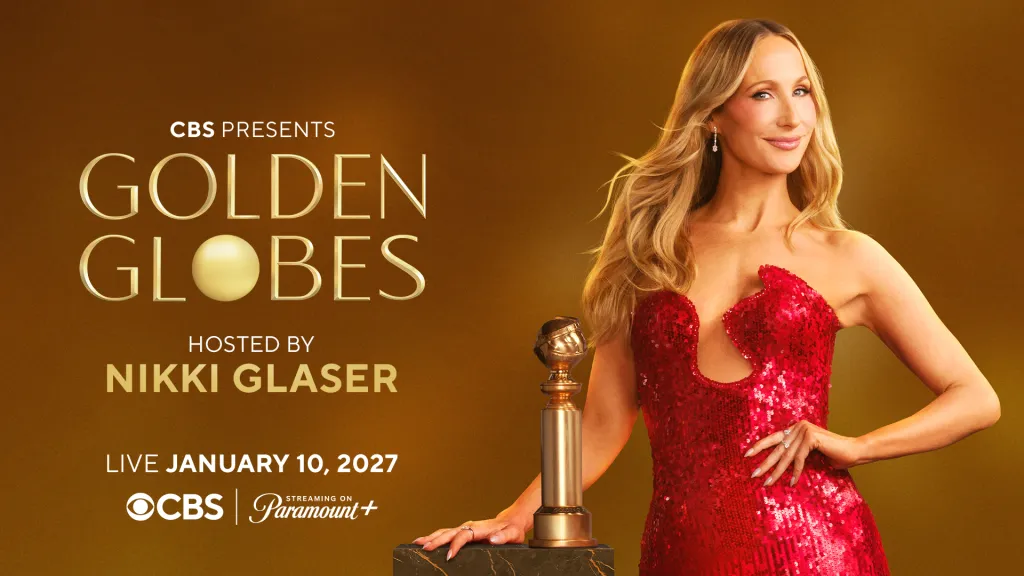
With the 84th Golden Globes shaping up for next January, the awards show is confronting the use of artificial intelligence (AI) with new eligibility rules.
On Thursday, the Golden Globe Awards explained that the use of AI or GenAI “does not automatically disqualify” submissions from eligibility for the Jan. 10, 2027 awards show, “provided that human creative direction, artistic judgment, and authorship remain primary throughout the production process.”
The award rules lay out that submissions will be evaluated “based on the extent to which creative direction, artistic decision-making, and execution originate from credited individuals,” providing guidelines for how AI can be used, adding that it “may not replace the core creative contributions of human talent.”
Additionally, all submissions are required to disclose “any generative AI used anywhere in the production of the completed work, including if any AI alteration was made to a credited performer’s likeness or voice.”
Meanwhile, actors will only be eligible for performance awards if their performance is “primarily derived from the work of the credited performer.”
“The use of artificial intelligence in connection with a performance does not automatically render a submission ineligible, provided such tools are used only to enhance or support a performance that remains fundamentally human-driven and under the creative control of the credited performer, and that any such use is authorized by the performer,” the rule states. “Additionally, submissions may not include performances generated through the unauthorized use of a performer’s digital likeness, voice replication, or biometric data, whether or not the performer is otherwise credited.”
For non-performance categories, submissions will be eligible if the “core creative contributions in the relevant craft (including but not limited to direction, writing, composition, and animation) originate primarily from credited human individuals, and that any use of AI or generative tools serves a supporting or enhancing role rather than substituting for that human creative authorship.”
Following news that Nikki Glaser will return to host the awards show for the third year in a row, the Golden Globes’ new rules come three years after AI became a major point of contention in the WGA and SAG-AFTRA strikes.
>
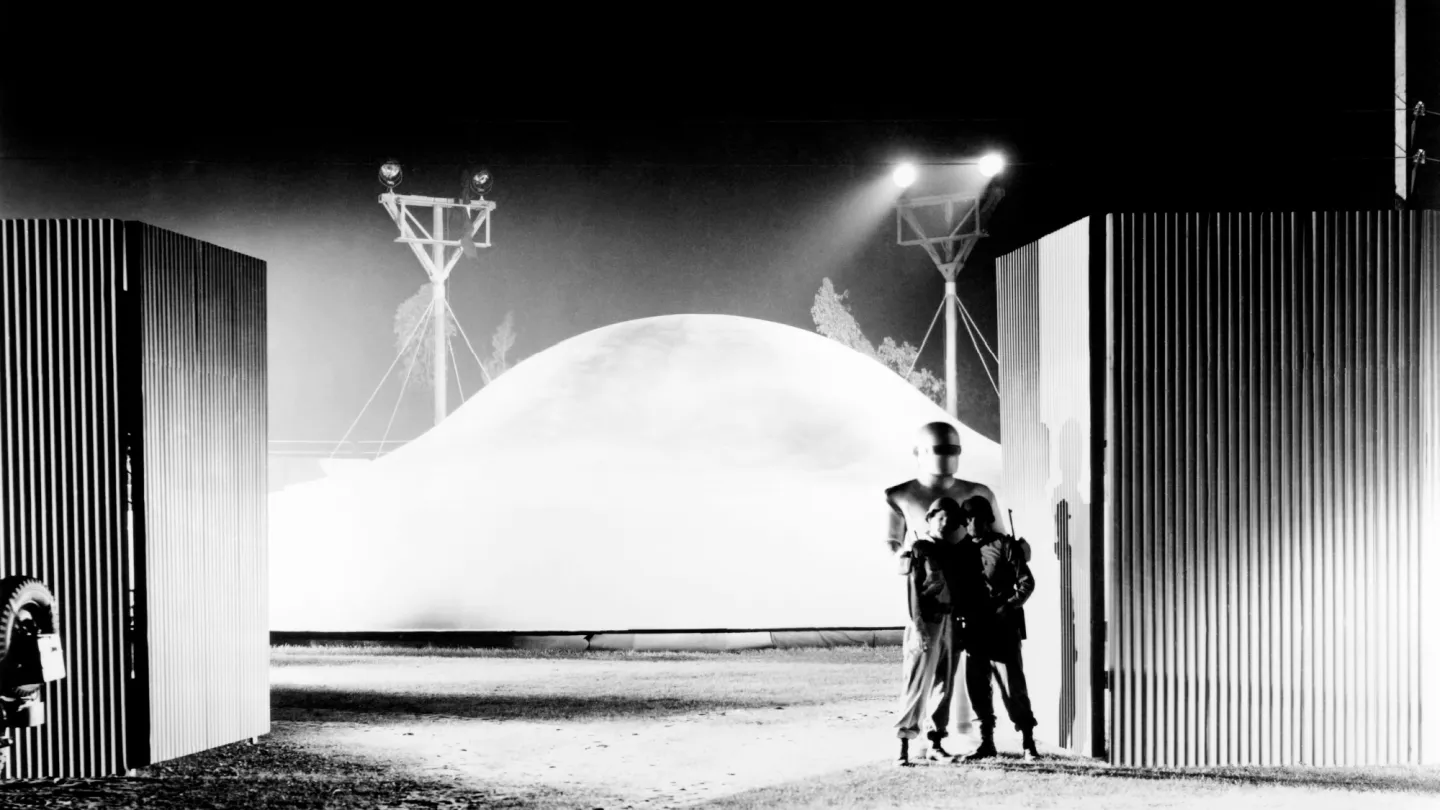
In September 1951, 20th Century-Fox‘s sci-fi drama The Day the Earth Stood rolled out in theaters following its premiere opening on Sept. 18 at New York’s Mayfair Theatre (where it grossed $6,500 that day). At the beginning of the month, the film screened at the World Science Fiction Convention in New Orleans, where 250 attendees “universally acclaimed the picture.”
The 92-minute feature, directed by Robert Wise, was released as Cold War fears were at the top of the headlines and was intended as a cautionary tale (decades later, the studio remade the film with Keanu Reeves and an aughts sheen in 2008). The Hollywood Reporter’s original review is below:
In The Day the Earth Stood still, producer Julian Blaustein and director Robert Wise have a highly exploitable, suspensefully entertaining drama that will ride the crest of the current cycle of science films with the ease of a space ship.
Adapted from a story by Henry Bates, the drama is an intriguing science fantasy, made believable by touches of genuine humor and the faint suggestion of a romance between a pretty American widow and a mysterious visitor from another planet. The overtones of social significance are adroitly handled and make real sense in an era of tragic international quarrels.
Physically, the production is all science saga should be — Blaustein supervises the special effects with telling results; the Washington locale is excellently fulfilled; and the thoughtful choice of actors accounts for convincing performances throughout. Wise’s direction imbues the narrative with the compelling atmosphere of the documentary; he creates an illusion of presenting the real thing rather than a fictional motion picture. Inevitably, the Wise technique heightens suspense values and writes terrific punch into the action scenes involving a powerful robot who accompanies the human visitor to the U.S.
Michael Rennie is the visitor, a man who whirls into the center of Washington in a space ship accompanied by his robot. His mission is one of peace — he wants to talk to the President. An hysterical soldier shoots him, Rennie is carried to Walter Reed Hospital. Here, by administering medicine brought from his outer-planet home, Rennie recovers. He tells the President’s secretary that he wishes to speak to representatives of all nations on earth. The secretary informs him this is impossible. Rennie casually leaves the hospital, takes a room in a boarding house where he meets Patricia Neal and her young son, Billy Gray. His adventures with the lad are amusing; one includes a visit to Sam Jaffe’s home where, by working an intricate scientific problem within seconds, he identifies himself as a super-intellect. Jaffe agrees to bring men of science from the four corners of the globe to hear him speak.
Meanwhile the police are searching frantically for him. Though wounded again, he escapes to his ship and before flying off tells those who hear him that the world must solve its petty political problems; otherwise, action by other planets in the universe will destroy the world.
Rennie’s quiet dignity in the part of the space visitor brings conviction to the interesting role. Miss Neal is vibrant and lovely as the young widow, and Hugh Marlowe is vigorous as her ambitious suitor. Jaffe’s scientist is portrayed with the actor’s usual resourcefulness. Gray is fine as the youth. Supporting players include some of Hollywood’s best character actors. Commentators Drew Pearson, Gabriel Heatter, H.V. Kaltenborn and Elmer Davis are on deck to implement the air of authenticity.
Leo Tover’s work in the trick photographic department is exceptional. Lyle Wheeler and Addison Hehr, allowing imagination to run wild, perform a superb job of art direction. Bernard Herrman’s eerie score and the editing of William Reynolds are other outstanding contributions to the success of the production. — Staff byline, originally published on Sept. 4, 1951.
The poster art for 1951’s The Day the Earth Stood Still.
The Hollywood Reporter‘s original review of The Day the Earth Stood Still in 1951.
>
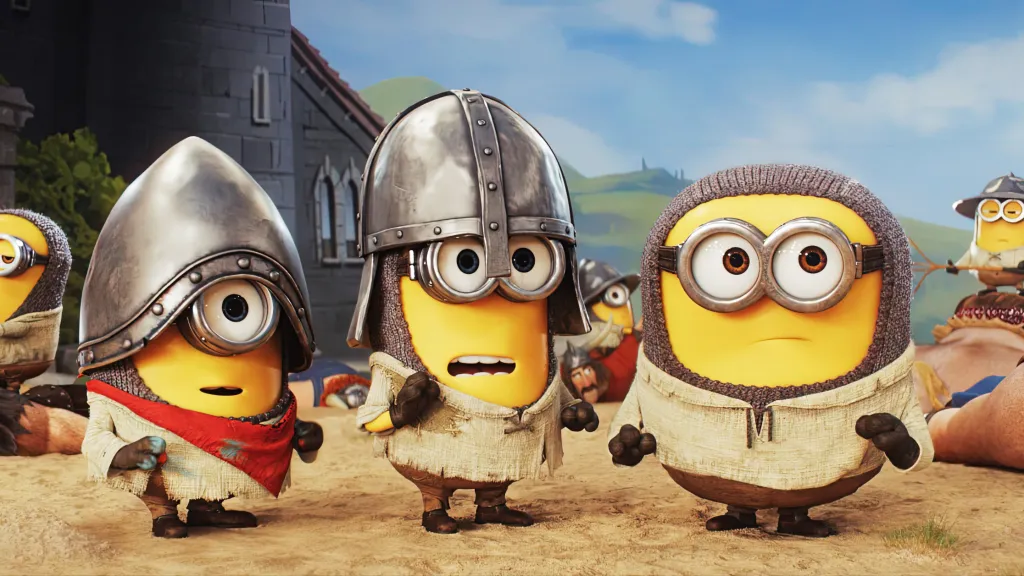
Minions & Monsters will begin streaming on Peacock on October 28, following its July 1 theatrical release.
Starring Pierre Coffin, Allison Janney, Christoph Waltz, Jesse Eisenberg, Jeff Bridges and Zoey Deutch, the seventh installment in the Despicable Me franchise and third in the Minions prequel series is set in 1920s Hollywood. As Deadline’s Damon Wise noted in his review, the opening credits alone trace the history of the Universal logo back to the silent-era days of The Trans-Atlantic Film Company. Per the synopsis, the Illumination/Universal film tells “the rambunctious, ridiculous and totally true story” of how the Minions — led by Dick — conquered Hollywood, became movie stars, lost everything, unleashed monsters onto the world and then banded together to try and save the planet from the mayhem they had just created.
The latest installment is directed by Oscar nominee Pierre Coffin, who helmed the first three Despicable Me films and the first Minions movie. Coffin also provides the voice of the Minions in the film, which he has done since the characters’ film debut in 2010.
Brian Lynch (Minions, The Secret Life of Pets films) and Coffin wrote the screenplay, which is produced by Illumination’s Oscar-nominated founder and CEO Chris Meledandri and Bill Ryan (The Super Mario Bros. Movie). Lynch also is an EP.
Minions & Monsters was a box office success, grossing $524 million worldwide and becoming the ninth-highest-grossing globally for 2026.
Created 15 years ago, the Minions have boosted Illumination’s Despicable Me and Minions to a global box office of more than $5.6 billion. The previous Minions film, 2022’s Minions: The Rise of Gru, was a summer tentpole, earning almost $1 billion worldwide.
>
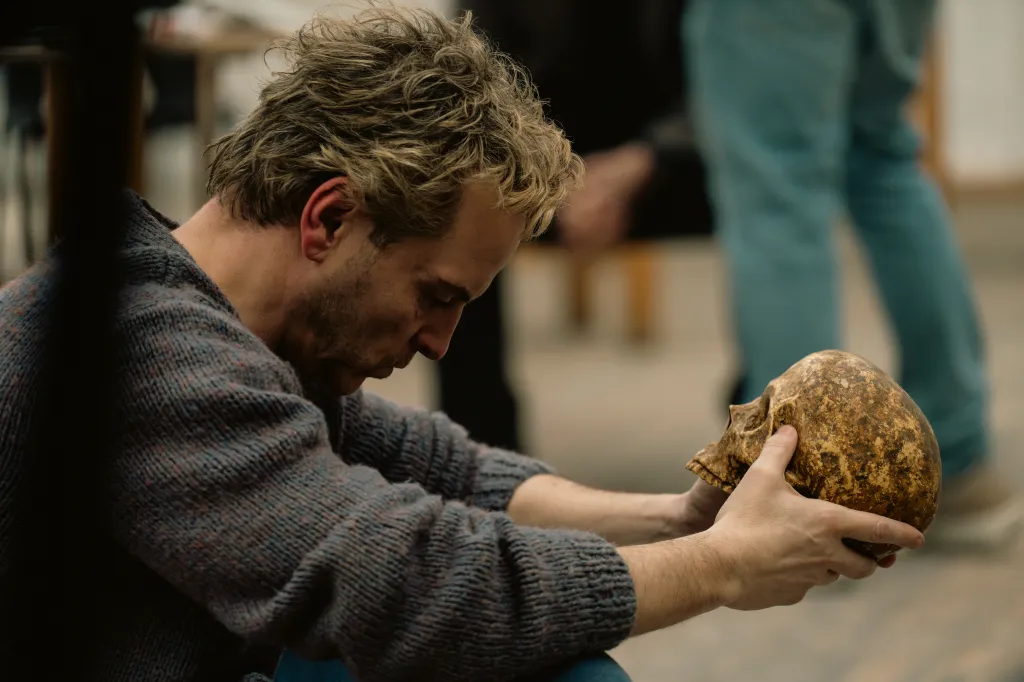
We have the first official trailer for Elsinore, starring Andrew Scott.
Simon Stone (The Dig) directs Elsinore, based on the life of Ian Charleson, written by Stephen Beresford (Pride). The official synopsis reads: Elsinore is a powerful, deeply moving, and inspiring true story of the actor Ian Charleson, who faced incredible odds while preparing to give the performance of his life in Hamlet at the National Theatre in London.
Scott stars as Charleson. He leads the film alongside Olivia Colman. Scott is also a producer on the film. The wider cast features Billie Piper, Johnny Flynn, Luke Thompson, David Dawson, Monica Dolan, Matthew Beard, Joe Locke, Georgie Glen, Sadie Soverall, Adeel Akhtar, Dickie Beau, with Juliet Stevenson and Peter Mullan.
Andrea Occhipintio of Lucky Red (Il Divo) produced the film with Gabrielle Tana of Magnolia Mae Films (The Dig), along with Pete Shilaimon and Mickey Liddell of LD Entertainment (Jackie), and Stefano Massenzi and Carolyn Marks Blackwood.
This film has received enthusiastic reviews following debut screenings at the fall festivals. Deadline’s Pete Hammond described Scott’s performance as “heartbreakingly great” and a “performance for the ages.”
Elsinore will next screen at the London Film Festival. StudioCanal will release the film in UK cinemas on January 29, 2027. Focus has the U.S. rights and will open the film on November 20.
“The movie is also a love letter to Britain’s National Theatre, a sprawling monument to the power of art and artists, an “Elsinore” unto itself,” Hammond wrote.
Check out the trailer above.
>


Search For Canadian TV Actor Stewart McLean Now Homicide Investigation


These ’90s fashion trends are making a comeback in 2017
According to Dior Couture, this taboo fashion accessory is back
Model Jocelyn Chew’s Instagram is the best vacation you’ve ever had
Emily Ratajkowski channels back-to-school style
9 Celebrities who have spoken out about being photoshopped


Rurouni Kenshin: Hokkaido Arc Manga Takes 1-Issue Break – News


HIDIVE to Stream English Dubs for The World Is Dancing, The Forsaken Saintess and Her Foodie Roadtrip in Another World, The Dangers in My Heart: The Movie Anime – News