

movies
4,500 Cinema Professionals Sign Open Letter In Support Of MEDIA Program

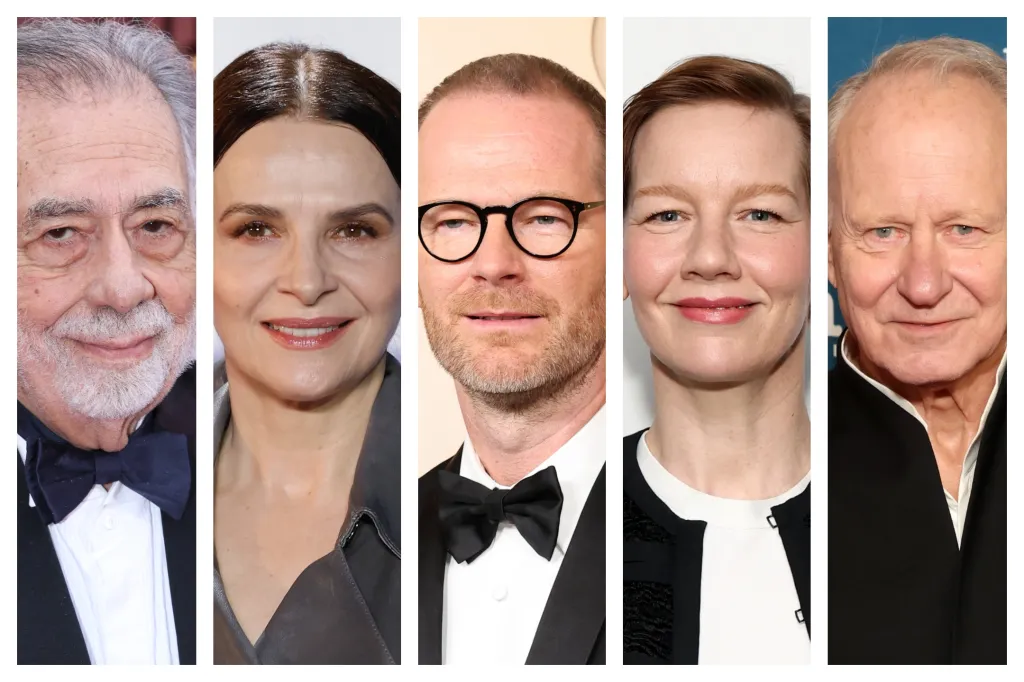
Juliette Binoche, Francis Ford Coppola Joachim Trier, Ruben Östlund, Stellan Skarsgård, Sandra Hüller and Vicky Krieps have joined calls for the European Union “to future-proof” the bloc’s 35-year MEDIA program which has supported thousands of films over the years.
They are among more than 4,700 cinema professionals to have signed an open letter entitled “Europe needs cinema, Cinema needs Europe”.
It has been published as EU Member states discuss plans for a controversial new mega-program bannered AgoraEU which will bring spending for culture, media and civil society under one umbrella. The move has set alarm bells ringing across the independent European film industry.
Under the proposal, the MEDIA program will be merged into a new Media+ strand combining support for film and audiovisual industries with that for video games, news media and journalism. MEDIA previously sat under the Creative Europe umbrella and ran several well-defined funding strands, honed over three decades, with clear multiyear funding windows.
The European Commission has proposed that €8.6 billion ($1 trillion) be set aside for AgoraEU under its 2028-2034 Multiannual Financial Framework (MFF) plan, with the European Parliament suggesting in April this should be bolstered to €10.7 billion under its ongoing consultation.
European film professionals say that while these figures suggests more money could be available overall for culture and media, there are no guarantees on what will be spent on the audiovisual and film sectors or any defined goals. The letter is part of a growing campaign to raise awareness around what is at stake.
“Just as the idea of Europe itself is a unique project, the idea of the MEDIA program is to sustain diverse European voices in a common house,” it reads.
“For over 35 years, it has been supporting the creation of European stories from script development to production by independent production companies, the releases in theatres and online, festivals, professionals’ training and upskilling.”
“We, European cinema professionals and citizens – all cinema lovers – call upon the European Commission, European Parliament and Member States to future-proof the success and integrity of the vital and precious MEDIA program and reinforce its resources. There are no shared values, no democracy, and no European soft power, without artistic creation.”
The member states are due to adopt a first position on the AgoraEU proposal on May 12, the same day as the opening of the 79th Cannes Film Festival.
The letter’s signatories include a number of Cannes habitués including 2026 Palme d’Or contenders Rodrigo Sorogoyen (The Beloved), Lukas Dhont (Coward), Pawel Pawlikowski (Fatherland) and Arthur Harari (The Unknown) as well as Ruben Östlund, Yorgos Lanthimos, Oliver Laxe, Michel Hazanavicius, Agnieszka Holland, Nadav Lapid, Laura Wandel, Ariane Labed, Agnès Jaoui, Clémence Poésy, Arnaud Desplechin among many more.
Most the signatories hail from Europe but the letter has also gained traction outside the region’s borders with Coppola among those lending his support.
The festival is usually a time of celebration for the MEDIA program thanks to its support of many of the European films in the Selection and parallel sections. This year, however, its future will be one of the hot button topics for European professionals up and down the Croisette.
Read the full letter below:
Cinema needs Europe, Europe needs cinema
“No art form, like cinema, traverses our diurnal consciousness so directly as to touch our feelings, deep within the twilight chamber of our soul.”
For more than 130 years, this twilight chamber, as Ingmar Bergman called it, was brought to life by the lives of others, by their thoughts, their struggles, their words and their gazes.
Cinema begins with the desire to create. It becomes a film through a succession of encounters: screenwriters, directors and producers develop it, cinematographers, actors, and technical crews contribute, film funds support it, sales agents and distributors bring it to cinemas and festivals – and later broadcasters and streamers, critics debate, and audiences embrace it.
Filmmaking is a collaborative art. It becomes an industry through job creation and technological innovation. Yet every film remains a prototype, impossible to mass-produce on an assembly line. There are no economies of scale in storytelling. This dual nature calls for deliberate political choices engaging public and private operators.
Europe itself, as a collective endeavour, was imagined in stories before it was built, it is Stefan Zweig’s continent of ideas, not armies. Cinema brought this imagined Europe to life: La Dolce Vita, Wings of Desire or Amélie turned Rome, Berlin and Paris into shared cultural references. Anatomy of a Fall, Sirat, or The New Years, global successes emerging from European talents, continue to build bridges across languages and borders.
In Europe, the political choice for cinema, be it Czech, Italian, Swedish, Slovenian, Portuguese or Belgian, is the MEDIA programme. Just as the idea of Europe itself is a unique project, the idea of the MEDIA programme is to sustain diverse European voices in a common house.
For over 35 years, it has been supporting the creation of European stories from script development to production by independent production companies, the releases in theatres and online, festivals, professionals’ training and upskilling. It has given a chance to all kinds of European projects, including the most unexpected ones, from East to West and from North to South. Building on the Union and Member States’ regulations, it has also reinforced our industries against global giants, allowing film professionals to face sector upheavals and resist standardization, and fostered a dynamic and job-creating ecosystem.
MEDIA is a drop in the ocean of European funding: it represents 0,2% of the Union’s budget, while, as a comparison, the common agricultural policy alone accounts for 32% of this budget.
Yet, it has been a European success story with an invaluable impact.
Thanks to MEDIA, works that nurtured the growth of Ruben Östlund or Justine Triet travelled the world.
Thanks to MEDIA, Europe wins an Oscar almost every year: after Flow, Gints Zilbalodis’s animated film, Joachim Trier’s Sentimental Value and the documentary Mr Nobody against Putin by David Borenstein and Pavel Talankin took the spotlight in 2026.
Thanks to MEDIA, the voices of exiled and oppressed authors, such as Jafar Panahi or Mohammad Rasoulof, have the freedom to reach audiences worldwide.
Thanks to MEDIA, our cherished neighbourhood cinemas can remain open to the world through diverse programming, and do not have to close their doors.
Without MEDIA, we would all be a little less European.
Greek filmmaker Costa-Gavras once said, “you cannot change people’s political vision with a film, but you can, at the very least, kindle a political discussion”. In times marked by war, geopolitical tensions, and pressure on democracy – our foremost common good – this function is essential. We strive to give our societies, our children and future adults a taste for collective experience, empathy, and resistance.
Yet Europe’s ability to tell its own stories is under strain. Most audiovisual productions viewed in Europe originate outside the continent. Global platforms increasingly shape visibility, access and stories. At the same time, the sector faces structural transformations: shifting audience habits, including declining cinema attendance, the rise of artificial intelligence, and growing geopolitical competition.
The European Union is currently revising the rules that enable European cinema to flourish, to travel, and to carry our common voice. It includes the future of MEDIA in the new AGORA EU programme.
It is now the time to write the next chapter of the European Cinema story, with even greater ambition, commensurate with the challenges we face. We must not fail to see that the destiny of democracy and that of cinema, both born in Europe, are intimately linked. Because every time a cinema opens, democratic life reasserts itself.
We, European cinema professionals and citizens – all cinema lovers – call upon the European Commission, European Parliament and Member States to future-proof the success and integrity of the vital and precious MEDIA programme and reinforce its resources. There are no shared values, no democracy, and no European soft power, without artistic creation.
>
Continue Reading
SPOILER ALERT: The story includes details about Episodes 408 and 409 of Apple TV’s Ted Lasso.
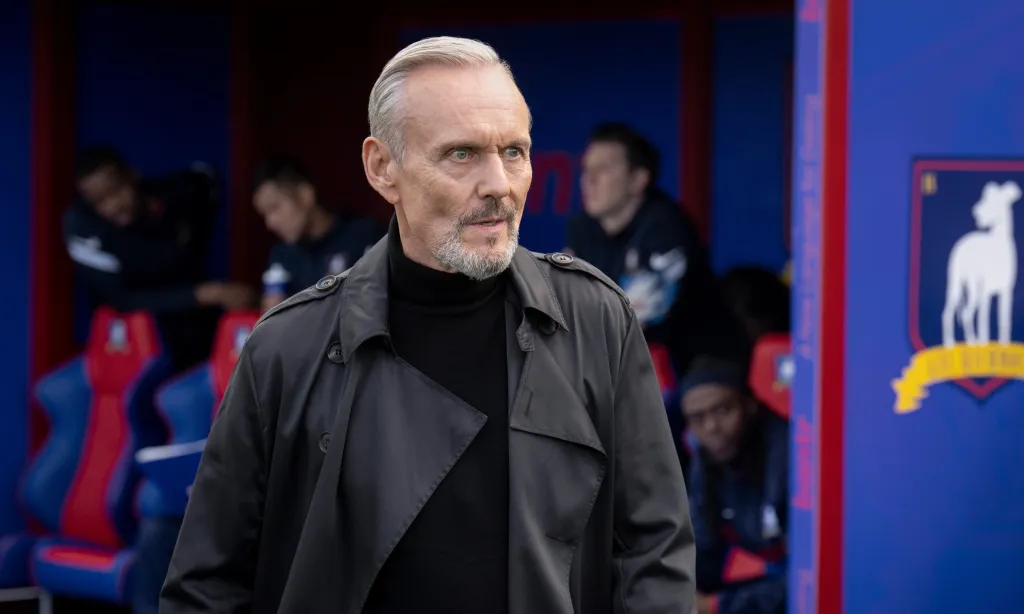
A very emotional Ted Lasso episode that included the death of a beloved original character, The Crown & Anchor pub owner Mae Green, played by Annette Badland, also acknowledged the death of the series’ popular recurring cast member Anthony Head, who played the villainous Rupert Mannion in the first three seasons.
A card, In Memory of Anthony Head, ran at the end of Season 4’s penultimate episode, “Mae Rides the Bus.” (You can see it below.)
“He was a beautiful man, and he will be much missed,” Badland told Deadline during an interview about Mae’s shocking death, reminiscing about famous Season 1 darts scene between Rupert and Jason Sudeikis’ Ted Lasso at the pub. “He was charming and funny and generous, and we’d have naughty little sort of asides.
Ted Lasso was always expected to pay tribute to the veteran British actor who died on June 1 at the age of 72. When that was not done in the Season 4 premiere, many thought that Head would be honored in an episode he appears in as the season had wrapped production in January, months before his passing.
“I assumed he would be in this last [season], and didn’t know, as I think very few people knew, he was ill and just couldn’t do it,” Badland said.
Barely referenced in the first seven episodes, Head’s Rupert, ex-owner of AFC Richmond and ex-husband of the club’s current owner Rebecca (Hannah Waddingham), came back into the forefront in Episode 8, when Higgins (Jeremy Swift), with the help of Mae and her “Follow the anger” advice, deducted that Rupert had been secretly buying shares to regain control of Richmond.
That remained a story thread in Episode 9 until the surprise twist at the end that revealed it was not Rupert but Tracey Ullman’s Zelda Southport who was behind the shady operation and on the verge of becoming a majority owner of the club.
The move raised questions whether Ted Lasso had pivoted from Rupert to Zelda as the culprit — and away from a potential Rebecca vs. Rupert battle for control of Richmond — in light of Head’s death (or leading into it). According to sources, no Season 4 storylines were changed following Head’s passing, there had been no formal plans for Head to be in Season 4 and no official approach to him about appearing.
It is unclear whether that was related to Head’s health issues which had been kept private. (His cause of death was listed by his daughters as complications due to pneumonia.) Head’s last acting credits were Season 3 of Ted Lasso, which came out in 2023, and the 2024 Prime Video movie Upgraded.
It is a longstanding TV tradition for characters to mirror the death of the actors who played them by passing away in the show. Because of the timing of Head’s passing after Season 4 had been completed, that will likely happen in Season 5.
The eccentric ultra-wealthy entrepreneur and sports investor Zelda — a polarizing and largely disliked new character introduced in Season 4 — had long been suspected by fans to be the season’s secret villain.
Zelda, who had become involved in Richmond’s women’s team with Keeley’s (Juno Temple) enthusiastic support over Rebecca’s serious reservations, was present when Higgins told Rebecca in Season 8 that Rupert was behind the buyouts. In fact, Zelda looked rather nervous for a moment when Higgins announced that he had solved the mystery before he dropped Rupert’s name and she chimed in with “Never underestimate the power of anger as fuel.” (We will likely find out more about her motives in the Season 4 finale.)
In Episode 9, Zelda also happened to be there any time Higgins and Rebecca discussed the matter. That included him telling his boss in the office that Rupert’s lawyers were “denying knowing anything about people selling shares but since there has been a pause in buying” and that Rebecca won’t lose control of the club regardless, as long as the Milk sisters, who no one had been able to get ahold of, don’t sell their shares. The three also were together on board the Richmond private jet when Higgins told Rebecca that even without the Milk sisters, the mystery buyer they believed to be Rupert can get 49% of the shares.
That may prove a moot point as Zelda was later seen giving her henchman, who had located the sisters, instructions to go as high as needed to secure their shares.
With the mystery solved, the producers felt it made sense to run an end card honoring Head in Season 9. Rupert had his Season 4 moment in 408 and 409, so paying tribute to Head following the close of his character’s two-episode arc felt most appropriate. (Running the card at the end of Episode 8 likely also would’ve spoiled the surprise that it wasn’t Rupert who was buying the shares.)
Head recurred on the first two seasons of Ted Lasso, becoming a series regular in Season 3. His character Rupert, Rebecca’s vindictive and philandering former husband who lost Richmond to her in the divorce, was the original three-season installment’s main antagonist. He subsequently bought another Premiere League team — West Ham United — and recruited Ted’s kitman turned assistant coach Nathan Shelley (Nick Mohammed) to work with him, before losing it in the Season 3 finale.
“We will miss him, I respect him, and it’s a great honor to be in the episode that is dedicated to him,” Badland said. Here is a video of her comments.
>

“I was very successful since I was a kid,” Tom Cruise told a full house at the Academy Museum’s 945-seat David Geffen Theater following a screening of Digger. That stardom has led him in search of ever bigger challenges, learning new skills and finding opportunities to apply them.
As he put it: “OK, the door’s open. Now I want to push it again.”
He has certainly done that with Digger, Alejandro G. Iñárritu’s wildly ambitious, deeply weird and extravagantly mounted comedy, in which Cruise plays a Texas oil tycoon forced to face the music after an environmental disaster puts the world at risk.
The Warner Bros. release, arriving just as Paramount nears its takeover of Warner Bros. Discovery, carries a reported $125 million production budget.
At 64 and 63, respectively, Cruise and Iñárritu are near-exact contemporaries taking this leap together. Cruise has ventured into similarly offbeat territory before, memorably in an Oscar-nominated turn in Paul Thomas Anderson’s Magnolia and beneath the prosthetics of Ben Stiller’s comedy Tropic Thunder.
But he has spent much of his recent career delivering increasingly elaborate Mission: Impossible spectacles, taking extraordinary physical risks within a franchise whose appeal he understands intimately. Digger requires a different leap of faith, both from Cruise and from the audience he hopes will follow him.
Among critics, the film has proved wildly divisive, with some reviews positively savage, The Hollywood Reporter’s among them. I understand the objections to Digger; I was also quite happy to have seen it. There is something invigorating about watching this much talent and money committed to a movie this peculiar, even when its considerable parts refuse to cooperate.

Tom Cruise talks to the audience at Academy Museum’s ‘Digger’ screening.
Seth Abramovitch
Iñárritu offered a remarkably candid account of the challenges during the discussion. Making this trompe-l’œil of a film required a constant negotiation between theatricality and the camera. What felt inspired on set could look very different the following morning.
“We were laughing all day,” the four-time Oscar-winning Mexican filmmaker said. Then he would watch the dailies: “Oh my God,” he recalled thinking. “This is not working. This is shit.” Adjusting the performance could send it too far in the other direction: “It’s too naturalistic. It’s not so funny.”
In sharing that, Iñárritu was describing the search for the film’s highly unusual tone, not conceding that the finished movie had failed. But the anecdote gets at the precariousness of the enterprise. The actors had to find that tone in their bodies and voices, he explained. “Nothing can be written in tone. It doesn’t exist,” he said.
Iñárritu compared the precision of Cruise’s acting to the “micro decisions” he makes during a dangerous stunt, when “one second is the difference between life and death.” On set, the director watched that attention extend to where Cruise placed his hands, when he winked and when he stayed silent. “Every take he’s just present and observing naturally,” he said.
Cruise, meanwhile, seemed delighted by the company he was keeping. He repeatedly jumped in to praise his fellow actors, recalling how difficult it was to stop laughing around John Goodman. Of Sandra Hüller, he said, “What an extraordinary actress,” before settling on a succession of wows.
His enthusiasm was considerably easier to pin down than his acting techniques. After Cruise gave a drawn-out answer about a life spent observing humanity to explain his character work, Iñárritu teased him: “He keeps the secret. He don’t answer.”
Tom Cruise and Alejandro G. Iñárritu at the Academy Museum’s ‘Digger’ screening.
Seth Abramovitch
By the end of the conversation, Cruise was making a broader argument about what audiences want, and what filmmakers should give them. “This film is handmade,” he said. He described stopping on set with his colleagues to look around and appreciate the skill that had gone into the physical world surrounding them. “People want to see real things,” he said. Then, a little later: “People want real things and they want real experiences.”
Cruise never mentioned artificial intelligence, but the repeated emphasis on “real things” and “handmade” filmmaking could readily be heard as an implicit rejoinder to it. His remarks placed the value in the people doing the work, the skills they had acquired and the pleasure of being together to make something. “It was never handed to any of us,” he said.
For all his confidence, there was also an acknowledgment that the opportunity to keep doing this depends on people buying tickets. “My hope is always that the films would do enough that I’d have that opportunity to do it again,” Cruise said.
Whether audiences follow him into Digger remains to be seen. For now, he seemed grateful to have made the leap. “It’s not like I don’t have challenges, we don’t have challenges,” he said. “But I really choose to be joyful about creating.”
After posing for a cast and crew photo, Cruise, ever the audience pleaser, spent 15 minutes mingling with fans who rushed the stage for selfies and a few words with a movie legend. Four decades into his career, he’s still finding new ways to make it in this risky business.
He clearly loves the job.
>
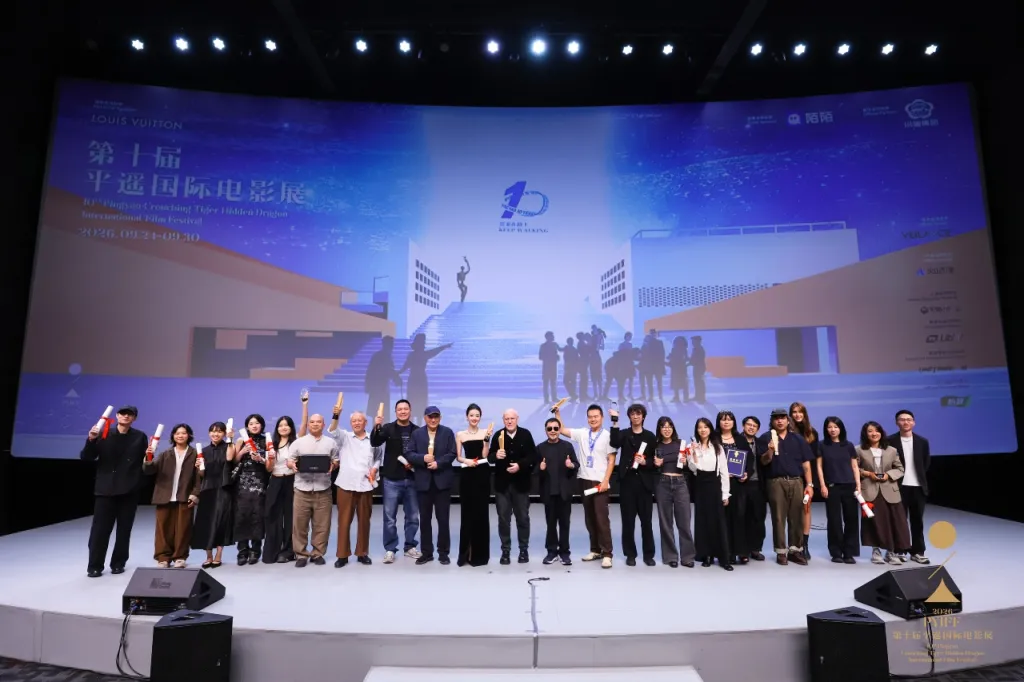
Chinese director Niu Niu’s Final Payment scooped the Best Film Award in the Fei Mu Awards of this year’s Pingyao International Film Festival (PYIFF), while Rafiki Fariala’s Congo Boy won Best Film in the festival’s Roberto Rossellini Awards.
Final Payment, which also won Best Actor for Niu Jianrong’s performance, revolves around a homeowner clashing with a contractor over the final payment following a set of renovations on his home. PYIFF’s competition jury stated: “Tearing through a very small rip, the film leads us into a reality and emotional landscape so expansive, where we sigh, lament, and reflect. The director’s approach is concise, unpretentious, and masterful, earning the wholehearted recognition of the entire jury.”
The Best Film award came with a cash prize of $150,000 (RMB1m) with half given to the director for the development of their next film, and half given to the distributor in China. Niu Niu previously directed Mr Junjun, which was awarded with the Jury Award and Youth Jury Award at PYIFF in 2023.
Also in the Fei Mu Awards, Xu Zao won Best Director for Light Pillar, while Best Actress went to Sun Yi for Wang Xiaozhen’s A Joke. The Jury Award was presented to Dong Jie’s Zoom In, Zoom Out, which had its world premiere in Venice Critics Week, while a special mention went to Cai Chengjie’s Suzhou Quartet.
The Fei Mu awards are focused on the festival’s Hidden Dragons section, which selects first, second and third films from emerging directors making Chinese-language films, while the Roberto Rossellini Awards focus on the Crouching Tigers section for emerging international directors.
Congo Boy, which took Best Film in the Roberto Rossellini Awards, also won Best Actor when it premiered in Un Certain Regard at this year’s Cannes film festival. The PYIFF award came with a cash prize of $20,000, with half given to the director for the development of their next film, and half given to the distributor in China.
The PYIFF jury stated: “The Jury unanimously has been moved by this autobiographical story, told in a simple style that echoes the great tradition of neorealism. For a film focusing on a character that confronts his world with optimism despite dark times and takes on his shoulders the destiny of his entire family.”
Also in this section, the Philippines’ Rafael Manuel won Best Director for Filipiñana, while the Jury Award went to Ben’imana, directed by Marie-Clémentine Dusabejambo, which won the Camera d’Or at this year’s Cannes. The jury also awarded Rakan Mayasi’s Yesterday The Eye Didn’t Sleep a Special Mention.
Hong Kong filmmaker Ann Hui received the Crouching Tiger Hidden Dragon East-West Award, shortly before she receives the Camellia Award at Busan International Film Festival next week.
Pingyao’s International Contribution To Chinese Cinema Award went to Marco Müller, who founded the festival with Chinese auteur Jia Zhangke and currently serves as Artistic Director of the Film Art Research Centre at Shanghai University, and veteran producer, director and former chairman of China Film Group Han Sanping. Hello Group chairman Tang Yan was presented with a 10th Anniversary Award.
This year’s PYIFF opened on September 24 with a screening of the 4K restoration of Fei Mu’s Spring In A Small Town; closed with Good Trip, co-directed by Hong Kong filmmakers Norris Wong and Hoi Wong, and also screened Jia’s short film Torino Shadow, which premiered at this year’s Cannes.
PINGYAO INTERNATIONAL FILM FESTIVAL 2026 AWARDS:
FEI MU AWARDS:
Best Film: Final Payment, dir: Niu Niu
Best Director: Xu Zao, Light Pillar
Best Actress: Sun Yi, A Joke, dir: Wang Xiaozhen
Best Actor: Niu Jianrong, Final Payment, dir: Niu Niu
Jury Award: Zoom In, Zoom Out, dir: Dong Jie
Special Mention: Suzhou Quartet, dir: Cai Chengjie
ROBERTO ROSSELLINI AWARDS:
Best Film: Congo Boy, dir: Rafiki Fariala
Best Director: Filipiñana, dir: Rafael Manuel
Jury Award: Ben’imana, dir: Marie-Clémentine Dusabejambo
Special Mention: Yesterday The Eye Didn’t Sleep, dir: Rakan Mayasi
>

movies22 seconds ago
‘Ted Lasso’ Pays Tribute To Anthony Head In Episode 409
Sports3 minutes ago
Pete Crow-Armstrong Debut Patch card sells for more than $1 million
Sports8 minutes ago
Connections: Sports Edition today: Hints and answers for Sept. 30, 2026, puzzle No. 737
-

 movies4 months ago
Search For Canadian TV Actor Stewart McLean Now Homicide Investigation
-

 Fashion9 years ago
These ’90s fashion trends are making a comeback in 2017
-
Fashion9 years ago
According to Dior Couture, this taboo fashion accessory is back
-
Fashion9 years ago
Model Jocelyn Chew’s Instagram is the best vacation you’ve ever had
-
Fashion9 years ago
Emily Ratajkowski channels back-to-school style
-
Fashion9 years ago
9 Celebrities who have spoken out about being photoshopped
-

 Anime4 months ago
Rurouni Kenshin: Hokkaido Arc Manga Takes 1-Issue Break – News
-

 Anime3 months ago
HIDIVE to Stream English Dubs for The World Is Dancing, The Forsaken Saintess and Her Foodie Roadtrip in Another World, The Dangers in My Heart: The Movie Anime – News