
movies
Coppola, Binoche, Sandra Hüller Urge EU to Protect Film Funding

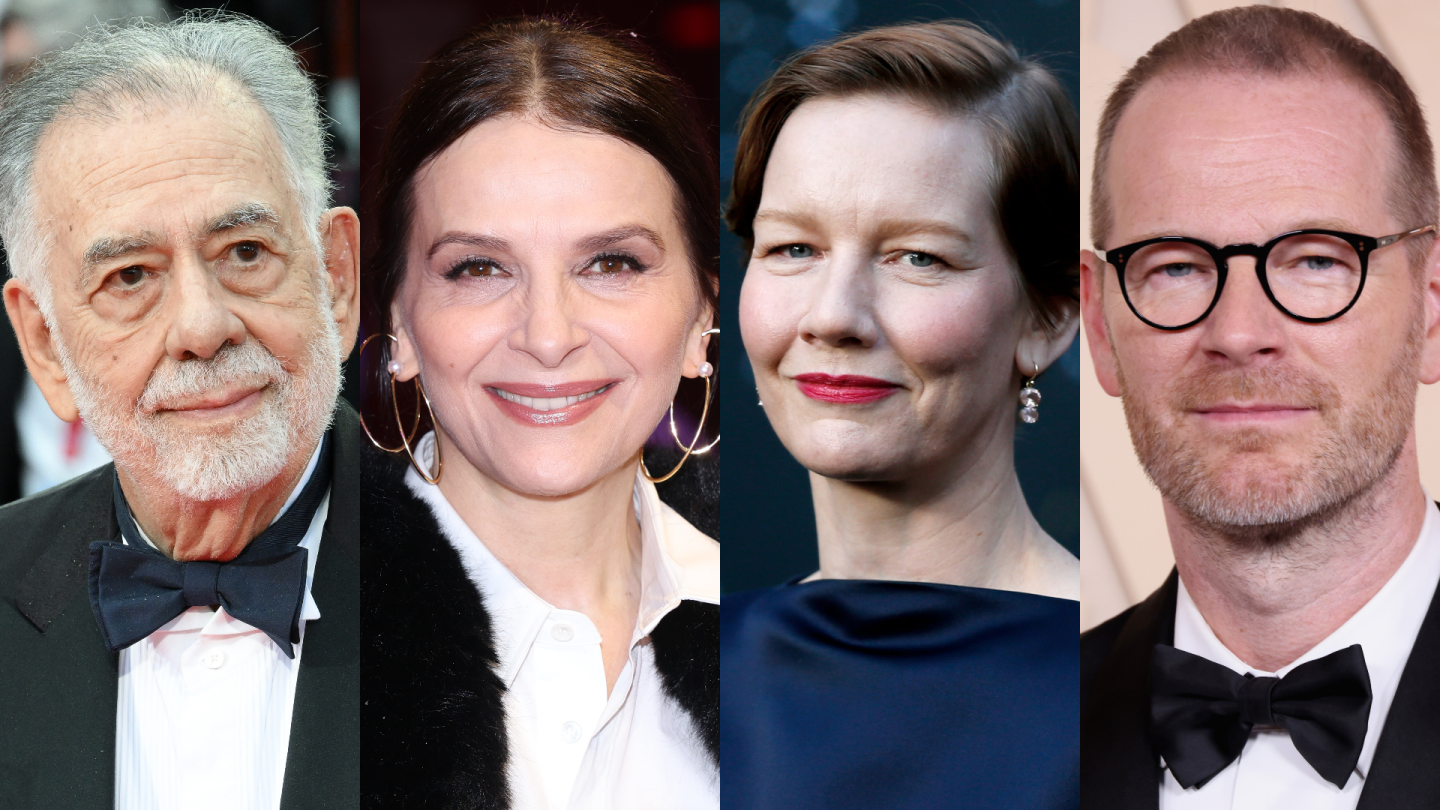
Francis Ford Coppola, Juliette Binoche, Sandra Hüller, Stellan Skarsgård, Joachim Trier, and Vicky Krieps are among the more than 4,700 film professionals who have signed an open letter calling for the European Union to protect film funding on the continent.
The letter, titled “Europe needs cinema, Cinema needs Europe,” calls on the EU to “future-proof” support or cinema under Europe’s MEDIA program, which has provided funding for thousands of films in the 35 years of its existence.
The MEDIA program has backed virtually every acclaimed European film of the past decades, including recent Oscar winners Sentimental Value, Mr Nobody against Putin, Flow, Anatomy of a Fall and The Favourite.
“Thanks to MEDIA, Europe wins an Oscar almost every year,” the letter highlights.
The open letter comes as EU Member states are discussing plans to combine funding for culture, media and civil society into a single pot. The so-called AgoraEU plan would see the MEDIA program merged with a new Media+ division, which would include EU funding for video games, news media and journalism. The European Commission has proposed a budget of €8.6 billion ($10 billion) for AgoraEU over its initial 2028-2034 funding period. The European Parliament has called to bump that up to €10.7 billion ($12.6 billion). With so much money at stake, the film, TV and media industries in Europe are fighting over how the budget gets divided up.
European film professionals want guarantees that funding for cinema is locked into the AgoraEU budget, and not diverted to other projects or industries.
“For over 35 years, [MEDIA] has been supporting the creation of European stories from script development to production by independent production companies, the releases in theatres and online, festivals, professionals’ training and upskilling,” the letter reads. “We, European cinema professionals and citizens – all cinema lovers – call upon the European Commission, European Parliament and Member States to future-proof the success and integrity of the vital and precious MEDIA program and reinforce its resources. There are no shared values, no democracy, and no European soft power, without artistic creation.”
EU Member states are due to adopt their initial position on the AgoraEU proposal next Tuesday, May 12, coincidentally the opening day of the 79th Cannes Film Festival. Several of the directors in the Cannes competition this year signed their names to the open letter, including Pawel Pawlikowski (Fatherland), Lukas Dhont (Coward), Arthur Harari (The Unknown), and Rodrigo Sorogoyen (The Beloved). Signatories include such festival regulars as Ruben Östlund, Yorgos Lanthimos, Oliver Laxe, Michel Hazanavicius, Agnieszka Holland, Nadav Lapid, Ariane Labed, and Clémence Poésy, among many others.
Among European film professionals, and independent producers that rely on EU funding, the debate around MEDIA and AgoraEU is set to dominate discussions up and down the Croisette this year.
Read the full letter below:
Cinema needs Europe, Europe needs cinema
“No art form, like cinema, traverses our diurnal consciousness so directly as to touch our feelings, deep within the twilight chamber of our soul.”
For more than 130 years, this twilight chamber, as Ingmar Bergman called it, was brought to life by the lives of others, by their thoughts, their struggles, their words and their gazes.
Cinema begins with the desire to create. It becomes a film through a succession of encounters: screenwriters, directors and producers develop it, cinematographers, actors, and technical crews contribute, film funds support it, sales agents and distributors bring it to cinemas and festivals – and later broadcasters and streamers, critics debate, and audiences embrace it.
Filmmaking is a collaborative art. It becomes an industry through job creation and technological innovation. Yet every film remains a prototype, impossible to mass-produce on an assembly line. There are no economies of scale in storytelling. This dual nature calls for deliberate political choices engaging public and private operators. Europe itself, as a collective endeavour, was imagined in stories before it was built, it is Stefan Zweig’s continent of ideas, not armies. Cinema brought this imagined Europe to life: La Dolce Vita, Wings of Desire or Amélie turned Rome, Berlin and Paris into shared cultural references. Anatomy of a Fall, Sirat, or The New Years, global successes emerging from European talents, continue to build bridges across languages and borders.
In Europe, the political choice for cinema, be it Czech, Italian, Swedish, Slovenian, Portuguese or Belgian, is the MEDIA programme. Just as the idea of Europe itself is a unique project, the idea of the MEDIA programme is to sustain diverse European voices in a common house.
For over 35 years, it has been supporting the creation of European stories from script development to production by independent production companies, the releases in theatres and online, festivals, professionals’ training and upskilling. It has given a chance to all kinds of European projects, including the most unexpected ones, from East to West and from North to South. Building on the Union and Member States’ regulations, it has also reinforced our industries against global giants, allowing film professionals to face sector upheavals and resist standardization, and fostered a dynamic and job-creating ecosystem.
MEDIA is a drop in the ocean of European funding: it represents 0,2% of the Union’s budget, while, as a comparison, the common agricultural policy alone accounts for 32% of this budget.
Yet, it has been a European success story with an invaluable impact.
Thanks to MEDIA, works that nurtured the growth of Ruben Östlund or Justine Triet travelled the world.
Thanks to MEDIA, Europe wins an Oscar almost every year: after Flow, Gints Zilbalodis’s animated film, Joachim Trier’s Sentimental Value and the documentary Mr Nobody against Putin by David Borenstein and Pavel Talankin took the spotlight in 2026.
Thanks to MEDIA, the voices of exiled and oppressed authors, such as Jafar Panahi or Mohammad Rasoulof, have the freedom to reach audiences worldwide.
Thanks to MEDIA, our cherished neighbourhood cinemas can remain open to the world through diverse programming, and do not have to close their doors.
Without MEDIA, we would all be a little less European.
Greek filmmaker Costa-Gavras once said, “you cannot change people’s political vision with a film, but you can, at the very least, kindle a political discussion”. In times marked by war, geopolitical tensions, and pressure on democracy – our foremost common good – this function is essential. We strive to give our societies, our children and future adults a taste for collective experience, empathy, and resistance.
Yet Europe’s ability to tell its own stories is under strain. Most audiovisual productions viewed in Europe originate outside the continent. Global platforms increasingly shape visibility, access and stories. At the same time, the sector faces structural transformations: shifting audience habits, including declining cinema attendance, the rise of artificial intelligence, and growing geopolitical competition.
The European Union is currently revising the rules that enable European cinema to flourish, to travel, and to carry our common voice. It includes the future of MEDIA in the new AGORA EU programme.
It is now the time to write the next chapter of the European Cinema story, with even greater ambition, commensurate with the challenges we face. We must not fail to see that the destiny of democracy and that of cinema, both born in Europe, are intimately linked. Because every time a cinema opens, democratic life reasserts itself.
We, European cinema professionals and citizens – all cinema lovers – call upon the European Commission, European Parliament and Member States to future-proof the success and integrity of the vital and precious MEDIA programme and reinforce its resources. There are no shared values, no democracy, and no European soft power, without artistic creation.
>
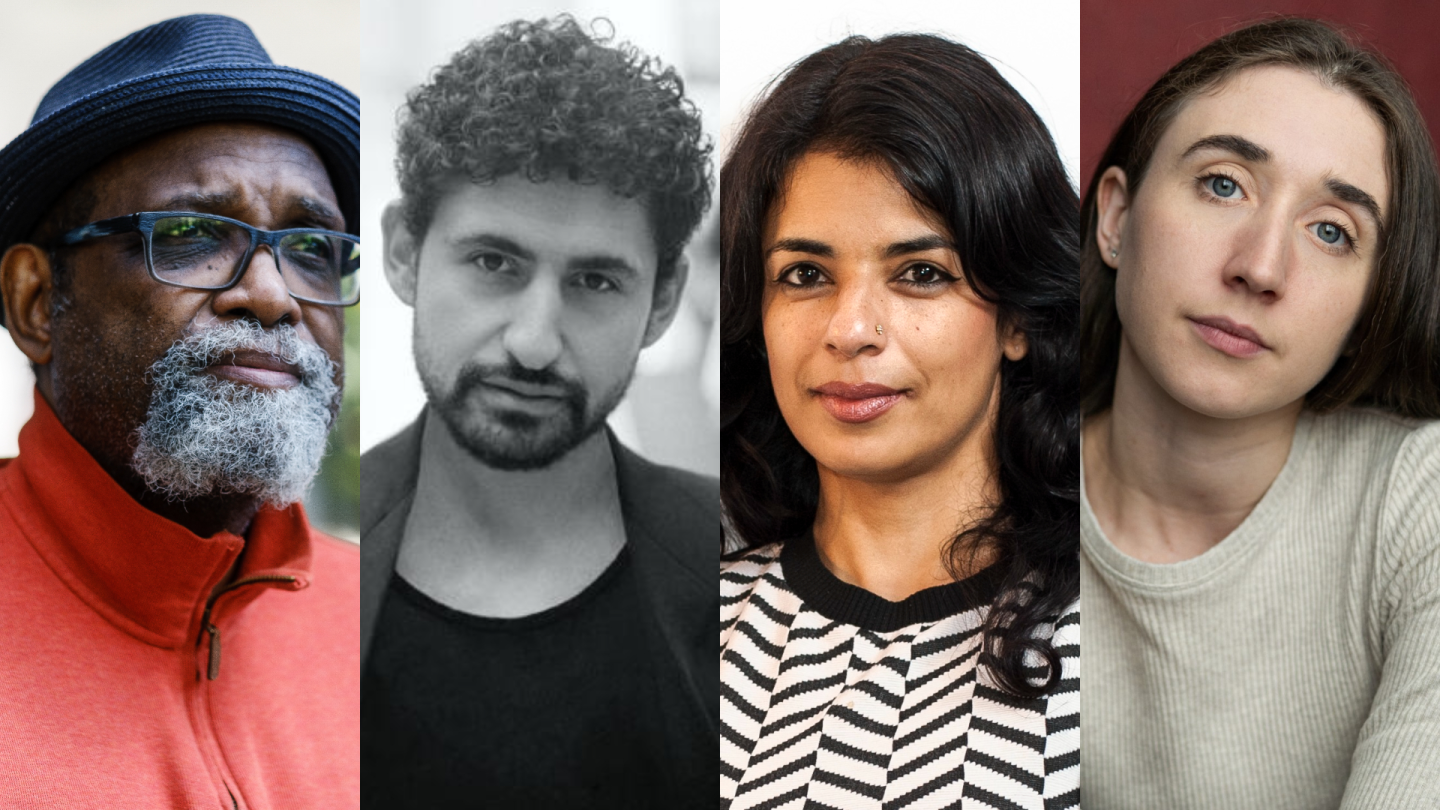
Sam Pollard and Amir El-Masry are among those tapped to head up the BFI London Film Festival competition juries this year.
Pollard will preside over the event’s official competition jury, which will select the winner of the best film award. His decades-spanning career includes Peabody and Emmy Awards, an Academy Award nomination and the International Documentary Association’s Career Achievement Award. Pollard’s recent directing credits include Tutu, which won the Peace Film Prize at this year’s Berlinale, as well as I Was Born This Way (2025), The League (2023), South to Black Power (2023), Citizen Ashe (2021) and MLK/FBI (2020).
Pollard is joined by Argentine filmmaker and writer Mariano Llinás (The Life of Jorge Luis Borges, The Flower) and Julie La Bassiere, chief strategy officer at DDA Global. “When I was asked to be the jury president for the London Film Festival, I was very surprised,” said the filmmaker on Wednesday. “I have been a jury member at other festivals but to be asked by the London Film Festival leaves me over the moon and very excited to weigh in on the films we will be asked to screen.”
The first feature competition (Sutherland Award) jury will be headed up by British-Egyptian actor and producer Amir El-Masry. El-Masry won a Scottish BAFTA for his performance in Limbo and named a BAFTA Breakthrough Brit in 2020. His recent screen work includes the Naseem Hamed biopic Giant and Julia Jackman’s 100 Nights of Hero. The star is joined by Filipino independent film producer and former schoolteacher Alemberg Ang (Moonglow) and Rosa Bosch, an international film sales, distribution, and awards strategy executive and AMPAS member.
Leading the jury selecting the winner of the Grierson Award for the documentary competition is British-Indian writer Sandhya Suri, whose narrative fiction debut Santosh was shortlisted for the Oscars and won the BIFA for best screenplay. Suri originally made her debut with the 2005 documentary I For India (which played at the Sundance Film Festival) and is now working with BBC Film on a J.G. Ballard adaptation. She is joined by Kate Fitzpatrick, senior programmer at Melbourne International Film Festival, and Andee Ryder, a BAFTA and Emmy Award-winning film producer.
The short film competition jury is led by producer, writer and Erebus Pictures co-founder Helen Simmons. Her producing credits include the BAFTA-nominated Hoard, the 2025 LFF closer 100 Nights of Hero and Berlinale Crystal Bear winner Last Swim. She also co-wrote and co-directed the Méliès Award-winning short Measure.
Simmons is joined by New York Times Critics’ Pick and Sky Arts breakthrough award nominee Leo Reich, a comedian and creator of forthcoming Channel 4 and A24 series It Gets Worse. Joining them is script editor, story consultant and executive producer Jack Casey (Wren Boys, White Girl), who is also a story consultant on Black Church Bay, which screens at this year’s LFF.
“We are delighted to share our 2026 competition titles with audiences and our esteemed jury members,” said BFI London Film Festival Kristy Matheson. “Our competition films bring together an extraordinary range of stories and filmmaking voices, and our juries bring distinct perspectives to the films. My thanks to each of them for their generous participation in the festival this year.”
>

EXCLUSIVE: Orange County Choppers Originals is headed out of the garage and travelling to Europe.
Hearst Networks has bought UK rights to the ‘reborn’ ob doc series from Off The Fence, which has boarded the show after striking an agreement to represent it worldwide (excluding the U.S.).
The new series – which aired in the U.S. on Discovery Channel, Discovery Turbo TV, Discovery+, and Discovery GO after launching in February – is the latest chapter in the motorbikes franchise that began in 2002 with American Chopper and is bases around the Orange County Choppers custom bikes business. A second season has been ordered, with the number of eps doubling to 12.
Prior to Orange County Choppers Originals‘ launch, there had been no new American Chopper episodes since 2020’s finale, American Chopper: The Last Ride. At one point, there had been a six-year gap due to legal problems between Paul Teutul Sr. and his son, Paul Teutul Jr., the father and son at the center of the series, but they were ultimately settled and the pair reunited on-screen.
The Hearst agreement, brokered by OTF’s SVP North America and Global Networks, Sam Thompson and Hearst Networks’ Acquisitions Manager, Hannah Gray, marks a first international deal for the revival.
Orange County Choppers Originals is based around Teutul Sr., founder and CEO of Orange County Choppers, who has spent over 30 years crafting custom motorcycles for major corporations and sports teams. The series shifts the focus to his workshop in Florida, where he reunites with some of the original team while introducing fresh talent. It also delves into his personal life, highlighting his charity work and passion for animal welfare and rescue on his hobby farm.
Hearst’s Gray said: “Orange County Choppers has everything we look for in great factual entertainment: big builds, strong characters and plenty of heart. With Paul Sr. back at the centre of the story, we’re excited to bring this new chapter to UK audiences.”
Orange County Choppers Original sees Teutul Sr.’s team design and build one-of-a-kind motorcycles for charitable causes, with each episode following them through engineering challenges, tight deadlines, and unexpected setbacks, culminating in auctions or raffles to raise funds and awareness.
Joan Kay, co-CEO of OCC said: “Everyone loves a comeback story and this one comes with the rebirth of an iconic brand and frankly, Paul Sr. is kicking ass. We’re very excited to partner with OTF on the global revival of the show as the company shares our values of working with entertainment with purpose and has an enviable reach and network of partners around the world across all platforms.
“This show isn’t just television, it has proved itself as a cultural phenomenon with the power to ignite fans and enthusiasts and turbocharge bike culture – we can’t wait for you all to see it.”
OTF’s Thompson said: “We’ve seized this opportunity wholeheartedly because the facts speak for themselves. There’s an existing fanbase hungry for more, with proven ratings, engagement, sponsorship and merchandising potential. We’re especially excited to have Hearst Networks on board as a quality broadcast partner and look forward to sharing the rollout of this rare gem.”
The American Chopper franchise has previously broadcasted in 160 territories in 35 languages worldwide, and OTF’s acquisition offers a new opportunity for buyers at MIPCOM in just under two weeks’ time in Cannes, France.
>
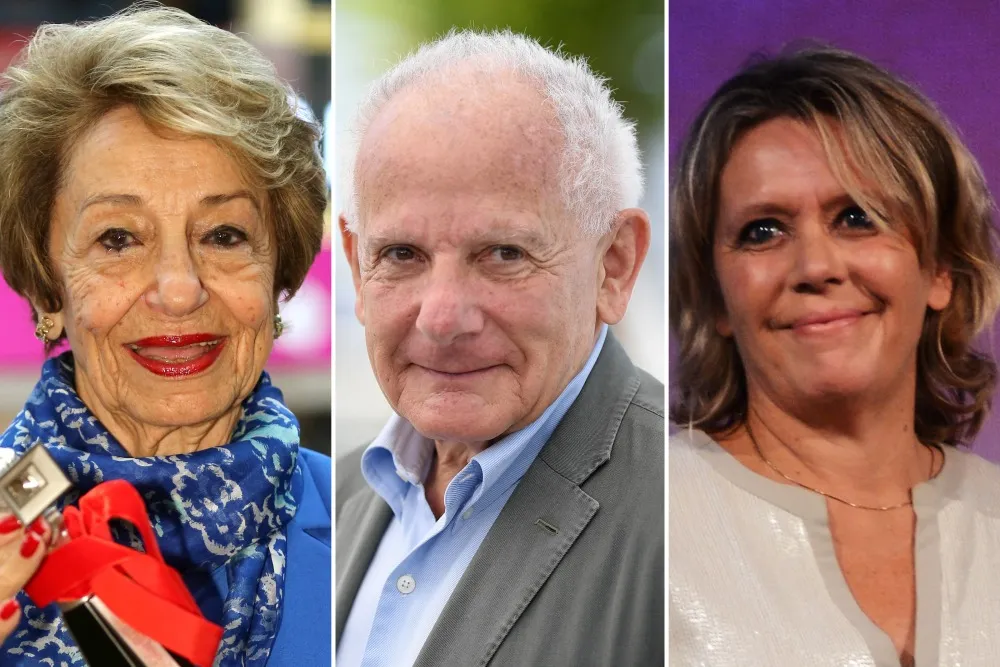
The European Film Academy has named Beki Probst, Marin Karmitz and Sandra den Hamer as the first recipients of its new Community Award for an Outstanding Contribution to European Film Culture.
The award, paying tribute to “a decisive and continuous contribution over many years to the development and expansion of European film culture”, will be presented during the European Film Awards weekend in Athens in January 2027.
The trio will be presented with the award on January 15, on the eve of the main ceremony at the traditional Welcome Night gala dinner, taking place this edition at the Acropolis Museum housing some 4,000 artefacts dating as far back as 1,200 BCE.
Probst is best known internationally as the founder of the Berlinale’s European Film Market, having entered the cinema world as the founder with her Swiss husband of the Queenie Cinemas in Berne in the 1960s, which grew into a successful chain of arthouse cinemas still existing today.
Born into a Sephardic Jewish family in Istanbul, Probst studied Law and Journalism and worked briefly as a film journalist.
From 1981 to 1988, she was the Berlinale delegate for Turkey and Greece and after initiating Locarno’s industry program, she was asked by Berlinale Director Moritz de Hadeln to start the European Film Market in 1988 in its current form.
Under her management, which continued into 2014, the EFM became one of the largest and most important international film market in Europe.
She has previously been feted with the Berlinale Camera, the Prix du cinéma Suisse, the French Chevalier des Arts et des Lettres and the Order of Merit of the Federal Republic of Germany.
Karmitz is known as the founder of France’s independent exhibitor, producer, film financier and sales agent mk2 film. Born in Romania in 1938, Karmitz arrived in France as a refugee with his family in 1947.
After studies at the IDHEC film school in Paris, he worked as assistant director to the filmmakers Jean-Luc Godard, Agnès Varda, Jacques Rozier, Yannick Bellon and Pierre Kast. before directing his first short film, Nuit Noir, Calcutta, based on a screenplay by Marguerite Duras, in 1964.
In 1965, he worked with Samuel Beckett on the adaptation of Comédie. In the same year, the feature was selected to open the Venice International Film Festival and shocked audiences with its avant-garde material.
He launched mk2 Productions in 1967 and made his feature-length directorial debut with Seven Days Somewhere Else (1968), followed by Comrades (1970) and Blow for Blow (1972), which were screened at international festivals.
He opened his first cinema in Paris in 1974 in response to Blow for Blow, about a group of textiles workers who take their factory boss hostage in protest at the work conditions, being shut out of mainstream circuits.
In 40 years, he would produce 108 films and distribute over 350 in theatres, among them Krzysztof Kieslowski’s Three Colours trilogy, for which he received a nomination for the European Film Awards 1994, twelve films by Claude Chabrol, Alain Resnais, Louis Malle, the Taviani brothers, Theo Angelopoulos, Lucian Pintilié, Gus Van Sant, Ken Loach, Abbas Kiarostami, Hong Sang-Soo, Michael Haneke, Walter Salles and Xavier Dolan.
Den Hamer has an extensive track record in the Dutch film industry.
From 2007 to 2023, she was the director of the Netherlands Filmmuseum in Amsterdam. Under her leadership, the re-named Eye Filmmuseum opened a brand-new museum building and a new collection centre in Amsterdam.
Its eclectic programming includes large retrospectives, international conferences and as well as exhibitions, exploring the work and careers of filmmakers such as Bela Tarr, Apichatpong Weerasethakul and Alex van Warmerdam among many others.
Before that, Sandra den Hamer worked for 23 years at the International Film Festival Rotterdam, including roles as co-ordinator of CineMart and the Hubert Bals Fund. From 1996 to 2007, she directed the festival.
She also served as President of the Board of the Association of European Cinematheques (A.C.E.). From 2023 to 2026. she was appointed interim executive director at the Netherlands Film Fund. Today she chairs the Board of the IDFA Institute and the Gerrit Rietveld Academy in Amsterdam.
Gathering 5,700 members from more than 50 countries across Europe, the European Film Academy oversees the annual European Film Awards, which alternates taking place in its home city of Berlin and another European city, which is Athens this year.
The 39th ceremony marks the second time it is unfolding in its new January slot, after the academy decided to shift it from a long-running December slot to integrate the awards more fully into the wider awards season.
>
'We've seen it all': Jared Spurgeon and Jonas Brodin reflect on a lifetime with the Minnesota Wild

London Marathon 2027: Sabastian Sawe and Catherine Debrunner play rock, paper, scissors to decide race days
Kevin Durant, Amen Thompson and the 11 questions facing the Rockets this season
-

 movies4 months ago
Search For Canadian TV Actor Stewart McLean Now Homicide Investigation
-

 Fashion9 years ago
These ’90s fashion trends are making a comeback in 2017
-
Fashion9 years ago
According to Dior Couture, this taboo fashion accessory is back
-
Fashion9 years ago
Model Jocelyn Chew’s Instagram is the best vacation you’ve ever had
-
Fashion9 years ago
Emily Ratajkowski channels back-to-school style
-
Fashion9 years ago
9 Celebrities who have spoken out about being photoshopped
-

 Anime4 months ago
Rurouni Kenshin: Hokkaido Arc Manga Takes 1-Issue Break – News
-

 Anime3 months ago
HIDIVE to Stream English Dubs for The World Is Dancing, The Forsaken Saintess and Her Foodie Roadtrip in Another World, The Dangers in My Heart: The Movie Anime – News