
Sports
The making of Arsenal signing Bruno Guimaraes, a captivating leader who couldn’t tie his shoelaces

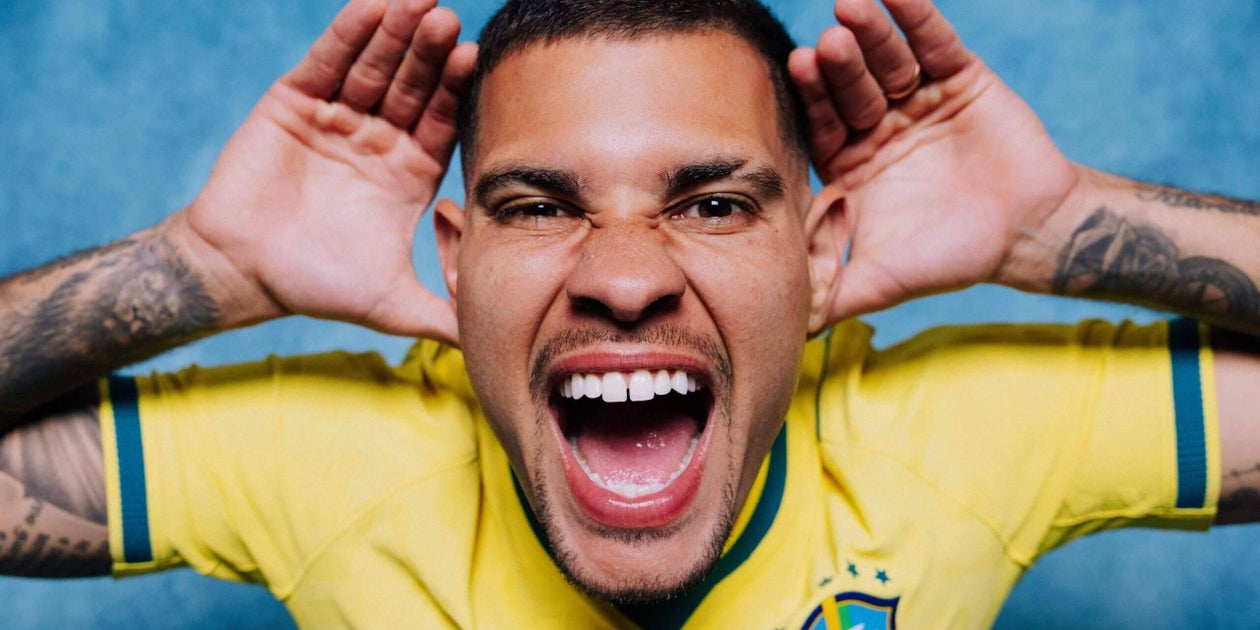
A version of this piece was first published in January 2023. It has been updated to reflect the period since then and Arsenal confirming the signing of Bruno Guimaraes from Newcastle United.
It wasn’t a free kick, nutmeg or rousing tackle that convinced Tiago Nunes that Bruno Guimaraes was destined for the stratosphere.
Nor was it one of the midfielder’s through balls, those trademark offerings to the gods of geometry.
It didn’t even happen on the pitch, in fact.
It was September 2019, half-time in the second leg of the Brazilian cup final. Athletico Paranaense had taken a narrow lead into the game — Guimaraes scored the only goal of the first leg — but were clinging on. Internacional, spurred on by a full house at their Beira-Rio stadium, were in pummelling mode.
“The score was 1-1, but they were dominating,” Nunes, Athletico’s coach at the time, recalled in an interview with The Athletic in 2023. “It was a high-pressure game and we were well below our usual level.”
The atmosphere in the away team’s changing room told its own story. The Athletico players knew that another goal for Internacional would take the final to penalties. They were quiet, their eyes fixed on the floor.
Then Guimaraes piped up.
“If you’re scared to play, give me the ball,” he said. “I’ll play for you. You can trust me. But let me tell you this: we are going to leave this stadium with the trophy.”
Guimaraes was 21, still a pup. Nunes already knew about his tenacity and had marked him as a future leader, but this? This was as unexpected as it was welcome.
“It gave me goosebumps,” Nunes said. “It was an extraordinary thing for a kid of his age. It demonstrated his personality and his ambition.”
Those attributes made Guimaraes a firm favourite at Newcastle during his four and a half years at the club. As he makes the switch to the Premier League champions Arsenal, there is a feeling of dread on Tyneside over what life will be like without him, a player who runs himself into the ground every game and adds much-needed composure, quality and incision to their possession play.
Not just on the pitch, Guimaraes has also endeared himself to Newcastle fans with his attitude, embracing life in the north-east of England and leading by example in his role as captain. His mentality from the start had been that of a winner, stating his determination to write his name into the history of the club. He said it was the “best day of his life” when, as skipper, he lifted the Carabao Cup in 2025 — Newcastle’s first piece of major domestic silverware in 70 years.
“When you demand something of him, he gets better,” said Nunes, and that is not an outlier view among Guimaraes’ former mentors.
Speak to those who knew him as a boy and you get the impression he was wired for big occasions.
But even when things have been tougher at Newcastle, Guimaraes has been the standard-setter, stepping up alongside Joelinton in the dressing room as results slipped under Eddie Howe last season, much like he did for Nunes all those years ago.
The result of that cup final speech? Athletico held on to win.

Guimaraes with the trophy after that 2019 Brazilian cup final (Lucas Uebel/Getty Images)
Guimaraes grew up in Engenho Novo, a modest neighbourhood in the endless northern sprawl of Rio de Janeiro. His father, Dick, drove a taxi; Marcia, his mother, worked in a motorcycle dealership. By Brazilian standards, they were comfortable enough.
He had two bouts of pneumonia as a toddler. The family’s doctor recommended swimming. Good for the lungs. But Guimaraes was already obsessed with football, always out in the street, a ball at his feet. Good for the soul, maybe.
At five, he started playing futsal at local club Helenico. There, he first appeared on the radar of Mario Jorge, a young coach with whom he formed a lasting bond. They were together at under-six, under-nine, under-11 and under-12 levels, and they still speak today.
Fun was the main objective in the early days. The Helenico boys played dodgeball and had shoelace-tying races. “Bruno didn’t know how to do his laces, so he’d get very upset,” Mario Jorge told The Athletic in 2023. “He’d go home and beg his mum to teach him how to do it. He was always really competitive.”
Guimaraes was less keen on playing matches. “He liked those little games, but not the actual football,” said Mario Jorge. “He did not want to take part. Sometimes he’d get so nervous that he felt sick. He’d go to the toilet and tell me that he didn’t want to play. Sometimes he couldn’t even speak; he would just shake his head. That was his signal.”
Eventually, Guimaraes found his confidence. After impressing for Helenico, he was invited to play for Flamengo’s futsal team. At weekends, he’d go for barbecues with Mario Jorge, who roped him into three-on-three neighbourhood games.
“It would be me, Bruno and another boy against three adults,” recalled Mario Jorge. “This was on the street. No shoes, no markings. The ball would hit the curb, hit the wall, and you’d continue. There were no fouls. It really was a street game. And we’d win every time.”
When Mario Jorge was asked to start an under-13s team at a local club called Sendas in 2010 (their name changed to Audax-RJ a few months later), Guimaraes transitioned to 11-a-side football. He had previously had trials with Fluminense and Botafogo, but nothing came of them; this was a chance to show what he could do on grass.
“Physically speaking, he was very skinny and slight,” said Gabriel Barreiro, who assisted Mario Jorge during Guimaraes’ time at Audax-RJ, when speaking to The Athletic in 2023. “He was not extremely technical, either. He was never the standout player at that age.”
Mario Jorge echoed that view, recalling a period when he became worried about Guimaraes’ co-ordination. The kid ran as though his arms and legs were having a four-way argument. “You have no idea how bad it was,” he laughed. “We made him do special exercises to tidy up his movement. Today, it’s a bit better. It’s not a particularly pretty way of running, but he gets by.”

Guimaraes in action for Brazil (Nicolo Campo/LightRocket via Getty Images)
While Guimaraes was neither a study in grace nor an obvious genius-in-waiting, he excelled in the intangibles.
“His commitment stood out,” explained Barreiro. “He had a very strong personality, extremely determined. He always did everything we asked of him in training — and then a bit more.
“Even without the physicality, he would surprise us. He would compensate in other ways. He was a fighter.”
Nor was his drive directed only inward.
“Bruno was always a leader,” said Mario Jorge. “He had the posture, the conduct, the intelligence.
“He was not an imposing leader; it wasn’t that he had a strong personality that he would force on his colleagues. It was more natural — a captivating, sweet form of leadership, through easy smiles and politeness. It was part of his upbringing. I think it came from his family.”
Still, the fan club remained fairly small for the three years Guimaraes spent at Audax-RJ. The scouts from the big clubs didn’t talk about Bruno.
“Bruno was far from being the most in-demand player we worked with,” said Mario Jorge. “Some boys had offers from Botafogo, Flamengo, Vasco da Gama, Bahia, Figueirense, but there was nothing for him.”
A futsal interlude.
Guimaraes, like many Brazilians before him, credits futsal — Brazil’s version of five-a-side, played on squeaky indoor courts using a small ball — with shaping the way he plays today. Which is fine, but a little vague. So we asked his former coaches for a bit more granular detail.
Mario Jorge: “Bruno always used the sole of his foot to control the ball. In 11-a-side, you don’t use that technique a lot, because sometimes the ball is wet and it can be slippery. But he always did that a lot.”

Guimaraes was still controlling balls with the sole of his boot years later for Newcastle (Serena Taylor/Newcastle United via Getty Images)
Barreiro: “It taught him quick decision-making in small spaces. He likes doing these little dribbles, even as a midfielder. Even when he is under pressure, he knows how to escape. That comes from playing futsal.”
Nunes: “The nutmegs are from futsal. The one he loves is when you control the ball with the sole of your foot and just nudge it. He always did that. It’s also typical of players from Rio. He’s an expressive guy, a joker, and he likes to bring that onto the pitch with him. He likes to mess with his opponent, to get in his head.”
Mario Jorge: “Futsal is responsible for his decision-making and the dynamism he brings to the game. He had to work out a way to escape pressure from boys who were stronger and taller than him. It made him develop an intelligence which is very visible. When I see him playing today for the national team, I still see that nine-year-old on the futsal court. It’s obvious that the action is much quicker, but I used to see him do the same things.”
When Guimaraes left Audax-RJ, it was not for one of the country’s traditional heavy hitters but for Audax-SP — the Sao Paulo branch of the same group of clubs, higher up in the pecking order of Brazilian football but not a household name.
He made his professional debut at 17, then kicked on after the 2017 Copinha youth tournament, playing eight first-team games under Fernando Diniz, an up-and-coming coach who is now in charge of the first team at one of those domestic big guns, Corinthians.
“He’s a very intelligent player,” Diniz said of Guimaraes in an interview with Brazilian TV show Globo Esporte. “He has immense maturity for his age, particularly in high-pressure games. He presses intensely and has the technical ability to dictate the play. He has the soul of a great footballer.”
Supported by his parents, who ferried him back to Rio at the weekends, Guimaraes started to win admirers — from Brazil and further afield. Audax turned down a bid from a Hungarian club before agreeing a deal with Athletico for a year-long loan with an option to buy.
Initially, it looked like a misstep. Between May and November 2017, Guimaraes played only 58 minutes for the Athletico first team. He expected to be sent back to Audax, but in the final match of the season he produced a sparky cameo off the bench against Palmeiras. “He did really well in those final 15 minutes,” said Nunes, who was Athletico’s B-team coach at that stage. “He made a great final impression, which pushed the club to let him stay.”
There was more good fortune to come. Diniz arrived from Audax as first-team coach, for one. Guimaraes then benefited from Athletico’s policy of ‘splitting’ their squad, allowing youth players to play the state championship so the first team could have a proper pre-season.
Guimaraes saw his chance.
“He had this determination,” said Nunes. “He didn’t want to go back to Audax, who only played in regional competitions.”
Athletico won the state championship with what was essentially an under-23 team. Guimaraes, the standout performer, was promoted to the senior squad proper.
The secret was finally out.
“He knew instinctively where he should be to receive the ball. He knew when he was the spare man, when he had to provide support, when he had to make a run. That wasn’t normal for a player of that age,” Nunes said.
“Bruno was never the kind of player who did stepovers or particularly creative things. He wasn’t that explosive player who would pause on the ball and do a dribble. His technical quality was about keeping the ball moving, the right touch at the right time.”
Above all, Nunes loved Guimaraes’ personality. “Bruno is a Carioca, from Rio,” he said. “Cariocas are known for being warm and open. They love to chat and are always smiling. They come with that software installed. Bruno is like that: a very sweet guy with a big heart.
“What really impressed me was the way he reacted to criticism. I was always challenging Bruno, nagging him. When you give Bruno some stick, he doesn’t give it back, doesn’t complain. He gets really pissed off but keeps it inside and uses the anger to improve.”

(Lucas Uebel/Getty Images)
What did Nunes need to pester him about?
“He sometimes wanted to chase his man all over the pitch. That way of thinking about defending as a collective thing didn’t come naturally to him. I didn’t want to take that aggression away from him, but sometimes he just abandoned his zone. Against the better teams, that left us with a weak point.
“I also nagged him about improving his left foot. I used to call him ‘mop foot’ because when he kicked the ball with his left, there was no power behind it. He hated that. He used the criticism as fuel. It was, ‘Watch this then, you son of a b***h, I’ll show you what I can do’. I used to do it quite intentionally. I wanted him to be pissed off.
“Some players go into their shells when you shout at them, and are unable to perform. Bruno was the opposite. He is at his best under pressure. Maybe that’s one of the things that helped him adapt to European football so quickly.”
A geography interlude.
Nunes: “One thing he’s not so good at is geography. I went to Paris with my wife in 2018 and when I got back, I called each one of my players to check in. I called Bruno and he told me he had seen on Instagram that I had been in Paris.
“He said, ‘Yeah, I saw you were in Paris. I’ve always wanted to go to England.’
“I told his team-mates about that later. It became a long-running joke.”
As Guimaraes’ star rose in Brazil, so too did interest levels abroad. Chelsea scouted him. Benfica phoned Nunes to ask for the inside line. So did Arsenal.
“Edu (then Arsenal’s technical director) called me to ask about Bruno,” Nunes recalled in 2023. “He just wanted to get my view about his characteristics, and see whether I thought he would be a good fit for Arsenal. Their philosophy was changing with Mikel Arteta’s arrival (as head coach and now manager) and they wanted players who could keep possession and interpret space — the exact things that Bruno does perfectly.
“I told him, ‘Sign him up, because he’s got huge potential’. But I don’t know whether Arsenal made an offer in the end.”
What Arsenal have seen in the years since has only convinced them that their initial instincts were correct.
Former Brazil midfielder Juninho Pernambucano, sporting director at French club Lyon at the time, called Guimaraes directly and told him he would make the youngster the best central midfielder in the world. Guimaraes believed him and moved to Ligue 1.
At Lyon, he caught the eye with his ability to run games from midfield. Former Lyon head coach Peter Bosz called him the “thermometer” of the team. Hiring his own personal performance analysts suggested he was taking his career incredibly seriously.
One of those analysts is Eduardo Barthem, who has worked closely with Guimaraes for almost five years, alongside Rafael Marques, Hugo Delfino and Marcos Tanaka and Rio de Janeiro-based consultancy Performa Sports. He has been impressed with Guimaraes’ drive to improve, despite his successful career to date.
“He’s a 28-year-old player who has already played in two World Cups and has become a cult hero at two different clubs,” says Barthem, speaking earlier this week. “He has had every reason to become complacent along the way, but there is ambition to always want more. He is a real winner, very competitive, and he understands that to compete at this level, he needs to be constantly improving.
“He’s always willing to listen to what he needs to improve on and where he needs to build on his strengths, and that mindset is definitely what has brought him this far.”

Guimaraes with Eduardo Barthem, one of the analysts he works with (Eduardo Barthem)
More specifically, Barthem pointed to Guimaraes’ increased shooting rates to illustrate his desire to add new layers to his game.
Guimaraes more than doubled his rate of shots on target per game last season, while he also doubled the number of actions with his left foot, which would be music to Nunes’ ears.
“He showed that response to our conversations in-game, which is helping him to become more complete all the time,” says Barthem.
“Then there are set pieces. That came from him. It was down to Bruno deciding to step up as a potential set-piece taker. We always said that he has an excellent delivery and that he could work on his free kicks and corners, but this was something that he took on himself, and the result has been very positive.”
Though Barthem and his team were thrilled with his time at Newcastle, they cannot hide their excitement at his next move.
“I am so excited, because Arsenal are one of the best teams in the world, the reigning Premier League champions, runners-up in the Champions League. He’ll be competing for every title. But I also think he fits really well into the midfield, and can replicate some successful partnerships he has had throughout his career.
“For example, I see a potential partnership with Declan Rice where they can constantly switch positions, much like he did with Sandro Tonali at Newcastle. Bruno is an elite player in both the No 6 and the N0 8 positions, so I think at certain moments he can play slightly further forward, at other times he can drop to allow Rice some space to move into.”
Barthem also thinks Guimaraes can click with Martin Odegaard, a player who is always making himself available to receive the ball and offering passing lanes, and who likes one-twos, combining in short spaces, much like Lucas Paqueta for the Brazil national team and at Lyon.
“But above all, I’m excited to see how he plays with Bukayo Saka, who is a player who likes to make runs in behind,” says Barthem. “Those through balls, particularly down the right flank, are his greatest strength — you only have to look at his relationship with Vinicius Junior, Raphinha and Gabriel Martinelli with the national team.”
When asked if he has any advice for Guimaraes, Barthem’s answer is simple: more of the same.
“Stay focused and disciplined, and keep that ambition. He is a player who gives 100 per cent to everything he does with his career, and he is addicted to football, to getting better.
“That flame has been lit for the game, and it is vital for him to keep that feeling alive.”

Guimaraes and Martin Odegaard (left) have gone from Premier League rivals to Arsenal midfield colleagues (Michael Regan/Getty Images)
Nunes holds a similar view. His affection for the player is reciprocated, too: Guimaraes once called Nunes his “godfather”.
“It’s a paternal relationship,” said Nunes in 2023. “Not many players give their manager a chance to get close, but some need that, and Bruno was one of them. He’s no longer just someone I coached; he’s a friend. He’s always in my heart.”
Nunes was never in any doubt about Guimaraes’ ability.
“He’s a player who will create a legacy,” he said. “I told him on many occasions that the sky is the limit.”
>
Sports
Today on Sky Sports Racing: Flat action from Windsor live on Monday evening with Badri chasing a four-timer | Racing News
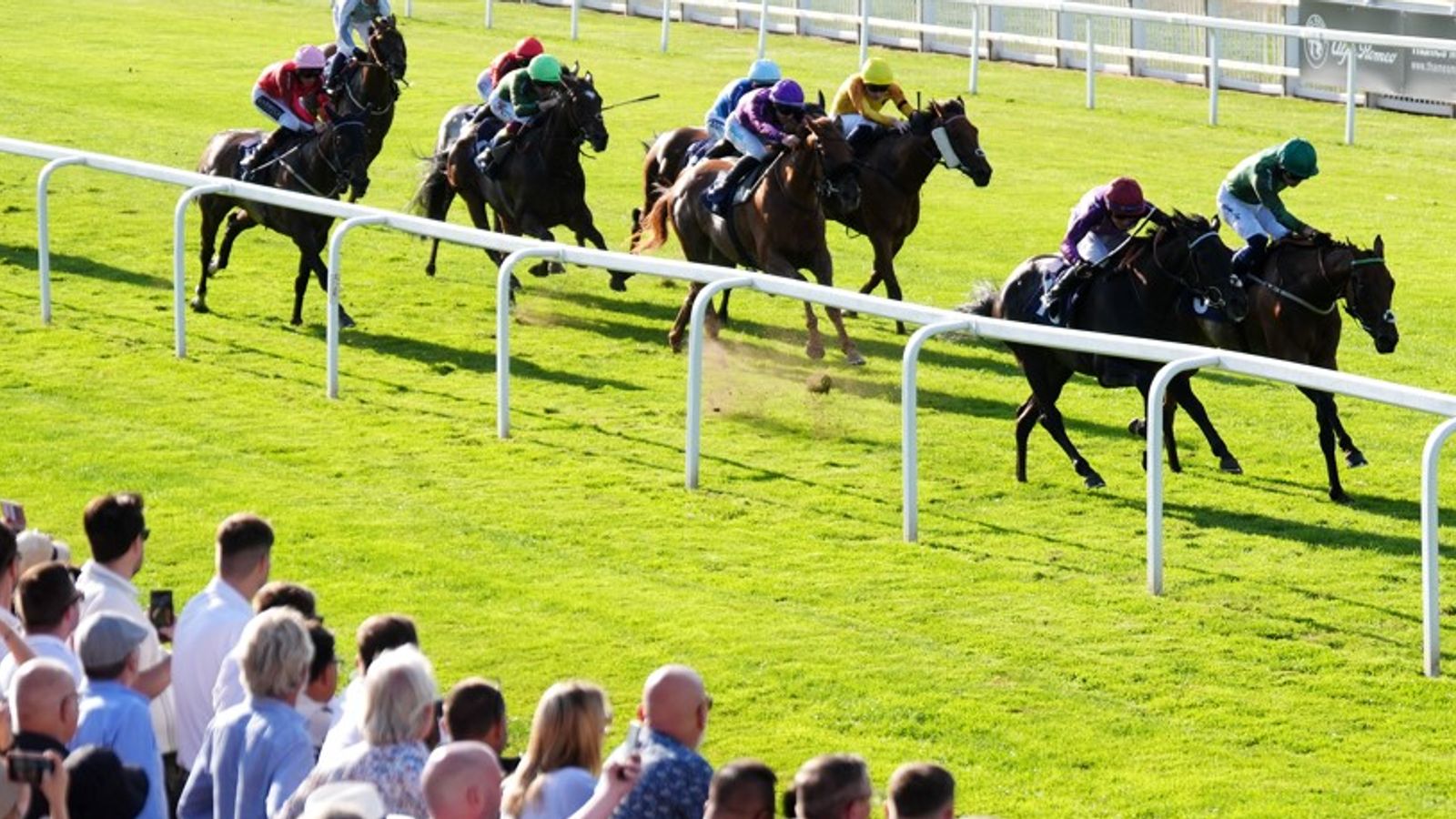
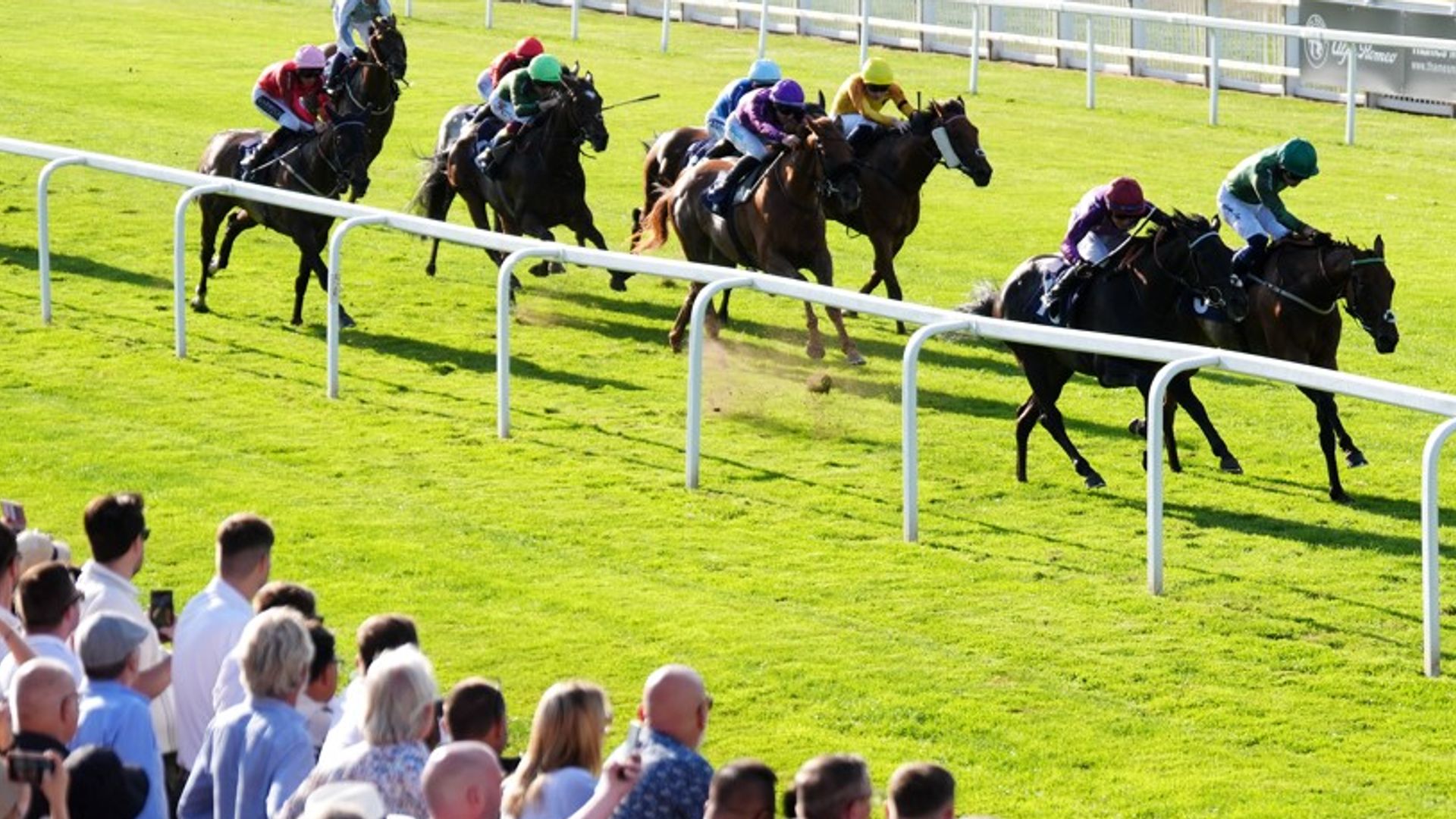
Windsor takes centre stage on Monday with a six-race Flat meeting live on Sky Sports Racing.
7.15 Windsor – Badri seeks four-timer in Sprint Series Final
Badri seeks a four-timer in the feature race at Windsor, the Fitzdares Sprint Series Final Handicap over six furlongs.
This horse has been a credit to connections, winning 15 times in 75 starts with his last three runs resulting in success, all at Pontefract. That has taken him from 89-rated up to 99 which is his best mark since March 2024.
Another Abbot returns to Windsor looking to follow up his course-and-distance success two weeks ago after previously running a creditable race in behind Amazing Journey, who went on to to win the International Handicap on King George Day at Ascot. That form reads very well and he could be hard to beat.
Sudden Flight is a model of consistency, finishing second in his last three starts which included in behind Another Abbot two weeks ago. He does find winning hard to come by, though, having not won since July last year, but is now better off at the weights with William Haggas’ charge and looks sure to run his race.
6.15 Windsor – Harry Knows and Keep Kicking On feature
Previous-winners Harry Knows and Keep Kicking On lock horns in the Fitzdares Nursery Handicap.
Harry Knows won in stylish fashion last time out at Windsor and received a three-pound rise for the success which might not be enough to stop him from continuing the winning sequence.
Keep Kicking On also arrives off the back of his first success over this track and trip when hitting the line readily three weeks ago and there could be more to come.
This Moment represents the connections of Bow Echo, dropping into a nursery for the first time and must be respected off 79 given the form of George Boughey and Billy Loughnane this season. He is interesting first time out after a gelding operation too.
5.45 Windsor – Mythological Star bids to defy penalty
Mythological Star headlines in the Find Us At fitzdares.com Apprentice Handicap where he carries a six-pound penalty for his success at Ffos Las.
Gelded before his first run, this half-brother to Astro King made it fourth-time lucky last time out when he won a shade cosily. Narrowly beaten on his penultimate start, that win came as no surprise as he was well supported and justified favouritism in good style for Daniel and Claire Kubler.
Hello Cotai disappointed at Epsom last month but this had followed a win here at Windsor and then a commendable third at Epsom before he finished last of four. He may prove best of the opposition.
>

Need help with today’s Connections: Sports Edition puzzle? You’ve come to the right place.
Welcome to Connections: Sports Edition Coach — a spot to gather clues and discuss (and share) scores.
A quick public service announcement before we continue: The bottom of this article includes the answers — and hints — for the four categories. So if you want to solve the board hint-free, we recommend you play before continuing.
You can access today’s game here. And when you’re done, try out our limited-edition Connections: Soccer Edition for an extra challenge.
Today’s difficulty
Game No. 686’s difficulty: 2.5 out of 5
Connections: Sports Edition hints for Aug. 10, 2026

Scroll below for one answer in each of the four categories.
.
.
.
.
.
.
.
.
.
.
.
.
.
.
.
.
.
.
.
.
Yellow: WINNER
Green: SMOKE
Blue: 4
Purple: COMBO
Connections: Sports Edition answers for Aug. 10, 2026
Scroll below for the full answers to each of the four categories.
.
.
.
.
.
.
.
.
.
.
.
.
.
.
.
.
.
.
.
.
Yellow
Tennis stat: ACE, DOUBLE FAULT, UNFORCED ERROR, WINNER
Green
Make good contact (in baseball): BARREL, CRUSH, LACE, SMOKE
Blue
Associated with Dak Prescott: 4, COWBOYS, MISSISSIPPI STATE, QUARTERBACK
Purple
_____ guard: COMBO, MOUTH, NOSE, OFFENSIVE
What is Connections: Sports Edition?
Connections: Sports Edition is The Athletic’s first-ever game, a daily puzzle designed for players to find connections between 16 words on the game board.
The game’s objective is to group words or objects into four groups of four based on commonalities within each group as quickly as possible. Find the groups without making four mistakes. Each puzzle has exactly one solution, so watch out for words or items that seem to belong to multiple categories!
Category examples:
Sports ____ : Fan, Car, Bar, Radio
U.S. Summer Olympians: Biles, Phelps, Ledecky, Lyles
Each category group is assigned a color, revealed as you solve, ranging from straightforward (yellow) to medium (green) to challenging (blue) to tricky (purple).
Who creates the puzzles for Connections: Sports Edition?
That’s me! My name is Mark Cooper, and I create Connections: Sports Edition and work as a managing editor for college sports here at The Athletic. I was previously The Athletic’s managing editor for breaking news.
The next puzzle will be available at midnight in your time zone. Thanks for playing — and share your scores in the comments!
>
Sports
Yaroslava Mahuchikh on making history while her country is at war: ‘I want to win gold for my people’
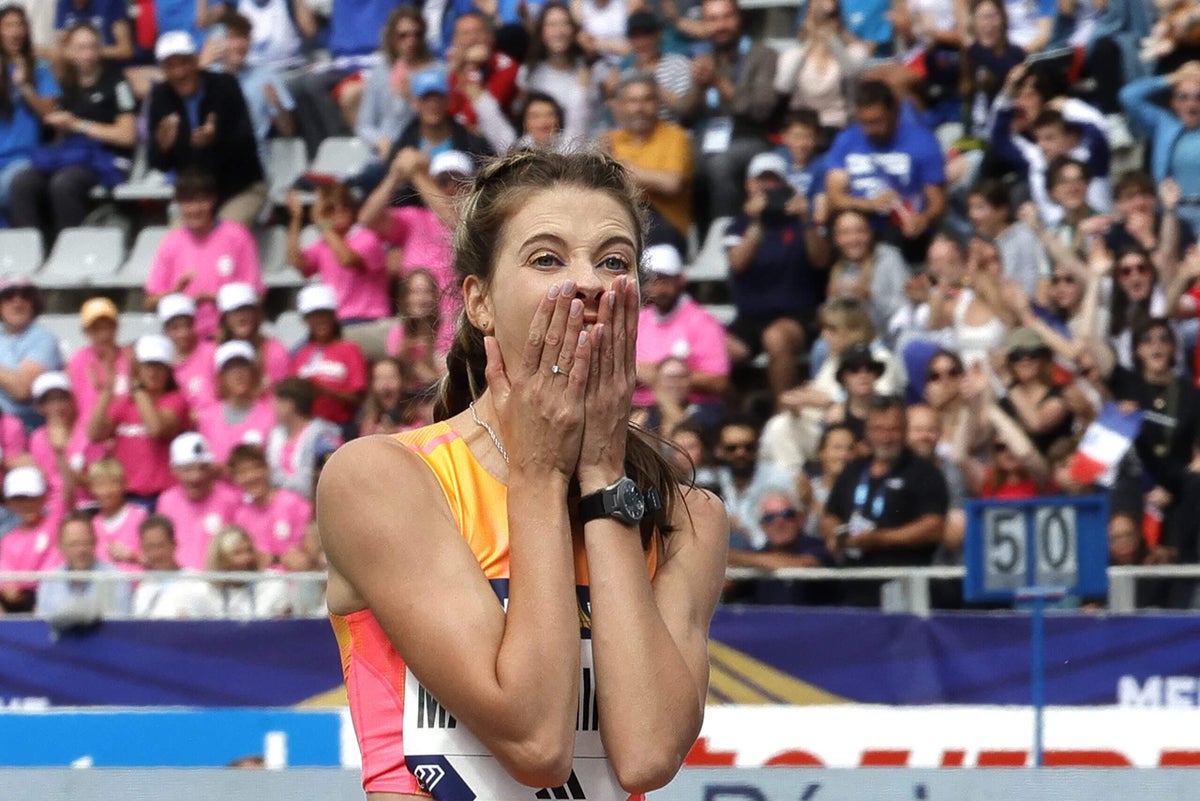
When Yaroslava Mahuchikh competes, she does so with added weight on her shoulders.
“I want to win gold for my people,” the high jumper says. “A lot of soldiers watch or read the news and they write to me: ‘Thanks for representing Ukraine.’ Because of them I have the opportunity to represent my country and (keep) our country alive.”
Born in Dnipro, eastern Ukraine, in September 2001, the majority of Mahuchikh’s professional track and field career has been intertwined with the Russia-Ukraine War, the biggest ground war in Europe since World War II. Russia first attacked in 2014, but the war then escalated four years ago when Russia started a full-scale invasion on its neighbor, attacking the Ukrainian capital Kyiv and the city of Kharkiv in February 2022.
A month after that February invasion, Mahuchikh competed at the World Indoor Championships in Belgrade, Serbia, and won her first global title with a 2.02 meters clearance. Having been a teen sensation — she won silver at the 2019 World Championships with an under-20 world-record jump of 2.04m, and took bronze at the 2021 Olympics — this gold took the then-20-year-old to new heights.
Three more global titles have followed, including Olympic gold in 2024. She’s the youngest ‘grand slam’ high jumper by six years — holding the Olympic, world championship and European crowns indoors and outdoors by the time she was 22. Only two other athletes — Mariya Lasitskene (28) and Stefka Kostadinova (31) — have achieved that feat.
She’s a five-time European champion (three times indoors) and, at the upcoming edition in Birmingham, England, which starts today, Mahuchikh has the chance to emulate Spaniard Ruth Beitia as a three-time continental gold-medal winner. The championship record of 2.03m should be under threat, too.
“I’m going there to protect my title,” she grins over a video call.

Yaroslava Mahuchikh celebrates winning the women’s high jump at the World Athletics Indoor Championships in Poland in March. (Kirill Kudryavtsev / AFP via Getty Images)
Russian athletes will not be in Birmingham. They are still excluded by governing body World Athletics, a stance which “hasn’t altered,” according to president Sebastian Coe last month. But the International Olympic Committee (IOC) has provisionally lifted its suspension of the Russian Olympic Committee, opening the door for their participation under the Russian flag at the 2028 Los Angeles Games.
“When I saw this news, I was pretty shocked because nothing has changed in our world since 2022,” Mahuchikh says.
“For us Ukrainians, it was really tough. I’m really thankful to Coe because he supports Ukrainian athletes and he has a strict position.”
The IOC’s policy change is especially pertinent for Mahuchikh. High jump is a sport historically dominated by eastern and central European nations. Of the 88 women who have jumped 2.00m or above, nearly half are from that region — 14 are Russian and seven are from Ukraine.
“We were talking, us girls, about why we have so (many) competitive high jumpers and, truly, we don’t know,” she laughs. “It’s just in Ukraine, high jump is really a national event.”
In March, there was a Ukrainian high jump double at the World Indoor Championships in Torun, Poland: Gold for Mahuchikh in the women’s event, while Oleg Doroshchuk claimed the men’s title.
“I’ve come back to the shape that I was in before the 2024 Olympics,” Mahuchikh says. “I feel it with my technique, I feel my speed.”
“I have big goals,” she adds. “At my first Olympic Games (2021), I won a bronze medal. (From) the second one I have gold. At the third (2028), I would like to win gold with an Olympic record.”
Winning gold in L.A. would make her only the second woman to retain the Olympic high jump title, replicating the feat of Romanian Iolanda Balas in 1960 and 1964. Meanwhile, the Olympic record of 2.06m was set by Russia’s Yelena Slesarenko in 2004.
“I wrote my name into the history of track and field,” she says of her success two years ago. “But I want to make it again.”
Mahuchikh’s training camps typically take place in Estonia, although she is speaking to The Athletic from Belgium as she puts the finer details on her preparations for this week’s European Championships, where she will first be in action on August 13 during qualification for Saturday’s final.
She is close to her season peak, which in training terms means one high jump session per week, half of what she was doing at the start of the year.
Training also includes the hurdles and long jump, events she competed in as a child. “When I met my coach, Tetiana Stepanova (in 2011), I thought that I’d be a hurdler,” she says.
Now she uses those disciplines to improve her runway speed, completing sprinting drills with the hurdles spaced at different distances. That is to mimic how she transitions from big steps early in her run-up to short steps before take-off.
The last step “should be short and fast,” she says, “because this is physics.”

Mahuchikh explains that her golden year in 2024 owed to a run-up tweak. That season, she won nine of the 10 competitions she entered, including European and Olympic gold, and a third Diamond League title. She also cleared 2.10m to break a world record which had stood since 1987. Her only defeat? Silver at the World Indoors.
“It was so risky,” she says of the change in approach. “Because I had nine steps on the runway and I jumped like that for five years. It was working. But we decided that I have more speed and the power to have two more (steps).
“When we did it in training, it was good. Then, after three training sessions, I could not even jump 1.85m. It was ‘what the f***, really?’” She puts her hands on her head, imitating the disbelief she had at the time.
“My coach said, ‘We’re not changing back. Yaroslava, please change your mind’. I felt comfortable but I needed to find this balance. I found it, and it gave me the world record and (Olympic) gold.”

Yaroslava Mahuchikh won Olympic gold in Paris on countback (Andrej Isakovic / AFP via Getty Images)
Her main recollection from 2024 is how hard it felt. “All the focus was on the Olympics,” she says.
She had to overcome heel problems at the start of the year, disrupting her preparation ahead of the World Indoor Championships, then hamstring trouble came before the European Championships in June. Against the advice of some close to her who wanted her to prioritize the Olympics, she nevertheless competed at Stadio Olimpico in Rome.
“I’m a top athlete, I went there to represent my country,” she says. After repeated trips to the hospital to help manage her hamstring, she won the European title by four centimeters with a 2.01m clearance.
A month later came the Diamond League in Paris. The aim: to better her personal best of 2.06m.
“I didn’t expect the world record, and my coach didn’t expect it, because of the injury. I just said, ‘OK, jump,’” she says.
She achieved a personal best with a second-time clearance at 2.07m. “A brilliant jump,” is how she describes the national-record mark which lasted just a few minutes.
Her world-record jump, made at the first attempt, owed to that longer run-up. She powered down the runway with big strides and pumping arms, then shortened her final two steps. Like a coiled spring, Mahuchikh took off, contorting herself so aggressively her mouth was wide open. Every sinew stretched.
She had so much height from her run-up that she only tickled the bar. She bounced off the mat and then ran with her hands over her mouth, equal parts elation and disbelief. Kostadinova’s 2.09m mark had stood since the 1987 World Championships, and had been considered one of track and field’s untouchable world records.
The irony? The greatest jump in history is not even her favorite. “If I technically awarded the jumps, I think 2.07m was better than 2.10m.”
The day after her world record, Russia hit Ukraine with a deadly missile attack and her joy quickly dissipated. “No record will bring joy while Russia attacks my country every day, kills our soldiers, and takes the lives of children and their parents,” she wrote on Instagram.
She made an even bigger statement at the Olympics, clearing the first four bars without any failures, the highest of those being 2.00m, to win gold on countback and become Ukraine’s third Olympic champion in track and field, following Inessa Kravets (triple jump, 1996) and Nataliya Dobrynska (heptathlon, 2008).
“If I reflect now, this is so impressive,” she says of that year.
“For me, it’s really important to show the whole world that we are Ukrainians, that we are strong and we continue fighting for independence, for liberty,” she adds.
It’s why she will jump for gold in Birmingham, so that the Ukraine flag can fly atop the podium once again.
>

Today on Sky Sports Racing: Flat action from Windsor live on Monday evening with Badri chasing a four-timer | Racing News

Connections: Sports Edition today: Hints and answers for Aug. 10, 2026, puzzle No. 686

Yaroslava Mahuchikh on making history while her country is at war: ‘I want to win gold for my people’
-

 movies3 months ago
Search For Canadian TV Actor Stewart McLean Now Homicide Investigation
-

 Fashion9 years ago
These ’90s fashion trends are making a comeback in 2017
-
Fashion9 years ago
According to Dior Couture, this taboo fashion accessory is back
-
Fashion9 years ago
Model Jocelyn Chew’s Instagram is the best vacation you’ve ever had
-
Fashion9 years ago
Your comprehensive guide to this fall’s biggest trends
-
Fashion9 years ago
9 Celebrities who have spoken out about being photoshopped
-
Fashion9 years ago
Emily Ratajkowski channels back-to-school style
-
Fashion9 years ago
A photo diary of the nightlife scene from LA To Ibiza