
Entertainment
Film Festival Attendance Is Up, But Distribution Is Changing

I’m headed to Cannes! If you are too, let me know: dana@indiewire.com or text me on Google Voice: 323-435-7690.
With the 2026 Cannes Film Festival comes the annual ritual of belief: A film’s value is determined in a concentrated moment, when buyers, press, and audiences converge.
That implicit agreement has governed independent film for decades and still shapes how films get made. It no longer reflects how they succeed.
Everyone in this ecosystem knows the terms. Build a film around the festival calendar. Hold it back from audiences, from the market, from any real exposure until the system decides when and how it should be seen. Protect the premiere and wait.


In exchange, filmmakers get something that doesn’t exist anywhere else: a shot at discovery, acquisition, and attention concentrated into maximum leverage.
That deal is breaking. Minimum guarantees have become de minimis and are no longer guaranteed. The overnight sale — the version of Sundance that shaped (rightly or not) decades of filmmaker strategy — is now an outlier. Buyers concentrate on fewer titles, at fewer festivals, with less urgency and less capital.
Sundance 2025 had three sales during the festival (four, if you count the “Peter Hujar’s Day” pickup right after the festival ended). Eventually, about three-quarters of the program secured some form of distribution. It took most of the calendar year to get there.
One shot, diminishing returns
it starts to look like a very odd bargain. Filmmakers still build production timelines around submission deadlines, rush unfinished cuts, hold back material that could build an audience — all to be among thousands of submissions competing for a handful of slots that may or may not generate a meaningful outcome.
And yet: Festival audiences are growing.
Eventive, a platform that helps independent cinemas, film festivals, and filmmakers manage ticketing, streaming, and audience engagement recently published a white paper that analyzed more than 15 million ticket sales across 6,000 festival editions.
It found that attendance rebounded from the pandemic and stabilized at a higher baseline. Average attendance per festival is up roughly 34 percent since 2021, while revenue per ticket reached its highest level on record.
Behind the numbers
Great news, right? It’s also a nest of structural tensions. Festivals have begun to feel less essential to the industry even as they become more meaningful to audiences.
Virtual screenings make that tension visible. Eventive’s data said they accounted for roughly a quarter of total attendance. While that’s significant growth for the festival as an audience experience, it’s a persistent source of friction for the festival as a market. With virtual access reducing the urgency to be there in person, sales agents complain that buyers now send smaller staffs.
Even as audiences grow, festival organizers acknowledge on background that industry attention has thinned. (Certainly, that was one reason that Sundance chose to relocate to the more-affordable Boulder, Colorado.) Festival coverage has declined, although that reflects the state of publishing as much as anything else.
The split
That’s an acute disconnect for early-career filmmakers weighing whether the traditional path justifies the cost and risk. Is it worth structuring an entire production cycle to compete for one of a hundred slots when the press and buying opportunities are in decline?
For decades, festivals functioned as a central nervous system for discovery, press, acquisition, and audience. Now, discovery is increasingly decentralized. Distribution is fragmented. Audience-building can happen anywhere, and it certainly doesn’t hew to the festival calendar. The market no longer guarantees outcomes.
Sundance’s move to tech-friendly Boulder is one signal of where festivals think the opportunity is. Festival leadership has acknowledged that Park City’s cost structure had effectively priced out a generation of creators — the person who showed up in their 20s on a bunk bed budget while trying to figure it out. That’s the digitally native generation of content creators who find their way without festivals. If Sundance is going to court that audience, they’ll need to meet them where they are.
As festivals concentrate attention but no longer control what happens to it, their roles have shifted from controlling outcomes to creating conditions. The traditional launchpad is now one leverage point of many in a larger system — including creator-driven strategies that don’t care about festivals at all.
I was struck by that shift in an unexpected moment while watching the recent Markiplier livestream. His opening line: “I’m going to need to be here a while, while people get in.”
He was talking about waiting for viewers to join the stream. However, that audience wasn’t hypothetical. It was gathering in real time and the work began once they arrived. For him, thinking about timing, attention, engagement, and presence is a given.
That doesn’t replace the festival model. But it operates on a fundamentally different premise: Filmmakers don’t wait for the system to convene the audience. They build and meet them directly.
This is where festivals find themselves in a genuinely new position. They still do something few systems can — gather audiences in concentrated, physical space around independent work, and the data makes clear that demand for that experience is not shrinking.
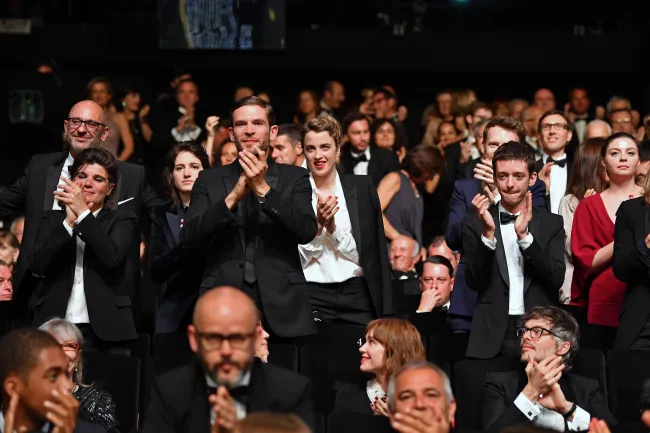
However, the connection between festival audience and long-term outcome remains remarkably weak. Films can play to full houses and still struggle to convert that momentum. (There’s a reason that American studios passed on Cannes this year.) The energy exists in the room (all those standing ovations!), but rarely extends beyond it.
Attention without translation
There’s the gap. The missing layer is translation — turning concentrated attention into durable value for filmmakers.
Cannes will open as it always does with premieres, deals, and headlines. It still matters, but it no longer defines the system on its own.
Festivals run on scarcity and the current environment runs on abundance: many paths, many audiences, many possible outcomes, none guaranteed. Those two systems now sit on top of each other, uneasily.
Festivals are not going away; the data makes that clear. But their roles are changing, from gatekeepers of access to curators of attention. The next question is whether they can turn that attention into something that works for filmmakers — because the real value was never the premiere. It was what the premiere made possible.
Right now, that translation is breaking. Something that doesn’t wait is beginning to replace it.
Weekly Recommendations curated by IndieWire Managing Editor Christian Zilko
If you’re pursuing a career in filmmaking, you should be reading everything you can find about vertical dramas. This article is more of a bear case than some others that we’ve highlighted, but the points are well-reasoned.
4. Top 10 Mistakes First-Time Microbudget Producers Make by Donny Broussard
Producing is something that can only be truly learned through blood, sweat, and tears — but nobody was ever worse off because they started their first shoot with too much information. Even if it’s impossible to fully prepare for the chaos of a film shoot, avoiding these mistakes might allow you to focus on making more memorable ones.
3. The Other Side of the Mountain by Jake S. Weisman
Anyone who seeks out career advice (in any field) is destined to get bombarded with metaphors. It can get old quickly, which is why Future of Filmmaking tries to steer you towards more practical ideas. But this is a clever essay about making sense of the ambiguous advice that people love to dispense, from someone who is willing to explain which ones actually proved helpful to his own film journey.
2. Why Scripts Still Matter the Most by Spyder Dobrofsky
For all the change that the entertainment industry is experiencing, some things remain the same. Dobrofsky, a screenwriter with an excellent Substack aimed at those who still want to pursue the inside track in Hollywood, explains why some younger writers have embraced a misguided pivot towards treatments and pitch decks instead of writing scripts on spec. Even as attention spans get shorter, he advocates for showing people a finished example of your craft.
Another compelling Kinema case study about one of the day’s most important topics: supplying your own audience for your indie film, and giving them something that they can’t get from streaming at home. The strategy that Sean Glass outlines in this interview might be hard to replicate, but the creativity behind it isn’t.
>
Entertainment
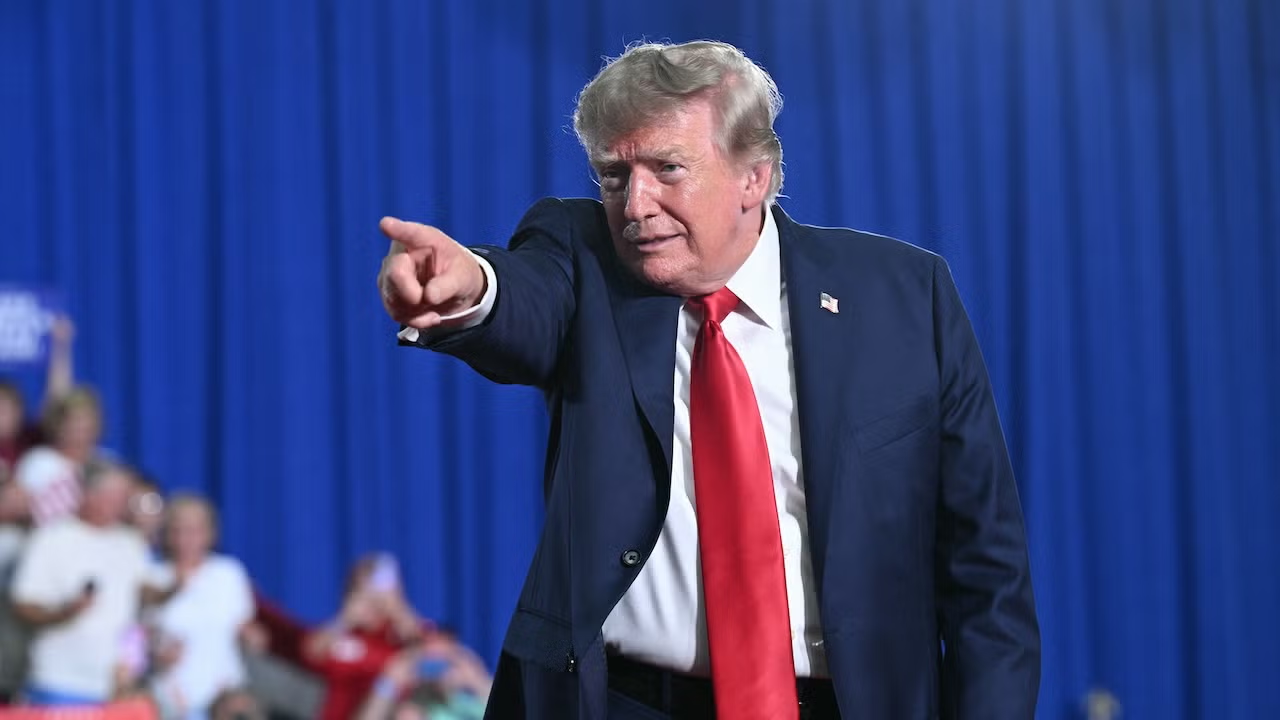
CNN, MS NOW and Politico Seek to Extend White House Access Order, Warn Trump Will ‘Reinstitute a Complete Ban’ Without It
>
>
CNN, MS NOW and Politico are warning that the Trump administration will reimpose a “complete ban” on their access to the White House without a judge issuing a preliminary injunction.
Last week, U.S. District Judge Timothy Kelly granted a temporary restraining order, forcing the White House to restore access to the White House to the outlets as he more fully considers the legal arguments. The TRO lasts for 14 days.
In a filing in federal court on Monday, attorneys for the three news outlets argued that the Trump White House actions since then “leave little doubt that it will immediately reinstitute a complete ban of CNN, MS NOW, and Politico if allowed the opportunity.”
The outlets’ legal team, led by Theodore Boutrous Jr., pointed to the White House’s restriction on CNN from access to State Dinner arrivals on Thursday evening. The network then was barred from serving as TV pooler on Air Force One on Trump’s trip to Tennessee on Saturday, with no replacement stepping in, and leaving a dearth of TV images from the trip.
“Because the ban is an unlawful assault on the most fundamental First Amendment freedoms and will inflict irreparable harm on Plaintiffs and the public if not restrained, this Court should preliminarily enjoin its enforcement pending the resolution of this case,” the news outlets’ attorneys wrote.
Kelly cited a lack of due process by the White House when it pulled dozens of credentials of reporters from the three outlets. While the Trump DOJ has cited standards of “professionalism and decorum” and national security concerns, the media outlets’ legal team called that reasoning that “pretextual” and “post hoc,” as well as vague.
In the latest brief, CNN, MS NOW and Politico also again cited violations of the First Amendment. They noted that Trump has explained the ban by blaming their coverage as “Purposely … negative,” among other things.
“His statements also make clear he implemented the ban to coerce more favorable coverage from CNN, MS NOW, and Politico, and to deter other journalists and news organizations from newsgathering and reporting that the President might view as negative,” the news outlets’ legal team wrote. “And his administration has continued to retaliate against Plaintiffs even after the temporary restraining order, only underscoring that Defendants’ motive is to punish and chill journalism they dislike.”
The outlets are asking the judge to prohibit the Trump team from pulling hard pass credentials, or to ensure the reporters of the White House access they had before Sept. 18. In contrast to a TRO, a preliminary injunction would sideline Trump’s ban until a trial is held, or if an appeals court rules otherwise.
Trump initially banned the three outlets on Sept. 18. When the judge granted a TRO last early Thursday, it meant that the White House had to restore hard passes, with reporters not gaining reentry until around noon that day.
The issue of whether the White House can also restrict CNN from the pool is a slightly different, but related issue. It’s also one at the center of another case, involving the Associated Press after it was banned from the pool and other White House events. That case is currently on appeal.
That said, in the latest brief, the three outlets cited the White House’s continued prohibitions on CNN as an example of White House retaliation over protected speech.
For much of last week, there was no TV network pool, meaning that there was little video coverage of Chinese President Xi Jinping’s visit to the White House. The four other networks in the pool — CBS News, ABC News, Fox News and NBC News — initially suspended their participation in protest of the exclusion of CNN. The networks resumed the TV pool coverage this week, but it will be put to the test again on Thursday, when CNN is assigned to that duty.
“Every day, critically important news is breaking at the White House, and the ban will substantially interfere with Plaintiffs’ ability to cover it,” the outlets brief stated. “The ban also inflicts an injury on all news media organizations—which now risk a similar fate if they engage in fact-based, independent reporting the President deems insufficiently favorable.”
The DOJ’s brief in response is due by Friday.
>

Snooker News | Sky Sports

County Championship: Leicestershire have eight points reinstated from 27-point deduction for poor pitch blamed on Bollywood film shoot | Cricket News

Dillian Whyte was suffering from a broken foot in Moses Itauma defeat but wants to return in British battle with Johnny Fisher | Boxing News
-

 movies4 months ago
Search For Canadian TV Actor Stewart McLean Now Homicide Investigation
-

 Fashion9 years ago
These ’90s fashion trends are making a comeback in 2017
-
Fashion9 years ago
According to Dior Couture, this taboo fashion accessory is back
-
Fashion9 years ago
Model Jocelyn Chew’s Instagram is the best vacation you’ve ever had
-
Fashion9 years ago
Emily Ratajkowski channels back-to-school style
-
Fashion9 years ago
9 Celebrities who have spoken out about being photoshopped
-

 Anime4 months ago
Rurouni Kenshin: Hokkaido Arc Manga Takes 1-Issue Break – News
-

 Anime3 months ago
HIDIVE to Stream English Dubs for The World Is Dancing, The Forsaken Saintess and Her Foodie Roadtrip in Another World, The Dangers in My Heart: The Movie Anime – News