
Entertainment
Q’orianka Kilcher’s ‘Avatar’ Lawsuit Raises AI and Likeness Questions

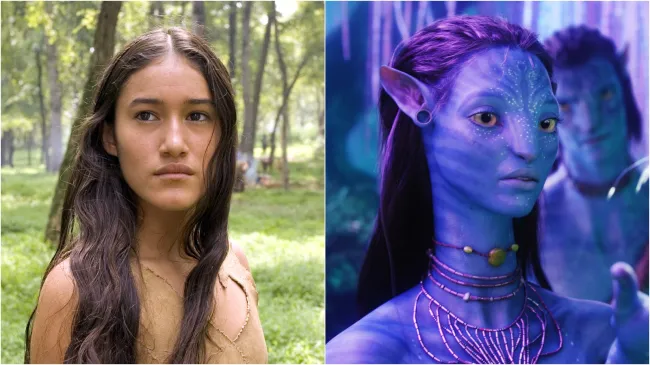
Over the years, there have been a number of copyright infringement lawsuits against the “Avatar” franchise that have all gone filmmaker James Cameron‘s way, but the latest isn’t a gripe over copyright, but over someone’s face, particularly their chin.
On May 5, actress Q’orianka Kilcher sued Cameron, The Walt Disney Company, Twentieth Century Fox, and Cameron’s Lightstorm Entertainment complaining that Cameron used Kilcher’s facial features as inspiration to create the main character Neytiri in “Avatar.” A pair of lawyers IndieWire spoke to called the lawsuit “frivolous” and with some “very serious weaknesses.” But it caught the eye of the media because it involved a recognizable Native American actress — one who literally played Pocahontas in “The New World” and has since appeared on “Yellowstone” — calling out the biggest franchise in the world based on a flashpoint that has dominated Hollywood in the age of AI: who has the right to my digital likeness?


Kilcher’s lawyers in a 99-page filing said that Cameron modeled the look of Neytiri off Kilcher’s own facial features based on her appearance in “The New World” when she was just 14. They didn’t just do initial sketches based on Kilcher, but went a step further and composed digital renderings that were based on one image from “The New World.”
“What Cameron did was not inspiration, it was extraction,” said Arnold P. Peter of Peter Law Group, lead counsel for Kilcher. “He took the unique biometric facial features of a 14-year-old Indigenous girl, ran them through an industrial production process, and generated billions of dollars in profit without ever once asking her permission. That is not filmmaking. That is theft.”
Kilcher’s suit is based on Cameron meeting Kilcher before the release of “Avatar” in 2009, at which point he gave Kilcher a sketch of Neytiri. When Cameron talked about it publicly in 2024, her tone changed.
“When I received Cameron’s sketch, I believed it was a personal gesture, at most a loose inspiration tied to casting and my activism,” Kilcher said in a statement. “Millions of people opened their hearts to ‘Avatar’ because they believed in its message and I was one of them. I never imagined that someone I trusted would systematically use my face as part of an elaborate design process and integrate it into a production pipeline without my knowledge or consent. That crosses a major line. This act is deeply wrong.”
The video in question isn’t a great look; it’s something that Cameron’s and Disney’s lawyers were “probably not the happiest about” when he said it, according to attorney Ray Seilie with Kinsella Holley Iser Kump Steinsapir. But a jury likely wouldn’t look at it as enough evidence that she’s entitled to potentially billions of dollars of the movies’ profits in damages. (Disney had no comment on the lawsuit when reached by IndieWire, and a lawyer for Cameron did not return a request for comment.)
“There’s a statute of limitations problem. ‘Avatar’ came out in 2009, and one of the specifics in her case is that her jaw is, supposedly, very easily noticeable,” Seilie said. “So why did it take until James Cameron said it out loud for her to realize it was her jaw? Jurors are going to be thinking about that.”
“I don’t think that anybody involved in this, any member of the public, would have taken look at this character materially and have made the connection that it was this actress, including, by the way, it seems, the actress herself,” added attorney Simon Pulman with Pryor Cashman.
Kilcher can’t sue for copyright because it’s her own face, so instead they’re suing based on Right of Publicity, where typically a person’s name or likeness is being used to sell a product in a commercial without their knowledge, and that depends on the person being very recognizable. Aside from the fact that she’s blue, seven foot tall, and is also played by Zoe Saldana, even the side by side isn’t 100 percent obvious to the naked eye. The lawsuit also includes a lot of lengthy rationales that this is cultural appropriation of an Indigenous person that has nothing to do with the legality of Right of Publicity. And it even makes the assertion that Cameron violated a deepfake revenge porn law because Neytiri has a love scene in “Avatar”; Seilie said that issue is just a “non-starter” almost certainly to be tossed.
But this remains an interesting conversation piece worthy of the attention of actors because AI now makes it possible to take the features of multiple people’s likenesses, without any other creative filter, and turn them into something new. Take Tilly Norwood or other “synthetic” actors. AI models have to be trained on something, and while Tilly might not look like anyone in particular, she’s likely trained on a number of images of women and could share features with someone in particular.
“What if you could somehow prove and reverse-engineer the creation process and figure out that, yes, in fact, Tilly Norwood uses the chin of a particular famous actor,” Seilie said. “That’s a question that hasn’t really been answered yet. Obviously, there’s a sliding scale here. If you’re lifting a likeness from one actress, it’s easier to say that that’s a violation of the right of publicity. But what if you’re combining two actresses? What if you take one actress’s body and one actresses head?”
Pulman notes there are recent examples in which a court has subpoenaed the prompts a person used in creating an AI-generated image. So in the future, there could very easily be claims that if an artist was found to have directly prompted a model to generate an image using a specific actor’s body part, that could be enough for a jury to deem it a violation. Right now though, Pulman says it would have to be a “very clear smoking gun,” like prompting the generation of Angelina Jolie “but we’ll make her blonde.”
Should the Kilcher/”Avatar” case make it to trial, which would be unlikely, Seilie says it would inevitably be one that would set precedent and be cited moving forward in determining what constitutes likeness.
“Does likeness mean the full body and face, or does the word likeness, can that be applied to parts?,” Seilie said. “I don’t think that’s been fully fleshed out, because until recently, we don’t really have technology that could hone in on individual parts of a likeness as opposed to the whole thing. That’s an area where technology raises new questions for existing doctrines of law, and it’ll be interesting to see how that’s approached.”
Seilie and Pulman say, that when it comes to complaints like this, it’s likely that actors will soon get more bargaining power with the studios and others to negotiate the value of their likenesses. It will include negotiating over specific features of a person, and studios or commercial agencies will negotiate individually with each performer to figure out just how much is permissible to be used, whether they’re allowed to use it in perpetuity, or in what specific ways. So while this case may not set precedent today, they’re questions all actors should be prepared for.
“We live in a world where actors are routinely scanned in high resolution for various purposes. They’re scanned for motion pictures, visual effects, and for video games. Even some of the agencies have unilaterally gone ahead and scanned their clients with the notion that then their clients can control their digital replicas,” Pulman said. “If I were an actor, I thought this for some time, you want to make sure your reps are very, very clearly from a contractual perspective setting forth how your digital replica can be used, how it will be stored, whether it will be destroyed after use, etc.”
>
>
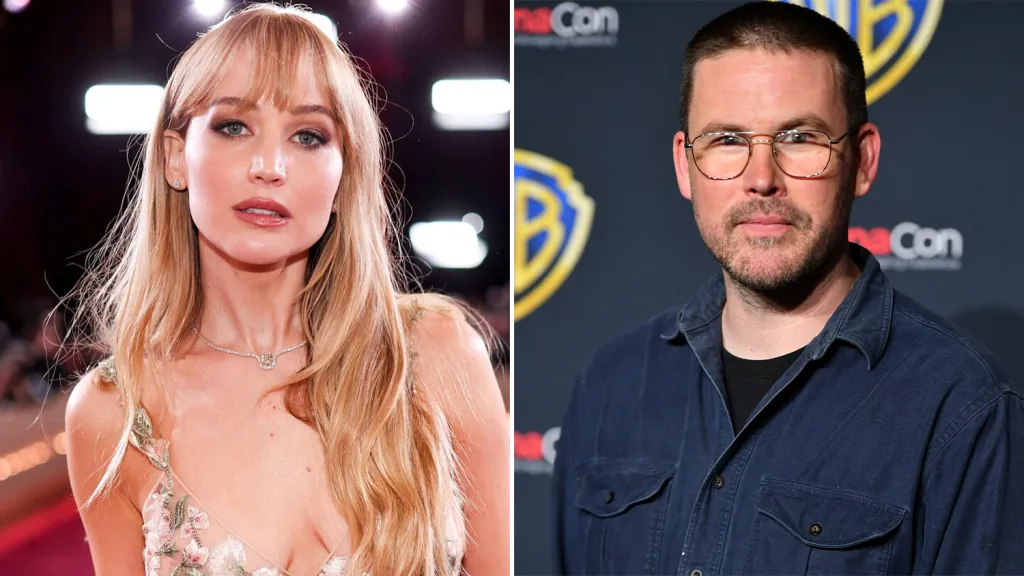
What has been buzzed about is becoming a reality: Oscar winner Jennifer Lawrence is starring in Zach Cregger‘s next movie, The Flood at Warner Bros’ New Line Cinema. The pic has a release date of August. 11, 2028.
The sci-fi thriller project brings the Weapons filmmaker back to New Line on which he’ll direct, produce and write based on his original idea. The news comes just as Cregger’s Resident Evil for Sony/Constantin has just crossed the two century mark at the global box office.
Said Cregger, “Mike, Pam and the whole Warner Bros./New Line team were an absolute dream to collaborate with on Weapons, and I couldn’t be happier to dive in with them again. Jennifer is one of a kind, and I’m beyond excited to see her in this role.”
“Jennifer Lawrence is one of the most gifted and compelling actors working today, and we are thrilled to have her at the center of Zach’s bold and wholly original vision for The Flood. Following our extraordinary experience together on Weapons, we could not be more excited to reunite with Zach and the team at Vertigo, as well as Amblin to bring this ambitious film to audiences around the world,” said Mike De Luca and Pam Abdy.
Amblin Entertainment is producing alongside Roy Lee and Miri Yoon of Vertigo Entertainment. Plot details are being kept under wraps.
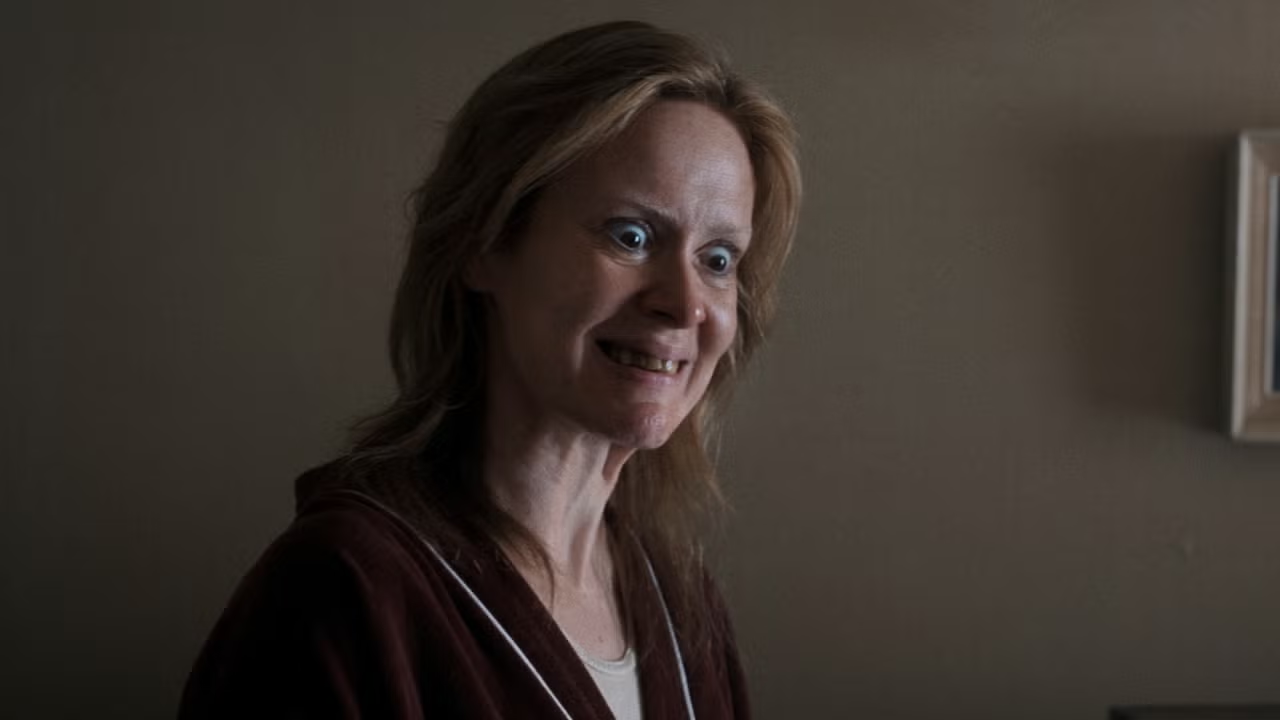
Weapons led the domestic box office for four consecutive weeks and earned $270 million worldwide last year, ranking among 2025’s highest-grossing horror films. Amy Madigan won the Academy Award for Best Supporting Actress for her performance as Aunt Gladys, a character whose story will continue in the upcoming film Gladys.
Lawrence received the Academy Award for Best Actress for her performance in Silver Linings Playbook and has also starred in American Hustle, Joy, Don’t Look Up, and The Hunger Games franchise. Through her production company, Excellent Cadaver, she has produced acclaimed films including Causeway, No Hard Feelings, and Die My Love, as well as the documentaries Zurawski v Texas and the Peabody Award-winning Bread and Roses. Most recently, Lawrence earned a Golden Globe nomination for her performance in Die My Love. Up next, Excellent Cadaver will produce the highly anticipated What Happens at Night, starring Lawrence alongside Leonardo DiCaprio and directed by Martin Scorsese.
Lawrence is represented by LBI Entertainment and Hansen, Jacobson, Teller, Hoberman, Newman, Warren, Richman, Rush, Kaller & Gellman.
>
>

Katsuwo Launches Manga Adaptation of Renren Ii’s Ōja no Ban Kuruwase Shōgi Novels – News
How to watch Canadiens vs. Maple Leafs: TV channel and streaming options for September 29

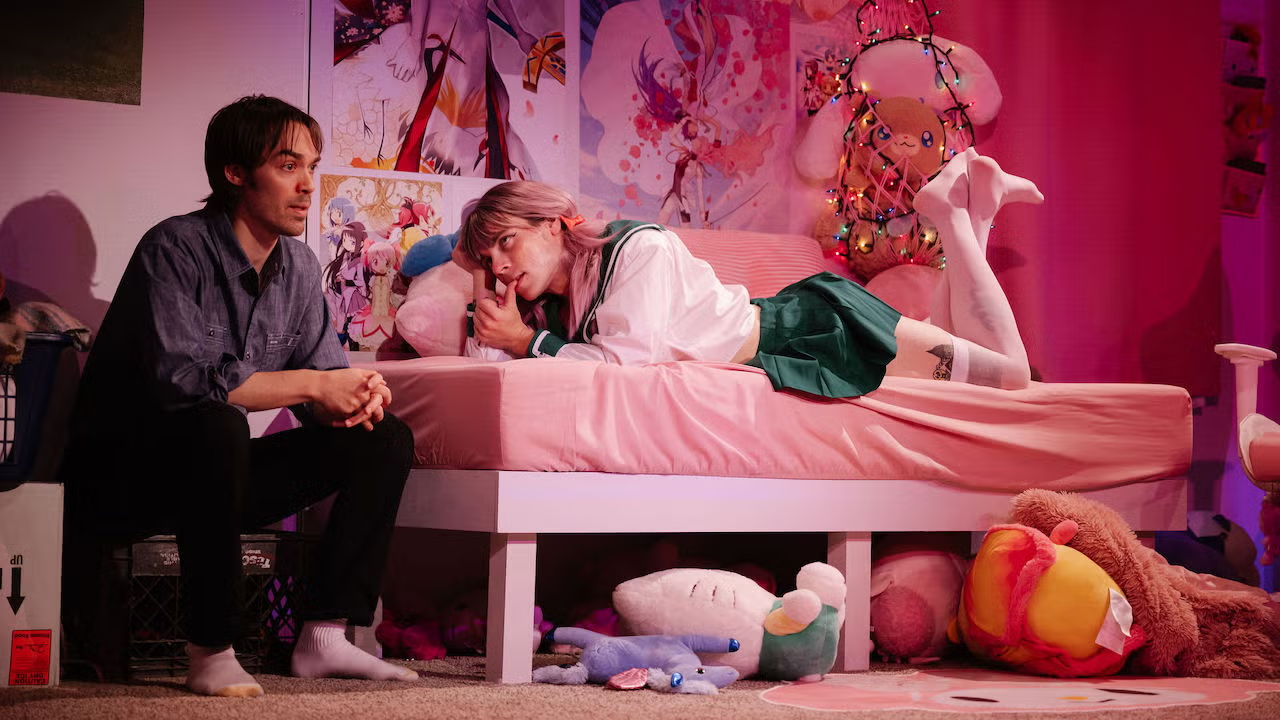
‘Degenerates’ Off Broadway Review: Incels Get the Play They Deserve
-

 movies4 months ago
Search For Canadian TV Actor Stewart McLean Now Homicide Investigation
-

 Fashion9 years ago
These ’90s fashion trends are making a comeback in 2017
-
Fashion9 years ago
According to Dior Couture, this taboo fashion accessory is back
-
Fashion9 years ago
Model Jocelyn Chew’s Instagram is the best vacation you’ve ever had
-
Fashion9 years ago
Emily Ratajkowski channels back-to-school style
-
Fashion9 years ago
9 Celebrities who have spoken out about being photoshopped
-

 Anime4 months ago
Rurouni Kenshin: Hokkaido Arc Manga Takes 1-Issue Break – News
-

 Anime3 months ago
HIDIVE to Stream English Dubs for The World Is Dancing, The Forsaken Saintess and Her Foodie Roadtrip in Another World, The Dangers in My Heart: The Movie Anime – News