
Entertainment
CNN’s Clarissa Ward Claps Back After White House Calls Her a Hot Mess

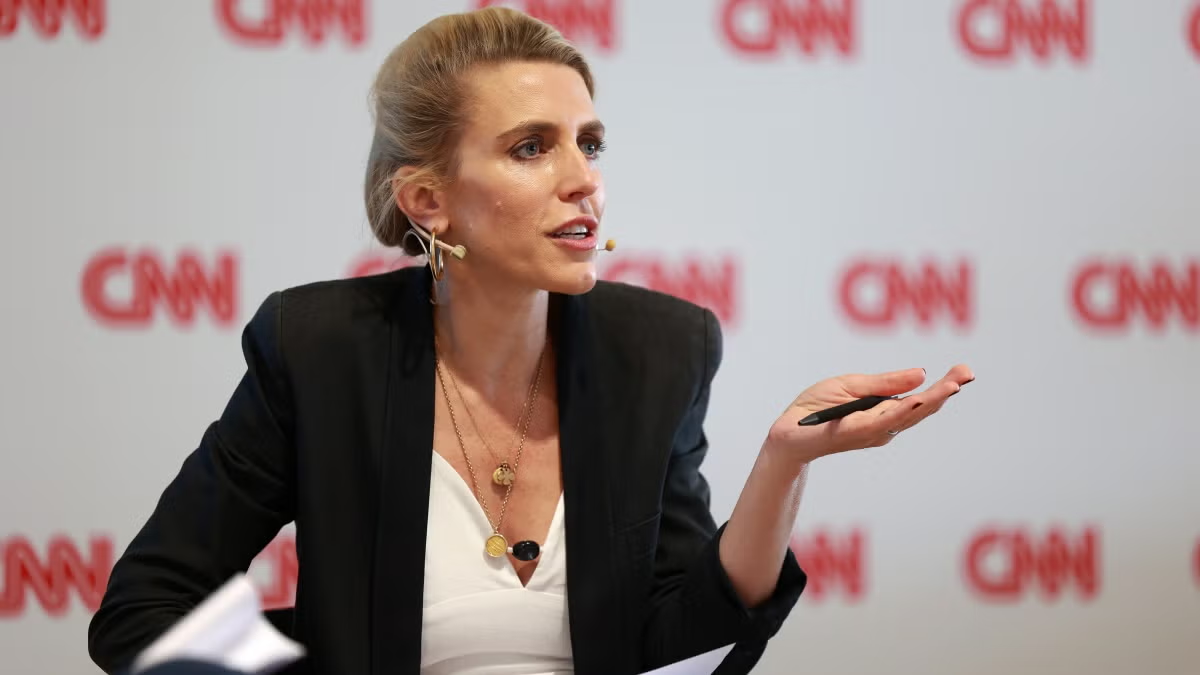
Clarissa Ward clapped back at the White House early Wednesday morning after she was called a “complete freak” and “hot mess” on social media.
On Tuesday, the CNN reporter posted a video of herself dancing in the airport while on assignment. President Donald Trump’s White House then took enough offense to the lighthearted display to call her out on their own social media accounts.
“Imagine being a self-described ‘serious’ journalist at CNN and acting like a complete freak in public, embarrassing yourself all for some social media clicks,” the Rapid Response 47 account posted on X. “Honey, nobody wants to watch that hot mess.”
Hours later, Ward offered a message of her own: “Dancing is good for the soul.”
The White House attack came on a post where Ward was encouraging her followers to be weird and goofy and to not care who’s watching. Other users later pointed out that Trump’s administration was attacking the CNN reporter when the president himself can constantly be seen dancing to “Y.M.C.A.” at events.
“When you get an assignment that is just good fun… Feeling PUMPED! Can you tell?” Ward wrote in her initial caption. “Drinks on me for anyone who can guess what I’m going to cover. Actually, there are some pretty blatant clues in there so you might have to settle for a like. Remember, if you’re not laughing your ass off and making a tit out of yourself, you’re doing this wrong!!”
Trump and his administration have made a habit out of attacking female journalists since he started his second term. Most recently, the president turned his sights on Kaitlan Collins – one of his favorite targets for insults – during his White House Correspondents’ Dinner speech, in which he compared her to trans actress and influencer Dylan Mulvaney.
“You know, I’ve covered Trump for 10 years. And so I’ve listened to pretty much all of his speeches for 10 years, with very little exception,” Collins told “The Daily Show” host Jon Stewart afterwards. “I actually think it’s helpful for other people to be able to listen to them in their entirety, which people really don’t that much these days.”
“I was not surprised when he insulted me, that happens pretty regularly inside the Oval Office,” she continued. “This is just a bigger venue where it was happening.”

>
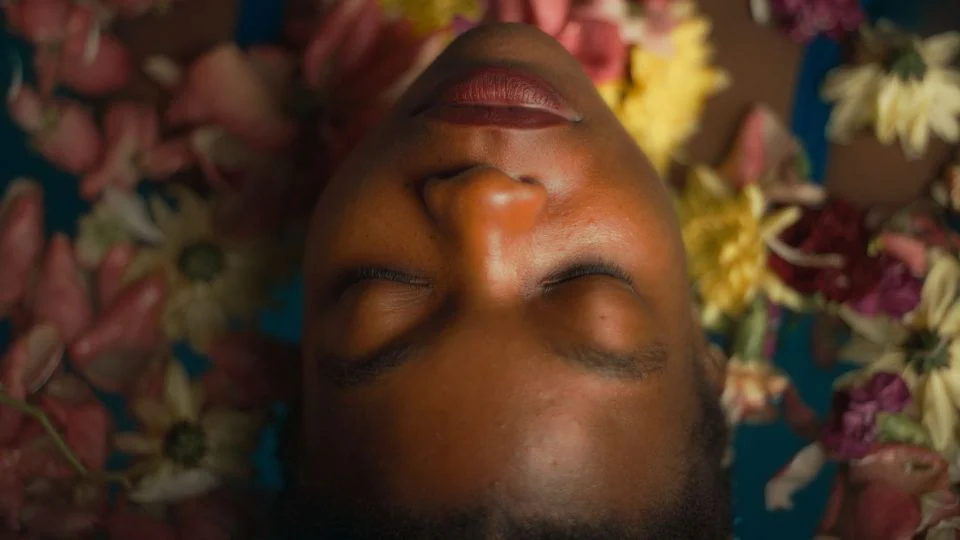
Tanzania-born director Neema Ngelime is working on her feature documentary debut. And the essayistic project has a title with poetic vibes: The Ones With the Tempered Flowers.
It was among the works-in-progress presented at the 2026 edition of Open Doors, the Locarno Film Festival‘s co-production platform and talent development program for filmmakers from equity-seeking communities and regions where artistic expression is at risk.
The Tanzania-Kenya co-production is being produced by Ivy Kiru. The filmmaker has so far made shorts, namely A Country In A Corner, Hooyo, Why Here and An Ode to A Time I Loved Bread. At the end of the Locarno Open Doors program, her new project won the Sørfond Award and the ARTEKino International Award .
THR has compiled highlights about the movie and insight from Ngelime about The Ones With the Tempered Flowers and the themes it explores.
Synopsis
For Neema, being a woman has always meant a script: school, marriage, babies. When a doctor tells filmmaker Neema that having children might be hard, she doesn’t expect it to confuse her. Those expectations wound her. Raised in a multi-religious home, her identity was forged by questions of what is haram and what would please Jesus. All Neema cared about was which hell she’d end up in.
To her, the older women in her family are a mystery beyond work and family. Their lives feel prophetic to her own. She and her sister try to rewrite their scripts through tarot. Her father taught her that anything is possible. Now he reminds her of her fate.
She stages performances with her family, reenacting fragments of their lives. They believe these are fictions. But they’re memories, repurposed, hidden truths surfacing through play. This is the story of a woman studying her body’s relationship to self, society, and the political weight placed on women’s bodies in Tanzania, challenging duty masked as love.
Director’s note
Growing up felt like watching the women I loved fade into mysteries. Now, with fibroids, a condition society pins on “unused” womanhood, I fear becoming a mystery too, lost to the weight of expectations. The women in my life shaped me deeply, yet I knew little about who they were before becoming mothers or wives. This erasure fills me with grief.
Through this film, I channel that grief, exploring how families shape dreams, identity and autonomy. I look inward and center myself and my family to reflect on my past and imagine my future. The film relies on metaphor to reflect the absurdity of how womanhood is confined. It captures the reality of existing in a patriarchal world, where women are bound by timed beauty and defined by their choice to give birth. While rooted in the experiences of young African women, it speaks to a universal audience, inviting viewers to reflect on their own relationships with identity, self-expression and societal constructs.
What was the inspiration for you, personal or otherwise, to want to make this film?
The film itself starts from a personal point of view, from my confronting and going through an
existential crisis because of my diagnosis. When I got my diagnosis, I was angry that I found out
so late in life that this could happen, and angry at how it could happen. I was also angry at how
little interest there is in understanding women’s bodies.
Out of that, the film became about someone wanting to find answers. So in a way, this was my way of creating a space for people going through what I’m going through, a space to talk. But mostly, it was a way to have these conversations with the people close to us, i.e. our families. Making my small inquiries with the people I love, that is the inspiration.
Can you share some thoughts on how universal the themes of the film are, and why people outside your home should see it?
The universal themes are womanhood and its place in 21st-century society, identity, and curiosity as an act of care across generations.
Do you know what the next step or focus for you and any collaborators on the film will be after Open Doors?
We’re going back home with so much clarity, thanks to the guidance we’ve received. I’m going to
continue my treatment, and the project will also participate in the Durban FilmMart in October,
and the Sørfond pitching event in November
>
Entertainment
‘The Rivals of Amziah King’ Review: Matthew McConaughey’s Got Honey Troubles in This Genre-Defying Wonder
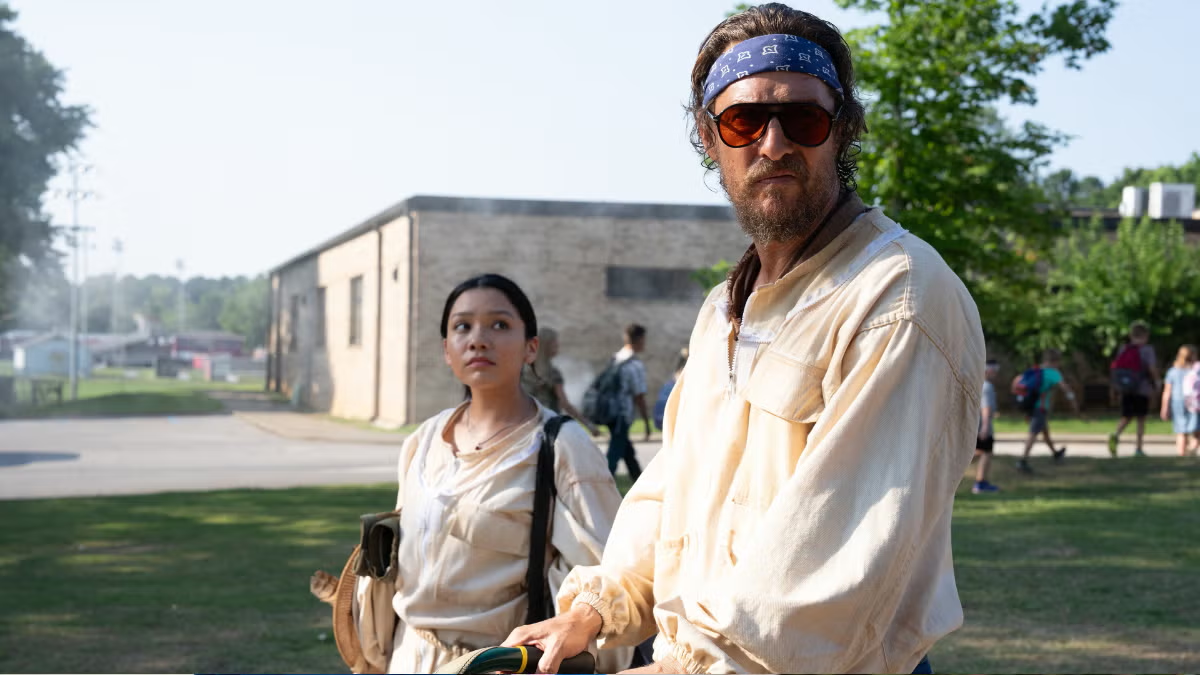
I’ve been trying to come up with the best way to describe Andrew Patterson’s second feature, “The Rivals of Amziah King,” for days. I could describe the plot, but it’s a surprising story, so doing justice to Patterson’s screenplay is a trick unto itself. I could celebrate Patterson’s ecstatic approach to filmmaking, and marvel at how he makes an intricate mosaic out of the western, noir, musical, heist, Christian and revenge genres. But that still doesn’t explain how the movie makes me feel.
“The Rivals of Amziah King” is so much easier to grasp than it is to quantify that, in the end, I find myself, as I often do, turning to the immortal words of Suzy Eddie Izzard. Or, at least, paraphrasing her. For you see, it turns out I like my elegiac masterpieces the way I like Matthew McConaughey: COVERED IN BEES.
Matthew McConaughey plays Amziah King, a small town beekeeper and honey manufacturer who is, sometimes, covered in bees. Amziah keeps bees (so they can’t get away) and extracts and sells their honey. The rest of the time, he plays bluegrass music and helps his community. He rescues an elementary school from a swarm of bees after the teachers and students spiral into terrified, comical chaos. He helps the police solve mysterious honey-based crimes. He drives a severed human scalp to the hospital in the middle of the night, just because a banjo player needs it.
He’s a busy guy, that Amziah King. This town would fall apart without him. When his latest unlikely adventure reunites Amziah with his long-lost foster daughter, Kateri (Angelina LookingGlass), he welcomes her back to the family business and teaches her everything she needs to know. How to keep bees, how to sing bluegrass, how to take care of your family, how to eat pot luck. He even teaches a tiny little bit about God, without ever getting preachy about it.

Kateri is Amziah’s protege but she’s not another Amziah. When life conspires to send Kateri on her own path, she confronts the people who hurt her foster father and makes a series of morally and ethically questionable decisions. But the film reserves its judgment. Everyone in “The Rivals of Amziah King” has their own tale, and although those tales are interconnected there’s no sense of conformity to Patterson’s characters. They behave like a beehive but every drone and worker is unique, and no two queens rule the same way.
Andrew Patterson’s debut feature “The Vast of Night” is one of the most assured, astounding directorial debuts in recent memory. It’s a science fiction tale about the residents of a small desert town, distracted by a high school basketball game, oblivious to the haunting secrets a few young people uncover about their community and the stars. Stylistically it’s an ambitious work, composed in long, elaborate shots that float all over this sprawling yet intimate world, searching the empty spaces for mystery and wonder.
“The Rivals of Amziah King” is just as assured, just as astounding, just as illuminating about rural American life, yet completely different. It’s a bustling film, bursting with music and edited with New Wave zeal. Within a span of seconds it evokes the soulful poetry of Terrence Malick and the bracing cynicism of Samuel Fuller. It’s the best Christian film in years even as it defies Christian ethos, embracing the complexity of human interaction and the essence of the human spirit. There are moments that leap straight out out of the novels of Mark Twain, intercut with the dirty criminality of “Breaking Bad.” Patterson can play a single instrument when he wants but with “The Rivals of Amziah King” he conducts an intricate, electrifying symphony.

Patterson also makes excellent use of Matthew McConaughey, one of modern cinema’s most engaged and engaging performers, who leaps headfirst into every line like it’s the only dialogue he’ll ever have. It’s no wonder everyone in town loves Amziah King, and would do anything — literally anything — for his sake. Within minutes he’s our new favorite person, and nothing he ever says or does proves that instinct wrong.
But this isn’t Amziah’s story. It’s Kateri’s story, and it’s the whole town’s story. Eventually, we view the drama unfold through Kateri’s eyes, and suddenly the film’s priorities change. Kateri is a young, indigenous woman who hasn’t been treated well, except for Amziah and his friends. She’s developed a quiet fortitude Amziah respects and nurtures but cannot share. Amziah welcomes her, his found family welcomes her, and anyone who doesn’t is a likely threat. In this landscape that so vividly evokes the corrupt American west, with its s–tkicker outlaws and smiling rattlesnakes, Kateri’s deeds carry historic weight.
This film is loaded, and it’s ready to explode at a moment’s notice, yet it resists the urge to blow up. That would be too simple. “The Rivals of Amziah King” is an ornate honeycomb of a feature, carefully designed to support supportive people and defend them with sharp objects. It’s not a violent film, although it can certainly be violent, and it’s not a saccharine film, even though it’s incredibly sweet. It’s a banjo plucked at a mile a minute, with a twang that resonates long and loud and clear. It’s further evidence that Andrew Patterson has a special talent for making films about America that look familiar but, upon closer inspection, have no rival.

>
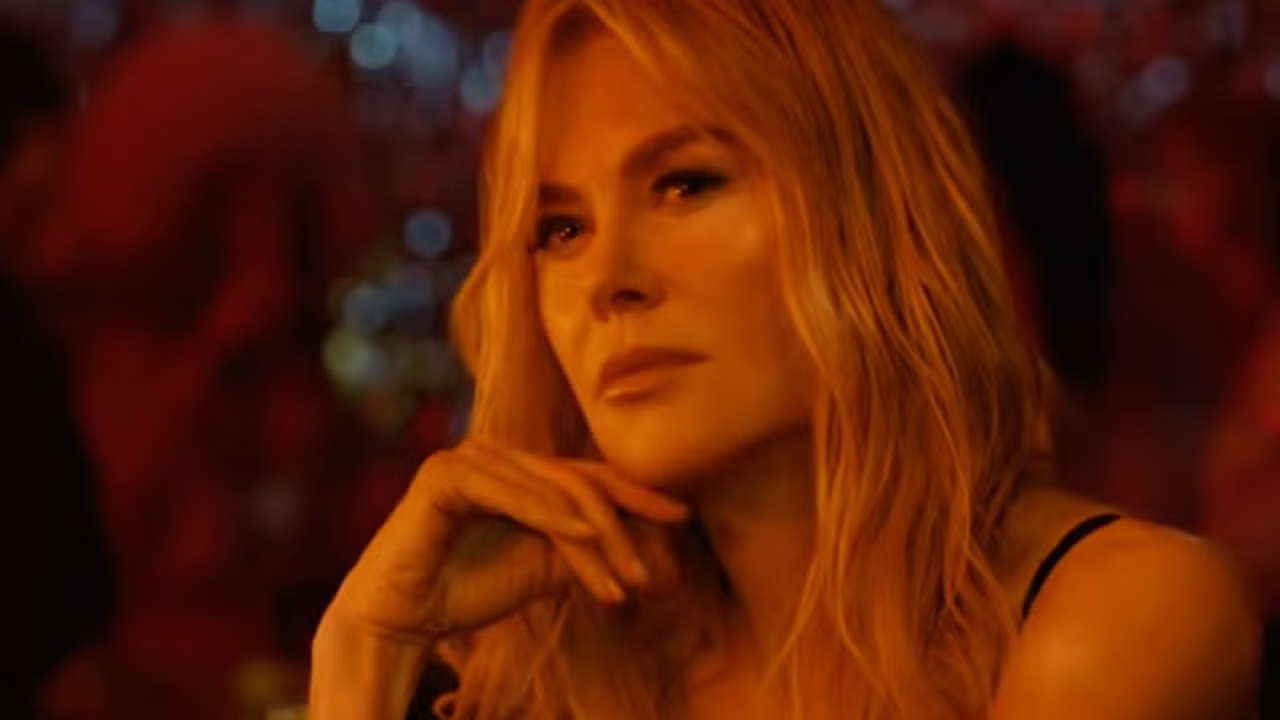
Troye Sivan tapped fellow Australian Nicole Kidman to be his music video vixen for the visual for his new song, “She’s the Best.”
Fans were met with a surprise cameo by the Oscar winner Thursday evening, when the 59-year-old Kidman was seen smoking a “thin little cigarette,” per the lyrics, and sauntering down the streets in a leather black dress, sunglasses and a sparkling fringe jacket for the new music video.
While many were surprised by Kidman’s presence in the music video, the general consensus was that the “Practical Magic 2” star was a welcomed addition.
“Nicole Kidman in a Troye Sivan video was not on my bingo card but I really love it,” read one top comment on YouTube. Another wrote, “And when the world needed him more than ever, he grabbed Nicole Kidman and said, ‘let’s show em.’”

Of course, Kidman wasn’t the only notable cameo in the music video, as “RuPaul’s Drag Race” Season 15 winner Sasha Colby was also featured in the footage.
“Two Aussie divas and THE Sasha Colby,” one fan notably celebrated on YouTube.
Sivan’s new video was directed by Gordon Von Steiner, a frequent collaborator of the musician’s that previously directed his 2023 visuals for “Rush,” “Got Me Started” and “One of Your Girls.”
Sivan is set to release his fourth studio album, titled “She’s the Best,” this October. The titular track was penned by Sivan, George Daniel, Jack Antonoff, Leland and Kaeyln Behr. Styalz Fuego did the production alongside Sivan, Daniel and Antonoff.
“‘She’s the Best’ is a painting that captures my life in all of its moods and colors,” Sivan said in a statement to media. “It explores the high-octane highs of the last few years, and the solitude and longing that sat underneath.”
He continued: “It’s chaotic, layered, organic, troubled and alive. It feels like the truest and most creative version of myself I’ve ever shared. At some point along the way I realized – the only constant in my life keeping me somewhat sane has not been the work, or the men, but the feminine. Thank god for them.”
Watch his new video above.

>

Brighton midfielder Diego Gomez signs new five-year deal

England opener Emilio Gay out for duck as Pakistan impress against County Select XI ahead of Test series | Cricket News

The Villager of Level 999 Anime Casts Yōji Ueda, Tetsu Inada – News
-

 movies3 months ago
Search For Canadian TV Actor Stewart McLean Now Homicide Investigation
-

 Fashion9 years ago
These ’90s fashion trends are making a comeback in 2017
-
Fashion9 years ago
According to Dior Couture, this taboo fashion accessory is back
-
Fashion9 years ago
Model Jocelyn Chew’s Instagram is the best vacation you’ve ever had
-
Fashion9 years ago
Your comprehensive guide to this fall’s biggest trends
-
Fashion9 years ago
9 Celebrities who have spoken out about being photoshopped
-
Fashion9 years ago
Emily Ratajkowski channels back-to-school style
-
Fashion9 years ago
A photo diary of the nightlife scene from LA To Ibiza