
Callum Scott Howells and Samuel Bottomley lead ‘The State of Us’
Courtesy of EIFF


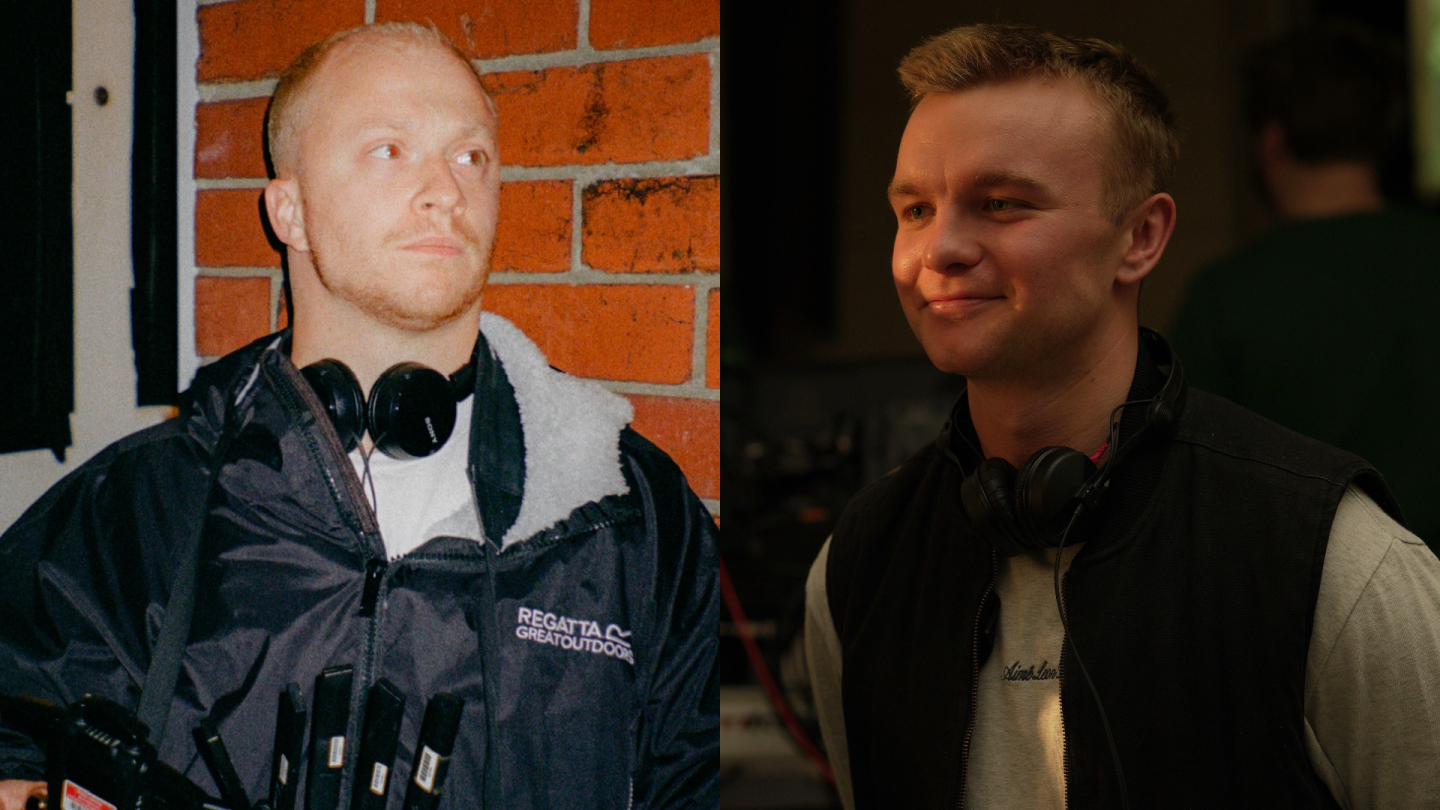
Ollie Gardner and Jake Harvey are not afraid to say they love each other.
The two British filmmakers — about to make their feature-length debut with Edinburgh Film Festival’s competition title The State of Us, premiering Friday — are flipping the narrative on what it means to be a man and embracing the intimacy of male friendships.
“Masculinity and toxic masculinity are synonymous with each other now. I’m not sure there is such a thing as positive masculinity,” Gardner wonders to The Hollywood Reporter ahead of their big night in the Scottish capital. “Especially in the public discourse and what young boys are being fed on social media, everything around the manosphere. We’ve had amazing pieces like Adolescence… What we were trying to do in this film is show, okay, well, what’s next? What do we do now?”
After meeting through the admittedly “macho” world of university rugby, Gardner, now 29, and Harvey, 28, peeled off and pursued their love of the arts in parallel industries: Gardner in theater and Harvey in TV. Under the wing of British producer Pippa Cross, who had seen a couple of their short films, they have — in their words — begged, borrowed and stolen to make this movie, and now arrive in Edinburgh with one of the U.K.’s most stirring indie films of the year, anchored by two devastatingly tender performances from Callum Scott Howells (It’s a Sin) and Samuel Bottomley (California Schemin’).
The filmmaking duo deftly tackle grief, nihilism and platonic love in The State of Us, following a boisterous tearaway called Frankie (Bottomley), who is struggling to come to terms with the inevitability of losing his best friend Taylor (Howells) to cancer. He impulsively breaks him out of hospice care for one final night of fun and debauchery. But what promises to be a night of hedonism quickly becomes something much more complicated, as Frankie and Taylor are forced to confront what has been left unsaid about their friendship and respective futures. Frances Barber, Safia Oakley-Green, Seamus O’Hara, Sunetra Sarker and Duggal Ram co-star.
The screenplay, written by Harvey, is loosely based on a childhood friend he lost to cancer. “I really wanted to explore what it looks like when one lad has his whole life ahead of him,” he explains, “and another person who has days left, in a really tragic sense, actually sees more value and excitement in those few days than someone who sees nothing in the rest of their life.” It is with immense sensitivity that the young directors navigate this probing of men and their feelings: The State of Us is, by no means, devoid of humor — Bottomley in particular gives the Bradford-set story an unpredictable cheekiness — but Edinburgh audiences will no doubt leave the theater interrogating the nuances of manhood.
Below, they talk about lifting The State of Us off the ground over the course of five years, Howells and Bottomley’s “yin and yang” approaches to Taylor and Frankie, and making it through the “tragedy” that is British independent film financing: “It was just five years of grinding and being passionate about it, and sticking to it, and making sure that we knew this was the first film we wanted to make.”
I actually wanted to start at the end, because I know this film is dedicated to a friend. I wondered if either of you would be comfortable talking about that.
JAKE HARVEY Yeah, so [he] was a friend of mine from school. We were part of a friendship group that this is all based on. There’s a lot of Taylor that’s inspired by him. He passed when we were 18, from cancer. And that friendship group is sort of characterized in Frankie. His family is coming up to Edinburgh, and it’s the first time they’ve all seen [the film] as well. So that’s a slightly daunting thing, but it’s not totally based on that person. His outlook on life [is what] I would say it’s based on.
This must be a very personal project for you. How long ago did you know you wanted to make a film influenced by his life?
HARVEY Ollie and I met at uni. We were both playing rugby together. And we we were the only two lads interested in theater. Ollie had an idea for a short film — a ballet-based, physical theater-type concept, and we started talking about that. We then related it to this cancer story about a bunch of boys who meet up in a pub every Sunday, where they then negotiate their struggles of this impending grief through movement rather than dialogue. It was sort of our approach to how men don’t really have the words to truly say how they’re feeling. What does that look like if they’re all joking in a room but actually their bodies say that they’re really struggling? Then in lockdown, about two years later, I just decided to try and write something. I was living with and looking after my grandma at the time, who [The State of Us character] Joan is based on. I guess lockdown almost inspired the idea of breaking out of somewhere that you’re locked in — a place of death. But weirdly, it’s quite a happy place, being around people that really see the true value of their life.
I really wanted to do something that was quite uplifting, rather than too heavy or only existed in the really dark space. I looked at how young lads negotiate the darker times with jokes and laughter, and underneath it can be a cry for help. Frankie, for me, was a really interesting character. I really wanted to explore what it looks like when one lad has his whole life ahead of him, and that’s a daunting feeling. And another person who has days left, in a really tragic sense, actually sees more value and excitement in those few days than someone who sees nothing in the rest of their life.
Callum Scott Howells and Samuel Bottomley lead ‘The State of Us’
Courtesy of EIFF
So you both were rugby boys at uni — wow! Were you studying film?
OLLIE GARDNER No, I studied drama, and you (to Harvey) were doing liberal arts. We’ve both been brought up playing sport our entire lives, which is quite the macho, classic lad setting. I think we bonded quite early playing rugby, and it’s where our analysis of masculinity started to come from — all the toxic elements, but then again, some of the beautiful male friendships that we formed.
So Ollie, when Jake came to you and showed you this very gut-wrenching script, what was your reaction?
GARDNER It’s such a process. It was in the works for four or five years. I think we’d always spoken [about] the earliest seed of an idea of what could be. And as Jake was writing it, we were constantly sending each other films to watch throughout that process, from Perks of Being a Wallflower to Good Time. All these references were getting muddled in from early on. Then I really loved the idea of it being a more contained story than something we were trying to do before. We immediately tried to go for big. It was nice that this felt really contained. And there’s never one point where you’re suddenly making the film. You’re doing it and doing it and doing it until suddenly you’re on a set and you actually are doing it.
HARVEY It definitely evolved. And my own mental health came as a bit of a reality in lockdown. Because I was at uni when I was processing [my] grief… Then in lockdown, [I was] suddenly like, “Oh, I understand. Death is all around us.” You really understand the weight of it. I think I really struggled and I was questioning what does it all mean if someone who’s that young has his fate decided otherwise? I became hooked on that. So the first draft was literally me locked in a room. I wrote it in three days. The first act stayed largely the same. The rest of it was, I think, probably a bit crap. (Laughs.) But it was just a bit of a grieving process that came out as a script about these two boys negotiating the value of their lives.
It really was so affecting. How on earth does a film like this get made? Was it non-stop pitching for you guys?
HARVEY Yeah, it’s odd when you get to this point of it because you forget all the times you sat in bed sobbing because you think [that] this one thing that you care about more than anything in the world will never happen. (Laughs.) But the difficult thing about it is there are so many times when you get close or you get some big financier who loves the script and says, “I’ve got all these people that, [I’ll put] all the money into it,” and then three weeks later they drop off the face of the planet and you’re back to square one. We were very lucky to have Pippa Cross as the producer on it. She saw our short, she offered us a job in her production company coming out of uni as part-time development producers, and I sent her the first draft of the script.
She was very much the champion early on. She said, “Keep refining it,” and that she’d be the face of it to take it out with a bit more experience behind her. Everyone faces this challenge in the industry at the moment, but we thought we were going to have three times the amount of money at one point to make this. We had to cut it down to a 12-day shoot, and we shot it in two weeks. It was basically running around with a camera, all first takes.
GARDNER Yeah, the reality is you just beg, borrow and steal your way to make it.
HARVEY (Laughs.) Yeah.
GARDNER It’s the tragedy of the independent British film industry at the moment. There aren’t a lot of routes for funding first-time directors. There are only a few public funders who do it, and even then, the process is arduous, and it’s not always tailored to brand new filmmakers. I think the hardest thing when you’re making a film as first-time directors is you have to convince people you can do the job before you’ve done the job. That’s why it’s really important to build a back catalogue of short films. We went off and did our own thing. I’ve been producing event cinema for the last five years. We had to build our own careers enough to warrant the fact that we know what we’re doing. It was just five years of grinding and being passionate about it, and sticking to it, and making sure that we knew this was the first film we wanted to make.
Then you eventually get a team who are willing to make this film no matter what. So when you have the tough discussions of, “Our budget’s been slashed in half, we would love you all to do it, but we’ll never be able to pay you as much as we’d ideally liked,” everyone just threw themselves in anyway because they loved the story and felt passionate about it.
HARVEY A family mentality was the only way through it.
GARDNER There’s no other way of saying it: [It was] just pure brute force.
What do you hope Edinburgh audiences — and audiences watching when this film is released wider — take away from The State of Us?
HARVEY I really want someone to leave the cinema just thinking of their best childhood friend. If they walk out with a smile on their face, having been on this journey on this night out with these two lads, and their immediate thought is, ‘Oh, I might just text my best mate and see how they are, or just ask if how they’re doing.’
GARDNER Yeah, and to add that, I really would love young boys and young men to watch this film as well. Primarily, I think we touch upon masculinity, and it’s a really tough conversation to be having at the moment, and it’s incredibly relevant. But masculinity and toxic masculinity are synonymous with each other now. I’m not sure there is such a thing as positive masculinity. Especially in the public discourse and what young boys are being fed on social media and everything around the manosphere. We’ve had amazing pieces like Adolescence and pieces on stage like Inter Alia come out, and there’s really incredible pieces of work being made that are shocking audiences into [seeing] the problem. What we were trying to do in this film is show, okay, well, what’s next? What do we do now?
[With] my male friends, it’s purely platonic. But there’s a love there. We (to Harvey) would say to each other that we love each other. There’s a vulnerability there. There’s a strength that comes with that. And I think all of that is really articulated in Frankie and Taylor’s relationship with each other. It’s really important that we start showing young men that you can love another man, and it can be platonic and a really beautiful thing.
How much does a platform like Edinburgh help with scoring a theatrical release? Are you nervous?
GARDNER Terrified. (Laughs.) Edinburgh is an incredible festival. It’s the oldest-running festival in the world, but it really champions independent filmmaking. I think it’s never really forgotten its main purpose [and] what a festival should be, and it should be to champion new voices and risky voices and push that medium further, because that’s what independent filmmaking is about. Edinburgh epitomizes that. It’s lovely that it’s obviously a British festival [as well]. I think that’s really special to us. Our film feels inherently British, but also there’s something really beautiful about it being in Bradford. You very rarely see these northern stories anymore. Growing up in the ’90s, Billy Elliot is the thing that inspired me to do this in the first place. The Full Monty… I think of these amazing, British, northern voices that I don’t see anymore.
HARVEY There is Clio Barnard [director of The Selfish Giant, I See Buildings Fall Like Lightning].
GARDNER Yeah, who’s obviously a pioneer in that sense.
HARVEY And Screen Yorkshire were probably one of the reasons that we were able to get this off the ground as well. They were really helpful and lowered our costs and championed the film, and I think they saw what we were trying to do as well and got behind that. But yes, coming back to the question, we are nervous. We had the first test screening and Ollie was on holiday. Coward! (Laughs.) I felt really confident going in and walked into the room and just felt the blood drain from my body. You know, Frankie isn’t a hero, he’s quite flawed, and that sparked debate when we did a test screening — quite a fiery debate. But that’s no longer up to us.
GARDNER It’s just letting go. The film’s not ours anymore. It’s everyone else’s to enjoy or not enjoy. And we can’t control how people are going to take to it now. That’s an incredibly daunting prospect, but fundamentally so exciting.
This interview has been shortened and edited for clarity. The 2026 Edinburgh International Film Festival runs Aug. 13-19.
>
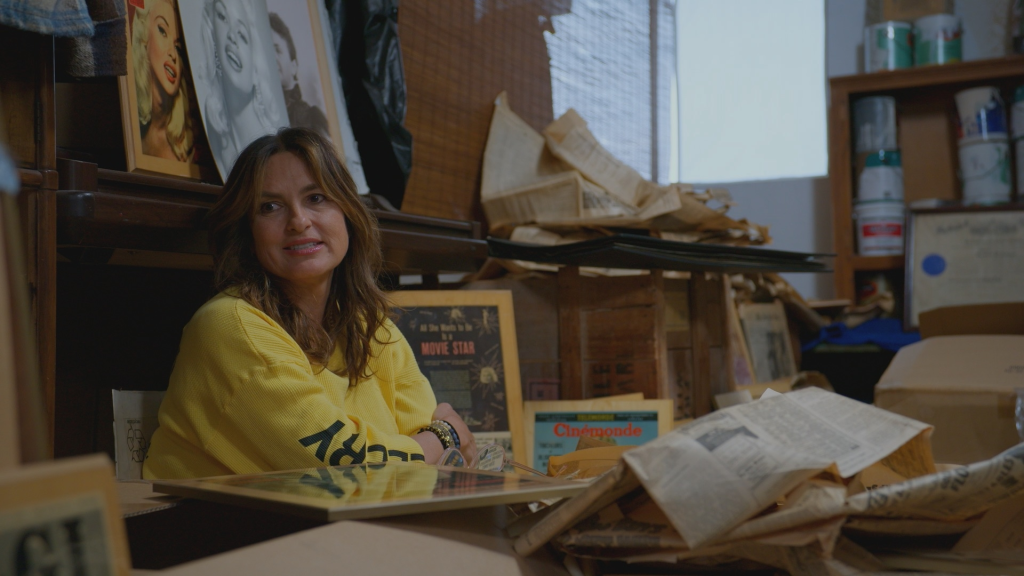
As Mariska Hargitay reflects on the past year in her life – a momentous one for the actress and filmmaker – a word comes to her mind to describe it: “cathartic.”
She completed her 27th season starring as Capt. Olivia Benson on Law & Order: SVU and in May made her Broadway debut in the drama Every Brilliant Thing – both exceptional achievements. But the catharsis emerged through an even more personal endeavor: her nonfiction directorial debut My Mom Jayne. The HBO documentary, an intimate exploration of Hargitay’s mother, the late actress Jayne Mansfield, and of a mystery surrounding the identity of Hargitay’s father, has earned three Primetime Emmy nominations, including Outstanding Documentary or Nonfiction Special and Outstanding Directing for a Nonfiction Program.
“The film has been, for me, the gift that just keeps on giving,” she tells Deadline. “It was an archeological dig of me not knowing what I was going to find, hoping that I had the internal architecture to support myself… Going into the unknown and not knowing what the other side was going to look like, it’s been so extraordinary to come out the other side with the results beyond my even dreams or comprehension, not knowing that the film would resonate with so many people the way it has.”
Hargitay was just three years old when her mother was tragically killed in an auto accident outside New Orleans in 1967. Mariska and her two older brothers, Zoltán and Miklos (Mickey Jr.), were in the back seat of the vehicle but survived. Mariska and her older siblings were raised by Mickey Hargitay Sr., the man she grew up believing to be her biological father.

Jayne Mansfield in 1957.
Everett Collection
Jayne Mansfield possessed great beauty and talent. She was multilingual and played classical piano and violin, but her exceptional good looks and curvaceous figure limited how the men who ran Hollywood perceived her. Mansfield accommodated herself to the sex symbol persona. In the film, Hargitay recalls growing up without her mom and becoming uncomfortable with how Mansfield had presented on screen.
“I didn’t really appreciate the sort of bombshell image and didn’t like some of the [acting] choices she made,” Hargitay told us at the Cannes Film Festival, where My Mom Jayne premiered. “I felt myself being embarrassed by her and just wanting a normal mom and a regular mom and ‘pick me up from school’ and like that… I just felt like I dissociated myself and said, yeah, I don’t want to be part of that, and I want to do it differently.”
Executive producer Lauran Bromley, director Mariska Hargitay, and producer and Trish Adlesic pose during the ‘My Mom Jayne: A Film By Mariska Hargitay’ photocall at the 78th annual Cannes Film Festival on May 18, 2025.
Pascal Le Segretain/Getty Images
In the course of the film, Hargitay reevaluates her mom, forming a fuller picture of how Mansfield’s career choices were circumscribed by the egregious sexism of the 1950s and ‘60s. She also explores her mother’s complicated love life, and the blended family Jayne raised that included Mickey Hargitay’s daughter by his first wife. The honesty of the portrayal, coupled with the reality that many people experience blended families or complicated family dynamics has allowed viewers to connect with the film.
A young Mariska Hargitay with her mom, Jayne Mansfield.
HBO Documentary Films
“You could say, ‘Oh, [this story is] about Jayne Mansfield, a movie star in the ’50s and her TV star daughter’; that’s not what the movie is about. It’s a family film. It’s a story about generational trauma, and it’s a story about identity and recovery and reclamation and forgiveness and so many things,” Hargitay says, expressing pride in “the way the film has been received and the way that people have said, ‘That’s my story,’ and the spark that has led people to investigate their own families to uncover their family secrets or just deal with them or just look at them closer.”
Hargitay captures on screen her reaction to learning as an adult that Mickey Hargitay in fact wasn’t her biological father. Her dad was Nelson Sardelli, a Brazilian singer with whom Jayne Mansfield became romantically involved during a break from her marriage to Hargitay. That revelation triggered conflicting emotions in Mariska, who felt intensely loyal to Mickey Hargitay as her loving father and didn’t want it to seem as if, somehow, she were turning her back on him.
“When we keep secrets, I think that occupies a big part of our psyche — knowingly and unconsciously,” Hargitay observes. “Holding this secret and feeling bad about it and knowing that there was a part of me that just wasn’t clear and allowing myself to be my authentic self — but out of duty thinking this is how it had to be to honor my father. And then when I came to the realization like, no, no, no, that secret isn’t honoring anyone. We have to tell the secret.”
She adds, “I wanted to make a love letter for my father, Mickey. That’s what I wanted to do. But in the process, it turned out to really be a love letter to all three of them [Jayne, Nelson, and Mickey] because the film deals with the complexity of the human condition, the real complexities of what it is to be human and how two things can be true at once.”
In My Mom Jayne, Mariska connects with Nelson Sardelli, and the half-sisters she never knew she had.
“It was very cathartic and mind-blowing to hear Nelson’s side of the story and understanding why he made the decisions that he made and how complex the decisions were for all three of them in so many ways,” she shares. “I was freed up; I felt like this giant exhale.”
Mariska Hargitay acknowledges the audience after making her Broadway debut in ‘Every Brilliant Thing’ at the Hudson Theatre on June 2, 2026.
Rob Kim/Getty Images
The freeing of psychic space has allowed Hargitay to pursue new avenues of creativity. She made her Broadway debut 40 years after her late mother had done the same.
“She was 22 [when she made her debut] and I was 62. That was also a deeply extraordinary feeling for me,” Hargitay affirms. “And when I went to Broadway, one of the things that I took with me was a plaque that she got that said ‘Broadway’s Rising Star 1955.’ And so every night I would hold that before I went [on stage].”
Hargitay will continue an extraordinary year by embarking on the 28th season of Law & Order: SVU and taking on another major challenge – hosting the Primetime Emmy Awards on NBC on Monday, Sept. 14.
We’ll have more on Mariska’s plans for hosting the show in a separate piece we’ll publish on Tuesday. She won’t be simultaneously hosting and hearing announcements of winners in the documentary categories – those are presented at the Creative Arts Emmys ceremony in Los Angeles on Sept. 5 and 6.
>
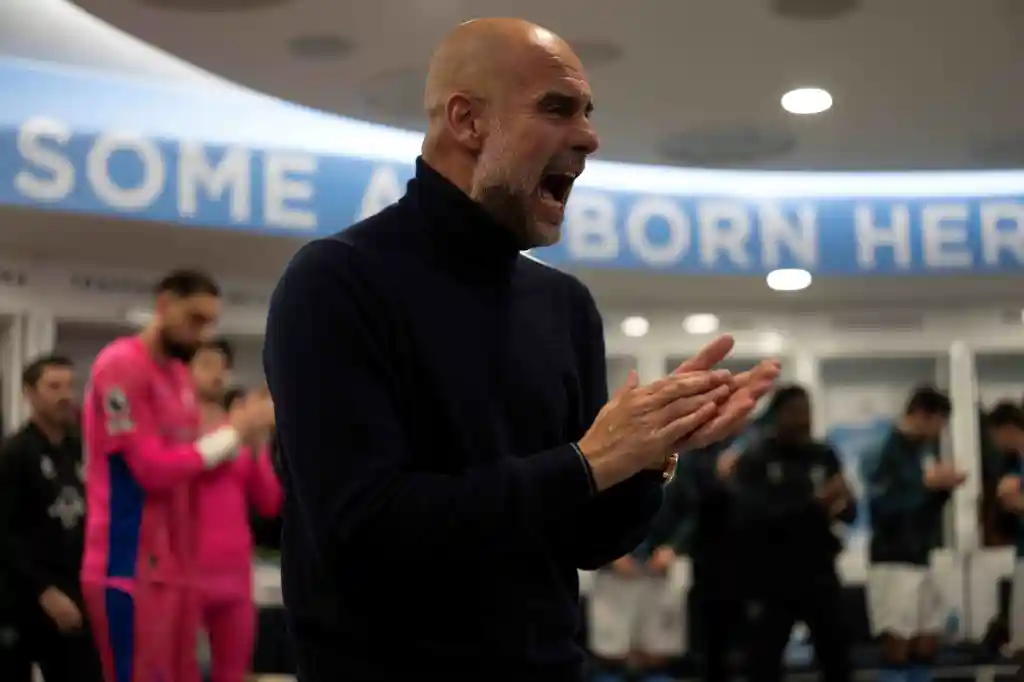
“Pep playing himself is a bit like having Robert De Niro play a football coach.”
Those are the musings of Oscar-winning director Kevin Macdonald, who has just spent two years charting the exploits of Pep Guardiola and Manchester City for A Beautiful Obsession and yet had barely heard of Guardiola before he was brought on board by Prime Video, Plan B, Workerbee and City Studios.
“He wears his heart on his sleeve,” said Macdonald. “He’s just so compelling to watch.”
Macdonald, whose subjects have included Whitney Houston and Bob Marley, and who won an Oscar for One Day in September, believes his lack of interest in soccer was advantageous when following one of the greatest managers of all time. The docuseries charts Guardiola’s tumultuous final two seasons after winning an English record four Premier League titles in a row and follows in a long line of Amazon sports docs about soccer teams, although this one isn’t part of the streamer’s successful All or Nothing strand.
Asking stupid questions
Kevin MacDonald. Image: Deadline via Getty
“There’s something quite good about asking stupid questions,” Macdonald told Deadline. “I told him I didn’t know much about football and the weird thing was that really engaged him. He was like, ‘Oh my god I’m so fed up with talking about football.’ So we talked about books, films and all sorts of other things.”
Macdonald’s disinterest in the UK’s national sport echoes that of Fisher Stevens, who directed Netflix’s smash hit Beckham documentary several years back and has also said in the past he didn’t know much about soccer when he took up the gig.
It allowed Macdonald to get under Guardiola’s skin, the Scottish director explained. “I asked why he was so interested and why the players cared so much,” added Macdonald, who spent hours observing with the legendary Spanish coach, met him five times and interviewed him three times. “We tried to make a series that was emotional and human, and saw these players go through really dramatic events. I hope the series will be enjoyed by people who aren’t football fans, but are just interested in the human drama.”
That drama came during the first few months of the period being covered in the doc as Guardiola, fresh off the back of his GOAT-like title quadruple, suddenly found results turning for the worst.
Gavin Johnson, Group Media Director at City Football Group, who oversees City Studios, said filming this period was “quite uncomfortable for people internally,” but the team was commited to keeping the cameras rolling.
“There is an acceptance at the top of the business that you have to tell deeper stories around the club and to do that you have to open yourself up,” said Johnson. “We’d had this amazing run and then we couldn’t stop losing for a short number of games and it was really really hard. Sometimes it was uncomfortable to watch but that is what makes good drama.”
Macdonald said this created “authenticity and honesty,” which contrasts with the “first wave” of popular streaming sports docs from a few years back that “were quite constructed and quite limited” in scope. “Fans see that every Saturday,” he added. “They want something more – a kind of observational, vérité documentary that is quite rare in other worlds.”
City Studios’ deep access comes from its unique position as an in-house Manchester City studio, chronicling the team all-year round.
“The team we’ve built at City haven’t shied away from any area but have done a wonderful job to build trust, catch all of the content and work within the parameters we have to work within,” said Johnson. “These are top sports individuals [we are following] who have to try and win games for Man City. But also they’re human beings and that is the essence of what Kevin Macdonald has scratched below the surface of.”
City Studios has a development deal with Sony Pictures Television for soccer content and Sony international boss Wayne Garvie has previously said he wants to find soccer’s Succession. Updating on the pact, Johnson said there are “three or four projects we are really excited about,” which lean on Garvie’s “expertise, contacts passion and knowledge,” but the world of scripted programming can be “frustratingly slow” compared with docs, he added.
“The philosophical underpinning of the series”
Image: City Studios
So what next for Guardiola?
Having won numerous titles at Barcelona, Bayern Munich and Manchester City, the 55-year-old is heading for a rare career break after turning down a job to manage the Italian national team. Macdonald said Guardiola is remarkably philosophical about the future.
“He’s coming to terms with the idea that you cannot be the best forever, but you need to understand and communicate to those around you that you have to enjoy life whether you are winning or losing,” added Macdonald. “In a way that is the philosophical underpinning of the series. This feels very authentic coming from Pep. I kept telling him he was a natural Buddhist.”
The docuseries launches August 19. It is directed by Macdonald alongside City Studios’ John De Caux and produced by Macdonald for Plan B/KM Films and Banijay UK-owned Workerbee, along with Johnson and Ged Doherty for City Studios.
>
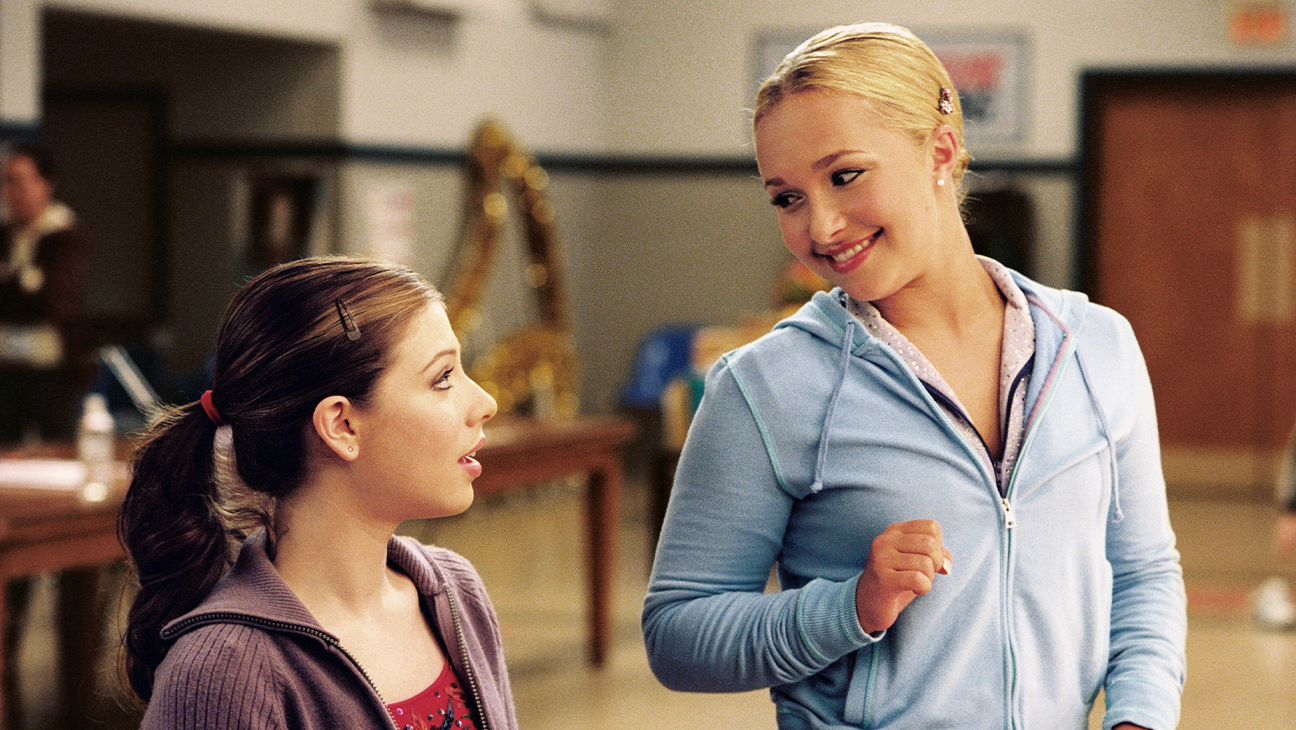
Hayden Panettiere’s most notable roles might have been in Heroes, Nashville and the Scream franchise, but her performance in one small Disney movie also had quite the lasting impact on fans.
Following the news of Panettiere’s death at age 36 on Sunday, fans have flooded TikTok to pay tribute to the actress and her many beloved roles throughout her career. But her 2005 Disney movie Ice Princess, which saw her star opposite Michelle Trachtenberg (who died last year at age 39), appears to have struck a specific chord for many.
Video compilations of Trachtenberg and Panettiere’s characters, Casey Carlyle and Gen Harwood, respectively, have been circulating on social media Monday, with many fans acknowledging the film’s comforting nostalgia amid the tragedy.
“Our ice princesses are together again,” one fan wrote, while another person shared, “RIP to our ice princesses. This is the movie that inspired me to start figure skating and will always hold a special place in my heart.” Another fan also wrote in a video, “Now they will skate together on ice for eternity. RIP queens,” while one person added, “Hayden and Michelle 4ever loved and remembered by the girls who grew up watching Ice Princess.”
Ice Princess followed Casey, a brainy high school student, who gives up her path to Harvard to pursue her newfound dream of being a professional figure skater. Panettiere played Casey’s main rival-turned- supportive ally.
While it underperformed at the box office upon its release in 2005, the recent reactions from fans highlight how the film became a childhood touchstone for many older Gen Zers and younger millennials, especially women. The film’s empowering message about self-discovery and combining academics and athleticism also contributed to its impact on young girls at the time.
Both Panettiere’s and Trachtenberg’s unexpected deaths occurring at a young age and within two years of each other have come as a shock to Ice Princess fans, as they continue to remember both women on social media. “Can’t believe both of our ice princesses are gone,” another person wrote on TikTok.
Kim Cattrall, who played Tina Harwood, the pushy figure skating coach and mom in the film, also took a moment to pay tribute to Panettiere on Instagram, writing on Monday, “Rest in peace sweet Hayden. Gone far too soon.”
>


Search For Canadian TV Actor Stewart McLean Now Homicide Investigation


These ’90s fashion trends are making a comeback in 2017
According to Dior Couture, this taboo fashion accessory is back
Model Jocelyn Chew’s Instagram is the best vacation you’ve ever had
Emily Ratajkowski channels back-to-school style
9 Celebrities who have spoken out about being photoshopped
Your comprehensive guide to this fall’s biggest trends
A photo diary of the nightlife scene from LA To Ibiza