
The first shot from production of ‘Murder In the Dark’
Prime Video


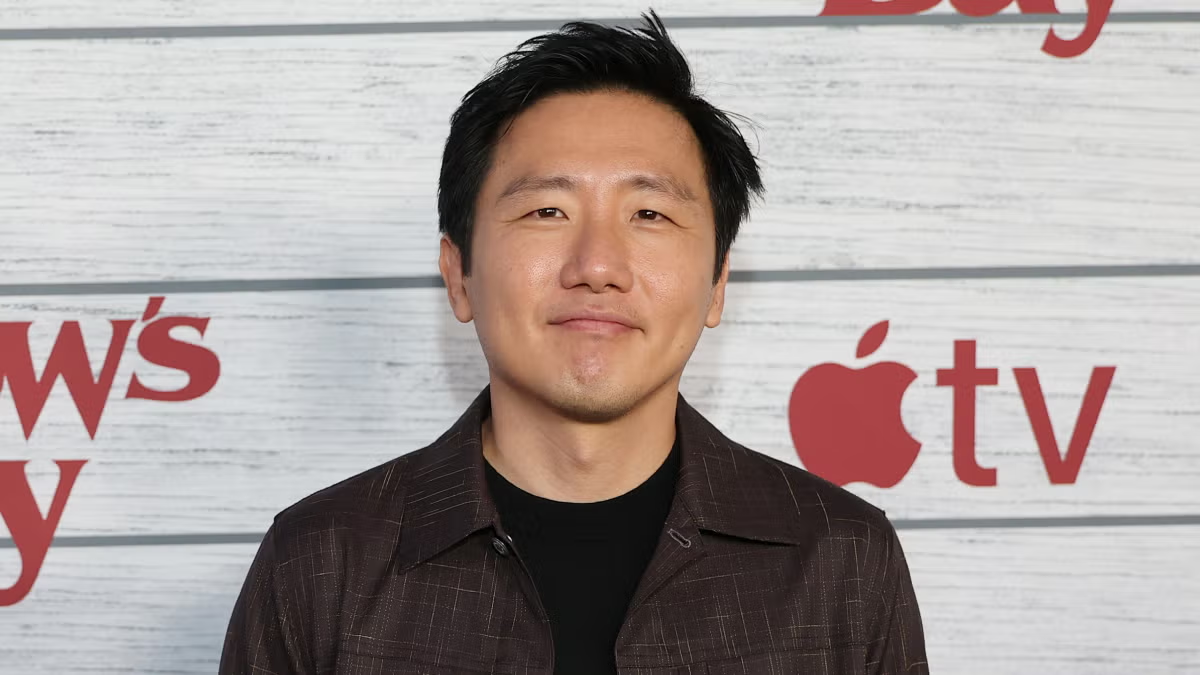
“Widow’s Bay” creator Katie Dippold did not write any of the show’s characters with actors in mind. But she knew she wanted Hiro Murai to direct it.
“He was my dream director. I was watching ‘Atlanta’ while I was rewriting the show,” Dippold told TheWrap, citing the Emmy-winning FX comedy that Murai directed nearly 30 episodes of as a major influence on her new Apple TV horror comedy. “I think Hiro is so brilliant at executing a very grounded world where you buy everything that’s happening, but then can really surprise you with something completely absurd. I just knew he would be perfect for our show.”
Her high regard for Murai’s work is a reflection of the position he now occupies, particularly in the serialized television space. Having directed seminal, defining episodes of not just “Atlanta,” but other acclaimed, genre-bending series over the years, like “Station Eleven,” “Barry,” “Mrs. & Mrs. Smith” and “Legion,” Murai has become, perhaps, television’s most esteemed and in-demand director.
How did that happen? Especially for a filmmaker who, when asked about the arc of his career, told TheWrap he never really had any kind of “master plan.”

Murai, the son of Japanese composer Kunihiko Murai, was born in Tokyo. He moved to Los Angeles when he was nine years old (“Where the movie business is just around,” he noted) and graduated from the USC School of Cinematic Arts. It was in high school, while going to movies with his friends at Los Angeles’ Westwood Village Theatre, that he said he fell in love with filmmaking.
“I’m sure this is true for a lot of kids in the ’90s, but every weekend, no matter what, we would just go see a movie,” Murai explained. “Some of them were really terrible, but it was like an appointment on Fridays. Just show up and stand in line. I think the communal aspect of that really stuck with me.”
After he graduated, Murai got jobs working on music videos, first as a cinematographer and storyboard artist and later as a director. It was a move, Murai said, partly inspired by his father’s work as a composer. “Music was always around. But I never had any real talent for it,” he reflected, noting that 10 years’ worth of piano lessons just “never stuck.” That did not lessen his love for the art form or his respect for the artists who create within it.
“I like the way they work. Many of my musician friends have this very organic, laid back approach to making things,” Murai said. “They just get together and pass the thing around. See if something comes. And I think I thought at the time, ‘I want to get close to that in some way.’”

Murai began to accrue his own directorial credits making music videos around the start of the 2010s. Reflecting on what he learned from those experiences, Murai told TheWrap, “I do think music videos, specifically, tell you how to build a story in an abstract way. A music video is an escalation of emotion and tension and release, and I think that translates surprisingly well to narrative storytelling.”
By the time Murai collaborated for the first time with “Atlanta” creator and star Donald Glover, who goes on stage by Childish Gambino, in 2013, he had already developed strong creative partnerships with artists like Earl Sweatshirt. But it was his early collaborations with Glover that changed the trajectory of his career, resulting in him directing the pilot and multiple episodes of “Atlanta,” as well as the incisive video for Glover’s scathing 2018 political anthem “This Is America.” (Murai won a Grammy for his work directing the latter.)
“I certainly wouldn’t be doing most of what I’m doing right now without Donald, just from a career perspective,” Murai admitted. “We’re very different people. He’s a performer, and I’m camera shy [laughs]. I don’t think you would group us together, but there’s something special about spending so much time with someone who has similar taste, the same creative ambitions and yet is capable of doing things that you can’t. You end up learning a lot about yourself as an artist.”

Murai followed up his early work on “Atlanta” with episodes of “Barry,” “Station Eleven,” “Legion,” “Snowfall” and “Mr. & Mrs. Smith.” The same things that appealed to him about those shows drew him to “Widow’s Bay.” When I ask him what else he looks for in the pitches he receives, the filmmaker is quick to highlight bold ideas.
“I want to see something I haven’t seen before,” he said. “I like the feeling of starting something and going, ‘I don’t know if this is going to work. I don’t know if this is actually a good idea.’ Every good artistic experience I’ve had has started there, with that feeling of, ‘Is this going to work? Can we get away with this?’”
He felt that when he read Dippold’s script for the first episode of “Widow’s Bay.” An ambitious, genre-bending horror comedy series, the Apple TV original follows Tom Loftis (Matthew Rhys), the mayor of a lonely island town located off the coast of New England who longs to turn it into the next Martha’s Vineyard. His attempts to do so are thwarted by the superstitions of local residents and by the ghostly specters that suggest the island may, in fact, be haunted.

Murai found himself charmed by the show’s ties to an older kind of workplace comedy (“You just don’t see TV shows about a mayor anymore.”), as well as the parts of it that felt modern and sharp and “jagged,” even on paper.
“It has this weird combination of cozy and unsettled,” Murai observed. “There’s something about those two things that felt really unique and strangely compatible, and when I talked to Katie, she explained the show as a place that she always dreamt about. It’s tied to her childhood experience of watching these horror movies and going to these haunted houses in New Jersey in the 1980s. It was tied to a lot of nostalgia, but it was also about her own anxieties.”
“When we talked, I just thought, ‘Oh, there’s a lot here. I don’t know what the show is going to be, but it feels like there’s a lot of material and things to excavate,’” he explained.
Murai ultimately helmed five of the 10 episodes of “Widow’s Bay” Season 1, making it the season of TV he has had the most control over since “Atlanta” ended in 2022. When I pointed that out to him, he admitted with a laugh, “This is the most tired I’ve been since ‘Atlanta.’ So that makes sense.”

Fortunately, the effort was worth it.
The Apple TV series is a cinematic marvel, one that feels deliberately reminiscent of horror classics and yet visually, aesthetically singular. The series is, like the episodes of “Atlanta” and “Station Eleven” that Murai directed, an achievement in grounded emotional reality and heightened, surreal logic. Watching its first three episodes, all of which Murai directed, leaves little room for wondering why directors like Ti West (“Pearl”) and Andrew DeYoung (“Friendship”) seemed like logical choices to direct the season’s middle episodes.
“I’ve come to distinguish the difference between my directorial voice and what I think is helpful for a TV show,” Murai told TheWrap. “I’m going to tell a story the way I’m going to tell a story because it’s not a choice. But I’m also stocking the kitchen so future people can come in and make something cool, too. The pilot is rarely the best episode of a show. Making it is kind of a thankless job. But what you’re doing is looking for the potential of something, a certain actor, setting, dynamic, and going, ‘There’s something here that future directors can play with.’”
“I’m a director first, and I love crafting scenes and building an experience out of an episode,” he continued. “But those two things are not at odds with each other, and they feel more and more like two different muscles that I am constantly oscillating between when I’m doing something like this.”
Despite its obvious debt to films like “The Shining,” “Jaws” and “The Fog,” “Widow’s Bay” never feels purely like homage. It is its own thing, one where the horror and the comedy are treated with equal respect. For Dippold, she wanted Murai to direct the series, which she has been developing since 2008, because she knew he would understand that.

“It’s a real tonal, tight-rope walk, and working with him was really great, because I knew he would never make anything corny or campy,” the showrunner explained. “That’s just not his taste.” For Murai, he knew the key to making the series function was making its world and its characters’ lives feel as real as possible.
“When we started, we came at it thinking, ‘We have to make the comedy and the horror work. It can’t be camp. It can’t be a spoof, because we want the horror to be actually scary.’ The only way to really get to that is by treating the world of the show really seriously,” Murai told TheWrap. “We were always thinking, ‘How do we make this feel real? How do we straddle the line between it being this nostalgic vibe and something that also feels uncomfortably real?’”
“Katie and I were always talking about how we didn’t want this to be a send-up where we’re dutifully recreating certain shots from horror movies we love,” Murai said. “There needed to be a baseline cadence that feels consistent, and, hopefully, what that does is make certain things extra jarring. Because we might have one scene where it is just office banter and then another where there’s an evil hag chasing Tom down the street. But it’s still the same visual language.”
“It wasn’t a foolproof recipe,” he said. “Sometimes, it felt like we weren’t servicing the joy of the horror enough. But little by little, we nudged it to the right place.”

Murai directed the opening and closing chapters of “Widow’s Bay” Season 1. A lot changes in the show between those installments. There are unexpected detours into different genres and standalone stories, a trick that Dippold said she fell in love with in “Atlanta.” As she broke the first season down with her fellow writers, she felt herself taking bigger swings, partly because she wanted to keep giving Murai reasons to direct more.
“Honestly, I think the show got more ambitious in its scope throughout the season because I wanted Hiro to direct as much as possible,” Dippold confessed. “I feel like I purposefully made it more ambitious for him.”
It worked.
“What I was particularly excited about with the show is that it starts in one gear, and then it keeps escalating and morphing into this other thing,” Murai said. The show’s ambition meant he, as the director of the series’ opening chapters, had to build a sandbox big enough to fit it all.
“Whatever we made needed to house all of those gears. It needed to work as a slice-of-life comedy. It needed to work as a sitcom, but there are also episodes in the season that are kind of straightforward movies, whether it’s straight drama or straight horror,” Murai said. “We tried to build a language that could house all of those things.”

Now, as “Widow’s Bay” moves into the middle of its season on Apple TV, Murai says he is just enjoying being back in Los Angeles for a bit after having spent months in the New England area bringing ghosts, ghouls and sailors’ superstitions to life. He does not know what he will do next, cryptically teasing only that, “There are a few things in the oven.”
Regardless of where he directs his attention next, Murai has ended up in a rare place in Hollywood, one where showrunners like Dippold want to pitch their projects to him, rather than the other way around. That is not too bad for a filmmaker who left college with no master plan.
“Creatively, I feel like I’ve always been chasing the same, consistent thing, even if it’s hard to define, both in tone and point of view,” Murai reflected. “I didn’t really have TV ambitions before I started doing ‘Atlanta.’ But something I learned early on, especially in the music video world, is that part of the work is just being present with the thing in front of you, the collaboration in front of you.”
“I’ve tried to just get something out of the process and the person in front of me at each step along the way,” Murai said. “That usually nets an interesting outcome.”
New episodes of “Widow’s Bay” premiere Wednesdays on Apple TV.

>
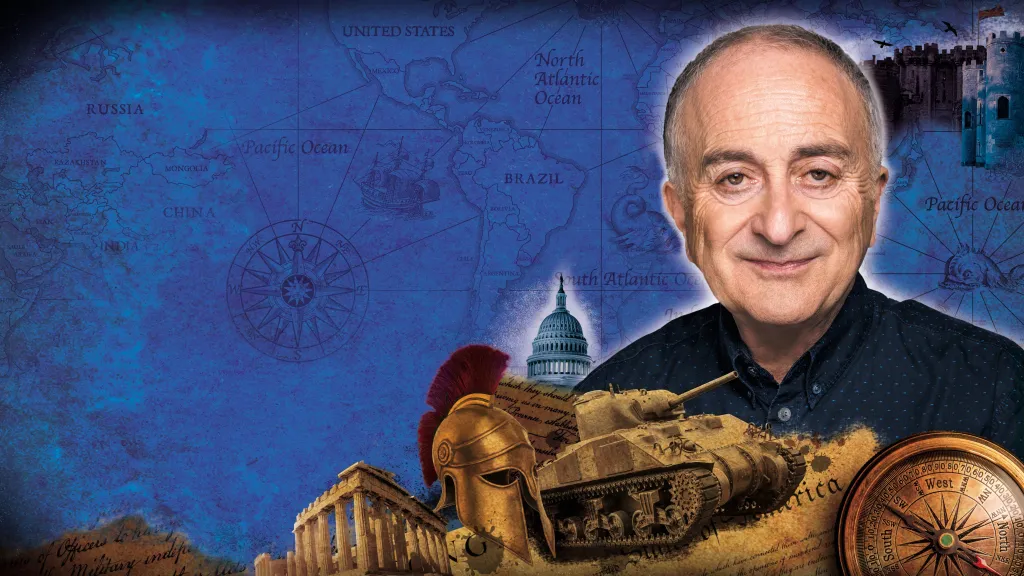
EXCLUSIVE: Here’s one for the history buffs. The newly-formed Radar Studios is teaming with British broadcaster and historian Tony Robinson for a suite of content.
Tony Robinson Rewrites History will launch as a YouTube channel later this year, with an initial 12 half-hour episodes. Meanwhile, Radar Studios will debut a six-part, hour-long TV series to international buyers at MIPCOM Cannes next month.
The series will see popular British personality Robinson, who is known for his role in sitcom Blackadder, revisiting defining events of the past, from ancient history through to the modern era, and explore how things might have gone differently if a single pivotal moment had gone differently. The events will range from the Spanish Armada to the advent of Covid-19.
Robinson has worked with Radar Studios parent WTFN Group in Australia for more than 15 years on TV shows such as Tony Robinson’s Time Walks and Tony Robinson’s Tour of Duty, so today’s news extends that pact.
As we revealed last week, Radar Studios came into being when WTFN merged its digital arm Radar with its distribution business Fred Media. It aims to bring content creation, channel management and international distribution together under one roof, and already operates Robinson’s dedicated history channel Time Travels on YouTube, where it has more than 40,000 subscribers.
The new pact will see a new pipeline on original shows and digital content from Robinson roll out.
“I’ve known the team at WTFN for more than 15 years and we’ve made some terrific television together, so the opportunity to do something genuinely new with Radar Studios was irresistible,” said Robinson in a statement to Deadline.
“History is about the way things were, isn’t it? It’s written in stone and it couldn’t have happened any other way. Well, no. It’s actually full of tiny moments where everything hung in the balance. One different decision, one mistake, even a gust of wind and you have to rewrite history.
“And the great thing about this partnership is that we’re no longer thinking about history as something that has to fit into one particular television slot. We can tell stories in different ways, for different audiences and across different platforms. There is an enormous amount to explore and I’m hoping these first six hours are just the beginning.”
Radar Studios’ Chief Commercial Officer, Derek Dyson, added: “There could hardly be a better partner than Tony to lead off our originals strategy. He is one of the most recognisable and trusted faces in popular history, with an extraordinary ability to make the past entertaining, accessible and relevant to audiences around the world.
“Significantly, Tony Robinson Rewrites History demonstrates exactly why we created Radar Studios. Instead of making a series and then deciding where it might live, we are developing IP from the outset with multiple audiences, platforms and distribution opportunities in mind. We are creating original content for a dedicated, managed YouTube channel; developing additional digital opportunities around that content; and producing a standalone six-part television series for international buyers.
“One creative partnership and one piece of IP can therefore generate a whole ecosystem of content and commercial opportunities. By bringing content creation, channel management and international distribution together within Radar Studios, we can manage that entire journey ourselves.”
>
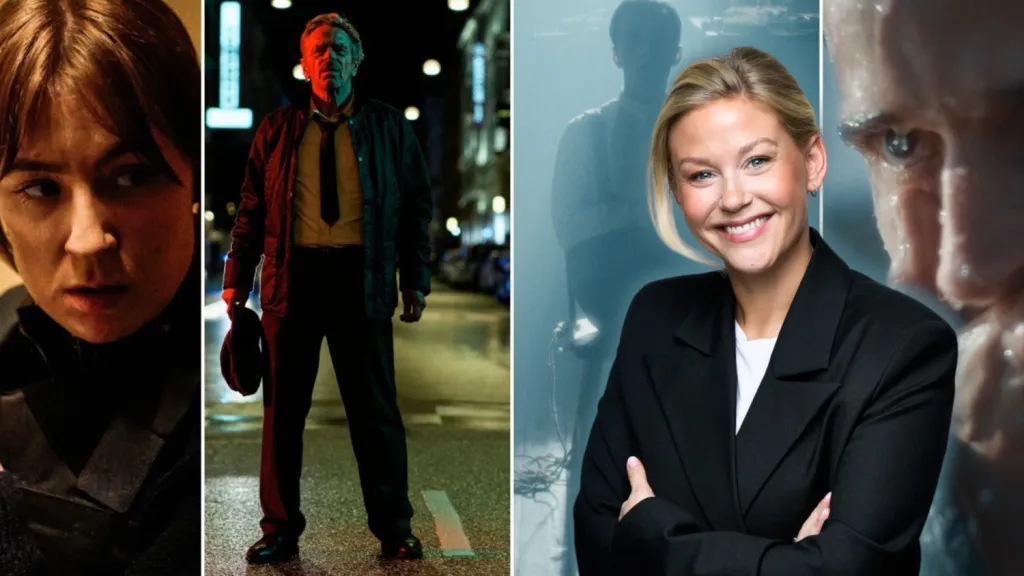
Prime Video‘s push into Danish originals began this year with Pilou Asbæk-starring Snake Killer, which is now serving as a milestone in a charge across the Scandinavian region, according to Amazon MGM Studios Nordics originals chief Emilia Widstrand.
“We’re really trying to build on that psychological thriller and crime vibe, doing it with strong creators and within established Nordic genres,” she told Deadline in an interview. Looking further ahead, Widstrand will be seeking to more directly target women and younger viewers too, as the service expands.
Snake Killer launched in January, with the four-parter followings a notorious Copenhagen narcotics police unit, Uropatruljen, a heavy-handed force that operated with relative autonomy between 1965 and 2001. The story sees Brian “Smiley” Petersen (Asbæk) leading his unit in a desperate war against a brutal heroin baron. Anders Ølholm is the writer and director.
Over in Norway, drama series Rinnan, about the infamous Norwegian traitor and Gestapo agent Henry Rinnan, is also set to launch. A co-production with Norwegian broadcaster TV2, the Miso Film show points to how Amazon is willing to share rights and window originals to bolster budgets.
Both series appeal to men, who have formed the backbone of viewing on Prime Video in the Nordics, but recent successes with unscripted shows will see the content mix changing in the future.
“Moving forward, we’ll have a more feminine point of view,” said Widstrand. “When we started out, we had a very broad audience, and we’ve really seen the appeal of female-led stories through global hits like The Idea of You and Pretty Little Liars, as well as unscripted shows like LOL: Last One Laughing. We’re really building on that, alongside our crime audience.”
As such, new original out of Denmark, Murder in the Dark, a four-part series from SAM Productions and Amazon MGM Studio based upon influential Danish literary icon Dan Turèll’s book series, is designed to appeal to a broad audience. It follows a retired and hard-bitten “nameless journalist” played by Michael Falch and his daughter Sophie (Katinka Lærke Petersen), who is an ambitious police detective.
The first shot from production of ‘Murder In the Dark’
Prime Video
Widstrand became Prime Video and Amazon MGM Studios Head of Nordic Originals in August last year, as we revealed at the time, to replace Karin Lindström, who later joined HBO Max. The two are credited internally with building Prime Video’s local originals team from scratch, making her the natural choice for the top post when it came available.
In May, this year, she added acquisitions duties following a restructure that saw the departure of Prime Video Nordics head Andreas Hjertø, and recently ordered a Swedish original, Sarek, a four-part psychological thriller based Ulf Kvensler’s debut novel about a group of friends on a hiking tripe that takes a dangerous turn.
That, Widstrand said, talks to a desire to age down the audience, with a cast led by Felix Sandman, Kitt Walker Johansson, Alva Bratt and Nora Rios, and to focus on well-known IP. “It really speaks to that strategy,” she added.
We sat down with Widstrand to pick her brains on the future for Prime Video Nordics and its originals slate.
DEADLINE: Emilia, you spoke at the Copenhagen TV Festival in August. What was your message to producers and the industry about what Amazon needs and is looking for from the Nordics?
Emilia Widstrand: We’ve been expanding our drama slate. It takes a long time to develop, and we wanted to take that time. Our first Danish original was Snake Killer, which was very successful, so we’re really trying to build on that psychological thriller and crime vibe, doing it with strong creators and within established Nordic genres.
Moving forward, we’ll have a more feminine point of view. When we started out, we had a very broad audience, and we’ve really seen the appeal of female-led stories through global hits like The Idea of You and Pretty Little Liars, as well as unscripted shows like LOL: Last One Laughing. We’re building on that, alongside our crime audience.
DEADLINE: Can you give us an example?
EW: We have Murder in the Dark, which is based on 1980s cult movies and books that we’re bringing back for Christmas Day. That has a much more female point of view than previous drama series. We’re leaning into both the female young-adult genre, looking for local versions of the kinds of stories that have found an audience globally, as well as Nordic crime, suspense and psychological thrillers. We’re trying to find strong local IP. Sometimes, we do co-productions where we sell international rights, but the focus is very much local right now.
DEADLINE: What kinds of international co-productions are you looking at and how flexible can you be?
EW: We’re very flexible. It’s a case-by-case decision about how we can get something done, but IP is important. We’re building on existing IP or true stories, which also helps us connect locally. Obviously you work with the best local talent, and the Nordics is such an amazing place to do that – It’s really special.
DEADLINE: Sarek is based on IP and with big producers. That feels like an example of what you’re talking about.
EW: Definitely, it really speaks to that strategy. I was just back on set on the show. It’s spectacular because it’s so Nordic. We’re shooting it up in Kiruna, and the environment is really a character in the story. There, we also decided to go a bit younger with the cast.
DEADLINE: In terms of your own role, Emilia, you’ve added some responsibilities, taking on unscripted along with scripted. How has that changed what you’re doing and has it impacted the overall shape of Prime Video Nordics?
EW: Strategy and programming are still separate, but I took on the overall responsibility for our Nordic local originals. I’ve found looking after the unscripted slate, which I wasn’t familiar with before, very intriguing. We work with very talented people across both unscripted and scripted, so we can really see synergies in both the talent and the content. It’s a big responsibility, but you get a fantastic overview.
DEADLINE: What would you say you’ve learned so far? It’s been a few months since you’ve taken on the expanded role.
EW: There are differences between the territories, both in Norway and Denmark, and there are different focuses in scripted and unscripted. Denmark, for example, is very strong in comedy, and it’s very easy to find strong unscripted comedy formats there.
Norway has really surprised me with the amount of great talent. We’ve found so many strong and interesting projects that we’re developing with local talent. That’s been overwhelming in a good way, with some really good projects coming out of Norway.
‘Snake Killer’
Prime Video
DEADLINE: With that in mind, what’s a realistic number of shows that will make it onto the screen?
EW: We have a slate of around 20 to 25 local originals per year, scripted and unscripted. It’s big, but we’re still trying to grow sustainably and not take on too much, while making sure we compensate the audience for the production.
DEADLINE: When we’re looking at LOL, which has been popular in the Nordics and pretty popular all over the place, is there any difference in how it’s received across the territories you’re overseeing?
EW: LOL works really well across territories. It’s a format that’s worked in so many countries across the world, huge in Mexico and Germany. It kind of works everywhere. The local versions are very different. We have local creatives on each project, because comedy is so local – it’s very hard for someone from another territory to develop it. We have other examples of programs that work better in one territory than another, but LOL is really delivering across the region, which I’m happy to see.
DEADLINE: When you’re looking at the Nordic region at the moment, what’s the biggest challenge for you as a commissioner? Obviously, you have the Amazon machine behind you, which means there is money, but it’s not an endless pot. Is it a case of funding, or talent identification?
EW: I would say both. Talent has had a few tough years, and I think it’s hard for talent to navigate what commissioners want to commission and what their creative vision is. I’m really interested in working with creators who have a strong vision and fight for that – they don’t just deliver everything you ask for. I really value creators who want to tell you something, because that delivers the best projects.
The other thing is, of course, funding. Budgets have been kind of the same, even though there’s been inflation, so it’s really hard to adapt to that. It’s also been a challenge with the tax rebates locally, and a lot of production is shooting abroad.
‘Rinnan’
Prime Vide
DEADLINE: Where are people shooting?
EW: Eastern Europe. It’s tougher to finance locally. That’s why we try to be open. If we’re going to get something big made, we need to be collaborative with local broadcasters and find synergies.
We’ve had a fantastic collaboration with TV2 in Norway with Rinnan, a project we’re launching this fall. It’s a World War II series we’re doing with Kenneth Karlstad, and it is a fantastic example of what we can do with a local broadcaster.
They benefit from their deep understanding of the local audience, while we bring the Amazon package and the premium feeling of doing high-end drama. We do it together. We’re in the room together and we’re reacting together.
DEADLINE: It comes to you first and then TV2?
EW: Yes.
DEADLINE: Is that always the case when you do those partnership shows? I see this in lots of different territories – it tends to be the streamer goes first with an exclusive window, and then the broadcaster takes it however many months later.
EW: Yes, that’s always how we do it, because we’re also much smaller than a TV2, so it makes sense for us to go first.
DEADLINE: Broadcasters and distributors have become more and more open to these types of collaborations. That probably wasn’t the case a few years ago.
Amelia: I think we’re moving into a much more collaborative space with financing.
>

>


Search For Canadian TV Actor Stewart McLean Now Homicide Investigation


These ’90s fashion trends are making a comeback in 2017
According to Dior Couture, this taboo fashion accessory is back
Model Jocelyn Chew’s Instagram is the best vacation you’ve ever had
Emily Ratajkowski channels back-to-school style
9 Celebrities who have spoken out about being photoshopped


Rurouni Kenshin: Hokkaido Arc Manga Takes 1-Issue Break – News


HIDIVE to Stream English Dubs for The World Is Dancing, The Forsaken Saintess and Her Foodie Roadtrip in Another World, The Dangers in My Heart: The Movie Anime – News