
Entertainment
Joe Dante’s ‘Explorers’ 4K UHD from Vinegar Syndrome

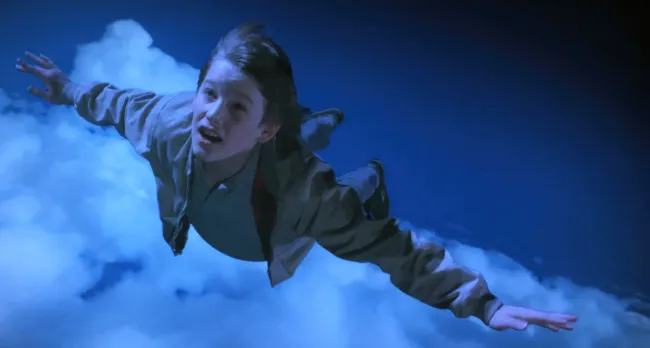
When Joe Dante was an art student in the late 1960s, he and his friend Jon Davison (who would go on to produce Dante‘s early directorial efforts “Hollywood Boulevard” and “Piranha”) created “The Movie Orgy,” a compilation of pop culture treasures and detritus that ran somewhere around seven hours and toured college campuses with the help of a sponsorship from Schlitz beer. Comprised of clips from Dante and Davison’s personal collections, “The Movie Orgy” mashed together trailers, commercials, movie scenes and more to create a dizzying 16mm collage that evolved over time with various additions and deletions, all personally hand-spliced in and out by Dante.


Until quite recently, with the release of a limited edition Blu-ray from the American Genre Film Archive, there was only one way to see “The Movie Orgy”: in a theater, with an audience — and the fact that it existed only as one constantly deteriorating and changing print meant you could never really see the same “Movie Orgy” twice. Dante and Davison’s found footage experiment foretold the boom in supercuts and video essays that would proliferate on YouTube more than 50 years after its release, but for many years it was a singular artifact — and in both its form and its copyright-flouting appropriation, perhaps the most radical film from Dante, who later became the most radical mainstream filmmaker of his era.
Dante’s cinephilia and insatiable appetite for sci-fi and horror comic books, TV shows, and literature weren’t unusual in the 1970s — peers like George Lucas and Steven Spielberg made classics (and fortunes) comprised largely of components borrowed and improved upon from serials, cartoons, Westerns, and alien attack movies. Dante had consumed as much of this stuff as anybody and loved it even more than his contemporaries, but he didn’t regurgitate it with the same uncritical eye — from “The Movie Orgy” on, he was both laughing with the entertainment of his youth and laughing at it, bringing a satirical perspective to his era’s pop culture that was as affectionate but scathing as Frank Tashlin’s was a couple decades earlier.
Dante’s best films — “The Howling,” “Matinee,” both “Gremlins” movies — thread the needle between unabashed nostalgia and anti-establishment cynicism in a way that shouldn’t be possible. The warring impulses ought to cancel each other out, but Dante orchestrates his films’ elements so deftly that the contradictions enrich each other and create a worldview more distinctive and complex than those of Lucas and Spielberg. Even in a low-budget exploitation flick like “Piranha” where Dante’s ambitions outstrip his resources by a wide margin, there’s a unique interplay between styles — “Piranha” works as a creature feature that rips off and delivers some of the same satisfactions as “Jaws,” but it’s also a commentary on “Jaws” and its reception.

Similarly, the Spielberg-produced “Gremlins” presents small town life with a Capra-esque charm but also provides the nasty pleasures of watching that town be demolished by anarchic monsters — monsters who, like Dante, are pop culture junkies (at one point a few hundred of them get taken out when their love of Disney’s “Snow White” leaves them vulnerable in a movie theater). When “Gremlins” came out in 1984 it provided Dante with his first — and, as it would turn out, only — blockbuster, putting him in an enviable position heading into his next movie.
Given the power and freedom “Gremlins” afforded him, it’s odd that the movie Dante made after “Gremlins,” a kids’ adventure movie called “Explorers” (1985), feels on the surface like one of his least personal films. Sincere and sweet, it shares more in common with Steven Spielberg’s movies than the movies Dante actually made for Spielberg, which often — as in the case of “Small Soldiers,” a war-themed movie as subversive as “Saving Private Ryan” is conformist — play like inverted parodies of his benefactor’s work.
To hear Dante tell it, the big problem with “Explorers” was an accelerated post-production schedule; Paramount thought it had a hit on its hands and moved the movie’s release almost two months earlier than planned, yanking the picture out of Dante’s hands before he was really finished with it. (When he introduced the film at the New Beverly Cinema, Dante referred to the release version as “the rough cut of ‘Explorers.’”) To add insult to injury, the supposedly ideal release date turned out to be a disaster, as it put “Explorers” up against not only the culturally ubiquitous Live Aid concert but the 1985 juggernaut “Back to the Future,” which had only been out for a week and was dominating movie screens.

“Explorers” came and went quickly, leaving in its wake a disappointed cast (Ethan Hawke, who made his film debut in “Explorers” alongside River Phoenix and blamed himself for the box office failure) and a director who spent his post-“Gremlins” capital on a movie that he found neither personally satisfying nor financially remunerative. Yet over the years it acquired a cult of devoted followers on cable television and home video (where it became available in an alternate cut that Dante preferred), and ultimately had a profound impact on a new generation of filmmakers (“Stranger Things” is unthinkable without its influence).
Now, the boutique physical media label Vinegar Syndrome has released a gorgeous 4K UHD edition of “Explorers” that offers the opportunity for reappraisal and rediscovery. Both the theatrical cut and the revised home video edition are included, along with several hours of supplements detailing the ground-breaking special effects and production history of the film — a film which, viewed in hindsight, feels much more of a piece with Dante’s work than it did at the time.
“Explorers” follows three boys (Hawke, Phoenix, and Jason Presson) who build a spaceship and manage to reach another planet where they meet alien versions of themselves — not only teenagers, but teenagers literate in the vocabulary of American movies, TV shows, and pop music. It turns out the aliens have been picking up all of our entertainment across the universe, and absorbed it unthinkingly — they reenact the boys’ stories, songs, and dialogue and spit them all back at them with no real understanding of context or meaning.
In essence, the aliens are living, walking embodiments of “The Movie Orgy,” the difference being that the aliens lack Dante’s sense of curation; they’re putting their sources together haphazardly, without regard for what images generate new meaning when they’re juxtaposed together. The irony, of course, is that this very haphazardness is orchestrated by Dante, who is putting all the references together with intention — the intention of creating the illusion of no intention, of chaos.

Dante incorporates pop cultural references the way Lucas employed needle drops in “American Graffiti,” using our shared familiarity with everything from Ed Sullivan and “I Love Lucy” to old movies and nightly newscasts as a kind of shorthand for the audience — a common language which is, by extension, shared with the aliens. It’s here that “Explorers” calls back to Dante’s earlier work in its evocation of pop culture artifacts as both magical and ridiculous; if the movie isn’t quite as satisfying as a “Gremlins” or “Small Soldiers,” it’s because the rushed nature of the production seems to have left the balance a little wonky (it feels more smoothly engineered in the Dante-supervised home video edit).
At the time of the movie’s theatrical release, even Dante partisans like Dave Kehr were disappointed; in his Chicago Reader review of “Explorers,” Kehr referred to it as a “hopelessly schizophrenic” film in which Dante carefully introduced his young heroes’ dreams only to undermine them by revealing them to be shabby hallucinations culled from mass media. This isn’t exactly inaccurate, but it’s also missing the point — as with all of Dante’s films, part of the pleasure is in the very tension Kehr exposes.
Kehr seems, like many Dante fans, to prefer Dante’s movies when the tension tips over into a triumph of cynicism over sentiment — it’s why so many Dante enthusiasts prefer “Gremlins 2” to “Gremlins.” But what’s fascinating about “Explorers” is how good Dante is at the childlike sense of wonder that permeates the film’s first half (and comes back around by the end). There’s genuine warmth and wonder to spare in the section where the friends build their spaceship, and Kehr’s description of the kids’ ideals as being “shabby” overlooks the aching melancholy that infuses the finale, which lingers long after the film is over as a quiet meditation on the inevitable disappointments of dreams realized.
The special effects by Industrial Light & Magic and make-up wizard Rob Bottin are also extraordinary (and hold up awfully well over 30 years later), and for once they don’t overwhelm the intimacy of the performances; Dante is that rare director who knows how to dazzle us with spectacle without smothering the actors underneath the pyrotechnics. Vinegar Syndrome’s disc is chock-full of extra features detailing everything from the evolution of writer Eric Luke’s screenplay and Bottin’s designs to Dante’s approach to working with children and his clashes with the studio.
The real gift here is simply the chance to see “Explorers” looking and sounding better than it has since it came out, as Vinegar Syndrome has clearly put a great deal of loving care into the restoration and transfer. While there are emotional threads (like an oddly abbreviated love story) and thematic connections that aren’t completely developed or resolved due to that rushed post-production schedule, they seem less problematic with each repeat viewing, and the strengths only more impressive. “Explorers” is ultimately one of the most enchanting and resonant fantasy films from an era that was filled with them.
The limited special editions of “Explorers” and “The Movie Orgy” are currently available from Vinegar Syndrome.
>
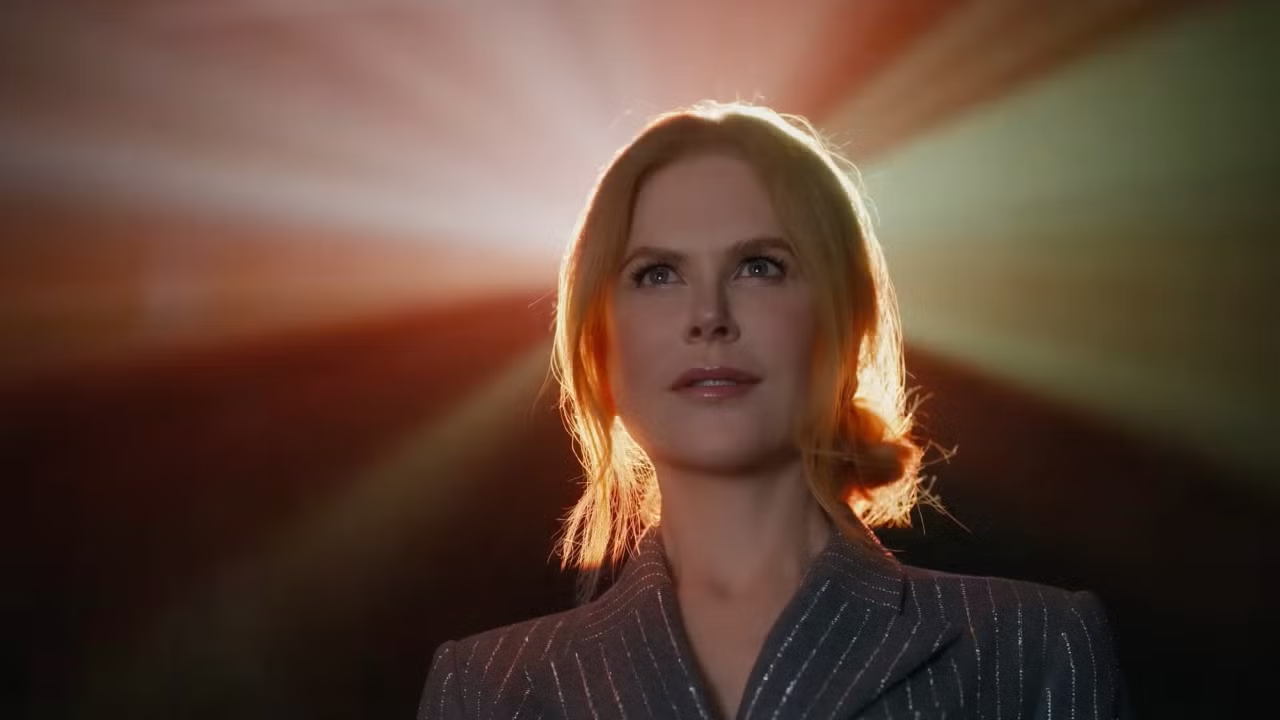
Nicole Kidman got a lifetime AMC A-List Membership for making her now viral ad for the theater chain.
As the COVID lockdown procedures were lifting, AMC put together an ad about the magic of going to the movies and Kidman starred in what would become an extremely viral ad. From quotable lines like “Heartbreak feels good in a place like this” to fans cheering the second the ad starts before the movie, its proven to be a lasting hit. While taking part in Vanity Fair’s lie detector interview with her “Lioness” co-star Zoe Saldaña, Kidman was asked if she got lifetime membership for her work.
“They did actually. They did,” Kidman confirmed.
“Can you take me as a guest to see a movie?” Saldaña asked.
“Sure, I can take you to see ‘The Odyssey,’” Kidman responded. “You haven’t seen that yet.”
Saldaña admitted that she had in fact seen the new Christopher Nolan film. Kidman quickly pivoted and said that the two of them could go see “Spider-Man: Brand New Day” instead. She was then asked if she would get made if Saldaña talked through her AMC ad.
“No,” Kidman said. “I will be very happy so that you do not look at the screen and I distract you, or you distract me. It’s incredibly embarrassing.”

She also admitted that while some stand and salute the AMC ad, nobody has come and done the same to her in person. Some brave souls have asked her to repeat her iconic “heartbreak feels good in a place like this” line from the ad and she said she usually obliges
“You’re so awesome,” Saldaña said. “I love it. It’s kind of sexy too.”
The ad has become so popular that Donald Trump’s White House recently spoofed it in one of the president’s latest ads. His administration uploaded a video titled “Silence your cell phones. Sit back. Welcome to the Golden Age.” The clip depicts a man wearing a hoodie and a red MAGA hat approaching the White House at night before going inside and walking its halls.
“We come to this place for MAGA,” a disembodied voice then says. “To fight, fight, fight and win, win, win.”
In the AMC ad, Kidman famously says, “We need that. All of us. That indescribable feeling we get when the lights begin to dim and we go somewhere we’ve never been before.” The MAGA version of this video says instead: “We need that. All of us. The indescribable feeling we get when we hear the national anthem and stand together stronger than ever before. Under this administration, we’re going somewhere we’ve never been.” Throughout the video, the man walks the halls of the White House, looking at artwork (including a rendition of the photo taken after an assassination attempt on Trump) before standing in a room to watch footage of Trump on a projector.
You can watch the clip of Kidman in the video above.

>
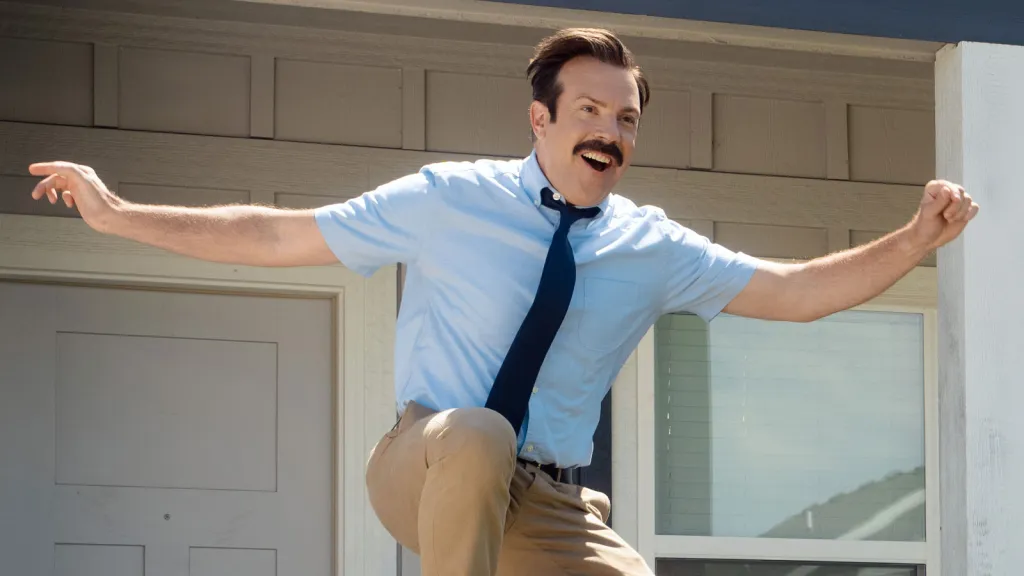
Ted Lasso received a warm welcome upon its return to Apple TV earlier this month.
The Season 4 premiere drew 296.6 million viewing minutes in the U.S. across its August 4 and 5 launch window, per Nielsen data provided by Apple on Thursday. On August 5 alone, the season debut was the most-streamed program in the U.S. with more than 200 million viewing minutes.
Per Apple, this also marks the biggest launch ever for Apple TV.
It remains to be seen whether those numbers will be strong enough to elevate Ted Lasso onto Nielsen’s streaming Top 10 for the week of the Season 4 premiere. However, since those rankings don’t separate titles by season, it’s likely the series will make the cut since new seasons also generally drive a decent amount of viewers to revisit old episodes.
This is a positive start for the new season and a good indication that audiences are still excited for more Ted Lasso, even returning from a multi-year hiatus after the series supposedly ended in 2023.
Season 3, which at the time was slated to be the final season, drove the series to become the most-watched streaming original of its debut year, despite the fact that Apple TV+ has the fewest subscribers among the streamers that saw their content ranked in Nielsen’s streaming Top 10. The Jason Sudeikis-fronted series put up 16.9B minutes across all 24 episodes in 2023.
In Season 4, Ted returns to Richmond, taking on his biggest challenge yet: coaching a second-division women’s football team. Throughout the course of the season, Ted and the team learn to leap before they look, taking chances they never thought they would.
The new season reunites fan favorites, including Hannah Waddingham, Juno Temple, Brett Goldstein, Brendan Hunt and Jeremy Swift, alongside new additions Tanya Reynolds, Jude Mack, Faye Marsay, Rex Hayes, Aisling Sharkey, Abbie Hern and Grant Feely.
Starring and executive produced by Sudeikis, Ted Lasso is also executive produced by Hunt, Joe Kelly, Jane Becker, Jamie Lee and Bill Wrubel. Jack Burditt serves as executive producer on Season 4 under a new overall deal with Apple TV. Goldstein serves as writer and executive producer alongside Leann Bowen. Sarah Walker and Phoebe Walsh serve as writers and producers for season four, and Sasha Garron co-produces. Julia Lindon writes for season four, and Dylan Marron serves as story editor. Bill Lawrence executive produces via his Doozer Productions, in association with Warner Bros. Television and Universal Television, a division of Universal Studio Group. Doozer’s Jeff Ingold and Liza Katzer also serve as executive producers.
The series was developed by Sudeikis, Lawrence, Kelly and Hunt, and is based on the preexisting format and characters from NBC Sports.
>
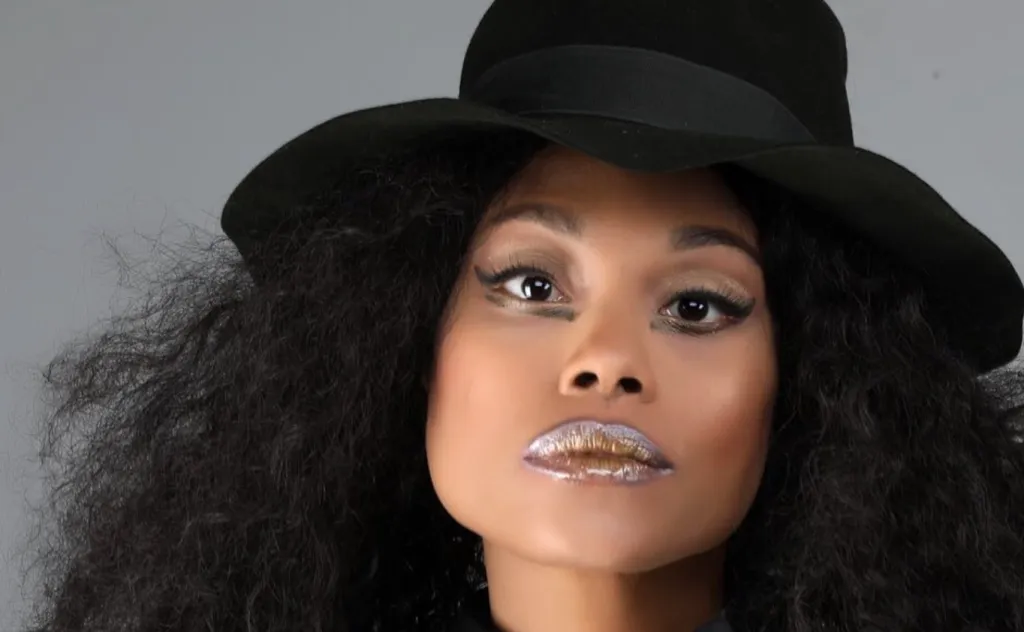
Christy Knowings, a cast member of Nickelodeon‘s ’90s hit All That, died Tuesday, August 11, after being removed from life support at a Los Angeles-area hospital, TMZ reports. She was 46.
Knowing’s aunt, Tyleah Joseph, announced the death yesterday on Facebook, but a cause was not disclosed.
According to TMZ, citing family sources, Knowing was placed on life support after suffering an asthma attack on Friday, August 7. The family made the decision to take her off life support on Tuesday.
After appearing on a failed 1997 Nickelodeon sketch comedy pilot called And Now This, Knowings joined the network’s All That the same year. She would spend three seasons on the popular show, which, at the time, included fellow cast members including Kel Mitchell, Kenan Thompson, Danny Tamberelli, Nick Cannon, Amanda Bynes and others.
Among her characters on All That were a dental assistant to Amanda Bynes’ dentist, Jessica from the recurring Whateverrr!!! skits, and newscaster Brenda Stone.

Following All That, Knowings appeared in several episodes of Sesame Street from 2008 to 2011 alongside her real-life twin brother Chris Knowings, who was a more frequent actor on the series and had appeared in Spike Lee’s 1994 film Crooklyn.
Knowings is the second former All That cast member to die this year following the fatal hit-and-run of Kianna Underwood last January in Brooklyn.
In her Facebook post last night, Knowings aunt wrote, “My brother Charles’ daughter Chrissy (Christy Knowings) has passed…She was a outstanding actress, comedian, twin sister, an amazing daughter….Rest in power Chrissy.”
Complete information on survivors was not immediately available.
>

Nicole Kidman Says AMC Gave Her a Lifetime A-List Membership

Paris Saint-Germain agree deal in region of €50m to sign Barcelona forward Ferran Torres

‘Ted Lasso’ Season 4 Enters The Pitch With Record Premiere Audience
-

 movies3 months ago
Search For Canadian TV Actor Stewart McLean Now Homicide Investigation
-

 Fashion9 years ago
These ’90s fashion trends are making a comeback in 2017
-
Fashion9 years ago
According to Dior Couture, this taboo fashion accessory is back
-
Fashion9 years ago
Model Jocelyn Chew’s Instagram is the best vacation you’ve ever had
-
Fashion9 years ago
Your comprehensive guide to this fall’s biggest trends
-
Fashion9 years ago
Emily Ratajkowski channels back-to-school style
-
Fashion9 years ago
9 Celebrities who have spoken out about being photoshopped
-
Fashion9 years ago
A photo diary of the nightlife scene from LA To Ibiza