
Tech
Investors sue Selena Gomez alleging fraud tied to her mental health startup


Singer and actress Selena Gomez and her mother are being sued over their mental health startup, Wondermind. The plaintiffs in the lawsuit say they invested nearly $1.2 million in the startup, and are accusing Gomez of securities fraud and breach of contract.
They allege that the startup failed to deliver on its commitments without informing investors, and Gomez failed to market the startup after promising to do so. The news was first reported by Forbes.
Wondermind launched in 2021 and aimed to offer daily mental health resources to users. The lawsuit alleges that investors were unaware of the company’s troubles until a September 2025 story from The Cut uncovered them.
“Gomez purported to sign a contract obligating her to perform and then ignored it,” the complaint reads. “The partnerships did not exist. The initiatives never materialized. The app was never built. And for three years, while the Company quietly collapsed around them, not one of its founders, officers, or directors said a word to the investors whose money was funding the collapse.”
The investors allege that Gomez and Wondermind misrepresented the company’s finances and overstated the extent of Gomez’s involvement. The plaintiffs are seeking to recover their investments and legal fees.
Wondermind did not respond to our request for comment.
>
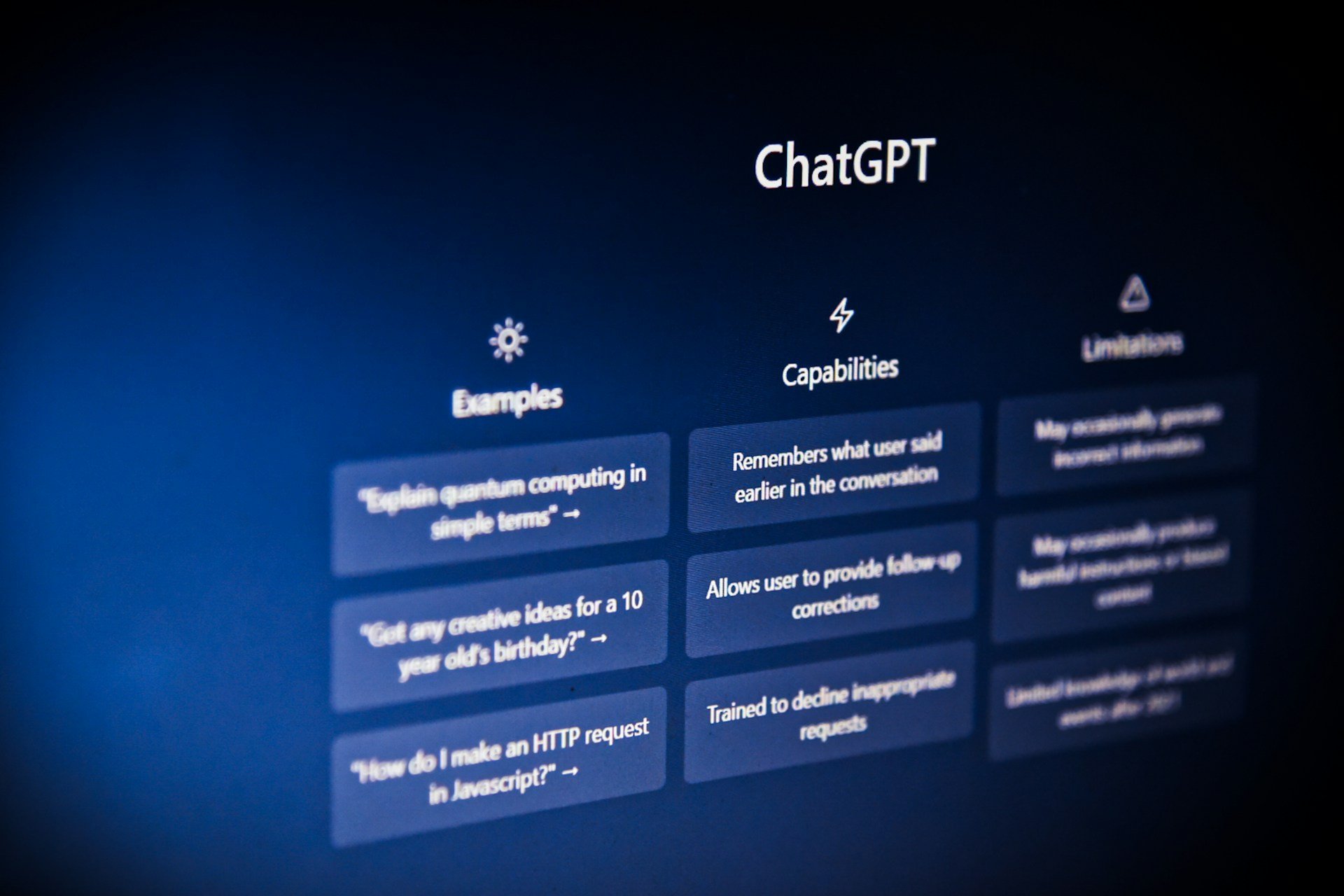
Linux users no longer need to rely solely on a browser or unofficial desktop clients to access ChatGPT.
OpenAI has released its ChatGPT desktop app for Linux in preview, combining ChatGPT, Work, and Codex in one application. The launch closes a gap in OpenAI’s desktop lineup and puts its coding agent closer to the Linux environments where many developers already work.
Which Linux distributions are supported?
According to OpenAI’s announcement, the preview supports:
- Ubuntu 24.04 LTS and 26.04 LTS
- Debian 13
- Fedora 43 and 44
- x64 and ARM64 processors
- .deb and .rpm packages
OpenAI has not officially listed Arch Linux, openSUSE, NixOS, or other distributions as supported. Community packages and workarounds may emerge, but compatibility, updates, and technical support could differ from OpenAI’s validated configurations.
Why the Linux app matters to developers
The application brings three OpenAI experiences into one interface. Chat handles questions, research, and conversations, while Work is designed for longer tasks such as analyzing information and creating documents, spreadsheets, presentations, and reports.
Codex can work with local files, repositories, terminals, and development tools, subject to the permissions available in the environment. That integration may be the most important part of the Linux launch. Developers can now use an AI coding agent alongside their projects instead of keeping it confined to a browser tab.
For IT teams, that access also requires scrutiny. An agent that can inspect files, change code, and run commands has more access than a conventional chatbot. Organizations evaluating the app should review its filesystem, network, and command-execution permissions before connecting it to sensitive repositories or production credentials.
The preview comes with caveats
Currently, the application is in preview with OpenAI yet to announce when the Linux app will reach general availability or when it might support more distributions.
Some early users have reported configuration-specific problems involving Wayland, input methods, display scaling, and synchronization between desktop and command-line Codex projects in OpenAI’s developer community. These are anecdotal reports, not confirmed product-wide defects, and some users have shared workarounds or different results.
IT teams should therefore treat the current build as evaluation software. Before a wider rollout, testing is a must against an organization’s standard Linux image, desktop environment, authentication controls, endpoint security software, and development workflows.
What Linux users should do next
Users can obtain the app through OpenAI’s official download channels and confirm if their operating system and processor are supported. Developers can begin with a noncritical repository to evaluate how Codex handles project context, terminal operations, and file changes. Organizations, on the other hand, should consider a limited pilot with restricted permissions, logging, and mandatory human review of generated code.
The Linux release removes a longstanding platform gap, but its value to technical teams will ultimately depend on compatibility and control — not merely the convenience of a native app.
Read more: As Linux users explore the new desktop app, brush up on ChatGPT’s features, costs, limitations, and tips with the complete ChatGPT cheat sheet.
>

Surveillance technology startup Flock announced a series of new policies and tools on Thursday, claiming they will help curb abuse of its automated license plate camera reader systems and help keep its law enforcement customers accountable.
Flock is now recommending police departments retain data for seven days rather than the previous 30 days. Along with this change, the company introduced what it calls “Evidence Mode,” which can be turned on when customers need to retain data for longer periods in “exceptional cases” and requires a specific case number. Customers will also now be able to set limits on the data they share with other customers based on the type of offense that’s under investigated.
The company also highlighted a tool called “Audit Assistance” as one of the key changes. Flock launched the tool in April. Since then, Flock said “more than one-third” of its customers have turned it on, and the startup is now requiring all customers to enable it by the end of the year.
Flock said Audit Assistance “detects abnormal activity and flags it for Administrator review,” according to a blog posted released Thursday. If that happens, the tool can automatically lock out users who have been flagged until an administrator intervenes. According to Flock, the tool has already helped customers spot and stop abuse.
Several executives have touted the capabilities of Audit Assistance. But despite its stated importance, Flock has not explained in detail how Audit Assistance actually works.
Some official comments provide some understanding of what Audit Assistance can do; it gets vague when trying to determine how it does it.
For instance, Flock’s head of trust and compliance Ashley Haber said in a video that the Audit Assistance can flag “what may look like an odd search history from a specific user,” helping customers understand how their users are operating the system. In another video, Flock co-founder Paige Todd said “Audit Assistance actually flags unusual patterns early. Think a user searching the same plate repetitively for more than 30 days.”
And Major Patrick Krieg of the Dunwoody, Georgia Police Department, a Flock customer, described the feature in a press release as “an algorithm that has notified us of any type of bias.”
Flock describes Audit Assistance as a feature that can “surface atypical activity early and review it quickly with a clear, documented workflow.”
What’s unclear — and TechCrunch has asked for answers about — is how this “algorithm” actually works, what data is it trained on, and if it was developed using an large language model. TechCrunch also asked what kind of patterns is it designed to surface and what exactly gets flagged as “abnormal activity”?
According to Flock, Audit Assistance is not based on [Machine Learning] or AI. The company told TechCrunch that “It is a data tool that flags atypical search patterns for further review. One example that would trigger a flag is if a user searches for the same plate using multiple different case codes, as this could potentially indicate abuse. A flag does not mean that it is definitely abuse — it only means it warrants further investigation.”
Numerous questions remain unanswered, however, including whether Flock has any statistics or data that shows how effective the tool is, what its false positive and flase negative rates are, and if it has been audited by a third party?
Privacy experts and Flock critics are not impressed by Audit Assistance.
The American Civil Liberties Union senior policy counsel Chad Marlow wrote in response to Flock’s announcement that “there is no evidence that the tool works consistently” to address abuse.
“While dozens of officers have recently been arrested, fired, or otherwise disciplined for misusing Flock for personal reasons, Flock claims these arrests are proof its auditing tool works,” Marlow wrote. “However, unless we know the number of officers misusing the system, we cannot conclude if Flock and its auditing tools are catching 95% of violators or 5%. Flock needs to have its auditing tool analyzed by an independent evaluator to determine its actual effectiveness. Until then, we don’t know if the tool is a real security measure or just window dressing.”
Cooper Quintin, a security researcher and senior public interest technologist at the Electronic Frontier Foundation, told TechCrunch that it may not even matter whether Audit Assistance works.
“If it does work, law enforcement will figure out ways to get around it,” he said, adding that what matters in the end is whether abusers are caught and held accountable. “If there are no consequences for abuse and whoever [the tool] reports to is the same police agency that is doing the abuse, it’s just a fig leaf for Flock. The best way to ensure accountability is to pass laws constraining the use of this technology and requiring a warrant for its use.”
Rachel Levinson-Waldman, the director of the Brennan Center’s Liberty and National Security Program, told TechCrunch that making Audit Assistance mandatory is a step in the right direction, and that “in theory” the tool is “a great idea.” But she also said the tool itself “needs to be audited” because there’s not enough information about how it works in practice.
Flock’s announcements come after years of reported incidents of its customers repeatedly abusing its technology. Earlier this week, three former Georgia sheriff’s deputies were arrested and accused of using Flock cameras to stalk people with whom they had a “personal relationship at the time,” as the Bibb County Sheriff’s Office said in a press release. In this case, the Bibb County sheriff David Davis specifically called out Flock’s new tool Audit Assistance for uncovering the misuse.
When you purchase through links in our articles, we may earn a small commission. This doesn’t affect our editorial independence.
>
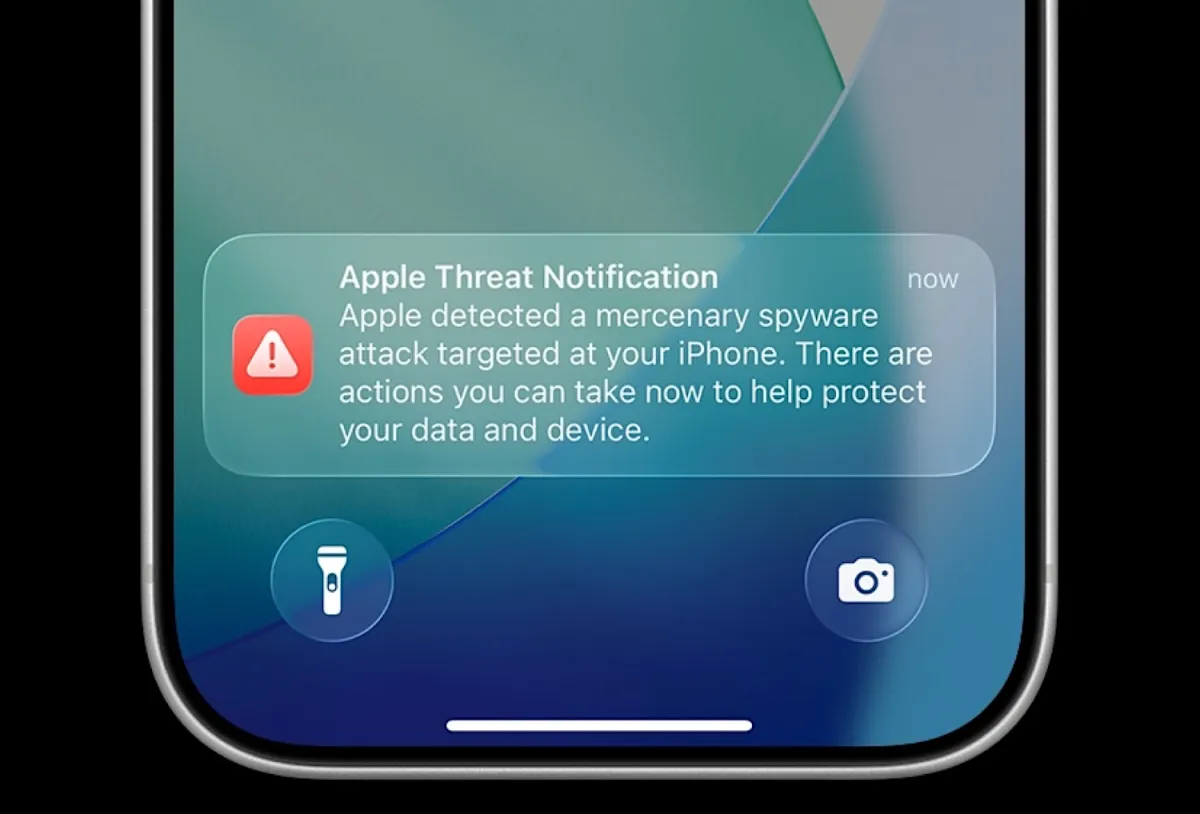
Apple has sent out a new batch of notifications to customers who it suspects have been targeted with spyware capable of hacking into their devices. The tech giant sends out these notifications on occasion to alert its customers that their iPhones, iPads, or Macs might have been compromised with spyware typically used by governments.
Apple told TechCrunch that it sent out the notifications on Thursday to users targeted in 110 countries. Apple says to date it has notified customers in over 150 countries, giving some context to how far government-used spyware has spread around the world.
In a new support article on its website, Apple says it will notify users directly on their iPhone lock screen with a push notification that urges the person to take action. Apple told TechCrunch that it’s updated the user experience, making it easier for recipients to access important information on what to do next.
When received, a threat notification will read: “Apple detected a mercenary spyware attack targeted at your iPhone. There are actions you can take now to protect your data and device.”
Apple also sends notifications by email and to users when they log-in to their account.
John Scott-Railton, a senior researcher at digital research group Citizen Lab, first highlighted the latest batch of spyware notifications in a thread on X.
If you receive a notification like this, take it seriously. We’ve explained before what happens when someone gets a notification saying they’ve been targeted. It may not mean that you have been successfully hacked, but you should still take immediate steps to protect your device and data.
The push notification also opens up advice on who to reach out to for help. You will also be advised to switch on Lockdown Mode, a security feature that makes it far more difficult for spyware attacks to succeed. According to Apple, it has yet to see a case where someone’s device was hacked while Lockdown Mode was enabled.
Spyware attacks are generally rare, but the proliferation of the surveillance technology in recent years has allowed them to be abused by governments and deployed against critics, including members of civil society.
Citizen Lab’s Scott-Railton told TechCrunch that these new push notifications are a “big improvement” in urging people to seek help to secure their devices since Apple debuted its spyware alerts in 2021.
“Notifications create a critical signal that a community is being targeted. People get an alert, and then some of them reach out and seek help. Often this kicks off an investigation that reveals many, many more cases,” said Scott-Railton.
Citing the ongoing scandal in Poland over the former government’s use of spyware against its rivals, Scott-Railton said that without Apple’s notifications, “that entire massive scandal about spyware abuse in the Polish election wouldn’t have been uncovered.”
When you purchase through links in our articles, we may earn a small commission. This doesn’t affect our editorial independence.
>

Sarajevo Film Festival Boss Jovan Marjanović Owns Their Origin Story

FPL 2026-27: Best picks, differentials and who to avoid this year

Women’s Super League: Manchester City must act like champions as WSL rivals grow stronger
-

 movies3 months ago
Search For Canadian TV Actor Stewart McLean Now Homicide Investigation
-

 Fashion9 years ago
These ’90s fashion trends are making a comeback in 2017
-
Fashion9 years ago
According to Dior Couture, this taboo fashion accessory is back
-
Fashion9 years ago
Model Jocelyn Chew’s Instagram is the best vacation you’ve ever had
-
Fashion9 years ago
Your comprehensive guide to this fall’s biggest trends
-
Fashion9 years ago
9 Celebrities who have spoken out about being photoshopped
-
Fashion9 years ago
Emily Ratajkowski channels back-to-school style
-
Fashion9 years ago
A photo diary of the nightlife scene from LA To Ibiza