
movies
Busan Film Festival to Honor Its Founder Kim Dong-ho with Korean Cinema Award

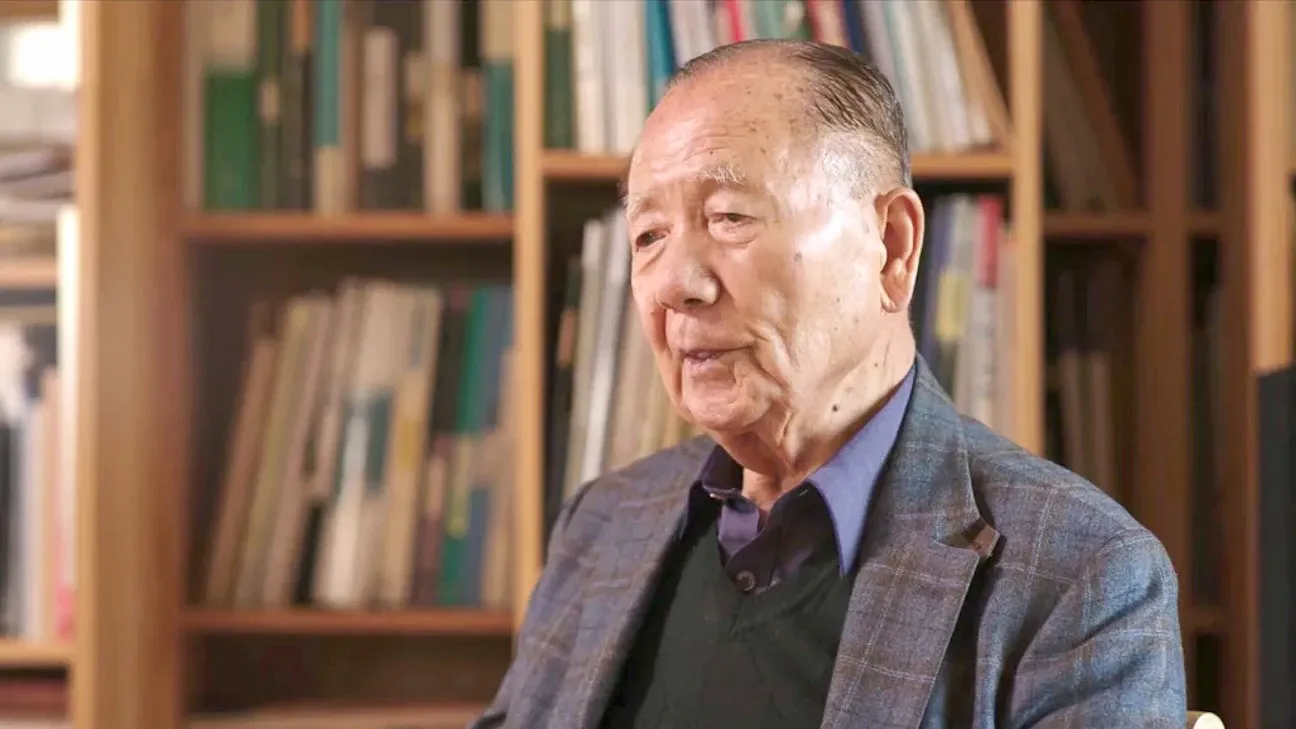
For this year’s Korean Cinema Award, the Busan International Film Festival will be honoring one of its own — the event’s founding OG, in fact.
Kim Dong-ho, who established BIFF in 1996 and ran the event for its first 14 years, will receive the prize at the festival’s opening ceremony on Oct. 6. The award goes annually to figures who have advanced Korean cinema’s standing in the world — and few, perhaps, are as worthy as the founder of the festival himself.
When BIFF launched in 1996, Korean films were still routinely submitted to government censors for pre-screening before public exhibition. Kim refused to put the festival’s program through that process, a stand that established BIFF’s independence, won the trust of filmmakers across the region and helped turn a first-year event in a Korean port city into the leading cinema showcase in Asia. The festival became the meeting ground and incubator for the Korean directors who would sweep the world in the early and mid-2000s, contributing significantly to the broader Korean cultural wave that continues today.
Kim brought a rare but essential combination of skills to BIFF’s early days — a bureaucrat’s background but a cinephile’s instincts. He spent roughly three decades at what is now South Korea’s Ministry of Culture, Sports and Tourism, rising to vice minister. He also served as president of the state film body now known as the Korean Film Council, as well as founding president of the Seoul Arts Center. After stepping down as festival director in 2010, he stayed in the field as dean of Dankook University’s Graduate School of Cinematic Content, chairman of the Presidential Committee for Cultural Enrichment and, later, chairman of BIFF. He has sat on festival juries at Cannes — where he presided over the Un Certain Regard section — Rotterdam and Fukuoka.
At age 85, Kim, quite improbably, began work on his first feature. His full-length directorial debut, the documentary Mr. Kim Goes to the Cinema, premiered as a special screening at BIFF’s 30th edition last year and opened in Korean theaters in February, when he was 88. Shot as the pandemic emptied theaters worldwide, the film follows him around the globe in conversation with filmmaker friends, including Bong Joon Ho, Park Chan-wook, Lee Chang-dong, Hirokazu Kore-eda, Tang Wei, Luc Besson and the Dardenne brothers about what purpose cinema now serves. He had previously directed a 2013 short, Jury, and was himself the subject of Walking in the Movies, a 2024 documentary that played Cannes Classics.
“I feel deeply moved and humbled to be recognized by the very festival I helped establish and served for over 15 years,” Kim said in a statement released Thursday.
The 31st Busan International Film Festival runs Oct. 6-15. Kim will be honored at an opening ceremony that also hands Michelle Yeoh the Asian Filmmaker of the Year award and Ann Hui the Chanel-backed Camellia Award, with Pachinko star Kim Minha hosting.
“Even today, I attend more than ten film festivals each year to promote Korean cinema,” Kim added, “and I hope to continue this journey for as long as I can.”
>
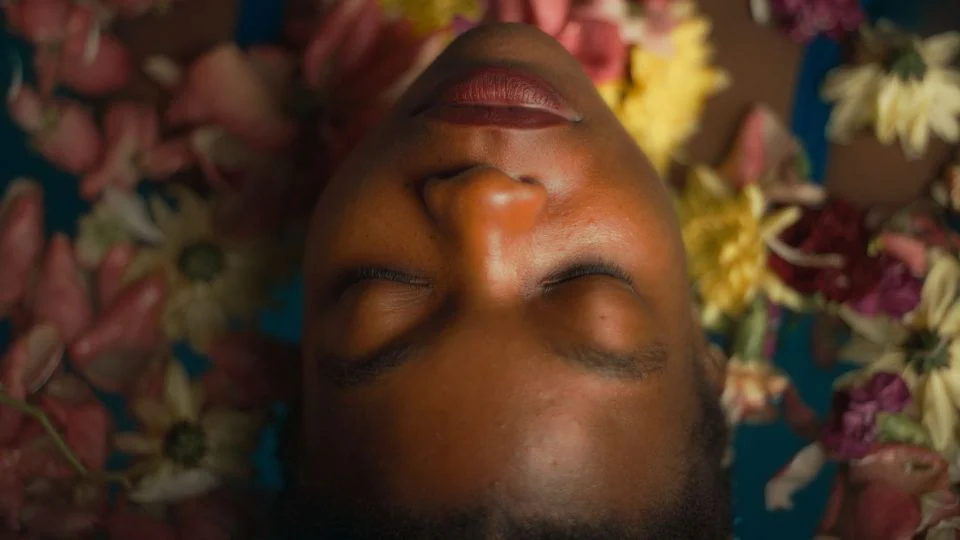
Tanzania-born director Neema Ngelime is working on her feature documentary debut. And the essayistic project has a title with poetic vibes: The Ones With the Tempered Flowers.
It was among the works-in-progress presented at the 2026 edition of Open Doors, the Locarno Film Festival‘s co-production platform and talent development program for filmmakers from equity-seeking communities and regions where artistic expression is at risk.
The Tanzania-Kenya co-production is being produced by Ivy Kiru. The filmmaker has so far made shorts, namely A Country In A Corner, Hooyo, Why Here and An Ode to A Time I Loved Bread. At the end of the Locarno Open Doors program, her new project won the Sørfond Award and the ARTEKino International Award .
THR has compiled highlights about the movie and insight from Ngelime about The Ones With the Tempered Flowers and the themes it explores.
Synopsis
For Neema, being a woman has always meant a script: school, marriage, babies. When a doctor tells filmmaker Neema that having children might be hard, she doesn’t expect it to confuse her. Those expectations wound her. Raised in a multi-religious home, her identity was forged by questions of what is haram and what would please Jesus. All Neema cared about was which hell she’d end up in.
To her, the older women in her family are a mystery beyond work and family. Their lives feel prophetic to her own. She and her sister try to rewrite their scripts through tarot. Her father taught her that anything is possible. Now he reminds her of her fate.
She stages performances with her family, reenacting fragments of their lives. They believe these are fictions. But they’re memories, repurposed, hidden truths surfacing through play. This is the story of a woman studying her body’s relationship to self, society, and the political weight placed on women’s bodies in Tanzania, challenging duty masked as love.
Director’s note
Growing up felt like watching the women I loved fade into mysteries. Now, with fibroids, a condition society pins on “unused” womanhood, I fear becoming a mystery too, lost to the weight of expectations. The women in my life shaped me deeply, yet I knew little about who they were before becoming mothers or wives. This erasure fills me with grief.
Through this film, I channel that grief, exploring how families shape dreams, identity and autonomy. I look inward and center myself and my family to reflect on my past and imagine my future. The film relies on metaphor to reflect the absurdity of how womanhood is confined. It captures the reality of existing in a patriarchal world, where women are bound by timed beauty and defined by their choice to give birth. While rooted in the experiences of young African women, it speaks to a universal audience, inviting viewers to reflect on their own relationships with identity, self-expression and societal constructs.
What was the inspiration for you, personal or otherwise, to want to make this film?
The film itself starts from a personal point of view, from my confronting and going through an
existential crisis because of my diagnosis. When I got my diagnosis, I was angry that I found out
so late in life that this could happen, and angry at how it could happen. I was also angry at how
little interest there is in understanding women’s bodies.
Out of that, the film became about someone wanting to find answers. So in a way, this was my way of creating a space for people going through what I’m going through, a space to talk. But mostly, it was a way to have these conversations with the people close to us, i.e. our families. Making my small inquiries with the people I love, that is the inspiration.
Can you share some thoughts on how universal the themes of the film are, and why people outside your home should see it?
The universal themes are womanhood and its place in 21st-century society, identity, and curiosity as an act of care across generations.
Do you know what the next step or focus for you and any collaborators on the film will be after Open Doors?
We’re going back home with so much clarity, thanks to the guidance we’ve received. I’m going to
continue my treatment, and the project will also participate in the Durban FilmMart in October,
and the Sørfond pitching event in November
>
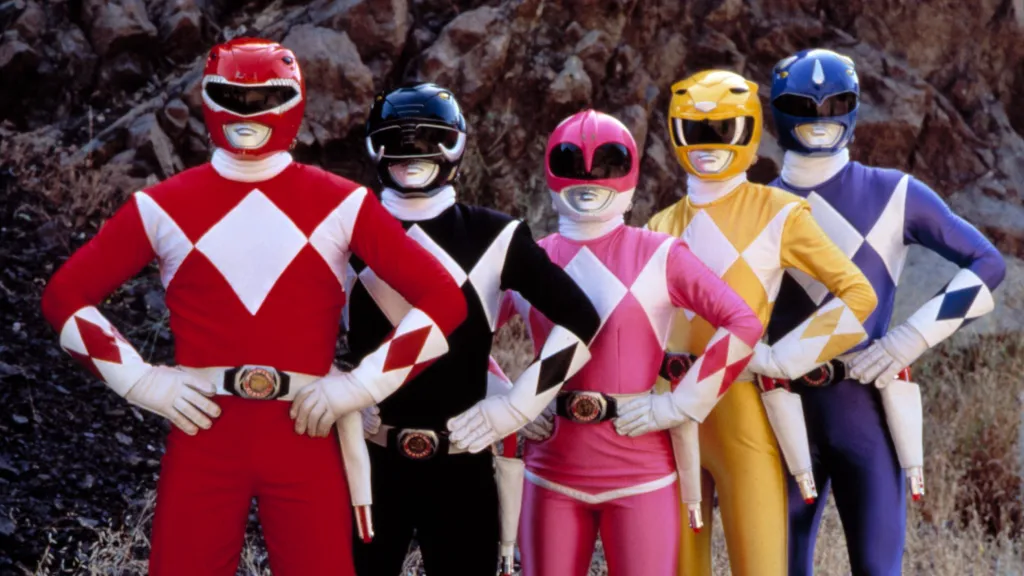
EXCLUSIVE: Disney+ is not proceeding with its live-action Power Rangers series.
The project, written and executive produced by Percy Jackson and the Olympians executive producers/showrunners Jonathan E. Steinberg and Dan Shotz, was set up for development at the Disney streamer about a year and a half ago with sibling 20th Television as the studio. It will not be going past the development stage.
According to sources, the reasons for the pass are not so much creative then they are business- (aka budget-) related. Mounting a high-end, live-action superhero series of the caliber of Power Rangers is a major investment, the economics of which are not as favorable when the streamer and/or the producing studio do not own the IP, which is the case with here. The Power Rangers brand is owned by Hasbro, which has been looking to get a live-action series adaptation off the ground, with Netflix taking a crack at it several years ago.
Once focused entirely on exploiting Disney properties, Disney+ has been increasingly opening up its slate to outside IP, including making development deals for Ella Enchanted and Casper series over the past couple of months.
Steinberg and Shotz are busy finishing Season 3 of the 20th Television-produced hit Disney+ series Percy Jackson and the Olympians, which premieres on Nov. 20, and developing other projects for the studio under their overall deal there.
>
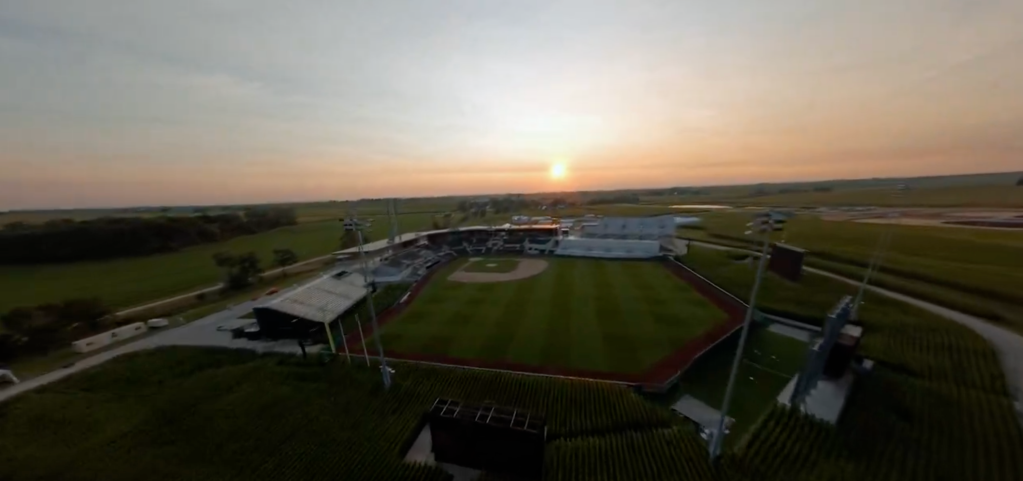
He wasn’t there in person this time, but he was there in spirit. And spirit is what the night was all about.
Kevin Costner provided the narration for an intro to tonight’s Field of Dreams game on Netflix. It’s the third edition of the Hollywood-MLB mashup played on a field near the Iowa farmhouse where the 1989 classic was filmed. And while it wasn’t quite the same as watching Costner walk out of the corn at the 2021 edition, tonight’s video still delivered chills.
The original film was more about the connections baseball builds in families, particularly between fathers and sons, and Costner was a key to the emotional and evocative feeling connecting all in attendance and watching on TV.
The two-minute video that presaged the game covered the history of baseball, what it’s meant to fans and what it’s meant to America with, as Costner said, “story after story”; from Babe Ruth to Jackie Robinson to Kirk Gibson to Barry Bonds to last year’s Dodgers. Those stories are important, he said, “to remind us what baseball can make us feel, how deeply it can bring us bring us together and why it’s still worth believing in.”
You can watch below.
And if you haven’t teared up yet, before the The Minnesota Twins and Philadelphia Phillies took the field, MLB hall-famers from decades past strode from the corn onto the grass, including Goose Gossage, Cal Ripkin Jr, Andre Dawson, Mike Schmidt, Bert Blyleven and Joe Torre.
You can watch that bit below.
As Brad Pitt’s Billy Bean said in another great, more recent, film about the game, “How can you not be romantic about baseball?”
>

New Zealand withdraws Gianni Infantino support but Oceania praise ‘progress’ under FIFA president

Brighton midfielder Diego Gomez signs new five-year deal

England opener Emilio Gay out for duck as Pakistan impress against County Select XI ahead of Test series | Cricket News
-

 movies3 months ago
Search For Canadian TV Actor Stewart McLean Now Homicide Investigation
-

 Fashion9 years ago
These ’90s fashion trends are making a comeback in 2017
-
Fashion9 years ago
According to Dior Couture, this taboo fashion accessory is back
-
Fashion9 years ago
Model Jocelyn Chew’s Instagram is the best vacation you’ve ever had
-
Fashion9 years ago
Your comprehensive guide to this fall’s biggest trends
-
Fashion9 years ago
9 Celebrities who have spoken out about being photoshopped
-
Fashion9 years ago
Emily Ratajkowski channels back-to-school style
-
Fashion9 years ago
A photo diary of the nightlife scene from LA To Ibiza