
Sports
Ashley Giles on England burn out, Covid cricket and returning to his playing weight: ‘I was a mess’

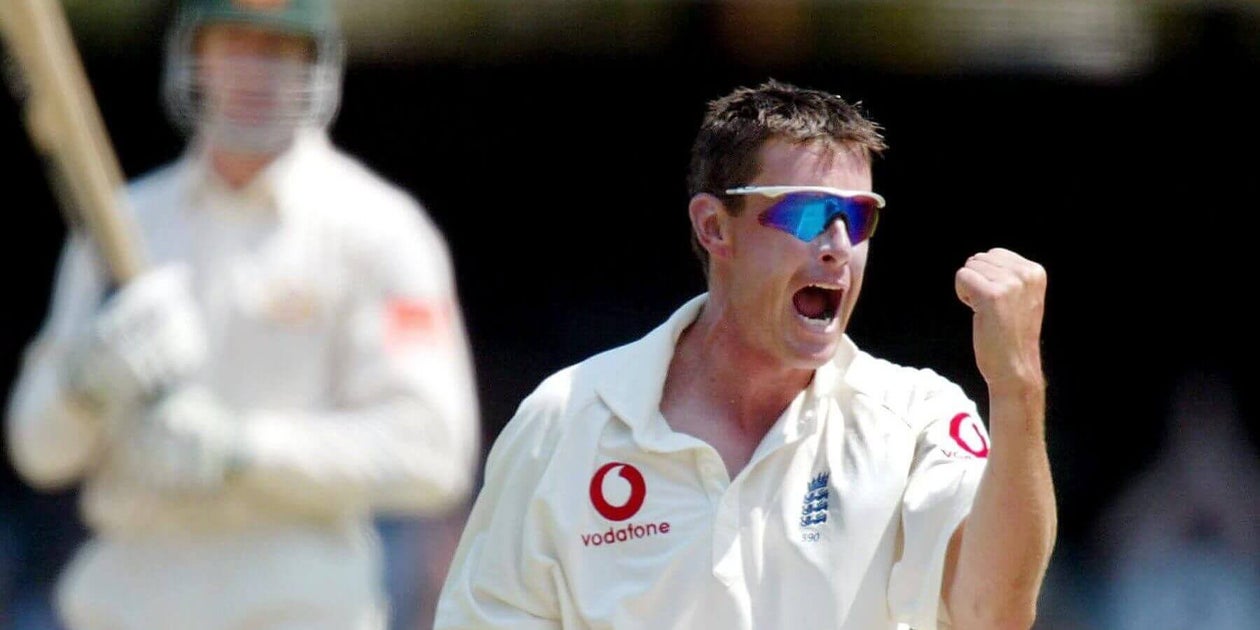
Eating well, filling out, going up a size, putting on a bit of timber… whichever euphemism you prefer, it amounts to the same thing and happens to most of us. Lifestyles change, metabolisms slow, responsibilities pile up. Putting on weight as we age is almost inevitable.
But how many new kilos or extra inches are OK?
It is a hard question to answer, as it will vary depending on circumstances. Some wear it well. Others become seriously unwell.
Ashley Giles was somewhere in the middle.
For those of you who do not immediately recognise the name, Giles was a popular member of the England men’s cricket team for almost a decade in the late 1990s and the first half of the noughties.
A left-arm spinner who could bat a bit, he played 54 Tests. He rarely took lots of wickets or scored many runs, but he had a happy knack of taking important wickets and hanging around with the bat when England really needed it.

Ashley Giles bowling to South Africa’s Jacques Kallis in Centurion in January 2005 (Alexander Joe/AFP via Getty Images)
To be honest, he is probably best remembered now for his nickname, the “King of Spain”, which he gained after word got out that a couple of commemorative mugs ordered in 2000, for his testimonial year, were mistakenly printed with that slogan and not the intended “King of Spin”. Once his fans found out, 200 more mugs were produced with the new slogan on one side and a picture of King Juan Carlos on the other.
There were other nicknames, too, some less flattering than others. But Giles was what American sports fans would call a “glue guy”.
His impact on those England teams was usually bigger than his numbers suggest, none more so than when he helped them to their most memorable achievement this century: winning the 2005 Ashes against Australia, a feat they had not achieved since 1986-87.
He recorded his highest Test score of 59 not out when he kept Kevin Pietersen company on the last day of the last Test, as the pair batted England to one of the most famous draws in Ashes history.

Kevin Pietersen (left) celebrates his first Test century with Ashley Giles by his side (Alessandro Abbonizio/AFP via Getty Images)
But two years after that golden summer, Giles was forced to retire as a player aged just 34, despite being the lightest he had been for years.
He had spent a large chunk of his final two years as a pro in the gym or pool trying to compensate for a chronic hip injury. Hundreds of thousands of deliveries, all landing on his front leg while twisting his torso, had taken a toll on his right hip that three surgeries could not repair.
The rowing machine and calorie-counting had got his usual playing weight down from 100 kilograms to 96 kilograms (from 220lbs to 212lbs), but no amount of time in the gym was going to get him back on the pitch.
“It was soon after that that the slow creep of weight started to come on,” says Giles. “It’s like a drip, drip effect, and then one day you look in the mirror and you’re like, ‘Oh, wow. OK, I’ve got a bit of an issue here.’
“Part of you thinks, ‘Well, this is it, this is just me now.’ You tell yourself it’s just part of the ageing process. But when you’ve been in the public eye, you do get comments — ‘you’ve let yourself go’, things like that — which are quite hurtful.
“You can be very self-conscious about how you look and the shame that can come with that. You walk into rooms with your head down and there is a debate in your head about it being your own fault.
“It’s a constant battle and most of it is just blaming yourself. It’s quite worrying to think that it went on that long… 19 years.”

Ashley Giles at Lord’s following his appointment as Managing Director of England Men’s Cricket in 2019 (Andrew Redington/Getty Images)
It is a battle he wants to discuss. Giles was talking to The Athletic from a hotel in Liverpool a few hours before he gave a speech at the Diabetes UK Professional Conference.
The fact he is so willing to talk about his struggle with weight is unusual for a former athlete, but his journey to this point is not.
Having called time on his playing career, he went straight into coaching, first with Warwickshire, the county side he had joined as a teenager, and then with England — initially as a spin coach, then as a limited-overs specialist.
He became Lancashire’s director of cricket in 2014, a high-profile role at one of English cricket’s big names, before returning to Warwickshire in a similar role and then becoming the managing director of the England men’s set-up in late 2018.
“So, instead of being that person out on the pitch for six or seven hours a day, I was sitting on my backside,” he recalls. “Yes, I did some coaching, but you’re not burning the same amount of calories.”
Giles tried extreme diets and long stints on the treadmill. These bouts of abstinence and punishment would work for a while but, like garden weeds, the pounds would always come back.
“You’ve got to live,” he explains. “I like a beer, I like to eat out. But I’ve always trained like a maniac to balance things.
“We all know people who can just naturally keep weight off — some of my old team-mates are like that — and I know many more people who don’t.
“We can all make better decisions, absolutely, but we can be more understanding about weight and this idea that it’s just a simple balance between calories in, calories out… There’s more to it than that.”

England’s class of 2005 are reunited at Edgbaston in 2019 (Stu Forster/Getty Images)
For Giles, “the more to it” was the nature of his work, particularly his time in charge of the England team.
Things started well. England won the Cricket World Cup for the first time in July 2019, beating New Zealand in thrilling fashion at Lord’s. They then drew an Ashes series 2-2, before heading to South Africa for a successful winter tour. So far, so good.
But then Covid-19 hit and the world stopped. Instead of launching its latest money-spinner, The Hundred, English cricket was locked down, competitions cancelled, players furloughed.
Giles, like sports officials around the globe, became an expert on antigen tests, contact tracing and incubation periods. In a triumph of logistics, England hosted the West Indies and Pakistan in two three-match series that summer, with all three squads staying in bio-secure “bubbles” to avoid infection.
England won both but, more importantly, the action helped to pay the bills and gave fans at home something to watch on TV. But it took a lot out of everyone involved.
The team went to Sri Lanka that winter, where they won another series, but the good run ended with three heavy Test defeats in India in early 2021.
With the pandemic lingering throughout 2021, Giles tried to keep his players fresh, physically and mentally, by rotating the squad. The policy was well-intentioned but it led to erratic play. New Zealand and India were the visitors that summer and the results were mixed.
But worse was to come that winter, when England took on their toughest challenge: an away Ashes. A combination of Australia’s strict Covid controls, bad luck, poor form and strange selections made the tour an ordeal.
England were chewed up and Giles was spat out.

England’s dejected players digest their Ashes defeat in Hobart, January 2022 (Robert Cianflone/Getty Images)
“By the time I left the (managing director) role with England, I was burned out — I was a mess,” admits Giles. “I’ve struggled at different times in my career, as a player and as a coach, but managing those two years of Covid, that battle between keeping people safe and the game on, was very difficult.
“Three weeks after I lost my job, I lost my mum. It was a pretty dark period.
“There’s no doubt I found solace sometimes in food and drinking. When you have tough moments, you look for an escape. It’s not healthy. And most of the jobs I’ve had — director of cricket, head coach, managing director — have been quite lonely positions. It’s my fault. I’ve chosen those jobs. But you don’t usually go downwards or upwards to ask for help, as it can be seen as sign of weakness.
“I’m hard on myself. I think all of us who do those jobs are. When you’re in a good place mentally, you don’t read (any criticism) or listen to it.
“But that’s not the reality when you’re in a bad spot. It finds you — normally, someone will tell you about it. That’s just the way it is and that pressure-cooker environment just builds. You can lose control pretty fast.”

Ashley Giles in his role as Worcestershire County Cricket Club’s CEO (Harry Trump/Getty Images)
After a year out of the public gaze, Giles returned to cricket but in a new role and setting. Since 2023, he has been chief executive at Worcestershire, where his biggest headache is the fact the club’s beautiful ground was built on a floodplain. It was submerged six times by the River Severn last season.
Last year, he also sought medical help as part of his obesity journey and found the balance, and support, he has been searching for ever since he stopped playing.
“When you’re a player, you have this support team around you that includes physio, coach, psychologist, nutritionist,” he explains. “By reaching out for help, I rounded the circle. It feels like my team is complete again.”
Having once tipped the scales at 127 kilos (280 lbs), he is almost back at his playing weight. For my British readers, that means he has lost nearly four stone.
“People would say to me, ‘you weren’t that bad’ or ‘you’re tall, you carry it well’,” he says. “But the reality is you don’t see that and I can show you pictures: it is stark. It’s not just about aesthetics, either. I feel healthier and more confident now than I’ve felt in years.
“I was a big ‘food noise’ person; that constant battle in your head, wanting something, the ‘hangriness’. That leads to snacking or overeating.
“I don’t have that anymore and it’s made me a better person, a better husband, a better father, because I’m not getting that noise.
“I’m not perfect. I still enjoy a beer. I still eat out with my wife. But all those things are possible. You don’t have to starve yourself or beat yourself up in a gym.”

Ashley Giles of England appeals successfully against Australia’s Justin Langer in 2005 (Ben Radford/Getty Images)
It is a message he wants to share, which explains the speech at the diabetes conference and this interview.
According to 2024’s Health Survey for England, by the National Health Service, two thirds of adults are either overweight or obese, which means they have a body mass index (BMI) of more than 25. The figure is even worse for men, with 70 per cent being overweight or obese.
The prevalence of obesity, which is defined as a BMI over 30, is even worse in the United States.
“Ultimately, it’s a disease and it’s a huge issue in this country and around the world,” adds Giles, who reached out to American pharmaceutical firm Eli Lilly last year and told them he wanted to talk about his experiences.
“I want to remove the stigma that people, particularly men, have when it comes to talking about it. Don’t be too hard on yourself. Ask for help, be that from a psychological point of view or, if it’s weight specific, help is out there.
“I’ve always been of the view that a healthier body will lead to a healthier mind. Throughout my career, when I’ve been healthier physically, I’ve been sharper mentally. It doesn’t mean I get everything right — my team at Worcestershire will tell you that — but it certainly helps.”
>
Sarkisian also alluded to an end zone celebration by Raleek Brown that was not penalized.
>
“We are doing everything we can to ensure the Trail Blazers are staying right here,” team president Dewayne Hankins said.
>
Cuellar, 42, sustained a serious head injury following the incident at the club’s training ground.
>
Texas coach Steve Sarkisian calls Colin Simmons' penalty in Tennessee win 'unacceptable'
'We are committed to Portland': Blazers send strong message amid arena standoff
Mallorca goalkeeper Ivan Cuellar hospitalised after canteen structure collapses
-

 movies4 months ago
Search For Canadian TV Actor Stewart McLean Now Homicide Investigation
-

 Fashion9 years ago
These ’90s fashion trends are making a comeback in 2017
-
Fashion9 years ago
According to Dior Couture, this taboo fashion accessory is back
-
Fashion9 years ago
Model Jocelyn Chew’s Instagram is the best vacation you’ve ever had
-
Fashion9 years ago
Emily Ratajkowski channels back-to-school style
-
Fashion9 years ago
9 Celebrities who have spoken out about being photoshopped
-

 Anime4 months ago
Rurouni Kenshin: Hokkaido Arc Manga Takes 1-Issue Break – News
-

 Anime3 months ago
HIDIVE to Stream English Dubs for The World Is Dancing, The Forsaken Saintess and Her Foodie Roadtrip in Another World, The Dangers in My Heart: The Movie Anime – News