
Anthony Avellano for Deadline


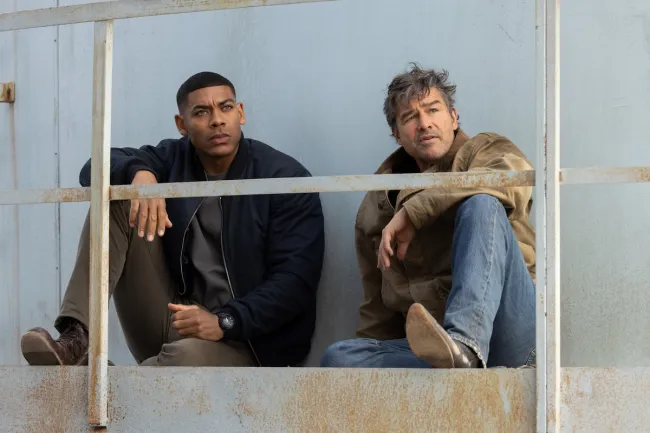

John Stewart — one of the most physically flawless humans to ever walk the planet Earth (and played quite credibly by Aaron Pierre) — can’t get no respect. The man is 6 feet, woah inches tall. He’s built like a defensive end, and he runs like Tom Cruise (palms flat, eyes fixed, barely controlled bursts of desperation the only threat to his perfect form). As a military-trained sniper, he can hit a bullseye from two miles out. He’s loyal, vigilant, and supernaturally patient.
He is, in simpler terms, the complete package. So naturally, he’s second fiddle to an old white guy who refuses to retire.
When “Lanterns” begins, John is waiting on the side of the road for the current Green Lantern to pick him up. Hal Jordan (Kyle Chandler), Earth’s first and only intergalactic law enforcement officer, is supposed to be training John as his backup — a “pull in case of emergency” superhero who could step in if, God forbid, anything happens to the man entrusted with the most powerful weapon in the universe.


And there’s good reason to think something will. After 20 years zipping across the galaxy, saving the planet from falling meteors and alien invaders, Hal is resting on his laurels. He doesn’t don his uniform anymore, since jeans make it easier to “take a piss.” He’s got the perpetual stubble of a guy who can’t manifest an electric razor out of thin air. His gray streaks betray an age that his boyish quips aim to negate, and when he finally shows up to get John, he’s two weeks late and proudly hungover.
To say there’s no love lost between mentor and mentee wouldn’t be entirely accurate. But respect only runs one way, and — despite an impeccable résumé and unrivaled skillset — John isn’t on the receiving end. After two months of “lessons,” he hasn’t even worn the ring, let alone used it to fly into space. When he’s not running random errands that amount to little more than getting the boss a cup of coffee, he’s waiting: waiting for Hal to finish taking pictures with awestruck fans, waiting for Hal to stop spouting bullshit, waiting to be chosen, one more time, after a lifetime of making sure he has been.
Hal says he’ll die before giving up the ring, and that entitlement, that sense of superiority, that deference to the old way of doing things — when exciting new opportunities are staring you dead in the face — drive the tension in HBO‘s anti-buddy-cop drama; a superhero series as indebted to odd-couple police procedurals as it is determined to see them through the eyes of its systemically slighted protagonist, rather than the long-established perspective of the powerful.
John is a young Black man. Hal is an old white guy. John does everything right, and Hal thinks he does everything right. John has been working his whole life to be deemed a worthy member of the Green Lantern corps, and Hal was literally handed the ring after answering a single yes-or-no question correctly. There are shades of gray, as befits any honest characterization, but “Lanterns” is aptly clear about who these men are, as well as what they represent culturally, generationally, and beyond. Can they come to an understanding before it’s too late to crack the case? Before it’s too late to save each other? Before it’s too late to save the world?
Can humanity?
The case, a unifying objective, is the source of those fears as well as their only hope, and “Lanterns” pivots around a doozy. Soon after Hal and John’s long-delayed return to training, they’re summoned to Rushville, Nebraska, a small town where four strangers are dead after a shooting at a high school football game. Hal’s gut tells him aliens are involved, which means he and his trainee won’t be shooed away by the local sheriff, no matter how well-intentioned her urgings may be.
Sheriff Kerry Kane (an excellent Kelly Macdonald) is whipsmart and no-nonsense. She clocks suspects as quickly as she dismisses Hal’s flirtations, and she exudes honesty and trustworthiness… despite being married to Billy (Jason Ritter), the son of the richest man in town, William Macon (Garret Dillahunt), who just so happens to employ a private militia that’s armed to the teeth for a war against… something.
Macon claims his funding and supplies are courtesy of a “mysterious benefactor” who he’s prohibited from discussing (per an NDA). His wife, Zoe (Poorna Jagannathan), is no help either, despite befriending John early on, and the rest of the town echoes their de facto leader: They do not want Hal and his protégé to be there.

It’s all a bit fishy, and between the case, the characters, and the larger Green Lantern mythology, questions stack up quickly across the first few episodes. Keeping track of who’s who, what happened when, and how a glowing green ring manifests objects with the power of its wearer’s will can be overwhelming for anyone without a doctorate in DC Comics (and, frankly, even for those of us who grew up reciting the oath). There are clunky moments where characters speak in thesis statements, and the larger stakes can get lost amid the individual dynamics.
But co-creators Chris Mundy (the showrunner and a former writer on “True Detective: Night Country”), as well as Tom King and Damon Lindelof (who, after ambitious and elaborate series like “Watchmen” and “Mrs. Davis,” knows how to turn exposition into entertainment) don’t let you lose track of what matters, relying on clean structuring, emotional logic, and charismatic performers to carry viewers into the core of a scintillating story.
Topping the charisma charts is Chandler, whose good-ol’-boy charms are shrewdly weaponized to win you over (as is the actor’s beloved screen presence; it can’t be a coincidence that the premiere episode finds the once and always Coach Taylor prowling the sidelines of a high school football field). Hal is the irascible old-timer whose belittlement can be interpreted as tough love, so long as you believe he’s one of the good guys. How “Lanterns” bucks and embraces that assumption at once, while savoring Chandler’s wily persona, is one of its finest feats (as well as some of the Emmy-winning actor’s finest work).
Pierre, as a vegan who “doesn’t believe in anything that causes enjoyment,” (Hal’s words) still infuses John with ample wit, passion, and mystique. In effect, “Lanterns” is his origin story (albeit one that’s purposefully at war with Hal’s third act), and Pierre’s cool magnetism optimally aligns with the steady trickle of information provided about his past. He’s in complete command of the character, just as “Lanterns” is confident in the genre-mashing mystery it carefully unfolds.
While not as bursting with ideas as Lindelof’s best work or as visually stunning as “True Detective’s” most memorable scenes, “Lanterns” is an exciting synthesis of its creators’ strengths. Like “Watchmen,” it’s a cop show set in America’s heartland that centers systemic racial discrimination (with a refreshing flourish of comic book sci-fi). Like “True Detective,” its partners are mismatched and unaligned, except when it comes to the case they’re determined to crack (and the top-notch actors working in tandem to bring them to life). Through seven of the first season’s eight episodes (and “Lanterns” is intended to run for multiple seasons), the series is a bright addition to HBO’s expanding mandate, rather than an empty capitulation to corporate demand for more name-brand franchises (although “Harry Potter” is name-checked more than once).
Best of all, “Lanterns” embodies the ethos it so closely studies. To become a Green Lantern, you must be deemed worthy and then answer a single question, posed under perilous circumstances: Are you afraid? “Lanterns” is not — it’s a bold endeavor, even riskier than the ill-fated Ryan Reynolds movie it contradicts at every turn (including very little use of the suit) — but it is keenly invested in the fears we carry, what they mean to the world, and how they define our humanity. Our fears are neither purely good or evil; they’re not meant to define us, but they’re not erasable either; they deserve our respect, like John, not our compliance, which Hal happily withholds.
Sounds like “Lanterns” has the perfect team. Light ’em up.
“Lanterns” premieres Sunday, August 16 at 9 p.m. ET on HBO. New episodes will be released weekly through the finale (Episode 8) on October 4.
>
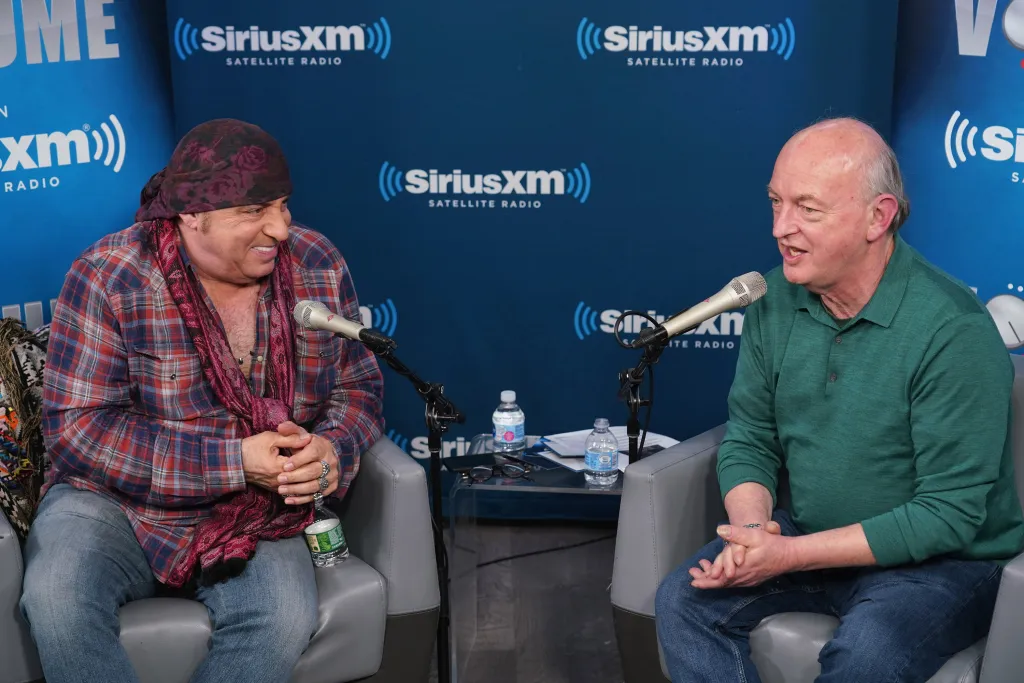
Dave Marsh, the influential and widely read rock critic for Creem, The Village Voice and Rolling Stone and the author of the foundational Bruce Springsteen 1979 biography Born to Run, died Friday, August 14, at his home in Connecticut. He was 76.
His death, reported by Deadline sister publication Billboard and confirmed on Facebook by Marsh’s friend Jim Rotolo, followed an extended period of declining health, although a cause has not been disclosed.
“Dave wrote several books about Bruce as part of a remarkable body of work spanning some 25 titles,” Rotolo, host of the radio show The Wild & The Innocent with Jim Rotolo. “A longtime rock critic for Creem and Rolling Stone, he was also one of the creators of E Street Radio and hosted Kick Out the Jams on SiriusXM for 19 years. Rest easy, Dave. Thank you for everything, my friend. You will be missed.
Marsh, alongside a coterie that included his friend and mentor Lester Bangs, launched his career as a critic and founding editor and writer of the highly influential Creem rock magazine in the late 1960s. An early champion of such ’50s and ’60s musical styles as soul, girl groups and what was starting to become known as garage rock, Marsh would later lend his considerable support to punk rock. Indeed, he is widely credited with coining the phrase, having first used it in a 1971 article about ? and the Mysterians, the band behind the 1966 hit “96 Tears.”
A native of Pontiac, Michigan, and a devotee of Detroit’s Motown as well as Motor City scenesters Iggy Pop and the Stooges, Marsh was instrumental in launching the Detroit-based Creem, and wrote for the magazine through the early 1970s. By the middle of the decade he began a multi-year tenure as an editor and critic at Rolling Stone, and shepherded the first edition of the Rolling Stone Record Guide in 1979.
A prolific author, Marsh wrote two books about Springsteen: In addition to Born to Run, which chronicled the singer-songwriter’s early career and initial fame, Marsh authored the 1987’s Glory Days, continuing the Springsteen life story through the peak MTV era. In 2003, Marsh combined the two biographies into the single-volume Bruce Springsteen: Two Hearts, adding an addition chapter to update the story.
Marsh also wrote 1983’s Before I Get Old, the biography of rock band The Who, and 1989’s The Heart of Rock & Soul in which he named the 1,001 greatest singles ever. (His #1 choice was Marvin Gaye’s “I Heard It Through the Grapevine.”)
In addition to the biographies, Marsh collected his reviews and essays in a number of volumes, including Fortunate Son and Kick Out the Jams. His 1993 book Louie Louie: The History and Mythology of the World’s Most Famous Rock ‘n’ Roll Song chronicled the cultural impact of that 1963 hit song.
Along with his old Rolling Stone boss and colleague Jann Wenner, Marsh helped found and maintain the Rock and Roll Hall of Fame in Cleveland, Ohio.
Marsh joined SiriusXM in 2004, and for 19 years hosted the weekly Kick Out the Jams show. He also launched the Springsteen-centric programs Live from E Street Nation and Live From the Land of Hopes and Dreams.
According to Billboard, Marsh is survived by his wife Barbara Carr, a longtime Springsteen co-manager as a partner in Jon Landau Management. He was predeceased by daughters Kristen Ann Carr and Sasha Carr. A complete list of his survivors was not immediately available.
>
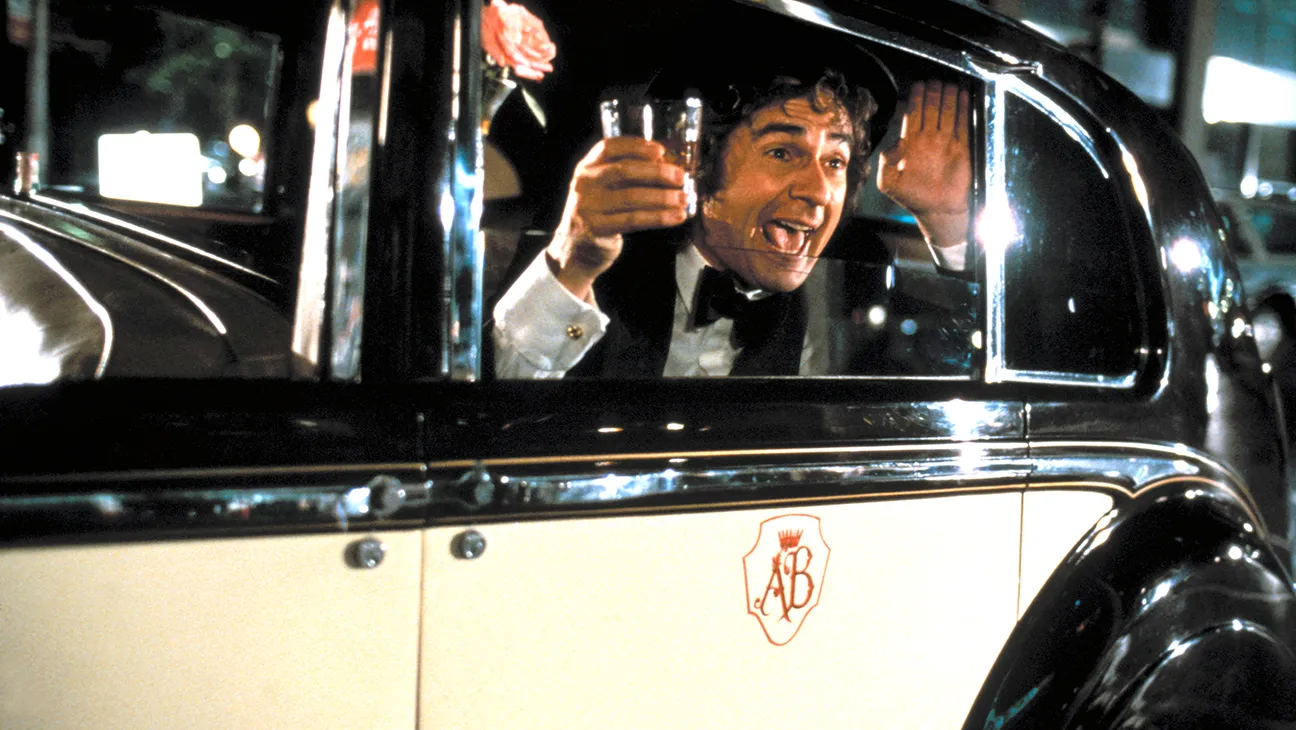
A toast is in order for Arthur, which became a comedy classic despite a quiet release 45 years ago. After penning Carl Reiner’s 1978 comedy The One and Only starring Henry Winkler, Steve Gordon was hired to direct his own Arthur script for Orion. Gordon initially considered George Segal and John Belushi for the title role before casting Dudley Moore off the success of 10, in which the actor starred opposite Bo Derek.
Arthur centers on alcoholic playboy Arthur Bach, who will be cut off from his family fortune unless he marries a woman he doesn’t love, which becomes complicated when he falls for working-class Linda, played by Liza Minnelli. At the time, Moore praised the script for its barrage of jokes: “Ten laughs a page, instead of one laugh every 10 pages.” Actress Anne DeSalvo, who played sex worker Gloria, tells THR that Moore, a classically trained pianist, would warmly greet her on set. “Dudley would be playing the piano, and he’d say, ‘Good morning, Anne,’ ” she recalls. “He was such a gentleman.”
The lead character was written as American, but Moore convinced Gordon to let him keep his British accent: “Steve kept phoning me up and saying, ‘Are you sure you can’t do an American accent?’ I told him if I tried, it would be the most distorted performance.”
Arthur hit theaters on July 17, 1981, with THR‘s review extolling the “hilarious comedy” and Moore’s “impeccable timing.” The film got off to a slow box office start amid marketing challenges, but word of mouth drew crowds for weeks to come, as Arthur became the year’s fourth-highest-grossing title. The film earned four Oscar nominations, winning for best supporting actor for John Gielgud as butler Hobson, plus Christopher Cross’ main theme song, “Best That You Can Do,” co-written by Burt Bacharach and Carole Bayer Sager.
Gordon died suddenly of a heart attack a year later at age 44, making Arthur his only feature. Moore and Minnelli returned for a 1988 sequel, while a 2011 remake starred Russell Brand, Jennifer Garner, Greta Gerwig and Helen Mirren, but neither matched the success of the original, which was named one of AFI’s top 100 comedies.
Moore, who died in 2002 at age 66 after battling progressive supranuclear palsy, once called Arthur his favorite role: “I love the character.”
This story appeared in the Aug. 12 issue of The Hollywood Reporter magazine. Click here to subscribe.
>

As the cost of groceries continues to rise, cooking in restaurants and at home has become more expensive. Kristen Kish, host of Top Chef, is well aware of this squeeze and wants the winners of the Bravo reality cooking show to be awarded more prize money for triumphing in the kitchen.
“I was just talking with some folks from Bravo, and I was like, ‘We need to increase the prize money.’ On my season, Season 10, it was $125,000. Now it’s $250,000, but with inflation, we should be creeping up near a million,” she said during a conversation at Deadline’s Contenders Television: The Nominees Studio. “Eggs are expensive these days. We need to like up the ante a little bit, but I do understand that it’s far more complicated than just saying give us a million bucks.”
Kish landed an Emmy nomination in the Outstanding Host for a Reality or Reality Competition Program category for a third year in a row, one for each year she has been hosting the long-running series, having replaced Padma Lakshmi in Season 21.
She is, once again, up against The Traitors’ Alan Cumming in the category, ironic given that she brought her kitchen star power to the Peacock mystery competition series this year too.
Check out the Contenders conversation with Kish below and scroll down for photos from the event.
Kish said that every year she is nominated it feels “surreal” and “exciting.” “I feel really proud for myself, but there is no show if there are no chefs. I am so proud for everyone involved in making the show. It changes so many people’s lives in our industry,” she said.
This season, set in the Carolinas, it changed the life of Rhoda Magbitang, who grew up in the Philippines and worked in kitchens including Michelin-starred Mélisse, Suzanne Goin’s A.O.C., République and Bazaar by José Andrés before winning Season 23.
Much like Kish, when she was a contestant (and winner) on Season 10 of Top Chef, Magbitang had to go through Last Chance Kitchen to win.
“Coming out of Last Chance Kitchen, a lot of the chefs will say if you’ve been through it, you are reignited. You have a little extra. There is some kind of mental load reset. The worst thing has happened, which is [they] got already got kicked off. So, you relieve yourself of that pressure,” Kish said.
Anthony Avellano for Deadline
Anthony Avellano for Deadline
Anthony Avellano for Deadline
Kish has a more comforting style than many reality TV hosts. This season it showed when she comforted a distraught chef, Nana Araba Wilmot, who didn’t have time to plate her dish, and also dealt with an injured contestant.
“I feel like an older sister or a peer that maybe has been in that particular restaurant for a little bit of extra time where… I can make people feel a little bit more calm and hopefully more confident, while also still giving feedback that holds them accountable,” she said.
Top Chef, produced by Magical Elves, has already been renewed for Season 24. Kish wouldn’t give much away as to where it will be set. “I have heard rumblings. I have a general idea of where we’re going, and all I can say is I’m very, very excited for the entire plan,” she said.
>


Search For Canadian TV Actor Stewart McLean Now Homicide Investigation


These ’90s fashion trends are making a comeback in 2017
According to Dior Couture, this taboo fashion accessory is back
Model Jocelyn Chew’s Instagram is the best vacation you’ve ever had
Emily Ratajkowski channels back-to-school style
Your comprehensive guide to this fall’s biggest trends
9 Celebrities who have spoken out about being photoshopped
A photo diary of the nightlife scene from LA To Ibiza