Connect with us

Sports

Demi Vollering interview: Turning a ‘crushed dream’ on Mont Ventoux into a beautiful Tour de France victory

Published

on

“That’s the most beautiful thing, when actually everything works out perfectly. It’s incredible.”

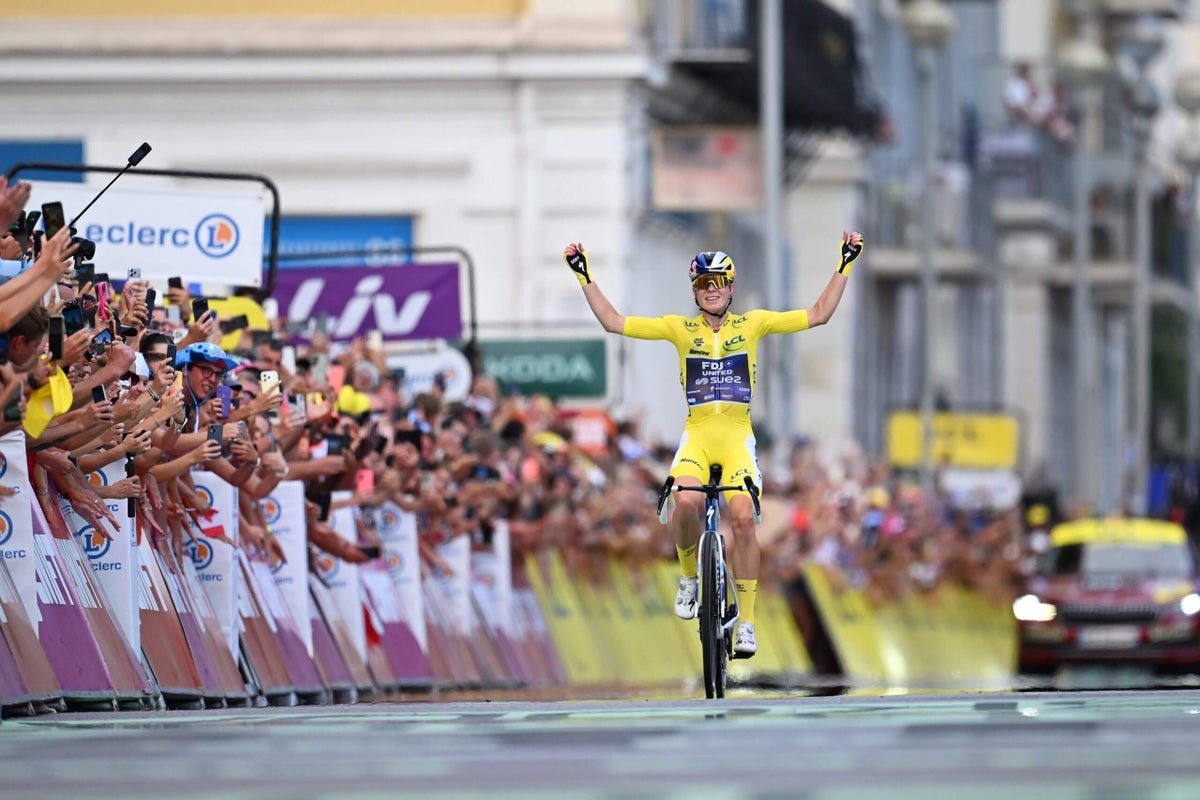
Last weekend, Demi Vollering confirmed a historic second Tour de France Femmes title in Nice.

Through illness, injury and a “crushed dream” on Mont Ventoux in the seventh of the nine stages, the FDJ United Suez team rose to the occasion to win a first title, and the Dutch rider her fifth grand tour victory.

The 29-year-old Vollering’s season has been spectacular — also winning the Giro d’Italia, Liege-Bastogne-Liege and Tour of Flanders — but it nearly didn’t happen at all. After finishing second in the Tour de France in 2024 and 2025, Vollering was so “done” with the sport that she considered taking a year off.

It was only after a reflective trip into the mountains, something she has done since she was a child, that she rediscovered her passion for cycling.

After the bright lights of the Tour, Vollering returned to the countryside this week. Speaking from her camper van, she talked to The Athletic about:

  • Riding through the pain barrier to Tour de France victory
  • A burnout that nearly derailed her entire season
  • What makes her tick, and where she wants to take the sport next.

This is the inside story of the 2026 Tour de France Femmes champion, and the woman behind that win.


“Since I was a young kid, I was very attached to the bike,” Vollering says. “I was always playing on the bike in the back garden. It was always, always there in my life.

“When we went camping, the bikes came with us, and so often in the day we did a small bike ride; my grandmas would bring sandwiches and we had a small picnic on the way somewhere — the bike was always a part of our family.”

Though the eldest sibling in her immediate family, Vollering had older cousins who already cycled competitively in the Netherlands.

“They were like my big brother and sister, who I was looking up to,” she says. “Because they did cycling, I felt like I also really wanted to do that. I had this very special connection somehow to the bike. I really enjoyed the feeling of the speed and the freedom, searching your limits.”

Vollering (centre) pictured in 2019 after winning the second race of her pro career, at the Giro dell’Emilia in Italy (Yuzuru Sunada/Belga Mag/AFP via Getty Images)

In many ways little has changed, as the FDJ Suez rider was forced once more to reckon with the upper limits of her capabilities at this year’s Tour.

With wins in two of the nine stages — one in the yellow jersey — and a second title, it went “better than expected”, but the road to get there was a “rollercoaster”.

“The only expectation I had was to win on Mont Ventoux, (and) that was the only thing I couldn’t do,” she says. “I was very disappointed, of course, also because I think we all almost expected that we would be in yellow after that stage. For me, it’s where it all started and it would feel like a complete story, but that just didn’t work out.

“It was like a crushed dream.”

Buoyed by her team’s encouragement, Vollering put the blinkers on to figure out how to rectify what she referred to as one of the biggest setbacks of her overall race.

“On the way back to the bus, I was already checking VeloViewer for the day after,” she says. “I did the record in January there as well, so I knew that this is a very hard-level climb. I was immediately in my head planning the perfect attack there.”

The next day proved one of FDJ Suez’s most impressive victories, with a calculated team leadout launching Vollering’s attack on an uncategorised climb to completely overturn the GC.

Vollering’s performance on Ventoux was a disappointment but she made up for it in the remaining two stages (Nicolas Tucat/AFP via Getty Images)

“Directly after the finish line (on stage eight), we were so incredibly happy, but at the same time there was also a kind of disbelief at what we had done,” she says.

“That made us all think, ‘Wow, this was crazy. We have done it, just how we planned it’. That’s the most beautiful thing, you know; like, when actually everything works out perfectly. It’s incredible.”

Vollering was quickly and aggressively announcing herself again as the peloton’s most complete rider — but she wasn’t even at full fitness.

After a fall on stage three, the Dutchwoman said she had “pain throughout the whole Tour”.

“My (left) knee, it was pretty painful from the crash,” she confirms. “It was getting really swollen and super-painful. Luckily, only the two or three stages after it happened I had pain in the stages. And then the last two stages, I didn’t have it during anymore, (but) I definitely had a reaction after the stages.”

Fortunately, it had minimal effect on her race, as Vollering recalls knowing she would win her second Tour de France Femmes even before she had gone solo in the final stage.

She was wearing the yellow jersey that day ahead of second-place Kasia Niewiadoma-Phinney, who needed to make up an eight-second deficit if she was to take it back. The Pole accelerated on the stage’s fourth ascent of the Col d’Eze, but couldn’t open a gap.

“I think I felt the moment Kasia attacked and I could follow, I knew already I would do everything to keep this yellow,” Vollering says. “I knew my legs would be there, because just mentally I would dig so deep, I was prepared to suffer so incredibly hard.”

Rolling through the seaside crowds in Nice, Vollering had secured her 14th win of the season — including her second grand tour victory.

In the end, the margin was emphatic and her dominance undeniable, with a final overall lead of 1:18.


Vollering won that final stage on the mountain roads above Nice, but it was a different trip to such terrain that saved her 2026 Tour before it even started.

“Last year, I just overdid everything,” she says. “At one point I was just so done, I had pushed my body way too far, and also mentally, maybe a bit too far over my limits. After the Tour de France last year, I was even considering a year off because I didn’t enjoy it at all anymore.”

It was not the first time cycling had forced her to wrestle with the upper fringes of her mental limits, having suffered a panic attack during the final stage of the 2024 Tour.

Vollering had been in the lead before crashing earlier in the race, and had one last shot to regain the yellow jersey from eventual winner Niewiadoma-Phinney. Unknown to her, the accident had fractured vertebrae in her back — something only discovered in scans taken after the Tour.

“The thing I was most scared of was to disappoint people,” Vollering recalls. “After I lost that tour, I realized that the people who truly love you, they will not be disappointed, because they will love you anyway.

“The day after, my period came, and of course that also has to relate a lot to it too because the moment before your period is coming, your heart rate is already high, your breathing temperature is already higher,” she added.

Vollering won the stage regardless, but missed out on the title by just four seconds.

“Actually, it was a good thing to go through because I learned so much,” she says. “I learned that you can take back control. I was also not scared of collapsing in the race, because I knew that if it ever would have come again, I would find a way to handle that.”

Vollering (sitting) reacts after learning she has failed to overtake Niewiadoma-Phinney in the GC on the final stage of the 2024 Tour de France (Julien De Rosa/AFP via Getty Images)

A year on, Vollering entered the 2025 Tour after five stage races — including a victorious Vuelta a España Feminina — and eight one-day races. She came second again, to Pauline Ferrand-Prevot, and this time the mental toll nearly took her away from the sport completely.

How did Vollering fall back in love with cycling?

The answer lay back in the happiness of her childhood.

“First, after that Tour, I took a week off, then I felt I was still not recovered. So we made the decision as a team to skip the Tour de Romandie and take more rest. Instead of racing, I went with the camper van to the mountains,” she says.

“I really like to be in the mountains. I always really love camping, because you spend so much time being outside — the moment you wake up, you’re with your feet in the grass, and you are just spending the whole day outside, exploring the area where you are. This is what I really love to do.

“It was my favorite thing to do as a kid as well — I think it’s also just a little bit a reminder of when I was young. We used to go camping every summer with my whole family, and it was often in the Netherlands because all my cousins are around the same age.”

That time after the 2025 Tour, Vollering only took a gravel bike.

“I told myself only to ride it when I felt like I wanted it,” she says. “After the camper trip, there was some hiking and, really being offline, I felt like I wanted to step on the bike again.

“I was just riding the bike without any goals or expectations. I was just free.”

After an “amazing” altitude training camp, Vollering returned to the roads for the European Championship in October. “I became a European champion, and then I went into off-season on a high. So I think that saved me, and then it was never a question anymore if I would take a year off,” she says.


“What really fuels me as a person is challenging yourself,” Vollering says. “If you dream about something, you really have to go after it and try everything in your power to get it.

“The whole process is what’s giving us a purpose in life. I think that’s why we are living, that’s what’s fuelling (us), is figuring things out. I love the challenge.

“If I have more time to think, then ideas come up strongly — I want to write a book, then I want to build ‘Move to Dream’ (her personal brand) further and all these things. My brain is never off-off. Also trying to help the people around you in bringing people closer to each other, I think that’s something beautiful.”

This extended to her closest competitors in the Tour, after Niewiadoma-Phinney accused Vollering’s teammate Célia Gery of boxing her in during the crucial penultimate stage. Niewiadoma-Phinney confronted the 20-year-old, who was subsequently said to have received death threats online.

“When I saw her interview, I was very angry,” Vollering says. “But then my second thought was she’s full of emotions, she doesn’t mean anything like this. You can blame the (rider) with the helmet, but when the helmet is off, you (have to) see them as a person.

“I had a conversation with her, and after that everything was good between us. She was very respectful and we listened to each other, so I think this was important for the both of us.

“Kasia has always been there; she’s a very great rider. She’s a rider who isn’t scared of trying — it’s always nice to have riders in a bunch who are eager to race, because in the end that’s what makes our sport better to watch.”

Vollering leads Niewiadoma-Phinney in the final stage of this year’s Tour (Nicolas Tucat/AFP via Getty Images)

As one of the greatest cyclists to ever step on a bike, Vollering’s fame almost transcends the sport — and she is determined to bring the rest of the peloton with her.

“I would love to see the sport as a whole growing, I think we can do so much more,” she says. “Cycling has such a big fanbase. But I believe also that often things are a bit, like, done still in an old-school way. I still believe there is room to bring the sport a lot more forward.

“It would be nice, yes, to have some very long races. But I think also what we have seen in women’s racing is that if the races are a bit shorter, they get even more exciting to watch.”

Lots of the issues surrounding the women’s peloton come down to funding.

“It’s such an insecure environment. The way cycling is earning money could be a bit different — I think that’s where the sport can grow,” she adds. “(I wish) that teams would have a more fixed name rather than sponsor names, because they change. If you have, for example, a name of a city, like with football clubs, people can also be easily stemmed from a team or support a team. But now it’s not possible, because we need the money from the sponsors.

“At the same time, cycling is not really making money because it’s such an open sport. It’s beautiful for us because everybody can come and watch on the side of the road, but I think there is an opportunity there so that you can let the sport grow also.

“I think there are still a lot of things we can change.”

Vollering has won every grand tour, and is prolific in the spring classics too, but still feels she has much more to give.

“I still have a lot of dreams on and off the bike,” she says.

On the bike, these are, of course, world championships, the Olympics, multiple Tours de France.

“But off the bike, it’s to bring people together and to let my movement grow. I would love to leave a legacy behind and to have helped to bring cycling to another level and gain a new fanbase. Just to bring women’s sports in general to a higher level, that really gives me energy.”

>

Continue Reading

Sports

Aston Villa receive new Emiliano Martinez bid from Juventus

Published

on

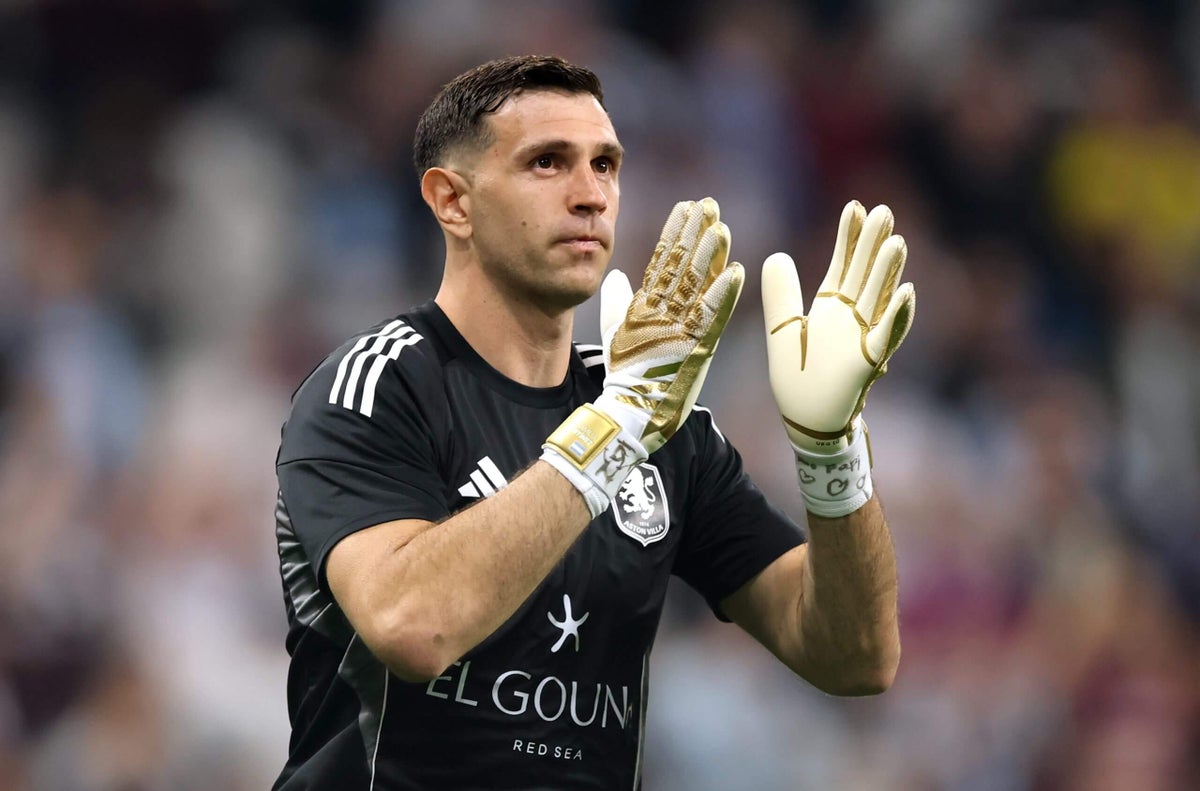
Emiliano Martinez applauds fans

Martinez is contracted with Villa until 2029 Alex Grimm/Getty Images

Aston Villa have received a new bid from Juventus for Emiliano Martinez and the gap between valuations of the goalkeeper is now narrowing.

The Serie A club have shown a willingness to pay up to €10million, comprising an initial €7m plus €3m in add-ons based on team success.

That falls short of the €10m guaranteed price Villa currently want, although the sides are moving closer to reaching a compromise.

Personal terms with the 33-year-old Argentina international will not be an issue.

The Athletic reported on Saturday that Martinez was in negotiations to leave Villa this summer, with the Premier League club stepping up their pursuit of Parma goalkeeper Zion Suzuki.

With discussions over Martinez progressing, Villa began considering pushing ahead with a deal in the region €30million for Japan international Suzuki.

It is the second successive summer where the Argentina international’s Villa future has been uncertain. Manchester United were in talks with him last summer, and they made a loan bid in the latter stages of the transfer window which was rejected. United ultimately signed Senne Lammens from Royal Antwerp.

Martinez is contracted to Villa until 2029, having signed fresh terms in August 2024.

He made 44 appearances in all competitions last season as Villa recorded a fourth-placed Premier League finish and won the Europa League.

Martinez was also a prominent figure for Argentina at this summer’s World Cup, starting all eight of his nation’s matches as they were beaten 1-0 by Spain in the final.

He joined Villa from Arsenal in September 2020 and has made 256 appearances for the club.

Martinez’s departure would add to a significant summer of change at Villa Park, with Morgan Rogers, Youri Tielemans and Lucas Digne having already departed, while uncertainty continues over Ezri Konsa’s future.

Connections: Sports Edition Logo

Connections: Sports Edition Logo

Connections: Sports Edition

Spot the pattern. Connect the terms

Find the hidden link between sports terms

>

Continue Reading

Sports

Eagles preseason: Backup QB race goes backward, Uar Bernard and Joshua Weru debut

Published

on

BALTIMORE — The Philadelphia Eagles last traveled north on Interstate 95 from a game in Baltimore in December 2024, looking like bona fide Super Bowl contenders. It’s hard to say what impression they left this time in a 24-7 loss to the Baltimore Ravens in Saturday’s preseason opener, other than they don’t place a premium on the exhibiton schedule — in playing time for starters and play calling from the coaches — and any hope they’ll imbue anyone with that feeling of contention again needs to wait until next month when the games begin to count.

But they still played 60 minutes. There were still jobs up for grabs, roster spots in question and even unforgettable debuts.

Here are five thoughts:

1. Quarterback race reverses

The backup quarterback situation went backward. No ground was made up in the quarterback competition, which is discouraging in itself.

Top Plays from Eagles @ Ravens

The whole idea of trading Andy Dalton or Tanner McKee is that they’re both among the top backup quarterbacks in the NFL. It didn’t help that they played without a starting offensive line and top skill players, but pro scouting departments won’t watch this film and view the Eagles’ quarterback depth chart as the envy of the league. Of course, there’s only so much one can read into a preseason game — especially for Dalton, who has started 173 games in his NFL career, including the playoffs.

“Nothing’s decided there as far as who’s the two, who’s the three,” head coach Nick Sirianni said when asked why he decided to start Dalton. “Andy’s played a lot of football. … Tanner’s had two starts.

“That’s just how we decided to go today. Been rotating with them in practice. I think both of them have continued to grow within the offense.”

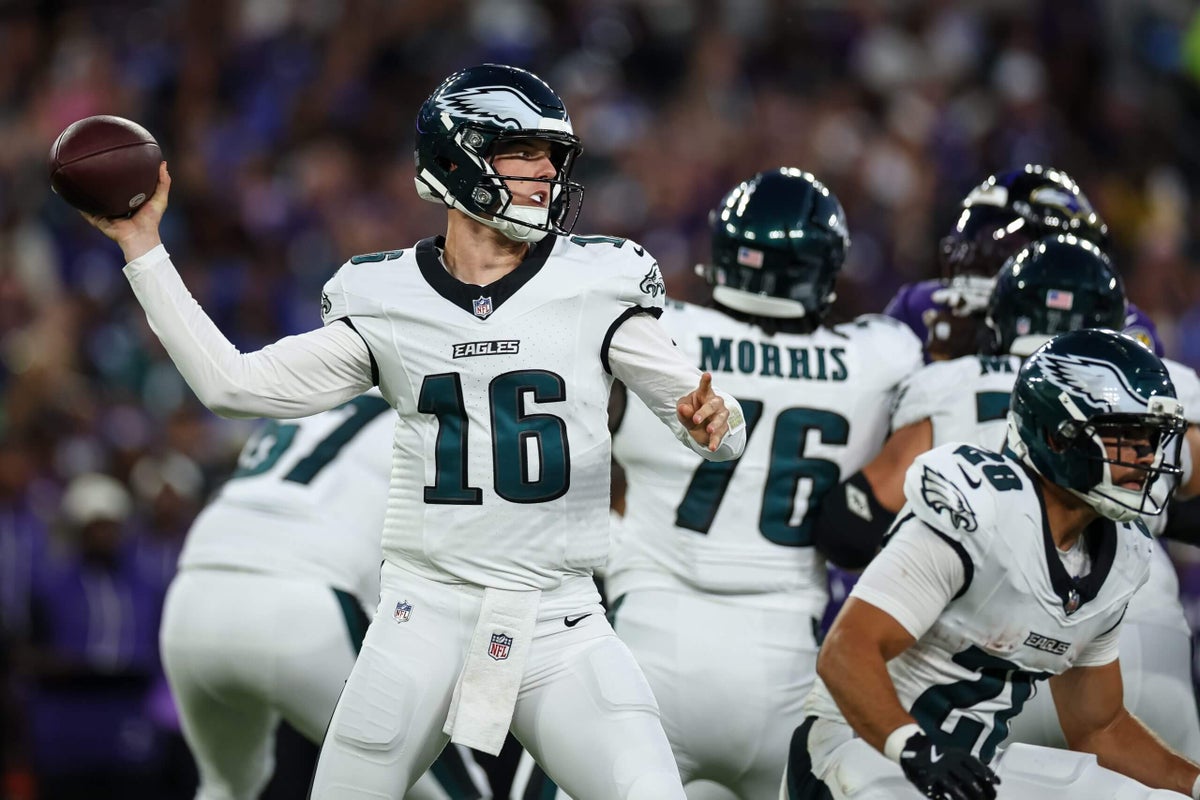
Dalton finished 3 of 6 for 20 yards on three drives. He was hurt by penalties on the opening drive and a costly third-down drop by Darius Cooper. McKee took over and went 6 of 10 for 35 yards. In four full drives (excluding an end-of-half drive), there were three three-and-outs.

It’s a sharp contrast to one year ago. McKee was the unquestioned No. 2 quarterback. He started the preseason opener and went 20 of 25 for 252 yards and two touchdowns. He looked like a starting-caliber quarterback that night. In fact, the Eagles saw enough that they didn’t play him again in the preseason.

If you told me that night he’d effectively be the third-stringer during the preseason debut one year later, I would not have believed it. It seemed as if the arrow was pointing up in his career.

That’s been the perplexing part of the backup quarterback competition this summer — either his stock fell last season, they didn’t like the system fit, or they were drawn to the asset value of two backup quarterbacks. It hasn’t materialized productively.

Dalton has enough of a track record that the league knows what he is, but McKee’s stock might not be what it was last summer.

“I’ll let the coaches decide that,” McKee said of the competition. “My job is to go out and play when I’m put on field, so how that’s going, I’m going to put in the work, I’m going to do the extra stuff. I’m going to do everything to have my case of why I believe I should be the backup.”

McKee said he looked on the “bright side” of not starting, because if he needed to enter a game in the regular season, it would usually happen in the middle of the game.

This has clearly been a different experience for Dalton and McKee. Their spot on the depth chart changes by the practice. Neither quarterback created distance Saturday, and two weeks remain until cutdown day. Perhaps those two weeks will provide more clarity, but it remains as unclear as ever after this game.

2. International players steal the show

When I remember this game a decade from now — what does it say about me that I might remember this game a decade from now? — I’ll focus less on the offense and the backup quarterbacks and more on an otherwise unremarkable drive in the third quarter when Uar Bernard and Joshua Weru played their first snaps of football in a game — ever.

“How exciting for those two guys to be playing in an NFL football game?” Sirianni asked.

Bernard, a native of Nigeria, and Weru, a native of Kenya, did not start practicing football until the spring. They didn’t wear full pads until two weeks ago. Consider how many youth league, high school or college games most everyone else on the field played before their NFL debuts.

Bernard and Weru did it for the first time in this setting. In the locker room after the game, teammates told Bernard how proud they were of him.

“It’s a dream come true for me,” said Bernard, who had chills when he went on the field. “I think I’m proud of myself.”

There were signs of major development necessary, but there were also flashes you can get behind — especially with Weru. He gets less attention than Bernard, but don’t forget about the undrafted edge rusher who was an international rugby player. He had a quarterback hit, and you saw his burst chasing down the passer.

Weru is 6 feet 4 and 244 pounds with a 4.45-second 40-yard dash and 41 1/2-inch vertical leap, and he’s demonstrated in practice tools that are hard to find at the position.

Both players are a work in progress. Vic Fangio said they’re “light-years away.” But Weru said this week that you need to celebrate the wins during the development process. It was a refreshing outlook. And seeing Bernard disengage a blocker or Weru apply pressure, it’s hard not to think about how far they’ve already come rather than focus on how far they still have to go.

Saturday night was a benchmark for them. It will be a lasting memory from the game.

3. It stood out that Jihaad Campbell was the only starter who played. It also stood out that Marcus Epps did not play

Sirianni explained that Campbell did not get as many reps last season — he played 710 snaps, which was 63 percent of the snaps on defense — and that they thought he would benefit from the work. One could push back on the idea that he didn’t get much work last season, although he is the youngest and least-experienced player among the starting defense. Sirianni’s explanation that he wants to give him playing time makes sense. I did not interpret Campbell’s inclusion as a signal that his spot could be in trouble. (The Eagles, however, are deep on linebackers, as you’ll read below.)

With Epps out of uniform along with the other defensive starters, it might signal where the starting safety competition is headed — at least entering the season. Sirianni pushed back on that idea, saying that Epps is “a little bit older” and Michael Carter II had limited experience after his midseason acquisition in 2025.

Training camp has already offered clues, considering Epps has played the preponderance of first-team snaps in nickel. Carter has mixed in with the first-teamers, so the competition has continued, but Epps has been the front-runner since the summer started. I figured both would play. Perhaps the Eagles don’t need to see much more from Epps, who has 53 career starts between the regular season and postseason and played safety in this scheme last season. There’s more to learn about Carter. My guess remains that the veteran presence of Epps will give him the edge in Week 1 against Washington.

4. The Eagles have serious linebacker depth — even after losing Nakobe Dean in free agency

Jeremiah Trotter Jr. was one of the bright spots for the Eagles on Saturday, with five tackles, a sack and two quarterback hits in limited playing time. He’s looked like a starting-caliber player whenever he’s entered games. Undrafted rookie Deontae Lawson also made plays, totaling five tackles. This doesn’t even include Smael Mondon Jr., a fifth-round pick last year, who had five tackles and a quarterback hit; and Chance Campbell, who did not play because of injury but impressed on scout team last season, and who Fangio noted should be kept in mind for 53-man roster projections.

It makes you wonder if the Eagles will look to trade from this position of strength. Trotter could carry trade value, although with Campbell’s injury history and Zack Baun turning 30 in December, he might be valuable to keep around for at least the final two years of his contract. I’m not sure Mondon carries much trade value (unless it’s a player-for-player deal), so Trotter would be the trade candidate. This illustrates how far the Eagles have come at the position under Fangio. Linebacker was a wasteland for the Eagles at the start of the decade. Now, we’re talking about having more starting-caliber linebackers than starting spots.

5. Preseason’s most important days are game days

Sorry to tell the fans who watch every minute of the preseason: The most important two days of the preseason come this week in New England. The Eagles have joint practices with the New England Patriots on Wednesday and Thursday in Foxborough, Mass., and those days will reveal more about the offense’s progress and how this team matches up with a Super Bowl contender than anything learned in the 180 minutes of game action on television this month.

“We’ve got a big week this week coming up, and the ones are going to get a lot of reps in New England for the joint practices,” Sirianni said.

That’s also why Sirianni does not play his starters in the preseason. The Eagles prioritize health (and keeping their scheme close to the vest) in games and have placed a greater emphasis on joint practices. The offense was bad Saturday, and there’s no spin or rationalizing the performance. There won’t be games this season (until perhaps Week 18) when they play 11 backups, although other teams play without starters and move the ball efficiently. The Eagles’ preseason opener last year was an example. But it’s hard to form any judgment based on what was on display in Baltimore.

A better evaluation will come in New England — just not in the game next week.

>

Continue Reading

Sports

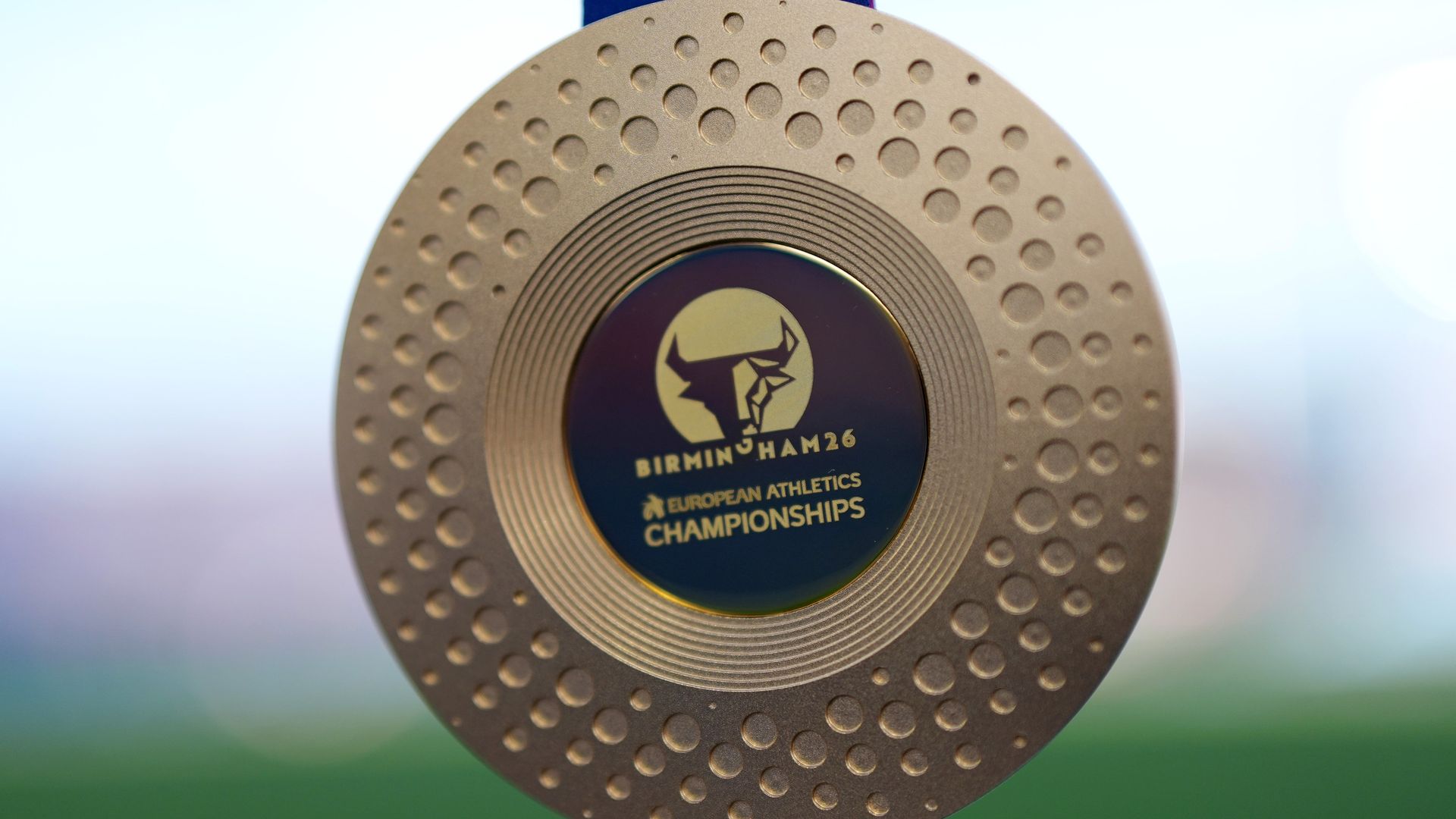
European Athletics medal ceremonies postponed after police arrest

Published

on

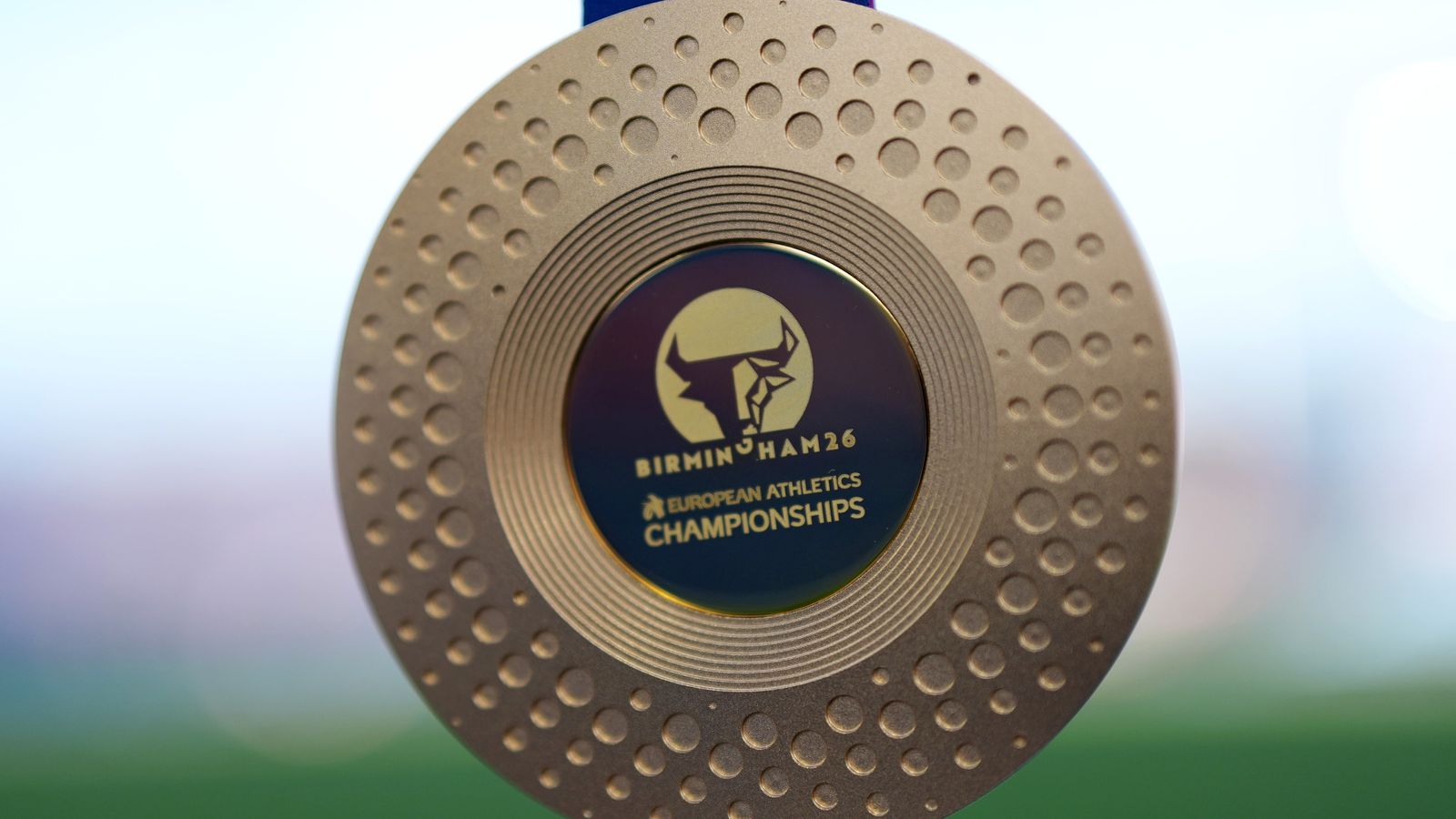
Medal ceremonies at the European Athletics Championships in Birmingham were postponed on Saturday evening and transport services suspended after a man was arrested on suspicion of fraud.

Tournament organisers said transport operations had returned to normal in the early hours of Sunday.

A statement from Birmingham 2026 read: “Birmingham 2026 can confirm that transport operations have returned to normal following a police incident on Saturday evening.

“Championship transport was suspended until the necessary security measures had been carried out whilst West Midlands Police arrested a man in his thirties on suspicion of fraud.

“The safety and wellbeing of our spectators, athletes, workforce and the wider Championships’ family will always be our first priority.

“We recognise that the delays presented challenges for those affected and would like to thank everyone for their patience, understanding and cooperation throughout the evening.

“Further information will be issued on Sunday relating to the evening’s postponed medal ceremonies.”

A West Midlands Police spokesperson confirmed that a man in his 30s was arrested on suspicion of fraud and remained in custody for questioning.

The crowd at the Alexander Stadium appeared to be near its 23,000 capacity to watch Saturday’s evening session, which concluded with Great Britain winning a pair of gold medals in the men’s and women’s 4x100m relays.

At one point during the session, there was an announcement that the six medal ceremonies, scheduled to take place after the final event between 10pm and 11pm, were cancelled.

The Press Association understands this decision was taken in relation to the police incident.

Outside, there was a visibly heavy police presence and huge static queues of people waiting for shuttle buses.

>

Continue Reading

Trending

Copyright © 2017 Zox News Theme. Theme by MVP Themes, powered by WordPress.