
Sports
How Ferran Torres’ quixotic World Cup-winning summer led to his Barcelona exit


There has been something almost absurd about Ferran Torres’ summer.
On July 19, he came off the bench in a World Cup final, scored the winning goal in the 106th minute and became a Spanish football hero.
Spain celebrated him. Barcelona celebrated him, too. At the trophy parade held in Madrid following the team’s return, inflatable sharks could be seen among the crowds — referencing the nickname he cultivated at Barca (tiburon, shark) as a way to deal with pressure.
Now, a month on from Torres’ strike in that 1-0 win over Argentina, some Barcelona supporters are celebrating his departure in a €50million (£42.7m; $57.9m) transfer to Paris Saint-Germain.
It’s not the ending you would expect for a World Cup hero.
Torres, 26, is not leaving Barcelona as a unanimously hated player, nor is he departing on bad terms with the club or the people inside it.
But many fans have been upset or annoyed by his behaviour over the past month — and the widely held theory is that his winning goal for Spain was the catalyst.
First of all, we need to talk about the hat.
During Spain’s World Cup celebrations in Madrid, Torres wore a red baseball cap bearing the words ‘Make Spain Great Again’. You don’t need to be a politics junkie to recognise the echoes with U.S. President Donald Trump’s ‘Make America Great Again’ slogan.
The White House reacted to the image through its official account on X, posting a video of Torres wearing the cap with the line: “Everyone wants in on the movement.”
Torres later insisted that it had nothing to do with politics, that it was simply about celebrating Spain being back at the top of world football.
SEE IT: Spain World Cup champion Ferran Torres gives fans a front-row look at the national team’s championship parade, sharing a POV video from the celebration on his Instagram Story while wearing a “Make Spain Great Again” hat.
The championship-winning forward rides through the… pic.twitter.com/BcwG8BIxqr
— Fox News (@FoxNews) July 21, 2026
Then there was the bracelet.
At the celebrations, Torres was also spotted wearing a rubber bracelet with a Spain flag that carried branding from the Guardia Civil — one of the country’s two national law enforcement agencies (the other being the Policia Nacional).
It would be unfair to assume that Torres was wearing that as some kind of political statement, but Catalonia’s recent history means some people saw one regardless.
In 2017, at the peak of the region’s now considerably weaker pro-independence movement, a referendum on the issue was organised by local authorities — without the permission of the Spanish government, who deemed it illegal. It brought huge crowds into Barcelona’s streets and was met with a heavy police crackdown.
Perhaps Torres was simply expressing his Spanish identity. But in Catalonia, even a seemingly harmless gesture can take on political significance. In Barcelona, a mural of Torres by Italian street artist TVBoy was defaced with the slogan: “We want Catalan national teams”, Another message scrawled on top simply read: “Spain”. Both were written in Catalan.

The mural of Ferran Torres by TVBoy as seen in Barcelona on July 22 (Josep Lago/AFP via Getty Images)
Torres responded to the situation in an interview with Radio Play Valencia a few weeks later.
“I am Valencian, a Valencianista (a proud supporter of the Valencia region) and Spanish,” he said. “If someone doesn’t like that, that’s their problem.”
Torres made those comments on August 7. By that time, he had already caused a bigger stir with several interviews in the United States.
After the World Cup final, Torres and the other seven Barca players in Spain’s squad had holidays before returning for pre-season training. Torres travelled to the U.S., where he took Barca by surprise with a round of media appearances on August 3.
“I have a contract at Barcelona, but in football you never know,” he said on NBC when asked where he would be playing this season, his Barca contract due to expire in June 2027. “I am just waiting to make the right decision, but I don’t know it yet.”
Later, speaking to Sportico, he also addressed reported interest from PSG.
“Every time these teams want you it’s a good thing,” Torres said. “In football you never know what can happen, but the good thing is that, as I have a contract, I can wait and decide on my own.
“What do Barca need to do to keep me? They have to show me they want me, come to negotiate, and in the end it’s all about talking.”

Spain held a trophy parade and celebrations in Madrid the day after the World Cup final (Diego Souto/Getty Images)
Torres is not a player who set the world alight at Barca. It would be fair to say he struggled overall to live up to the expectations following his €55million arrival from Manchester City in January 2022.
He also struggled with the mental side of the game and consulted psychologists to help get the best out of himself. This is where that nickname comes in again. The ‘shark’ reference comes via UFC fighter Ilia Topuria. Torres heard an interview with the Georgian-Spanish athlete in which he said of his rivals: “There’s only one shark here; the rest are sardines.”
He found it funny and told his Barcelona team-mates about it while they were eating. After an upturn in his goalscoring form for Barca at the beginning of 2023-24, the team started calling him ‘El Tiburon’. His goal celebrations reflected a player who felt he was proving doubters wrong.
But Torres has still never quite managed to deliver consistently, and that feeling of it being him against the world has not disappeared.

Ferran Torres’ goal sealed the second World Cup in Spain’s history (Justin Setterfield/Getty Images)
At the start of 2025-26, Hansi Flick’s idea was for the season to mark a transition from Robert Lewandowski to Torres as Barcelona’s leading No 9, but the reality was different. Torres struggled and ended the campaign with 21 goals and three assists in 49 appearances, going 14 games without scoring between late January and mid-April. After the season ended, there were no advances on a contract renewal, a situation complicated by the deal that took him from City four years ago.
Barca would have had to pay City about €8million if they had renewed Torres’ contract, while club sources — speaking anonymously as they did not have permission to comment — also said another clause meant selling him for anything over €55m would have forced them to pay City €10m.
The Spanish club ended up seeing him as a top-class substitute rather than a regular starter. Further to this, they have been trying to sign Atletico Madrid’s Julian Alvarez all summer.
Barca’s pursuit of Alvarez reinforced a perception that had been building around Torres. He felt he had been treated harshly for some time, and he wanted to respond to that. Every goal had become an answer to his critics, every good performance a rebuttal.

Ferran Torres joins up with former Spain manager Luis Enrique at PSG (Lou Benoist/AFP via Getty Images)
The critics were real, of course. So was the pressure. Barcelona is an unforgiving place for any player, and Torres has received his share of criticism. No one can blame him for carrying it as he has. But at times he seemed to be fighting a version of his critics that was larger, louder and more permanent than the one that actually existed. Many Barcelona supporters saw a betrayal of some kind in those U.S. media interviews — as they felt the club’s fanbase had rallied behind him in important moments.
Did Torres receive more criticism than he deserved? Did he receive more support than he remembers? The truth probably lies somewhere in between. Then, he scored the winning goal in a World Cup final.
The comparisons with Andres Iniesta’s extra-time strike in the 2010 final against the Netherlands (another 1-0 win for Spain) were obvious. The logical next step, in Torres’ eyes, might well have been to get out there and say, as the new hero of the nation, I told you so.
But in the end, there is perhaps nothing more Spanish than emulating Don Quixote — fighting battles against giants that may have been much smaller than they seemed.
>
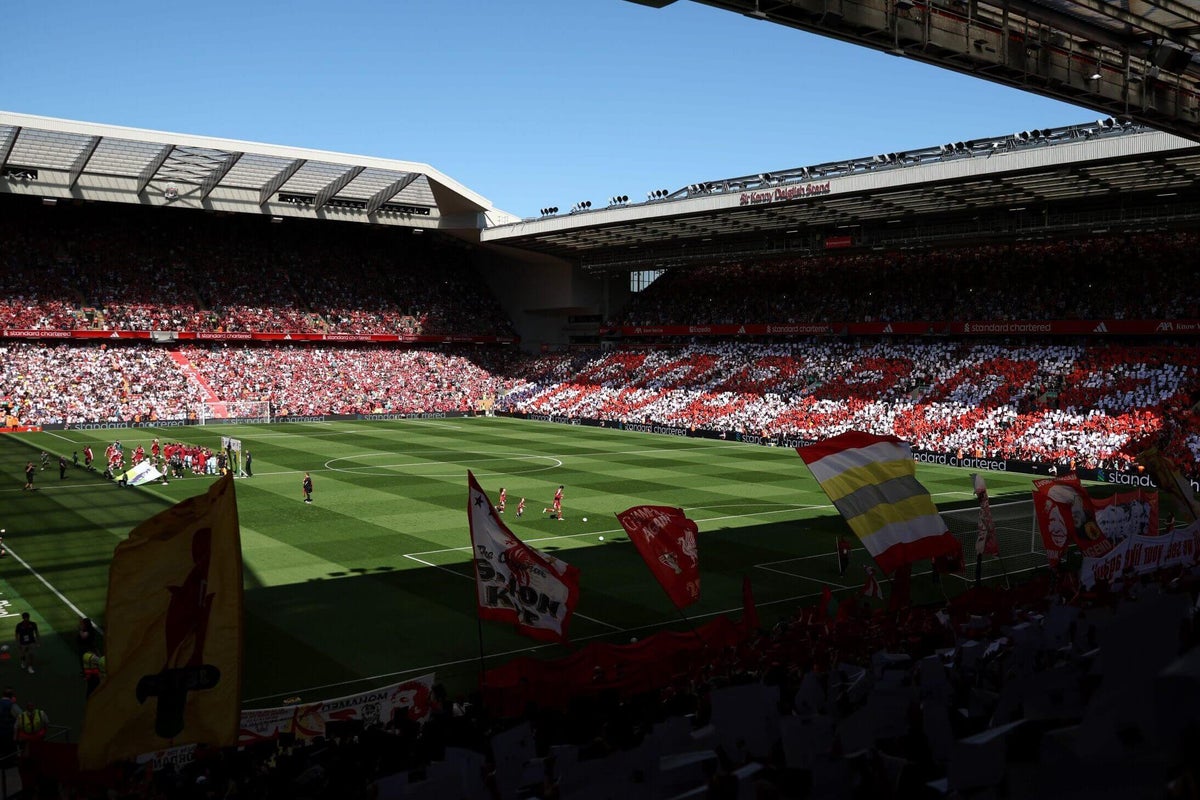
There is the potential to eventually grow numb to the finances of a Premier League summer.
Up the transfer fees go, higher and higher across the board. Already, there has been more than £2billion ($2.71bn) spent in this window and another fortnight remains for further investment in new players.
The numbers are vast and climbing again but during the countdown to another season, beginning on Friday night, there has been another timely marker to illustrate the rapid financial growth of the Premier League and its elite.
The value of English football’s biggest clubs is spiralling. Fenway Sports Group’s decision to sell a 38 per cent shareholding in Liverpool to a consortium including Amit Bhatia and Amazon founder Jeff Bezos lifted the bar to new heights last week. The investment attaches a valuation of around £5.5bn to Liverpool, eclipsing the 2024 arrival of Sir Jim Ratcliffe into Manchester United, where a 25 per cent stake had valued the club at £4.3bn.
Chelsea, too, are back around the table talking big. Todd Boehly and Mark Walter are in talks to sell their 12.8 per cent shareholdings to co-owner Clearlake Capital in a proposed deal widely reported to value Chelsea at £5bn. It is unclear if Clearlake will proceed at that price but it would be more than double the £2.3bn spent on buying the club from a sanctioned Roman Abramovich in 2022.
The figures are stretching beyond what most industry experts — such as Forbes and Sportico — consider to be the value of these clubs. International advisory firm Football Benchmark, another to compile annual assessments of Europe’s biggest clubs, valued Liverpool at between £3.9bn and £4.2bn in its 2026 rankings, with Chelsea listed at between £2.5bn and £2.7bn.
Investors, though, are clearly seeing something different. The Athletic assesses why.
What factors are driving up the value of the Premier League’s biggest clubs?
Growth, ultimately — both that which has happened over the last decade and which could still take place.
More than £3.1bn was distributed centrally among the Premier League’s 20 clubs last season, almost double the £1.63bn handed out in the 2015-16 campaign. It means the biggest clubs, including Liverpool, can now expect to generate annual revenues north of £700m, with aspirations to eventually follow Real Madrid beyond the £1bn mark in the years to come. Matchday revenues are also rising, along with commercial gains. The latter for Liverpool was £323m in their most recent accounts (2024-25), five times what it was at the point of FSG’s arrival in 2010.
That is not to say most of the Premier League’s big hitters are profitable. Losses are commonplace in a market where revenue growth has not kept pace with rising transfer fees and wages. Liverpool, the Premier League’s most profitable club, have only marginally broken across the FSG era (below).

“The scarcity value of owning a Premier League club is essentially driving up the prices,” says Christina Philippou, associate professor in accounting and sport finance at the University of Portsmouth.
“English football clubs, even at Premier League level, aren’t supremely profitable. In fact, they’re likely not to be profitable at all. That makes these valuations very hard to understand unless you look at the more exogenous factors.
“If you look at the kind of people around sports franchises, a lot of them are in tech and those types of industries. It is more about diversification into an industry they feel is less likely to be impacted and more likely to retain value.”
The profile of investors in English football clearly echoes that belief. An influx of money from the United States has altered the ownership landscape beyond recognition in the last 20 years, with private equity groups, such as Clearlake, seeing an opportunity for long-term returns.
“The commercial aspects are what you’re looking at to drive valuations above and beyond what we can measure on an income statement and balance sheet,” says Dan Plumley, senior lecturer in sport finance at Loughborough University.
“These U.S. investors still see Premier League clubs being undervalued in comparison to the U.S. franchises and see value to extract, whether that’s through new broadcast initiatives or subscriptions, monetising fans all around the globe. They still see growth in those markets.”
Are any of these English clubs worth it?
The multi-billion-dollar question.
England’s two biggest clubs, Manchester United and Liverpool, were the only two to feature in Forbes’ most recent top 50 most valuable sports teams, with Liverpool considered to be on par with the Detroit Lions and Toronto Raptors in joint 48th. It was estimated that 29 NFL teams carried a greater theoretical price tag, and only last week was the $12bn sale of NBA team LA Lakers to Josh Kushner, the investor at the heart of the attempted FIFA takeover, agreed.
Attaching a value to any sporting organisation is fraught with difficulty and was explored at length here by The Athletic’s Chris Weatherspoon last year. A variety of formulas can be used but the valuation of a football club, unlike average businesses, is a process lacking maturity.
The easiest starting point used to be a revenue multiplier, with a final figure finessed by other factors such as assets, stadium and brand. A mid-table Premier League club might be broadly valued at twice its annual revenues, with the elite clubs valued at five or six times their revenue. Liverpool’s value in 2026 is more like eight times that. Chelsea, meanwhile, would be pushing 10 times if £5bn is being sought.
Whether it is Bhatia and Bezos arriving at Liverpool or Clearlake considering an expanded shareholding at Chelsea, however, there is a sense that these opportunities are rare. There have been small changes to the ownership structures of Arsenal, Manchester City and Tottenham Hotspur in the last decade but without control ever being relinquished. The structures of Europe’s other big hitters, such as Real Madrid, Barcelona and Bayern Munich, also place them out of reach.

Jeff Bezos has bought into Liverpool as part of a consortium with a minority stake (Miguel J Rodriguez Carrillo/AFP via Getty Images)
“These deals don’t come around very often,” says Plumley. “They’re some of the most exclusive clubs in the world and how often do you get the chance to purchase a stake in one or buy them outright?”
The rest of the Premier League will be taking note. Investments into Chelsea and Manchester United set new record values and the sale of a shareholding in Liverpool has set another benchmark. The £305m spent by a Saudi-backed consortium to purchase Newcastle United in 2021 suddenly feels very low.
“Owners are not just looking at numbers, but also capital appreciation,” adds Philippou. “The difference between what they’ve bought it for and what they’re potentially going to sell it for, even having lost money on it.
“These types of deals are definitely going to have people sitting up and saying, ‘Maybe I can get a bit more for what I’m currently selling’. This is not just football, it’s sport in general. Sport still holds a very unique place in the ecosystem because it’s one of the few things people are still happy to watch live.”
That reality carries an increasing premium.
Will these values continue to grow?
There is no indication of a slowdown, at least for the elite. The Premier League has a range of bumper broadcast deals, domestic and international, in place until 2029, while UEFA has also struck its own new and improved TV partnerships, beginning next season and running through to 2031. Those offer financial insulation to the top clubs, even if the competitive Champions League qualification process introduces potential variables.
Then there are the great unknowns that make this a question hard to answer with conviction. Football has faced multiple threats to its future in recent times, such as the European Super League, with increasing revenues as the ultimate goal. The sport might look a whole lot different in a decade but current owners will naturally be encouraged by the newcomers to Liverpool.
“Clubs looking for investment or a sale will naturally be nudging their numbers a little bit higher once those negotiations come along,” says Plumley. “You can even see that, to an extent, with Leicester City. They’re out for full acquisition and the price is £200m-plus as a League One club. As good as the infrastructure is and where they’ve been in the last 10 years, a £200m valuation feels crazy for a third-tier club.”

Broadcast deals are still highly lucrative for Liverpool and other Premier League clubs (Andy Buchanan/AFP via Getty Images)
Leicester, though, stand as an example of the limits. Unlike American sports, where franchises are locked into profitable leagues, there will always be the threat of relegation and shrinking revenues that trouble those considering entry into the English game. Tottenham came perilously close to falling out of the Premier League last season, a fate that would have dramatically altered their valuation.
In the same breath, though, there are the guarantees that hold an attraction. Manchester United have failed to win the Premier League since 2012-13 but have a supporter base like few in the world. A lack of silverware has not stopped the club’s value building and it remains one of the most recognisable brands in sport. Despite all the loss-making in the Premier League, it retains a level of certainty in a world where live sport holds an increasingly unique position.
“It’s a very hard one to predict where we’ll be,” says Philippou. “If you look at other industries, there are a lot who don’t know what they’re going to look like in five years because we’ve had the advent of AI, where the world is changing and also political upheaval.
“There’s been all sorts of stuff we’ve not seen in a very long time and sport is one of the few industries that’s a lot safer with the knowledge of what it’ll look like.”
>
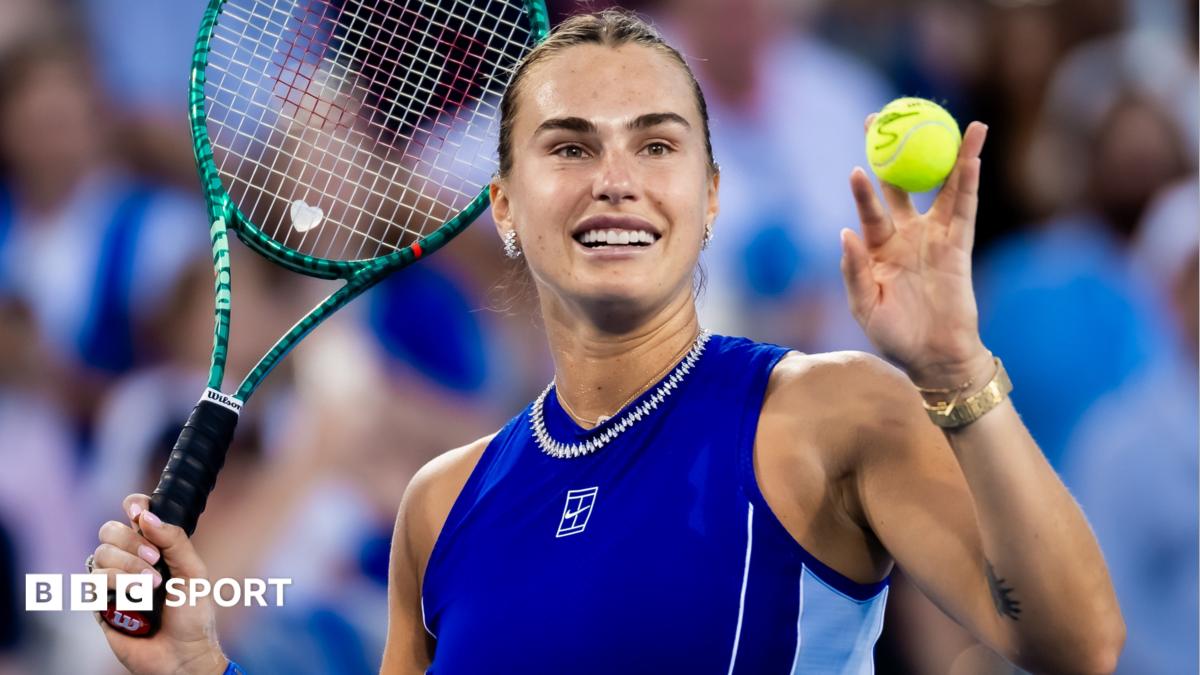
World number one Aryna Sabalenka needed just 54 minutes to reach the Cincinnati Open fourth round – but Daniil Medvedev could not hide his frustration after missing three match points in a surprise defeat.
Sabalenka did not face a break point in a 6-1 6-3 win over China’s Wang Xinyu.
The Belarusian lost only six points in eight service games and committed just five unforced errors to 17 winners in a composed performance.
It was Sabalenka’s easiest win for some time following her fourth-round Wimbledon exit and an early loss in Canada last week.
“To get this win in under an hour [is] an insane result and I’m so happy to be through,” the 28-year-old said.
“I think I really trusted myself and I was going for my shots without overthinking.
“That was the weapon of tonight’s match.”
Sabalenka is the two-time defending champion at the US Open, which begins on Sunday, 30 August.
No woman since Serena Williams in 2014 has won the New York title three times in a row.
Sabalenka’s position as world number one is also under threat from Australian Open champion Elena Rybakina.
Four-time major singles champion Sabalenka had a 354-point gap over Rybakina going into Cincinnati.
Rybakina must reach the final to have a chance at surpassing Sabalenka. If Sabalenka reaches the quarter-finals, Rybakina would need to win the title to become world number one.
Sabalenka will face Czech Sara Bejlek for a place in the last eight.
Earlier, fourth seed Medvedev lost his cool after squandering a match-winning position against Brandon Nakashima.
The Russian had fought back from 5-2 down in the first set to take it on a tie-break and had three match points on the American’s serve at 5-4 in the second.
However, Nakashima saved them and won a subsequent tie-break – then ran away with the third set to win 6-7 (3-7) 7-6 (7-4) 6-1.
Medvedev hurled his racquet at the electronic boards at the back of the court – briefly breaking it – after missing the match points.
He also kicked the screen and knocked over several microphones after committing 51 unforced errors in a poor display.
“Down match points, I was just trying to tell myself to keep fighting for every point,” Nakashima said.
“I’m super happy with the level in the third.”
>
Sports
The strange life of a national anthem singer: ‘I repeated ‘king’ over and over. I had to get ‘queen’ out of my head’
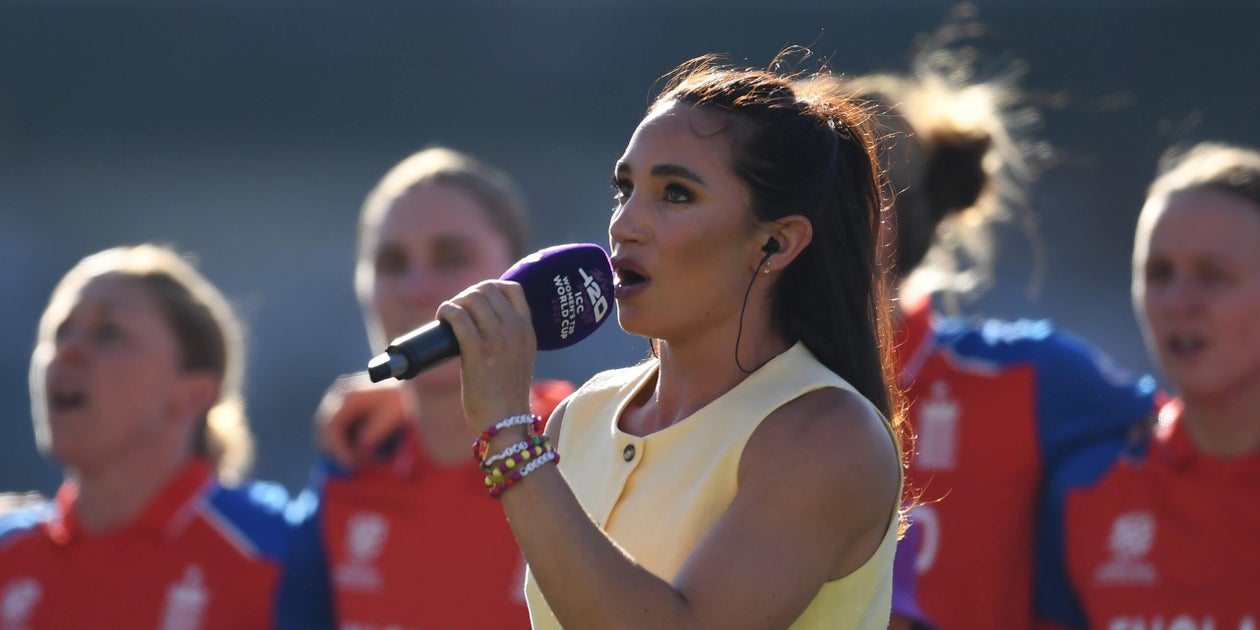
Laura Wright knew it would be no everyday performance when she stood in front of a packed Oval four years ago and prepared to sing the national anthem.
The mezzo-soprano was already vastly experienced in singing at sporting events and had carved out a niche for herself as the go-to performer on the big cricketing occasion. But nothing prepared Wright for the honour of becoming the first soloist to sing God Save the King at a public event in 70 years, two days after the death of Queen Elizabeth II.
“It was such an emotional day,” Wright tells The Athletic. “Even though only one word of the anthem was different it was such a massive change and I was very nervous. A cricket crowd felt like the best environment to be in on that day. They were so respectful and calm and I remember people almost holding their breath before I sang ‘king’ for the first time.”
There was no need for anyone to be concerned as what followed was an historic and word-perfect a cappella performance by Wright — followed by the equally impressive feat of singing the anthem of England’s opponents that day, South Africa, complete with its five languages.
“Whether you’re a fan of the royal family or not, it was a huge moment,” says Wright. “It was just it being so new and how important it was to get it right. I practised over and over beforehand repeating the word ‘king’ and I had to tell my family ‘please, no one say queen to me’ for weeks. I needed to get that word out of my head. It was banned from conversation.”

Laura Wright performed God Save the King after the death of Queen Elizabeth II (Phil Brown)
The ‘new’ anthem in honour of King Charles III has become second nature now to Wright, who is as familiar a face at the start of Test matches in England as the players.
After training at the Royal College of Music, combining her twin loves of music and sport has created a flourishing career. Wright has sung all over the world, and is regularly heard before rugby union internationals, NFL games in London and boxing bouts. It all started in her native Suffolk.
“I was asked to sing at Ipswich Football Club when I was 16,” says Wright, now 36. “They knew I’d become a signed artist by then and that I was a local girl, so they asked me to sing at Sir Bobby Robson’s memorial game.
“All of his old players and friends along with his wife were stood in a circle as I sang ‘My Way’, and I remember standing there thinking: ‘This is magical’. Just seeing all those football fans joining in. I thought it was incredible and moving and from that moment I was always searching for that feeling again.”

Laura Wright sings the national anthems ahead of England Women’s game against France in November 2020 during Covid-19 (Julian Finney/Getty Images)
The feeling came again when Wright, who played hockey, netball, tennis and javelin at county level in her teens, turned her hand to rugby.
“I was playing at Rosslyn Park a few years later and England Rugby were interested in having anthem singers,” she says. “I said: ‘Let’s build something and create a story’.
“I loved the sport, played it and understood it, and felt it would be great to build a relationship with the crowd so that the singing of the anthem became something even bigger.
“It moved from that into writing music for sporting events like the Invictus Games for Prince Harry, and then I got involved in cricket. I wanted to work in women’s sport and help it grow so I wrote a song for the England women’s team called Heroes ahead of the 2017 World Cup and my cricket went on from there.”
Wright will take that involvement to the next level at Headingley on Wednesday when she performs not only God Save the King but also Qaumi Taranah, the Pakistan anthem, in Urdu.
It follows her singing the Indian anthem, Jana Gana Mana, in Bengali ahead of each of the men’s Tests against England last year, and before the first women’s Test at Lord’s last month.
“It’s such an honour to be asked to sing any anthem, and I’d never take it for granted,” says Wright. “The Indian and Pakistan ones are real challenges and when I’m asked I really do think about it before I say yes because I have to be sure I can get it right.
“I need to know I’ve got enough time to learn it and I’ve been working on Urdu for the last six months. This is not someone saying: ‘Can you come in and sing Jerusalem’. It’s much bigger than that, but this will be a huge privilege for me and I just hope to do it justice.

Laura Wright sings the anthem ahead of an England Test match (Phil Brown)
“Singing the Indian anthem for the first time was probably the most nervous I’ve ever been. When you study classical music you’re given a basic understanding of Italian and German, but when you do anthems you come across so many different languages.
“I spent so long listening to the Indian anthem and time with two or three people speaking it so I could listen to the pronunciation, the phrasing and understand what the words meant. That’s part of this career that people don’t see.”
Working in sporting stadiums rather than opera houses can provide its challenges. “I’ve had some difficult situations,” she admits. “There was one occasion at Twickenham when my microphone just didn’t work. It was totally out of my control but the crowd started singing along, almost for me, until I got a replacement mic and there was then this big cheer. It was fine in the end, but it was a quite stressful moment.
“Then there was the time I was singing the anthem at Wembley Stadium before a Tyson Fury fight and that was a cappella. It was on St George’s Day and there were lots of England flags and everyone was so loud singing the anthem I could barely hear myself.
“I had to almost close my eyes and hope I was in tune and on time and doing the right thing at the right moment. The sporting environment can be quite tense at times in the nicest possible way.”

Laura Wright sings the national anthem prior to Miami Dolphins’ game against the New York Jets at Wembley Stadium in October 2015 (Bryn Lennon/Getty Images)
Wright has become used to mixing with royalty — “I met the late Queen and the Duke of Edinburgh and they were lovely, kind, generous people” — and her sporting heroes, but she remains starstruck whenever she meets one team and one player in particular.
“For me the 2003 England rugby team stand out,” she says. “I met a lot of them during that time after they’d won the World Cup and I was singing at Twickenham.
“When I met Jonny Wilkinson I was like Martine McCutcheon in Love Actually. I went to speak and no real words came out. I thought I would say something really cool and nothing came out.
“You put your heroes on a pedestal and you always imagine you’d have this amazing conversation with them, and then the moment is over in a flash.”

Laura Wright tries her hand at batting (Phil Brown)
There now remains just one sporting event in particular where Wright would like to perform. “I think they should have a performance at Wimbledon again because it’s been a long time since Sir Cliff Richard sang there,” she adds with a smile.
“They don’t often have music and it’s such an iconic place. It would be very exciting to see whether I could ever do something there.”
>

Why Liverpool, Chelsea and the Premier League elite are worth billions

Cincinnati Open: Aryna Sabalenka wins but Daniil Medvedev’s frustrations boil over

The strange life of a national anthem singer: ‘I repeated ‘king’ over and over. I had to get ‘queen’ out of my head’
-

 movies3 months ago
Search For Canadian TV Actor Stewart McLean Now Homicide Investigation
-

 Fashion9 years ago
These ’90s fashion trends are making a comeback in 2017
-
Fashion9 years ago
According to Dior Couture, this taboo fashion accessory is back
-
Fashion9 years ago
Model Jocelyn Chew’s Instagram is the best vacation you’ve ever had
-
Fashion9 years ago
Emily Ratajkowski channels back-to-school style
-
Fashion9 years ago
9 Celebrities who have spoken out about being photoshopped
-
Fashion9 years ago
Your comprehensive guide to this fall’s biggest trends
-
Fashion9 years ago
A photo diary of the nightlife scene from LA To Ibiza