
Sports
Why Liverpool, Chelsea and the Premier League elite are worth billions

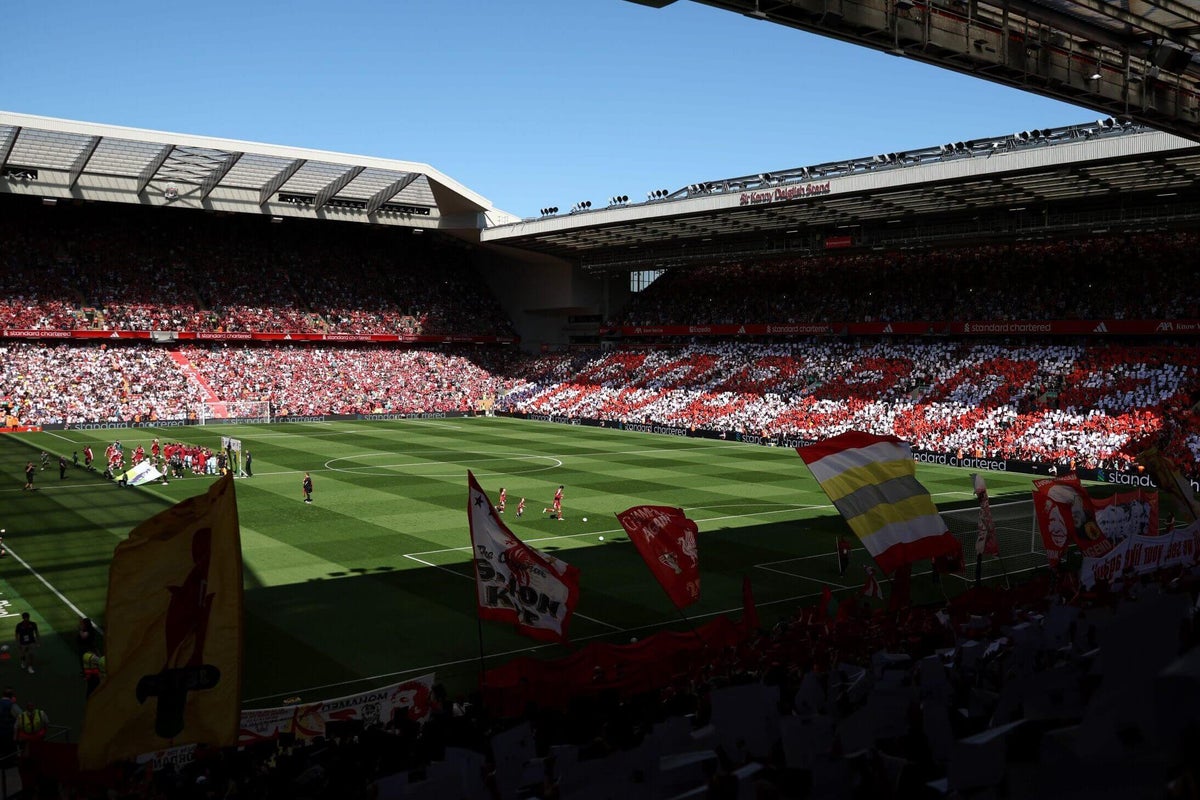
There is the potential to eventually grow numb to the finances of a Premier League summer.
Up the transfer fees go, higher and higher across the board. Already, there has been more than £2billion ($2.71bn) spent in this window and another fortnight remains for further investment in new players.
The numbers are vast and climbing again but during the countdown to another season, beginning on Friday night, there has been another timely marker to illustrate the rapid financial growth of the Premier League and its elite.
The value of English football’s biggest clubs is spiralling. Fenway Sports Group’s decision to sell a 38 per cent shareholding in Liverpool to a consortium including Amit Bhatia and Amazon founder Jeff Bezos lifted the bar to new heights last week. The investment attaches a valuation of around £5.5bn to Liverpool, eclipsing the 2024 arrival of Sir Jim Ratcliffe into Manchester United, where a 25 per cent stake had valued the club at £4.3bn.
Chelsea, too, are back around the table talking big. Todd Boehly and Mark Walter are in talks to sell their 12.8 per cent shareholdings to co-owner Clearlake Capital in a proposed deal widely reported to value Chelsea at £5bn. It is unclear if Clearlake will proceed at that price but it would be more than double the £2.3bn spent on buying the club from a sanctioned Roman Abramovich in 2022.
The figures are stretching beyond what most industry experts — such as Forbes and Sportico — consider to be the value of these clubs. International advisory firm Football Benchmark, another to compile annual assessments of Europe’s biggest clubs, valued Liverpool at between £3.9bn and £4.2bn in its 2026 rankings, with Chelsea listed at between £2.5bn and £2.7bn.
Investors, though, are clearly seeing something different. The Athletic assesses why.
What factors are driving up the value of the Premier League’s biggest clubs?
Growth, ultimately — both that which has happened over the last decade and which could still take place.
More than £3.1bn was distributed centrally among the Premier League’s 20 clubs last season, almost double the £1.63bn handed out in the 2015-16 campaign. It means the biggest clubs, including Liverpool, can now expect to generate annual revenues north of £700m, with aspirations to eventually follow Real Madrid beyond the £1bn mark in the years to come. Matchday revenues are also rising, along with commercial gains. The latter for Liverpool was £323m in their most recent accounts (2024-25), five times what it was at the point of FSG’s arrival in 2010.
That is not to say most of the Premier League’s big hitters are profitable. Losses are commonplace in a market where revenue growth has not kept pace with rising transfer fees and wages. Liverpool, the Premier League’s most profitable club, have only marginally broken across the FSG era (below).

“The scarcity value of owning a Premier League club is essentially driving up the prices,” says Christina Philippou, associate professor in accounting and sport finance at the University of Portsmouth.
“English football clubs, even at Premier League level, aren’t supremely profitable. In fact, they’re likely not to be profitable at all. That makes these valuations very hard to understand unless you look at the more exogenous factors.
“If you look at the kind of people around sports franchises, a lot of them are in tech and those types of industries. It is more about diversification into an industry they feel is less likely to be impacted and more likely to retain value.”
The profile of investors in English football clearly echoes that belief. An influx of money from the United States has altered the ownership landscape beyond recognition in the last 20 years, with private equity groups, such as Clearlake, seeing an opportunity for long-term returns.
“The commercial aspects are what you’re looking at to drive valuations above and beyond what we can measure on an income statement and balance sheet,” says Dan Plumley, senior lecturer in sport finance at Loughborough University.
“These U.S. investors still see Premier League clubs being undervalued in comparison to the U.S. franchises and see value to extract, whether that’s through new broadcast initiatives or subscriptions, monetising fans all around the globe. They still see growth in those markets.”
Are any of these English clubs worth it?
The multi-billion-dollar question.
England’s two biggest clubs, Manchester United and Liverpool, were the only two to feature in Forbes’ most recent top 50 most valuable sports teams, with Liverpool considered to be on par with the Detroit Lions and Toronto Raptors in joint 48th. It was estimated that 29 NFL teams carried a greater theoretical price tag, and only last week was the $12bn sale of NBA team LA Lakers to Josh Kushner, the investor at the heart of the attempted FIFA takeover, agreed.
Attaching a value to any sporting organisation is fraught with difficulty and was explored at length here by The Athletic’s Chris Weatherspoon last year. A variety of formulas can be used but the valuation of a football club, unlike average businesses, is a process lacking maturity.
The easiest starting point used to be a revenue multiplier, with a final figure finessed by other factors such as assets, stadium and brand. A mid-table Premier League club might be broadly valued at twice its annual revenues, with the elite clubs valued at five or six times their revenue. Liverpool’s value in 2026 is more like eight times that. Chelsea, meanwhile, would be pushing 10 times if £5bn is being sought.
Whether it is Bhatia and Bezos arriving at Liverpool or Clearlake considering an expanded shareholding at Chelsea, however, there is a sense that these opportunities are rare. There have been small changes to the ownership structures of Arsenal, Manchester City and Tottenham Hotspur in the last decade but without control ever being relinquished. The structures of Europe’s other big hitters, such as Real Madrid, Barcelona and Bayern Munich, also place them out of reach.

Jeff Bezos has bought into Liverpool as part of a consortium with a minority stake (Miguel J Rodriguez Carrillo/AFP via Getty Images)
“These deals don’t come around very often,” says Plumley. “They’re some of the most exclusive clubs in the world and how often do you get the chance to purchase a stake in one or buy them outright?”
The rest of the Premier League will be taking note. Investments into Chelsea and Manchester United set new record values and the sale of a shareholding in Liverpool has set another benchmark. The £305m spent by a Saudi-backed consortium to purchase Newcastle United in 2021 suddenly feels very low.
“Owners are not just looking at numbers, but also capital appreciation,” adds Philippou. “The difference between what they’ve bought it for and what they’re potentially going to sell it for, even having lost money on it.
“These types of deals are definitely going to have people sitting up and saying, ‘Maybe I can get a bit more for what I’m currently selling’. This is not just football, it’s sport in general. Sport still holds a very unique place in the ecosystem because it’s one of the few things people are still happy to watch live.”
That reality carries an increasing premium.
Will these values continue to grow?
There is no indication of a slowdown, at least for the elite. The Premier League has a range of bumper broadcast deals, domestic and international, in place until 2029, while UEFA has also struck its own new and improved TV partnerships, beginning next season and running through to 2031. Those offer financial insulation to the top clubs, even if the competitive Champions League qualification process introduces potential variables.
Then there are the great unknowns that make this a question hard to answer with conviction. Football has faced multiple threats to its future in recent times, such as the European Super League, with increasing revenues as the ultimate goal. The sport might look a whole lot different in a decade but current owners will naturally be encouraged by the newcomers to Liverpool.
“Clubs looking for investment or a sale will naturally be nudging their numbers a little bit higher once those negotiations come along,” says Plumley. “You can even see that, to an extent, with Leicester City. They’re out for full acquisition and the price is £200m-plus as a League One club. As good as the infrastructure is and where they’ve been in the last 10 years, a £200m valuation feels crazy for a third-tier club.”

Broadcast deals are still highly lucrative for Liverpool and other Premier League clubs (Andy Buchanan/AFP via Getty Images)
Leicester, though, stand as an example of the limits. Unlike American sports, where franchises are locked into profitable leagues, there will always be the threat of relegation and shrinking revenues that trouble those considering entry into the English game. Tottenham came perilously close to falling out of the Premier League last season, a fate that would have dramatically altered their valuation.
In the same breath, though, there are the guarantees that hold an attraction. Manchester United have failed to win the Premier League since 2012-13 but have a supporter base like few in the world. A lack of silverware has not stopped the club’s value building and it remains one of the most recognisable brands in sport. Despite all the loss-making in the Premier League, it retains a level of certainty in a world where live sport holds an increasingly unique position.
“It’s a very hard one to predict where we’ll be,” says Philippou. “If you look at other industries, there are a lot who don’t know what they’re going to look like in five years because we’ve had the advent of AI, where the world is changing and also political upheaval.
“There’s been all sorts of stuff we’ve not seen in a very long time and sport is one of the few industries that’s a lot safer with the knowledge of what it’ll look like.”
>
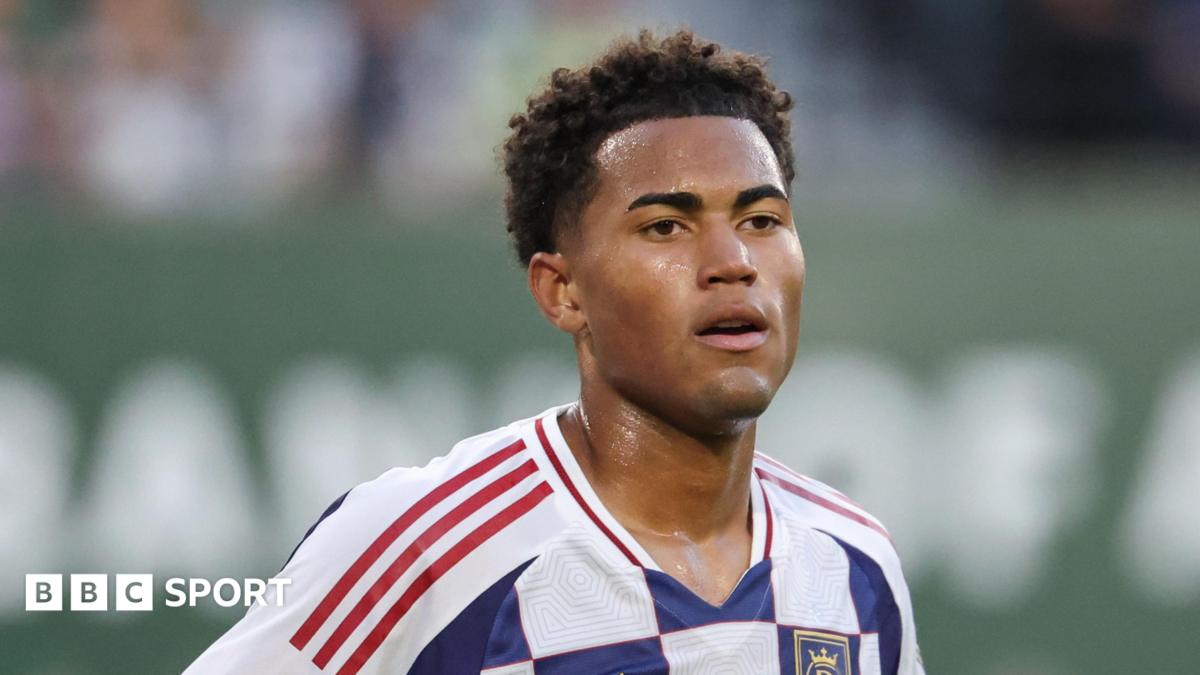
Crystal Palace have signed forward Zavier Gozo from Real Salt Lake for a reported $15m (£11.1m).
The 19-year-old has signed a five-year deal with Palace, subject to international clearance.
Gozo joined the Real Salt Lake academy in 2021 and made his Major League Soccer debut as a 16-year-old in October 2023.
He has scored six goals and made four assists in RSL’s first 16 league games of the year and was selected for the season’s MLS All-Star Game.
The Utah-born prospect has been capped by the United States at every level up to under-23s.
He becomes Palace’s sixth signing of the summer transfer window, following Oscar Mingueza, Takehiro Tomiyasu, Dwight McNeil, Evann Guessand and Anan Khalaili.
Palace start their Premier League season under new head coach Pierre Sage on Saturday at Everton (15:00 BST).
>
Speaking of Haaland, Ibsen says last season’s highest-scoring player was “pretty much constantly” in his team last year.
The City forward is currently the most expensive FPL player of all time at £15.5m, but Ibsen is still planning on including him.
“There’s no-one else like Haaland,” said Ibsen.
“Yes there’s no-one as expensive as him, but you can still make a great team around him because everyone else is so cheap.
“I don’t have to sacrifice a lot. A team with Haaland, Florian Wirtz, Dominik Szoboszlai, Joao Pedro, a good keeper and a good defence is possible.
“Plus, he makes the game really straightforward. If you’re in doubt about who to captain, you always have him. He’s a really nice player to have.”
>
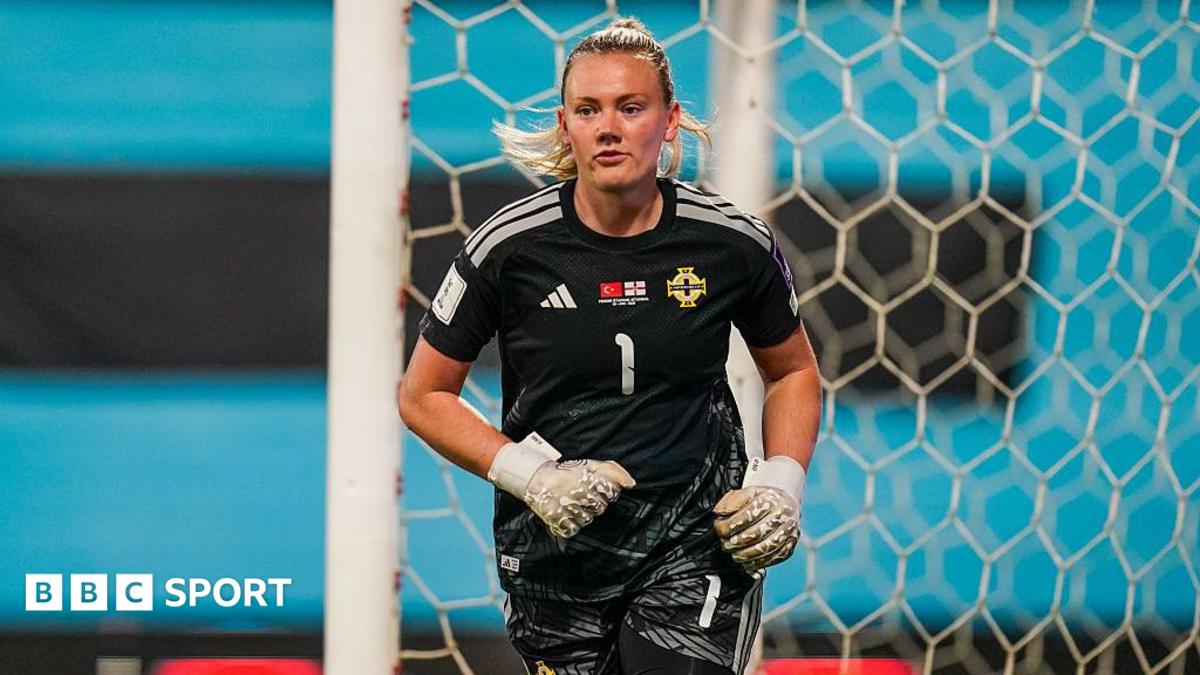
Northern Ireland goalkeeper Jackie Burns is the number one for her country and has just signed for Burnley – but she is already thinking about her next steps.
At some point, the 29-year-old will leave football and she is doing what she can now to prepare herself for a new career.
Across 15 years so far, Burns has built experience playing in leagues across the world, including Iceland, Canada and Sweden.
Along the way she has faced challenges off the pitch, as well as on it, and wants to help players in the future in similar situations.
Speaking about life after football, Burns said: “I have definitely thought about it. I still want to be a part of football in whatever aspect that may be.
“It will probably be in more of a player-care role, just helping players as they progress through a team, and not so much on the football aspect.
“It’s just making sure they are comfortable so it’s not a challenge for them coming in. They are a player in a team – but a person too.”
Burns chose to join newly-promoted Women’s Super League 2 club Burnley this summer having left Bristol City.
She hopes to use her experience to help others settle in and said a big part of her decision to join was Burnley’s willingness to support her post-career ambitions.
The goalkeeper feels that support from Burnley puts “value on her” as a person.
“[I want to] feel heard as a person and they really inspire me in that aspect,” said Burns.
“I’ve been to a few places and while you’re always excited to go, sometimes it can be a challenge. You don’t know what way things work.
“It’s basic stuff like getting a house or a car which can be quite complicated if you’re not from that country.
“If you have someone in a club who can help take that stress off you, it just makes the experience a lot easier.
“It can go unseen sometimes. For a lot of players, as soon as they feel valued, it just turns into an easier experience.”
>

Crystal Palace transfer news: United States prospect Zavier Gozo joins on five-year contract

Fantasy Premier League: Five tips from last season’s FPL champion

Northern Ireland GK Jackie Burns on plans for life after football
-

 movies3 months ago
Search For Canadian TV Actor Stewart McLean Now Homicide Investigation
-

 Fashion9 years ago
These ’90s fashion trends are making a comeback in 2017
-
Fashion9 years ago
According to Dior Couture, this taboo fashion accessory is back
-
Fashion9 years ago
Model Jocelyn Chew’s Instagram is the best vacation you’ve ever had
-
Fashion9 years ago
Emily Ratajkowski channels back-to-school style
-
Fashion9 years ago
9 Celebrities who have spoken out about being photoshopped
-
Fashion9 years ago
Your comprehensive guide to this fall’s biggest trends
-
Fashion9 years ago
A photo diary of the nightlife scene from LA To Ibiza