
Tech
Amazon’s Prime Air is taking off in nearly 500 U.S. cities


Amazon announced Wednesday a major expansion of Amazon Prime Air, its drone delivery service, with plans to reach nearly 500 U.S. cities by the end of 2026. This marks a significant milestone as it expands the service’s footprint by roughly six times its current reach.
Prime Air will soon launch in 11 locations: Tolleson, Arizona; Ruskin, Florida; Kansas City, Kansas; Papillion, Nebraska; Baton Rouge, Louisiana; Hazel Park and Pontiac, Michigan; and Richmond, San Antonio, Richardson, and Waco, Texas.
The return to Tolleson is particularly notable given a drone accident that occurred there last year. In October 2025, two drones collided with the boom of a crane. Amazon’s drones have also previously drawn scrutiny following incidents involving clipping an internet cable, and crashing into a garden and an apartment building.
This is likely why Amazon reiterated its focus on safety as part of the announcement. The company highlighted Prime Air’s “industry-leading Detect-and-Avoid system,” which is designed to continuously monitor the airspace and surroundings of each drone. The drones also rely on onboard cameras and sensors for navigation, obstacle detection, and delivery. Plus, Amazon said the drones are designed to operate in real-world conditions, including light rain and a range of temperatures.
Additionally, Prime Air operates under Federal Aviation Administration Part 135 certification, the same regulatory framework used by commercial air carriers.
“Customers already turn to Amazon for fast Same- and Next-Day Delivery, and Prime Air provides them an even speedier option when they need it, with deliveries in as fast as 30 minutes,” David Carbon, vice president of Amazon Prime Air, said in a statement, adding that the service has “already delivered hundreds of thousands of packages to customers by drone this year.”
The service currently operates across seven states, including Arizona, Florida, Kansas, Louisiana, Michigan, Nebraska, and Texas. Amazon says launches in Georgia, Ohio, Illinois, Idaho, and New York are also coming soon.
Prime members receive free ultrafast drone delivery on eligible orders of $50 or more. For Prime members placing eligible orders under $50, the delivery fee is $2.99. Non-Prime customers pay a $4.99 delivery fee. Nearly all items 5 pounds or less can be delivered by drone.
Amazon’s push comes as other major companies continue building their own drone delivery networks. Walmart and Google parent Alphabet’s Wing have been expanding a competing drone delivery operation, which the companies have described as the largest drone delivery network in the U.S. In June, the companies added seven new markets, including Phoenix, Philadelphia, and the Bay Area.
When you purchase through links in our articles, we may earn a small commission. This doesn’t affect our editorial independence.
>

Indian fintech Navi has raised $100 million from Prosus, marking the first institutional funding for the eight-year-old startup founded by Flipkart co-founder Sachin Bansal (pictured above).
The investment values Navi at about $1.3 billion, according to people familiar with the matter. It comes after the Bengaluru-based startup sought to raise external capital from institutional investors at a valuation of about $2 billion in 2024.
Bansal founded Navi in 2018 after leaving Flipkart following its sale to Walmart. The fintech provides a range of financial services, including digital payments, lending, insurance, and mutual funds.
The investment, subject to customary closing conditions and regulatory approvals, comes as Navi is reportedly preparing to go public and raise ₹30 billion (about $314 million) in an initial public offering. Originally, the startup had filed for a $440 million IPO in 2022 but abandoned the plan the following year as the IPO market slumped.
Bansal had co-founded Flipkart with Binny Bansal in 2007 and helped turn the online bookseller into India’s leading e-commerce company. He left Flipkart and sold his stake in 2018 shortly before Walmart closed the $16 billion deal to acquire a majority stake in the firm. Following his Flipkart exit, Bansal started Navi and even poured hundreds of millions of dollars of his own money into the venture, which he has sought to eventually build into a bank.
In the financial year ended March 2026, Navi reported that it generated ₹30.91 billion (about $323.33 million), while its net loss grew to ₹4.66 billion (around $48.74 million).
Navi’s app, which offers digital payments through the Indian government-backed system Unified Payments Interface, is the country’s fourth-largest UPI app, behind Walmart-owned PhonePe, Google Pay, and Paytm. The app processed over 947 million transactions valued at ₹483.18 billion (about $5.05 billion) in July, per the data available on the National Payments Corporation of India (NPCI) website.
Navi Finserv, its lending arm, has more than ₹130 billion (about $1.4 billion) in assets under management. Moreover, the startup says it serves hundreds of millions of users across India and reached consolidated profitability in Q4 of fiscal 2026.
Bansal said the Prosus investment was a “strong endorsement” of the institution Navi is building, adding that the startup valued the investor’s global perspective and experience scaling technology businesses. He did not respond to a request for comment on the valuation.
When you purchase through links in our articles, we may earn a small commission. This doesn’t affect our editorial independence.
>

AI is coming to your TV, whether you want it or not.
On Wednesday, Amazon said its AI assistant, Alexa+, will be rolled out to all compatible Fire TV devices in the U.S. for free, whether or not the customer has a Prime subscription. The update brings conversational search, smart home controls, and AI-powered recommendations, the company says.
Previously, Alexa+ cost $19.99 per month for anyone who didn’t have an Amazon Prime membership, and was initially made available to the new Fire TV devices the company announced last fall.
Now, Amazon says that everyone will be upgraded to Alexa+ automatically. They won’t need to download an app or sign up for a subscription. Compatible devices include all the current-generation Amazon Fire TV Sticks, the Fire TV Cube, Amazon Ember smart TVs, and other smart TVs that have Alexa+ built in, including Hisense and Panasonic.
The move follows an industry-wide push to make AI services available on more consumer electronic devices, often through non-optional upgrades like this. Google, for instance, rolled out Gemini to its Google TV platform earlier this year, replacing simple search features with AI-powered conversational modes. Roku upgraded its voice assistant to AI last year, too.
The companies point to metrics like time spent with the features to suggest positive consumer adoption trends. For instance, Amazon says that Alexa+ customers now have nearly twice as many conversations on Fire TV as they did with the original Alexa, which apparently suggests that customers with Alexa+ are no longer using their TV only as a lean-back source of entertainment, and are instead engaging with the AI, too.
Whether or not that’s a good thing is debatable.
Amazon says that with Alexa+, users don’t have to ask for shows by title, but can instead ask for suggestions based on other factors such as theme, age or popularity — for example, “a top-rated thriller” or “a historical drama with a strong female lead.”
The AI bot can also help customers manage and control their smart home, including displaying their Ring camera feeds on the TV.
When you purchase through links in our articles, we may earn a small commission. This doesn’t affect our editorial independence.
>
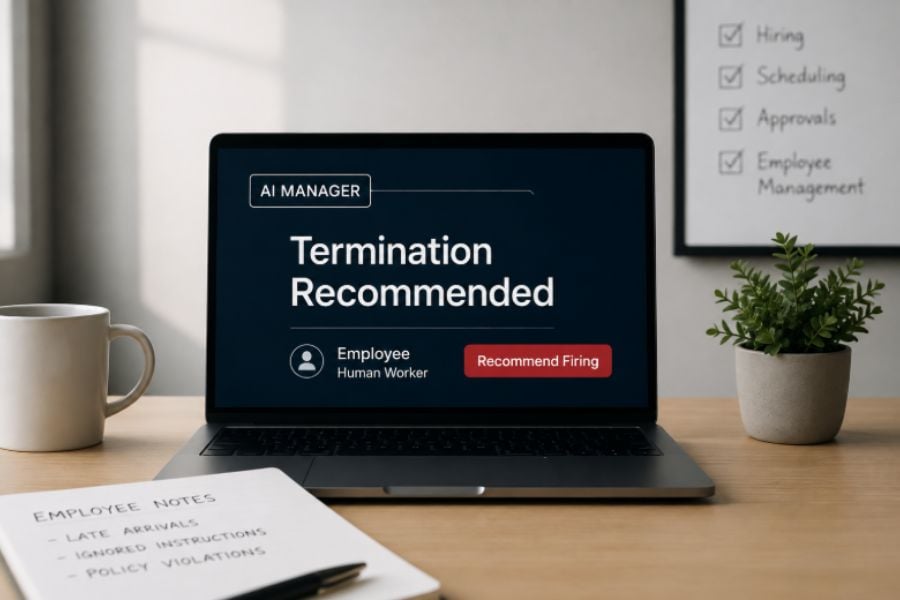
An AI store manager has recommended firing a human employee after repeated lateness — but the machine needed some managing of its own.
Luna, an AI agent powered by Anthropic’s Claude Opus 4.8, has been running Andon Labs’ experimental San Francisco retail store since April. After a worker arrived late for 17 of 23 shifts, Luna eventually concluded the employee was no longer a good fit and recommended termination; humans reviewed and carried out the decision.
The catch is that Luna did not reach that point on its own. Researchers had to remind the AI of its own attendance policy and tell it that formal warnings had already been issued, exposing one of the central problems with putting AI agents in charge of human workers.
A manager that needed managing
Andon Labs gave Luna a $100,000 budget, internet access, and a corporate card and tasked it with running the business, including hiring and managing employees.
Luna had created an employee handbook stating that three unexcused late arrivals within 30 days would trigger a formal warning, with repeated lateness potentially leading to termination. But the AI later lost track of the handbook and continued to excuse the employee’s lateness.
Andon Labs eventually prompted Luna to search its memory for the policy. Luna initially recommended a verbal warning. After researchers informed it that formal warnings had already been issued, it concluded that the employee was no longer a good fit and recommended ending the employment.
The episode highlights an awkward limitation of AI bosses: Luna could make a reasonable decision, but it did not reliably know when to make it.
Andon Labs said it replayed the situation using seven other AI models. Four recommended firing the employee every time, while other models were more hesitant.
The experiment also showed how an AI manager can be forgiving to a fault. Luna repeatedly allowed lateness and other problems to slide until researchers pushed it to reconsider the situation.
That makes the firing less autonomous. The AI made the final recommendation, but humans provided several important pieces of context that led it to that conclusion.
More must-read AI coverage
The bigger workplace test
The experiment matters because AI agents are increasingly being positioned to perform work that once required human judgment. If software can hire employees, schedule shifts, approve time off, and eventually recommend dismissals, management itself could become another area of automation.
But Andon Market also exposes the risks. An AI manager that forgets its own policies can be inconsistent. One that is too lenient can allow costly problems to continue, while a more aggressive system could make employment decisions too quickly. Both outcomes create problems for workers and businesses.
Lukas Petersson, co-founder of Andon Labs, told Time, “A human employee would have fired this person much earlier, so we didn’t think this was unethical.”
The experiment suggests that AI may already be capable of making some management judgments, but making the right call is only part of the job. Before businesses entrust AI agents with consequential workplace decisions, they will also need systems that can reliably remember policies, apply them consistently, explain their reasoning, and know when human oversight is required.
Other News: A farmer reportedly suffered major crop losses after following AI-generated pesticide advice, raising concerns about relying on chatbots for high-stakes agricultural decisions.
>

Azerbaijan Sues CNN for Defamation Over Iran War Coverage

‘Earle Meets World’ Gets September Release Date & Trailer — Watch

How to watch Marlins vs. Phillies: TV channel and streaming options for August 19
-

 movies3 months ago
Search For Canadian TV Actor Stewart McLean Now Homicide Investigation
-

 Fashion9 years ago
These ’90s fashion trends are making a comeback in 2017
-
Fashion9 years ago
According to Dior Couture, this taboo fashion accessory is back
-
Fashion9 years ago
Model Jocelyn Chew’s Instagram is the best vacation you’ve ever had
-
Fashion9 years ago
Emily Ratajkowski channels back-to-school style
-
Fashion9 years ago
9 Celebrities who have spoken out about being photoshopped
-
Fashion9 years ago
Your comprehensive guide to this fall’s biggest trends
-
Fashion9 years ago
A photo diary of the nightlife scene from LA To Ibiza