
Sports
LASK 5-1 Celtic AET (agg 5-4): ‘Celtic deficiencies laid bare on another night of Champions League pain’

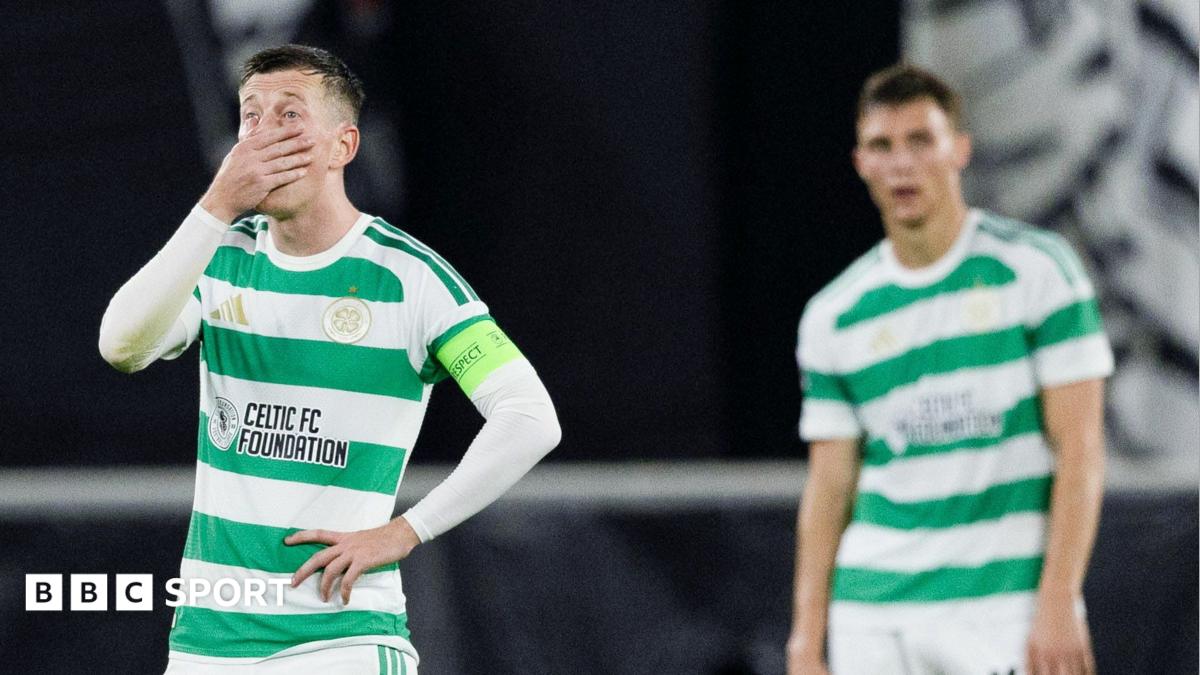
It was McGregor who opened the scoring on the night, a deflected shot and a 4-0 lead on aggregate.
LASK had started well but that goal looked to all the world like a kick to their solar plexus. They had chances in Glasgow and they had chances in the opening minutes in Linz – and they were 4-0 down!
How many punches can one team take before they lose their fight? Many, as it turned out.
Celtic were obliging, of course. Painfully so. We trumpeted their classy goals and their adventurous play a week ago and wrongly assumed that they had gumption to go with it. Big mistake. When Benjamin Nygren’s ridiculously loose pass led directly to LASK’s equaliser on the night, the first signs of a wobble were visible.
Thirty-two minutes had been played and Celtic didn’t look wholly comfortable at 4-1 on aggregate. Mad, but true. When they conceded again three minutes into the second half, there were a few jelly legs on show. Auston Trusty was culpable this time. Brushed off the ball. Swatted and 4-2 now.
Trusty was poor, not the only one, but a point of real weakness that LASK went for.
Ten minutes after the hosts scored their second, they scored their third. Too many parts of the Celtic team were in full fright mode now. The slow death was picking up pace.
Camilo Duran, the hero of the first leg, was reduced to a non-event. Kasper Hogh worked hard but with no impact. Passes went astray. Celtic were directionless. Everything fell apart. Rabbits in headlights don’t tend to look as lost as Celtic did when the pressure really hit.
If McGregor was trying to put out fires in his own team he was failing. He could not cut through the tension.
Martin O’Neill looked on like a man 10 years older than his true age. This was a shocking night for him. One of his worst in football, he said later. He took responsibility, but he can’t be alone in that.
He emptied his bench in a desperate attempt to stem the flow, but his substitutions, five in 12 befuddled minutes, had zero impact.
Celtic did not have a shot on target in the second half of normal time nor in extra-time. They only existed as a man hanging off a cliff edge exists. There was only one way this was going to end.
LASK’s fourth goal might have come in the 90th minute but it was deserved.
By that point they’d had 33 shots on Celtic’s goal (they finished on 40) to go with the 20 from last week. It was a rout.
Cameron Carter-Vickers was hobbling about on one leg. Hogh much the same. Forward came the waves and Celtic tried to hold them back with a back four of Anthony Ralston, Dane Murray, Trusty and Liam Scales.
The fifth goal was a mercy, and another Celtic player doing the wrong thing at the wrong time in the wrong place. For Nygren and Trusty read Luke McCowan. Hapless and helpless – and out of the Champions League.
>
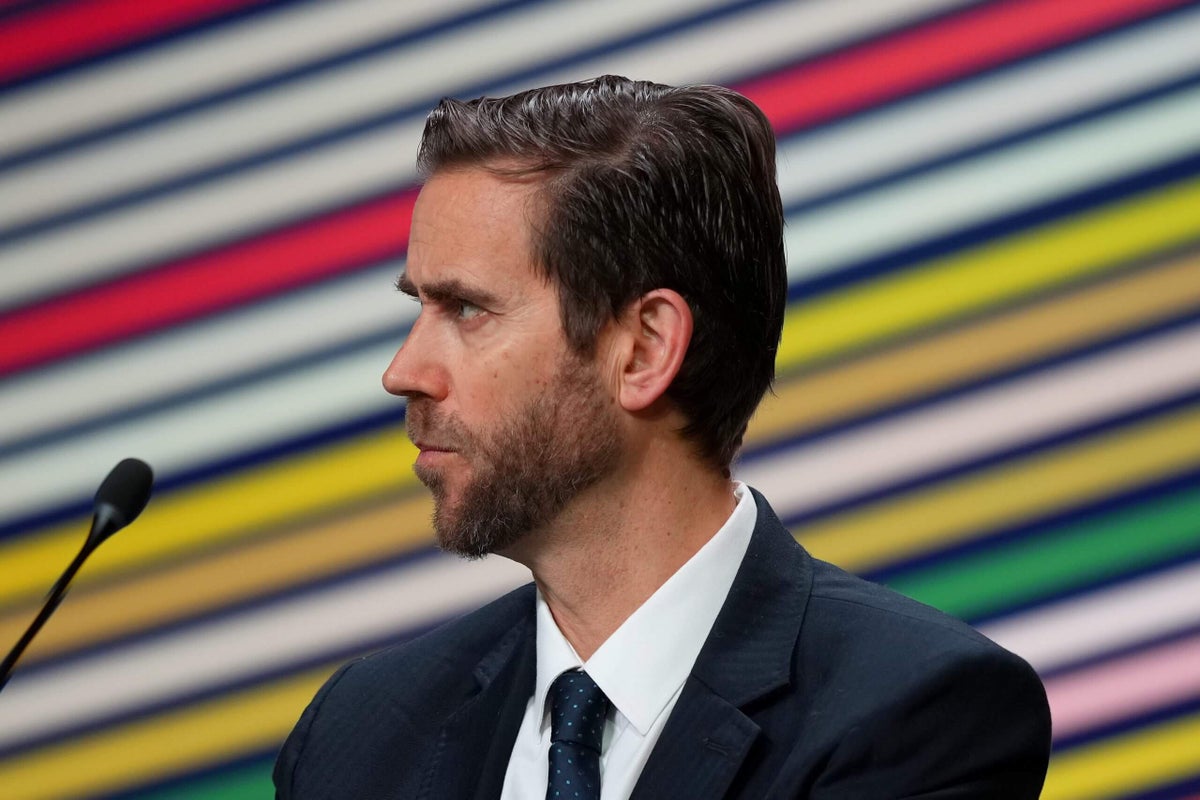
European Leagues president Claudius Schafer believes Gianni Infantino has “no future at FIFA” but says reforming football’s global governing body is more important than simply replacing its leader.
In an exclusive interview with The Athletic, Schafer said the current crisis at FIFA has been building for years because of Infantino’s “increasingly centralised and personalised” approach to leadership and his total failure to consult with key stakeholders on decisions that impact clubs, fans, leagues and players around the world.
It was this refusal to consult that forced European Leagues, which represents the interests of 53 men’s and women’s professional leagues in 34 countries, including the so-called ‘big five’, to lodge a formal complaint with the European Commission against FIFA for alleged breaches of European competition law.
That was almost two years ago and Schafer, a lawyer-turned-football-administrator who also runs the Swiss Football League, is very confident that recent events will only bolster European Leagues’ case, making it almost certain that the Brussels-based commission will open an investigation into FIFA’s decision-making and governance in future.
In the meantime, Schafer is adamant: Infantino must go.
“We are deeply concerned about his leadership,” he said. “We question his suitability to continue as president.
“Here in Switzerland, we’ve had a close view of FIFA and it seems that the influence of the president has grown from year to year. Major decisions are taken without meaningful consultation with stakeholders who will be affected – that’s why we’ve lodged our complaint with the European Commission over the international match calendar.
“Now we have this situation with (FIFA Forward Enterprise) but we also had the case of the (FIFA) Peace Prize last year, which was done without any conversation with the FIFA Council.
The FIFA sell-off scandal, explained
Hannah Vanbiber and Reuben Pinder
“FIFA is an association under Swiss law and in this association you have rules. The president and the board members have to perform their duties with care. This is a legal matter. If you take such a decision (as the peace prize), without even informing the council, that, in my view, is a breach of law.
“And then, during the World Cup we all know about the red card issue (with U.S. striker Folarin Balogun). It was a real scandal. I can’t ever recall a political intervention of this kind relating to a sporting matter. Such acts call the integrity of the game into question.
“That’s why there is no future at FIFA for Infantino. There can’t be.”

Infantino faced an enormous backlash over his plans to privatise FIFA competitions, including the World Cup (Mandel NGAN / AFP via Getty Images)
Infantino was forced to reveal his secret FFE project a month ago but only after it was leaked to the British media. The plan, which involved setting up a subsidiary to run FIFA’s competitions and then selling a stake in that company to private investors, caused a global storm that has split FIFA’s confederations and put Infantino’s 10-year hold on power in serious doubt.
The last month has seen Infantino withdraw the sell-off idea and apologise for working on the plan for so long without sharing the details with senior staff at FIFA, council members or the member associations. The 56-year-old Swiss-Italian, however, has made it clear that he has no intention to quit and will stand for a fourth four-year term next March at FIFA’s congress in Rabat.
He has also spent the last few weeks travelling the globe in an attempt to shore up his support ahead of an electoral showdown with his main critics – the Asian, European and North and Central American confederations – in the Moroccan capital.
Schafer said his members are “fully in line” with the rebels and is confident they will put up a candidate who will beat Infantino. But he is more concerned about what happens next.
“The role and responsibilities of the FIFA president need to be redefined,” he said.
“We we were promised some reforms at FIFA after the arrests at the Baur au Lac in 2015 but then Gianni didn’t follow through. Now, for us, getting these reforms is the most important task and they can only happen with another president.”
The reference to the Baur au Lac relates to the arrests that took place at the luxury hotel in Zurich on the eve of the 2015 FIFA Congress, where former FIFA boss Sepp Blatter was elected for a fifth term. The crisis sparked by those arrests forced him to resign six months later, paving the way for Infantino’s election as the organisation’s saviour.
When asked if Schafer was in favour of reducing the power of the presidency by rotating it between the presidents of FIFA’s six confederations – an idea which is gathering support – he said he was happy to let the current debate play out but added that there is a strong consensus “we never (a president) as powerful as this again”.
He said he is more interested in how FIFA itself will respond to the current crisis, particularly the 37-strong council that Infantino appears to have ignored for several years.
“I’m waiting for some action (from the council),” he said. “Where are they? Is there a meeting planned?”
Schafer believes FIFA’s refusal to deal with its very obvious problems are even more baffling when you consider the fact that the European Commission has been mulling over whether to open an investigation into the governing body since October 2024.
The catalyst for that unprecedented complaint from the leagues was FIFA’s decision to shoehorn an expanded the Club World Cup into an already congested international match calendar, over which it exerts complete control. For European Leagues, this was a clear case of FIFA acting as the game’s regulator but also as a competition organiser. And by favouring its competition over everyone else’s, it was abusing a dominant market position.
Premier League chief executive Richard Masters was asked about this last week when he spoke to a group of reporters ahead of the new season.
“Leagues don’t have a meaningful seat at the table at all,” said Masters. “We’re not consulted on the big decisions.
“We think that’s wholly wrong and that’s why we’ve regrettably had to put in a complaint at the European Commission.”
Some might wonder why the commission has not already opened an investigation, given the seemingly ample amount of evidence that FIFA does not consult before making big decisions, but Masters took a more diplomatic stance.
“The European Commission moves at its own pace,” he said. “The European Leagues team is in pretty regular dialogue with the people there and at some point a decision will be made.”
Schafer believes that decision will be positive for the leagues.
“We’ve had constructive meetings with key people in Brussels who dealing with the complaint along with the Commissioner for Sport (Malta’s Glenn Micallef),” he said.
“We’ve exposed FIFA’s conflict of interest of being a regulator but also a commercial operator, and now everyone can see it. We have also had a series of decisions from the European Court of Justice that support our position.
“We wouldn’t have done this if we didn’t think we had a very strong case. I’m sure the commission will have followed recent events and see that FIFA has a conflicted position.
“It takes time because they have other issues to deal with, not just football, but there is now some urgency with this case.
“We will know more about the timeline when they open the investigation but it will put FIFA under a lot of pressure to reform its governance model. FIFA should be doing this proactively now because, if it delays and the complaints succeeds, it will be obliged to reform and could also face a fine.
“The commission can issue very high fines and that is money that belongs to FIFA’s member associations.”
While Schafer was reluctant to spell out exactly what a “meaningful voice” would entail, it is clear that the leagues want a much bigger say over matters that directly impact the domestic game and, ideally, would have a veto in such decisions.
“We expect to be part of the decision-making process,” said Schafer.
“We want to be at the table. What that looks like in the end is to be decided. We have to find agreements on those matters affecting domestic leagues.
“FIFA is still the global football regulator but, because of their double role, they must admit they need to include stakeholders in the decisions.”
Asked if he was worried that Infantino might be able to exploit the desire of the big clubs to play in the Club World Cup (perhaps even a bigger and more frequent Club World Cup) to put pressure on the leagues to back down, Schafer said: “I think this is worrying and it’s certainly something he has done in the past.
“But in this situation it’s not just an issue for the big clubs – it’s more about the functioning of the whole game. There are 1,300 clubs in our leagues. Domestic football is the basis of football.
“We are not against the Club World Cup. We are not against big clubs looking for ways to play international games. But it has to be in a fair and balanced way and FIFA has to take a more general view and play a more responsible role. It cannot pick sides.
“Let’s go back to FIFA’s statutes and look at its objectives. Yes, it should try to raise money for the associations so they can fund projects. But, first of all, you need the game as a whole to work together. You need to balance the different layers of the game.
“Who is at the bottom of the pyramid? The grassroots game, then it’s professional club football, then international football. We have lost sense of that pyramid.”
Schafer also worries about the increasing strain all these new international tournaments are placing on the best players.
“Rest is really, really important and I’m happy to work on this with (global players’ union) FIFPro,” he said. “These new and enlarged competitions which require more dates are becoming impossible. And if you enlarge the Club World Cup and World Cup again, I’m wondering where you are taking the dates from?
“Sometimes, they’ll say, ‘the leagues should play fewer games, the Premier League should go to 18 teams.’ But I’ll say, ‘you know the Premier League has been that size for decades, why is it fair for you to come up with new competitions but we have to cut ours?’”
The Athletic has contacted the European Commission and FIFA for comment.
>
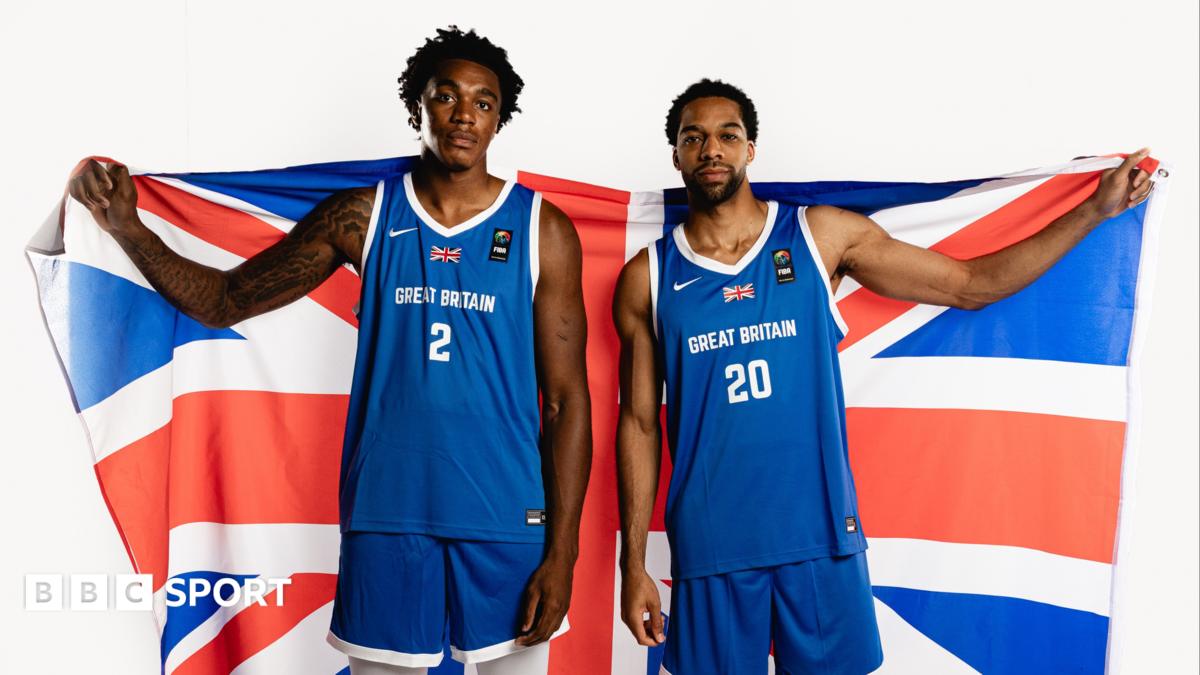
For Evbuomwan and Williams, 24, this double-header on Thursday in Switzerland and then at home to Slovakia in Newcastle on Sunday is set to mark their GB debuts at senior level.
But how the duo have been able to sign up for the latest fixtures is all about timing.
Four of GB’s six first-round qualifying matches for the 2027 Fiba World Cup were in November 2025 and March 2026, which clashed with the NBA season.
But with this window opening in between NBA seasons, as well as those of its European counterparts, the stars aligned for Steutel and his team.
“In the season, guys in the NBA [and] the EuroLeague, we struggle to get. There’s very little ability to be able to do that,” added Steutel.
“We’re right before the start of the season and our general manager has done an incredible job communicating with the Boston Celtics. Tosan is closer to home now with Barcelona.
“They’ve both been really supportive and want those guys to play, so [we’re] really excited.”
GB’s coaching staff have long craved the opportunity to be able to cash in by adding recent NBA players to their squad.
Dan Clark, who featured at the 2012 Olympics alongside two-time NBA All-Star Luol Deng, is now GB’s general manager and has stayed in contact with Newcastle-born Evbuomwan and Williams, awaiting the opportunity to be able to call on the duo.
“It’s not just a ‘this window’ thing, it has taken years,” explains Steutel.
“Tosan is someone who I’ve known for a long time and I’ve followed his journey. He’s someone who has communicated really well with us and Amari likewise. Dan Clark has been communicating with Amari for years.
“We’re able to get the timing right now and get them in a GB jersey. It’s great for the team, but I think it’s great for British basketball on the whole.”
>
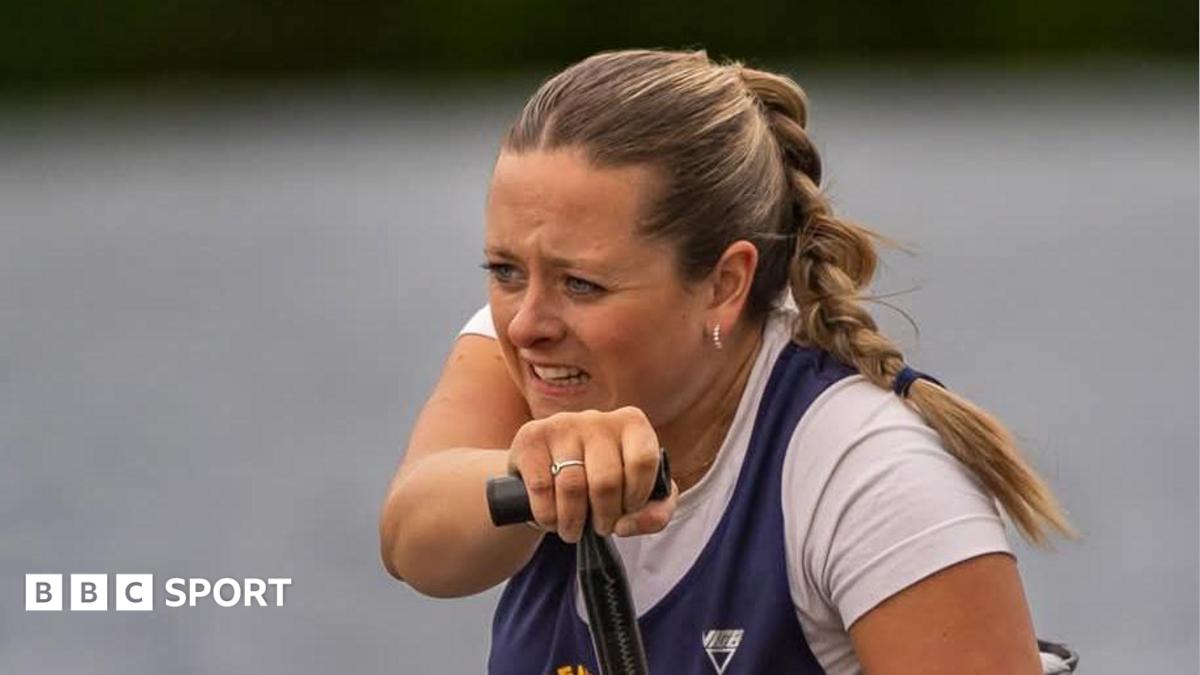
Around a week before she left the spinal unit, Cresswell attended the Spinal Games at Stoke Mandeville Hospital, which is for patients with spinal injuries who are either still in hospital or within a year post-accident, and is an opportunity to try different sports over four days.
You name it, she tried it.
“I got six out of six bull’s eyes and won the archery out of 110 people,” she says.
“It was a great stepping stone to coming home. And I think I kind of held on to that when I came home initially because the first while was really tough at home.”
She left hospital on 8 October and by December had started wheelchair racing, going on to race 10Ks and a half-marathon, also doing wheelchair tennis and basketball.
The trouble was, she didn’t love them.
“I was worried I would never find a sport that I wanted to put my whole energy into,” she says. “I think I knew that horses were my hobby that got to turn into my sport and my career and lifestyle so I didn’t know if that would be possible to find something like that.”
Enter para-canoe.
Cresswell had got chatting to Olympic canoe athlete Deborah Kerr at an event run by the Women’s Sport Trust charity who had told her to “have a go”.
So, on 23 December last year, she did. Winter was “not the time to start a water sport” and she was “not a natural”.
“My coach was too scared to let me off the bank in case I capsized,” she laughs. “And that probably stayed, I don’t think I left the bank for about a month.”
A one-off taster session turned into twice a week and then eventually five times a week on the water. Four-hour training sessions, plus gym work three days a week.
One of the biggest challenges has been staying upright.
“I don’t have any feedback of any part of my body if I am losing balance,” she explains. “So I’m strapped into a seat because I’ve got no core function, but I can’t actually feel that seat. So I basically feel like I’m floating.
“So my only thing I’ve got to know if I’ve lost balance is my head and my eyes. So that took a while to start to hone in and they always say, deaf people hear better than anybody else, don’t they? And I think it’s a bit the same.
“It’s like, I’ve now tuned into how to balance myself without the use of the rest of my body. But I’d say the balance aspect is a big part of it alongside the technical, constant skill-based stuff that needs to be improved.”
It is the technical aspect that she thinks has similarities to equestrian and which is why she thinks she enjoys it so much.
Her progress has been rapid, by anyone’s standards. Not least her own.
“World Championships was definitely not the plan. It was a quiet goal after a while that if I could get the time, I might be able to go,” says Cresswell, who alongside training is also doing media work.
“The time I needed to achieve was, I think, one minute 26 seconds. And anyway, I’m now down to one minute 18. So I’ve kind of over-achieved on that one, which has just been through repetition, practise, finding new ways to do things.”
She has been selected to represent Great Britain at this month’s Canoe Sprint and Para-Canoe World Championships in Poznan, Poland.
Having only ever raced once before in the UK her aims are modest.
“Honestly, stay up and get through the start and finish line,” she says, explaining that she capsized before the start of a race she was due to do in April.
It is more about getting an international classification – which involves a series of medical tests to assess an athlete’s impairment and demonstrating how much of your body you can use when paddling – so that she can be eligible to earn points at events that can lead to qualification for the 2028 Paralympics in Los Angeles.
Could she have pictured this when she was in hospital?
“I certainly wouldn’t have imagined I was going to do para-canoe – I didn’t even know [that] was a sport when I was in hospital,” says Cresswell, who will compete in the VL1 (a canoe with a support float) and KL1 (kayak).
“But to be honest, I think what actually is more kind of crazy in my head is I couldn’t even imagine January me doing this.”
>

Marlo Miazga Debuts M Media With “Deeply Personal” Doc For CBC

‘No future for Gianni Infantino’: European Leagues president calls for FIFA reforms

Ventures Platform goes bigger — and broader — with its second Africa fund
-

 movies3 months ago
Search For Canadian TV Actor Stewart McLean Now Homicide Investigation
-

 Fashion9 years ago
These ’90s fashion trends are making a comeback in 2017
-
Fashion9 years ago
According to Dior Couture, this taboo fashion accessory is back
-
Fashion9 years ago
Model Jocelyn Chew’s Instagram is the best vacation you’ve ever had
-
Fashion9 years ago
Emily Ratajkowski channels back-to-school style
-
Fashion9 years ago
9 Celebrities who have spoken out about being photoshopped
-
Fashion9 years ago
Your comprehensive guide to this fall’s biggest trends
-

 Anime3 months ago
Rurouni Kenshin: Hokkaido Arc Manga Takes 1-Issue Break – News