
Anime
Episode 5 – Hundred Scenes of AWAJIMA


©志村貴子・太田出版/淡島百景製作委員会
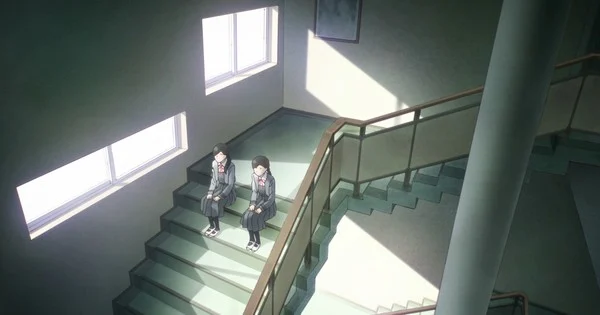
A Hundred Scenes of AWAJIMA is full of surprises. Last week, while it’s not out of character for Takako Shimura to write about gender, I was not anticipating transfeminine feelings so early into the season. This week, similarly, I did not expect religion’s presence, nor the nuance of Asami’s narrative. And these are good surprises, to be clear. I’m happy to see Awajima explore the breadth of ways that art, especially theater, intersects with real life.
Asami’s story is both generalized and specific. We never find out the identity of her parents’ faith, so we can project any number of beliefs or sects onto her experience. I saw an online mutual comparison to her experiences leaving Mormonism. I could recognize some of my own memories growing up in and drifting out of the Catholic faith. Religions all over the world indoctrinate children into their unique collections of beliefs, and it’s tempting to think of those children as unilaterally passive participants. And there’s no doubt that a child growing up in a single-faith household is very likely, through inertia alone, to accept that faith as their own. Many children have no other choice. Yet children are also people who possess autonomy, and there will always be kids like Asami who question and doubt at a very young age.
On the other hand, Asami’s childhood is rooted in a specifically Japanese experience. We intuit that her parents likely belong to a new age cult, of which there are more than a few in Japan. This is a complicated topic that I have not studied to any appreciable degree, but I do know that in the wider cultural sphere, these cults come laden with certain connotations. One such cult, Aum Shinrikyo, perpetrated the 1995 Tokyo subway sarin gas attack. Tetsuya Yamagami, the man who assassinated Shinzo Abe, cited Abe’s financial ties to the Unification Church (a.k.a. the Moonies) as the reason for his actions. Meanwhile, films like Love Exposure and books like 1Q84 use real cults as touchstones for their salacious fictional ones. In short, these facets and more make up the context in which Asami finds herself, and it’s not a good context.
Awajima, however, is characteristically muted in its approach. Asami’s parents do not force her to participate; they’re not abusive, and they seem pretty normal. But this situation nonetheless proves difficult for Asami. Even though she has no desire to join their church, she can’t help but be exposed to it to some extent. She used to go to their youth group. Her parents put up some resistance to her doing a “normal” shrine visit. She gets recognized by another girl who belongs to the church. Moreover, she can’t discount the possibility that she’s already been brainwashed into their doctrines, despite her skepticism. Asami believes she has been fundamentally tainted by her proximity to this unnamed cult, and although she finds herself climbing the golden thread of the Awajima Revue School, she can’t help but feel her parents’ influence weighing down her feet.
I totally get Asami’s frustrations. She can’t bring herself to hate her parents because she knows they love her and support her. However, she can’t help but be frustrated with them and with herself. It hurts to have your own hard work be ascribed to a higher power. It sucks when you can only relate to the kind of people you want to escape from. And it feels awful to sulk behind the walls one constructs to defend their vulnerabilities and insecurities. Asami knows that Awajima is good for her, because it allows her to live by her own values. It’s not an immediate fix. She shrinks from the public bath, projecting a germaphobia that belies her buried self-deprecating truth. But it also gives her a voice that she can explore through art and performance, and that can illuminate a path forward.
This week’s second and final scene focuses on Midori Asaka, a.k.a. Leo Asagami, a.k.a. the heartthrob who made Wakana’s mom swoon last week. Midori, we learn, found her calling through her own infatuation with Reona Tsukasa, another Awajima alum, renowned for her male roles. The anime doesn’t do a full dive into Takarazuka politics, but the otokoyaku players (those who perform as men onstage) have a unique set of cultural mores and expectations, as do the musumeyaku (those who perform as women). The otokoyaku are expected, to some extent, to be more masculine on and off the stage, and we see hints of that in Midori. She states that “Midori Asaka had to become Leo Asagami,” as if Leo is an identity distinct from her usual one. We also see this in practice more humorously when Midori reverts to a fangirl in Reona’s presence, with Midori seeking forgiveness for breaking Leo’s facade in that moment. I would expect, with Shimura’s history of writing about gender, that she will return to this topic in the future, so I’ll leave things here for now. Suffice it to say, gender is pretty darn interesting.
These are scenes from Awajima. They’re not full stories. They have neither a set beginning nor a satisfying conclusion. One student fades into another. Awajima itself exists as a tesseract whose projection and role are in constant flux. This is not an “easy” series. The anime’s website includes a character chart that it has been updating each week, which is a useful reference to have. But it’s also a funny admission of the series’ scope and difficulty. You have to put work into getting the most out of Awajima, and even then, Shimura’s brand of drama might not be to your liking. I count myself lucky that I sync with this series’ wavelength.
Rating:
Hundred Scenes of AWAJIMA is currently streaming on
Crunchyroll.
Sylvia is on Bluesky for all of your posting needs. In high school, you could catch her in the pit orchestra, but never on stage. You can also catch her chatting about trash and treasure alike on This Week in Anime.
The views and opinions expressed in this article are solely those of the author(s) and do not necessarily represent the views of Anime News Network, its employees, owners, or sponsors.
>

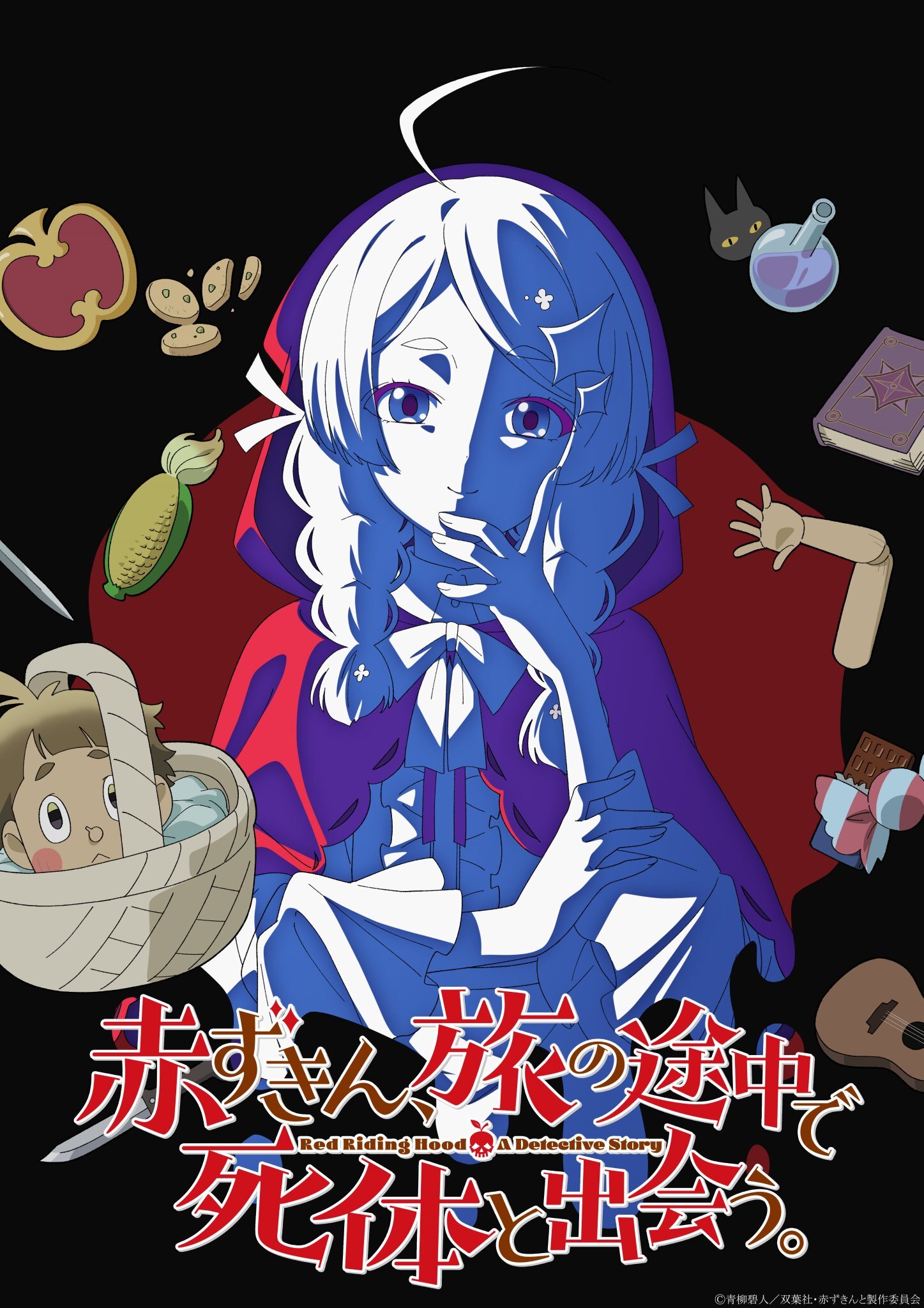 Production company Pony Canyon opened an official website for a television anime adaptation of Aito Aoyagi‘s Akazukin, Tabi no Tochuu de Shitai to Deau. (Little Red Riding Hood…) novel on Monday, revealing the main cast, staff, a teaser visual (pictured), and teaser promotional video. The anime series will premiere in 2027.
Voice actresses Yume Miyamoto (Kanojo ga Koushaku-tei ni Itta Riyuu) and Akira Sekine (Tsue to Tsurugi no Wistoria) are starring as Akazukin (Little Red Riding Hood) and Pinocchio, respectively.
Staff
Director, Screenplay: Itsurou Kawasaki (Oroka na Tenshi wa Akuma to Odoru)
Character Design: Manami Minakata (Babanbabanban Vampire sub-character design), Yuuko Yahiro (Aharen-san wa Hakarenai)
Art Director: Izumi Hoki (Net-juu no Susume), Hiroshi Katou (Shinseiki Evangelion)
Color Design: Chie Yoshimura (Reincarnation no Kaben)
Director of Photography: Rieko Koike (Chanto Suenai Kyuuketsuki-chan)
Editing: Daisuke Hiraki (Sono Bisque Doll wa Koi wo Suru)
Studio: BENTEN Film
Aoyagi published the comedy mystery novel through Futabasha in August 2020. The fourth volume went on sale in July 2025.
Kanoka Tana drew a manga adaptation from January 2023 to May 2025. It was first serialized in Monthly Action magazine before being transferred to Web Action. The fourth and final volume was published by Futabasha in June 2025. The series has a cumulative 600,000 copies of its volumes in circulation.
Synopsis
The fairytale of Little Red Riding Hood is as classic as they come, a familiar delivery of cookies and wine. But on this particular journey, Little Red Riding Hood…encounters a dead body?! As the mystery begins to unfold, familiar faces from other fairytales such as “Cinderella”, “Hansel and Gretel”, and “Sleeping Beauty” bring their own countless twists and tricks. Will she be able to solve the larger puzzle at the center of it all? A new detective is born!
Teaser PV
Official site: https://akazukin-anime.com/
Official X: @akazukin_anime
Source: PR Times
>

The staff for the live-action film based on Muneyuki Kaneshiro and Yūsuke Nomura‘s BLUE LOCK soccer manga confirmed three more cast members on Monday. The film’s staff also announced that the film will screen in MX4D, 4DX, and Dolby Cinema starting on August 21. Additionally, cheering screenings (in which audiences are allowed to shout at and interact with the film) will be held at five participating theaters in Hokkaido, Tokyo, Aichi, Osaka, and Fukuoka.
The newly announced cast members are:
FANTASTICS member Yūsei Yagi as Rin Itoshi

©金城宗幸・ノ村優介/講談社, CK WORKS
Keisuke Watanabe as Jyubei Aryu

©金城宗幸・ノ村優介/講談社, CK WORKS
Omi Natsuki as Aoshi Tokimitsu

©金城宗幸・ノ村優介/講談社, CK WORKS

© 金城宗幸・ノ村優介/講談社, CK WORKS
The cast includes:
Yūsuke Taki is directing the film, and Tetsuo Kamata is writing the screenplay. Shinzō Matsuhashi is serving as a producer. CREDEUS (live-action Golden Kamuy film) is producing the film, and TOHO is distributing.
The film opened in Japan on August 7.
Kaneshiro and Nomura launched the manga in Kodansha‘s Weekly Shōnen Magazine in August 2018. Kodansha will publish the manga’s 40th compiled book volume on August 17. The manga won the Best Shōnen Manga award in Kodansha‘s 45th annual Manga Awards in 2021. Kodansha USA Publishing is releasing the manga in English digitally and is also releasing it in print.
The original manga inspired a television anime series that premiered in Japan in October 2022 on TV Asahi and its affiliates in the NUMAnimation programming block. The anime ran for 24 episodes. Crunchyroll streamed the series as it aired, and is also streaming an English dub.
BLUE LOCK vs. U-20 JAPAN, the second television anime season, debuted in October 2024, and aired for 14 episodes. Crunchyroll streamed the anime as it aired in North America, Central America, South America, Europe, Africa, Oceania, the Middle East, and CIS.
The anime is getting a third season, adapting the “Shin Eiyū Taisen” (New Hero Wars) story.
Kōta Sannomiya‘s BLUELOCK -Episode Nagi- manga spinoff focuses on Seishirō Nagi before he enters the titular BLUE LOCK facility. The manga launched in June 2022 in Kodansha‘s Bessatsu Shōnen Magazine and ended in July 2025. Kodansha USA Publishing is releasing the spinoff manga in print.
The spinoff inspired an anime film that premiered in Japan in April 2024. The film sold 337,000 tickets to earn 463 million yen (about US$2.99 million) in its first three days, and ranked at #2 in the Japanese box office in its opening weekend. The film opened in North America in June 2024. Crunchyroll is streaming the film with subtitles and with several dubs.
Sources: Live-action BLUE LOCK film’s website, Comic Natalie
>
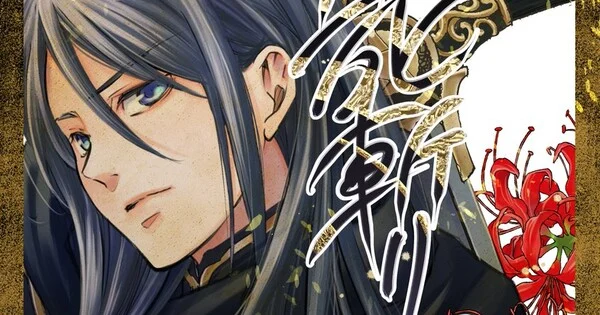
The September issue of Akita Shoten‘s Mystery Bonita magazine announced on August 6 that manga creator Shiori Teshirogi and her younger brother and novelist Shōtarō Teshirogi will launch a four-chapter manga miniseries titled Fushigiri Muichi (Muichi the Slayer of Immortals) in the magazine’s next issue on September 4. Shiori Teshirogi is drawing the art, and Shōtarō Teshirogi is writing the story.
お久しぶりです! やっと告知することが出来ます! 9月4日発売のミステリーボニータにて、久しぶりに『不死斬り夢一』を4話短期連載で描かせて頂く事になりました!原作は弟の手代木正太郎(@syoutarou1981 )になります。 良かったら見て頂けたら嬉しいです。 pic.twitter.com/E9XQg58GSO
— 手代木 史織 (@teshi_kuro413) August 9, 2026
The manga is set during the early Meiji Period, and centers on the titular Tamahashi Muichi, once a secret lawman of the late Shogunate government, and who has now traded his sword for a painter’s brush. That is, until he receives word of the activities of the Restoration agitator Sakamoto Ryōma, who is supposed to be dead.
The Teshirogi siblings previously published a two-chapter manga with the same title and story in Akita Shoten‘s Weekly Shōnen Champion magazine in October 2021.
Shiori Teshirogi launched the Batman and the Justice League manga in Akita Shoten‘s Champion RED magazine in June 2017, and ended it in May 2019. Akita Shoten published four compiled book volumes for the manga. Teshirogi also published the “Justice League Origin: Wonder Woman” one-shot manga in July 2017.
Teshirogi’s Saint Seiya: The Lost Canvas – Meiō Shinwa manga ran from 2006 to 2011, and inspired two OVA series that totaled 26 episodes. Crunchyroll streamed the series, and Discotek released the series on DVD in November 2015. Teshirogi launched the Saint Seiya: The Lost Canvas – Meiō Shinwa Gaiden manga in 2011, and ended it in April 2016.
Shōtarō Teshirogi wrote the Kou-Tetsujo Iron Castle novel, the second part an original manga and novel project in collaboration with Anima, with designs by Yasuo Ohtagaki (Mobile Suit Gundam Thunderbolt, Moonlight Mile). The novel shipped in March 2021.
Sources: Mystery Bonita September issue, Shiori Teshirogi‘s X/Twitter account, Shōtarō Teshirogi’s X/Twitter account
>

How Bryan Abreu returned from the abyss and reprised his role as the Astros’ setup man

‘Hearing’ Review: Vietnamese Slow-Burn Is a Feast for the Senses

Best Friend Forever Boards TIFF Midnight Madness Indian Title ‘Half’
-

 movies3 months ago
Search For Canadian TV Actor Stewart McLean Now Homicide Investigation
-

 Fashion9 years ago
These ’90s fashion trends are making a comeback in 2017
-
Fashion9 years ago
According to Dior Couture, this taboo fashion accessory is back
-
Fashion9 years ago
Model Jocelyn Chew’s Instagram is the best vacation you’ve ever had
-
Fashion9 years ago
Your comprehensive guide to this fall’s biggest trends
-
Fashion9 years ago
9 Celebrities who have spoken out about being photoshopped
-
Fashion9 years ago
Emily Ratajkowski channels back-to-school style
-
Fashion9 years ago
A photo diary of the nightlife scene from LA To Ibiza