
Sports
Honest Ahanor: Chelsea in talks to sign Atalanta and Italy defender

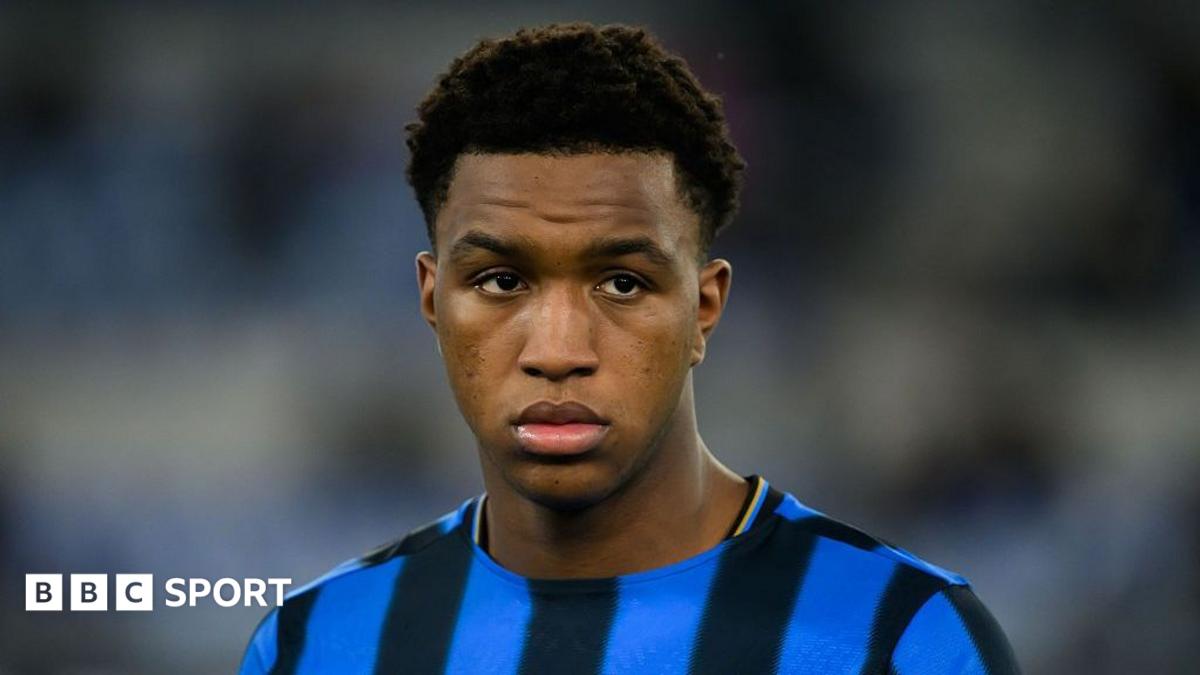
Chelsea are in talks to sign Atalanta defender Honest Ahanor.
The Blues expressed an interest in the 18-year-old Italian when they signed right-back Marco Palestra from the Serie A side in July.
BBC Sport has been told Atalanta are willing to sell Ahanor if their 40m euro (£34.3m) valuation is met.
Ahanor, who mainly plays at left-back, joined Atalanta from Genoa on a three-year deal last summer for a reported fee of 16m euros, plus 4m euros in add-ons.
He made 28 appearances in Serie A for Atalanta last season, establishing himself as a regular starter for the Italian club. He also made his Champions League debut in a 2-1 win against Club Brugge in September.
In May, he was called up by Italy for friendly matches against Luxembourg and Greece.
Chelsea manager Xabi Alonso has been building his squad since taking over at Stamford Bridge in July, signing England midfielder Morgan Rogers from Aston Villa for a club record £117m, and adding experienced Premier League players Danny Welbeck and Jordan Henderson.
Chelsea face Brighton at home in the Premier league on Sunday after beating Fulham 3-2 in their opening match of the season on Monday.
>
Who’s going to win the College Football Playoff this season? It’s hard to imagine preseason prognostications going much worse than last year, when No. 1 Texas missed the Playoff and No. 2 Penn State and No. 4 Clemson played each other in the Pinstripe Bowl, finishing unranked.
Though Ohio State is No. 1 in the AP Top 25 and the coaches poll and owns the best national championship odds of the 138 FBS teams in Austin Mock’s CFP Predictor, it is not the favorite of The Athletic’s college football staff.
We polled 31 of our writers and editors for national title, Power 4 championship, Playoff and Heisman Trophy picks, and we also surveyed more than 2,000 readers for their championship picks. Here are the results, plus some bolder predictions.
Who will win the national championship?
| Team | Staff | Readers | Model |
|---|---|---|---|
|
41.9% |
18.9% |
10.4% |
|
|
16.1% |
17.9% |
13.5% |
|
|
16.1% |
20.8% |
10.1% |
|
|
6.5% |
5.5% |
9.6% |
|
|
6.5% |
5.2% |
7.3% |
|
|
6.5% |
9.4% |
6.1% |
|
|
3.2% |
8.7% |
9.2% |
|
|
3.2% |
0.6% |
2.1% |
|
|
0.0% |
1.3% |
3.4% |
|
|
0.0% |
1.3% |
3.2% |
|
|
0.0% |
1.1% |
2.3% |
|
|
0.0% |
0.5% |
4.9% |
Is it finally time for Notre Dame’s 38-year national championship drought to end?
The Irish are No. 4 in the preseason AP poll and No. 5 in the coaches poll, but 13 of our 31 staffers surveyed think they’re going to win the title after losing to Ohio State in the championship game in 2024 and being the first team left out last season.
Eight teams received at least one vote for the national title from our staff, with Ohio State and Oregon tied for second behind Notre Dame. Our readers prefer Oregon over Notre Dame and Ohio State in a tight battle, followed by Texas and Georgia.
Why Notre Dame is the staff’s prediction to win the national title
David Ubben
Our staff, our readers and Mock’s model all like a combination of Notre Dame, Ohio State and Oregon as the three favorites. Let’s turn to The Athletic’s writers and editors for cases for the teams they voted for:
Why Notre Dame?
It’s all aligning for the Irish in 2026. The defense is stacked, led by All-America cornerback Leonard Moore. They have a Heisman candidate at quarterback in CJ Carr. Head coach Marcus Freeman has experienced the duality of leading the team to the national championship game and narrowly missing the Playoff the past two seasons, the latter fueling a potential revenge tour. And the schedule is very favorable, to the point that missing the CFP would mean something went spectacularly wrong. I’m banking on the opposite.
— Justin Williams
Why Oregon?
With little separation at the top, I’m reverting to my default: Pick a contender that just seems due. That’s Oregon, the best program without a championship. Over the last three years, Dan Lanning’s only five losses came against teams that won or played for the title. The Ducks return standout quarterback Dante Moore with enough talent around him. Coordinator turnover is a concern, but Oregon will shrug that off to win its elusive first ring
— Matt Baker
Why Ohio State?
Because if you’re a boring human like me, you pick the team with most talent. Sure, there’s an argument the Buckeyes were the most stacked team in the country last year, and if OSU is to win its second title in three years, QB Julian Sayin must improve. The Buckeyes do have maybe the hardest three-game stretch in college football with back-to-back road games at Indiana and USC before hosting Oregon. I’m banking on OSU staying healthy and keeping the Big Ten’s title streak rolling.
— Chris Kamrani
Why Miami?
The Hurricanes have the quarterback, three 1,000-yard weapons on offense (Malachi Toney, Cooper Barkate and Mark Fletcher) and the depth to stop living on vibes and start acting like a national title team. Duke transfer Darian Mensah gives offensive coordinator Shannon Dawson the brains and deep ball to revive the explosiveness Miami lost last year with Carson Beck. Corey Hetherman’s defense should be faster and nastier in Year 2. The offensive line is the big question. If that group holds — and it should, considering that’s head coach Mario Cristobal’s specialty — Miami has everything needed to finish the job it nearly completed in 2025.
— Manny Navarro
Why Texas?
That’s a great question. Why Texas, indeed? I could have gone any of seven different ways with a national champion, and Oregon and Texas were practically a coin flip at the end. The Longhorns seem to have the most high-ceiling difference makers at the most important positions (Arch Manning, Cam Coleman, Colin Simmons). The narrative around coach Steve Sarkisian is a little odd. He’s 35-8 over the past three seasons with two CFP semifinal appearances. This is looking like Mack Brown 2.0. As with Brown, the program seems to be in a position where if it just keeps doing what it’s doing, at some point it will break through.
— Ralph Russo
Why Indiana?
If the helmet had a blue-blood logo instead of the IU logo, would the defending champs be down at preseason No. 6? Sure, Curt Cignetti and company lost Heisman winner and No. 1 pick Fernando Mendoza, but they also elevated him into that position and could elevate TCU transfer Josh Hoover, too. Both coordinators are back, and don’t overlook the other portal additions, like running back Turbo Richard (Boston College) and receiver Nick Marsh (Michigan State). This is a top-10 most-experienced team, with a leading five members of our preseason All-America teams. With a schedule that has Ohio State and USC at home, avoids Oregon and has no nonconference threat, why not a repeat?
— Chris Vannini
Why Georgia?
Look, the SEC is going to end its national championship drought eventually, and I’m placing my faith in the conference’s most reliable power to do it. The defense improved as last season progressed and should be even better. Gunner Stockton is a gamer who has stepped up in some big moments. I know there are questions at receiver, but the run game should improve as well. And I think the Bulldogs will have better postseason luck after having to start their backup in the Sugar Bowl two seasons ago and falling victim to an incredible Trinidad Chambliss performance last season.
— Antonio Morales
Why Texas A&M?
The Aggies could not outrun the paper tiger allegations at the end of 2025, with performances against Texas and Miami that seemed to answer the “Is Marcel Reed actually a good quarterback?” debate in the negative once and for all. Not so fast, I say. With Rueben Owens II shouldering a lead back load and another rock-solid Mike Elko defense, A&M has the balance and experience to withstand the randomness of tournament football, shedding a lifetime of gut-punches in the process to win its first national title since 1939.
— Eric Single
Who will lose in the national title game?
Oregon has long been an easy answer when trying to pick the next first-time national champion after Florida did it in 1996. Then Indiana came out of nowhere to win its first football title last fall.
The Ducks came close with national championship losses in 2010 and 2014 and have earned their “best program without a title” status. Five of our staff voters do like Oregon to finally win, but a whopping 13 predict the Ducks to get to Las Vegas and lose again.
Notre Dame vs. Oregon is our most common national championship matchup, with six of those nine calling for an Irish win. An All-Big Ten clash between Ohio State and Oregon is the only other championship matchup with more than two votes.
National title game matchups
| Matchup | Votes |
|---|---|
|
Notre Dame vs. Oregon |
9 |
|
Ohio State vs. Oregon |
3 |
|
Oregon vs. Texas |
2 |
|
Georgia vs. Oregon |
2 |
|
Notre Dame vs. Ohio State |
2 |
|
Georgia vs. Notre Dame |
2 |
|
Notre Dame vs. Texas |
2 |
|
Miami vs. Texas |
2 |
|
Georgia vs. Ohio State |
2 |
|
Oregon vs. Texas A&M |
1 |
|
Miami vs. Notre Dame |
1 |
|
Indiana vs. Notre Dame |
1 |
|
Indiana vs. Oregon |
1 |
|
Notre Dame vs. Oklahoma |
1 |
Who will win the Heisman Trophy?
Predicting the Heisman race before the season is notoriously difficult.
It’s the second year in a row that Ohio State receiver Jeremiah Smith tops our August list. He ended up finishing sixth in the actual Heisman race last season, two spots behind his quarterback, Julian Sayin. But Smith is No. 1 in our top 100 players list, No. 2 on Bruce Feldman’s Freaks List and No. 1 on Dane Brugler’s NFL Draft board. The No. 1 recruit in the Class of 2025, he has 163 catches for 2,558 yards and 27 touchdowns in just two seasons.
The Heisman often goes to the best quarterback, not necessarily the best overall player, but Smith holds the slight edge in a wide-ranging vote in which 10 players received a nod.
The other five players who got at least two votes are quarterbacks: Oregon’s Dante Moore, Notre Dame’s CJ Carr, Texas’ Arch Manning, Ole Miss’ Trinidad Chambliss and Miami’s Darian Mensah, who were five of the eight Tier 1 quarterbacks in our July ranking of all 138 projected starters. Another Tier 1 QB, LSU’s Sam Leavitt, got one vote, as did Tier 2 headliner Jayden Maiava from USC and rising star sophomore Jaron-Keawe Sagapolutele from Cal.
Who will win the Power 4 conference championships?
ACC
| Team | Staff | Readers | Model |
|---|---|---|---|
|
71.0% |
70.4% |
57.4% |
|
|
12.9% |
5.6% |
13.2% |
|
|
9.7% |
5.2% |
7.9% |
|
|
3.2% |
4.5% |
3.4% |
|
|
3.2% |
2.8% |
2.5% |
Miami finished as the national runner-up last year, but thanks to losses to Louisville and SMU and a convoluted five-way tiebreaker that sent Duke to Charlotte, the Hurricanes still have not won the ACC since joining the league in 2004.
The Hurricanes are the overwhelming favorite to finally do so this season, no matter who you ask. Though they’re rebuilding both lines, they have an excellent offensive core led by Duke transfer Mensah, Fletcher and Toney.
SMU is the consensus second choice, followed by Louisville. Beyond that, votes and odds are all over the place.
Big 12
| Team | Staff | Readers | Model |
|---|---|---|---|
|
51.6% |
39.6% |
55.0% |
|
|
32.3% |
35.4% |
11.5% |
|
|
6.5% |
7.1% |
4.0% |
|
|
6.5% |
2.4% |
2.8% |
|
|
3.2% |
3.6% |
7.0% |
Backed by big roster investment, Texas Tech won its first Big 12 championship last season, en route to a Playoff bid and the first AP top-10 finish in program history. The Red Raiders enter 2026 ranked in the top 10 despite the Brendan Sorsby saga that will result in them turning back to Will Hammond at quarterback, and they are the consensus favorite to win the league — over BYU, again.
Our readers are much more split on the matter, with BYU less than 5 percentage points behind Texas Tech. Nobody else reaches double digits, no matter who you ask.
Big Ten
| Team | Staff | Readers | Model |
|---|---|---|---|
|
58.1% |
34.3% |
22.4% |
|
|
22.6% |
44.9% |
36.3% |
|
|
19.4% |
12.9% |
23.5% |
Though Penn State, USC and Washington received Playoff bid votes from our staff, it’s a three-horse race for the Big Ten title. Only Oregon, Ohio State and Indiana received votes from our staff, with Oregon the favorite. The model and readers prefer Ohio State, which hasn’t actually won the Big Ten since 2020.
An interesting discrepancy: Oregon received the most national championship votes from our readers, but Ohio State is their Big Ten title pick. Of course, Ohio State showed in 2024 that a team doesn’t need to win the Big Ten to go on a national title run.
SEC
| Team | Staff | Readers | Model |
|---|---|---|---|
|
48.4% |
35.2% |
19.6% |
|
|
35.5% |
40.2% |
28.3% |
|
|
9.7% |
2.8% |
5.2% |
|
|
3.2% |
6.0% |
6.2% |
|
|
3.2% |
2.4% |
7.3% |
|
|
0.0% |
4.3% |
11.0% |
|
|
0.0% |
3.9% |
8.6% |
As the SEC moves to a nine-game conference schedule, predictions are centered around Texas (favored by our staff) and Georgia (favored by the model and readers). Beyond that, it’s wide open: Ole Miss is third among our staff, with Alabama third in the model and LSU third in the reader vote.
Seven teams have at least a 5 percent chance to win the SEC, according to Mock’s model; no other Power 4 conference has more than three teams above 5 percent in those simulations.
Who will make the College Football Playoff?
We assembled the teams with the highest CFP vote shares into our consensus bracket, ordering them by average seed:
Nine teams got at least half of the staff’s vote to make the Playoff: Notre Dame and Oregon were the only unanimous picks, as Ohio State fell one vote short. Georgia, Texas, Miami and Indiana joined Ohio State in appearing on more than 90 percent of ballots. Big 12 heavyweights Texas Tech and BYU were above 50 percent, while Oklahoma edged a pair of SEC rivals, Texas A&M and LSU, for the final at-large spot. Boise State topped UNLV as the favorite for the Group of 6’s automatic bid.
Thirty-four teams received at least one vote to earn a Playoff bid from our 31 staff voters:
Staff CFP picks
| Team | Staff votes | Model |
|---|---|---|
|
100.0% |
67.0% |
|
|
100.0% |
76.3% |
|
|
96.8% |
70.7% |
|
|
93.5% |
65.1% |
|
|
90.3% |
70.8% |
|
|
90.3% |
68.5% |
|
|
90.3% |
49.9% |
|
|
64.5% |
71.6% |
|
|
58.1% |
21.9% |
|
|
48.4% |
27.4% |
|
|
38.7% |
19.8% |
|
|
38.7% |
26.3% |
|
|
38.7% |
24.2% |
|
|
35.5% |
6.8% |
|
|
32.3% |
5.7% |
|
|
25.8% |
29.3% |
|
|
22.6% |
22.1% |
|
|
22.6% |
29.3% |
|
|
22.6% |
36.0% |
|
|
12.9% |
10.9% |
|
|
9.7% |
13.9% |
|
|
9.7% |
10.7% |
|
|
6.5% |
9.9% |
|
|
6.5% |
8.2% |
|
|
6.5% |
16.9% |
|
|
6.5% |
4.4% |
|
|
6.5% |
2.2% |
|
|
6.5% |
11.0% |
|
|
3.2% |
6.9% |
|
|
3.2% |
15.9% |
|
|
3.2% |
7.4% |
|
|
3.2% |
7.4% |
|
|
3.2% |
1.2% |
|
|
3.2% |
11.9% |
Boise State and UNLV are the favorites among our staff from the Group of 6 (Navy leads Mock’s model’s CFP hopefuls at just 10.7 percent), and six other G6 teams received a vote. Though two Group of 6 teams — James Madison and Tulane — made the CFP last year, that’s become much less likely now that all Power 4 champions are guaranteed spots. A second Group of 6 team would need to finish in the top 12 to have a chance.
The teams with the best odds in Mock’s model that received zero CFP votes from our staff? Michigan (21.2%), Tennessee (15.9%), Auburn (14.3%), Iowa (12.2%) and South Carolina (11.9%).
Bold predictions and hot takes
Lastly, we asked our 31 panelists to submit their bold predictions for the season. Here’s what they came up with:
Bruce Feldman: Miami receiver Malachi Toney will become the first FBS player to notch touchdowns rushing, receiving, passing and on a return in the same game.
Mark Cooper: Cal wins double-digit games in the regular season and Jaron-Keawe Sagapolutele wins the Heisman, but the Golden Bears lose to Miami in the ACC title game and are left out of the Playoff for a final SEC team, with the committee leaning on strength of schedule.
Eric Single: After the ACC changed its tiebreakers expressly to reduce the chances this happens, overwhelming favorite Miami will miss the ACC championship game due to a tiebreaker anyway.
Daniel Shirley: Miami will not win the ACC.
Austin Mock: Syracuse will contend for a berth in the ACC championship game.
Ira Gorawara: James Franklin takes Virginia Tech to the ACC championship.
Grace Raynor: Billy Napier gets James Madison back in the Playoff.
Joe Rexrode: Indiana will miss the Playoff — an upset loss to Washington will clinch it, but that won’t be as stunning as the earlier stumble at Nebraska (with Ohio State accounting for the third loss). Curt Cignetti is elite, but so was Fernando Mendoza, and that’s simply not IU’s quarterback situation in 2026.
Mitch Sherman: Cignetti will lose three times as many regular-season games in his third season at Indiana as he did in his first two seasons combined. That’s three losses.
Scott Dochterman: Michigan will struggle to make a bowl game. Although the Wolverines are talented, a difficult schedule will force them from the Big Ten title hunt before Halloween. Michigan’s first five Power 4 opponents all have the potential to win at least nine games, and that’s before it plays at Oregon and Ohio State in November.
Sam Khan: Michigan QB Bryce Underwood will silence all the offseason critics and, with the help of new offensive coordinator Jason Beck better utilizing his entire skill set, will have a breakout year, enough to be considered one of the sport’s 10 best quarterback’s by season’s end.
Matthew Ho: Texas misses the Playoff and Arch Manning enters the transfer portal after a lackluster season instead of entering the NFL Draft. He heads to Florida under Jon Sumrall.
Matt Brown: Bill Belichick resigns after North Carolina loses at UConn on Nov. 7 to fall to 2-7.
Seth Emerson: Only one SEC head coaching job opens — Tennessee, where Josh Heupel beats the posse out of town by taking an open job.
Matt Baker: Four head coaches were fired last September. This September has five.
Mitch Light: UCLA heads into the regular-season finale with a 9-2 record and is favored on the road against USC. Nico Iamaleava earns second-team All-Big Ten honors, behind Dante Moore but ahead of Julian Sayin, Josh Hoover and Jayden Maiava.
Jason Kirk: Lincoln Riley doesn’t have to play rival Notre Dame, but his last game at USC will be a loss to rival UCLA.
Pete Sampson: USC misses the College Football Playoff and fires Lincoln Riley, replacing him with Kalen DeBoer, who ushers in a new era of USC football where the Trojans return to national prominence and begin competing for national titles.
Chris Kamrani: USC will make the CFP.
Cameron Teague Robinson: Alabama loses four games, misses the Playoff, fires DeBoer and tries everything to get Cignetti from Indiana, only to be rejected.
Austin Green: Alabama will lose four of its final six SEC games and miss the Playoff. Ohio State and Oklahoma barely make the Playoff as three-loss teams, edging out fellow three-loss teams USC and Washington and prompting another round of CFP expansion shouts from the Big Ten. The Buckeyes then pull off a first-round upset of Georgia under the lights in Athens.
Austin Meek: The best team in Texas won’t be Texas or Texas A&M.
Antonio Morales: Texas misses the Playoff again after spending a ton of money on its roster.
Kate Hairopoulos: Obviously, with Indiana as the reigning national champion, anything is possible in college football. That includes Texas A&M ending decades of championship deficiency, and the Aggies do it during a season in which Texas was supposed to be back on top, capping a run to the SEC title game with a win over the Longhorns on Black Friday.
Stewart Mandel: Two 9-3 teams from the Big Ten and/or SEC make the Playoff.
Manny Navarro: Ole Miss thumps LSU and goes on to win the SEC with an 11-2 record. The Tigers miss the Playoff despite finishing 9-3 in Lane Kiffin’s first season.
Justin Williams: Ole Miss loses to LSU in Kiffin’s return to Oxford, but the Rebels rebound to win the SEC and LSU misses the Playoff.
Jill Thaw: Clemson will spoil Kiffin’s LSU debut. Both teams end up missing the Playoff, and this game is the lightning rod for both. The fallout: Multiple Power 4 conferences scratch big-time nonconference matchups to avoid this happening to them, and the CFP expands to at least 24 in response. The losers, of course, are CFB fans.
Chris Vannini: A major CFB program announces it will refuse to do any sponsorship jersey patch and stadium field logo because that space should be sacred and ad-free, and the team gets donations from unaffiliated fans in support of the move.
David Ubben: A former SEC football coach announces a 2028 presidential run with a platform centered around “saving college sports.”
Ralph Russo: Upsets in both the ACC and Big 12 title games create CFP bid-stealers that squeeze out at least one SEC team (Georgia) that would have otherwise made the field via ranking, helping to break the SEC’s resistance to the Big Ten’s desired expansion to a 24-team format. The conferences agree to make the transition in 2028.
>
Sports
How Hunter Goodman, who can hit the ball ‘anywhere,’ is launching the Rockies into their next era
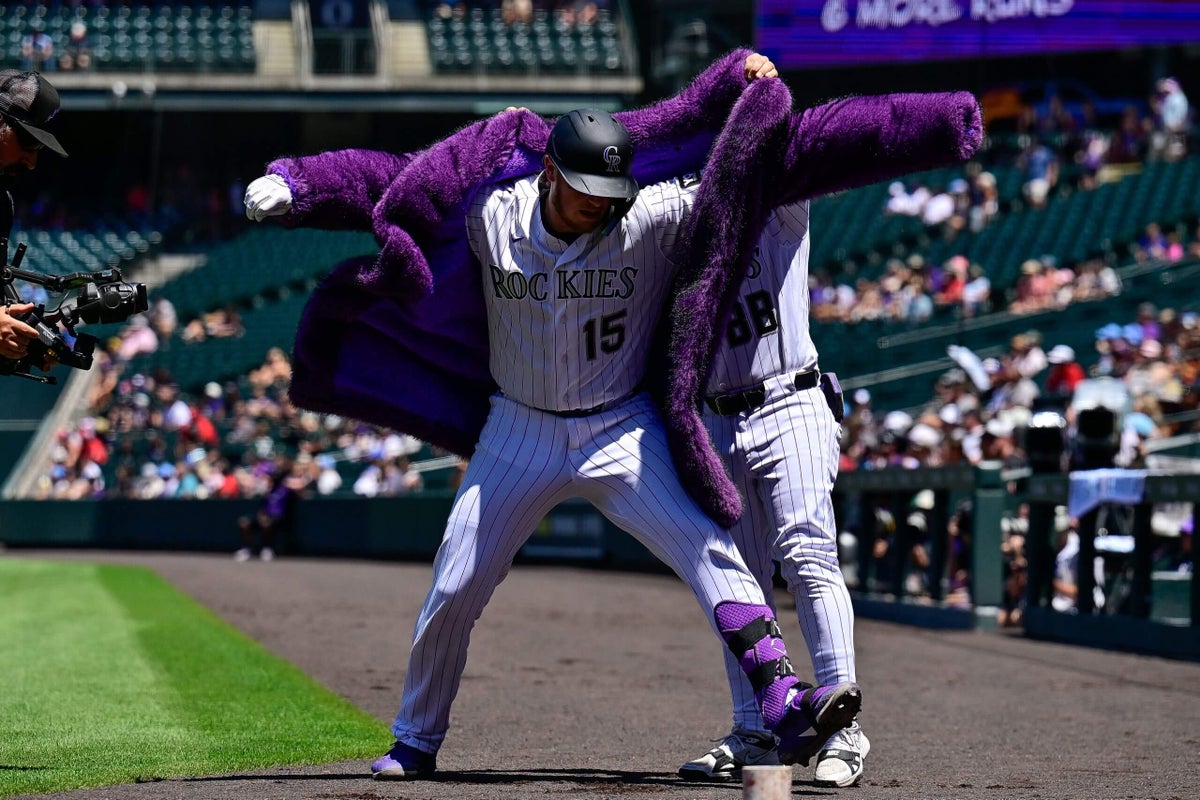
DENVER — To understand Hunter Goodman — the home-run hitting, trade-deadline surviving, Colorado Rockies All-Star — maybe start in Tennessee, where he grew up.
Maybe start with the juggling club.
Goodman developed into a dominant all-around athlete in Arlington, Tenn., located about 30 miles from Memphis. While baseball, football and basketball were staples of his calendar, he was also part of the Arlington Elementary School juggling team, which performed at Grizzlies and Memphis Tigers games and featured a lineup packed with future stars.
“Yeah. Did a little bit of juggling,” said Goodman, whose juggling club teammates included Phillies reliever Jonathan Bowlan and Tyler Gentry, an outfielder in the minors. “Wasn’t the best, but I tried.”
Maybe don’t start with the juggling club then. Maybe it is fine to start in the present, with Goodman draped in the purple faux fur coat, which the Rockies wear to celebrate home runs. This year, Goodman’s home run tally keeps climbing — 36 going into Thursday — even away from his hitter-friendly home ballpark. This year, too, he has weathered a gloomy trade deadline in Denver, leaving him as both part of Colorado’s present and future.
A left shoulder strain put Goodman’s power surge on hold — first by affecting his swing, then prompting a trip to the injured list. Upon his return Tuesday, though, he made an immediate impact. Goodman homered at Nationals Park in Washington to keep his numbers climbing. Then, he did it again on Wednesday.
NUMBER 3⃣6⃣ pic.twitter.com/01u9F5QftR
— Colorado Rockies (@Rockies) August 27, 2026
“He can hit the ball anywhere,” Rockies manager Warren Schaeffer said earlier this month.
Here’s how that happened.
On the diamond, Goodman’s story starts in Tennessee. Although he hit over .400 as a freshman for Arlington High School, his big swings rarely resulted in home runs.
“Believe it or not, he was kind of the opposite of what you see now,” Arlington assistant coach Michael Thees said. “What you see now is you see him hit a lot of home runs to left field, he’s got tremendous power to left field. We saw that in him, but the timing in high school, most of the balls he hit were center or right center.”
Lightly recruited during high school, Goodman played his college ball at nearby Memphis, where he emerged as an offensive force as a freshman, with 13 home runs and a .326 batting average. His best years, though, came over the next two seasons, hitting eight home runs in 17 games in the pandemic-shortened 2020 season, then tallied 21 in 2021. Against Western Illinois in 2021, he had grand slams in all three games and drove in 22 runs in the series.
“Baseball is a game of failure, but he succeeded a lot,” Memphis associate head coach Russ McNickle recalled. “When Hunter got in the box, those guys are on the rail, pulling for him.”
That put him on MLB clubs’ radars, prompting Goodman and McNickle, a former catcher himself, to discuss a path to the majors.

Hunter Goodman returned from the injured list on Tuesday. (Christian Petersen / Getty Images)
“The bat was going to get him to the big leagues, but from a position standpoint, (catcher) is going to be your best bet of getting there quicker,” McNickle said. “He loved playing back there, because he was involved in everything. He was a guy who wasn’t good if he just DH-ed or played a different position. He was better when he was involved in every pitch, every play.”
Goodman also split time between designated hitter and the outfield as a freshman. In the 2020 and 2021 seasons, he shifted to behind the plate, and McNickle empowered him to call pitches and have more autonomy.
“They were cool enough to let me call my own pitches, so I got to learn,” Goodman said. “You grow through failure and learn how to call a game or read some swings. I know where college baseball is today, where not a lot of catchers get the opportunity to do that.”
The Rockies selected Goodman in the fourth round of the 2021 MLB Draft, and after a combined 70 home runs between 2022 and 2023, he debuted for Colorado in 2023 and split time between the majors and minors in 2024.
In 2025, the Rockies made Goodman their full-time catcher, and he rewarded Colorado with an All-Star campaign and 31 home runs. In a historically awful Rockies season that included a franchise-worst 119 losses, Goodman was a rare bright spot.
His ascension has continued into 2026.
With 36 homers, Goodman trails Kyle Schwarber and Matt Olson for most in the National League. After hitting 13 in June, Goodman hoped to participate in the Home Run Derby — and even brought his dad to Colorado to throw batting practice — but he did not receive an invite. While Coors Field is known for its batter-friendly altitude, he has mashed the majority of his homers away from Denver. Goodman’s home runs have helped mitigate his high strikeout rate — a downside of his aggressive approach — and defensive limitations.
At 26, Goodman has emerged as a leader by example and a beloved teammate in the Rockies’ clubhouse. Those characteristics have also emerged at his previous stops.
“He’s not super vocal as a teammate, but he is very silently competitive,” said Gentry, who was Goodman’s teammate from both his elementary school juggling and high school baseball squads. “You can definitely see it in his eyes, and he hates to fail as much as anyone from what I remember. You love seeing that, especially from one of your best hitters.”
This has not been an easy season in Denver, where Goodman was at the center of trade deadline talks this August. Still, as that deadline approached, he appeared focused on what he does best: blasting homers.
Take, for example, a warm summer evening at the start of August, when the Colorado catcher stepped to the plate in the third, with his Rockies trailing the Kansas City Royals. He sent Luinder Avila’s slider well over the left-field wall for a three-run homer. Four innings later, he drove a low pitch from reliever Alex Lange 424 feet to the same location for his sixth multi-homer game this season. He finished the night 4-for-5 as the Rockies rolled to a 12-6 win.
Goodman’s performance helped achieve two noteworthy feats. With the victory, the Rockies surpassed their win total from 2025. Also, Goodman broke the Rockies’ single-season record for home runs by a catcher … which he set in 2025.

“Baseball is a game of failure, but he succeeded a lot,” Memphis associate head coach Russ McNickle said of Hunter Goodman. “When Hunter got in the box, those guys are on the rail, pulling for him.” (Dustin Bradford / Getty Images)
He did all this on Aug. 1, with the MLB trade deadline looming. Colorado acting as a seller was never really in doubt. What was in question: Would Goodman finish the rest of 2026 in Denver, or elsewhere for a playoff contender?
Days later, the answer from the Rockies’ new-look front office became clear. Colorado turned down their suitors for Goodman, moving forward in its rebuild and uncertain future, with its star catcher at the forefront.
“We had a set price in mind of what it would take to acquire any of our players. We think we have a lot of good players here,” Paul DePodesta, the Rockies’ president of baseball operations, told reporters after the deadline. “We think we have the foundation of something that has the chance to be pretty good. With that, it was going to take a lot to pry any of those pieces away. I don’t think we got particularly close on any of those players because I think our internal price was going to be higher than what the market would bear.”
The Rockies sent two well-established members of their club elsewhere, trading pitcher Antonio Senzatela to Milwaukee and two-time Gold Glove-winner Brenton Doyle to the White Sox. Colorado also moved reliever Victor Vodnik to Miami for first baseman Connor Norby and prospect Aidan May. But Colorado retained Goodman, as well as outfielders Mickey Moniak and Jake McCarthy. Goodman, who had ranked sixth on The Athletic’s final trade deadline Big Board, has three years of club control remaining.
“I’m excited about it,” Goodman said. “We’re making a lot of improvements. We’re headed in the right direction. I really want to be a part of turning this thing around and getting back to the playoffs.”
>

Change makes things tough to predict. A new coach, a new scheme, a rookie quarterback — all of those changes can have a major impact on how an NFL team performs, and all of them are a challenge for my NFL Projection Model, or any model, to account for.
My model takes into account hundreds of variables, and while taking a data-driven approach is a sound way to make predictions, football is often chaotic and always unpredictable.
Who could have known what Mr. Irrelevant Brock Purdy would become for the San Francisco 49ers? How could one have predicted that then-relatively unknown Sean McVay would turn Jared Goff into an above-average quarterback after a disastrous rookie season?
These are just a couple of examples of how roster decisions and coaching hires can make forecasting the future a challenge.
So, with that background, let’s look at five of the teams that, in my opinion, the model had the hardest time projecting. We’ll start with a couple of teams in the AFC before moving on to the NFC.
AFC
Buffalo Bills: 10.7 wins
Josh Allen is a known commodity, which is a quick way of saying no one and nothing, including my model, doubts the QB will be great in 2026. So why are the Bills on this list? Well, it’s the rest of the roster and coaching staff that makes the Bills hard to project.
As it stands right now, the Bills are the model’s favorite to win the AFC East (51 percent) and rank atop the AFC when it comes to making the playoffs (74 percent). But with a lackluster receiving group and without many difference-makers on defense, I’m concerned about what happens to this team if Allen sees a dip in production. I love the offensive tackles, and Ed Oliver is great on the defensive front, but outside of that, do the Bills resemble a Super Bowl team? Because that’s where they’re priced right now, and a scary amount of that optimism rides on the right shoulder and legs of Allen.
They’ve also handed over the big job to former offensive coordinator Joe Brady. Former coach Sean McDermott may have had his flaws, but Brady is a total unknown as a head coach. I am optimistic about him bringing in Jim Leonhard as defensive coordinator, but he hasn’t called plays in the NFL and hasn’t called plays at any level since doing so at Wisconsin in 2022.
Pittsburgh Steelers: 8.4 wins
The Steelers are old, especially on defense and at quarterback, with the soon-to-be 43-year-old Aaron Rodgers under center. As you might imagine, aging curves are also a challenge to predict. We expect players to fall off as they get older, but by how much, and when that starts is tough to forecast.
Will defensive stars like T.J. Watt, Cameron Heyward and Jalen Ramsey perform at a high level for another season? How far do they drop off? Can they stay healthy?
Beyond age, the most difficult variable to account for is how new coach Mike McCarthy will impact the offense and this roster as a whole. McCarthy probably doesn’t belong in the elite tier of coaches, but he is a good one. If he and Rodgers can rekindle some magic from their Green Bay Packers glory days, there is enough talent around them to believe this offense can be above average. Of course, that assumes Rodgers can still handle pressure and hold off Father Time a little longer.
If the older players stay productive and healthy, the Steelers will be in the hunt to defend their AFC North crown. If not, well, there’s no Mike Tomlin magic to save the Steelers this season.
NFC
Philadelphia Eagles: 10.4 wins
Maybe I’m a sucker for believing quarterback Jalen Hurts can return to the level of play he showed during runs to two Super Bowls. If he does, it will likely be because new offensive coordinator Sean Mannion proves to be a big upgrade over his predecessor, Kevin Patullo. But Mannion is an unknown commodity, and he’s far from the only question mark on this team.
The Eagles’ offensive line isn’t the dominant unit it once was, and it’s getting up there in the age department. Injuries have become a more persistent problem, and we all saw what happened when star right tackle Lane Johnson, who is 36, went down with an injury last year. There’s some noise in these numbers, but with Johnson on the field in 2025, the Eagles offense ranked ninth in adjusted EPA per play; they fell to 26th without him. Is this unit just one injury away from falling off a cliff? We also must acknowledge that longtime offensive line coach Jeff Stoutland is no longer coaching this unit. That kind of change is something a model has a very difficult time quantifying.
The pass rush is also tough to project. Before trading for Jaelan Phillips last year, the Eagles ranked 8th in EPA per play, 21st in success rate and 14th in pressure rate. After acquiring Phillips, those numbers jumped to third, second and third. Phillips is now with the Carolina Panthers, and while the Eagles traded for Jonathan Greenard, his status for Week 1 is up in the air.
Given all of this, are we sure the Eagles are going to win 10-plus games?
Green Bay Packers: 9.7 wins
My brain is like a ping-pong ball when thinking about the Packers. Sometimes I think they could contend for the Super Bowl; other times I think they’ll miss the playoffs. Neither outcome would surprise me.
On one hand, QB Jordan Love and coach Matt LaFleur have produced top-five offenses in two of the past three years, per my model. However, the offensive line is in the worst shape of LaFleur’s tenure, and while the pass catchers have tons of potential, wide receiver Christian Watson and Tucker Kraft have concerning injury track records. More injuries could be enough to sink Green Bay’s offensive production.
Is Green Bay Packers offensive line ‘good enough’ going into 2026 NFL season?
Robert Mays and Derrik Klassen
Then there’s the defense, where star pass rusher Micah Parsons is out for the first month-plus of the season. Last year, his first in Green Bay, Parsons was a difference-maker for the Packers defense. When Parsons was on the field, the Packers ranked 15th in EPA per play but fell to 28th when he was off the field. That’s a stark difference, and it’s concerning that even when he was on the field, they were just an average unit.
The last part of the uncertainty for the Packers is their change at defensive coordinator. Jeff Hafley has moved on to coach the Miami Dolphins, and the Packers brought in Jonathan Gannon to replace him. Will Gannon improve the unit? What he gets out of the defense without Parsons on the field could determine the Packers’ playoff fate before we reach October.
New York Giants: 7.1 wins
What are the Giants under new coach John Harbaugh? Are they playoff contenders, or a team that will pick near the top of the 2027 NFL Draft? The play of second-year QB Jaxson Dart will go a long way in determining the answer. He remains a bit of an enigma to project, however, following a promising rookie year filled with injuries.
Combine a perplexing young quarterback with a new scheme and a brand new coaching staff, and you start to see some wide distribution of outcomes.
And then we look at the defense, which has tons of pass rushers. Brian Burns is coming off an awesome season, and the Giants drafted linebacker/pass rusher Arvell Reese at No. 5. But maybe the piece I’m most excited about is pass rusher Abdul Carter. He didn’t register the sack numbers last year, but he was incredible at generating pressure. But will this front seven be able to stop the run? After trading defensive tackle Dexter Lawrence to the Cincinnati Bengals, the middle of the defense is thin, and that can lead to these pass rushers being nullified, with the Giants’ defense failing to force the offense into true passing situations.
>
Our College Football Playoff, Heisman, national championship and bold predictions for 2026

BBC Confirms Plans To Reboot ‘Top Gear’ Amid Speculation Jimmy Carr Will Host

How Hunter Goodman, who can hit the ball ‘anywhere,’ is launching the Rockies into their next era
-

 movies3 months ago
Search For Canadian TV Actor Stewart McLean Now Homicide Investigation
-

 Fashion9 years ago
These ’90s fashion trends are making a comeback in 2017
-
Fashion9 years ago
According to Dior Couture, this taboo fashion accessory is back
-
Fashion9 years ago
Model Jocelyn Chew’s Instagram is the best vacation you’ve ever had
-
Fashion9 years ago
Emily Ratajkowski channels back-to-school style
-
Fashion9 years ago
9 Celebrities who have spoken out about being photoshopped
-
Fashion9 years ago
Your comprehensive guide to this fall’s biggest trends
-

 Anime3 months ago
Rurouni Kenshin: Hokkaido Arc Manga Takes 1-Issue Break – News