
Tech
Snapchat’s 13+ Rating Under Fire: Pennsylvania Alleges Addictive Design, Adult Content

Snapchat says it is suitable for teens as young as 13, but Pennsylvania now alleges the app’s content and design tell a very different story.
The state’s attorney general has sued the social media company, alleging Snapchat uses disappearing content, Snapstreaks, notifications, and other engagement features that encourage compulsive use among children. Pennsylvania says these mechanics can create a cycle in which young users return repeatedly because they fear missing content, losing a streak or falling behind socially.
The lawsuit also challenges Snapchat’s 13+ age rating, alleging that the company does not accurately reflect how often younger users encounter mature material.
Together, the claims put both sides of Snapchat’s teen experience under scrutiny.
Why Pennsylvania says Snapchat’s teen safeguards fall short
App store ratings and labels are intended to be a quick way potential app users, and in this case, parents, can check how suitable an app aligns with their needs and preferences. That means such labels should always be accurate.
However, the Pennsylvania judiciary has found that Snapchat’s age ratings and the app’s actual behavior are miles apart.
According to the court filing, an investigator working with the Pennsylvania attorney general’s office created a Snapchat account for a fictional 13-year-old and tested the content a minor could encounter on the platform. According to the complaint, the investigator encountered frequent and intense profanity, drug and alcohol references, sexual content and other mature material despite Snap maintaining a “T for Teen” rating in Google Play and Microsoft’s store and a 13+ rating in Apple’s App Store, The Next Web reports.
But Pennsylvania’s case does not stop at what Snapchat shows children. The case also aims to show how the platform keeps them coming back.
The complaint alleges that disappearing content, infinite scrolling, push notifications, autoplay, Snapstreaks and Snapscores create repeated-use loops that can encourage compulsive behavior among young users.
Snapchat has a defense; the courts have the decision
A Snapchat spokesperson told Fox Business in a statement that Snapchat was designed differently from the beginning, opening to a camera rather than a content feed and focusing on self-expression and connections between friends.
The statement also noted that Snap shares the attorney general’s goal of protecting young people online but is disappointed that Pennsylvania chose to pursue litigation rather than work with the company.
The dispute will now move forward in the Philadelphia Court of Common Pleas. Pennsylvania is asking the court to declare the alleged practices unlawful, impose temporary and permanent injunctions, and levy civil penalties for willful violations, along with legal costs and other relief.
The court will ultimately determine whether Snap’s practices violated that law and whether the state is entitled to the remedies it is seeking.
Earlier this month, a US appeals court allowed more than 3,000 lawsuits against Meta, Google, TikTok and Snap over alleged addictive platform design to proceed. Separately, a recent Meta settlement with dozens of states could force sweeping changes to how the company handles young users.
Australia has gone even further, imposing a ban that prevents children under 16 from holding accounts on social-media platforms.
The policy, which took effect in December 2025, has since helped trigger a wave of regulations and proposals aimed at limiting children’s access to social media across age groups. Governments are increasingly targeting features such as endless feeds, feedback systems and disappearing content that can encourage prolonged or repeated use.
What this means for Snapchat users and parents
For parents and younger Snapchat users, the Pennsylvania case is worth watching because its impact could extend beyond warning labels and app-store ratings. If the state succeeds, Snap could face pressure to change how it presents Snapchat to younger users, how it handles mature content, or how some of its most popular engagement features work for teen accounts.
That could put features such as Snapstreaks, disappearing content, autoplay, and frequent notifications under greater scrutiny. These are familiar parts of the social media experience, but regulators are increasingly questioning whether platforms should be allowed to use the same engagement mechanics for children as they do for adults.
The case could also contribute to a broader shift in how social-media companies verify ages and design accounts for younger users. Parents and teens may eventually encounter stronger age checks, expanded parental controls, different default settings, or restrictions on features intended to encourage repeated use.
For now, Snapchat’s existing features remain in place, and Pennsylvania’s allegations must still be tested in court. But the outcome could help determine how much responsibility social-media companies have for designing a fundamentally different experience when the person behind the screen is a child.
Also read: Meta was ordered to pay $567 million and overhaul teen protections as courts put more pressure on social media companies over how their platforms affect young users.
>
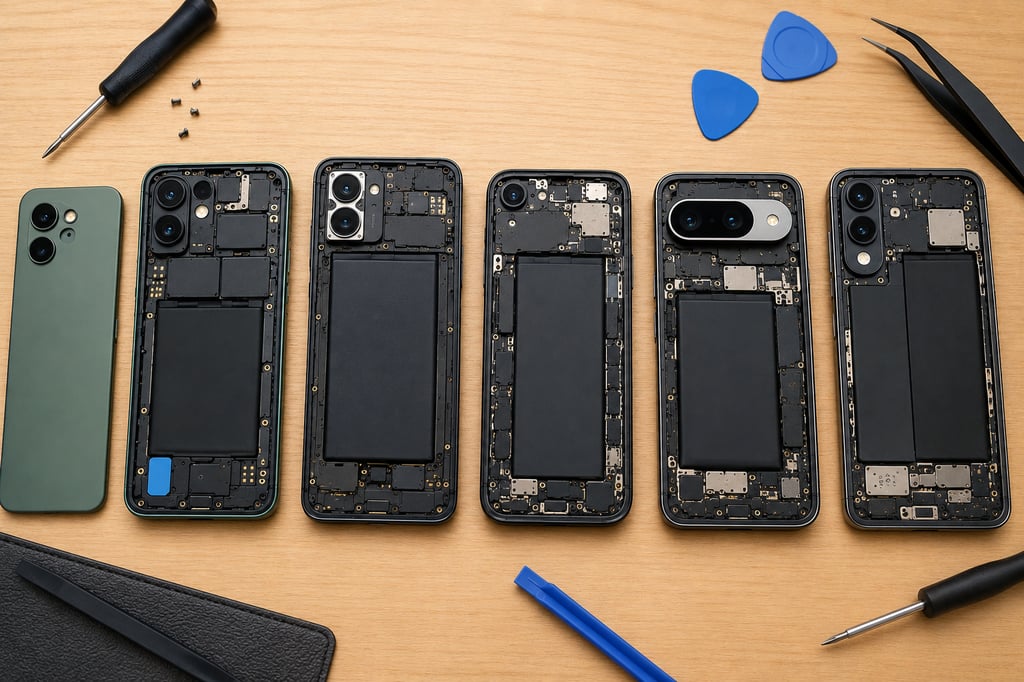
A phone becomes expensive to own when a worn battery, cracked screen, or damaged charging port turns into a complicated repair.
In 2026, some manufacturers make those jobs considerably easier, but repairability still varies widely between models.
Fairphone has centered its phones on modular, owner-replaceable hardware for more than a decade. HMD has adopted similarly repair-friendly designs, while Apple and Google have made common repairs easier on some mainstream models.
For this comparison, we prioritized current phones with independent iFixit repairability scores, available parts or repair documentation, and practical access to components such as batteries, displays, and charging ports.
Most repairable phones at a glance
| Phone | iFixit score | Best for | Main drawback |
|---|---|---|---|
| Fairphone Gen. 6+ | Gen. 6 design: 10/10 | Most replaceable components | Limited availability compared with major brands |
| HMD Skyline | 9/10 | Easier DIY repairs | Shorter software support |
| iPhone 17e | 7/10 provisional | Apple buyers | USB-C repair remains difficult |
| Google Pixel 10 | 6/10 provisional | Android buyers | Display still relies heavily on adhesive |
iFixit changes its scoring methodology over time, so the scores are useful indicators rather than perfectly standardized measurements across every phone generation.
Fairphone Gen. 6+ offers the most modular design
The Fairphone Gen. 6+ keeps the modular construction of the Gen. 6, which earned 10/10 in an iFixit teardown.
Owners can replace 12 modules, including the battery, display, cameras, and USB-C port. The battery and screen avoid adhesive, and Fairphone sells replacement parts directly.
The Gen. 6+ also carries a five-year warranty and software support through 2033. That combination addresses both sides of device longevity: replacing worn hardware and keeping the phone supported after the repair.
HMD Skyline also performs strongly on hardware repairability. iFixit gave it 9/10, citing its screw-assisted opening mechanism, replaceable display, accessible battery, and modular charging port.
Its shorter software-support period is the main trade-off. Buyers planning to keep a phone for several years should compare repairability with current software support windows before choosing a model.
iPhone 17e and Pixel 10 bring easier repairs to major brands
The iPhone 17e received a provisional 7/10 from iFixit. Its dual-entry design lets technicians reach internal components from either side, while Apple’s electrically releasable battery adhesive makes battery replacement easier.
Apple also publishes repair manuals and sells replacement parts. The USB-C port remains a more involved repair because several components must be removed to reach it.
Google’s Pixel 10 received a provisional 6/10. Its back panel can be removed without heat, battery removal is easier than on previous Pixels, and the USB-C board is replaceable.
The display still relies heavily on adhesive, limiting the Pixel’s score. Google offsets some of that hardware complexity with seven years of OS, security, and Pixel Drop updates.
Samsung’s self-repair program does not eliminate hardware complexity
Samsung’s US Self-Repair program provides genuine parts, tools, and documentation for supported Galaxy phones. One UI 9 is also making repair support easier to access from the device.
Recent Galaxy hardware remains more difficult to work on than the highest-scoring phones in this comparison. The Galaxy S25 Edge received a provisional 5/10 from iFixit despite improvements to battery removal and a modular USB-C port.
Its display and back cover still rely heavily on adhesive. Samsung therefore offers stronger access to DIY repair resources than its hardware repairability score alone might suggest.
An independent iFixit score for the Galaxy S26 series was not available when this article was written, so we have not ranked those models alongside independently tested phones.
Which repairable phone should you buy?
The Fairphone Gen. 6+ offers the most repair-friendly hardware in this group, with 12 replaceable modules, readily available spare parts, and software support through 2033.
HMD Skyline provides similarly accessible hardware but a shorter software-support period. The iPhone 17e is the strongest option here for Apple buyers, while Pixel 10 combines improved repair access with seven years of updates.
For long-term ownership, we recommend checking four things before buying: whether the battery and display can be replaced without excessive adhesive, whether high-wear components such as the charging port are modular, whether spare parts and manuals are available, and how long software updates will continue.
Also read: Samsung is reportedly exploring self-healing display glass for the Galaxy S27 Ultra, which could reduce surface damage without necessarily making the phone easier to repair.
>
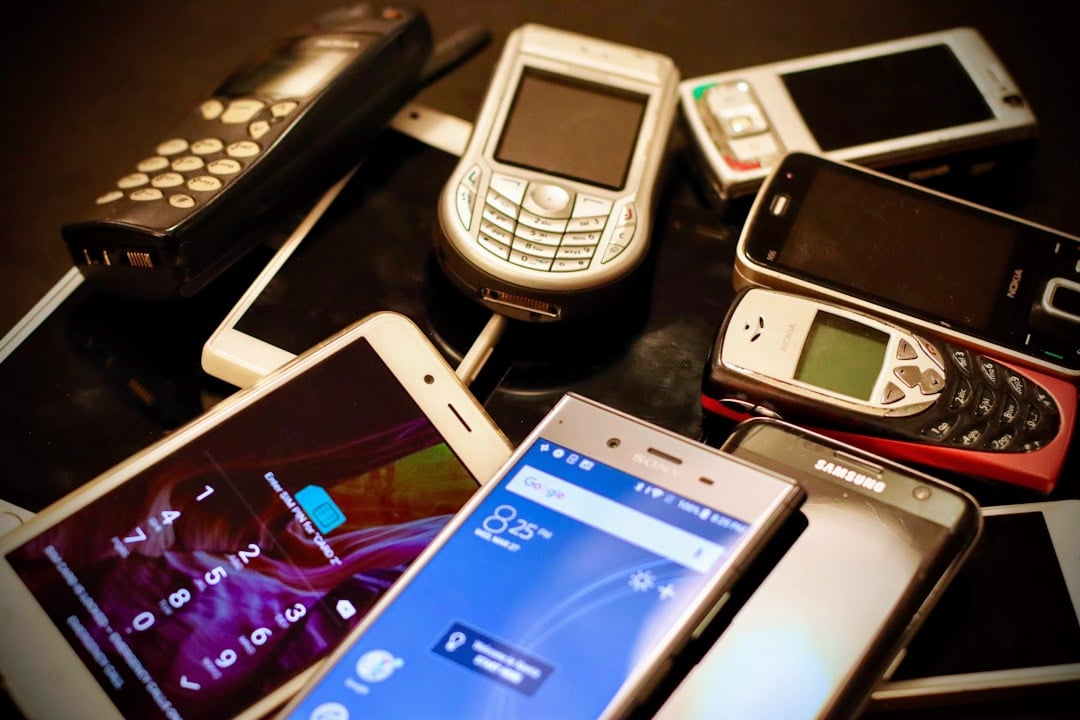
An old phone can still work in 2026, but age alone does not determine whether a carrier will activate it. A hand-me-down smartphone from several years ago may work perfectly, while an older 4G phone can fail because it lacks the right voice support or carrier compatibility.
Four checks matter most: the phone needs current network support, VoLTE, a compatible IMEI result, and an unlocked status. Software support matters too, especially if you’ll still use the phone for apps, payments, email, or other sensitive tasks.
T-Mobile’s current BYOD guidance recommends checking the IMEI, the phone’s unique device identifier, and unlock status before activation. Its compatibility tool can return fully compatible, partially compatible, incompatible, or blocked.
2G and 3G phones are effectively out
The major US networks have moved beyond the technologies many older phones were built around.
T-Mobile’s Network Evolution page says its 2G GSM network was retired on August 3, 2026. Its 3G UMTS network was retired in July 2022, following the shutdowns of Sprint’s 3G CDMA and LTE networks earlier that year.
AT&T phased out 3G in February 2022. Verizon completed the retirement of its 3G CDMA network at the end of 2022 and says 4G devices without VoLTE also lost calling, texting, and data service.
That means a 2G- or 3G-only phone is no longer a practical option on the major US networks. A 4G label alone is not enough either. The phone still needs VoLTE and carrier support.
Run these four checks before activating an old phone
| Check | Pass | Warning or failure |
|---|---|---|
| Network | Supports the carrier’s LTE or 5G bands | 2G/3G-only or missing important bands |
| Voice | Supports VoLTE on the destination carrier | LTE data works, but voice support is missing |
| IMEI | Carrier reports fully compatible | Partial, incompatible, or blocked |
| Unlock | Device is unlocked | Still locked to another carrier |
Network support depends on the exact model. Phones sold for different carriers or countries can support different frequency bands, so an imported phone may connect to LTE while still missing bands needed for reliable US coverage.
VoLTE, or Voice over LTE, is just as important. A phone can support LTE data without supporting the carrier’s LTE voice service. Verizon’s shutdown guidance specifically says 4G non-VoLTE devices are no longer supported.
Run the IMEI through the destination carrier’s compatibility checker rather than relying only on the specifications. A fully compatible result is the safest sign that activation should work, while a partial or incompatible result deserves a closer look before buying a SIM or switching service.
The phone also needs to be unlocked if it is moving to another carrier. Unlock requirements vary, but carriers commonly require eligible devices to be paid off and in good standing.
Software longevity belongs in the decision too. Recent Samsung and Google phones now receive much longer software support windows, while older models may already have stopped receiving security updates.
A new SIM cannot fix an incompatible phone
Once the phone passes those checks, activation itself is usually straightforward.
A compatible device can use either a physical SIM or eSIM if the phone and carrier support it. Changing the SIM type cannot add missing LTE bands, VoLTE support, or carrier approval.
T-Mobile says many smartphones released since 2020 support eSIM, although availability varies by model and region. With eSIM, activation can often complete within minutes.
After activation, test voice calls, texts, and mobile data. If data or MMS does not work, check the APN settings. Some older and imported devices may require manual configuration.
If you’re transferring an existing phone number, keep the old service active until the port finishes. T-Mobile says number transfers can take from a few minutes to several hours.
A phone can connect and still be too old to use safely
Carrier compatibility is only one part of keeping an old phone useful.
Older devices may no longer receive security patches or current app versions. More than a billion older Android devices were estimated to be outside Google’s current security-update coverage earlier this year, making unsupported Android phones a separate concern from whether they can connect to a cellular network.
Apps can impose their own cutoffs too. WhatsApp, for example, is ending Android 5 support in September 2026.
Before putting an old phone back into regular use, check whether it still receives security updates and whether the apps you rely on still support its operating system.
If the phone supports the carrier’s LTE bands and VoLTE, passes the IMEI check, is unlocked when necessary, and still receives acceptable software support, it can remain perfectly usable in 2026. If one of those checks fails, a new SIM is unlikely to rescue it.
Also read: If replacement is unavoidable, our guide to the most repairable phones in 2026 compares current models by repairability, parts access, and software support.
>

A supposed expert institute publishing academic-looking research was actually part of a covert influence operation supported by ChatGPT, according to OpenAI.
The company said Tuesday it banned a cluster of accounts originating in Russia that were used to promote the International Burke Institute, a self-described Israel-based expert community. OpenAI’s investigation uncovered copied academic research, misleading author attributions and a “sovereignty index” that portrayed Russia favorably while criticizing Western governments.
The operation shows how generative AI can support more than mass-produced social posts. It can also help operators build the surrounding infrastructure — research, branding and coordinated accounts — needed to make an influence campaign look more legitimate.
A fake institution with real-looking research
The operation centered on the International Burke Institute, whose website was registered in February 2025 and presented itself as an Israel-based “expert community.”
OpenAI reviewed 36 articles published on the site between September 2025 and May 2026 and found that 34 appeared to have been copied from elsewhere, sometimes with incorrect authors. One article on the China-Pakistan Economic Corridor, for example, appeared to originate from Cambridge University Press but was attributed to a different academic.
The site also claimed connections to prominent figures including Francis Fukuyama and Noam Chomsky, according to OpenAI.
The institute’s most distinctive feature was its “sovereignty index,” which rated countries across political, economic, technological, information, cultural, cognitive and military measures. OpenAI said the index was used to praise Russia and attack Western governments.
Must-read security coverage
AI was the amplifier, not the whole operation
The ChatGPT accounts generated promotional posts and replies designed to push people toward IBI content. One operator also produced German-language material for a Telegram channel called “Lahme Ente,” which criticized Ukraine, the EU and Germany while advocating closer relations with Russia.
Another created logos for about a dozen Telegram channels focused on countries including Germany, the U.S., France, Poland and Türkiye and used ChatGPT to summarize their activity in Russian.
OpenAI said the campaign’s immediate reach was modest. Most posts received few views, while the associated Telegram channels generally had 10,000 to 20,000 followers each.
That limited reach does not make the operation insignificant. The more important development is the way AI was used as one component of a larger credibility-building system. OpenAI said, “The significance of the operation lies less in the audience it reached, however, than in the infrastructure it had built.”
That distinction matters for platforms, businesses and consumers. Generating a convincing post is increasingly easy; building an apparently independent institution around that content could also make coordinated messaging look more credible and therefore harder for users to recognize as part of an influence operation.
OpenAI said activity involving ChatGPT also gave investigators signals that helped connect parts of the wider campaign. That creates an unusual dynamic for influence operators: the same AI tools that make coordinated activity easier to scale can also leave patterns that platforms can use to uncover it.
More news: Microsoft Teams is rolling out a new policy that lets IT administrators automatically block detected external meeting bots, giving organizations more control over third-party AI assistants in sensitive calls.
>

Emiliano Martinez’s Aston Villa exit: The end of a long goodbye that became an annual saga

Penn Badgley Joins Amazon’s ‘Everyone In My Family Has Killed Someone’

Canucks sign Chris Driedger to PTO: What it means for Thatcher Demko
-

 movies3 months ago
Search For Canadian TV Actor Stewart McLean Now Homicide Investigation
-

 Fashion9 years ago
These ’90s fashion trends are making a comeback in 2017
-
Fashion9 years ago
According to Dior Couture, this taboo fashion accessory is back
-
Fashion9 years ago
Model Jocelyn Chew’s Instagram is the best vacation you’ve ever had
-
Fashion9 years ago
Emily Ratajkowski channels back-to-school style
-
Fashion9 years ago
9 Celebrities who have spoken out about being photoshopped
-
Fashion9 years ago
Your comprehensive guide to this fall’s biggest trends
-

 Anime3 months ago
Rurouni Kenshin: Hokkaido Arc Manga Takes 1-Issue Break – News