
Tech
Best Sales Analytics Software for Revenue Teams

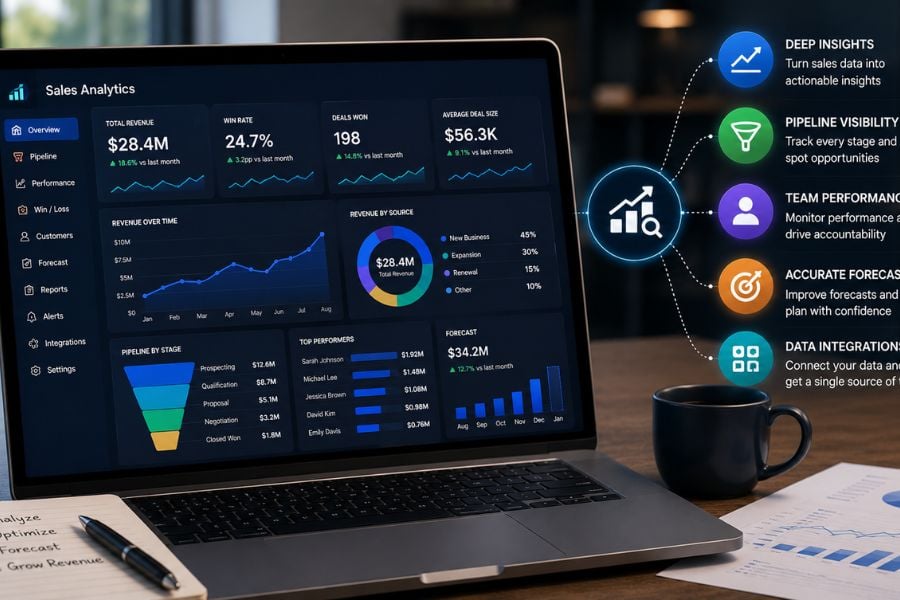
Sales teams rarely have a shortage of data. The harder problem is turning CRM records, pipeline activity, forecasts, buyer engagement, and rep performance into information revenue leaders can actually use.
The right sales analytics software can help RevOps and sales leaders identify pipeline bottlenecks, compare performance across teams and segments, monitor conversion, assess forecast risk, and determine where sellers should focus. The best choice depends on what needs analyzing: CRM performance, account and buyer signals, forecasts, customer conversations, or data spread across multiple business systems.
My picks for the top sales analytics tools include ZoomInfo for account intelligence and buyer signals, Salesforce for CRM-native analytics, Clari for forecasting and pipeline analysis, Gong for conversation-driven insights, and HubSpot CRM for growing teams.
ZoomInfo combines company and contact intelligence with enrichment and buyer signals to give revenue teams more context for account prioritization and sales analysis.
| ZoomInfo | ||
| Salesforce Analytics | ||
| Clari | ||
| Gong | ||
| HubSpot CRM | ||
| Salesloft |
Best sales analytics software at a glance
Why you can trust TechRepublic
|
To ensure we provide readers with the best answers, the TechRepublic editorial process adheres to strict standards, including rigorous research, assessment, and provider scoring. In this review, I evaluated the most important aspects of sales analytics software for revenue teams, including pipeline and forecasting capabilities, account and buyer intelligence, conversation analytics, integrations, ease of use, and pricing. My methodology also considered how well each platform supports distinct revenue use cases, along with product usability and feedback from real users. Furthermore, I leverage the following work experiences when carrying out software reviews:
|
 Bianca Caballero
Methodology: How I evaluated the best sales analytics tools
I compared these sales analytics tools based on the capabilities that matter most to sales leaders and RevOps teams, with an emphasis on how effectively each platform turns sales and revenue data into actionable insights.
- Pipeline and conversion analytics: How well the platform tracks pipeline value, movement, coverage, stage conversion, win rates, sales cycles, and potential bottlenecks.
- Sales performance analytics: The depth of reporting across reps, teams, territories, products, accounts, and customer segments.
- Forecasting and revenue visibility: The ability to monitor expected revenue, forecast changes, pipeline risk, deal progression, and performance trends.
- Account and buyer intelligence: The depth of company, contact, intent, engagement, and other buyer signals available for account analysis and prioritization.
- Data integration and enrichment: How easily the platform connects with CRM and other revenue systems, synchronizes relevant data, and enriches existing records where applicable.
- AI and automation: How effectively the platform uses AI and automation to surface patterns, risks, signals, summaries, or recommendations that reduce manual analysis.
- Customization and usability: How easily RevOps and sales leaders can configure reports, dashboards, metrics, and workflows, investigate performance changes, and get useful answers without excessive technical support.
I also evaluated each platform according to its strongest use case rather than assuming all six solve the same problem equally well. This approach helps buyers identify the platform that best addresses their revenue team’s priorities instead of looking for a single product that does everything equally well.
What makes ZoomInfo the best for account intelligence and sales prioritization?

Pros
- Strong B2B company and contact intelligence
- Useful intent and engagement signals for account prioritization
- CRM enrichment can improve segmentation and downstream reporting
Cons
- Pricing is not publicly listed
- Not a dedicated sales forecast-management platform
- May be more platform than smaller or lower-volume sales teams need
Why I chose ZoomInfo
ZoomInfo is strongest when the analytics problem starts with the quality of the underlying account and buyer data. Its combination of company and contact intelligence, CRM enrichment, intent signals, account segmentation, and conversation intelligence provides RevOps with more context to decide which accounts deserve attention and to analyze performance across meaningful customer segments.
The main trade-off is forecasting: ZoomInfo is not primarily designed as a forecast-management platform. For teams focused on account quality, buyer activity, segmentation, and prioritization, though, its intelligence layer can strengthen the data feeding CRM, analytics, prospecting, and sales workflows.
Also read: Revenue Intelligence Platforms: Key Features to Know
Key features
- Company and contact intelligence: ZoomInfo provides B2B company and professional data that helps teams research accounts, identify decision-makers, and add organizational context to CRM records.
- CRM data enrichment: Enrichment can fill missing account and contact fields and refresh existing records, improving the data used for routing, segmentation, and reporting.
- Buyer intent signals: Intent data helps surface accounts with increased research activity on relevant topics, giving sellers another signal to prioritize outreach.
- Account segmentation and prioritization: Firmographic, contact, and behavioral data can help RevOps organize accounts by ICP fit, territory, company attributes, or buying activity.
- Conversation intelligence: ZoomInfo’s broader platform includes conversation-intelligence capabilities that can provide additional context from sales calls and buyer interactions.
ZoomInfo pricing
ZoomInfo does not publish standard monthly or annual list prices. Contact ZoomInfo for a customized quote based on the included users, data allowances, add-on costs, and any usage-based fees.
What makes Salesforce Analytics the best for CRM-native sales analytics?
Pros
- Deep analytics tied directly to Salesforce CRM data
- Highly customizable dashboards and analytical models
- Strong forecasting and broader analytics ecosystem
Cons
- Advanced analytics can require additional licenses
- Configuration and administration can become complex
- Best value depends on an existing Salesforce ecosystem
Why I chose Salesforce Analytics
Salesforce Analytics makes the most sense for organizations that already treat Salesforce as the operational center of the sales process. Pipeline analysis, forecasting, configurable dashboards, CRM Analytics, and the broader Salesforce analytics ecosystem give mature teams substantial flexibility while keeping sales insights close to the underlying CRM records.
Complexity is the tradeoff. Advanced deployments can involve additional products, licensing, and administration. For organizations already deeply invested in Salesforce, however, keeping opportunity data, workflows, forecasting, and analytics within the same ecosystem can outweigh that overhead.
Key features
- CRM-native analytics: CRM Analytics works directly with Salesforce data, helping teams analyze sales performance without having to routinely export data to a separate system.
- Pipeline and opportunity analysis: Revenue teams can examine opportunity progression, pipeline changes, sales performance, and other CRM-based measures.
- Sales forecasting: Salesforce supports forecast management and expected-revenue analysis, with additional purpose-built revenue capabilities available through Revenue Intelligence.
- Custom dashboards and metrics: RevOps can create tailored dashboards, filters, models, and analytics applications around its sales processes and reporting requirements.
- AI-powered analytics: Higher-tier offerings add capabilities such as Einstein Discovery for predictions, automated data discovery, explanations, and scoring.
Salesforce Analytics pricing
- CRM Analytics Growth: $140/user/month
- CRM Analytics Plus: $165/user/month
- Revenue Intelligence: $220/user/month
- Industry Cloud Intelligence: $220/user/month
- Service Intelligence: $220/user/month
Free trial: 30 days
What makes Clari the best for forecasting and revenue predictability?

Pros
- Strong forecasting and pipeline-inspection capabilities
- Purpose-built for CRO and RevOps workflows
- Helps connect deal risk with forecast and pipeline reviews
Cons
- Pricing is not publicly listed
- May be excessive for teams with simple forecasting needs
- More specialized than general CRM reporting
Why I chose Clari
Clari excels when forecasting and pipeline inspection are formal operating disciplines rather than occasional reporting exercises. Its revenue forecasting, pipeline analytics, deal-risk capabilities, and trend visibility map closely to the questions leaders ask during forecast calls and pipeline reviews.
That specialization can be more than smaller teams need. For larger revenue organizations with structured forecasting processes, however, the narrow focus becomes an advantage because Clari is built around revenue predictability rather than generic dashboard creation.
Key features
- Revenue forecasting: Clari supports structured forecasting workflows that help sales leaders monitor expected results and forecast movement.
- Pipeline inspection: Teams can analyze pipeline coverage, changes, opportunity progression, and other signals that may affect future revenue.
- Deal risk analysis: Deal-level signals help managers identify opportunities that require closer inspection or intervention.
- Revenue trend reporting: RevOps can monitor patterns across forecast periods, pipeline movement, and historical performance.
- Revenue data integration: Clari brings information from CRM and other revenue systems into its forecasting and pipeline workflows.
Clari pricing
Clari uses custom pricing and does not publish standard monthly or annual per-user rates. Contact Clari to request a custom quote based on user count, modules, integrations, and deployment scope.
What makes Gong the best for conversation and deal analytics?

Pros
- Strong conversation intelligence capabilities
- Connects buyer engagement with deal and pipeline context
- Supports forecasting alongside conversation and deal analytics
Cons
- Pricing is quote-based
- Broader platform may be unnecessary for dashboard-only needs
- Value depends on consistently capturing buyer interactions
Why I chose Gong
Gong adds a layer of evidence that conventional CRM reporting often misses: what buyers and sellers are actually discussing and doing within an opportunity. Conversation intelligence, buyer engagement, deal analytics, forecasting, and coaching insights can help managers interpret whether a deal is genuinely progressing rather than relying only on manually maintained CRM fields.
The platform’s breadth can be unnecessary for teams that need only standard dashboards. When calls, meetings, stakeholder engagement, and rep behavior materially influence deal outcomes, though, Gong’s interaction data provides context that traditional sales reporting may not capture.
Also read: What Is Sales Intelligence? Tools, Benefits, and Use Cases
Key features
- Conversation intelligence: Gong captures and analyzes calls, meetings, emails, and other buyer interactions to surface patterns and important moments.
- Buyer engagement insights: Teams can examine stakeholder participation and engagement to understand whether opportunities have meaningful buyer involvement.
- Deal analytics: Gong combines CRM data and interaction signals to help managers evaluate opportunity health and progression.
- Sales forecasting: Forecast functionality supports revenue projections, pipeline review, and manager forecasting workflows.
- Coaching analytics: Conversation and activity data can help managers identify seller behaviors and coaching opportunities.
Gong pricing
Gong does not publish fixed monthly or annual list prices. Contact Gong to obtain a custom quote based on user licensing, included products, and implementation expenses.
What makes HubSpot CRM the best for growing revenue teams?

Pros
- CRM, sales execution, and reporting are closely integrated
- Lower starting price than many enterprise-focused platforms
- Monthly and annual billing are available on key tiers
Cons
- More advanced analytics require higher tiers
- Professional and Enterprise carry onboarding fees
- Less flexible than dedicated BI software for complex modeling
Why I chose HubSpot CRM
HubSpot CRM strikes a useful balance between capability and accessibility. Pipeline reporting, activity analytics, forecasting, conversation intelligence, and CRM workflows give growing teams a path beyond spreadsheets without immediately requiring a separate analytics stack.
The limitation is that the strongest reporting and analytics features become increasingly tied to higher subscription tiers. Even so, the integrated CRM experience and comparatively lighter administration can make that tradeoff worthwhile for teams prioritizing adoption and speed.
Key features
- Pipeline reporting: HubSpot CRM provides pipeline and deal reporting that helps teams monitor opportunity stages and sales performance.
- Sales activity analytics: Managers can analyze emails, calls, meetings, tasks, and other activity alongside deal results.
- Forecasting: Professional and Enterprise support more advanced forecasting and team-level revenue visibility.
- Conversation intelligence: Enterprise includes conversation intelligence capabilities for recording, transcription, and coaching insights.
- Sales automation and reporting: Higher tiers add customizable workflows and deeper reporting for more complex sales processes.
HubSpot CRM pricing
What makes Salesloft best for sales engagement and revenue execution analytics?

Pros
- Connects analytics directly with seller workflows
- Combines engagement, conversation, and deal insights
- Includes reporting and AI-powered workflow capabilities
Cons
- Pricing is not publicly listed
- Broad platform can be excessive for teams with simple reporting needs
- Less suited to standalone BI and highly customized analytics
Why I chose Salesloft
Salesloft is most compelling when analytics need to drive direct seller action. Its engagement workflows, conversation intelligence, deal management, analytics, and CRM synchronization make it particularly useful for teams that want reps and managers to act on insights inside their day-to-day sales process.
The downside is breadth: organizations that only need lightweight reporting may not need a full sales execution platform. For teams already investing heavily in structured sales engagement, however, bringing analytics and execution together can reduce the need to move between disconnected tools.
Key features
- Conversation intelligence: Salesloft can capture and analyze customer conversations to give reps and managers more context around interactions and deals.
- Deal management: Deal-focused workflows help teams inspect opportunities, identify risks, and determine appropriate next actions.
- Reporting and analytics: Salesloft includes reporting capabilities for monitoring seller activity, engagement, and performance across sales workflows.
- AI-powered workflows: AI can help guide seller actions and reduce manual work by using signals and workflow context.
- CRM synchronization: Bi-directional CRM sync helps keep engagement and sales data connected with the organization’s system of record. Salesloft lists reporting and analytics, AI-powered workflows, coaching, and bi-directional CRM sync among its platform capabilities.
Salesloft pricing
Salesloft does not publish monthly or annual list prices. Contact Salesloft to request a custom quote based on included platform capabilities, number of user licenses, implementation services, and add-ons.
Sales analytics software vs revenue intelligence software
Sales analytics software primarily helps teams measure and analyze sales performance. Revenue intelligence platforms typically go further by combining pipeline information with buyer activity, forecasting, and risk or opportunity signals.
| Primary purpose | Measure sales performance | Improve revenue execution |
| Typical outputs | KPIs, dashboards, trends, conversion analysis | Forecasts, deal risk, buyer signals, recommended actions |
| Common inputs | CRM, pipeline, sales activity | CRM plus calls, emails, meetings, and engagement data |
| Core question | What happened and where? | What is likely to happen and what needs attention? |
| Typical users | RevOps, sales leaders, analysts | RevOps, CROs, managers, sellers |
The categories increasingly overlap. Salesforce provides analytics and revenue intelligence capabilities, while Clari and Gong combine analytics with forecasting and execution workflows. Buyers should focus on the capabilities their teams need rather than the category label alone.
What features matter most in sales analytics tools?
The strongest sales analytics tools do more than create dashboards. They let revenue teams move from a high-level performance change to the accounts, opportunities, activities, or segments behind it.
CRM and data integration
Determine which systems the platform connects to and what data actually moves between them.
Verify supported CRM objects, custom fields, historical data, sync frequency, and external data sources. A long integration list has limited value if the fields required for your reports cannot be synchronized.
Pipeline and conversion analytics
Look for the ability to analyze pipeline coverage, stage conversion, win/loss performance, sales cycle length, deal slippage, and pipeline trends.
Managers should be able to move from a company-wide change to the team, segment, rep, or individual opportunities responsible for it.
Forecasting and trend analysis
If forecasting matters, determine whether the software merely displays current pipeline or helps explain changes in expected revenue.
Look for historical comparisons, pipeline movement, forecast categories, risk indicators, and drill-down capabilities appropriate to your sales process.
Custom dashboards and metrics
Your reporting model should match your sales motion.
Check whether RevOps can define custom metrics, filters, segments, and dashboards without repeatedly depending on engineering or vendor support.
Segmentation
Useful sales analysis should allow teams to compare performance by dimensions such as rep, team, territory, product, customer segment, source, and deal size.
This is also where account data quality matters. Incomplete company and contact records can limit the usefulness of otherwise sophisticated reporting.
AI-assisted insights
AI should reduce analytical work rather than simply add a summary box to an existing dashboard.
Ask vendors to demonstrate how AI identifies anomalies, surfaces risk, explains changes, prioritizes accounts, or recommends what a manager should investigate.
Governance and metric consistency
Analytics become less useful when different teams create competing definitions of the same KPI.
Look for permissions, standardized metrics, controlled dashboard access, and sufficient transparency so users can understand where reported numbers originate.
How to choose the best sales analytics software
The best sales analytics software is the product that answers your team’s most important revenue questions without creating unnecessary data or administrative complexity.
- List the questions your current reporting cannot answer.
Document the decisions that are difficult to make today before evaluating software.
Example: If managers can see total pipeline but cannot identify why stage conversion is falling, prioritize tools with conversion and pipeline diagnostics instead of simply adding more dashboard templates.
- Decide whether you need CRM-native or cross-system analytics.
CRM-native analytics may be simpler when most relevant sales data already lives in one system. Broader analytics platforms become more valuable when RevOps needs to combine CRM data with finance, marketing, product, or other sources.
Example: A Salesforce-centric organization may be able to answer most operational questions with native analytics, while a RevOps team combining CRM, billing, profitability, and product usage data may need a broader BI layer.
- Test the platform with your own sales data.
Vendor demo environments are designed to look clean. Your production data may not.
Example: Ask each vendor to reproduce your current win rate, pipeline, sales cycle, and forecast reports using representative records. Compare the results with your existing numbers and investigate discrepancies.
- Check metric flexibility.
Determine whether RevOps can adapt calculations to your organization’s definitions.
Example: If your company calculates pipeline coverage differently for enterprise and SMB teams, verify whether the platform supports both definitions without exporting data to a spreadsheet.
- Evaluate drill-down capabilities.
A dashboard should help explain changes, not merely report them.
Example: When win rate falls, test whether a manager can move from the company-wide KPI to segment, territory, rep, stage, and individual opportunity data without building a new report.
- Measure administrative overhead.
Consider what happens after implementation.
Example: Ask who needs to modify a dashboard when the sales organization adds a segment or changes opportunity stages. If every adjustment requires technical resources, include that dependency in the buying decision.
- Compare the total analytics stack.
Do not evaluate a platform in isolation.
Example: Map the analytics products you already pay for against the proposed platform. Identify which functions it replaces, which it complements, and where reporting would remain duplicated.
Common sales analytics software buying mistakes
Revenue teams can add sophisticated analytics without improving decision-making if they choose software before defining how it will be used.
- Buying dashboards instead of answers: More visualizations do not necessarily help teams diagnose performance or make better decisions.
- Ignoring CRM data quality: Analytics cannot fully compensate for inconsistent stages, missing fields, duplicate accounts, or stale close dates.
- Choosing based on vendor demos: Test products against real sales questions and representative company data.
- Overlooking adoption: Managers and reps need to understand and trust the metrics if analytics are going to influence behavior.
- Creating duplicate reporting layers: Another analytics platform can worsen metric inconsistency when data ownership and KPI definitions are unclear.
- Ignoring administration costs: Licensing is only part of the investment. Factor in implementation, integrations, data modeling, governance, training, and dashboard maintenance.
>

Meta has agreed to pay billions and restrict how teenagers use Facebook and Instagram, settling claims that the platforms were designed to encourage addictive use.
The settlement could be worth approximately $18 billion and ends a federal trial brought by a bipartisan coalition of US attorneys general.
The agreements cover 47 states, Washington, D.C., Puerto Rico, American Samoa and the Northern Mariana Islands, including a separate agreement with Texas.
Meta says its total payment could reach approximately $18 billion. About $12.7 billion will be distributed over 10 years, while the remaining $5.3 billion is contingent on TikTok and YouTube adopting comparable protections and making matching payments.
The settlement was submitted to US District Judge Yvonne Gonzalez Rogers and remains subject to court approval. The deal resolves allegations that Meta deliberately designed its platforms to encourage addictive use among young people, misled consumers about safety and collected data from children without proper parental consent.
Meta denies wrongdoing.
What changes for teen users
Under the agreement, users under 18 will face a default two-hour daily limit across Facebook and Instagram, which they can turn off only with a parent’s permission. The restrictions are expected to take effect within six months if the settlement receives court approval. Meta will also block most teen access from midnight to 6 a.m. and mute push notifications from 8 a.m. to 3 p.m. during school hours, except for direct messages and account security or safety alerts.
Other changes include hidden like counts, blocks on cosmetic surgery and extreme makeup filters, options to disable autoplay and use a non-personalized feed, and prompts after 15 minutes of continuous use and at 60 and 90 minutes of daily use.
Meta also agreed to strengthen age-assurance technology, restrict age-inappropriate content and improve parental controls.
If TikTok and YouTube adopt comparable protections, Meta would reduce its daily limit to one hour per app and extend the overnight block to 10 p.m. through 7 a.m.
A costly deal with wider consequences
The settlement does not require Meta to abandon personalized recommendations or targeted advertising, Reuters reported. That leaves a central part of its engagement-driven business model intact.
Still, the financial and product changes could influence thousands of other lawsuits against Meta, TikTok, YouTube and Snap. Reuters reported that governments and private plaintiffs are pursuing claims alleging social media companies contributed to a youth mental health crisis.
The agreement could therefore become more than a costly settlement for Meta: it may establish a practical template for regulating how major social platforms design products for teenagers.
An independent auditor will review Meta’s compliance and the effectiveness of its safeguards, while a research foundation will use data from consenting users to study teen well-being. For technology companies, the settlement shows that youth safety is becoming a product-design and compliance requirement affecting age-assurance systems, recommendation features, notifications and parental controls — not simply a matter of updating privacy policies.
Read more: A recent New Mexico ruling ordered Meta to pay $567 million and overhaul teen protections on Facebook and Instagram, showing how courts are increasingly treating youth safety as a product-design and compliance issue.
>
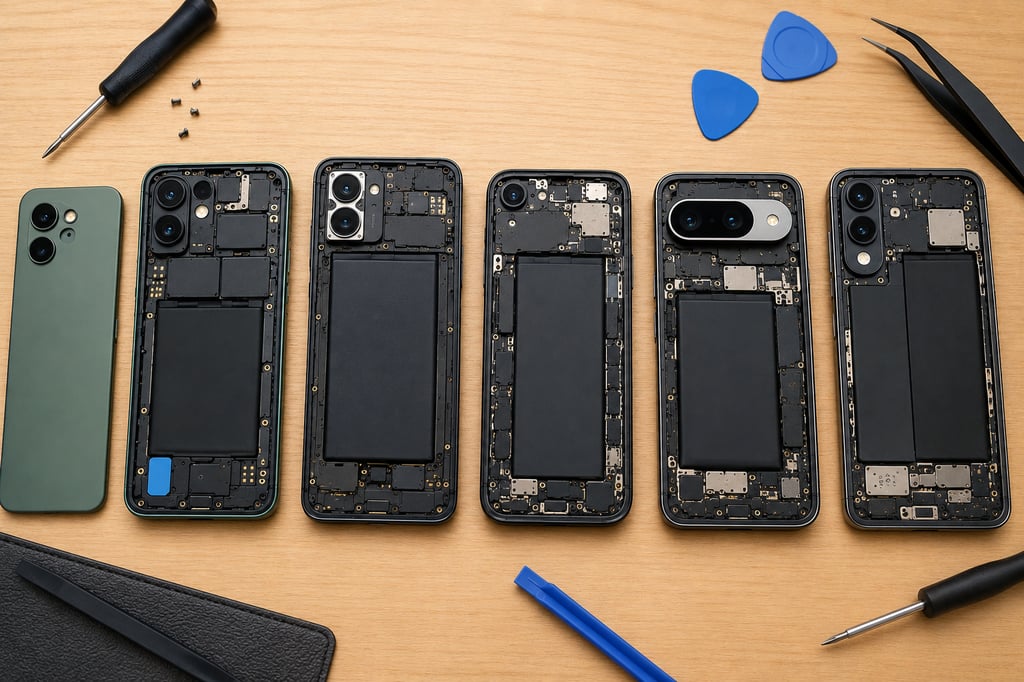
A phone becomes expensive to own when a worn battery, cracked screen, or damaged charging port turns into a complicated repair.
In 2026, some manufacturers make those jobs considerably easier, but repairability still varies widely between models.
Fairphone has centered its phones on modular, owner-replaceable hardware for more than a decade. HMD has adopted similarly repair-friendly designs, while Apple and Google have made common repairs easier on some mainstream models.
For this comparison, we prioritized current phones with independent iFixit repairability scores, available parts or repair documentation, and practical access to components such as batteries, displays, and charging ports.
Most repairable phones at a glance
| Phone | iFixit score | Best for | Main drawback |
|---|---|---|---|
| Fairphone Gen. 6+ | Gen. 6 design: 10/10 | Most replaceable components | Limited availability compared with major brands |
| HMD Skyline | 9/10 | Easier DIY repairs | Shorter software support |
| iPhone 17e | 7/10 provisional | Apple buyers | USB-C repair remains difficult |
| Google Pixel 10 | 6/10 provisional | Android buyers | Display still relies heavily on adhesive |
iFixit changes its scoring methodology over time, so the scores are useful indicators rather than perfectly standardized measurements across every phone generation.
Fairphone Gen. 6+ offers the most modular design
The Fairphone Gen. 6+ keeps the modular construction of the Gen. 6, which earned 10/10 in an iFixit teardown.
Owners can replace 12 modules, including the battery, display, cameras, and USB-C port. The battery and screen avoid adhesive, and Fairphone sells replacement parts directly.
The Gen. 6+ also carries a five-year warranty and software support through 2033. That combination addresses both sides of device longevity: replacing worn hardware and keeping the phone supported after the repair.
HMD Skyline also performs strongly on hardware repairability. iFixit gave it 9/10, citing its screw-assisted opening mechanism, replaceable display, accessible battery, and modular charging port.
Its shorter software-support period is the main trade-off. Buyers planning to keep a phone for several years should compare repairability with current software support windows before choosing a model.
iPhone 17e and Pixel 10 bring easier repairs to major brands
The iPhone 17e received a provisional 7/10 from iFixit. Its dual-entry design lets technicians reach internal components from either side, while Apple’s electrically releasable battery adhesive makes battery replacement easier.
Apple also publishes repair manuals and sells replacement parts. The USB-C port remains a more involved repair because several components must be removed to reach it.
Google’s Pixel 10 received a provisional 6/10. Its back panel can be removed without heat, battery removal is easier than on previous Pixels, and the USB-C board is replaceable.
The display still relies heavily on adhesive, limiting the Pixel’s score. Google offsets some of that hardware complexity with seven years of OS, security, and Pixel Drop updates.
Samsung’s self-repair program does not eliminate hardware complexity
Samsung’s US Self-Repair program provides genuine parts, tools, and documentation for supported Galaxy phones. One UI 9 is also making repair support easier to access from the device.
Recent Galaxy hardware remains more difficult to work on than the highest-scoring phones in this comparison. The Galaxy S25 Edge received a provisional 5/10 from iFixit despite improvements to battery removal and a modular USB-C port.
Its display and back cover still rely heavily on adhesive. Samsung therefore offers stronger access to DIY repair resources than its hardware repairability score alone might suggest.
An independent iFixit score for the Galaxy S26 series was not available when this article was written, so we have not ranked those models alongside independently tested phones.
Which repairable phone should you buy?
The Fairphone Gen. 6+ offers the most repair-friendly hardware in this group, with 12 replaceable modules, readily available spare parts, and software support through 2033.
HMD Skyline provides similarly accessible hardware but a shorter software-support period. The iPhone 17e is the strongest option here for Apple buyers, while Pixel 10 combines improved repair access with seven years of updates.
For long-term ownership, we recommend checking four things before buying: whether the battery and display can be replaced without excessive adhesive, whether high-wear components such as the charging port are modular, whether spare parts and manuals are available, and how long software updates will continue.
Also read: Samsung is reportedly exploring self-healing display glass for the Galaxy S27 Ultra, which could reduce surface damage without necessarily making the phone easier to repair.
>

An old phone can still work in 2026, but age alone does not determine whether a carrier will activate it. A hand-me-down smartphone from several years ago may work perfectly, while an older 4G phone can fail because it lacks the right voice support or carrier compatibility.
Four checks matter most: the phone needs current network support, VoLTE, a compatible IMEI result, and an unlocked status. Software support matters too, especially if you’ll still use the phone for apps, payments, email, or other sensitive tasks.
T-Mobile’s current BYOD guidance recommends checking the IMEI, the phone’s unique device identifier, and unlock status before activation. Its compatibility tool can return fully compatible, partially compatible, incompatible, or blocked.
2G and 3G phones are effectively out
The major US networks have moved beyond the technologies many older phones were built around.
T-Mobile’s Network Evolution page says its 2G GSM network was retired on August 3, 2026. Its 3G UMTS network was retired in July 2022, following the shutdowns of Sprint’s 3G CDMA and LTE networks earlier that year.
AT&T phased out 3G in February 2022. Verizon completed the retirement of its 3G CDMA network at the end of 2022 and says 4G devices without VoLTE also lost calling, texting, and data service.
That means a 2G- or 3G-only phone is no longer a practical option on the major US networks. A 4G label alone is not enough either. The phone still needs VoLTE and carrier support.
Run these four checks before activating an old phone
| Check | Pass | Warning or failure |
|---|---|---|
| Network | Supports the carrier’s LTE or 5G bands | 2G/3G-only or missing important bands |
| Voice | Supports VoLTE on the destination carrier | LTE data works, but voice support is missing |
| IMEI | Carrier reports fully compatible | Partial, incompatible, or blocked |
| Unlock | Device is unlocked | Still locked to another carrier |
Network support depends on the exact model. Phones sold for different carriers or countries can support different frequency bands, so an imported phone may connect to LTE while still missing bands needed for reliable US coverage.
VoLTE, or Voice over LTE, is just as important. A phone can support LTE data without supporting the carrier’s LTE voice service. Verizon’s shutdown guidance specifically says 4G non-VoLTE devices are no longer supported.
Run the IMEI through the destination carrier’s compatibility checker rather than relying only on the specifications. A fully compatible result is the safest sign that activation should work, while a partial or incompatible result deserves a closer look before buying a SIM or switching service.
The phone also needs to be unlocked if it is moving to another carrier. Unlock requirements vary, but carriers commonly require eligible devices to be paid off and in good standing.
Software longevity belongs in the decision too. Recent Samsung and Google phones now receive much longer software support windows, while older models may already have stopped receiving security updates.
A new SIM cannot fix an incompatible phone
Once the phone passes those checks, activation itself is usually straightforward.
A compatible device can use either a physical SIM or eSIM if the phone and carrier support it. Changing the SIM type cannot add missing LTE bands, VoLTE support, or carrier approval.
T-Mobile says many smartphones released since 2020 support eSIM, although availability varies by model and region. With eSIM, activation can often complete within minutes.
After activation, test voice calls, texts, and mobile data. If data or MMS does not work, check the APN settings. Some older and imported devices may require manual configuration.
If you’re transferring an existing phone number, keep the old service active until the port finishes. T-Mobile says number transfers can take from a few minutes to several hours.
A phone can connect and still be too old to use safely
Carrier compatibility is only one part of keeping an old phone useful.
Older devices may no longer receive security patches or current app versions. More than a billion older Android devices were estimated to be outside Google’s current security-update coverage earlier this year, making unsupported Android phones a separate concern from whether they can connect to a cellular network.
Apps can impose their own cutoffs too. WhatsApp, for example, is ending Android 5 support in September 2026.
Before putting an old phone back into regular use, check whether it still receives security updates and whether the apps you rely on still support its operating system.
If the phone supports the carrier’s LTE bands and VoLTE, passes the IMEI check, is unlocked when necessary, and still receives acceptable software support, it can remain perfectly usable in 2026. If one of those checks fails, a new SIM is unlikely to rescue it.
Also read: If replacement is unavoidable, our guide to the most repairable phones in 2026 compares current models by repairability, parts access, and software support.
>

‘Miami Vice ’85’ Movie Adds Danny Ramirez To Cast

Junket Bank TV Anime Premieres on October 5 – News

Emi Martinez transfer news: Chelsea agree £7.5m fee for Villa goalkeeper
-

 movies3 months ago
Search For Canadian TV Actor Stewart McLean Now Homicide Investigation
-

 Fashion9 years ago
These ’90s fashion trends are making a comeback in 2017
-
Fashion9 years ago
According to Dior Couture, this taboo fashion accessory is back
-
Fashion9 years ago
Model Jocelyn Chew’s Instagram is the best vacation you’ve ever had
-
Fashion9 years ago
Emily Ratajkowski channels back-to-school style
-
Fashion9 years ago
9 Celebrities who have spoken out about being photoshopped
-
Fashion9 years ago
Your comprehensive guide to this fall’s biggest trends
-

 Anime3 months ago
Rurouni Kenshin: Hokkaido Arc Manga Takes 1-Issue Break – News