Connect with us

Sports

‘The Athletic Football Show’ previews the 2026 Cleveland Browns

Published

on

Browns tight end Harold Fannin Jr. runs with the ball as a pair of Cincinnati Bengals try to bring him down.

The Browns found a potential future star in tight end Harold Fannin Jr. in the 2025 NFL Draft. Gregory Shamus / Getty Images

“The Athletic Football Show” is previewing all 32 teams before the start of the 2026 NFL season. Below are select quotes from the show’s preview of the Cleveland Browns. The quotes are edited for clarity. You can watch the whole preview on YouTube and in the embedded video below, or listen to the full AFC North preview wherever you get your podcasts.

Dave Helman on what excites him most about the Browns: It is probable that last year set my expectations too high. What the Browns did in last year’s draft — you find a future All-Pro-caliber guy in Carson Schwesinger, you redo the tight end room and find a really fun one in Harold Fannin. The running back room is completely revamped; you have two good ones now. Hopefully Mason Graham has more to show you in Year 2. To have all of that from one year, and then you turn around and have two first-round draft picks and a top-40 pick in Denzel Boston, all three of those guys are expected to start. I mean, that’s half your starting lineup in big-time draft picks over the last two years that you have sky-high expectations for. It’s not fair that I’m over the moon about Spencer Fano, KC Concepcion and Denzel Boston mainly because of what the rookie class did last year. If they’re even close to as impactful early as last year’s rookies were, this is an incredibly exciting team by the end of 2026.

Derrik Klassen on what he’s watching the first month of the season: What does the defense look like and how different is it going to be? I think a lot of the front structure and language should be the same. It should be a lot of attacking stuff. I think on passing downs, this thing is going to look a little bit different. Jim Schwartz played a lot more man, and his changeup really was always cover two. The tree that Mike Rutenberg is coming from doesn’t play a lot of cover two. They play a little bit less man and they play a lot more quarters, especially on early downs. If you’re playing it with match principles, it does become man, so that’s more what I expect to see because that’s still how you want to use these corners. That’s still what Denzel Ward does best. That’s still what Tyson Campbell does best. How many growing pains do we get in the first four-to-six weeks where I think every team is really trying to figure out what they want to be and what they want to call?

Robert Mays on what would be a successful season for the 2026 Browns: Is that excitement about the young core maintained throughout the season? When we get to the end of this year, are we in a spot where you’re looking at the collection of guys — (Quinson) Judkins, Schwesinger, Graham, Fannin, Fano, Concepcion, Boston, (Emmanuel) McNeil-Warren — and you’re like, ‘Man, there is a really exciting, promising group of young players here.’ If we find ourselves in a conversation on Dec. 15, being like, ‘You look at the 2027 quarterback carousel and the guys that are going to be available in the draft and the Browns have a top-five pick. Imagine Dante Moore with this group of players. What can this look like?’ If that’s the conversation we’re having after the college football season has wrapped up and we’re transitioning to draft time, that to me is success for the 2026 Browns.

Subscribe to “The Athletic Football Show” on YouTube

Connections: Sports Edition Logo

Connections: Sports Edition Logo

Connections: Sports Edition

Spot the pattern. Connect the terms

Find the hidden link between sports terms

>

Continue Reading

Sports

What We’re Hearing: MLS transfer window set for a hectic final week

Published

on

There’s less than a week left in the summer transfer window in MLS. It is shaping up to be quite a busy week.

This is The Athletic’s latest intel ahead of the deadline on September 2 and the teams to watch:

Sporting KC overhaul

Sporting KC, with two open designated player spots and a mandate from ownership that “money is not an obstacle” is the most interesting team over the next six days, even though they are dead last in MLS at the moment.

The club is hoping to supercharge its rebuild with those two DP slots after adding 17 new players this year and shipping out 16. SKC already signed Brazilian winger Andre Luiz for a club-record fee of $18 million and it’s not a guarantee that record will stand by next week. 

“We’re going to be as aggressive and as bold as we can,” sporting director David Lee told The Athletic.

The shopping list is simple: A center forward and an attacking midfielder with those two DP spots. Identification and execution, obviously, is much more difficult. 

A sporting director at a different MLS club this week quipped to The Athletic that spending $12 million or more is not as easy as it looks. Players in these categories are typically in better situations and have other European options. It’s easy to overspend on the wrong player. SKC are being careful in their target lists not to do so.

It’s been a busy week already for SKC. A shock departure of leading scorer Dejan Joveljic ($6 million, Seattle Sounders) created one of the DP openings as well as a valuable injection of $3 million GAM. 

Dejan Joveljic moved on from Sporting KC to the Seattle Sounders in a surprising deal. (Luiza Moraes / Getty Images)

SKC then signed U.S. youth international midfielder Owen Wolff from Austin FC for $4.5 million. He will occupy a U-22 slot. A high-quality, MLS-proven player hitting the salary cap at a controlled, low cost.

Sporting KC are in advanced talks to sign forward Paulos Abraham from Hammarby, sources say. The 24-year-old former Sweden youth international has 11 goals and three assists in just under 1,400 minutes this year.

The club also made an audacious attempt to sign Nico Fernandez Mercau from NYCFC in a potential $25 million deal, as previously reported, but sources said last week those talks are not active.

Rapids reloading

The Colorado Rapids aim to bring in multiple significant attacking reinforcements this summer. One is on the way.

Colorado is finalizing a deal to sign Israel international forward Sayed Abu Farkhi from Maccabi Tel Aviv for a $6 million fee, sources tell The Athletic. He will occupy a U-22 initiative slot.

The highly-rated 20-year-old forward was on the radar of numerous clubs in Europe. Abu Farkhi made his senior Israel debut this summer after excelling at the youth national team level. Abu Farkhi has five goals in 401 minutes already this season after 10 goals across all competitions in 2,477 minutes last year.

Colorado remains aggressive in pursuing their top targets for a DP winger, sources say, as the club looks to immediately reinvest money received in the deal that sent Lucas Herrington to Hull City ($17 million guaranteed). Those top targets are complex deals for a mix of players with other options or clubs not looking to sell. The next few days at the end of the transfer window is crucial.

Paxten Aaronson is a key contributor for the Colorado Rapids. (Ron Chenoy / Imagn Images)

Brazilian forward Rafa Navarro continues to have a ton of serious interest from other clubs. Colorado has received bids in each of the last several transfer windows and had braced for an exit at some point in 2026 but that hasn’t happened yet.

Abu Farkhi can ease into the team with Navarro seeing out 2026 in Colorado or will be ready to take more minutes if a huge offer arrives. Either way, the Rapids understand Navarro may move on over the next transfer window or two and want to be prepared, sources say.

If that departure comes, Colorado would have another DP spot open beyond Paxten Aaronson. 

Colorado wanted to rejuvenate the attack under head coach Matt Wells this summer and there are plenty of moving pieces. The defense is strong even with Herrington out, as Loic Williams was an under the radar signing that has settled immediately in the team.

St. Louis look to add in attack

St. Louis City is also looking to make significant additions to their attack as the club is on a 12-game unbeaten run.

The club has an open DP spot and aims to use it on a center forward if they can get a top target, but also is working on other possibilities. 

St. Louis City is a team pursuing American forward Damion Downs, sources briefed on the situation tell The Athletic. Downs, 22, is expected to leave Southampton this summer. St. Louis hopes to bring him on loan but would not use a DP slot to do so, sources say. 

The forward spent the second half of last season on loan in the Bundesliga with Hanover after he fell out of favor with Southampton the first half of the year. He excelled with FC Köln in the German second tier in the 2024/25 season.

The profile the club is looking for at center forward with the DP spot is an all-around player who can do more than just score and will lead the team’s counterpress against the ball, sources say.

St. Louis has had an eventful summer, with DP attacker Carlo Holse joining as Marcel Hartel and Eduard Löwen left. St. Louis has climbed to sixth in the Western Conference along this unbeaten run under first year head coach Yoann Damet.

More outbounds coming?

MLS clubs have exported a number of players this summer, led by Herrington ($17m, Hull City) and Zavier Gozo ($15m, Crystal Palace). Further outgoings can come, though Red Bull New York forward Julian Hall just signed a contract extension to remain with the club a bit longer. 

Here are a few possible or rumored:

Nico Fernandez Mercau (NYCFC): SKC wasn’t the only team bidding on Mercau this summer, with European clubs approaching NYCFC as well. NYCFC want to keep their talisman and no deals were reached.

At the moment, NYCFC is confident in holding onto Mercau through the end of the window, a source says.

Mercau, 26, has a career-best 13 goals and five assists this season. He has been one of the  very best players in MLS since arriving last summer.

Kevin Denkey is attracting interest beyond Cincinnati. (Orlando Ramirez / Getty Images)

Kevin Denkey (FC Cincinnati): Hull City and Real Betis had bids rejected for Denkey by Cincy this summer, with the club holding out for at least $20 million, sources briefed on the negotiations say. 

Cincy signed Denkey for a fee of $16.2 million and view offers around that fee as a non-starter. The 25-year-old Togo international has scored 33 goals in a season and a half in MLS after winning the Golden Boot in Belgium.

Hull City has since signed forwards and Betis did not remain in pursuit as they were priced out. With his price tag, if Denkey is to leave in the next few days, likely only Premier League or ambitious Championship sides could make it happen.

“Honestly, it’s not easy,” Denkey told Laurel Pfahler of Queen City Press. “You have to talk to teams in Spain, you have to talk to … staff members in England (but) you need to focus here.”

Manu Duah (San Diego FC): One of the best young center backs in MLS, Duah remains at San Diego for the time being as Olwethu Makhanya (Rangers) and Herrington head to Europe.

San Diego has rejected bids far below their valuation, sources say, which is expected to be in the range of $10 million. It’s very possible Duah signs a new contract and sticks around at the club a bit longer before heading to Europe but the situation is fluid at this time of year. Progress has been made on a new deal, sources say.

Duah, 21, has been a revelation over the 18 months. He was selected No. 1 overall in the 2025 MLS SuperDraft out of UC Santa Barbara as a defensive midfielder before San Diego developed him at center back.

Jack McGlynn (Houston Dynamo): Several European clubs have approached Houston for McGlynn this summer and, while no deal has been reached, negotiations are serious, sources say.

McGlynn, 23, has 13 caps for the USMNT. He has nine goals and 13 assists in 50 appearances for Houston after arriving from the Philadelphia Union in 2025.

Houston plans to bring in a player or two irrespective if McGlynn leaves, a source says.

Marco Pasalic (Orlando City): After Hull City had a loan offer rejected and never returned with a permanent offer, it looks like Pasalic may stay in MLS for the rest of the year.

The latest enquiries from Europe are around loans again and Orlando would prefer a permanent deal if a departure was to happen.

Pasalic, 25, represented Croatia at the World Cup this summer and would be interested in a return to Europe if a deal materialized. He joined ahead of the 2025 season and had 12 goals and five assists last year.

Liel Abada (right) finds his Charlotte FC future in flux. (Dan Hamilton / Imagn Images)

Liel Abada (Charlotte FC): The plan had been for Abada to depart Charlotte FC this summer, but that is not guaranteed now. The Israeli winger has played more and been productive since returning from the World Cup break, with three goals and four assists in eight games.

Charlotte holds a contract option on Abada for 2027, which would make the winger a DP. It’s possible that is declined and he’ll depart as a free agent.

Antony (Portland Timbers): Every window, there is varying degrees of interest or bids to Portland for winger Antony and that may happen over the next week (or two, with Turkish and Middle Eastern transfer windows open longer than primary European leagues).

Antony, 24, has 18 goals and 14 assists in 101 games for the Timbers since arriving in the summer of 2023.

>

Continue Reading

Sports

Dolphins trade WR Tutu Atwell to Rams for RB Jarquez Hunter

Published

on

Los Angeles Rams wide receiver Tutu Atwell runs for a touchdown on an 88-yard pass in the fourth quarter against the Indianapolis Colts at SoFi Stadium.

Tutu Atwell was signed by the Dolphins in the offseason after spending the first five years of his career with the Rams. Jayne Kamin-Oncea / Imagn Images

The Los Angeles Rams aren’t done with Tutu Atwell after all. They have acquired their former wide receiver in a trade with the Miami Dolphins in exchange for running back Jarquez Hunter, the team announced on Thursday.

The Rams are bringing back a receiver they drafted in the second round in 2021 who spent the past five seasons with the team. Atwell was a steady producer from 2022 to 2024, catching 99 passes for 1,343 yards and four touchdowns, and Los Angeles re-signed him last offseason to a one-year, $10 million deal.

However, Atwell fell out of the rotation quickly and finished with just six catches for 192 yards and a touchdown on 15 targets. He was often a healthy scratch down the stretch of the season as the Rams leaned into three-tight end sets and had to fix their special teams units on the fly — and Atwell didn’t contribute to that phase.

Three takeaways from Rams training camp

Nate Atkins

But now, the Rams are bringing Atwell back. They feel better about their special teams numbers and are still searching for a dependable No. 3 receiver behind Puka Nacua and Davante Adams.

Hunter was a fourth-round pick in 2025, but he was pushed out of playing time by the steady presence of Kyren Williams and Blake Corum, as well as Ronnie Rivers, who contributes on special teams.

The Rams will take on $1.075 million of Atwell’s contract for this season, marking a difference of nearly $9 million from what they paid him last year. They will incur a cap hit of around $250,000 from Hunter’s deal as part of the trade.

The Rams are now likely to keep just three running backs on their 53-man roster, but they will have to decide how many wide receivers to keep beyond Nacua, Adams and Atwell, with Xavier Smith and Jordan Whittington filling special teams roles and sixth-round rookie CJ Daniels enjoying a busy training camp and preseason.

Connections: Sports Edition Logo

Connections: Sports Edition Logo

Connections: Sports Edition

Spot the pattern. Connect the terms

Find the hidden link between sports terms

>

Continue Reading

Sports

The T206 Honus Wagner: Latest historic sales and why he objected to the card

Published

on

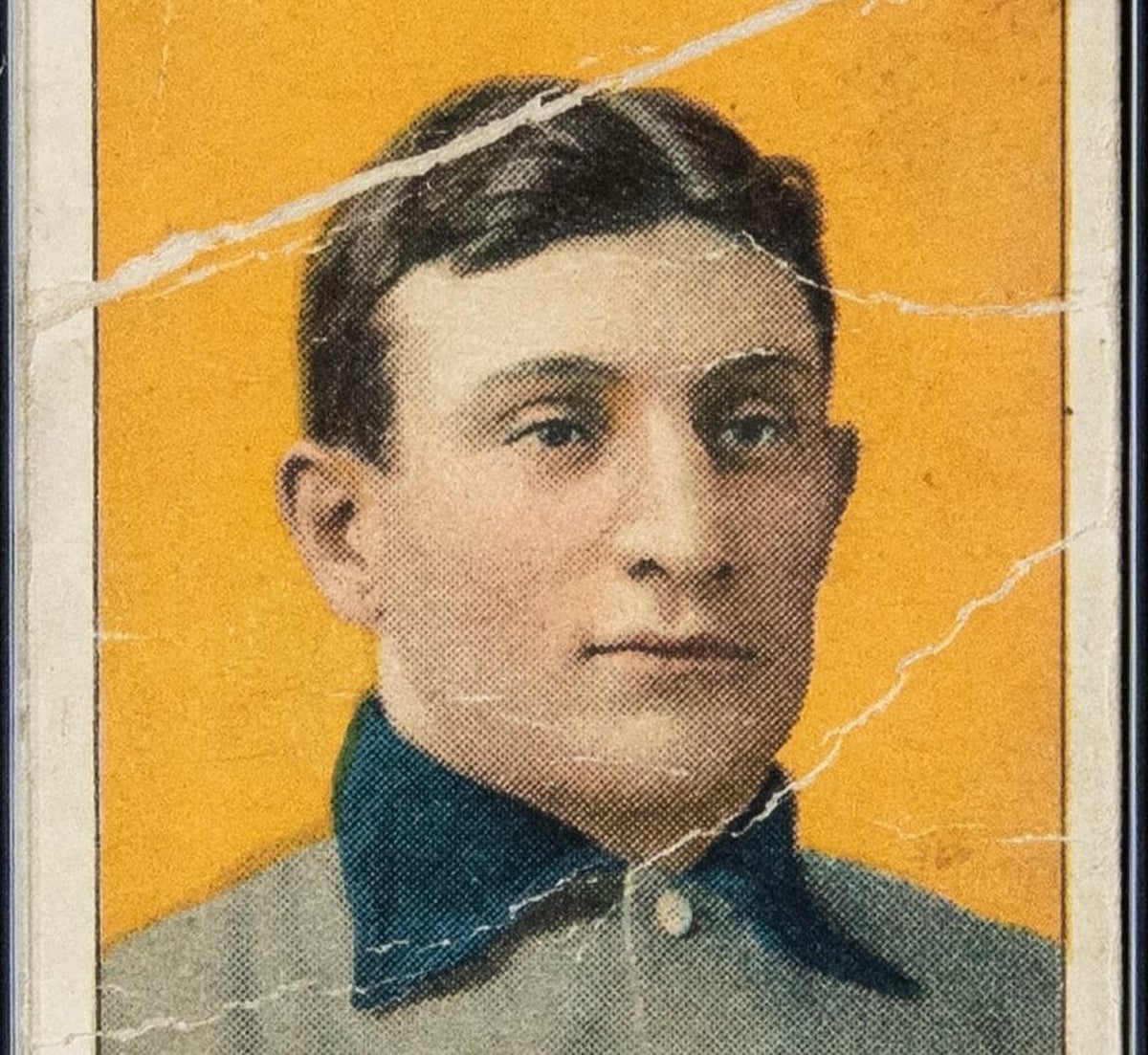
Only a T206 Honus Wagner trading card can look like it was half-eaten by a dog and still sell for nearly $500,000 in 2022 and carry an estimated value of nearly four times that price today. Only a T206 Honus Wagner can be cut with a scissors around the outline of the player and be reconstructed with bones of other cards and still sell for more than $1 million.

No athlete in the history of sports card collecting truly carries the same weight as Wagner and his rare, expensive and almost mythical T206 card, first produced in 1909. Even though more modern athletes like Michael Jordan, Kobe Bryant, Shohei Ohtani and LeBron James appear on cards that have now sold for at least $10 million, there’s still only one “Holy Grail” card — the T206 Wagner, which took the top spot in The Athletic’s list of the 10 most important baseball cards of all time earlier this year.

“You’ve got the rule of Wagner,” said Chris Ivy, director of sports auctions at Heritage. “I’ve never seen any collector lose money on one.”

The general consensus among experts is that there are around 60 T206 Wagner cards in existence, bringing scarcity without the help of serial numbers and purposefully limited manufacturing used with modern cards.

“(Wagner) has just become the symbol for baseball card collecting,” Ivy said. “Given how popular the T206 set is from the American Tobacco Company, distributed multiple brands over a multi-year period, but only about 60 people in the world have the capability to complete the set because it requires Honus and (Eddie) Plank and the (Sherry) Magee error.
This (Wagner) card is that missing link for anyone that’s trying to collect the set.”

An example of the T206 Honus Wagner card with a Sweet Caporal back passed down through the Shields family over more than 100 years before it was sold at auction earlier this year for $5.1 million. (Photos courtesy of Goldin Auctions)

Former ESPN and news anchor Keith Olbermann, who’s owned five different T206 Wagners in his lengthy time as a baseball card collector, said the mystique is the simplest part of the story for the T206 Wagner.

“It was rare from the moment it came out,” said Olbermann. “The real explanation for why there is a mystique about this card is from what was certainly in the first century of sports memorabilia the most famous baseball card set and the card set that was the nostalgia point for every collector before probably 1940, and became this revered American touchstone for every collector before 1980, is simply it has always been scarce and it has always been a mystery.”

Olbermann said the topic of added value to the T206 Wagner card because of its scarcity first became a talking point almost accidentally while the vast T206 set was still being produced.

“There is a ‘letter to an editor’ kind of column about serious stuff in an Atlanta paper in 1911 that asks, ‘Is there an extra value to a Honus Wagner cigarette card?’ 1911! So this has been going on forever,” Olbermann said.

But why was there talk of the Wagner card carrying extra significance even then? The T206 set was produced between 1909 and 1911 by the American Tobacco Company, with the sprawling set’s more than 500 cards going into packs of cigarettes and tobacco across 16 brands owned by the company. (It didn’t get its name until well-known collector Jefferson Burdick devised a catalog system for his 1939 book “The American Card Catalog.” The “T” in T206 stands for “tobacco,” as there were also designations for cards made by bakeries, ice cream makers, publications, etc.) While most T206 cards were printed in such numbers that they are still plentiful today, more than 100 years later, production of the Wagner card was stopped early on.

“I have always thought, looking at what we have from the papers at that time, that perhaps, although it may not have been planned, at some point they might have turned this into (what) nowadays would have been called the ‘chase’ card,” Olbermann said. “They saw the value in having a Honus Wagner that was impossibly scarce, and then there suddenly was some sort of hullabaloo about it being withdrawn and the kids would still be out there trying to get it.”

Wagner was a Pennsylvania-born shortstop who played most of his 21-year, Hall-of-Fame career for Pittsburgh, where he won eight batting titles and a World Series. But the legend of Wagner’s refusal to be displayed on a cigarette card will forever accompany his rare T206 card.

Within Wagner’s chapter of The Athletic’s “Baseball 100,” author Joe Posnanski wrote that in 1909 the American Tobacco Company paid $10 to John Gruber, Pittsburgh’s most-read and influential sportswriter, to secure Wagner’s permission. The payday didn’t convince Wagner, though, spurring the Pirates star to pen this letter to Gruber:

Dear John,

I don’t want my picture in cigarets, but I don’t want you to lose the $10, so I’m enclosing my check for that sum.

Hans Wagner

The ATC had already printed some Wagner cards — estimates range from 50 to 200. But after getting word from Gruber, they immediately stopped. Posnanski wrote that baseball card historian Scot A. Reader estimated there were 370 million T206 cards printed from 1909 to 1911. That would be about 700,000 copies per card.

“The assumed answer for at least 60 years was that it was a simple question of his not wanting to have his picture associated — or his image or his reputation associated with cigarette cards or with cigarettes,” Olbermann said. “
And he refused to give permission and they printed the card anyway and had to withdraw it and had to literally send agents into the street to get the ones back that had been released.

“Whether or not that’s true, whether it was more about whether or not Honus got paid enough, it’s hard to say.”

In 1914, a letter written by Wagner with the headline “Wagner’s Advice To Boy Friends” appeared in the Pittsburgh Press. The first piece of advice? “I don’t think you could use a better line of talk than to tell a boy not to use tobacco and to let drink and lies alone; keep good hours, take plenty of exercise and not over-exert,” Wagner wrote.

But maybe the most concrete indication that Wagner’s disdain for cigarettes played the primary role for his desire to be excluded from the T206 set came within a newly resurfaced 1909 newspaper interview.

Paul Reiferson, an investment banker and photography collector, is working on a book about celebrated baseball photographer Charles Conlin. Reiferson began digging into the Wagner smoking/tobacco topic after seeing a Conlin 1914 photo of Wagner where the former Pirates shortstop wore “a little bit of tobacco juice” at the corner of his mouth.

“It just made me wonder whether we had all the facts about Wagner and his feelings about tobacco, given this legend,” Reiferson said. “I just followed that question into the newspaper archives.”

Reiferson sent The Athletic a Sept. 21, 1909 article published in the New Orleans States (originating from the Cincinnati Times Star) he discovered while researching for the book.

The reporter described Wagner’s reaction to being asked for his consent to appear in the T206 set as one that “showed that he had given the matter some thought before he made (his) answer.”

Wagner then said, “Not a chance in the world for me to allow myself to be used for advertising. Not that I think it makes any difference one way or the other, as I don’t amount enough to cut any ice in a matter of this kind. But I am opposed to the use of cigarettes, and if I can help it I would never have a person who smokes one within forty feet of me.

“If having my picture would help the sale of those cigarettes, I’d feel pretty mean about it, and so I must refuse to permit my picture to be used. If it were for a cigar or something else that looked worthwhile, I wouldn’t object. But cigarettes — never.”


As evidenced by the last few months, any T206 Wagner card in any condition that hits the open market sells for at least $1 million, and that’s typically a very conservative baseline.

Case in point, the T206 Wagner that just came off the block at Heritage Auctions.

The even rarer variation of the card (it’s one of three known with Piedmont cigarette advertising on its back — most have Sweet Caporal branding), which only carries the lowest condition grade of “Authentic” from SGC, sold for $5.86 million in an auction ending last weekend. It broke the record for the highest publicly known sale of an “Authentic” T206 Wagner by more than $2 million. The previous record occurred in February 2026 when the “Garagiola Wagner” (a Sweet Caporal) — once owned by famed former MLB player and broadcaster Joe Garagiola — sold for $3.599 million. This same copy fetched $2.52 million five years earlier.

The recently sold “FrankenWagner,” previously owned by Olbermann is also known as the “Die-Cut Wagner,” because the card was literally cut around the face and torso of the player and then pieced back together with parts of other T206 cards to create a restored version of one of the most famous trading cards ever produced. With a “restored” tag from grading service CGC, the card sold for $1.34 million via auction through Love of the Game earlier this month.

“The entire hobby and the structure of values of cards in this crazy hobby, the Wagner sits at the top and every other value of every other card is driven by what is the value of a Wagner,” Olbermann told The Athletic leading up to the auction.

In February 2022, a T206 Wagner with nearly half the card torn off and given a “Genuine” grade from PSA sold for nearly $475,960 through SCP Auctions. Online card sales database Card Ladder places that card with a current value of $1.83 million.

Overall, there have been more than 20 publicly known sales of a T206 Wagner north of $1 million. It was reportedly the first sports card to sell for more than $1 million in 2000. In 2016, it became the first publicly known $3 million sale of a sports card.

The T206 Wagner with the highest grade by some distance is the PSA 8 (on a scale of 1-10) owned by Arizona Diamondbacks owner Ken Kendrick. It was the first card ever graded by PSA, which now dominates the grading industry, but the edges of the card were trimmed before it was graded to make it appear to be in better condition than it actually was. Trimming is a major sin in the card world and enough to prohibit a card from getting a numbered grade in the modern landscape. But as Kendrick told Sports Card Investor in an interview last year, he believes that the card being the subject of wrongdoing makes it more valuable, like John Dillinger’s gun.

Top 5 publicly known T206 Wagner sales to date

  1. $7.25 million — SGC 2 grade; best offer; private sale; Aug. 4, 2022
  2. $6.61 million — SGC 3; auction via REA; Aug. 15, 2021
  3. $5.86 million — SGC authentic (Piedmont); auction via Heritage; Aug. 21, 2026
  4. $5.12 million — PSA 1; auction via Goldin; Feb. 21, 2026
  5. $3.72 million — PSA 1.5; auction via Goldin; Oct. 9, 2022

Sales data via Card Ladder

Cards like Topps’ one-of-one Superfractors and Rookie Debut Patches will continue to be produced with the intended purpose of maximizing scarcity and values, with top stars of today likely reaching the heights of the prices for a T206 Wagner. But with so many twists and turns in the plot of the T206 Wagner’s lifespan, none of them will ever carry a story quite like it.

“You’ve got trophy hunters out there that want the best of the best.” Ivy said. “The Wagner card, it’s the ultimate trophy piece.”

The Athletic maintains full editorial independence in all our coverage. When you click or make purchases through our links, we may earn a commission.

>

Continue Reading

Trending

Copyright © 2017 Zox News Theme. Theme by MVP Themes, powered by WordPress.