
movies
Thierry Frémaux Talks Oscar, Feminist Washing, AI, Berlin Backlash


Cannes Film Festival Director Thierry Frémaux took to the stage on Monday for his traditional meeting with the press on the eve of the opening ceremony.
In a sign of the complexity of the times, he was grilled on everything from AI to new Oscar submission rules; selfies; the festival’s gender parity record; steps taken to Berlinale backlash, the Hollywood studios and Fast and Furious.
On whether the festival had taken steps to prepare its jury and the film teams on how to deal with thorny political questions in the light of the Berlinale’s rocky ride, Frémaux did not give a direct answer.
“The question raised in Berlin is one that regularly comes up at the festival, which for a long time was considered as a very political festival. Is it more or less than before? We’re living in different times, it’s hard to make a comparison,” he said.
Frémaux waded in to defend Wenders who found himself at the heart of the Berlinale backlash after he declared at the opening jury conference that filmmakers should “stay out of politics”.
“I would like to pay tribute to Wim Wenders because I think he was subjected to criticisms that weren’t really justified. I understood what he wanted to say, but I think people didn’t want to understand what he was saying,” he said.
“He wanted to say that the politics should be on the screen. That’s what we say at Cannes… the festival considers that political questions are primarily those of the artists’ voices and the voices of the artists whose work is being shown.”
He said that while filmmakers in Official Selection were free to express or not express their political views if questioned, it was not his job or that of the jury or management to wade in on politics.
“We’re in a world partly at war, a world in a fragile state in terms of dialogue between nations. We don’t want to add to the confusion with our analysis of what’s going on… I often say, and I deeply believe this, that art, and cinema in particular, are instruments of peace, even when they are calling for rebellion and freedom.”
Gender Parity
Frémaux came with notes for a question on the festival’s track-record over gender parity, which he said he had been expecting.
The fact that only five of the 22 films in the running for the Palme d’Or this year are directed by women, against seven in 2025, has sparked criticism from French gender-parity group Le Collectif 50/50 in the lead-up to the festival.
The group, which was created in the wake of the MeToo movement, has accused the festival of “feminism washing” in relation to its official poster featuring Geena Davis and Susan Sarandon in 1991 road movie Thelma & Louise.
A journalist from the AFP asked why in Cannes only 23% of the main prize contenders were women, while the Berlinale managed to approach parity this year, with nine of the 22 Golden Bear contenders by women.
Suggesting her question had been prompted by the Le Collectif 50/50 poster comments, Frémaux responded: “At no moment would we have chosen an image of Geena Davis or Susan Sarandon or Ridley Scott’s film for the poster to make ourselves look feminist.”
He acknowledged that in the past the festival’s track record had been questionable, evoking the selection in 2012 when not a single female director made it into the main competition, but said it had striven in recent years to play its part in rectifying the situation.
He said that Cannes had been one of the first festival to sign up for Le Collectif 50/50’s equality charter in 2018 and had acted on its stipulation that juries and its government body achieve gender parity, but noted that there is no clause in the charter demanding parity in the Official Selection.
Studying his notes, Frémaux said that 28% of the films submitted this year had been by women, while female-directed films accounted for 34% of the across the entire selection and 38% in the short film competition.
“Today we’re seeing more and more women directors coming into cinema, so they’re gradually making their way into the competition,” said. “The figures show its moving forward, but also that it’s slow, that it’s not enough.”
Frémaux said the entire cinema industry had to get behind a gender parity push, pointing to the challenges for female directors to make their second feature as well as the need for more cinema made from a female point of view.
“As in literature and in music, we need the world seen from a female perspective, a woman’s sensibility, to be more present in the world of film,” he said.
The festival director promised fresh dialogue with interested parties in future but said negative campaigns on social media were not the answer.
New Oscar rules
This year’s edition of Cannes comes just days after the Academy of Motion Picture Arts and Sciences (AMPAS) unveiled a game-changing shake-up of the eligibility rules for the non-English language Best International Feature Film category, which will lend even more weight to the Palme d’Or winner.
Under the new rules, as well as being submitted by a country or region via an Academy-approved selection committee, a non-English language film can also become eligible for consideration in the category by winning the top prize at qualifying festivals Berlin, Busan, Cannes, Sundance, Toronto or Venice.
Frémaux welcomed the changes, suggesting it was sign of the rise of international films in the overall Oscar race, citing 19 nominations in the run-up to the 98th Academy Awards for films which screened in Cannes last year.
“When people say that America is turning inward, it’s not true. In any case, Hollywood is opening up to the international scene, opening up to universality; that’s what Cannes is all about, it’s about universality,” he said.
He acknowledged that the new rules would avoid a situation such as that of the 2026-26 Oscar cycle in which Jafar Panahi’s It Was Just An Accident ran as France’s candidate rather than for Iran, where his anti-government stance means he is unlikely to ever be the country’s official candidate.
Frémaux added it would also open up the possibility of a country with a strong crop of films having more than one film in the running in the category, noting the strong showing for Japan and Spain in Official Selection, with three films each.
He downplayed a question on whether the rule change might influence the jury’s decision and sway them towards awarding the Palme d’Or to dissident filmmakers who would benefit from the award, such as Iranian director Asghar Farhadi and Russian director Andrey Zvyagintsev, who are in competition with Parallel Tales and Minotaur this year.
“The jury is nine people. There is not one political conscience, there are nine personal positions… It could be there that there is someone on the jury who is extremely politicised. Paul Laverty might be very political, he writes very political films but that perhaps he not like that as a spectator,” he said, referring to the UK writer and longtime Ken Loach collaborator who is in the jury this year.
“Cineastes very often like cinema that is different from their own, and not the same as their own… even last year, I won’t reveal the jury’s secret, I never felt that the favorable opinion that ultimately emerged in favor of Jafer Panahi had the slightest the political bias.”
AI
Frémaux was also asked his opinion on AI, and what implications of the technology for the filmmaking.
“Artificial intelligence is what the electric bicycle is to the bicycle. To ride an electric bicycle, you need to know how to ride a bike,” responded Frémaux. “It’s becoming a bigger subject in cinema. We have to be on our guard, but at the same time understand it a bit,” he said.
“The real question is what does it mean for our lives, our existence, our children,” he said. “What are the rules. The Oscars decided recently that an AI character cannot run for the best actor prize. That makes perfect sense.”
He likened the current debate around AI to that around the arrival of digital technology and special effects, and move away from celluloid and chemicals, evoking questions around whether films with digitally manipulated images are less authentic that those in the works of F. W. Murnau Murnau, Erich von Stroheim and the Lumière brothers.
Frémaux suggested that films made without AI or special effects were a bit like organic wine.
He suggested that the last “organic film” was Francis Ford Coppola’s Apocalypse Now, citing the Flight of the Valkyries helicopter attack scene which was shot live on 35mm.
“The number of helicopters that we see in the film is the number of helicopters that he had,” said Frémaux, suggesting contemporary directors can now create such scenes with special effects, adding helicopters at will.
He addressed rumors ahead of the festival that it had been mulling showing an AI film this year as untrue, saying no such film had ever been submitted for consideration.
“If it had been offered to us, we would have watched the film, and what would we have done?
Would it have been important for what it says about the history of cinema or the future of cinema?,” he said, adding that his mind was not made up on what would have been the correct course of action.
“What I can say with certainty in relation to artificial intelligence is that we are on the side of the artists, the screenwriters, actors and voice actors. We stand with everyone whose job could be negatively impacted by artificial intelligence. It requires legislation. We need to control this.”
>

Another hockey book adaptation has entered the chat.
Netflix is currently building out its cast for the series adaptation of Hannah Grace’s Icebreaker book that kicks off the Maple Hill series. This in addition to their show The Sticks that is also currently in the works.
For everything we know about Netflix’s Icebreaker book adaptation so far, read on.
When will Netflix’s Icebreaker series adaptation come out?
A release date has not yet been set. The show has begun to assemble its cast.
Who will lead the Icebreaker show at Netflix?
Daisy Jelley (Poser, How To Have Sex) will portray Anastasia “Stassie” Allen, and Connor Simos (Subversion) will portray Nate Hawkins in the college hockey drama series.
Who else is in the cast of Netflix’s Icebreaker adaptation?
Gabriel Tierney (Rivals, Enola Holmes 2), Auliʻi Cravalho (Moana), newcomer and professional athlete Peter Berry, Chaneil Kular (Best of the Best, Sex Education), Devin Craig (Sex Lives of College Girls, Maize) and Aidan Shaw (We Were Liars, Heated Rivalry, Finding Her Edge) have joined the ensemble cast.
Tierney will play Aaron; Cravalho will portray Lola; Berry is Robbie; Kular will play JJ; Craig will portray Henry and Shaw is Russ.
What is Hannah Grace’s Icebreaker book about?
Stassie is a transfer athlete gunning for Olympic gold. Nate is the campus star chasing the NHL. When an accident forces their teams to share one rink, Anastasia Allen and Nate Hawkins collide—and discipline gives way to obsession, because the only thing more dangerous than wanting to win is wanting each other.
Who else is behind Netflix’s Icebreaker series?
Jade Halley Bartlett (Road House, Doctor Strange in the Multiverse of Madness, Miller’s Girl) created and executive produced the series. Amanda Lasher (Gossip Girl, The Bold Type, Togetherness) serves as showrunner, writer and excutive producer. Grace also executive produces along with Alex Cooper, Matt Kaplan and Mina Lefevre for Cooper’s Unwell Productions.
>
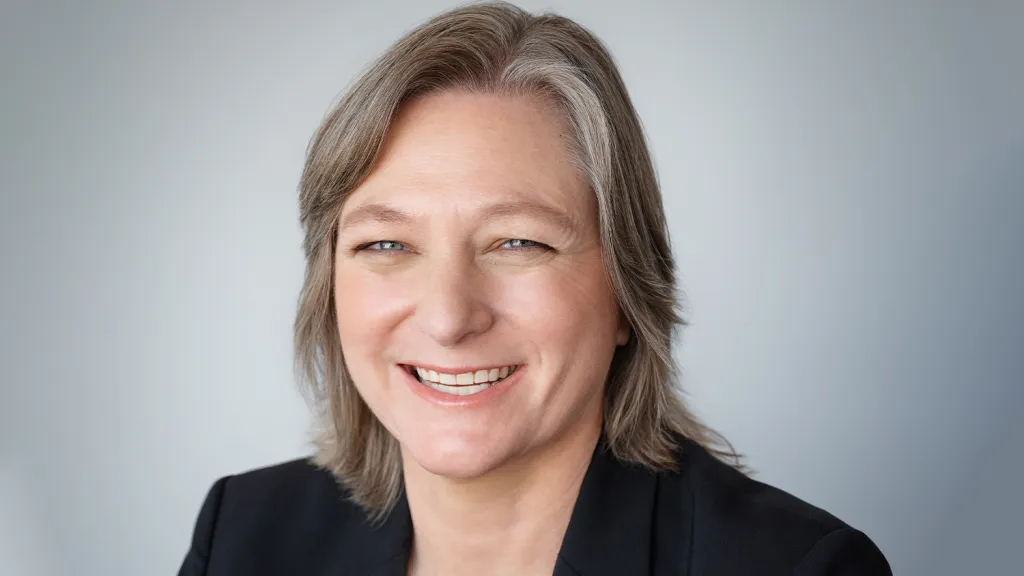
One of the biggest executive questions about Paramount following its pending acquisition of Warner Bros. Discovery — who will lead streaming — may have been answered.
Cindy Holland is leaving Paramount where she was Chairman of Direct-To-Consumer since the Skydance-Paramount merger having served as an advisor to Skydance CEO David Ellison prior to that. She announced her departure in a company memo, which you can read below.
The move leaves HBO’s Casey Bloys as the likely streaming head of the combined Paramount-WBD.
“Cindy is one of the most exceptional executives in our industry — a force of nature whose impact on Paramount over the past year has been significant,” Paramount CEO David Ellison said. “Under her leadership, P+ reached new heights, Pluto TV underwent its most significant transformation in a decade, and we strengthened our content and sports portfolio – all while the business exceeded the ambitious goals we set. Just as importantly, she built an exceptional team and a strong foundation for the future. Cindy has been a trusted partner to me and so many others, and I couldn’t be more grateful for her leadership, her relentless drive and everything she’s done for our company.”
Here is Holland’s memo:
When I joined David’s team in January 2025, we proceeded to set three goals: i) advise on the Warner Bros. Discovery acquisition, ii) integrate and transform Paramount+ & revive Pluto TV, and iii) build an unparalleled team in this industry. In just over 12 months, I’m proud to say we accomplished all three and it’s been a joy to work closely with all of you.
Together with the Product team, we drove significant strategic and organizational change across DTC — building a new foundation for growth on both services, while investing in greater depth and breadth of programming and delivering strong revenue, profit, and subscriber growth for the division.
As David readies for the next phase of his vision, we’ve discussed my role and the future of the combined businesses. David is optimizing for HBO stability as we move into this next chapter, and I fully support that. I know this team has the leadership and expertise to manage through the transition and the next phase of the company, and to this end today will mark my last day here.
As I reflect on my time here and all that we’ve built together in this short time, what stands out most to me is this team. I have never been more proud of a group of people. What we’ve accomplished together is remarkable — landing quarter after quarter while navigating extraordinary uncertainty and change with resilience, focus and ambition. We grew Paramount+ to an all-time subscriber high, delivered the best retention in the service’s history, and drove double-digit growth in both engagement and revenue. We built an extraordinary content pipeline, greenlighting more than 40 new and returning series and setting all-time records with Landman, the most-watched series in Paramount+ history, and Dutton Ranch, the service’s biggest original series debut ever. We transformed live sports into a powerful streaming growth engine, securing landmark agreements with UFC and Zuffa Boxing and expanding our WNBA and UEFA Champions League rights – with UFC Freedom 250 becoming the largest-ever audience for an exclusive live event on Paramount+ and UFC 329 setting a new platform record for peak concurrent streams for an exclusive live event. And we undertook Pluto TV’s biggest product transformation in a decade, dramatically increasing registered viewing and VOD consumption while delivering strong financial performance across the business. These are extraordinary accomplishments – but what makes me proudest is how we achieved them: together, with an unwavering commitment to our audiences, our creative partners and one another.
I joined Paramount because I believe in these businesses, and because I believe wholeheartedly that the combination of Paramount and Warner Bros. Discovery serves the best interests of artists and audiences worldwide. I’m looking forward to seeing what you all accomplish together in this next, momentous chapter.
Cindy
>

While President Trump was holding a press conference at the White House this morning and extolling the AI-related work of Meta’s Mark Zuckerberg, Nvidia CEO Jensen Huang, Anthropic’s Dario Amodei and SpaceX’s Elon Musk, a promo for tomorrow night’s South Park episode dropped. It was less salutary.
Here’s the logline for Episode 6 of Season 29: “Butters is unhappy with the data centers that the billionaires are building in our backyards.”
The clip opens with an X-Pest exterminator guy ringing the doorbell at Butters’ home.
“I understand you’ve got some billionaires in your back yard,” he says.
“Yeah, there’s more of these stupid billionaires every day!” replies Butters.
The first image from the episode (see it above) shows Butters in what appears to be his back yard with the X-Pest exterminator guy, who has strapped on his tank of poison and has his sprayer wand at the ready.
The topic of data centers is a hot one across the country and especially in Hollywood, where unions and workers worry about job displacement and writers and directors express concern over what it might do to their art.
Among the biggest players in the data center land rush is, of course, Oracle CEO and Paramount-WBD deal financier Larry Ellison. South Park airs on Comedy Central, which is owned by Paramount. As in the past, the show’s creators are seemingly not afraid to bite the hand that feeds them.
Mark Ruffalo and others have decried the introduction of “really profoundly scary technology” into Hollywood and how AI might impact media outlets soon to be owned by Ellison and his son David.
“Larry is a classic Oligarch,” wrote Ruffalo. “They are crushing workers and consolidating the wealth of the world for their own power and concentrated dominance.”
Paramount, for its part, responded by accusing Ruffalo of using “antisemitic tropes” in his argument, especially when linking the Ellisons’ studio acquisition to Oracle’s work with the Israeli military.
>
NBA attempting crackdown on off-arm shoves by offensive players

Van Veen: MvG's early World Grand Prix exit 'not as much of a shock'

Creators: AI Is the Future. We Need to Be Transparent About Using It
-

 movies4 months ago
Search For Canadian TV Actor Stewart McLean Now Homicide Investigation
-

 Fashion9 years ago
These ’90s fashion trends are making a comeback in 2017
-
Fashion9 years ago
According to Dior Couture, this taboo fashion accessory is back
-
Fashion9 years ago
Model Jocelyn Chew’s Instagram is the best vacation you’ve ever had
-
Fashion9 years ago
Emily Ratajkowski channels back-to-school style
-
Fashion9 years ago
9 Celebrities who have spoken out about being photoshopped
-

 Anime4 months ago
Rurouni Kenshin: Hokkaido Arc Manga Takes 1-Issue Break – News
-

 Anime3 months ago
HIDIVE to Stream English Dubs for The World Is Dancing, The Forsaken Saintess and Her Foodie Roadtrip in Another World, The Dangers in My Heart: The Movie Anime – News