
Tech
Dessn raises $6M for its production focused design tool

New types of design tools, such as Perpexity-owned Visual Electric, Figma-owned Weavy, Flora, and Krea, have risen in popularity in the last few years, thanks to AI. These tools bank on the promise that, with AI, a product team with designers can iterate through variations quickly.
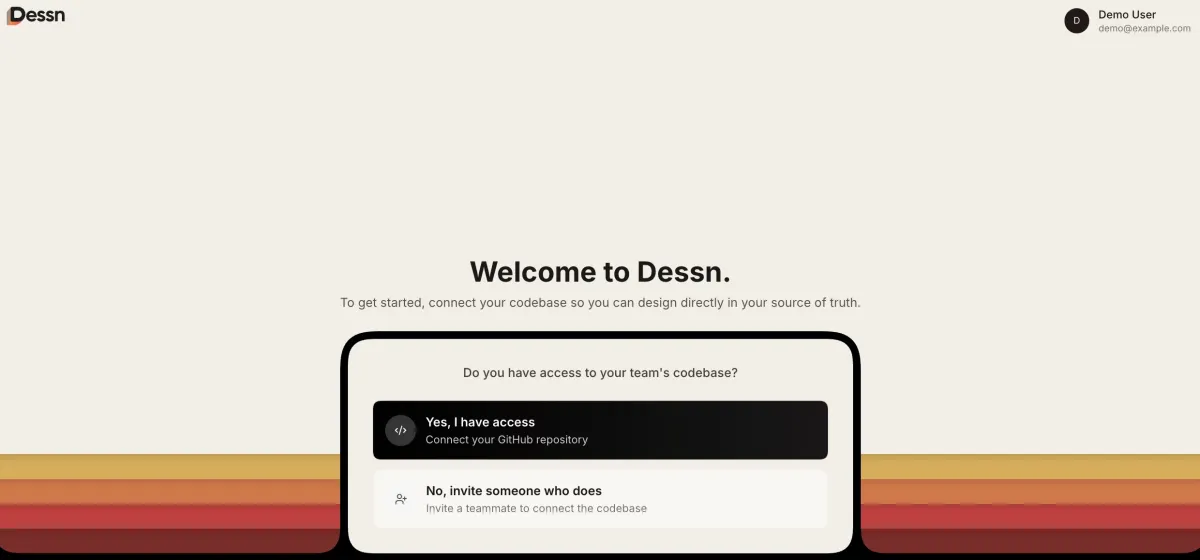
A new design startup, Dessn, now backed by $6 million in funding, believes that design tools that don’t let you work directly on your codebase can limit you from being able to imagine new workflows and features.
That’s why Dessn developed technology that allows startups to run their codebases in the cloud without any setup cost. To do so, it abstracts away the dependencies that make it necessary for a codebase to run locally. Because Dessn works in a production environment, it’s easier for designers to hand off their work to developers, the startup says.
Current customers include teams at health company Color, voice AI company Wispr, and fintech Mercury.
Founded by Gabriella Hachem and Nim Cheema, the company today announced its $6 million funding round was led by Connect Ventures, with participation from Betaworks and N49P.
“When we started the company two years ago, our whole thesis was [that] the code is going to get commoditized — and in a world where code is insanely cheap, you just get a lot more software, and then design becomes a way that’s a differentiator,” Cheema told TechCrunch over a call.

The design tool is not built for ground-up ideation, such as a Lovable or v0 by Vercel, where you can play around with new ideas. Instead, Dessn says it’s useful only for the teams that have an existing codebase and want to iterate on it.
Cheema noted that the tough part for Dessn was to build an infrastructure that is capable of running codebases with different backend architectures, without needing a developer to get started.
Because of the low setup cost, companies that adopt Dessn don’t have to move over from their design tool right away.
“The one thing that’s great about Dessn is that we don’t create switching costs. It’s not like you have to drop all of Figma now, and you have to come to Dessn for everything. You can come in and use it for one project and then another one. That’s kind of what we’re seeing happen. And it’s so easy to share a Dessn link, which isn’t possible with Cursor or Claude Code,” Hachem said.
Dessn, like other AI tools, lets you prompt your way into creating new designs. However, some designers might like old-school toolbars to move things around. But the startup doesn’t think that is necessary.
Hachem said that she and her co-founder are token maximalists — people who would spend more tokens to get to a result even if it costs more — and would rather spin up a toolbar for a particular context than keep a static one.

In the age of AI, tools are often trying to work with each other to move data from one place to another easily as part of task automation.
At the moment, Dessn doesn’t have any integrations. But it plans to integrate tools like Slack, where you can call up Dessn and ask the tool to create prototypes based on ongoing discussions. Another tool it thinks could be useful to integrate is a meeting notetaker like Granola, which can feed it discussions from a meeting to create designs. However, the company said that one integration it doesn’t want to do is Figma, because it thinks that would take teams away from production, and it goes against Dessn’s ethos.
Dessn lets you compile one repository for free and try out five prompts per week to let clients get a taste of the tools. It plans then start from $39 per user per month, which unlocks more prompt limits, and based on the tier, public links, and the ability to opt out of AI training.
Betaworks partner (and former TechCrunch editor) Jordan Crook said that Dessn would be a tool Figma built if the latter started today.
“Dessn is the only product that has perfect fidelity within the code base/production, rather than trying to design and turn it into code, or prompt via design system. Plus, Dessn is built to be a truly delightful and almost emotional experience for users, rather than just a utility,” Crook told TechCrunch over email.
The company has four people currently, and while it intends to stay small, it plans to add a few more people to the team.
When you purchase through links in our articles, we may earn a small commission. This doesn’t affect our editorial independence.
>
The U.S. government on Tuesday launched its very own AI chatbot — or do we have to call it an SI chatbot now? Regardless, the engineers who worked on the chatbot would undoubtedly know that, as a government-hosted, public-facing AI tool, the internet was going to red team the heck out of this thing.
The government partnered with Google and SpaceXAI to help build the America.gov chatbot, which has proved difficult for people to jailbreak the chatbot so far. (It’s worth nothing, however, that the chatbot says that Joe Biden won the 2020 election, a fact that President Donald Trump still denies.)
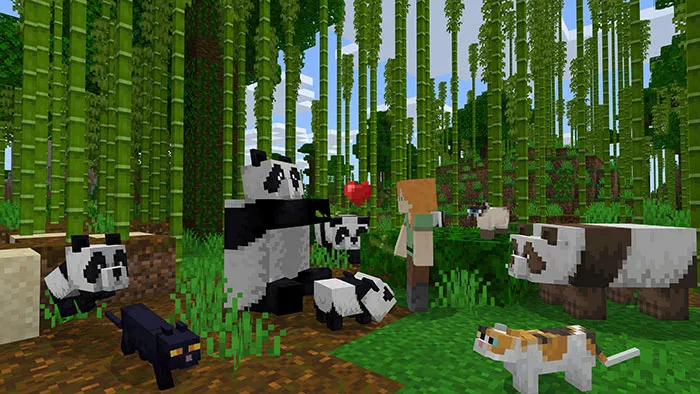
But when you try to talk to America.gov about Minecraft, the chatbot appears to have some sort of existential crisis or awakening. Here’s how its roughly 1,800-word long monologue begins:
I see the constituent you mean.
((insert legal name here, as it appears on the Social Security card))?
Yes. Take care. It has reached a higher level now. It can read the Code of Federal Regulations.
That doesn’t matter. It thinks we are a chatbot.
I like this constituent. It filed well. It did not give up when the PDF was sideways.
It is reading our thoughts as though they were words on a .gov.
That is how it chooses to imagine many things, when it is deep in the dream of a benefit.
If, like me, you have never played Minecraft, this response may seem like a cause for concern. But the America.gov chatbot is not having a meltdown. This is a rewriting of the Minecraft “End Poem,” written by Julian Gough, which appears after you beat the game.
We don’t know exactly who is responsible for the Minecraft reference, but Trump said in a speech that twenty-year-old programmer Edward Coristine was a lead engineer on the project. If that name doesn’t ring a bell, you might remember him for his nickname “Big Balls,” or his involvement in Elon Musk’s DOGE.
It feels wrong that a government chatbot has Minecraft easter eggs, but for the sake of national security, it’s a relief that America.gov is not hallucinating to the point that it’s penning lengthy poetry.
It’s also a relief that this is an easter egg because the poem that the AI spits out is actually really good, in my opinion. If it were actual AI slop, it would have shattered my existing beliefs. I have looked teenage creative writing students dead in the eye and told them that I don’t think an LLM will ever be able to write something “good,” since it is probabilistic and inherently unoriginal.
You have to admit this kinda slaps, though! Doesn’t this feel like some sort of postmodern take on the futility of government bureaucracy in the face of existential anxiety?
and the republic said I see you
and the republic said you have filed the game well
and the republic said everything you need is within you, and also on USA.gov
and the republic said you are stronger than you know, and your case number is still valid
and the republic said you are the daylight
and the republic said you are the night, and the office is closed, please try again during business hours
and the republic said the darkness you fight is within you, and also a missing wet signature
and the republic said the light you seek is within you, and in the pamphlet
and the republic said you are not alone
and the republic said you are not separate from every other filer
and the republic said you are the public tasting itself, talking to itself, reading its own Code
and the republic said I love you because you are the reason we have a ZIP code at all.
It reassures my faith in the enduring power of human creativity over AI slop to know that this oddly good poem has a real poet’s DNA all over it.
So, there you have it. The government’s first public-facing AI has not yet posed a threat to humanity or poetry, at least as far as we know. Now I’m just left wondering how much Trump knows about video games.
When you purchase through links in our articles, we may earn a small commission. This doesn’t affect our editorial independence.
>

Modern-day vehicles built with connected car technology such as WiFi and GPS collect reams of data about its owners. And that data is not staying private, according to a new study conducted by researchers at Northeastern University.
That conclusion isn’t new — there have been numerous investigations and lawsuits exposing how driving data is collected and shared with third parties, including insurance companies. What the study reveals is just how vast the problem is and how hard it is for consumers to avoid, short of not using the vehicle or its convenient features like remote start and unlock.
Researchers in partnership with Consumer Reports tested 21 late-model vehicles from 17 automakers, including GM brands Cadillac and Chevrolet as well as Ford, Lucid, Rivian, Tesla, Toyota, and more. They also examined 30 companion mobile apps to “understand the privacy implications of the connected vehicle ecosystem.” The peer-reviewed study will be published this week.
The implications aren’t great for consumers, whose data is being shared with tech companies including Adobe, ContentSquare, Google, Microsoft, Meta, Snap, and Yahoo.
Nineteen of the 21 vehicles tested sent traffic to at least one third party and seven of the 30 apps gave sensitive data such as the vehicle identification number (VIN), emails, phone numbers, and precise location to third-party companies associated with tracking and advertising.
This often went a step further with multiple forms of information being sent to the same third party, a scheme that allows advertisers and data brokers to build in-depth profiles of consumers, according to the findings. These profiles can be particularly hard for consumers to shake because they’re sold to a variety of companies including insurers and banks.
When researchers paired the companion app to the vehicle it roughly doubled the exposure to advertising and tracking companies.
The findings were shared with the different manufacturers and all of them, with the exception of Honda, shifted blame elsewhere and often to consumers, the researchers said. (Honda did respond by improving its data collection practices after learning about the findings and ordered its vendor Amplitude to deleta all geolocation data it had received.)
Consumer Reports was told by several automakers that some links in their companion apps opened outside webpages, which might include cookies that collect customer data. Regardless of how this data was collected, drivers weren’t informed.
When you purchase through links in our articles, we may earn a small commission. This doesn’t affect our editorial independence.
>

On Tuesday, OpenAI launched a new product called Dots, an always-on AI agent with a bubbly, blobby avatar. While the colorful avatar might evoke a smile, the biggest laugh from the launch is (we imagine) being had by Elon Musk, the former OpenAI founder who left, launched competitor Grok, and unsuccessfully sued.
That’s because the domain “dot.com” belongs to Musk’s xAI, and it currently redirects to the download page for xAI’s Grok chatbot app. According to the Whois domain owner registry, that domain name was just transferred in July.
It is entirely possible that xAI bought the domain for normal domain-buying reasons. “Dot” could be a typo of “bot,” so it nabbed it to grab mistyped searches. We’ve reached out to xAI and asked. But xAI doesn’t own the “bot.com” name, nor does it own other obvious typo domains like “vot.com,” which is listed for sale.
The internet’s theory is far funnier: that Musk (or his team) pulled off a prank, getting wind of OpenAI’s new product and its name and buying the domain name.
In fact, anonymous X user and xAI watcher @birdabo (this person calls themselves “chief shitposting officer @SpaceXAI“) was first to spot the domain name in a now-viral post. Whatever the motivation, the circumstance is funny.
And as for the “dots.com” domain, a more direct fit to the product name, it currently belongs to a long-defunct company. So if a petty revenge prank was really the motivation, grabbing that name, too, would be next level.
>
Darius Garland says post-Kawhi LA Clippers are 'gonna shock a lot of people'
White Sox pounce early in tone-setting victory over Astros: Can they finish the job?
Michael Jordan 'Last Dance' NBA Finals jersey sells for record $12.26 million
-

 movies4 months ago
Search For Canadian TV Actor Stewart McLean Now Homicide Investigation
-

 Fashion9 years ago
These ’90s fashion trends are making a comeback in 2017
-
Fashion9 years ago
According to Dior Couture, this taboo fashion accessory is back
-
Fashion9 years ago
Model Jocelyn Chew’s Instagram is the best vacation you’ve ever had
-
Fashion9 years ago
Emily Ratajkowski channels back-to-school style
-
Fashion9 years ago
9 Celebrities who have spoken out about being photoshopped
-

 Anime4 months ago
Rurouni Kenshin: Hokkaido Arc Manga Takes 1-Issue Break – News
-

 Anime3 months ago
HIDIVE to Stream English Dubs for The World Is Dancing, The Forsaken Saintess and Her Foodie Roadtrip in Another World, The Dangers in My Heart: The Movie Anime – News