
Tom Cruise talks to the audience at Academy Museum’s ‘Digger’ screening.
Seth Abramovitch


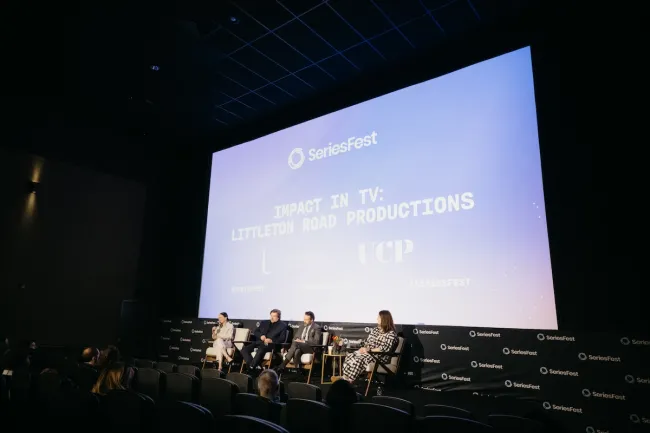
SeriesFest Season 12 — the Denver-based festival dedicated to discovering and championing innovative television projects — has announced its 2026 winners, including pilots from Corbin Bernsen, Mandy Patinkin, and Kathryn Grody. The awards were handed out at a ceremony on Sunday, March 10 and bestowed by juries of industry executives, journalists, creators, and experts.
“The Independent Content Competition is the heart of SeriesFest. It’s why we started this whole thing: to spotlight emerging creators, elevate unheard voices, and help new stories make their way into the world,” SeriesFest Co-Founder and CEO, Randi Kleiner, and Chief Programming Officer, Claire Taylor Smith said in a statement. “We received hundreds of submissions this year and narrowing it down was no small feat. Every pilot is packed with passion and talent, and we are thrilled to honor their hard work.”


Winners were chosen from more than 50 independent pilots in the Comedy, Drama, and Unscripted competitions, which will receive $25K in-kind post production support from Company 3. Held from May 6-10, the non-profit organization hosted a wide array of programs including scripted, unscripted, and late-night pilot competitions, exclusive screenings (including “Lord of the Flies”), series premieres (featuring “The Four Seasons” Season 2), panels, and workshops.
SeriesFest and Shondaland also partnered on the seventh cycle of the Women Directing Mentorship, a competition designed to discover aspiring female directors with a unique voice and provide a launchpad for their careers. This year’s winner, Kim Blanck, will have the opportunity to shadow a director on an episode of a Shondaland original series.
SeriesFest also announced the final selections for five festival initiatives:
Read the full list of winners below:
Best Drama Pilot: “Woodstockers”
Creator: Corbin Bernsen
Jury Statement: For establishing a clear sense of place, filled with memorable and authentic characters, and emotional resonance and a compelling story engine, the best pilot award goes to “Woodstockers.”
Best Director: Keenan O’Reilly, “Reentry”
Jury Statement: For its ambitious use of 16mm film, its remarkable verisimilitude, and its commitment to powerful characters and real-life issues, the best director award goes to Keenan O’Reilly of “Reentry.”
Best Writer: Alexa Polivka & Natasha Mynhier, “Aptitude”
Jury Statement: For creating an imaginative and visually striking sci-fi world, with a script that raises intriguing questions about ideas that are sometimes scarily relevant to our current world, the best writer award goes to “Aptitude.”
Best Performance: Daniel Diemer, “In My Blood”
Jury Statement: For a nuanced lead performance that ranges from quiet emotional devastation to powerful range, much of it without dialogue, the best performance award goes to Daniel Diemer of “In My Blood.”
Honorable Mention, Best Production Design: “Neither Donkey Nor Horse”
Jury Statement: For creating dazzling period detail that felt completely immersive — we just can’t believe you shot this in the summer in LA.
Jury: Sean Charles (Development / Production Manager, ALLBLK), Adam Goldworm (Founder, Aperture Entertainment), Katey Rich (Awards Editor, The Ankler), Matthew Hodgson (Executive Producer / Writer)
Best Comedy Pilot: “Seasoned”
Creators: Ewen Wright, Gideon Grody-Patinkin
Jury Statement: In totality, this intimate romantic-comedy was the most exquisitely produced pilot in this category. For its performances, assured direction, and impeccable writing, we celebrate and congratulate “Seasoned.”
Best Director: Julien Turner & Justen Turner, “Freelance”
Jury Statement: A passion for excavating comedy in every frame is the life-force behind this ambitious, collaborative directing team. Their directing is relentless, inventive, and unforgettable.
Best Writer: Brice Beckham & David Fickas, “Batshit”
Jury Statement: The writing for this genre-specific pilot brings rhythmic perfection, tonal and structural mastery, and word-perfect joke construction. The result is an outrageous, laugh-out-loud comedy anchored in relatable humanity.
Best Performance: Camille Wormser, “Soft Boil”
Jury Statement: This actor’s singular voice serves as the foundation of her piece. We see in her a wild, unafraid, and truly genius comedic actor deserving to be seen and celebrated.
Honorable Mention: “Dragged”
Jury Statement: The jury would like to give an honorable mention to “Dragged” for its honesty, necessity, and joy in telling this queer story today.
Jury: Marco Calvani (Filmmaker / Actor), Jack Dolgen (Writer / Producer / Director), Teri Weinberg (President, Yellow Brick Road)
Best Unscripted Pilot: “Choir Games”
Creators: Leanne Pooley, Andrew Akman
Jury Statement: For its moving depiction of the uplifting and healing power of music, and its engaging ensemble of children and their dedicated teachers who left us wanting more, this Unscripted Series award goes to “Choir Games.”
Best Director: David Anthony Ngo, “Never Get Busted!”
Jury Statement: For its nuanced portrait of a complicated — and often hilarious — person who undergoes a life-changing epiphany, this award for Best Unscripted Series goes to “Never Get Busted!’s” David Anthony Ngo.
Jury: Havva Eisenbaum (Unscripted TV Development Exec, Reality of Change), John Horn (Entertainment Correspondent, NPR 1A), Yvette Frampton (Board Member / Filmmaker, SeriesFest)
Best Digital Short Series: “Banana”
Creators: Crystal Kim, Kieran Barry
Jury Statement: The pilot’s clear and articulate premise, strong characters, and complicated family dynamics create many opportunities to follow the characters across multiple seasons. Its focus on self-worth and identity in a world where it’s easy to get lost is not only relatable but topical.
Best Director: Vidhya Iyer, “Giving Mom the Talk”
Jury Statement: For her bold visual storytelling and fearless ability to flip the narrative and explore female pleasure through the female gaze with honesty, humor, and striking originality, this award goes to Vidhya Iyer.
Best Writer: Dave Niedoba & Edward Bursch, “The Human, Will”
Jury Statement: “The Human, Will” is clear and thorough in unpacking a charming lead character whose micro, everyday decisions come to feel major, purposeful, and compelling.
Best Performance: Kavi Ramachandran Ladnier, “Giving Mom the Talk”
Jury Statement: This award goes to Kavi Ramachandran Ladnier of “Giving Mom the Talk,” who effortlessly blends comedy and drama, anxiety and courage, as well as a curiosity that pulls the audience into her journey of sexual awakening.
Honorable Mention, Ensemble Performance: “Birth Is for P*ssies”
Jury: Ben Travers (Head TV Critic, IndieWire), Dana Jackson (Manager / Producer, Echo Lake Entertainment), Nelson Moses Lassiter (Creative Executive, DramaBox)
Best Late-Night Pilot: “HAINT”
Creator: Jahmil Eady
Jury Statement: “HAINT” paints a clear vision for a tantalizing supernatural mystery. It’s filled with cohesive world building, innovative creature design, and told from a necessary cultural perspective.
Pitch-A-Thon Winner: “Golden Groves”
Creators: Marteene Gabrielle Diaz & Eric Todd Patton
Jury Statement: The jurors unanimously agree: One pitch arrived with a clear point of view, a full-throttle sense of humor, a vibrant setting, and characters living it up while getting it on as if every day is the last. We cannot wait to see Josette find her way to “Golden Groves” and take us on the golf cart ride of our lives.
Jury: Wendy Calhoun (Executive Producer, Edgewood Place Entertainment), Kelly Brown (Producer, Liston James Productions), Crystal Holt (Executive Producer, Saviaj MEDIA), Alex Schmider (Sr. Director, Entertainment, GLAAD)
Independent Pilot – Drama: “Woodstockers”
Independent Pilot – Comedy: “Soft Boil”
Independent Pilot – Unscripted: “Choir Games”
Digital Short Series: “Birth Is For P*ssies”
Late Night: “HAINT”
>

“I was very successful since I was a kid,” Tom Cruise told a full house at the Academy Museum’s 945-seat David Geffen Theater following a screening of Digger. That stardom has led him in search of ever bigger challenges, learning new skills and finding opportunities to apply them.
As he put it: “OK, the door’s open. Now I want to push it again.”
He has certainly done that with Digger, Alejandro G. Iñárritu’s wildly ambitious, deeply weird and extravagantly mounted comedy, in which Cruise plays a Texas oil tycoon forced to face the music after an environmental disaster puts the world at risk.
The Warner Bros. release, arriving just as Paramount nears its takeover of Warner Bros. Discovery, carries a reported $125 million production budget.
At 64 and 63, respectively, Cruise and Iñárritu are near-exact contemporaries taking this leap together. Cruise has ventured into similarly offbeat territory before, memorably in an Oscar-nominated turn in Paul Thomas Anderson’s Magnolia and beneath the prosthetics of Ben Stiller’s comedy Tropic Thunder.
But he has spent much of his recent career delivering increasingly elaborate Mission: Impossible spectacles, taking extraordinary physical risks within a franchise whose appeal he understands intimately. Digger requires a different leap of faith, both from Cruise and from the audience he hopes will follow him.
Among critics, the film has proved wildly divisive, with some reviews positively savage, The Hollywood Reporter’s among them. I understand the objections to Digger; I was also quite happy to have seen it. There is something invigorating about watching this much talent and money committed to a movie this peculiar, even when its considerable parts refuse to cooperate.
Tom Cruise talks to the audience at Academy Museum’s ‘Digger’ screening.
Seth Abramovitch
Iñárritu offered a remarkably candid account of the challenges during the discussion. Making this trompe-l’œil of a film required a constant negotiation between theatricality and the camera. What felt inspired on set could look very different the following morning.
“We were laughing all day,” the four-time Oscar-winning Mexican filmmaker said. Then he would watch the dailies: “Oh my God,” he recalled thinking. “This is not working. This is shit.” Adjusting the performance could send it too far in the other direction: “It’s too naturalistic. It’s not so funny.”
In sharing that, Iñárritu was describing the search for the film’s highly unusual tone, not conceding that the finished movie had failed. But the anecdote gets at the precariousness of the enterprise. The actors had to find that tone in their bodies and voices, he explained. “Nothing can be written in tone. It doesn’t exist,” he said.
Iñárritu compared the precision of Cruise’s acting to the “micro decisions” he makes during a dangerous stunt, when “one second is the difference between life and death.” On set, the director watched that attention extend to where Cruise placed his hands, when he winked and when he stayed silent. “Every take he’s just present and observing naturally,” he said.
Cruise, meanwhile, seemed delighted by the company he was keeping. He repeatedly jumped in to praise his fellow actors, recalling how difficult it was to stop laughing around John Goodman. Of Sandra Hüller, he said, “What an extraordinary actress,” before settling on a succession of wows.
His enthusiasm was considerably easier to pin down than his acting techniques. After Cruise gave a drawn-out answer about a life spent observing humanity to explain his character work, Iñárritu teased him: “He keeps the secret. He don’t answer.”
Tom Cruise and Alejandro G. Iñárritu at the Academy Museum’s ‘Digger’ screening.
Seth Abramovitch
By the end of the conversation, Cruise was making a broader argument about what audiences want, and what filmmakers should give them. “This film is handmade,” he said. He described stopping on set with his colleagues to look around and appreciate the skill that had gone into the physical world surrounding them. “People want to see real things,” he said. Then, a little later: “People want real things and they want real experiences.”
Cruise never mentioned artificial intelligence, but the repeated emphasis on “real things” and “handmade” filmmaking could readily be heard as an implicit rejoinder to it. His remarks placed the value in the people doing the work, the skills they had acquired and the pleasure of being together to make something. “It was never handed to any of us,” he said.
For all his confidence, there was also an acknowledgment that the opportunity to keep doing this depends on people buying tickets. “My hope is always that the films would do enough that I’d have that opportunity to do it again,” Cruise said.
Whether audiences follow him into Digger remains to be seen. For now, he seemed grateful to have made the leap. “It’s not like I don’t have challenges, we don’t have challenges,” he said. “But I really choose to be joyful about creating.”
After posing for a cast and crew photo, Cruise, ever the audience pleaser, spent 15 minutes mingling with fans who rushed the stage for selfies and a few words with a movie legend. Four decades into his career, he’s still finding new ways to make it in this risky business.
He clearly loves the job.
>
>
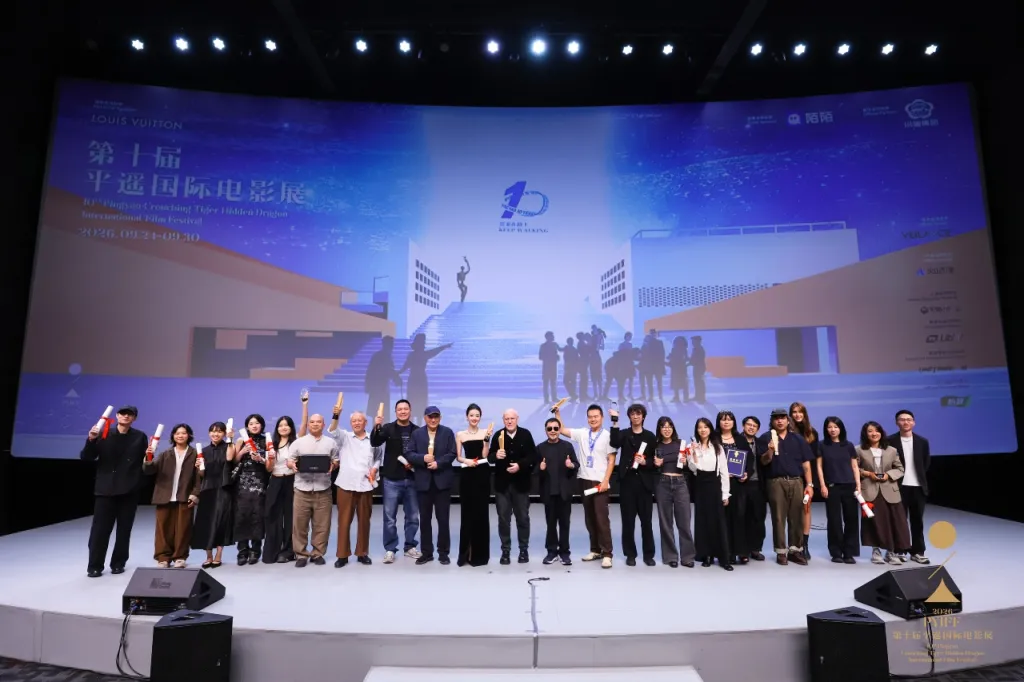
Chinese director Niu Niu’s Final Payment scooped the Best Film Award in the Fei Mu Awards of this year’s Pingyao International Film Festival (PYIFF), while Rafiki Fariala’s Congo Boy won Best Film in the festival’s Roberto Rossellini Awards.
Final Payment, which also won Best Actor for Niu Jianrong’s performance, revolves around a homeowner clashing with a contractor over the final payment following a set of renovations on his home. PYIFF’s competition jury stated: “Tearing through a very small rip, the film leads us into a reality and emotional landscape so expansive, where we sigh, lament, and reflect. The director’s approach is concise, unpretentious, and masterful, earning the wholehearted recognition of the entire jury.”
The Best Film award came with a cash prize of $150,000 (RMB1m) with half given to the director for the development of their next film, and half given to the distributor in China. Niu Niu previously directed Mr Junjun, which was awarded with the Jury Award and Youth Jury Award at PYIFF in 2023.
Also in the Fei Mu Awards, Xu Zao won Best Director for Light Pillar, while Best Actress went to Sun Yi for Wang Xiaozhen’s A Joke. The Jury Award was presented to Dong Jie’s Zoom In, Zoom Out, which had its world premiere in Venice Critics Week, while a special mention went to Cai Chengjie’s Suzhou Quartet.
The Fei Mu awards are focused on the festival’s Hidden Dragons section, which selects first, second and third films from emerging directors making Chinese-language films, while the Roberto Rossellini Awards focus on the Crouching Tigers section for emerging international directors.
Congo Boy, which took Best Film in the Roberto Rossellini Awards, also won Best Actor when it premiered in Un Certain Regard at this year’s Cannes film festival. The PYIFF award came with a cash prize of $20,000, with half given to the director for the development of their next film, and half given to the distributor in China.
The PYIFF jury stated: “The Jury unanimously has been moved by this autobiographical story, told in a simple style that echoes the great tradition of neorealism. For a film focusing on a character that confronts his world with optimism despite dark times and takes on his shoulders the destiny of his entire family.”
Also in this section, the Philippines’ Rafael Manuel won Best Director for Filipiñana, while the Jury Award went to Ben’imana, directed by Marie-Clémentine Dusabejambo, which won the Camera d’Or at this year’s Cannes. The jury also awarded Rakan Mayasi’s Yesterday The Eye Didn’t Sleep a Special Mention.
Hong Kong filmmaker Ann Hui received the Crouching Tiger Hidden Dragon East-West Award, shortly before she receives the Camellia Award at Busan International Film Festival next week.
Pingyao’s International Contribution To Chinese Cinema Award went to Marco Müller, who founded the festival with Chinese auteur Jia Zhangke and currently serves as Artistic Director of the Film Art Research Centre at Shanghai University, and veteran producer, director and former chairman of China Film Group Han Sanping. Hello Group chairman Tang Yan was presented with a 10th Anniversary Award.
This year’s PYIFF opened on September 24 with a screening of the 4K restoration of Fei Mu’s Spring In A Small Town; closed with Good Trip, co-directed by Hong Kong filmmakers Norris Wong and Hoi Wong, and also screened Jia’s short film Torino Shadow, which premiered at this year’s Cannes.
PINGYAO INTERNATIONAL FILM FESTIVAL 2026 AWARDS:
FEI MU AWARDS:
Best Film: Final Payment, dir: Niu Niu
Best Director: Xu Zao, Light Pillar
Best Actress: Sun Yi, A Joke, dir: Wang Xiaozhen
Best Actor: Niu Jianrong, Final Payment, dir: Niu Niu
Jury Award: Zoom In, Zoom Out, dir: Dong Jie
Special Mention: Suzhou Quartet, dir: Cai Chengjie
ROBERTO ROSSELLINI AWARDS:
Best Film: Congo Boy, dir: Rafiki Fariala
Best Director: Filipiñana, dir: Rafael Manuel
Jury Award: Ben’imana, dir: Marie-Clémentine Dusabejambo
Special Mention: Yesterday The Eye Didn’t Sleep, dir: Rakan Mayasi
>


Search For Canadian TV Actor Stewart McLean Now Homicide Investigation


These ’90s fashion trends are making a comeback in 2017
According to Dior Couture, this taboo fashion accessory is back
Model Jocelyn Chew’s Instagram is the best vacation you’ve ever had
Emily Ratajkowski channels back-to-school style
9 Celebrities who have spoken out about being photoshopped


Rurouni Kenshin: Hokkaido Arc Manga Takes 1-Issue Break – News


HIDIVE to Stream English Dubs for The World Is Dancing, The Forsaken Saintess and Her Foodie Roadtrip in Another World, The Dangers in My Heart: The Movie Anime – News