
Entertainment
Swann Arlaud on Memes, ‘A Man of His Time,’ and Fame

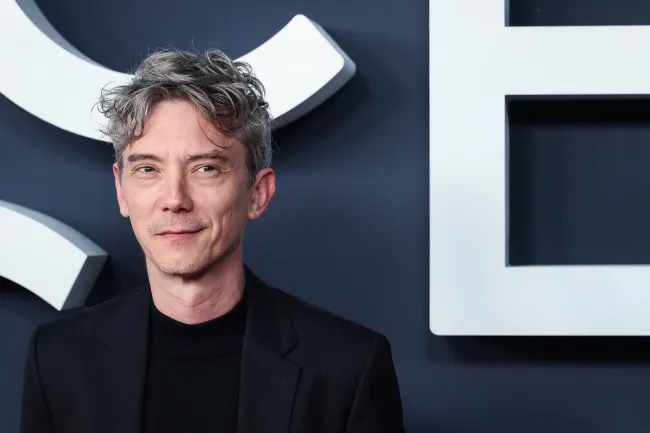
Yes, the Hot Lawyer from “Anatomy of a Fall” knows all about the memes.
“They’re less about me than about the character,” Swann Arlaud told IndieWire, smiling about the fancams and edits that turned the Parisian character actor into an unlikely sex symbol for the Letterboxd set. “I think people responded to a different kind of masculinity, someone in service to a woman, a kind of devoted lover. So I don’t really feel responsible for what it triggered.”
Still, he admitted the hair may have helped. Pointing to his now tightly cropped ‘do, he laughed: “That’s why I got rid of it.”
Offline — or at least on the French web — the 45-year-old has been more celebrated for his melancholy, for that singular blend of wiriness and weariness that makes so many of his characters feel like young men with old souls. That persona has netted Arlaud three César Awards so far, and nearly a record-breaking fourth earlier this year. (“I was rather relieved not to go on stage,” he said of the miss.)


But Arlaud is just as wary of industry prestige. “My first instinct is almost always to refuse a role, because I feel I won’t be capable,” he added. “Doubt is part of the work. It’s what protects us. It’s what allows us to keep going, to start over, to try to do better. You do take after take after take, rehearsal after rehearsal after rehearsal. So we doubt, and that’s what pushes us to go back, to add another layer, and then another. In the end, after stripping away what’s less interesting, something remains. The day you stop doubting yourself, you start worrying.”
That is precisely what drew the actor to “A Man of His Time,” which returns him to the Cannes spotlight.
“At first, I really wasn’t convinced I was the right person,” he explained. “I remember telling [director Emmanuel Marre], ‘I don’t think I am this character.’ And he said: ‘He’s someone whose suit is too big for him. He wants access to something, he believes he absolutely can attain it, but in reality, he isn’t built for it. He’s too fragile, too lost.’”

Set in occupied France, “A Man of His Time” casts Arlaud as an amoral arriviste whose less-than-stellar rise to Vichy middle management owes less to broader historical forces than to his own (limited) backroom opportunism. While the role aligned with Arlaud’s political interests, he was most drawn to an off-the-cuff filmmaking approach that echoed his own process.
“Emmanuel [Marre] works through improvisation,” he said. “He wrote a very detailed screenplay, then told us not to use it. Instead, we explored in every direction, filming endlessly. I was half-lost in it, trying to get things right, while he shot take after take. And eventually I realized that whenever I tried to ‘make the basket,’ what he preferred was when I missed. That’s what he kept. That’s how he builds something almost documentary-like: he captures awkwardness, hesitation, mistakes. That creates an enormous sense of truth, because we’re all imperfect.”
To navigate such unsteady terrain, the actor had to simply — and gleefully — embrace doubt.
“There was nothing to reassure you,” he said. “So I had to accept not knowing, to surrender, to get lost, to let go. To say: I’m going to fail, and that’s OK, I’m going to be bad, and that’s OK. I’m going to look ugly, and that’s OK. I won’t know what to answer, and that’s OK.”
And in turn, the approach embodied the film’s political message.
“Emmanuel kept reminding us that these characters also don’t know,” he said. “They don’t know there will be a D-Day. They don’t have the historical perspective we have now. So the idea was not to view history from above, but to move through life day by day. Not to look at the ‘guilty people’ of history from a distance, but to look at ourselves and ask: if this starts again tomorrow, where would we stand? Who would we become?”
Arlaud did not arrive at the latest César ceremony empty-handed. Not that he needed another trophy — a fourth would make him the only actor in French history to reach that mark — but he also couldn’t let the moment pass. Held in late February, just after the Berlinale, the ceremony unfolded amid lingering controversy, and the actor came prepared with a speech pushing back against Wim Wenders’ assertion that artists “have to stay out of politics.”
“We’re not here to give lessons,” he said. “I’m not going to explain geopolitics to anyone — there are many people far more qualified to do that. But I also can’t say nothing, close my eyes, and pretend that while civilians are dying and dangerous ideologies are rising, I can simply stand on my little red carpet and be happy. If I went onstage, I couldn’t just say, ‘Thank you, I’m happy to be here, I love you all.’ Of course I’d say those things too, but it felt impossible not to say more.”

“Saying something is not political is already a political statement,” he continued. “The moment you cast a gaze on a situation, an era, or a society, it becomes political whether you want it to or not. And as artists, we have that responsibility because people give us the floor. There’s no obvious reason why what I have to say matters more than anyone else — except that people are willing to listen. From that moment on, yes, I have a responsibility, because I can speak and maybe be heard.”
Call it another twist in the story of an accidental heartthrob turned self-effacing star — or simply the irony of teller and tale — but despite his discomfort with visibility, Arlaud has become one of the most outspoken left-wing voices in contemporary French cinema. He publicly supported Adèle Haenel after her César walkout, backed France’s Yellow Vest movement and Doctors Without Borders’ work in Gaza, and during France’s snap parliamentary elections in 2024, addressed a sprawling crowd gathered at Paris’ Place de la République.
“It wasn’t easy, because I value my privacy, and the little anonymity I still have left,” he said. “I don’t want to be a spokesperson or a standard-bearer — but people asked me to speak. I hesitated, then told myself the moment was too serious, and that I had my own small part to play, my own hummingbird’s share. Standing on a platform in front of 60,000 people was terrifying, but I don’t regret it. Even for our children, in 20 years, they may ask, ‘All of this was happening, so where were you?’ Well, I was there.”
All the same, he would love to recede from view. The actor has no further projects booked and plans to recharge his creative batteries for the rest of the year. He’ll certainly remain active politically — especially as the French far-right soars towards the May 2027 presidential election with the wind seemingly at their backs — but he cannot say how that engagement might take shape. (“I’ll certainly participate,” he said. “Forces are going to mobilize once again to avoid the worst. If I’m needed somewhere, I’ll be there.”)
Eventually, he might return to the stage, where he has developed a longstanding professional relationship with theatre director Tatiana Vialle, who is also his mother.
“She knows me,” he said. “So she knows both what she can get out of me and what she can’t. She won’t insist on something if she knows it simply isn’t me. But if she knows there’s something there, even if I don’t see it myself, then she can push. And because we know each other so well, we can save time.”
And all the while, Arlaud will continue negotiating his discomfort with becoming a meme.
“From the moment you’re in a film, something gets taken from you,” he said. “Something no longer belongs to you; it belongs to other people, and everyone invents their own story around it. There’s a kind of dissociation. That can be frightening or flattering. But what’s reassuring is realizing that this public figure exists somewhere between the image you project and what people decide to see in it, because it reflects their own projections too.”
“Images do have power,” he added. “So we might as well use that power for something more interesting than hair.”
“A Man of His Time” premieres at the 2026 Cannes Film Festival and is currently seeking U.S. distribution.
>
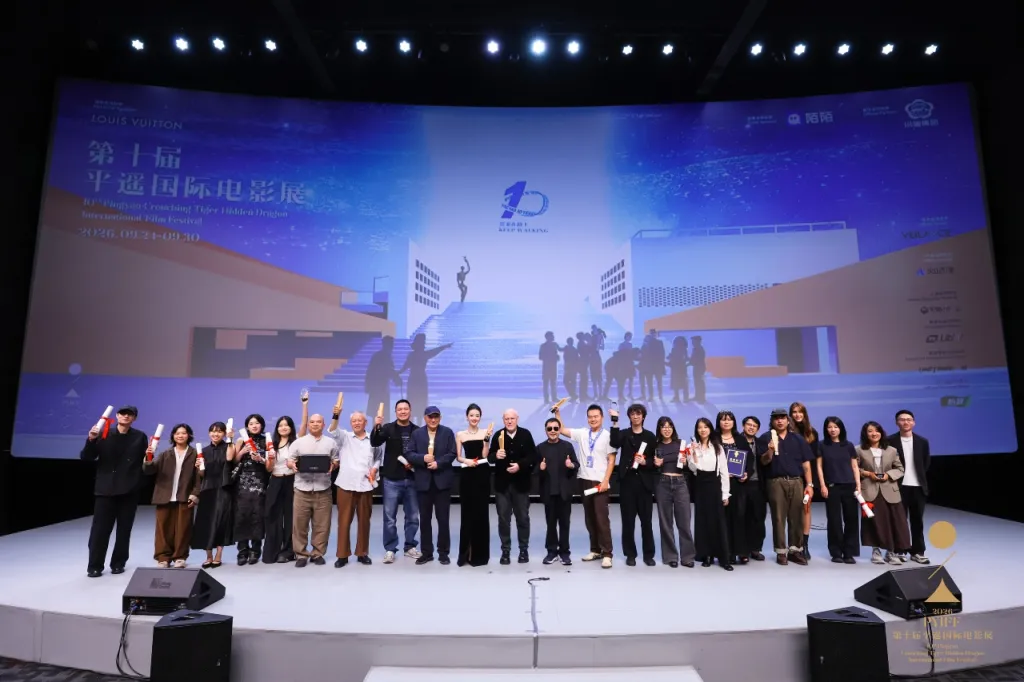
Chinese director Niu Niu’s Final Payment scooped the Best Film Award in the Fei Mu Awards of this year’s Pingyao International Film Festival (PYIFF), while Rafiki Fariala’s Congo Boy won Best Film in the festival’s Roberto Rossellini Awards.
Final Payment, which also won Best Actor for Niu Jianrong’s performance, revolves around a homeowner clashing with a contractor over the final payment following a set of renovations on his home. PYIFF’s competition jury stated: “Tearing through a very small rip, the film leads us into a reality and emotional landscape so expansive, where we sigh, lament, and reflect. The director’s approach is concise, unpretentious, and masterful, earning the wholehearted recognition of the entire jury.”
The Best Film award came with a cash prize of $150,000 (RMB1m) with half given to the director for the development of their next film, and half given to the distributor in China. Niu Niu previously directed Mr Junjun, which was awarded with the Jury Award and Youth Jury Award at PYIFF in 2023.
Also in the Fei Mu Awards, Xu Zao won Best Director for Light Pillar, while Best Actress went to Sun Yi for Wang Xiaozhen’s A Joke. The Jury Award was presented to Dong Jie’s Zoom In, Zoom Out, which had its world premiere in Venice Critics Week, while a special mention went to Cai Chengjie’s Suzhou Quartet.
The Fei Mu awards are focused on the festival’s Hidden Dragons section, which selects first, second and third films from emerging directors making Chinese-language films, while the Roberto Rossellini Awards focus on the Crouching Tigers section for emerging international directors.
Congo Boy, which took Best Film in the Roberto Rossellini Awards, also won Best Actor when it premiered in Un Certain Regard at this year’s Cannes film festival. The PYIFF award came with a cash prize of $20,000, with half given to the director for the development of their next film, and half given to the distributor in China.
The PYIFF jury stated: “The Jury unanimously has been moved by this autobiographical story, told in a simple style that echoes the great tradition of neorealism. For a film focusing on a character that confronts his world with optimism despite dark times and takes on his shoulders the destiny of his entire family.”
Also in this section, the Philippines’ Rafael Manuel won Best Director for Filipiñana, while the Jury Award went to Ben’imana, directed by Marie-Clémentine Dusabejambo, which won the Camera d’Or at this year’s Cannes. The jury also awarded Rakan Mayasi’s Yesterday The Eye Didn’t Sleep a Special Mention.
Hong Kong filmmaker Ann Hui received the Crouching Tiger Hidden Dragon East-West Award, shortly before she receives the Camellia Award at Busan International Film Festival next week.
Pingyao’s International Contribution To Chinese Cinema Award went to Marco Müller, who founded the festival with Chinese auteur Jia Zhangke and currently serves as Artistic Director of the Film Art Research Centre at Shanghai University, and veteran producer, director and former chairman of China Film Group Han Sanping. Hello Group chairman Tang Yan was presented with a 10th Anniversary Award.
This year’s PYIFF opened on September 24 with a screening of the 4K restoration of Fei Mu’s Spring In A Small Town; closed with Good Trip, co-directed by Hong Kong filmmakers Norris Wong and Hoi Wong, and also screened Jia’s short film Torino Shadow, which premiered at this year’s Cannes.
PINGYAO INTERNATIONAL FILM FESTIVAL 2026 AWARDS:
FEI MU AWARDS:
Best Film: Final Payment, dir: Niu Niu
Best Director: Xu Zao, Light Pillar
Best Actress: Sun Yi, A Joke, dir: Wang Xiaozhen
Best Actor: Niu Jianrong, Final Payment, dir: Niu Niu
Jury Award: Zoom In, Zoom Out, dir: Dong Jie
Special Mention: Suzhou Quartet, dir: Cai Chengjie
ROBERTO ROSSELLINI AWARDS:
Best Film: Congo Boy, dir: Rafiki Fariala
Best Director: Filipiñana, dir: Rafael Manuel
Jury Award: Ben’imana, dir: Marie-Clémentine Dusabejambo
Special Mention: Yesterday The Eye Didn’t Sleep, dir: Rakan Mayasi
>
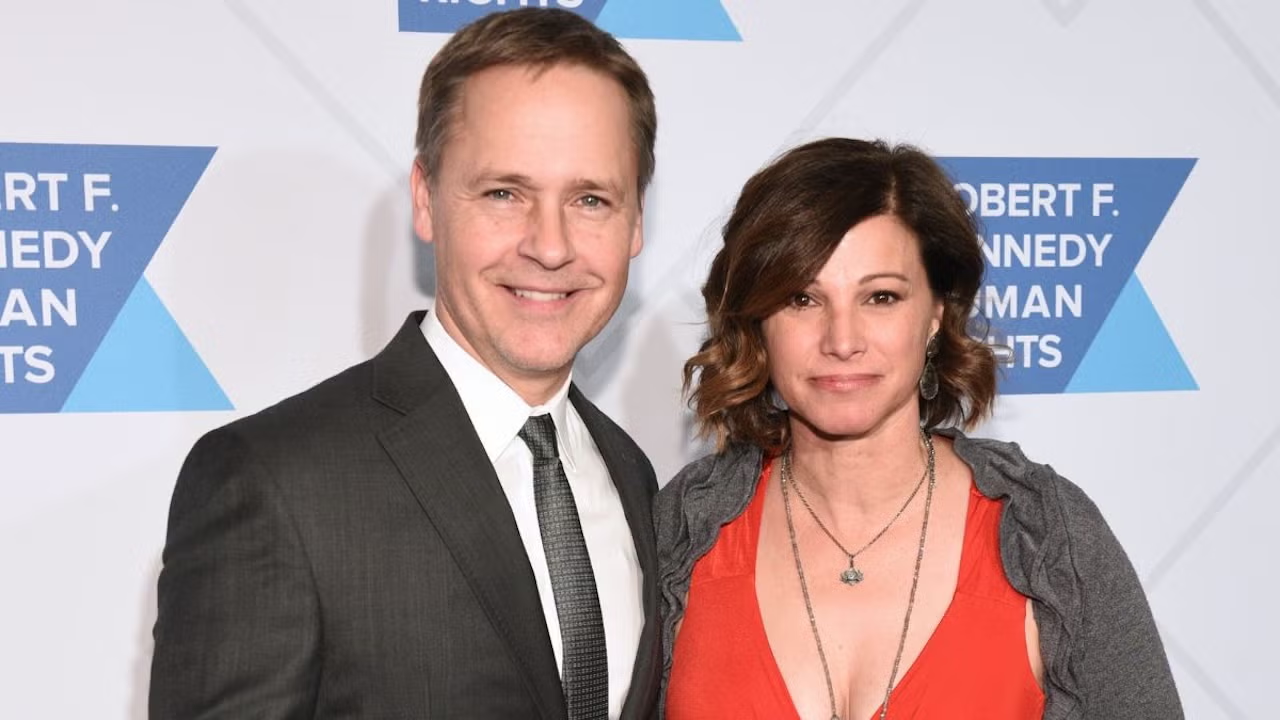
Actor Chad Lowe and producer Kim Painter’s 13-year-old daughter, Fiona, has died, according to a statement from the teen’s family.
“We are deeply heartbroken by the loss of our beloved Fiona,” the Lowe family said in a statement to media Tuesday evening. As the family went on, they remembered Fiona as “a loving young girl who was smart, creative, and loved to dance.”
“She was adored by her sisters and she was deeply loved by her parents,” the family’s statement added. “In fact, she was the light of our lives.”
While a cause of death was not immediately shared, the Lowes alluded to Fiona’s mental health struggles, writing, “Her passing is devastating for our entire family and we ask for prayers and privacy at this time. If you or someone you know is struggling with mental health, please reach out to the 988 Suicide & Crisis Lifeline by calling or texting 988.”
More to come…
>
>

‘Final Payment’, ‘Congo Boy’ Win Top Awards At Pingyao Film Festival

Chad Lowe and Kim Painter’s Daughter Fiona Dies at 13

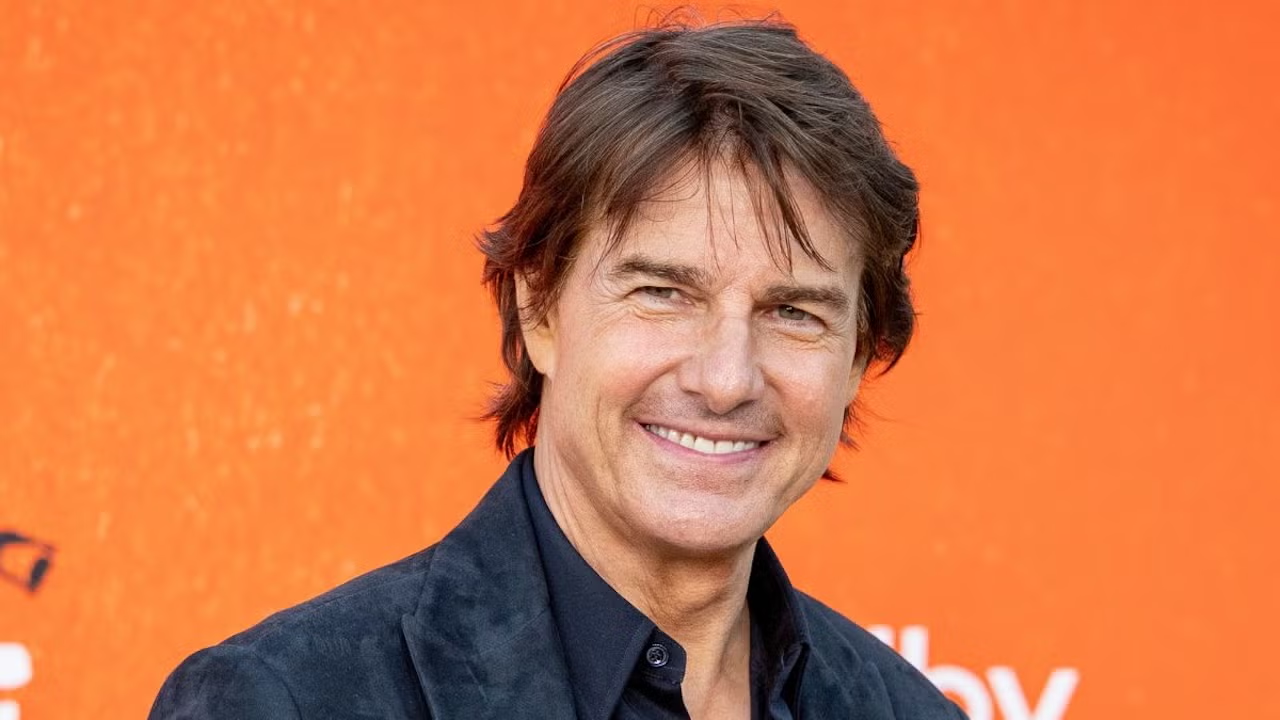
Tom Cruise Dusts Off Risky Business Moves for Jennifer Hudson Show Spirit Tunnel
-

 movies4 months ago
Search For Canadian TV Actor Stewart McLean Now Homicide Investigation
-

 Fashion9 years ago
These ’90s fashion trends are making a comeback in 2017
-
Fashion9 years ago
According to Dior Couture, this taboo fashion accessory is back
-
Fashion9 years ago
Model Jocelyn Chew’s Instagram is the best vacation you’ve ever had
-
Fashion9 years ago
Emily Ratajkowski channels back-to-school style
-
Fashion9 years ago
9 Celebrities who have spoken out about being photoshopped
-

 Anime4 months ago
Rurouni Kenshin: Hokkaido Arc Manga Takes 1-Issue Break – News
-

 Anime3 months ago
HIDIVE to Stream English Dubs for The World Is Dancing, The Forsaken Saintess and Her Foodie Roadtrip in Another World, The Dangers in My Heart: The Movie Anime – News