
(L-R) Journalist Zoë Schiffer, who appears in the ‘Musk’ documentary, director Alex Gibney, and Ashley St. Clair, Musk’s former romantic partner, at the Venice premiere of ‘Musk’ on September 8, 2026.
Andreas Rentz/Getty Images


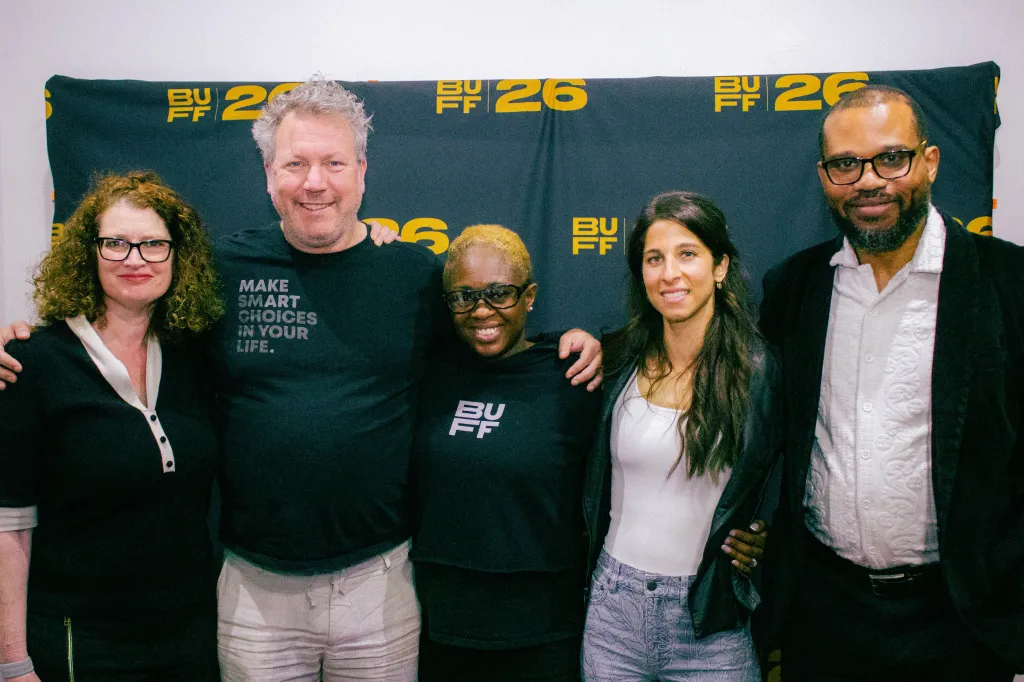
EXCLUSIVE: BUFF Studios has acquired UK distribution rights to Tina Gharavi’s Shadows of Beirut and will present the film at this year’s Cannes market.
Quantify Sales is handling international sales on the title, which Gharavi directed from a screenplay that she wrote with Tala Calil. Starring Calil, Assaad Bouab, Flavia Bechara and Michael E. Rodgers, the film follows a young woman who returns to Beirut after 25 years of estrangement from her dying father.
The official synopsis reads: “As she navigates the emotional tension between forgiveness and unresolved trauma, she reconnects with her homeland through the people and places that shaped her past.”
Yariv Lerner, Tala Calil, Rob Van Norden, and Pia Patatian produced the film, with Paula Crickard serving as Executive Producer.
“We made this incredible film during lockdown and had to duck and dive to bring it to life across Beirut and Bulgaria during a very challenging period,” Gharavi said in a statement. “At a time when the world was thinking deeply about separation and connection, this film explored what it truly means to know a person or a place.”
Emmanuel Anyiam-Osigwe, Head of Global Theatrical Distribution at BUFF Studios, added: “Shadows of Beirut represents exactly the kind of internationally resonant storytelling BUFF Studios is focused on bringing to audiences through our UK theatrical slate. Cannes is the first step in introducing the film to global partners as we move into its sales and distribution phase.”
>

When the world’s richest man threatens to sue you, it’s enough to get your attention.
That’s the situation filmmaker Alex Gibney finds himself in with the imminent release of his documentary Musk, an unflattering portrait of tech mogul and investor Elon Musk.
“He is well funded,” Gibney notes in conversation with Deadline. “Let’s just be honest for a moment and say that with our legal system, money talks in court in a way that it shouldn’t. It’s not like everyone is equal under the law. He’s got a bucketload of money — more money, on paper, than anybody on the planet.”
(L-R) Journalist Zoë Schiffer, who appears in the ‘Musk’ documentary, director Alex Gibney, and Ashley St. Clair, Musk’s former romantic partner, at the Venice premiere of ‘Musk’ on September 8, 2026.
Andreas Rentz/Getty Images
Through his attorney Alex Spiro, Musk raised the prospect of a defamation suit over part of the film relating to the 2024 presidential election. In that sequence, Musk’s former girlfriend, Ashley St. Clair, says Musk told her before election day that he would “unleash an anomaly in the matrix” to ensure his preferred candidate, Donald Trump, came out victorious.
“Is it a concern when braggadocious Alex Spiro fires a broadside and threatens to sue? Yeah, it’s always a concern,” Gibney admits. But he detects an upside.
“The danger of suing, as I discovered long ago when I did a film on Henry Kissinger,” Gibney observes, “is that you open yourself up to discovery.”
Elon Musk with a Tesla.
Courtesy of Gregg Segal
The discovery process would allow Gibney and his own legal team to dig into many of the darkest areas in the documentary – for instance, whether Musk exaggerated the autopilot capacity of Tesla vehicles, with fatal consequences. The film alleges Tesla hid data stored on a Tesla S model that ran through a T-intersection in Florida in 2019, killing a 22-year-old woman and it cites other examples where Teslas being driven on autopilot were involved in deadly accidents. And here’s another area ripe for exploration: how did Musk leverage the opportunity to run DOGE at the start of the second Trump administration?
“One of the things I’d want to pursue in discovery is… what about the data obtained from DOGE? — or should I say, did he obtain, did they take [data]? We know that the DOGE boys had access to all of our data,” Gibney comments. “So, the question is, is that data sitting on hard drives at SpaceX and what are they doing with it now? So, there’d be a lot of fun questions to ask in discovery.”
Pres. Trump and Elon Musk in the Oval Office on May 30, 2025.
Getty Images
For the record, Gibney says the threat from Musk’s attorney to sue him is based on a faulty premise.
“What was interesting about that threat is that they cooked up something that we said when we didn’t say it. All we did was to show [Musk’s] texts to Ashley. He was the one who started talking about ‘lasers in space.’ He was the one who said there’s an ‘anomaly in the matrix,’” Gibney insists. “The film doesn’t say he did this to manipulate the election. The film shows that he was texting to his lover, suggesting to her that he manipulated the election. So, was he lying to her? Was he telling the truth? We don’t know. That’s why you put it in the movie and it’s up to the viewer to find out.”
We spoke with Gibney at the Camden International Film Festival in Maine, where he took the Musk documentary after its North American premiere at the Toronto Film Festival and world premiere in Venice. Bleecker Street opens the documentary theatrically in New York and Los Angeles on October 9 before expanding nationwide.
Shortly after the Venice premiere, Musk used his X/Twitter platform to attack the filmmaker, calling him a “horrible human” with “zero integrity,” adding for good measure that he’s a “bitter old man who lost the plot long ago.” But in the war of words, Gibney gives as good as he gets.
“He’s a bullshitter,” Gibney tells me over coffee, sitting in sunshine near the harbor in Rockland, ME. He says Musk has serially inflated his role at Tesla and SpaceX.
“He didn’t invent Tesla, he didn’t invent the technology, didn’t invent the business plan. He invented a mission and he invested. I mean, he was willing to roll in and invest all his money. Good for him. But it was the mission that attracted all of these talented engineers,” Gibney asserts. “It’s not like he sat there in a room and said, ‘The wheelbase will be this.’ He’s an investor and that’s his genius, is pumping the stock. But all these people say, ‘Elon this and Elon that.’ Elon didn’t launch every rocket [at SpaceX]. Once again, there’s a mission at that company that attracts a tremendous number of talented engineers… He’s the front man with the story that he’s responsible for everything.”
When I suggest Musk isn’t “under the hood with a wrench,” Gibney replies. “He’s not… He’s not working the rivet gun. It’s not like, ‘Oh, he worked the wrench on car number 759 and that really saved the operation.’ No… Honestly, he’s a storyteller. And in that sense, he sort of follows in the footsteps of [Steve] Jobs, but Jobs, unlike Musk, was really dedicated to making [Apple] products better. And I think the products at Tesla and SpaceX succeed despite him, not because of him.”
Elizabeth Holmes in ‘You Can See Everything.’
A24 /Courtesy Everett Collection
Our conversation at the Camden festival turned to another billionaire – well, former billionaire: Elizabeth Holmes. Gibney examined the rise and fall of the Theranos founder in his 2019 documentary The Inventor: Out for Blood in Silicon Valley. A week after Musk hits theaters, a new documentary about Holmes opens theatrically – You Can See Everything, directed by Nathan Fielder and Lance Oppenheim. That film created a sensation when it premiered as a super-secret screening at the Telluride Film Festival on September 5.
“I saw the teaser-trailer that dropped, and that’s the Holmes that I recognize from The Inventor,” Gibney notes. “It’s like there’s some figures that just generate a tremendous amount of interest and there are a bunch of different stories on it. Good. I feel like we did our thing and now Oppenheim and Fielder can do their thing… I’m going to watch it because she didn’t talk to us, right? I had to rely on her talking to [filmmaker] Errol Morris, all that material that I got, because it was all owned by Theranos. But I have a pretty good sense of who she is, and our producer talked to her.”
Holmes and her romantic partner and baby daddy Billy Evans granted full access to directors Fielder and Oppenheim in the weeks before she reported to federal prison to begin serving an 11-year sentence following her conviction for defrauding Theranos investors. It was a “nothing’s off the table” kind of offer – hence the film’s title, You Can See Everything. The couple’s goal seems to have been to publicize their intention to revive Theranos, the Silicon Valley startup built on the promise that it would revolutionize the lucrative blood testing industry through new technology.
“I’m excited to see it,” Gibney says. “It’s about a curious person who seems to be determined to perpetuate her fantasy no matter what the odds. And in that, I suppose, she shares certain characteristics with Elon Musk, but Musk has been much more effective at selling his dream. ‘Let me sell you a dream.’”
As far as Musk goes, Gibney says, “If I’m to be impressed by something he did, he’s kept a lot of this kind of Oz-like fiction about himself for a long time. And people still buy it. People go on Squawk Box all the time and say, ‘Oh yeah, his thing is going to be worth $125 trillion. Better buy.’”
Gibney, for one, isn’t buying it.
>
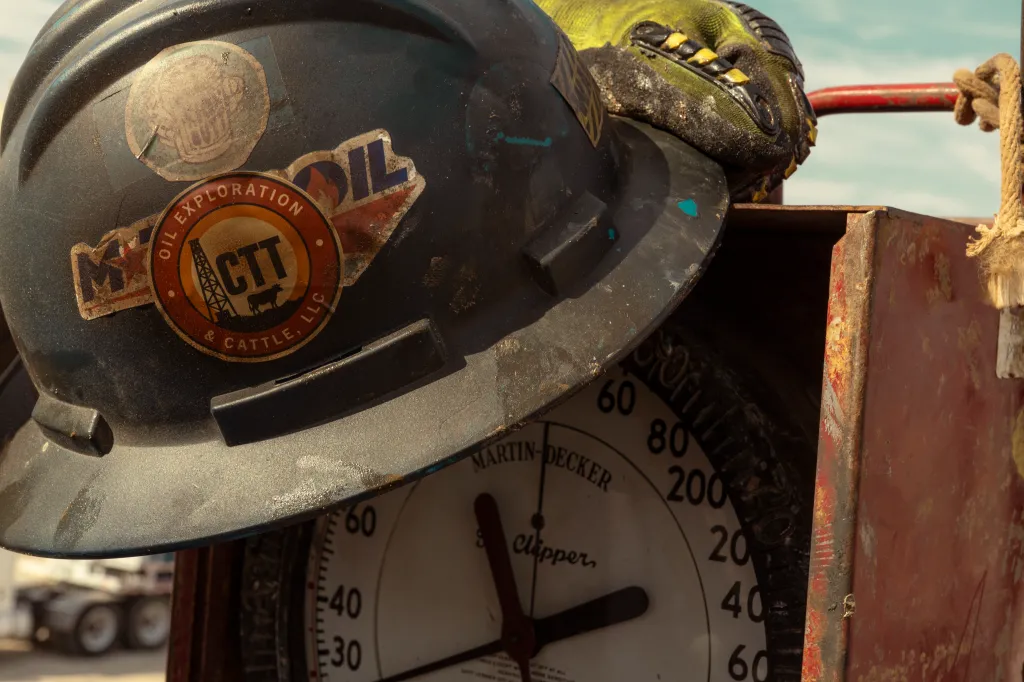
We’ll be seeing more of Colm Feore, Mustafa Speaks, Bobbi Salvor Menuez, and Francesca Xuereb in Season 3 of Landman. All four have been promoted to series regulars as Season 3 productions gets underway in Fort Worth, TX.
They join previously announced new series regular Michael Kelly in Taylor Sheridan‘s hit oil drama series.
Set in the boomtowns of West Texas, Landman is a modern tale of fortune seeking amongst roughnecks and wildcat billionaires – fueling an oil boom so big it’s reshaping the climate, the economy and geopolitics.
In Season 2, as oil rises from the earth, so do secrets – and Tommy Norris’s (Billy Bob Thornton) breaking point may be closer than he realizes. Facing mounting pressure from M-Tex Oil, Cami Miller (Demi Moore), and the shadow of his kin, survival in West Texas isn’t noble – it’s brutal. And sooner or later something’s got to break.
Details of the Season 3 storyline have yet to be revealed.
Starring Billy Bob Thornton and Demi Moore, the cast also includes Andy Garcia, Ali Larter and Sam Elliott, along with Jacob Lofland, Michelle Randolph, Paulina Chávez, Kayla Wallace, Mark Collie, and James Jordan.
Landman is executive produced by Sheridan, David C. Glasser, David Hutkin, Ron Burkle, Bob Yari, Christian Wallace, Billy Bob Thornton, Geyer Kosinski, Michael Friedman, and Stephen Kay. Dan Friedkin and Jason Hoch for Imperative Entertainment, and J.K. Nickell and Megan Creydt for Texas Monthly also executive produce.
Landman is produced by Paramount Television Studios, 101 Studios, and Sheridan’s Bosque Ranch Productions.
>
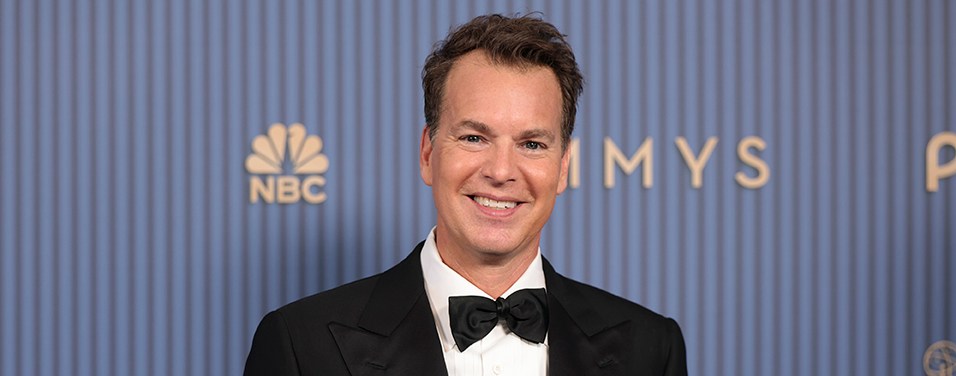
Casey Bloys, Chairman and CEO of HBO and HBO Max Content, jokingly requested some credit for not canceling his appearance at Bloomberg’s Screentime conference Thursday which came at a very awkward time. It was held two days after Paramount‘s streaming chief Cindy Holland’s exit cleared the way for Bloys to take over the combined Paramount+/HBO Max streaming operation but ahead of Paramount’s acquisition of HBO parent WBD officially closing and the merged company’s leadership structure, including Bloys’ exact position and title, being announced.
That led to a series of deflected questions, including whether HBO Max and Paramount+ will be fully merged or bundled.
But Bloys did say that Paramount CEO David Ellison “is very, very excited, very respectful of what the HBO team has done — not just in my tenure, but the entire history of HBO” and that he believes Ellison will “maintain what we’ve done.”
Bloys did address in depth the ongoing TV industry contraction — which the Paramount-WBD merger will likely be contributing to — in the aftermath of the Peak TV era that was driven by the rise of streaming.
“We are an industry in disruption, we used to compete against people who were selling cable subscription or advertising, main product was video entertainment,” he said. “We are now competing against companies that are in very different spaces, have different economics. We’re also on the backside of a bubble bursting, we went from 600 shows to 400, whatever it is. If you just think about those numbers, 200 shows and the average show, depending on how big it is, is a couple of hundred good paying jobs. That’s a catastrophe. That is very hard across the board. That is what it looks like when a bubble bursts. It’s ugly.”
Bloys did admit that the downfall was inevitable, referencing the craze at the height of the market when over 600 scripted series were being made in a year.
“People were greenlighting shows based on an idea, it was not sustainable; you couldn’t make that many shows as an industry and monetize it properly,” Bloys said. “A bubble has some benefits on the way up in terms of people learning on shows because there’s so much work. The downside is really painful.”
It was not all bleak as Bloys had a positive outlook and said that he would still recommend pursuing a career in entertainment because it’s “a lot of fun.”
“My hope is, like any industry that gets disrupted, there is mergers, there is new players coming in,” he said. “Maybe we will find some certainty, some calmness.”
>


Search For Canadian TV Actor Stewart McLean Now Homicide Investigation


These ’90s fashion trends are making a comeback in 2017
According to Dior Couture, this taboo fashion accessory is back
Model Jocelyn Chew’s Instagram is the best vacation you’ve ever had
Emily Ratajkowski channels back-to-school style
9 Celebrities who have spoken out about being photoshopped


Rurouni Kenshin: Hokkaido Arc Manga Takes 1-Issue Break – News


HIDIVE to Stream English Dubs for The World Is Dancing, The Forsaken Saintess and Her Foodie Roadtrip in Another World, The Dangers in My Heart: The Movie Anime – News