
Entertainment
Jordan Firstman on ‘Club Kid,’ His Tender Cannes Debut — Interview

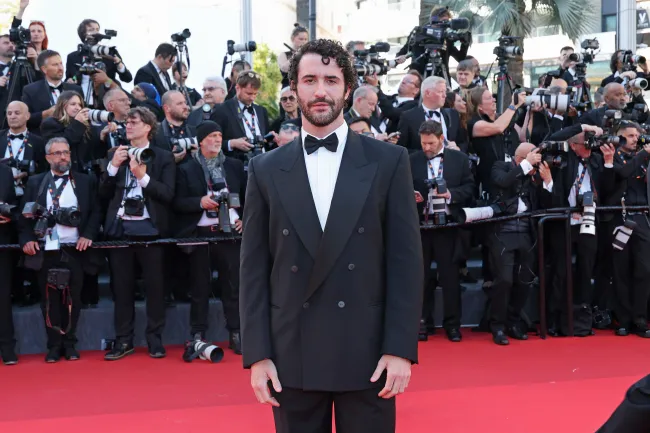
The official Cannes synopsis for “Club Kid” is almost suspiciously vague: “A washed-up party promoter is forced to turn his life around when an unexpected visitor arrives.” Hmm…
Technically, that’s true. But it’s also the kind of carefully evasive logline you can only use if you’re an artist as charismatic and cunning as Jordan Firstman. A writer, actor, singer, comedian, and now debut feature filmmaker, Firstman has spent years making audiences feel like they know everything about him without fully surrendering the parts of himself that might actually hurt.
“People have trouble metabolizing me for a lot of different reasons, ” Firstman told IndieWire, ahead of his dazzling feature film‘s world premiere at the Cannes Film Festival on May 15. “I think I remind them of someone they know, but also someone they don’t know. Or someone who deserves things, but also someone they went to high school with who’s just an annoying gay guy. Perception is weird.”


For years, Firstman’s public persona has existed somewhere between chaotic queer oracle and self-aware caricature — whether through his hilariously unhinged Instagram comedy, his writing and acting work on shows like “Search Party,” “The Other Two,” and “I Love LA,” or his caustic self-portrayal in Sebastián Silva’s “Rotting in the Sun,” which debuted at Sundance in 2023.

“I wanted the thing I did after that to be a bit softer and more like a version of me that I knew, but other people didn’t,” Firstman said. “There was a lot on me in that movie in terms of persona and people thinking about me in a certain type of way.” (Suffice to say, Firstman spends much of “Rotting in the Sun” cartoonishly chasing attention and ketamine on the beach.)
The “Club Kid” filmmaker also wrote the viral Laura Dern tribute that was performed by the Gay Men’s Chorus of Los Angeles at the 2020 Spirit Awards (“Top five moments of my life,” Firstman joked), which helped carve out space for his unique voice in Hollywood. Sliding effortlessly from incisive observer to chaotic flirt to exhausting narcissist, Firstman is never not in on the joke. But it took until now for him to finally explore what happens when that cyclical sense of self-parody stops working as armor and starts feeling like a weight.

“I didn’t want to win anyone over anymore,” Firstman said of his mentality heading into this project. “All I could do was tell the story I wanted to tell in the way that I wanted to tell it.”
A funny and melancholy look at one man’s deep feelings of isolation, appropriately set against the fast-changing experience of modern queer nightlife, “Club Kid” stars Firstman as Peter, a gay New York party fixture whose chemically accelerated existence is interrupted by the sudden arrival of a child he never knew he had. That setup could easily lend itself to a broader (read: straighter) comedy, but Firstman’s soulful consideration of finding both family and purpose hits a much more sensitive frequency than that.
Not nearly as interested in punishing Peter for his messiness as it is in helping explain why he built his life this way in the first place, “Club Kid” draws a lot of its tension from the inherent conflict between the pursuit of shallow visibility and the fundamental need for more meaningful types of intimacy. The damage and acceptance that kind of internal contradiction can bring to a person over an extended period runs through every frame of Firstman’s film, and the result feels less like a conventional dramedy than a decade-long discovery unfolding in real time.

With a slick, feel-good opening scene that smartly orients the entire experience, “Club Kid” charts Peter’s evolution from the mid-2010s into the spiritually scorched present with merciless specificity.
“I remember that era was the start of Europe coming to America gay-wise,” Firstman said. “Dark rooms were not really a thing before that. It was Molly, and maybe some coke, and that was kind of it.” Then came COVID. “I said this famously in the pandemic, but it’s like, you take sex away from gay people for a month, and they’ll make up for it for the next five years.”
According to Firstman, as the substances changed in many American clubs, so did the emotional atmosphere surrounding some parts of LGBTQ culture. “In 2020 and 2021, K got really big. Then G started in 2022. Then, the last couple years, the Mephedrone, the 3MMC, and 4MMC,” he explained. “You look around, and you see zombies where it should be a community. And sometimes that still feels like your community? It just changed.”
The brilliance of “Club Kid” lies in Firstman’s refusal to flatten those realities into an easy morality. His film understands the air of danger, loneliness, and instability often inherent in queer spaces — while warmly demonstrating why countless people keep returning to them anyway. No one in Firstman’s script is reduced to a victim or cautionary tale, least of all Firstman. And in the end, even his harshest skeptics will struggle to shake the affection they’ll feel for a character who has spent years finding and losing himself under the same strobe lights.

“Even when you strip back the surface layer of the drugs and the afters going on all weekend, beneath it is a bunch of queer people who are funny and sensitive and broken in some ways and artistic and just fully whole,” Firstman said. “That’s what I wanted to show.”
The heart of “Club Kid” is in Peter’s relationship with his son, played by newcomer Reggie Absolom, whom Firstman discovered after watching hundreds of audition tapes out of London. “I remember seeing the thumbnail and being like, ‘Please be able to act, please be able to act, because that’s him,’” Firstman said. “Then I met him, and we went for ice cream and talked about music. I sent all the kids the playlist I wrote the movie to. Reggie loved Massive Attack.”
At several points throughout our conversation, Firstman became emotional discussing his kid scene partner and their film’s larger themes of innocence, queer identity, and the cruel impermanence of self-perception. One moment in particular, in which Reggie bonded with the movie’s ensemble cast of queer and trans performers, overwhelmed him.
“For the rest of his life now he’s going to love trans people because he got to see how funny and creative [they are], and listen to music with them and joke around with them,” Firstman said, trailing off emotionally. “I think that’s the beauty of this story.”

That softness feels revelatory coming from an artist who has so often weaponized irony and overstimulation as an entertainment strategy. Moments earlier, Firstman had been casually breaking down the social consequences of post-pandemic partying and joking about his “level of hotness.” Then, he was crying and discussing chosen family.
“Everything shows on me,” Firstman laughed, describing the quality as a “gift and a curse.” “Maybe people have complicated feelings toward me because I can’t really hide anything.”
What makes “Club Kid” as hysterical as it is devastating? Its writer/director’s keen understanding that exposure and vulnerability are not the same thing. Peter has spent years being looked at — desired, consumed, partied with, projected onto — without ever fully learning how to let himself be seen. The arrival of his son has the power to change that, and viewers, too.
“A lot of queer people lose their innocence young and then go straight into this world that can be debaucherous,” Firstman said. “They don’t get a chance to go back to that. Then they don’t have kids. I think for a lot of people, kids bring out their inner child in ways they never expected.”

Speaking with IndieWire, the filmmaker repeatedly returned to the idea that queer adulthood can feel like an endless negotiation between freedom and self-destruction. But even at its saddest, “Club Kid” remains startlingly sweet. Firstman has an almost anthropological understanding of the contemporary queer social scene in New York, and his movie is packed with the kind of hyper-specific observations that can only come from somebody who has spent years studying how humor functions as both a tool for connection and an often unwieldy defense mechanism.
“I’ve softened a lot in the process of making it,” Firstman said. “I think I’ve struggled so much with my queerness, not in a traditional way, but more in the actual community and having so many mixed feelings about it. Because it isn’t simple. It’s very rich and full. And I think all this [with ‘Club Kid’] happened at the right time and when I could handle it in my life.”
For all its scenes of spiraling, “Club Kid” is ultimately about the terrifying decision to let yourself be loved without performing for acceptance first. The fact that Firstman can communicate a concept so psychologically naked suggests the arrival of a major new auteur unafraid to move forward on his own terms. “Club Kid” is the most honest Firstman appearance to date.
“Club Kid” premieres May 15 at Cannes in this year’s Un Certain Regard section. The film was produced by Topic Studios, Alex Coco, and Galen Core, with co-financing from Stay Gold.
>
>
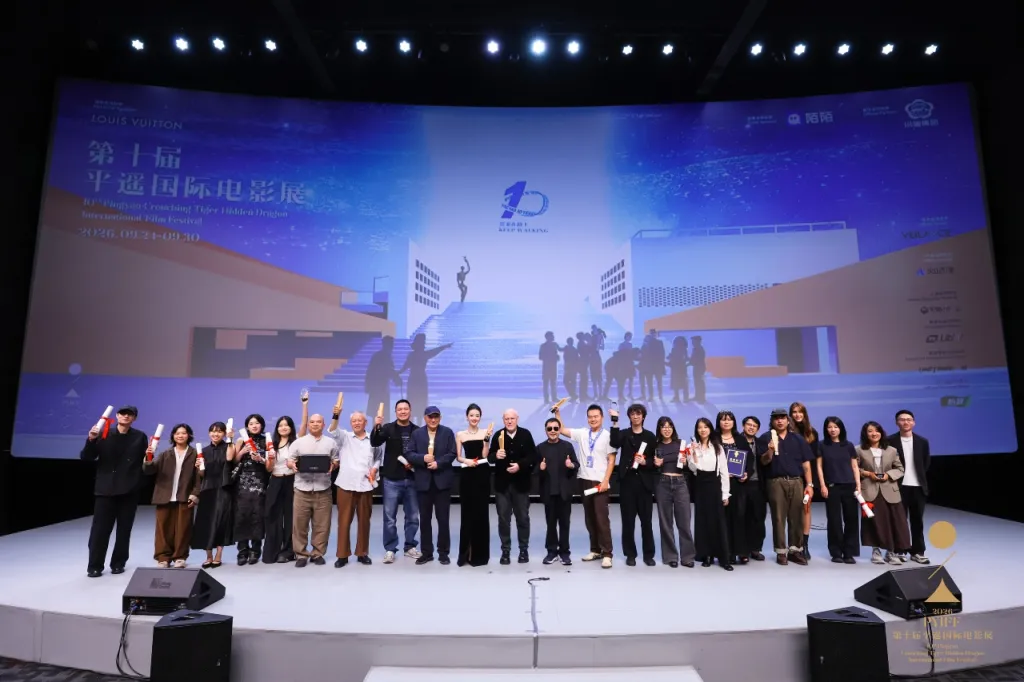
Chinese director Niu Niu’s Final Payment scooped the Best Film Award in the Fei Mu Awards of this year’s Pingyao International Film Festival (PYIFF), while Rafiki Fariala’s Congo Boy won Best Film in the festival’s Roberto Rossellini Awards.
Final Payment, which also won Best Actor for Niu Jianrong’s performance, revolves around a homeowner clashing with a contractor over the final payment following a set of renovations on his home. PYIFF’s competition jury stated: “Tearing through a very small rip, the film leads us into a reality and emotional landscape so expansive, where we sigh, lament, and reflect. The director’s approach is concise, unpretentious, and masterful, earning the wholehearted recognition of the entire jury.”
The Best Film award came with a cash prize of $150,000 (RMB1m) with half given to the director for the development of their next film, and half given to the distributor in China. Niu Niu previously directed Mr Junjun, which was awarded with the Jury Award and Youth Jury Award at PYIFF in 2023.
Also in the Fei Mu Awards, Xu Zao won Best Director for Light Pillar, while Best Actress went to Sun Yi for Wang Xiaozhen’s A Joke. The Jury Award was presented to Dong Jie’s Zoom In, Zoom Out, which had its world premiere in Venice Critics Week, while a special mention went to Cai Chengjie’s Suzhou Quartet.
The Fei Mu awards are focused on the festival’s Hidden Dragons section, which selects first, second and third films from emerging directors making Chinese-language films, while the Roberto Rossellini Awards focus on the Crouching Tigers section for emerging international directors.
Congo Boy, which took Best Film in the Roberto Rossellini Awards, also won Best Actor when it premiered in Un Certain Regard at this year’s Cannes film festival. The PYIFF award came with a cash prize of $20,000, with half given to the director for the development of their next film, and half given to the distributor in China.
The PYIFF jury stated: “The Jury unanimously has been moved by this autobiographical story, told in a simple style that echoes the great tradition of neorealism. For a film focusing on a character that confronts his world with optimism despite dark times and takes on his shoulders the destiny of his entire family.”
Also in this section, the Philippines’ Rafael Manuel won Best Director for Filipiñana, while the Jury Award went to Ben’imana, directed by Marie-Clémentine Dusabejambo, which won the Camera d’Or at this year’s Cannes. The jury also awarded Rakan Mayasi’s Yesterday The Eye Didn’t Sleep a Special Mention.
Hong Kong filmmaker Ann Hui received the Crouching Tiger Hidden Dragon East-West Award, shortly before she receives the Camellia Award at Busan International Film Festival next week.
Pingyao’s International Contribution To Chinese Cinema Award went to Marco Müller, who founded the festival with Chinese auteur Jia Zhangke and currently serves as Artistic Director of the Film Art Research Centre at Shanghai University, and veteran producer, director and former chairman of China Film Group Han Sanping. Hello Group chairman Tang Yan was presented with a 10th Anniversary Award.
This year’s PYIFF opened on September 24 with a screening of the 4K restoration of Fei Mu’s Spring In A Small Town; closed with Good Trip, co-directed by Hong Kong filmmakers Norris Wong and Hoi Wong, and also screened Jia’s short film Torino Shadow, which premiered at this year’s Cannes.
PINGYAO INTERNATIONAL FILM FESTIVAL 2026 AWARDS:
FEI MU AWARDS:
Best Film: Final Payment, dir: Niu Niu
Best Director: Xu Zao, Light Pillar
Best Actress: Sun Yi, A Joke, dir: Wang Xiaozhen
Best Actor: Niu Jianrong, Final Payment, dir: Niu Niu
Jury Award: Zoom In, Zoom Out, dir: Dong Jie
Special Mention: Suzhou Quartet, dir: Cai Chengjie
ROBERTO ROSSELLINI AWARDS:
Best Film: Congo Boy, dir: Rafiki Fariala
Best Director: Filipiñana, dir: Rafael Manuel
Jury Award: Ben’imana, dir: Marie-Clémentine Dusabejambo
Special Mention: Yesterday The Eye Didn’t Sleep, dir: Rakan Mayasi
>
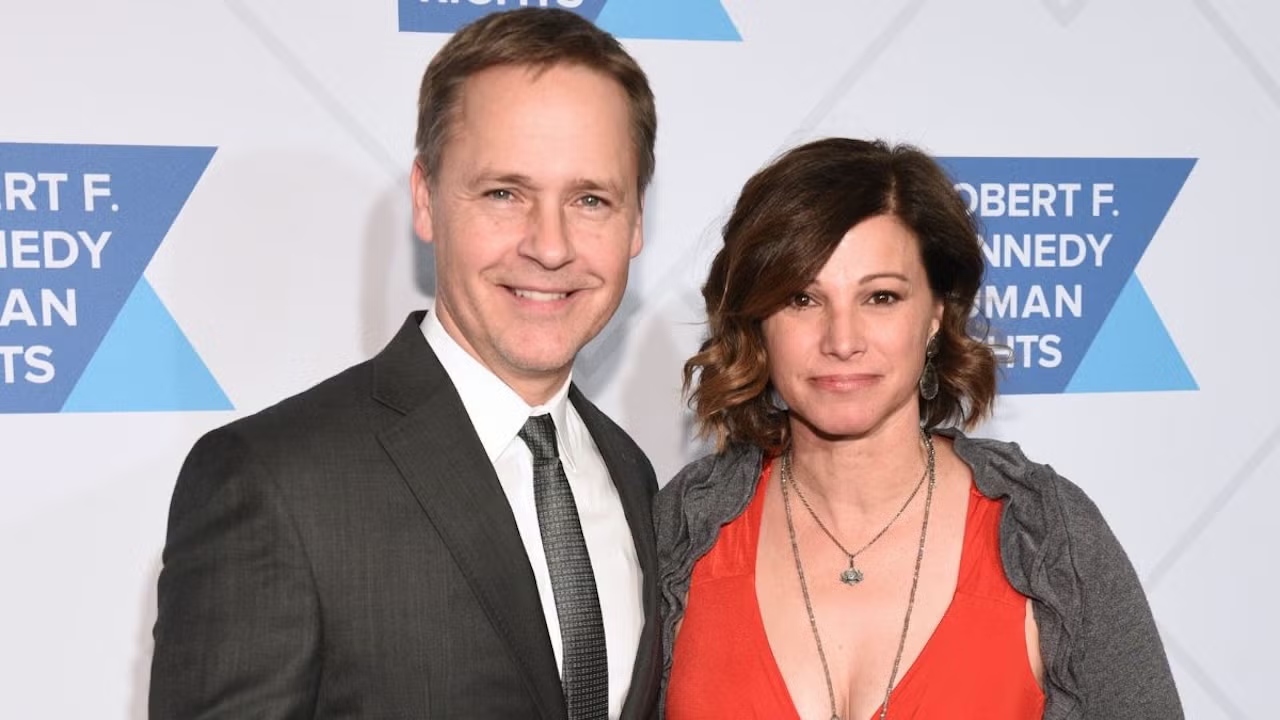
Actor Chad Lowe and producer Kim Painter’s 13-year-old daughter, Fiona, has died, according to a statement from the teen’s family.
“We are deeply heartbroken by the loss of our beloved Fiona,” the Lowe family said in a statement to media Tuesday evening. As the family went on, they remembered Fiona as “a loving young girl who was smart, creative, and loved to dance.”
“She was adored by her sisters and she was deeply loved by her parents,” the family’s statement added. “In fact, she was the light of our lives.”
While a cause of death was not immediately shared, the Lowes alluded to Fiona’s mental health struggles, writing, “Her passing is devastating for our entire family and we ask for prayers and privacy at this time. If you or someone you know is struggling with mental health, please reach out to the 988 Suicide & Crisis Lifeline by calling or texting 988.”
More to come…
>
Man City's 'sham contracts', spending breaches and 'disguised funding': Breaking down the findings

Whitley Bay: The part-timers who won a record three Wembley finals in a row

Flex your football brain with our daily quizzes
-

 movies4 months ago
Search For Canadian TV Actor Stewart McLean Now Homicide Investigation
-

 Fashion9 years ago
These ’90s fashion trends are making a comeback in 2017
-
Fashion9 years ago
According to Dior Couture, this taboo fashion accessory is back
-
Fashion9 years ago
Model Jocelyn Chew’s Instagram is the best vacation you’ve ever had
-
Fashion9 years ago
Emily Ratajkowski channels back-to-school style
-
Fashion9 years ago
9 Celebrities who have spoken out about being photoshopped
-

 Anime4 months ago
Rurouni Kenshin: Hokkaido Arc Manga Takes 1-Issue Break – News
-

 Anime3 months ago
HIDIVE to Stream English Dubs for The World Is Dancing, The Forsaken Saintess and Her Foodie Roadtrip in Another World, The Dangers in My Heart: The Movie Anime – News