
a Location Managers Guild International scouting trip visited Kurdistan’s Hawraman region and the local bazaar, courtesy of Kurdistan Film Commission
Courtesy of Kurdistan Film Commission


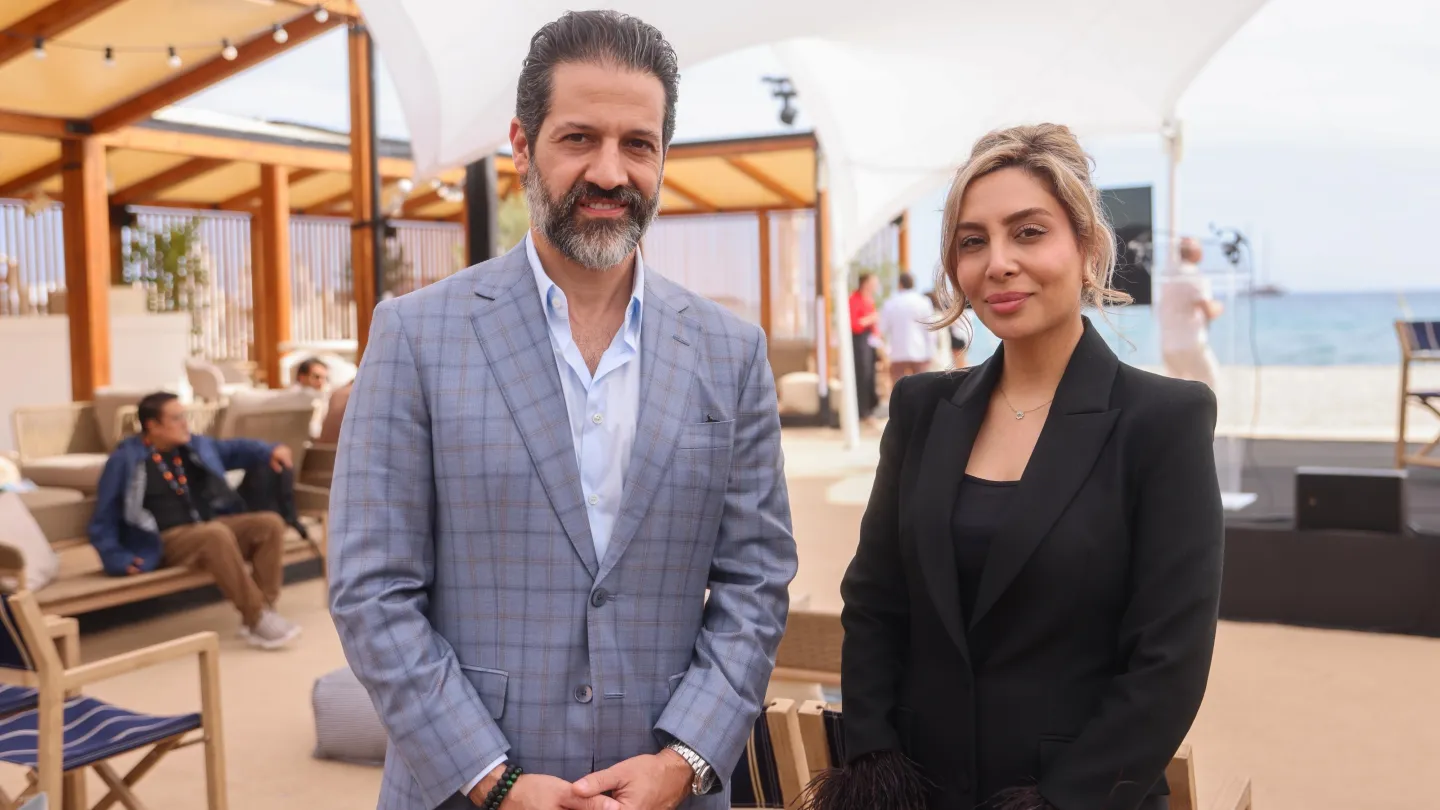
Last year marked the premiere of the Kurdistan Film Commission (initially known as the Kurdistan Film Commission Slemani before a broadening of activities) on the global film stage at Cannes. The world’s biggest film festival marked the coming-out party for the commission of the small semi-autonomous region in northern Iraq under the office of Deputy Prime Minister H.E. Qubad Talabani, who is the president of the organization. This year, he, Bavi Yassin, founder and chair of the film commission, and her team are back at Cannes for an encore.
The mission of the commission, located in the cultural hotspot city of Slemani, is to empower Kurdish creatives through training and support, bring foreign creatives to Kurdistan and establish it as a filming destination, and to help bring the region’s stories to the world.
Recruitment for staff, in Slemani, also known as “Suli,” and elsewhere, has been in full swing. For Cannes 2026, the team also packed some financial news. After last year signaling plans for a fund, the Kurdistan Film Fund was officially unveiled during a Wednesday event, entitled “Owning Our Story,” at the Cannes Marché. The fund is worth $2 million per year.
a Location Managers Guild International scouting trip visited Kurdistan’s Hawraman region and the local bazaar, courtesy of Kurdistan Film Commission
Courtesy of Kurdistan Film Commission
Talabani highlighted the uniting force of storytelling at the event, saying: “We want to show the world that despite political differences, despite regional tensions, or war, that cinema can cross those boundaries, that storytelling can unite where politics divides. This fund is not just an opportunity for Kurdistan. It’s a signal to the region that we see the momentum and that we want to be part of it, that we are willing to invest in the relationships, the collaborations, the partnerships that make this region stronger.”
The region has long considered itself a connector rather than a divider. “For centuries, Kurdistan has been a bridge between cultures, between civilizations, between worlds. That is our geography, that is our history,” he told the crowd. “We want to be a bridge, not a battlefield. We want to build, not destroy. We want to create an industry, an opportunity where there is currently division.”
The deputy prime minister also highlighted the importance of changing the narrative. “We have decided that today, Kurdistan stories will no longer be told by others on our behalf,” Talabani told the Cannes audience. “We will tell them ourselves, on our terms, with the depth and accuracy that only we can provide.”
And the film and creative sectors play a key role here. “They are essential parts, because how a nation tells its story determines how it is seen, how it is understood, how it attracts investment, talent and partnerships,” he said. “We are ready to be seen, to be understood, to be part of the global conversation, not as subjects, certainly not as victims of history, but as participants.”
Kurdistan Film Commission training session, courtesy of Kurdistan Film Commission
Courtesy of Kurdistan Film Commission
Yassin also emphasized the focus areas of her work. “Kurdish films have always relied on external support, without a solid system of their own. The fund changes that by placing the Kurdish narrative at the center, wherever it is told in the world,” she tells THR. “It is not only about financing films – it is about creating ownership, continuity, and visibility for Kurdish stories on an international level. At the same time, it is designed to open the door for global creators and producers to engage with Kurdish talent and stories through meaningful collaboration.”
The goal: “to create a structure that supports our narrative, while also encouraging international interest – and ultimately, to start bringing that attention back to Kurdistan itself.” Fund evaluations will center on artistic merit, but not solely. “Projects are assessed on their international co-production potential, their ability to circulate, and their relevance to the local ecosystem,” shares Yassin. “We are looking for films that can connect Kurdistan with global partners while also contributing to the industry’s development on the ground.”
Attracting film and TV productions has both cultural and economic benefits, both near- and long-term. “For Kurdistan, this is about diversification,” highlights Yassin. “The audiovisual sector brings immediate economic activity – jobs, services, infrastructure – but beyond that, it builds long-term value. It shapes how a region is seen globally and opens the door to cultural tourism. When people see a place on screen, they connect with it. That connection creates curiosity, and over time, it translates into real interest in visiting and engaging with that place.”
But making Kurdistan appealing to filmmakers is multi-layered, she emphasizes: “It is the combination of authenticity, access, and cost effectiveness.”
Kurdistan Film Commission at Cannes Marché 2026, courtesy of Kurdistan Film Commission
Keep in mind that the treasure trove of stories from the region hasn’t been widely seen around the globe. “There is a strong narrative identity. Kurdistan offers stories, locations, and cultural depth that have not been overexposed,” emphasizes Yassin. “For European and Asian partners, this represents originality – something audiences have not seen repeatedly.”
Such authenticity meets access when it comes to location scouting, where Kurdistan can offer something new. “I have had professionals reach out to us, saying they are tired of the overused locations that always stand in for other countries they so much need,” the commission’s chair shares with THR. “Kurdistan is in the MENA (Middle East/Northern Africa), very accessible, and yet it has four proper seasons per year, a wide range of diverse locations, from extreme greenery to drylands, waterfalls, mountains and hills, rivers, and urban cities. These locations can stand in for Syria, Afghanistan, Pakistan, Iran, and so many more.”
Some experiences with surprised visitors even provided laughs. Yassin, for example, recalls taking people to some areas, “and they said, ‘It looks precisely like Ireland!’ Can you believe that: In the heart of the MENA, there is a country with corners that look like Ireland!”
Money, of course, is also a key consideration for productions. “This industry is very expensive,” Yassin knows, highlighting that Kurdistan “offers a cost-effective filming environment.” She even sees opportunities for collaborations with producers within the region. “How many times have we seen Egyptian films seeking locations in Europe for their greenery and landscapes, and how much does it cost them?” Yassin tells THR. “They can find it all right here.”
How about that efficiency argument? “Within a very compact geography, productions can access a wide range of locations – urban, rural, mountainous – without the logistical complexity or costs found in many other countries,” she notes. “This has a direct impact on budgets and timelines.”
Kurdistan offers varied landscapes, some of which could be a stand-in for Ireland, courtesy of Kurdistan Film Commission
Courtesy of Kurdistan Film Commission
But there are also production support and soft incentives, which she describes as “often underestimated,” given a traditional focus on cash rebate percentages. “What matters in practice is the total cost of production,” Yassin emphasizes. “In Kurdistan, facilitated permits, flexible coordination, access to locations, and overall lower operational costs make it highly competitive – even without relying solely on large rebate schemes.”
To ensure local talent has what is needed, the Kurdistan Film Commission Slemani has, over the past year, had all sorts of training, education and skills development initiatives. Among the events have been a five-day Kurdistan Producers Lab for producers and directors, covering film budgeting, financing, funding applications, and marketing, in collaboration with European Audiovisual Entrepreneurs (EAVE). There was also a four-day workshop on location management and scouting, led by John Rakich, president of the Location Managers Guild International (LMGI), and Andrea Keener, a LMGI board member and senior location manager, who has worked on such TV series as Cold Case and Scandal and such feature films as Ant-Man, Captain America, and Killers of the Flower Moon.
The commission plans to continue and expand its training opportunities. “This year, we will work with top professionals around the world and highly established institutions on scriptwriting, documentaries, and more focused professional training for crews, especially below-the-line,” Yassin tells THR. “We will also start our Suli Screens programs, which are free of charge film screenings all over the city.”
For productions looking to shoot in the region, the commission is offering a database of locations, including the likes of the archaeological remains of Bazyan, an ancient Christian site estimated to date back to the 6th century, the Red Prison Museum, a site formerly known for its brutality before being abandoned and reopened in 2003 as a museum, and Tuni Baba, a gorge known for its stunning scenery.
Yassin even has news of an international project to share. “We have a Canadian film production, Daudistan, coming this year,” she tells THR. A synopsis for the drama from writer-director Ariel Nasr on Cinando reads like this: “On the eve of Kabul’s fall to the Taliban, Afghanistan’s star runner Daud Ahmadi returns from a Canadian detention center to reunite with his sister Tayiba. Together, they must confront a city in collapse and fight to reclaim their shattered dreams before everything they love is lost forever.”
Yassin mentions “a few more [projects] in the pipeline, but the unexpected war in the region has affected production, not just in Kurdistan but across the entire MENA region.” Yes, the war in Iran has been the elephant in the room in the region, adding to worries around the Gaza war.
“I appreciate this question, because it goes beyond Kurdistan – it speaks to the reality of an entire region,” the film commission chair highlights. “The truth is, many countries in our region are affected by conflicts they are not directly part of. As Kurds, this is something we have lived with for decades. We are often carried by the consequences of wars that are not ours, yet we absorb their impact – politically, economically, and culturally. One of the first sectors to suffer is film: production slows down, and, more importantly, a region’s reputation—something that takes years to build – can be affected almost overnight. But there is another reality that is often overlooked. If you look at daily life in a place like Kurdistan, it is stable, functional, and safe. There is a disconnect between perception and reality, and part of our role is to correct that.”
Kurdistan even features snowy landscapes, courtesy of Kurdistan Film Commission
Courtesy of Kurdistan Film Commission
This is why being at Cannes is important. “Our presence is a statement: that we are open, that we are building, and that we are not waiting for perfect conditions to start,” says Yassin. “In times of conflict, support for the arts is not secondary – it becomes essential. Culture is what preserves identity, what sustains people, and what allows a region to define itself rather than be defined by others.”
The Kurdistan Film Commission Slemani is also bringing filmmakers to Cannes to network and pitch their projects at the Marché du Film. And it is organizing the first-ever Kurdistan Producers Circle at its Cannes market stand. “We are selecting 10 projects,” explains Yassin. “They will have the opportunity to meet top established producers and present their work in a focused setting. This is not about visibility alone – it is about creating real connections and opening doors. …Importantly, as we reintroduce Kurdistan to the international industry, we are not limiting ourselves to the domestic market. We are selecting projects from across the wider region, not only Kurdistan. This is a deliberate choice. It reflects how we see our role: not only building locally, but positioning Kurdistan as a platform for collaboration.”
Concludes Yassin: “Ultimately, this is what we are doing – building bridges that did not exist before.”
And, she emphasizes, the commission has just barely started its work. “After one year since the official establishment of our film commission, I do not expect a mountain of productions coming our way. The fact that, in less than a year, we were contacted multiple times and considered for production gives me hope for what comes next,” Yassin tells THR. “Of course, welcoming foreign production is also my top priority, but people still don’t know us yet! All they know is stories related to sadness, war and politics. My main objective is to change people’s minds about how they see us. Once they do that, trust me, they won’t be able to resist the beauty and versatile location, and the enormous cost-effectiveness.”
>

EXCLUSIVE: Orange County Choppers Originals is headed out of the garage and travelling to Europe.
Hearst Networks has bought UK rights to the ‘reborn’ ob doc series from Off The Fence, which has boarded the show after striking an agreement to represent it worldwide (excluding the U.S.).
The new series – which aired in the U.S. on Discovery Channel, Discovery Turbo TV, Discovery+, and Discovery GO after launching in February – is the latest chapter in the motorbikes franchise that began in 2002 with American Chopper and is bases around the Orange County Choppers custom bikes business. A second season has been ordered, with the number of eps doubling to 12.
Prior to Orange County Choppers Originals‘ launch, there had been no new American Chopper episodes since 2020’s finale, American Chopper: The Last Ride. At one point, there had been a six-year gap due to legal problems between Paul Teutul Sr. and his son, Paul Teutul Jr., the father and son at the center of the series, but they were ultimately settled and the pair reunited on-screen.
The Hearst agreement, brokered by OTF’s SVP North America and Global Networks, Sam Thompson and Hearst Networks’ Acquisitions Manager, Hannah Gray, marks a first international deal for the revival.
Orange County Choppers Originals is based around Teutul Sr., founder and CEO of Orange County Choppers, who has spent over 30 years crafting custom motorcycles for major corporations and sports teams. The series shifts the focus to his workshop in Florida, where he reunites with some of the original team while introducing fresh talent. It also delves into his personal life, highlighting his charity work and passion for animal welfare and rescue on his hobby farm.
Hearst’s Gray said: “Orange County Choppers has everything we look for in great factual entertainment: big builds, strong characters and plenty of heart. With Paul Sr. back at the centre of the story, we’re excited to bring this new chapter to UK audiences.”
Orange County Choppers Original sees Teutul Sr.’s team design and build one-of-a-kind motorcycles for charitable causes, with each episode following them through engineering challenges, tight deadlines, and unexpected setbacks, culminating in auctions or raffles to raise funds and awareness.
Joan Kay, co-CEO of OCC said: “Everyone loves a comeback story and this one comes with the rebirth of an iconic brand and frankly, Paul Sr. is kicking ass. We’re very excited to partner with OTF on the global revival of the show as the company shares our values of working with entertainment with purpose and has an enviable reach and network of partners around the world across all platforms.
“This show isn’t just television, it has proved itself as a cultural phenomenon with the power to ignite fans and enthusiasts and turbocharge bike culture – we can’t wait for you all to see it.”
OTF’s Thompson said: “We’ve seized this opportunity wholeheartedly because the facts speak for themselves. There’s an existing fanbase hungry for more, with proven ratings, engagement, sponsorship and merchandising potential. We’re especially excited to have Hearst Networks on board as a quality broadcast partner and look forward to sharing the rollout of this rare gem.”
The American Chopper franchise has previously broadcasted in 160 territories in 35 languages worldwide, and OTF’s acquisition offers a new opportunity for buyers at MIPCOM in just under two weeks’ time in Cannes, France.
>
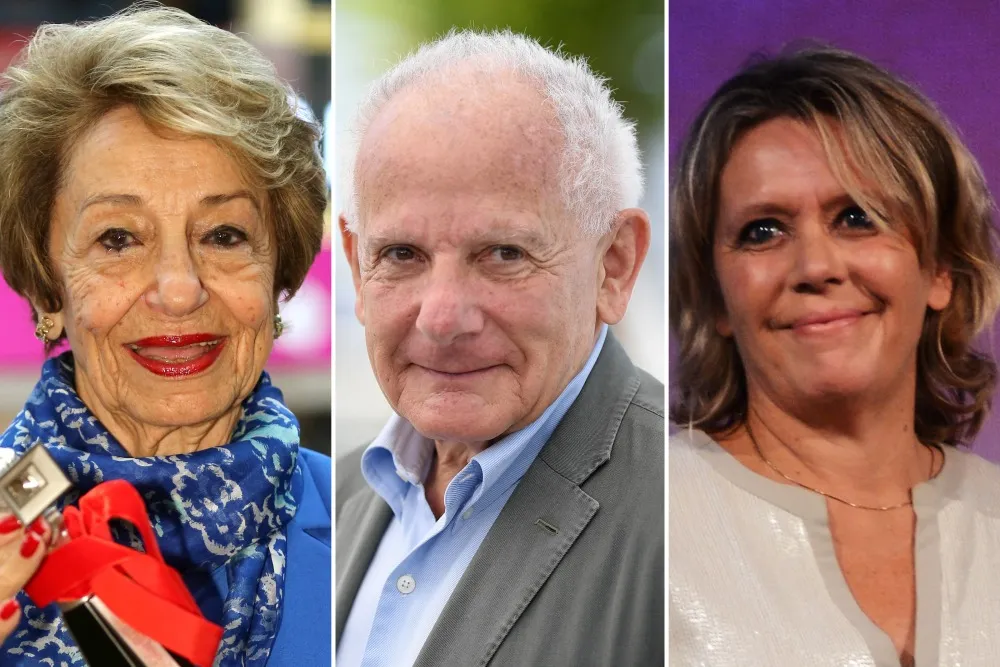
The European Film Academy has named Beki Probst, Marin Karmitz and Sandra den Hamer as the first recipients of its new Community Award for an Outstanding Contribution to European Film Culture.
The award, paying tribute to “a decisive and continuous contribution over many years to the development and expansion of European film culture”, will be presented during the European Film Awards weekend in Athens in January 2027.
The trio will be presented with the award on January 15, on the eve of the main ceremony at the traditional Welcome Night gala dinner, taking place this edition at the Acropolis Museum housing some 4,000 artefacts dating as far back as 1,200 BCE.
Probst is best known internationally as the founder of the Berlinale’s European Film Market, having entered the cinema world as the founder with her Swiss husband of the Queenie Cinemas in Berne in the 1960s, which grew into a successful chain of arthouse cinemas still existing today.
Born into a Sephardic Jewish family in Istanbul, Probst studied Law and Journalism and worked briefly as a film journalist.
From 1981 to 1988, she was the Berlinale delegate for Turkey and Greece and after initiating Locarno’s industry program, she was asked by Berlinale Director Moritz de Hadeln to start the European Film Market in 1988 in its current form.
Under her management, which continued into 2014, the EFM became one of the largest and most important international film market in Europe.
She has previously been feted with the Berlinale Camera, the Prix du cinéma Suisse, the French Chevalier des Arts et des Lettres and the Order of Merit of the Federal Republic of Germany.
Karmitz is known as the founder of France’s independent exhibitor, producer, film financier and sales agent mk2 film. Born in Romania in 1938, Karmitz arrived in France as a refugee with his family in 1947.
After studies at the IDHEC film school in Paris, he worked as assistant director to the filmmakers Jean-Luc Godard, Agnès Varda, Jacques Rozier, Yannick Bellon and Pierre Kast. before directing his first short film, Nuit Noir, Calcutta, based on a screenplay by Marguerite Duras, in 1964.
In 1965, he worked with Samuel Beckett on the adaptation of Comédie. In the same year, the feature was selected to open the Venice International Film Festival and shocked audiences with its avant-garde material.
He launched mk2 Productions in 1967 and made his feature-length directorial debut with Seven Days Somewhere Else (1968), followed by Comrades (1970) and Blow for Blow (1972), which were screened at international festivals.
He opened his first cinema in Paris in 1974 in response to Blow for Blow, about a group of textiles workers who take their factory boss hostage in protest at the work conditions, being shut out of mainstream circuits.
In 40 years, he would produce 108 films and distribute over 350 in theatres, among them Krzysztof Kieslowski’s Three Colours trilogy, for which he received a nomination for the European Film Awards 1994, twelve films by Claude Chabrol, Alain Resnais, Louis Malle, the Taviani brothers, Theo Angelopoulos, Lucian Pintilié, Gus Van Sant, Ken Loach, Abbas Kiarostami, Hong Sang-Soo, Michael Haneke, Walter Salles and Xavier Dolan.
Den Hamer has an extensive track record in the Dutch film industry.
From 2007 to 2023, she was the director of the Netherlands Filmmuseum in Amsterdam. Under her leadership, the re-named Eye Filmmuseum opened a brand-new museum building and a new collection centre in Amsterdam.
Its eclectic programming includes large retrospectives, international conferences and as well as exhibitions, exploring the work and careers of filmmakers such as Bela Tarr, Apichatpong Weerasethakul and Alex van Warmerdam among many others.
Before that, Sandra den Hamer worked for 23 years at the International Film Festival Rotterdam, including roles as co-ordinator of CineMart and the Hubert Bals Fund. From 1996 to 2007, she directed the festival.
She also served as President of the Board of the Association of European Cinematheques (A.C.E.). From 2023 to 2026. she was appointed interim executive director at the Netherlands Film Fund. Today she chairs the Board of the IDFA Institute and the Gerrit Rietveld Academy in Amsterdam.
Gathering 5,700 members from more than 50 countries across Europe, the European Film Academy oversees the annual European Film Awards, which alternates taking place in its home city of Berlin and another European city, which is Athens this year.
The 39th ceremony marks the second time it is unfolding in its new January slot, after the academy decided to shift it from a long-running December slot to integrate the awards more fully into the wider awards season.
>
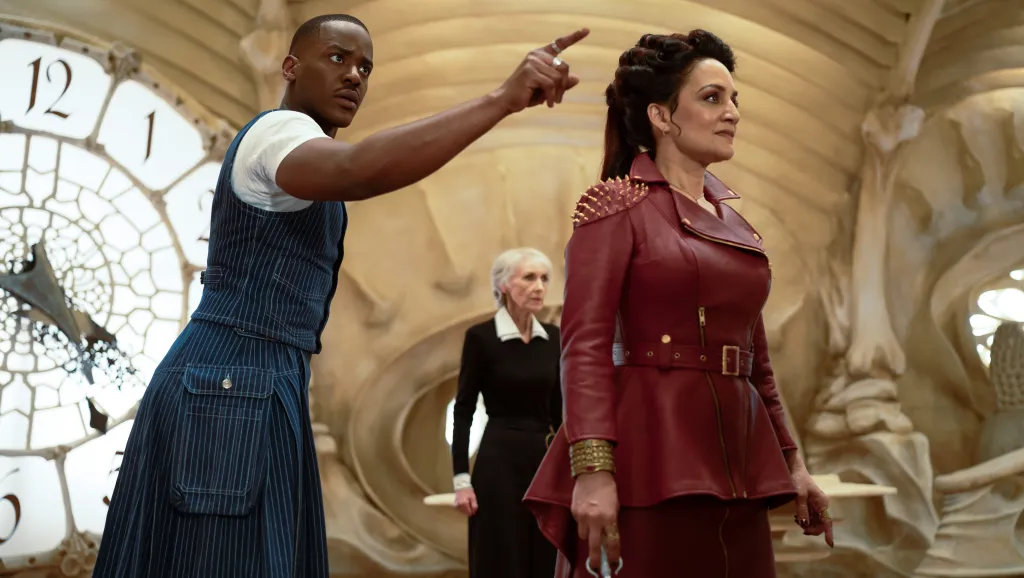
EXCLUSIVE: At least one BBC Studios indie will be throwing its hat in the ring to become the next producer of Doctor Who, with scripted boss Jamie Hall telling Deadline he “firmly believes” the entire BBC group should “reap the rewards” of the iconic sci-fi series.
Hall said “we’ve probably got one, potentially two companies” going for the multi-million pound tender, which if successful would bring the show back in house following two seasons made by Sony-owned Bad Wolf, starring Ncuti Gatwa. His comments followed BBC Studios CEO Tom Fussell recently saying BBC Studios would be applying “with gusto.”
Hall wouldn’t reveal the names of the indies but said he would “100%” be happy for more than one to enter the race.
BBC Studios runs an in-house drama label, which made Doctor Who before Bad Wolf, while it also owns several scripted indies outright including Baby Reindeer maker Clerkenwell Films, Happy Valley producer Lookout Point and Sherwood indie House Productions.
While he hasn’t seen his labels’ proposals, Hall said he has been “very open” and honest with those keen to go for the tender because the process is “quite an onerous undertaking and costs quite a bit of money.” “I have to make sure that it doesn’t become a distraction from the day job,” he added.
If two BBC Studios labels enter, they will likely join Line of Duty producer World Productions, whose boss Simon Heath has previously indicated his ITV Studios-owned outfit is interested. More thoughts from producers can be found in our future Doctor Who analysis from over the summer.
Published a fortnight ago, the tender calls for a “relevant, surprising, brave and inspiring” new vision for the show that should premiere in 2028-29. Notably, it said it is happy for indies to pitch a series using “episodic writers” rather than a “showrunner model,” which would do away with how Doctor Who has been made in recent years.
After several years with Bad Wolf and after the termination of the just-ended Disney+ co-pro deal, Hall was adamant that Doctor Who “should sit within the BBC and the whole group should reap the rewards of it.”
Questioned on what he would want to see from a revamped Doctor Who, Hall harked back to the days when Matt Smith and David Tennant were playing the Doctor.
“It feels to me that there is an opportunity to get back to what the core offering was in that time,” he added. “It will be off screen for two or three years and that gives the audience a great chance to have a break then rediscover, while also bringing a new audience.”
>


Search For Canadian TV Actor Stewart McLean Now Homicide Investigation


These ’90s fashion trends are making a comeback in 2017
According to Dior Couture, this taboo fashion accessory is back
Model Jocelyn Chew’s Instagram is the best vacation you’ve ever had
Emily Ratajkowski channels back-to-school style
9 Celebrities who have spoken out about being photoshopped


Rurouni Kenshin: Hokkaido Arc Manga Takes 1-Issue Break – News


HIDIVE to Stream English Dubs for The World Is Dancing, The Forsaken Saintess and Her Foodie Roadtrip in Another World, The Dangers in My Heart: The Movie Anime – News