
Entertainment
How Far Can Trump’s War With the Press Go?

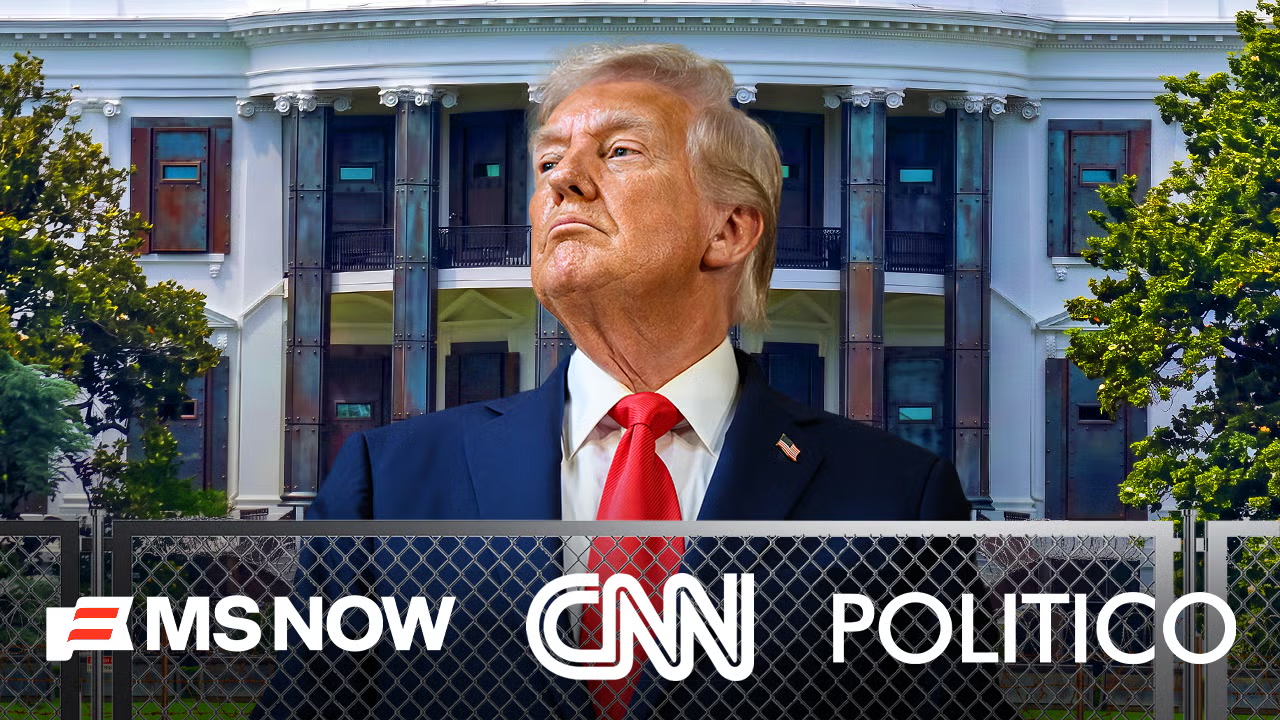
The Trump administration’s latest confrontation with the press ended, for now, with the institutional guardrails holding. But not for lack of the president trying to barrel his way through them.
A federal judge on Thursday ordered the White House to restore access to CNN, MS NOW and Politico. The major television networks stood together rather than replace CNN in the White House TV pool. And reporters from the three barred outlets were eventually allowed back onto the grounds Thursday after initially being turned away despite the court’s order.
But the episode marked the latest escalation in President Donald Trump’s confrontation with the media and raised a more fundamental question about what happens when the White House keeps pushing against both institutional norms and constitutional limits. As the administration keeps escalating its confrontations with the press — including denying CNN and MS NOW reporters access to cover the arrival of Chinese President Xi Jinping for a state dinner even after the ruling — what happens when those protections are tested again?
The administration has been remarkably consistent in its clashes with the media. Trump has regularly sued or threatened to sue news organizations. The White House restricted the Associated Press’ access in February 2025 after it declined to adopt Trump’s preferred “Gulf of America” terminology, then took control of selecting which news organizations participate in the presidential press pool, a role previously handled by the White House Correspondents’ Association. The administration later imposed new restrictions on journalists at the Pentagon, and in January, federal agents searched the home of a Washington Post reporter as part of a national security leak investigation.
In the latest escalation, Trump went further, barring three major national news organizations from the White House after attacking their coverage, once again raising the question of how much discretion the White House has when deciding who gets to cover it.
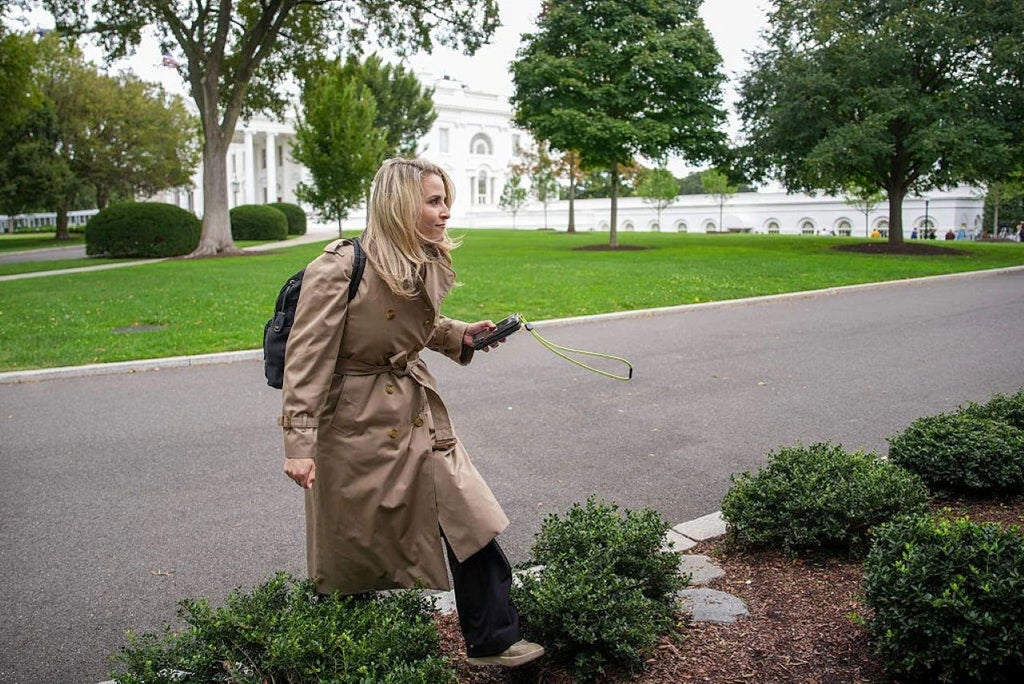
Jonathan Peters, a University of Georgia professor and the Carter Chair for Excellence in Journalism, said the key distinction is between a president criticizing coverage and the government using its control over access to reward or punish editorial decisions.
“Once access becomes contingent on editorial compliance, the dispute stops being merely another political fight between a president and the press and begins to raise serious First Amendment concerns,” Peters told TheWrap.
The first guardrail was the judiciary
U.S. District Judge Timothy Kelly ordered the administration early Thursday to restore the outlets’ access for 14 days. His ruling granting temporary relief rested on due process — whether the government followed the required procedure before taking away access — while leaving the broader First Amendment fight for another day.

Amy Kristin Sanders, the John and Ann Curley Chair in First Amendment Studies at Penn State University, said that distinction could prove important as the case proceeds.
“We certainly got a sense that Judge Kelly thinks the news organizations’ Fifth Amendment argument is strong, but he kept his cards close to his chest with regard to their First Amendment claims,” Sanders told TheWrap.
That leaves the larger constitutional question unresolved. The White House has substantial authority to manage press access for legitimate reasons including security, space and logistics, Peters said, but that discretion is not unlimited.
“Once the government establishes a system for granting press access, constitutional protections constrain the government’s ability to exclude particular journalists or organizations for impermissible reasons,” Peters said.
Kelly did not settle that issue Thursday. But the confrontation quickly presented another test when questions emerged about whether the White House would comply with his order.
“His willingness to move quickly when it seemed the White House was not going to respect his order was essential,” Sanders said, adding that the administration “seems keen to push the constitutional envelope.”

Hours after Kelly ordered their access restored, reporters from CNN, MS NOW and Politico were still turned away from the White House. The organizations went back to court, and Kelly ordered the administration to explain its compliance. The reporters were eventually allowed back around noon.
Timothy Zick, chancellor professor and John Marshall Professor of government and citizenship at William & Mary Law School, said the delay raised a separate issue.
“It was a temporary violation of a judicial order, which raises serious questions of its own,” Zick told TheWrap. “Had access not been restored, contempt proceedings might have been the next step.”
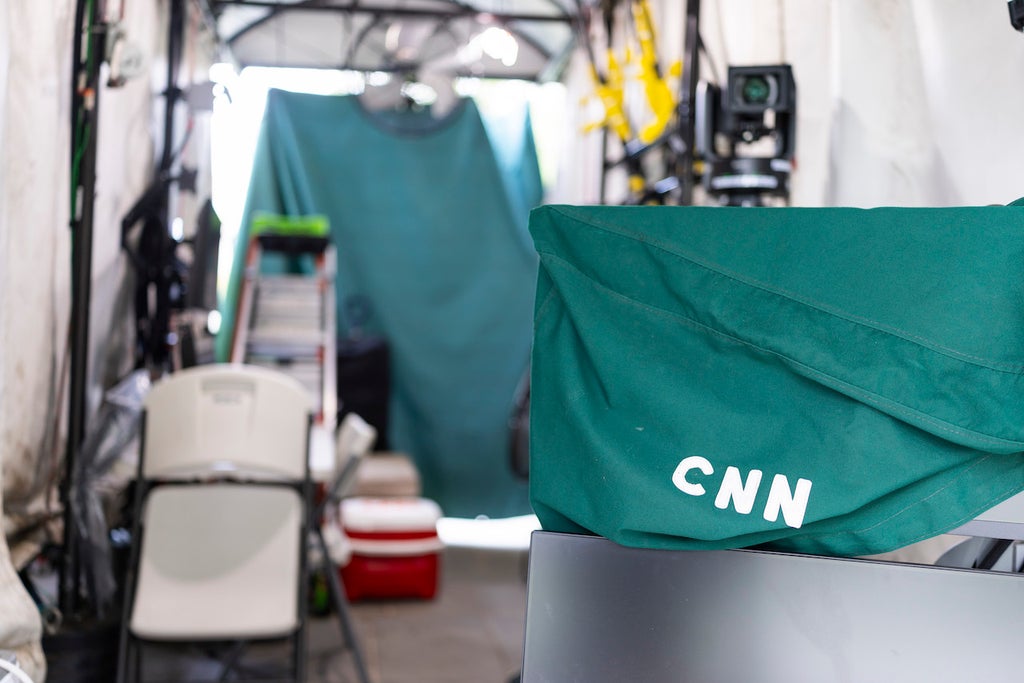
The second guardrail came from the press itself
After CNN was prevented from handling its scheduled television pool duties in the immediate wake of the ban, the other major networks declined to take its place. Still photographers also withheld their participation.
The pool allows a small group of journalists to cover events where there is not enough room for the entire press corps and share their reporting with other news organizations. The networks’ decision meant the White House could not simply remove CNN and rely on another major network to step into its pool slot.
“By declining to take CNN’s place, the other networks effectively treated this as a question about the independence of the press corps rather than CNN’s individual interests,” Peters said.
But the standoff also exposed a weakness: CNN, MS NOW and Politico have the resources to fight the federal government in court. Not every journalist or news organization does.

MS NOW senior legal reporter Lisa Rubin warned Thursday that repeated confrontations could discourage journalists even if the government ultimately loses.
“The process for him is the punishment,” Rubin said on “Morning Joe.” “What concerns me is people who are outside of the mainstream media, who want to do reporting without fear or favor, who are going to be deterred by this kind of behavior from the president.”
The government does not have to prevail in every legal fight for restrictions to have an effect. The expense and disruption of challenging them can fall especially hard on smaller outlets and independent journalists.
Will these guardrails keep holding?
The episode underscored both the strength and the limits of those protections. A federal judge intervened, competing networks refused to benefit from CNN’s exclusion and the three outlets regained their access.
But those protections are being tested in increasingly consequential ways. Each confrontation has pushed against a different boundary — from editorial language and control of the press pool to journalists’ physical access and, now, the outright exclusion of major news organizations.
Now the courts may be asked to decide not only what process the government must follow, but where its constitutional authority over press access ends.
Kelly’s order lasts only 14 days, and the larger First Amendment claims remain unresolved.
And the dispute over access continued Thursday night. CNN and MS NOW said the White House denied their journalists access to cover the arrival of Chinese President Xi Jinping for a state dinner, just hours after reporters from the outlets regained access to the White House grounds.
The networks standing together this time does not guarantee the same response in another dispute. And not every outlet could mount an immediate legal challenge.
Trump has also shown himself willing to continue legal fights even after setbacks in court. To that end, this order may prove more of a speed bump than a wall.
This week showed that the guardrails can still hold. The courts intervened, the networks stood together and the barred reporters got back inside.
What it did not establish is where the breaking point of those protections lies.
As the administration continues pushing the boundaries of its authority over the press, that is the question the next escalation may test.

>
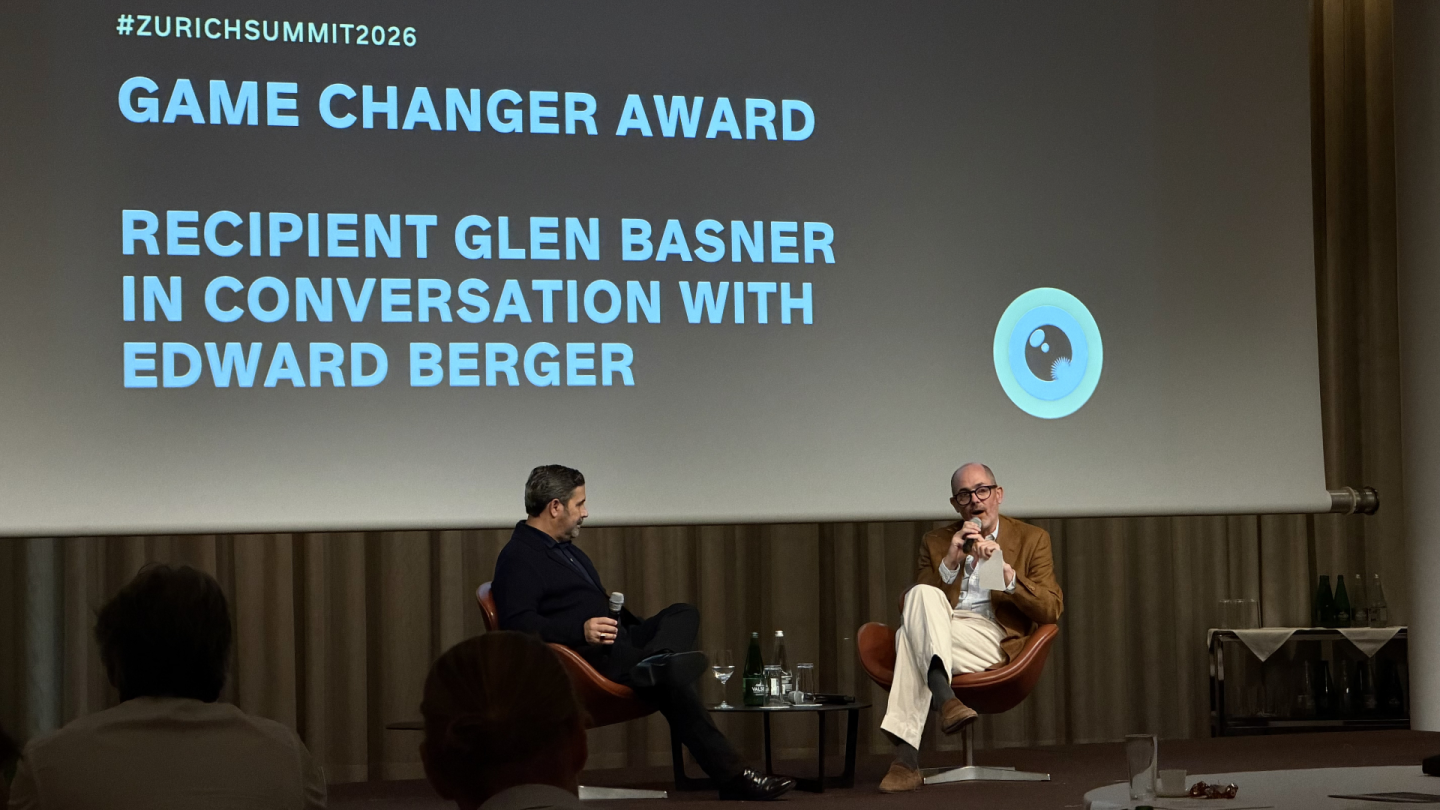
Quite the bromance unfolded on stage at the Zurich Film Festival Summit as Oscar-winning filmmaker Edward Berger held a session with FilmNation Entertainment founder and CEO Glen Basner, who is this year’s Game Changer award recipient.
Basner, being honored for what the festival described as his “outstanding achievements, excellent cinematic taste, and significant contributions within the film industry,” has helped make FilmNation one of the dominant players in the independent film business, backing awards-season and commercial hits including Anora, Promising Young Woman, Arrival, The Big Sick, and, crucially, Berger’s Academy Award-nominated Conclave.
“Glen, I’m so proud to have had the opportunity to make a film with you. I’m so happy to know you. I’m so happy to call you a friend, and I want to congratulate you on your wonderful career, for all the great movies, for all the filmmakers that you’ve inspired, that you’ve instilled confidence in,” said Berger after an hour-long discussion in which the two reflected on their time together, a chaotic film climate, and why great storytelling will always be at the heart of Basner’s work.
At this year’s Zurich Film Festival, Basner is producing three movies in the lineup: Florian Zeller’s Bunker with Javier Bardem and Penélope Cruz, A Talent for Murder with Helen Mirren and I Play Rocky, which proved a real crowd-pleaser at TIFF.
Mostly, however, the two creative partners — both of whom worked at indie production and sales company Good Machine early on in their respective careers — focused on the making and success of Conclave. Berger’s 2024 masterpiece starred Ralph Fiennes as Cardinal Thomas Lawrence, the dean of the College of Cardinals, who is tasked with overseeing the election of a new pope at a time when he is personally experiencing a crisis of faith.
Berger shared an anecdote about feeling “in a real panic” when the film had sold in most territories apart from the U.S. in Cannes a few years back. He then recalled, after nearly finishing the film, that he desperately wanted it to go to the Venice Film Festival. “Or at least show them the movie and see if they’d show it,” said the Swiss-Austrian. “This was in May and Glen, we got on the phone — and I hated Glen — he said, ‘I don’t know. I’m not sure the movie’s ready. Don’t rush it.’ And then: ‘Is it going to be expensive? We don’t have American distribution in place yet.’”
But Berger really wanted to hit the Lido with Conclave (the film would later earn its world premiere in Telluride). “Glen said, ‘Okay, let’s test the movie. Let’s show it to a few people, to friends and family, and see how it does. And if it does really well, let’s just finish it.’ And Tessa [Ross, of House Productions] was of the same opinion, by the way. Tessa also said, ‘I think you’re still missing something, and I don’t know what it is.’ And no one could really formulate it,” Berger explained.
They tested the movie, and it “tested just okay,” he continued. “It was an argument to say, ‘Okay, why don’t we just sit on it and wait a little bit?’ And those really are professorial decisions and creative decisions that made me, that pushed me. And this is going back to Good Machine. This is what I really took from Good Machine: You can always do better,” Berger told Basner. “We make mistakes as filmmakers. We make mistakes as producers, as financiers, [in] sales. We oversell it. We undersell it. Movies fail. […] So I really learned: ‘Let’s look at it again.’ Maybe it can be better. Maybe we can do better. Whether it’s a budget, whether it’s a contract, or whether it’s a cut of the movie.”
“[I had] absolute gratitude to you,” Berger continued. “You were right, I was wrong.” Basner quipped back: “The film was finished… We technically could have been ready for Venice that year.”
Basner said his decision-making dates back to their time at Good Machine. “We always talk about how we want to work on films that inspire us and that we think we understand. And if the marketplace doesn’t get it yet, that’s okay. We’re going to move forward, and we’re going to let them understand why this film is so exciting at a later time. But after that, we’re then going to work like hell to create the environment where that filmmaker can really go and achieve their vision in the purest sense.” He continued about Conclave, demonstrating an impressive knack for knowing when to give directors the appropriate space: “We don’t know if we knew how to unlock it, [otherwise] we would have suggested it. We didn’t know that it was definitely going to be unlocked the way that you ended up doing so, but we knew that we just needed to give you a little bit of time and space to work through and get it to the great place that it did.”
They even had a “few hundred thousand dollars” left over, per a self-proclaimed “frugal” Berger. Basner insisted that the money be spent on improving the film. “It was really inspiring to get that call from you and have the opportunity to make the movie better again, just for being better,” Berger said.
The men touched on why Focus Features became the right home for Conclave in the U.S., with Berger explaining that he was terribly nervous about theatrical distribution there and what that path would look like. “I was so close to the film for so long,” he said. “You were championing Focus […] you were confident that they would be the right partner. And I really kept thinking, ‘Well, what about the streamers? Maybe it’s safer there,’” said Berger. “What gave you the confidence? Again, I’m super grateful for that as well.”
Basner simply told him that “the first thing you learn over time [is] we’re never really exposed the same way that a director is exposed when the movie goes out there. If we make a film that doesn’t succeed, the press aren’t writing about, ‘It’s another shitty film from FilmNation!’ They’re talking about the filmmaker and the actors, and with that understanding comes real responsibility and humility, where these are important decisions in terms of the success and what happens for that filmmaker going forward.”
“But there are sme films that when you watch it,” said Basner, “they’re just undeniable. And Conclave is a fucking amazing movie. We knew it, and we believed and Focus believed that it would have the greatest impact.”
Conclave proved an audience hit as well as an award darling, generating over $125 million at the global box office on a $20 million budget. Its popularity furthered when the real-life Pope Francis died in 2025.
Aside from Conclave, Berger and Basner reflected on the evolution of FilmNation over the last 20 years. They discussed what’s stayed consistent as the company has continued to expand globally, what helps him bolster buyer confidence in a risk-averse industry — and why a film’s budget never equates to its value.
Basner lauded the films he’s in Zurich with, including the “nostalgic” I Play Rocky, which he believes will inspire audiences heading to the theater, and the upcoming FilmNation slate. “This year we will make four films and a television series, and we already have four films in pre-production and hope to make another three. So right now it’s about maintaining the same high-quality standards, but it’s really about more, and with that, being very much okay with taking more risk than maybe we would have some years ago,” beamed Basner.
Earlier at the Zurich Summit, Backrooms director Kane Parsons reflected on helping to save the summer box office, while AMPAS CEO Bill Kramer doubled down on that big YouTube move.
The 22nd Zurich Film Festival runs Sept. 24-Oct. 4.
>
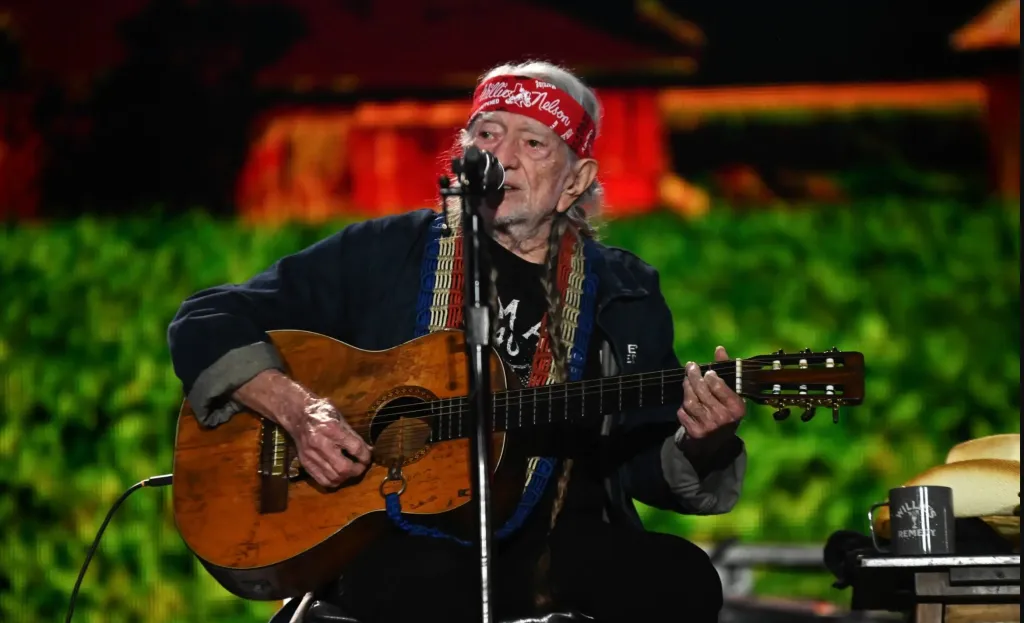
Farm Aid, the annual music festival to raise funds and awareness for American family farms, will be broadcast tonight on CNN from 7-11 pm/ET, 4-8 pm/PT. The benefit concert marks the second consecutive partnership with CNN.
Performers expected to play at the Virginia Beach fest are Willie Nelson & Family, Neil Young and the Chrome Hearts, John Mellencamp, Dave Matthews & Tim Reynolds, Margo Price, Nathaniel Rateliff, Turnpike Troubadours, Lukas Nelson, Ty Myers, Mike Campbell & The Dirty Knobs, Jesse Welles, Sierra Ferrel, Mon Rovîa, I’m With Her, Amythyst Kiah, Lily Meola and Chris Pierce.
CNN Anchors John Berman and Laura Coates will co-anchor tonight’s special coverage and CNN Chief Climate Correspondent Bill Weir will provide on-the-ground reporting.
Other ways of watching are:
- You can watch the already-in-progress, pre-primetime streaming live webcast at the Farm Aid site here.
- Fans around the world can watch Farm Aid 2026 live for free on nugs via the nugs mobile app, at nugs.net, or on the official nugs YouTube channel starting at 11:30 a.m. ET. nugs All Access subscribers will also be able to stream the festival on the big screen through Roku and Apple TV.
- Beginning at 12 p.m. ET, SiriusXM subscribers will be able to listen to the full Farm Aid 2026 festival on SiriusXM’s Willie’s Roadhouse (channel 61) and Dave Matthews Band Radio (channel 30) via SiriusXM radio and on the SiriusXM app. The live coverage will also include backstage interviews with artists and family farmers, hosted by SiriusXM’s Dallas Wayne and Joey Black. All coverage will feature an inside look at Farm Aid 2026 and the organization’s year-round work to strengthen family farm agriculture. This marks the 17th year that SiriusXM has carried the festival on satellite radio.
>

Focus Features has released a new trailer for Werwulf, and it looks like it’s going to be another gothic Christmas for Robert Eggers‘ fans.
Directed by Eggers (The Witch, The Lighthouse, Nosferatu), Werwulf stars Aaron Taylor-Johnson as a man who transforms into a monstrous creature, while Lily-Rose Depp plays his wife and Willem Dafoe portrays a knight tasked with ridding the countryside of wolves. Set in 13th-century England, the medieval horror film also features period-appropriate language.
“Every wolf shall die!” Dafoe’s character declares in the trailer.
Depp’s character pleads for help to save her husband from his curse.
“My husband… he is a good man. For the love, I bear him,” she says. “Please, make him safe from his cursedness.”
The trailer ends with Taylor-Johnson shaking and looking toward the sky as his transformation into a wolf appears to approach.
The trio of actors are reuniting for the werewolf-centered film after previously starring together in Eggers’ vampire-centered Nosferatu, released in 2024, also on Christmas Day. The film grossed $180 million worldwide and received four Oscar nominations in craft categories.
The first footage from Werwulf was shown during Universal’s presentation at CinemaCon in April, where the film was billed as Eggers’ “most terrifying motion picture yet.”
Eggers also co-wrote the film with Sjón, whom he worked with for 2022’s The Northman.
Producers include Eggers, Tim Bevan, Eric Fellner, Garrett Bird and Sjón, while Chris Columbus, Eleanor Columbus and Bernard Bellew serve as executive producers.
Werwulf hits theaters Christmas Day.
Watch the new trailer below.
>

Zurich Summit Game Changer Glen Basner and Edward Berger Reminisce
Is the Maple Leafs' new goaltending situation better than it was last season?

How To Watch Farm Aid 2026
-

 movies4 months ago
Search For Canadian TV Actor Stewart McLean Now Homicide Investigation
-

 Fashion9 years ago
These ’90s fashion trends are making a comeback in 2017
-
Fashion9 years ago
According to Dior Couture, this taboo fashion accessory is back
-
Fashion9 years ago
Model Jocelyn Chew’s Instagram is the best vacation you’ve ever had
-
Fashion9 years ago
Emily Ratajkowski channels back-to-school style
-
Fashion9 years ago
9 Celebrities who have spoken out about being photoshopped
-

 Anime4 months ago
Rurouni Kenshin: Hokkaido Arc Manga Takes 1-Issue Break – News
-

 Anime3 months ago
HIDIVE to Stream English Dubs for The World Is Dancing, The Forsaken Saintess and Her Foodie Roadtrip in Another World, The Dangers in My Heart: The Movie Anime – News