
The first shot from production of ‘Murder In the Dark’
Prime Video


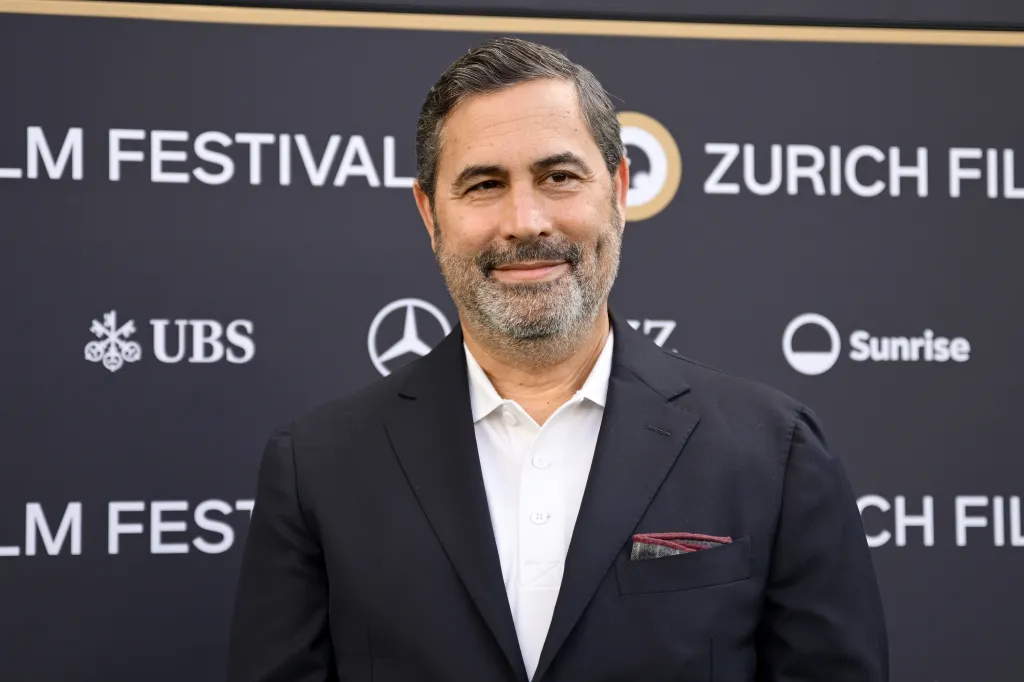
FilmNation Entertainment Founder and CEO Glen Basner will receive the Game Changer Award this evening at the Zurich Summit, the annual industry event aimed at fostering transatlantic connections taking place within the Zurich Film Festival.
As part of the honor, Basner participated in an onstage conversation on Saturday moderated by German Oscar-winning director Edward Berger.
Over the course of an hour, the pair dug into Basner’s trajectory from sales rep at his father’s garment business, to heading up one of the world’s top international indie sales, financing and production companies.
Basner and Berger go back a long way, having first met at the beginning of their film careers in the early 1990s at famed New York production company Good Machine.
Basner arrived there from a five-year stint selling ladies knitted sweaters. He had been bitten by the movie bug while helping childhood friend Edward Burns in his spare time on his first film The Brothers McMullen. Burns then invited Basner onto his second feature She’s The One, which was produced by Good Machine. The rest is history.
Berger spent a year and a half at the company from 1994, where his paths crossed with Basner. They have stayed connected ever since, with the pair joining forces professionally again on Berger’s 2024 $100M global box office and streaming hit Conclave.
“32 years later, it’s such a full circle moment,” said Berger as they kicked off the conversation.
Looking back at his time working with Ted Hope, James Schamus and David Linde at Good Machine, Basner said the lessons he learned there had carried him through his career.
“I was taught that you could sell movies around the world and not lie to people… that you can value and appreciate the relationships that you develop around the world and treat people not just as if you’re selling them a product, but that you are really delivering them a work of art, and that you’re there to help support them as they go and release the films country by country.”
Berger suggested working there had also taught them reliance, recalling how just prior to their arrival, the company had nearly gone bankrupt after it wrapped Ang Lee’s romantic comedy The Wedding Banquet.
“It taught us to go through hard times and get stronger… around the time of The Wedding Banquet, the company was basically bankrupt… they decided let’s cancel the photocopier and scrape every last bit together and go to Berlin,” said the director.
The film went on to win the Berlinale’s Golden Bear and then took off at the box office to gross some $23M, against the $1M budget, making it the most profitable U.S. film of 1993.
After subsequent stints heading up sales at Focus and then The Weinstein Company, Basner created FilmNation in 2008, initially uniquely as a sales company.
He said creating his own company had been a natural move for him given his family background.
“My father had his own business, and I wanted to be like my father, so I always had this entrepreneurial bug that I wanted to go out and sort of really test my mettle by being on my own and developing something and seeing if it could succeed,” he said. “So that was something I thought about since the first day that I started working in film.”
Eighteen years later, the company has expanded organically into finance, production and TV, with bases in New York and L.A., and string of award-winning features in its filmography including The Big Sick, Promising Young Woman, Anora, Conclave, Maria and upcoming pictures Bunker, Talent for Murder and I Play Rocky to name but a few.
“The opportunity was clear in 2008. In those days, there were only two strong and dominant, excellent American international sales companies that were unaffiliated with U.S. distribution,” said Basner.
“Pretty much at the same time, they both became U.S. distributors. Summit, which was run by Patrick Wachberger, became a U.S. distributor, and Mandate, Joe Drake’s company, was bought by Lionsgate… so there was this big hole for an American, unaffiliated-with-distribution sales company.”
Sales craft
Talking about FilmNation’s recent slate, Basner said he had wooed Florian Zeller ahead of getting involved in Bunker.
“I told him to his face he was my filmmaker crush of the moment,” he joked.
“You said that to me too,” replied Berger in mock disbelief.
“I know. It was a different moment,” fired back Basner jovially.
He recalled how Zeller had been on the cusp of approaching Javier Bardem and Penelope Cruz as FilmNation quietly putting out international sales feelers.
“He had said, ‘If they say yes, we’ll move forward. If they don’t do the movie, I don’t think I’m going to do the movie.’ Fortunately, they said yes, and then we just really started the work,” said Basner.
The film took a traditional pre-sales route thanks to Zeller’s track-record with Oscar-winner The Father, followed by The Son, it’s A-list cast and a “exquisite” script, with the bulk of the international sales tied up at Cannes in 2025. The U.S. deal to Sony Pictures Classics was sealed in collaboration with CAA Media Finance later on, on the basis of the completed film.
“There were distributors that were willing to take the risk. It’s not the easiest thing to say: ‘Here’s the script, here’s the director, here are the actors, and here’s your price’. They don’t really get to sit and have hour-long conversations with the filmmaker to fully understand the movie,” said Basner .
“They have to trust us to be able to articulate exactly what the movie is and what the intention is of that filmmaker, so that they can then decide to take the significant risk on a movie like this of pre-buying the film.”
Talking about their collaboration on Vatican-set thriller Conclave, revolving around the secretive Vatican process of electing a new Pope, Basner said part of the challenge had been conveying Berger’s vision for the film to buyers.
He suggested that on the basis of the screenplay alone – it felt like a story about “a bunch of old men talking in rooms” with a potential $12M to $15M price tag.
“But that really wasn’t the movie that you were looking to make… You talked about The Parallax View being a point of reference for you,” said Basner, referring to Alan J. Pakula’s 1974 political thriller.
“You talked not just about the architecture of the locations, but the architecture of how you wanted the camera to move and the film to feel… all of a sudden this became a political thriller,” continued Basner.
The sales veteran said estimating a value of a film, country by country, came down to a mixture of experience and expertise.
“You’re responsible to hit these estimates. And human nature takes over, and sometimes you can get a little bit conservative to make sure that you deliver,’ he said.
“What we’ve learned over the years is to trust the business acumen and the marketplace experience that we have, and not be too conservative, but actually just deliver the valuation that we think, and be prepared to stand by it in a real way because it’s our money that we’re investing.”
“Part of that is, instead of talking all the time about what the market says and what the market will bear, it’s really about just sitting and listening to the filmmaking team so that you really understand, not what I, Glen Basner, thinks the movie is going to be or should be, but the movie that the filmmaker wants to make.”
Basner revealed he was wary of going down the packaging route of attaching known talent when helping get big projects of the ground, suggesting attempts to mitigate risks on films, whether via the cast or other factors, can sometimes lead to less exciting films.
“Sometimes we have to take more risk on an unknown actor because they are the best person for that role to make the best version of the movie, and we have to trust that filmmaker to deliver on that, not in a naive way, in a thoughtful way, but really trust that that’s really what’s going to drive the value for that movie,” said Basner.
“I really am encouraging everybody to look around, look at what’s working in the marketplace. There are a lot of films that, on paper, did not make sense. The history of our company is predominantly on films that did not make sense to the marketplace at the beginning.”
Conclave clash
Berger revealed they had not always seen eye-to-eye in the final stages of bringing Conclave to fruition.
“After quite a long edit… I was basically done with the film. I’d run out of ideas… I really wanted to go to Venice or at least show them the movie and see if they’d show it,” recalled Berger.
“This was in in May. Glenn got on the phone and made me furious. I hated him. He just kind of said, ‘I’m not sure the movie’s ready, don’t rush it…Venice is going to be expensive, and we don’t have American distribution in place’,” he recalled.
Lead producer Tessa Ross also felt the movie was “missing something” and after test screenings with friends and family sparked an “ok” response, Berger went back to the edit suite and even reshot one or two scenes.
Berger credited Berger and Ross for pushing the extra mile on the film, while his energy levels were low after an arduous months-long edit process.
“We just edited and edited and edited and made the music again and revised it, and finally something cracked… little things, just shifted and gave us the confidence that the movie was ready. But it was really half a year later.”
It was another full circle moment for Berger
“This is going back to Good Machine, and what I took from Good Machine… which was you can always do better… whether its budget, contract or the cut of the movie.”
Organic expansion
Taking stock of FilmNation’s trajectory since 2008, Basner said the expansion into production and TV had been organic.
“We never really anticipated becoming the company that we have over time, but things changed. One, as we continued to do our jobs and have success, we gained confidence through experience, and we were ready to do things like fund our own films,” he said.
A second development was the convergence of film and TV and other entertainment formats, which has seen the company also embrace TV, podcasts and theater, while retaining its original mission of being a place that enables filmmakers to not just make their film, but to make the very best iteration of their film.
“When we’re at our best, that’s exactly what we’re doing. It’s no more complicated than that. And when we are doing it, nothing feels more rewarding than doing that job well,” he said.
Looking to near-term goals, Basner said the company was ramping up its productions in the arrival of former 20th Century Fox, DreamWorks and Universal Pictures exec Stacey Snider in the new role of Chief Creative Officer in January.
“We are being more ambitious by investing more and making more films. This year we will make four films and a television series, and next year we already have four films in pre-production and hope to make another three,” said Basner.
“The arrival of Snider as the Chief Creative Officer was an articulation of our desire to take more risk and to be more productive,” he continued.
“Working with her these last nine months, you see this incredible creative talent, you see a skill set and a maturity that we don’t have ourselves, or that I don’t have myself, and it is definitely building confidence to invest further. But it’s really also, as she would say, it’s about making it better. The conversation that you had before: let’s take another look at this. Let’s do it a little bit better. That’s something she reminds me pretty much every day.”
>
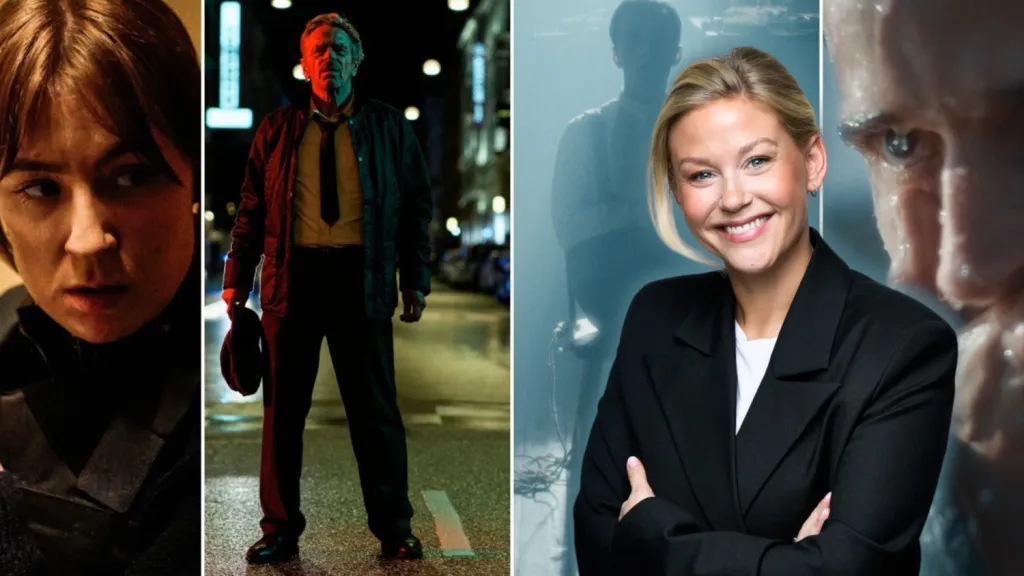
Prime Video‘s push into Danish originals began this year with Pilou Asbæk-starring Snake Killer, which is now serving as a milestone in a charge across the Scandinavian region, according to Amazon MGM Studios Nordics originals chief Emilia Widstrand.
“We’re really trying to build on that psychological thriller and crime vibe, doing it with strong creators and within established Nordic genres,” she told Deadline in an interview. Looking further ahead, Widstrand will be seeking to more directly target women and younger viewers too, as the service expands.
Snake Killer launched in January, with the four-parter followings a notorious Copenhagen narcotics police unit, Uropatruljen, a heavy-handed force that operated with relative autonomy between 1965 and 2001. The story sees Brian “Smiley” Petersen (Asbæk) leading his unit in a desperate war against a brutal heroin baron. Anders Ølholm is the writer and director.
Over in Norway, drama series Rinnan, about the infamous Norwegian traitor and Gestapo agent Henry Rinnan, is also set to launch. A co-production with Norwegian broadcaster TV2, the Miso Film show points to how Amazon is willing to share rights and window originals to bolster budgets.
Both series appeal to men, who have formed the backbone of viewing on Prime Video in the Nordics, but recent successes with unscripted shows will see the content mix changing in the future.
“Moving forward, we’ll have a more feminine point of view,” said Widstrand. “When we started out, we had a very broad audience, and we’ve really seen the appeal of female-led stories through global hits like The Idea of You and Pretty Little Liars, as well as unscripted shows like LOL: Last One Laughing. We’re really building on that, alongside our crime audience.”
As such, new original out of Denmark, Murder in the Dark, a four-part series from SAM Productions and Amazon MGM Studio based upon influential Danish literary icon Dan Turèll’s book series, is designed to appeal to a broad audience. It follows a retired and hard-bitten “nameless journalist” played by Michael Falch and his daughter Sophie (Katinka Lærke Petersen), who is an ambitious police detective.
The first shot from production of ‘Murder In the Dark’
Prime Video
Widstrand became Prime Video and Amazon MGM Studios Head of Nordic Originals in August last year, as we revealed at the time, to replace Karin Lindström, who later joined HBO Max. The two are credited internally with building Prime Video’s local originals team from scratch, making her the natural choice for the top post when it came available.
In May, this year, she added acquisitions duties following a restructure that saw the departure of Prime Video Nordics head Andreas Hjertø, and recently ordered a Swedish original, Sarek, a four-part psychological thriller based Ulf Kvensler’s debut novel about a group of friends on a hiking tripe that takes a dangerous turn.
That, Widstrand said, talks to a desire to age down the audience, with a cast led by Felix Sandman, Kitt Walker Johansson, Alva Bratt and Nora Rios, and to focus on well-known IP. “It really speaks to that strategy,” she added.
We sat down with Widstrand to pick her brains on the future for Prime Video Nordics and its originals slate.
DEADLINE: Emilia, you spoke at the Copenhagen TV Festival in August. What was your message to producers and the industry about what Amazon needs and is looking for from the Nordics?
Emilia Widstrand: We’ve been expanding our drama slate. It takes a long time to develop, and we wanted to take that time. Our first Danish original was Snake Killer, which was very successful, so we’re really trying to build on that psychological thriller and crime vibe, doing it with strong creators and within established Nordic genres.
Moving forward, we’ll have a more feminine point of view. When we started out, we had a very broad audience, and we’ve really seen the appeal of female-led stories through global hits like The Idea of You and Pretty Little Liars, as well as unscripted shows like LOL: Last One Laughing. We’re building on that, alongside our crime audience.
DEADLINE: Can you give us an example?
EW: We have Murder in the Dark, which is based on 1980s cult movies and books that we’re bringing back for Christmas Day. That has a much more female point of view than previous drama series. We’re leaning into both the female young-adult genre, looking for local versions of the kinds of stories that have found an audience globally, as well as Nordic crime, suspense and psychological thrillers. We’re trying to find strong local IP. Sometimes, we do co-productions where we sell international rights, but the focus is very much local right now.
DEADLINE: What kinds of international co-productions are you looking at and how flexible can you be?
EW: We’re very flexible. It’s a case-by-case decision about how we can get something done, but IP is important. We’re building on existing IP or true stories, which also helps us connect locally. Obviously you work with the best local talent, and the Nordics is such an amazing place to do that – It’s really special.
DEADLINE: Sarek is based on IP and with big producers. That feels like an example of what you’re talking about.
EW: Definitely, it really speaks to that strategy. I was just back on set on the show. It’s spectacular because it’s so Nordic. We’re shooting it up in Kiruna, and the environment is really a character in the story. There, we also decided to go a bit younger with the cast.
DEADLINE: In terms of your own role, Emilia, you’ve added some responsibilities, taking on unscripted along with scripted. How has that changed what you’re doing and has it impacted the overall shape of Prime Video Nordics?
EW: Strategy and programming are still separate, but I took on the overall responsibility for our Nordic local originals. I’ve found looking after the unscripted slate, which I wasn’t familiar with before, very intriguing. We work with very talented people across both unscripted and scripted, so we can really see synergies in both the talent and the content. It’s a big responsibility, but you get a fantastic overview.
DEADLINE: What would you say you’ve learned so far? It’s been a few months since you’ve taken on the expanded role.
EW: There are differences between the territories, both in Norway and Denmark, and there are different focuses in scripted and unscripted. Denmark, for example, is very strong in comedy, and it’s very easy to find strong unscripted comedy formats there.
Norway has really surprised me with the amount of great talent. We’ve found so many strong and interesting projects that we’re developing with local talent. That’s been overwhelming in a good way, with some really good projects coming out of Norway.
‘Snake Killer’
Prime Video
DEADLINE: With that in mind, what’s a realistic number of shows that will make it onto the screen?
EW: We have a slate of around 20 to 25 local originals per year, scripted and unscripted. It’s big, but we’re still trying to grow sustainably and not take on too much, while making sure we compensate the audience for the production.
DEADLINE: When we’re looking at LOL, which has been popular in the Nordics and pretty popular all over the place, is there any difference in how it’s received across the territories you’re overseeing?
EW: LOL works really well across territories. It’s a format that’s worked in so many countries across the world, huge in Mexico and Germany. It kind of works everywhere. The local versions are very different. We have local creatives on each project, because comedy is so local – it’s very hard for someone from another territory to develop it. We have other examples of programs that work better in one territory than another, but LOL is really delivering across the region, which I’m happy to see.
DEADLINE: When you’re looking at the Nordic region at the moment, what’s the biggest challenge for you as a commissioner? Obviously, you have the Amazon machine behind you, which means there is money, but it’s not an endless pot. Is it a case of funding, or talent identification?
EW: I would say both. Talent has had a few tough years, and I think it’s hard for talent to navigate what commissioners want to commission and what their creative vision is. I’m really interested in working with creators who have a strong vision and fight for that – they don’t just deliver everything you ask for. I really value creators who want to tell you something, because that delivers the best projects.
The other thing is, of course, funding. Budgets have been kind of the same, even though there’s been inflation, so it’s really hard to adapt to that. It’s also been a challenge with the tax rebates locally, and a lot of production is shooting abroad.
‘Rinnan’
Prime Vide
DEADLINE: Where are people shooting?
EW: Eastern Europe. It’s tougher to finance locally. That’s why we try to be open. If we’re going to get something big made, we need to be collaborative with local broadcasters and find synergies.
We’ve had a fantastic collaboration with TV2 in Norway with Rinnan, a project we’re launching this fall. It’s a World War II series we’re doing with Kenneth Karlstad, and it is a fantastic example of what we can do with a local broadcaster.
They benefit from their deep understanding of the local audience, while we bring the Amazon package and the premium feeling of doing high-end drama. We do it together. We’re in the room together and we’re reacting together.
DEADLINE: It comes to you first and then TV2?
EW: Yes.
DEADLINE: Is that always the case when you do those partnership shows? I see this in lots of different territories – it tends to be the streamer goes first with an exclusive window, and then the broadcaster takes it however many months later.
EW: Yes, that’s always how we do it, because we’re also much smaller than a TV2, so it makes sense for us to go first.
DEADLINE: Broadcasters and distributors have become more and more open to these types of collaborations. That probably wasn’t the case a few years ago.
Amelia: I think we’re moving into a much more collaborative space with financing.
>
CNN, MS NOW and Politico are warning that the Trump administration will reimpose a “complete ban” on their access to the White House without a judge issuing a preliminary injunction.
Last week, U.S. District Judge Timothy Kelly granted a temporary restraining order, forcing the White House to restore access to the White House to the outlets as he more fully considers the legal arguments. The TRO lasts for 14 days.
In a filing in federal court on Monday, attorneys for the three news outlets argued that the Trump White House actions since then “leave little doubt that it will immediately reinstitute a complete ban of CNN, MS NOW, and Politico if allowed the opportunity.”
The outlets’ legal team, led by Theodore Boutrous Jr., pointed to the White House’s restriction on CNN from access to State Dinner arrivals on Thursday evening. The network then was barred from serving as TV pooler on Air Force One on Trump’s trip to Tennessee on Saturday, with no replacement stepping in, and leaving a dearth of TV images from the trip.
“Because the ban is an unlawful assault on the most fundamental First Amendment freedoms and will inflict irreparable harm on Plaintiffs and the public if not restrained, this Court should preliminarily enjoin its enforcement pending the resolution of this case,” the news outlets’ attorneys wrote.
Kelly cited a lack of due process by the White House when it pulled dozens of credentials of reporters from the three outlets. While the Trump DOJ has cited standards of “professionalism and decorum” and national security concerns, the media outlets’ legal team called that reasoning that “pretextual” and “post hoc,” as well as vague.
In the latest brief, CNN, MS NOW and Politico also again cited violations of the First Amendment. They noted that Trump has explained the ban by blaming their coverage as “Purposely … negative,” among other things.
“His statements also make clear he implemented the ban to coerce more favorable coverage from CNN, MS NOW, and Politico, and to deter other journalists and news organizations from newsgathering and reporting that the President might view as negative,” the news outlets’ legal team wrote. “And his administration has continued to retaliate against Plaintiffs even after the temporary restraining order, only underscoring that Defendants’ motive is to punish and chill journalism they dislike.”
The outlets are asking the judge to prohibit the Trump team from pulling hard pass credentials, or to ensure the reporters of the White House access they had before Sept. 18. In contrast to a TRO, a preliminary injunction would sideline Trump’s ban until a trial is held, or if an appeals court rules otherwise.
Trump initially banned the three outlets on Sept. 18. When the judge granted a TRO last early Thursday, it meant that the White House had to restore hard passes, with reporters not gaining reentry until around noon that day.
The issue of whether the White House can also restrict CNN from the pool is a slightly different, but related issue. It’s also one at the center of another case, involving the Associated Press after it was banned from the pool and other White House events. That case is currently on appeal.
That said, in the latest brief, the three outlets cited the White House’s continued prohibitions on CNN as an example of White House retaliation over protected speech.
For much of last week, there was no TV network pool, meaning that there was little video coverage of Chinese President Xi Jinping’s visit to the White House. The four other networks in the pool — CBS News, ABC News, Fox News and NBC News — initially suspended their participation in protest of the exclusion of CNN. The networks resumed the TV pool coverage this week, but it will be put to the test again on Thursday, when CNN is assigned to that duty.
“Every day, critically important news is breaking at the White House, and the ban will substantially interfere with Plaintiffs’ ability to cover it,” the outlets brief stated. “The ban also inflicts an injury on all news media organizations—which now risk a similar fate if they engage in fact-based, independent reporting the President deems insufficiently favorable.”
The DOJ’s brief in response is due by Friday.
>

The Tokyo International Film Festival will honor filmmakers Mohammad Rasoulof and Mipo O with its Kurosawa Akira Award at the event’s 39th edition next month.
Named for the Japanese master, the award recognizes directors whose work has made an impact on cinema and who are expected to help shape its future. It was revived in 2022 after a 14-year hiatus with support from Capcom. Last year’s recipients were Chloé Zhao and Lee Sang-il.
This year’s honorees were selected by a committee comprising filmmakers Yoji Yamada and Lee Sang-il, cinematographer Akiko Ashizawa and TIFF programming director Shozo Ichiyama.
Rasoulof, one of Iran’s leading dissident directors now living in exile in Europe, won Berlin’s Golden Bear for There Is No Evil (2020), while The Seed of the Sacred Fig (2024) received a special prize at Cannes before earning an international feature Oscar nomination as Germany’s submission.
The committee singled out the two films for “their humanist perspective, which portrays even those who perpetrate oppression as ordinary citizens.” It also praised Rasoulof’s “unwavering commitment to creative expression despite relentless pressure.”
“Receiving the Kurosawa Award is a great honor for me. His films are profound explorations of the human condition and the moral choices we make in moments of crisis. Kurosawa was a dynamic and inquisitive visual storyteller whose unique perspective on humanity, nature, and the world has made his work an enduring source of inspiration in cinema,” Rasoulof said.
O, a Japanese-born filmmaker of Korean descent, made her feature debut with The Sakais’ Happiness in 2006. Her credits include The Light Shines Only There (2014), Japan’s Oscar submission that year, and Being Good (2015), an ensemble drama exploring child abuse, bullying and the possibility of breaking those cycles through human connection.
After a nine-year break from feature filmmaking, she returned with Living in Two Worlds (2024), a family drama starring Ryo Yoshizawa as the hearing son of deaf parents, whose desire for independence complicates his relationship with his mother. Her latest, How Dare You? (2025), takes a more comic approach to childhood, following three elementary school students whose budding environmental activism — mixed with a classroom crush — leads to unintended consequences.
The selection committee praised her “multifaceted perspective on individuals living on the margins of society” and her avoidance of “a simple lens of good vs. evil,” while highlighting her work with child performers.
“To receive such an extraordinary honor on the 20th anniversary of my directorial debut fills me with immense gratitude and deep humility,” O said. “Winning the Shindo Kaneto Award in 2010 provided me with the vital support to keep making films. Though my progress has been slow, reaching the Kurosawa Akira Award is a stroke of fortune that makes me truly savor what a happy cinematic journey I have had. This recognition is by no means mine alone. My heartfelt thanks go to all the cast and crew members I have met along the way, the audience who stepped into the theaters, and the selection committee—led by director Yamada Yoji—who discovered my films.”
Tokyo will also screen 4K restorations of Kurosawa’s Sanshiro Sugata (1943) and Ikiru (1952), alongside Charles Chaplin’s The Circus (1928) and Abbas Kiarostami’s Where Is the Friend’s House? (1987).
Separately, the festival named Alice in Borderland actor Hayato Isomura president of its Ethical Film Award jury. Launched in 2023 with Sumitomo Corporation, the prize recognizes films addressing social issues including the environment, poverty and discrimination. Three members of TIFF’s Student PR team will join Isomura on the jury.
The nominees are Brazil’s Amadeo and the Hypothetical New World, the German-Ukrainian feature I Rarely Wake Up Dreaming and Australia’s Time and Tide. The award ceremony and a talk with Isomura are scheduled for Nov. 2.
“Today, we absorb vast amounts of information in seconds through a small screen. I often feel we fall into the trap of believing we understand something instantly, constantly searching for quick answers. Yet, when it comes to deepening our awareness and understanding of social issues, the process of reaching those answers is what truly matters,” Isomura said. “Cinema possesses the unique power to pause our hurried pace, allowing us to experience that very process through the lives and emotions of others. I am committed to taking the thoughts, hopes, and wishes woven into these films by each filmmaker deeply to heart, and to reflecting on them together with everyone.”
The 39th Tokyo International Film Festival runs Oct. 26-Nov. 4, with the TIFFCOM market taking place Oct. 28-30.
>


Search For Canadian TV Actor Stewart McLean Now Homicide Investigation


These ’90s fashion trends are making a comeback in 2017
According to Dior Couture, this taboo fashion accessory is back
Model Jocelyn Chew’s Instagram is the best vacation you’ve ever had
Emily Ratajkowski channels back-to-school style
9 Celebrities who have spoken out about being photoshopped


Rurouni Kenshin: Hokkaido Arc Manga Takes 1-Issue Break – News


HIDIVE to Stream English Dubs for The World Is Dancing, The Forsaken Saintess and Her Foodie Roadtrip in Another World, The Dangers in My Heart: The Movie Anime – News