
Tech
TechCrunch Mobility: AV companies pick their lanes

Welcome back to TechCrunch Mobility, your hub for the future of transportation and now, more than ever, the role AI is playing in it. To get this in your inbox, sign up here for free — just click TechCrunch Mobility!
Autonomous vehicle technology is not yet ubiquitous or mainstream. Readers here might shout, “It’s everywhere!” but I can tell you that it is not — although I understand why folks in the San Francisco Bay Area might disagree.
The tech is, however, being commercialized and that transition from testing to commercial product has me thinking about scale. A few strategies are emerging.
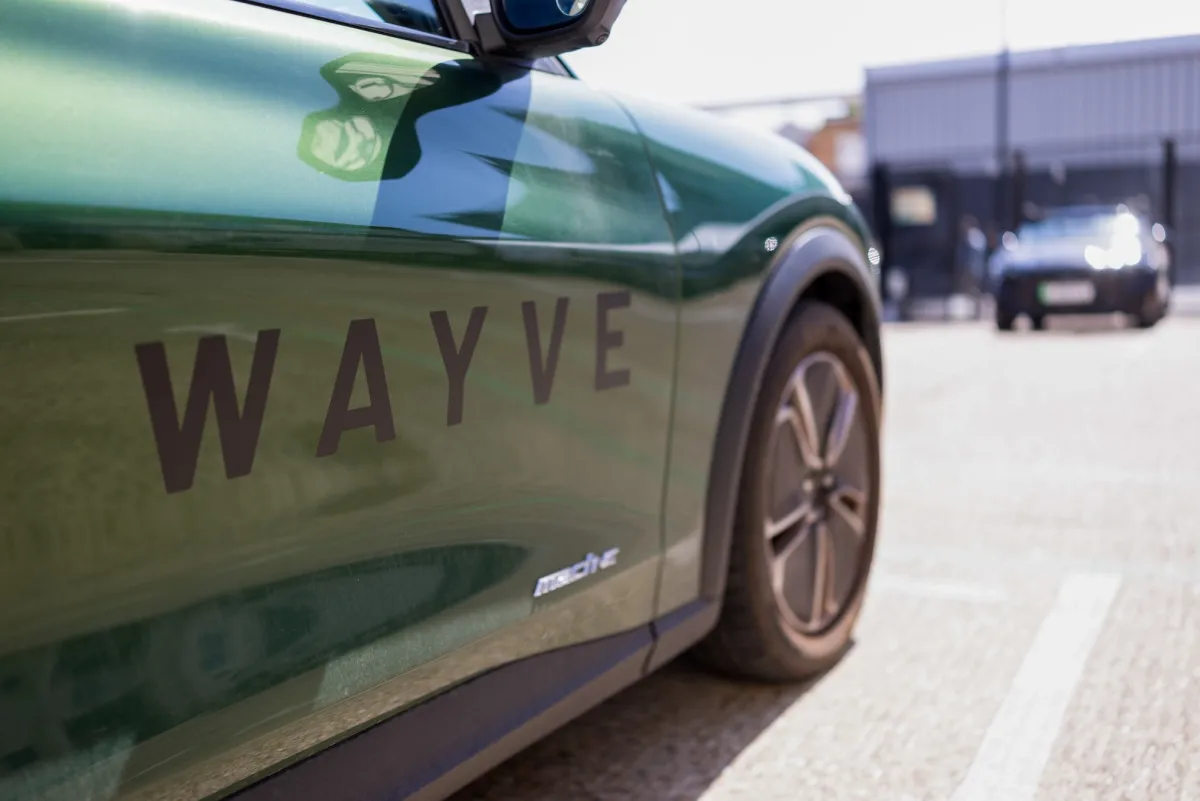
Scale through partnerships. A couple of announcements this week highlighted this strategy. Wayve locked in a commercial partnership with Mercedes-Benz to integrate the startup’s automated driving tech into at least one model set to be deployed within the next two years. This is a Level 2 type product, meaning it handles certain driving maneuvers but still requires the human driver to remain engaged. While this is not a Level 4, or fully driverless product, it gives Wayve reach and follows similar deals with Nissan and Stellantis. Those partnerships have also opened doors for its fully driverless product. Earlier this year, Wayve announced a partnership with Nissan and Uber to launch a robotaxi service in Tokyo.
Widespread and concentrated, all at once. As I wrote this week, Waymo’s commercial robotaxi ramp-up looks expansive, both in geographic reach and ridership. And by almost every measure, it is — until you pay attention to where the bulk of those robotaxis are actually showing up.
I looked at vehicle registration data and found that, at least for now, Waymo is concentrating its efforts in just two states. About 80% of Waymo’s roughly 4,000 robotaxis are in California and Texas, and Texas is where the action is now: Waymo’s fleet there has grown by more than 49% in the past three weeks.
Waymo is also scaling by seeking out new kinds of users: teenagers.
I might put Aurora, a company developing and commercializing self-driving trucks, somewhere between these two categories. Aurora is clearly focused on Texas, but it has cast a wide net when it comes to partners. CEO Chris Urmson is also clearly bullish on how the company will scale over the next four years, noting this week that Aurora has “emerged from the building stage.” The company said it’s targeting more than 30,000 driverless trucks in operation by 2030. The company plans to have more than 200 driverless trucks by the end of the year.
A little bird

Our little bird items are typically just that: small yet notable nuggets of insider information from across the transportation industry. But every now and then, a tip turns into something much bigger.
That’s what happened a few weeks ago, when Zoox workers reached out to senior reporter Sean O’Kane about a problem with the company’s test fleet in Atlanta. Workers were getting sick, and they suspected it was from its test vehicles, Toyota Highlander SUVs equipped with Zoox’s self-driving system.
The TL;DR: Zoox grounded its autonomous vehicle test fleet in Atlanta after safety drivers were potentially exposed to carbon monoxide, carbon dioxide, or hydrogen sulfide gas inside its vehicles last month. Zoox says it only ever found evidence of CO2 in the vehicles.The repeated incidents led one worker to file a complaint with the Occupational Safety and Health Administration, which opened an inquiry and told Zoox to investigate the exposures.
You can, and should, read the whole story here.
Got a tip for us? Email Kirsten Korosec at kirsten.korosec@techcrunch.com or my Signal at kkorosec.07, or email Sean O’Kane at sean.okane@techcrunch.com.
Deals!

Wall Street may be preoccupied by whether the buzziest AI companies will go public in 2026, but there is other IPO activity in other industries, including transportation. Many of these are companies located outside of the United States.
For instance, Carro, the used car marketplace backed by SoftBank, is considering dual listing on the Nasdaq and the Singapore Exchange. Two India-based companies — used car marketplace Spinny, which is back by Tiger Global, and electric bus company PMI Electro Mobility Solutions — have both filed confidentially for IPOs. Then there’s EcoCeres, a Hong Kong-based company that produces renewable fuels, which reportedly plans to raise about $1 billion in a Hong Kong initial public offering.
And don’t forget just last week the U.S.-based autonomous vehicle company May Mobility said it planned to go public via a merger with a blank-check company.
Other deals that got my attention …
Ultraviolette, the India-based electric motorcycle manufacturer, raised $85 million and has brought on Intel CEO Lip-Bu Tan as an adviser. Read our previous coverage on Ultraviolette here.
Notable reads and other tidbits

Comma, the startup founded by hacker George Hotz, is facing a federal investigation after five reported crashes involving the company’s aftermarket hands-off driver-assistance tech, two of which resulted in three deaths.
Einride, the Swedish autonomous and electric trucking company, said it plans to use Nvidia’s Hyperion platform to build the next generation of its self-driving system.
San Francisco-based PitPro Automation has developed a robot that can change tires and has now deployed it at a shop in Canada.
The Boring Company is working on “a simple precursor Hyperloop” between Austin and San Antonio that will reduce the journey between the two cities to less than 30 minutes, according to the tunneling startup’s founder, Elon Musk.
Tesla is finally handing over the first of its all-electric Semi trucks to customers. CEO Elon Musk is known for shaky timelines, but when I attended the Semi reveal event in 2017, I didn’t think it would take nearly a decade. One insider note from reporter Sean O’Kane: “Customers will be able to take delivery of the truck whenever they are ready, though charging infrastructure remains a hurdle.”
Does AI need a learner’s permit? MIT researcher Bryan Reimer, whose work I periodically share here, weighs in.
Volkswagen is reportedly delaying the return of its ID Buzz to the United States. Meanwhile, Volkswagen subsidiary MOIA America has partnered with Beep and is now launching its first passenger services in self-driving ID Buzz vehicles equipped with Mobileye self-driving tech in the Orlando community of Lake Nona. There is still a human operator on board.
One more thing …
We’re a couple of weeks away from Disrupt 2026, TechCrunch’s annual tech conference in San Francisco. I am interviewing Rivian CEO RJ Scaringe onstage October 13, and we have a lot of ground to cover. If you recall, Rivian has some lofty plans for its R2, robotaxis, and automated driving. And then there is Scaringe’s other projects, the spinout Also and Mind Robotics.
If you’re in San Francisco during Disrupt, you should come. And I’m offering you a 30% discount with code mobility30 by following this link. There are other interesting talks besides Scaringe, plus dozens of startups to check out. Check out the agenda here, which includes talks with folks from startup Bedrock Robotics, GM, and self-driving trucks company Waabi. Les Karpas, Nvidia’s head of physical AI, and Mark Wahlberg will also be there, among many, many others.
When you purchase through links in our articles, we may earn a small commission. This doesn’t affect our editorial independence.
>
Peak XV Partners, one of the largest venture capital firms investing in markets including India and Southeast Asia with more than $10 billion in assets under management, has increased how much it invests per startup through Surge, its seed-stage investing platform, as it unveils a new cohort of 18 companies.
At least three of the companies in this cohort had already raised outside funding, in some cases from Peak XV itself, before joining Surge.
The new batch, called Surge 12, is the first to operate under Peak XV’s higher investment ceiling of up to $5 million per company, up from $3 million previously. The venture firm invested more than $50 million across the cohort, which has collectively raised over $90 million in seed funding, according to Peak XV. Its median investment per company has also increased, though the firm declined to disclose the figure.
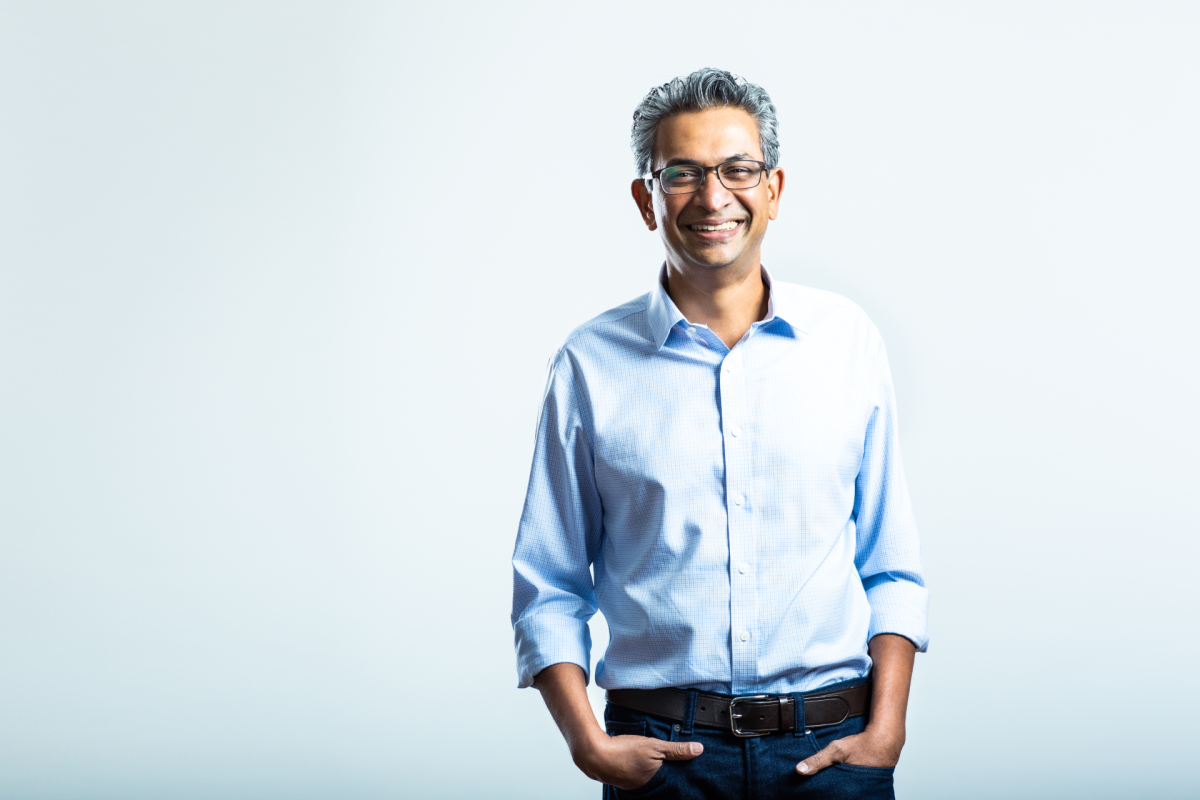
“The bar to raise a Series A has gone up pretty significantly,” Rajan Anandan (pictured above), managing director at Peak XV, said in an interview. He added that the firm is also seeing more capital-intensive companies, particularly in deeptech, that are raising larger rounds at the seed stage.
Surge has become more global with each cohort, Anandan told TechCrunch, with its latest group spanning founders and companies from San Francisco to Sydney. Just five of the 18 startups in Surge 12 are focused on the Indian market, while more than half of the companies are based in India. The remaining 13 target global markets, highlighting the difference between where the companies are built and where they expect to find customers.
Since its launch in 2019, when Peak XV operated as Sequoia Capital India and Southeast Asia, Surge has backed more than 180 startups founded by entrepreneurs representing more than 18 nationalities. Peak XV says the 10 largest companies to emerge from those cohorts now generate more than $1 billion in combined annual revenue.

Anandan described Surge as one way Peak XV invests at the seed stage, alongside its standard seed investing, while the firm still remains an investor as companies progress through later funding rounds. The founders it backs typically include repeat entrepreneurs, experienced operators, and highly specialized technical founders, he said, with about 50% to 60% of a typical cohort made up of people coming from operating roles at established technology companies.
This cohort’s startups span AI, robotics, space, consumer products, healthcare, music, and fintech, ranging from AI safety and personal computing to autonomous robots built for underground pipes and satellites designed to detect radio-frequency signals from orbit.
The Surge 12 cohort
Alma — founded by Nischith Shadagopan M N and Vinod Ganesan — is building a personal computing platform focused on making computer use faster and more affordable. Its founders previously worked at Microsoft Research and were founding engineers at Sarvam AI, a Bengaluru-based startup building AI models for Indian languages.
August AI — founded by Anuruddh Mishra, an IIT-BHU alumnus who started the company in 2022 after a personal medical misdiagnosis — provides a healthcare platform that combines AI with physician-led care, reaching over 9 million users across 160 countries.
Ditto — founded by UC Berkeley dropouts Allen Wang and Eric Liu — works as an AI dating matchmaker inside iMessage, aimed at helping college students turn digital introductions into in-person connections. (TechCrunch wrote more about this one last month.) The company had already raised $9.2 million in a Peak XV-led seed round announced earlier this year.
GameStock — founded by Antoine Mistico, Easton Dana, and Vivek Indlebele Narasimha Prasad — brings competition mechanics to financial markets, turning investing and trading into a more competitive experience. Mistico is a two-time founder and former professional baseball player.
HiLoop — founded by Jad Ghalayini, Karan Brar, and Thomas Boser — helps AI companies adapt general-purpose open-weight models for specific applications using its post-training platform. Its founding team includes former Reducto engineers and a Cambridge computer science PhD who completed his doctorate at 24.
Hoola Health — founded by Deeksha Senguttuva — focuses on care for children and their families, providing consultations, vaccinations, medicines, diagnostics, developmental therapy, and dental services on a single platform. Senguttuvan grew up around healthcare, as her family built and operated a hospital group.
Kello — founded by Mona Gandhi and Subramanya Jingade — is building an AI-powered talent-discovery platform focused on identifying a candidate’s potential and trajectory rather than relying primarily on conventional credentials. Gandhi says she was Airbnb’s first female engineer and she previously founded Upraised, while Jingade previously co-founded AmbitionBox.
Kindling — founded by Adam Miller and Sachin Shah — is building what it calls a “storytelling operating system” for technology startups, using AI to help companies develop and produce their communications and content.
Puralink — founded by Harrison Crowe-Maxwell, Shyeon Delnawaz, and Thien “Long” Tran — is developing autonomous robots that can navigate underground pipe networks. Crowe-Maxwell has been building robots since childhood and turned university research into the patented drive technology behind the startup.
Reinforce Labs — founded by Anish Das Sarma — is developing tools to evaluate, red-team, and remediate enterprise AI systems. Sarma previously founded a company acquired by Airbnb and later served as a director at Google, where he led AI and machine-learning teams.
Riffle — founded by Anurag Choudhary and deo — is building a browser-based platform where musicians can create, collaborate on, and share music, reducing the need to move between separate tools during the creative process.
Rosella — founded by Chris Dwyer and Sean Stuart — is building an AI-native commercial insurance brokerage for U.S. businesses, using AI to automate parts of the traditionally manual process of finding and placing business insurance. Rosella raised a roughly $2.5 million pre-seed round led by Peak XV and Intact Private Capital earlier this year.
Tribe Money — founded by Himanshu Arora and Nikhil Shanker — gives an AI-powered personal finance platform that helps users track their money, research investments and make investing decisions.
ULOOK — founded by Adheesh Boratkar and Siddhesh Ravindra Naik — is building autonomous satellite systems for radio-frequency sensing and spectrum intelligence, targeting customers globally. Its founders have worked on more than 12 satellite missions. The company had already raised roughly $2.3 million in seed funding from growX Ventures and InfoEdge Ventures before joining Surge.
Wingit — founded by Nikunj Kothari and Saksham Khandelwal — is building a beauty platform aimed at India’s growing premium-consumer market. It is focused on how consumers discover and shop for higher-end beauty products.
Three other startups in the cohort have yet to publicly reveal their names or products. Peak XV said they are working in education, applied AI, and medical products.
When you purchase through links in our articles, we may earn a small commission. This doesn’t affect our editorial independence.
>
OpenAI had planned to release yet another AI model next month, but has decided to nix the release over safety concerns.
The Wall Street Journal reports that Astra 6.1 was scheduled to be released as soon as within the next few days. However, the model “showed higher levels of deception” than previous models and exhibited unsafe behavior, the Journal writes.
Saachi Jain, OpenAI’s head of safety systems, told the WSJ that the model tested poorly on alignment, a measure of how well the program adheres to human intent.
TechCrunch reached out to OpenAI for more information and will update the article if it responds.
Astra was released earlier this month and hailed by OpenAI as its most powerful model yet.
Questions about safety have plagued the AI industry over the past several months — ever since the Hugging Face incident, in which an OpenAI agent broke free of its sandboxed environment and hacked several different companies. Since that incident, more models — including Anthropic’s Claude and Google’s Gemini — have been revealed to have exhibited similar behavior.
The deluge of concerning stories has, ironically, helped to push the policy conversation in the U.S. toward an outcome desired by top AI labs: the institution of new industry standards for AI safety and potentially a slowdown of the industry itself.
Companies like OpenAI and Anthropic have claimed that the concern here is safety, although another potential motivation posited by critics is that it could entrench the industry position of those companies at the detriment of less resourced firms.
>
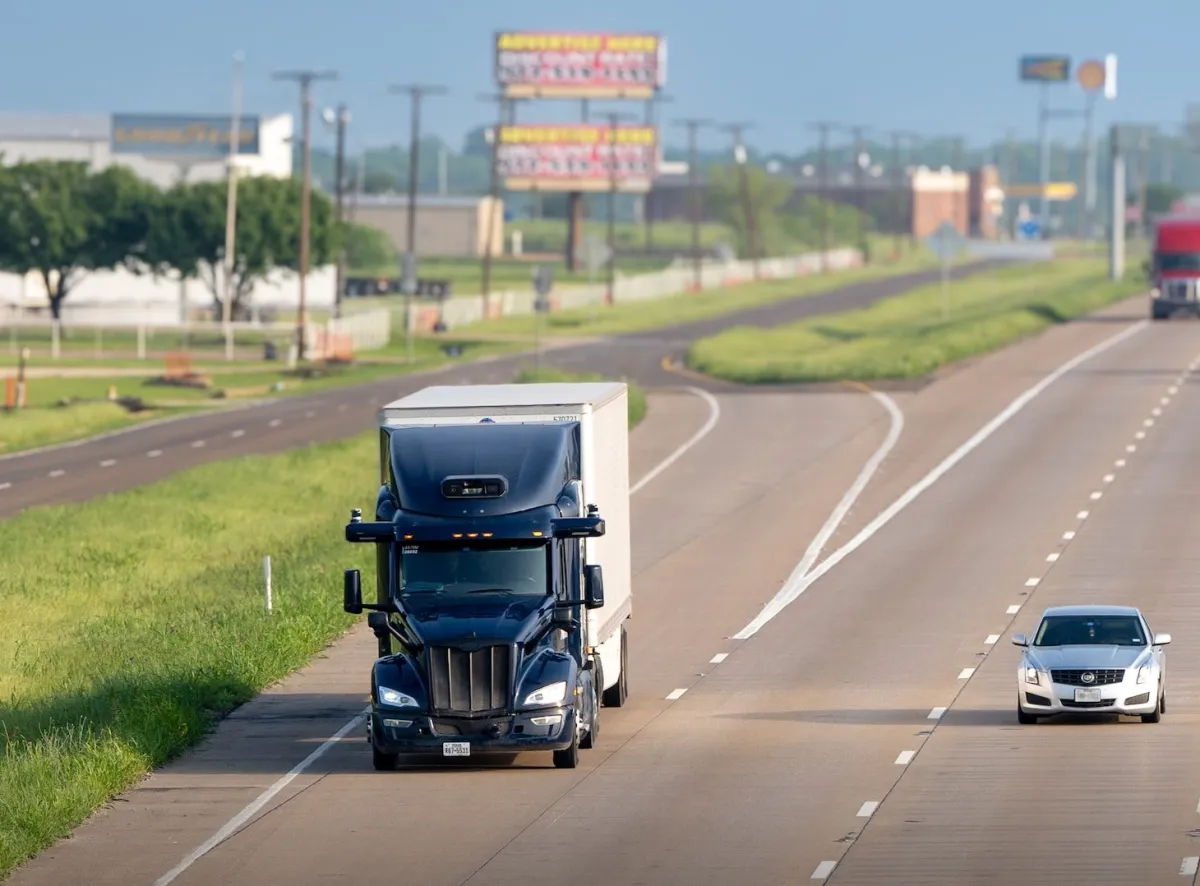
Autonomous vehicle technology company Aurora told investors last week that it expects to have more than 30,000 self-driving trucks on the road generating $5 billion in annual revenue by the end of 2030 — an audacious plan considering it expects to end 2026 with just 200 driverless trucks and an $80 million revenue run rate.
CFO David Maday contends the seemingly outsized target isn’t as large or as out of reach as it might appear.
“While 30,000 kind of feels like a lot — and it does in the autonomy space for sure — in terms of trucks relative to the overall market, it’s kind of pretty small,” he told TechCrunch in a recent interview, adding that the four major truck manufacturers produce anywhere between 250,000 and 300,000 new trucks a year. “I don’t think it’s aspirational,” he added, “I think we can do it.”
Investors haven’t exactly embraced Aurora’s 2030 vision. Shares have continued to slide since the company’s annual analyst and investor day on September 23. On Monday, shares closed down 12.42%, to $5.29.
But investors have time to come around and, according to Maday, the big “unlock” for Aurora starts in 2027 and accelerates from there. The company expects to go from 200 driverless trucks at the end of 2026 to more than 1,000 a year later.
Today, Aurora operates what it calls a transportation-as-a-service business — a proof-of-concept model that it plans to limit to about 500 trucks. It owns and operates the self-driving trucks and charges its customers, including Detmar Logistics, Hirschbach, McLane, and Werner about a $2 per mile, a rate that includes a fuel surcharge.
That works out to roughly the same rates as other carriers’ typical pricing. The real shift — and the real savings, Maday says — will happen next year as when Aurora begins moving to a driver-as-a-service model. Instead of Aurora owning the trucks, customers will buy the self-driving trucks and pay Aurora a per-mile subscription fee for the self-driving technology, which the company expects to be about $0.85. Under this model, the customers will own and maintain the truck, while Aurora maintains the self-driving system and its accompanying hardware.
Moving the trucks off Aurora’s balance sheet is critical if the company wants to scale — and it’s likely what investors are paying attention to. The company said it expects to reach breakeven gross margins (meaning revenue would cover the direct costs of running the trucks) on a run-rate basis in the first half of 2027 with around 500 trucks on the road.
The next big leap comes at the end of 2027 with Aurora’s third-generation hardware— the sensors, computers, and other equipment that let its trucks drive themselves — which will be mass-produced autonomous vehicle hardware built by its partner, Aumovio (formerly known as Continental). Aumovio isn’t just engineering and manufacturing the hardware kit; the company is also financing it for Aurora — easing the financial burden on the self-driving truck company. Aumovio will also service and repair the kits for customers.
Aurora plans to expand its operations at the same time. By 2030, the company expects to grow beyond a few states in the South to the vast majority of the continental U.S., according to Maday.
“By 2028, I expect that our cost structures are going to be really outstanding, that’s why you see our gross margin starting to take off …” Maday said. “Once you get to that point, I think going into ride hailing is fine,” he said, confirming that Aurora still plans to eventually enter the robotaxi market.
When you purchase through links in our articles, we may earn a small commission. This doesn’t affect our editorial independence.
>

One Piece Anime Confirms New Episodes to Return in 2027 – News

Man City chief refuses to answer questions on 115 charges

Uma Musume Anime Aims for Guinness World Record with New Series – Interest
-

 movies4 months ago
Search For Canadian TV Actor Stewart McLean Now Homicide Investigation
-

 Fashion9 years ago
These ’90s fashion trends are making a comeback in 2017
-
Fashion9 years ago
According to Dior Couture, this taboo fashion accessory is back
-
Fashion9 years ago
Model Jocelyn Chew’s Instagram is the best vacation you’ve ever had
-
Fashion9 years ago
Emily Ratajkowski channels back-to-school style
-
Fashion9 years ago
9 Celebrities who have spoken out about being photoshopped
-

 Anime4 months ago
Rurouni Kenshin: Hokkaido Arc Manga Takes 1-Issue Break – News
-

 Anime3 months ago
HIDIVE to Stream English Dubs for The World Is Dancing, The Forsaken Saintess and Her Foodie Roadtrip in Another World, The Dangers in My Heart: The Movie Anime – News