
Entertainment
‘Cave of Forgotten Dreams’ Review: Werner Herzog’s Natural Museum in 3D

Editor’s note: “Cave of Forgotten Dreams” is returning to select IMAX theaters with a brand-new 6K restoration on April 24, 2026. Revisit our original review, published on during the 2010 Toronto International Film Festival, below.
In recent years, Werner Herzog‘s sly observations on the ways the universe in wondrously strange documentaries such as “Grizzly Man” and “Encounters at the End of the World” have taken on cult status apart from his existing place in the history of German cinema. Viral videos contain uncanny imitations of the filmmaker’s distinct Bavarian accent reading every children’s classic from “Where’s Waldo?” to “Curious George.”


The reality is that Herzog could make the phonebook sound interesting, but he usually aims much higher than that. His latest non-fiction outing, “Cave of Forgotten Dreams,” proves that point again: It’s an extraordinary production feat that transcends his personal whims while giving them room to shine.
“Cave of Forgotten Dreams” takes a fascinating 3D journey into the inner sanctum of heretofore undocumented cave paintings in the south of France. Destined to delight Herzog fans for its offbeat ruminations on the evolution of creativity, the movie also derives ample philosophical weight from the sheer beauty and inherent mystery of the subject at hand.
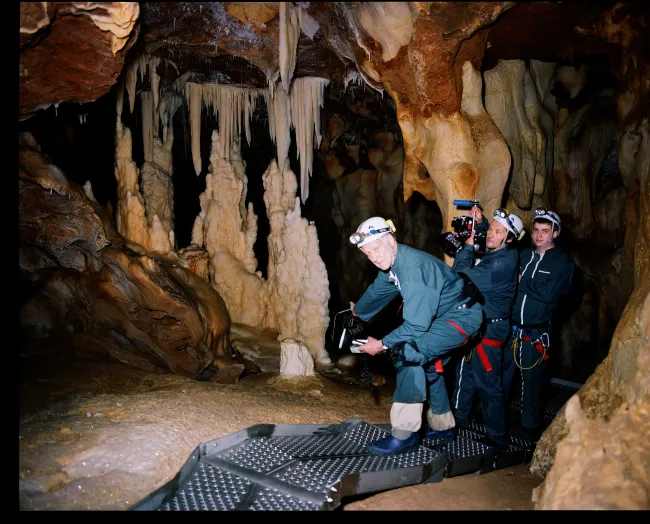
Guiding the audience with his typical voiceover narration, Herzog delves into “one of the greatest discoveries in the history of human culture,” the etchings on the walls of the 1,300-foot Chauvet Cave, presumably home to the oldest paintings in the world. Owned by the French government and restricted to a handful of experts, the cave remains as mysterious as the history of its contents.
Herzog naturally plays up the enigma at hand with epic grandeur, occasionally overdoing it but usually hitting the mark. Introducing the setting with a majestic crane shot (particularly immersive in 3D), his camera soars above the cave and surveys the desolate landscape. Unleashing cosmic observations about “the abyss of time” and the like, Herzog ventures into the darkness with his small team, carefully illuminating the 35,000-year-old artwork within. The profoundly magical aura of the footage ranges from charcoal etchings of animals in motion (“almost like a form of proto-cinema”) to hints of attempts at self-portraiture (“as if the human soul was awakened within them”).
Aside from the Herzogian idiosyncrasies, however, “Cave of Forgotten Dreams” contains the musings of real experts. Archaeologists analyze the ancient painters’ creative use of the cave’s spatial definition to tell stories and create illusions of motion. The personalities involved in the cave study receive less overt scrutiny than the eccentric Antarctica residents in “Encounters at the End of the World,” where Herzog expressed as much interest in the researchers as their work.
Still, he urges the cave experts to reach beyond academic conclusions and look at the big picture, and they happily indulge themselves. “I’m a scientist,” says one, “but I’m a human, too.”
Having thoroughly explored the paintings to the extent that he’s allowed to film them, Herzog launches on a less immediately thrilling tangent to explore the possible lifestyles of the inhabitants. Muting the awe factor, this segment downgrades some of the movie’s intrinsic appeal. But just when Herzog appears to veer too far off-topic, he makes an instant comeback by showing one of his experts playing the Star Spangled Banner on a primitive flute.
As usual, human progress gets the sublimely absurd Herzogian treatment, with modern and primordial sights and sounds becoming whole. Nothing can top utterly zany inspiration of the postscript, which somehow involves a nuclear power plant and radioactive albino crocodiles. Ironically, it turns out the 3D effects comprise the sole aspect of the movie where Herzog issues restraint.
And yet, given the unprecedented nature of the project, Herzog’s filmmaking efforts are tightly controlled and closer to conventions of the form than his other recent non-fiction ventures. He sticks to the practical goal of exposing the art, and concludes by dedicating the movie to the cave’s discoverers. Apparently, plans are underway to open a replica of the cave for the general public, but Herzog beats them to the punch by putting this natural museum on the big screen.
Grade: A-
This review was originally published during indieWIRE’s coverage of the 2010 Toronto International Film Festival.
>
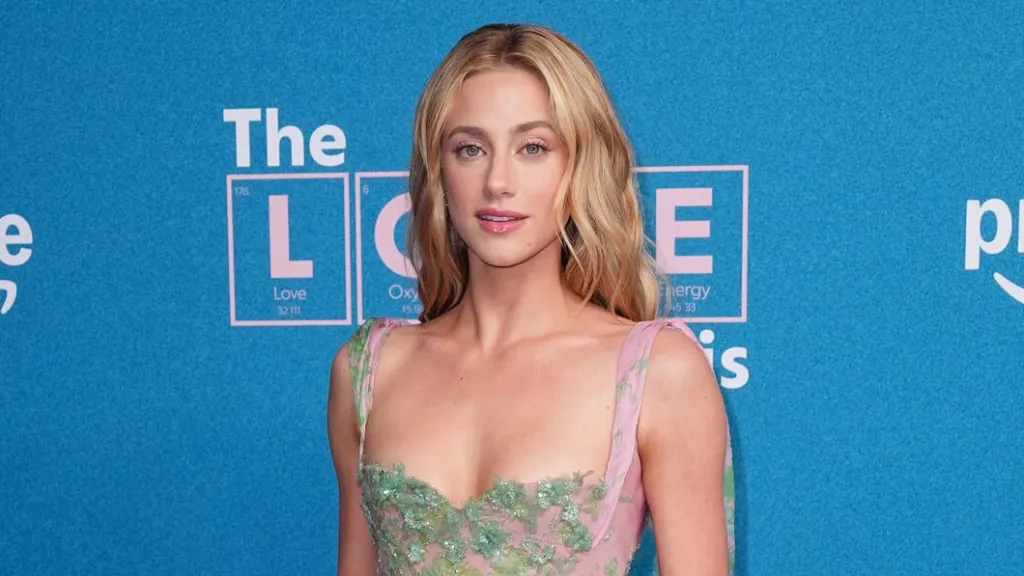
As Lili Reinhart celebrates her role in The Love Hypothesis, she’s ready to sink her teeth into another romantic book adaptation.
Without revealing the title, the actress recently teased that she’s trying to adapt a novella “about lesbian vampires” but is having trouble finding a studio that’s willing to take on the source material.
“People are too afraid to make that,” Reinhart told Hits Radio. “So, if you work at a studio and are watching this video, I don’t know why you wouldn’t make that in this day and age. That’s what I’m trying to do.”

Although Reinhart didn’t reveal which novella she’s trying to adapt, some are speculating it to be Irish author Joseph Sheridan Le Fanu’s Carmilla (1872), about a young Austrian woman who is pursued by the eponymous vampire.
The project comes as Reinhert promotes Prime Video’s adaptation of Ali Hazelwood’s The Love Hypothesis, in which professor Dr. Carlsen (Tom Bateman) and PhD student Olive (Reinhart) start a fake relationship to test their theories about love.
Reinhart also serves as an executive producer on the Claire Scanlon-helmed adaptation, which is penned by Sarah Rothschild. She has previously been an EP on her films Chemical Hearts (2020), Look Both Ways (2022) and American Sweatshop (2025).
>
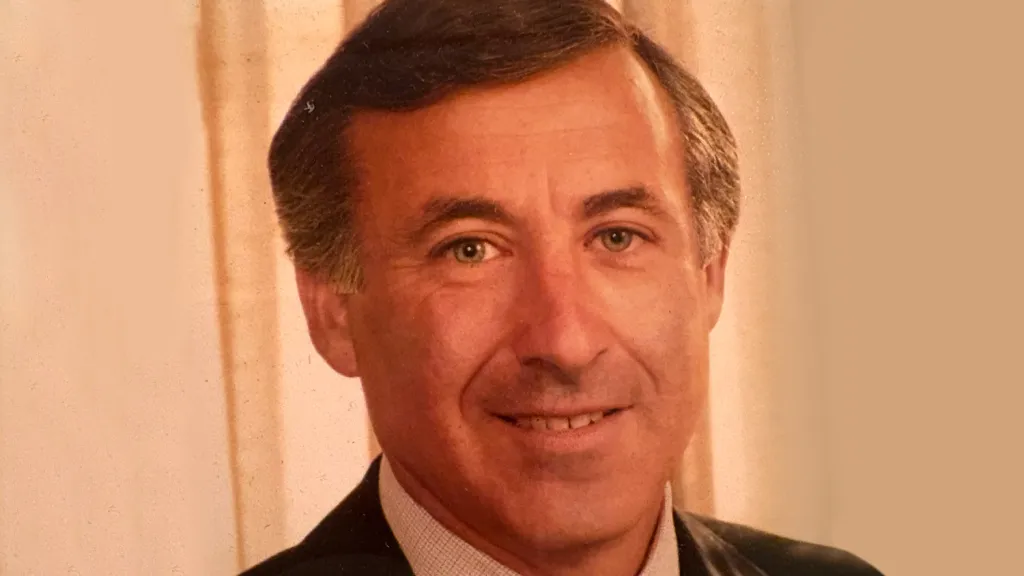
Richard S. Reisberg, who held senior roles at Viacom Productions, UA TV, MGM/UA TV Productions and Lionsgate TV, passed away on September 23, 2026. His family confirmed the news to Deadline. He was 85.
After earning his law degree, Reisberg worked early on in business affairs at ABC, CBS and NBC and then Viacom International, where he rose to become Senior Vice President. In 1972, he was made President of Viacom Productions.
After Viacom, Reisberg held a string of senior roles: President of United Artists Television, President of MGM/UA Television Productions and President and Chief Operating Officer of Reeves Entertainment. His final industry position was President of Lionsgate Television.
He later became a mediator at JAMS and taught mediation at Pepperdine School of Law.
Reisberg is survived by his wife of almost 56 years, Judy; his daughters, Jennifer Benson and Stephanie Silvera; his son-in-law, Justin Silvera; and his grandchildren, Oliver and Tyler Benson and Ella and Layla Silvera. His son-inlaw, David Benson, predeceased him.
Donations in his memory may be made to Alzheimer’s Los Angeles.
DEADLINE RELATED VIDEO:
>
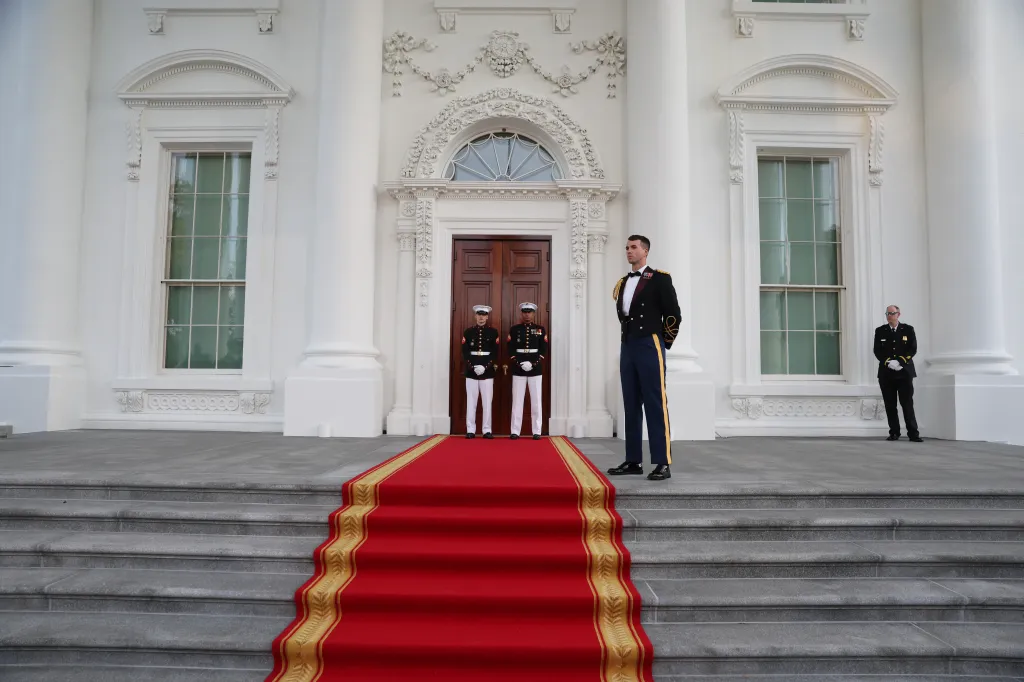
CNN said that it was denied access to cover the arrivals at the White House State Dinner for Chinese President Xi Jinping, just hours after a federal judge ordered the network to restore hard passes to the network journalists and those of MS NOW and Politico.
The coverage at the North Portico was scheduled to be open to pre-credentialed media, a wider scope of reporters and photographers than the White House press pool.
CNN White House correspondent Kristen Holmes said that they were told that their credential to cover the event was only for a camera and audio, not an editorial presence. She had requested that she and her producer attend.
“Again, no editorial presence, just a camera and audio, which certainly seems like a reaction to President Trump saying that he wanted the CNN coverage of the event,” Holmes said.
U.S. District Judge Timothy Kelly ordered that credentials for CNN, Politico and MS NOW be restored, ending Trump’s five-day ban of the outlets from the White House grounds. They returned to the White House around noon, and hours later, Trump event complained that CNN and MS NOW were not covering the state visit.
Trump claimed that the networks “refused to cover one of the Biggest and Most Beautiful Events to take place in many years, the arrival at the White House of the Highly Respected President of China, Xi Jinping, and his beautiful wife, Madam Peng. The event was magnificent — Actually made for Television but, because they’re Fake News, and because they knew how good it would be, they didn’t want credit to be given to ‘TRUMP,’ they refused to be there. That’s why they have such poor Ratings. Tonight’s State Dinner at the White House, for President Xi, will be spectacular!”
In fact, network correspondents said that they were not able to get access to the White House on Thursday morning. And after the White House pulled CNN from the TV pool on Monday, the other four networks in the pool declined to replace them in the rotation. That has meant a dearth of video images from the White House, as TV pool coverage has yet to resume.
>

Lili Reinhart Says Hollywood Is “Afraid To Make” Her Lesbian Vampire Film
Minnesota Twins, assistant GM Daniel Adler mutually part ways: Sources

Richard S. Reisberg Dead: TV Executive At Viacom, MGM/UA & Lionsgate Was 86
-

 movies4 months ago
Search For Canadian TV Actor Stewart McLean Now Homicide Investigation
-

 Fashion9 years ago
These ’90s fashion trends are making a comeback in 2017
-
Fashion9 years ago
According to Dior Couture, this taboo fashion accessory is back
-
Fashion9 years ago
Model Jocelyn Chew’s Instagram is the best vacation you’ve ever had
-
Fashion9 years ago
Emily Ratajkowski channels back-to-school style
-
Fashion9 years ago
9 Celebrities who have spoken out about being photoshopped
-

 Anime4 months ago
Rurouni Kenshin: Hokkaido Arc Manga Takes 1-Issue Break – News
-

 Anime3 months ago
HIDIVE to Stream English Dubs for The World Is Dancing, The Forsaken Saintess and Her Foodie Roadtrip in Another World, The Dangers in My Heart: The Movie Anime – News