
Entertainment
Cyndi Lauper Calls Out Heckler After Mid-Show Interruption

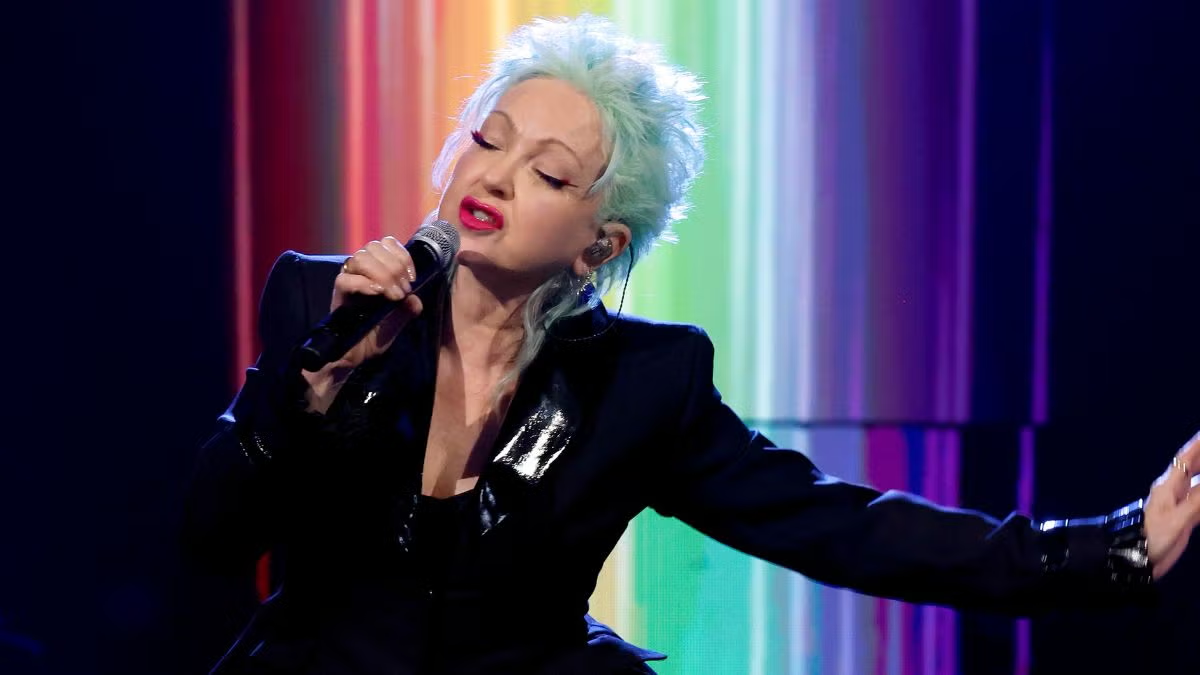
Cyndi Lauper did not take too kindly to her Las Vegas residency being interrupted by a heckler Friday evening.
In a now viral video from Lauper’s Friday night performance at The Colosseum at Caesars Palace, the singer called out one attendee for interrupting her show, reminding them she was not to be crossed.
“I don’t know what the f–k you’re saying, hon,” Lauper said from the stage after trying to give a speech about her song, “Sally’s Pigeons.” “But please remember where you are, OK? Because if you’re trying to shade me, bitch, I’m gonna come for you. I’m from Brooklyn.”
She added: “And if I wanna f–king talk, I will do a tap dance if I f–king want. Sorry, that, of course, is not part of my people skills.”
While it wasn’t clear what exactly was said by the fan in-question, Lauper’s response suggested that the concertgoer was demanding the Grammy winner sing instead of going on with her pre-song address. Watch the incident play out below.
Lauper announced her first-ever Las Vegas residency in October of last year, when she joked the entertainment hub would be renamed “Cyn City” in the spring.
“Vegas will become ‘Cyn City’ next spring, when I bring my Girls Just Wanna Have Fun show to town for this special run, an opportunity for fans who missed my Farewell Tour to celebrate one last time,” she wrote on Instagram at the time.
The residency kicked off Friday night and is set to run through May 2. The stop in Las Vegas comes eight months after Lauper concluded her 69-show Girls Just Want to Have Fun Farewell Tour, which wrapped back in August.

>

EXCLUSIVE: Jena Malone, Dermot Mulroney, Mekhi Phifer & Vannessa Vasquez are astronauts in a trip to outer space in the Stanley Yung directed indie feature Moon People.
Written by Niko Foster, Moon People follows a team of astronauts who travel to the Moon to confirm the discovery of water, but they soon encounter unexpected danger and struggle to survive. The pic was shot in Lexington, Kentucky.
Malone plays Dr. Jennifer Foster while Mulroney will portray Sam Foster. Phifer is Cape Josh Briley and Vasquez is Dr. Diana Alvarez.
Moon People is a production of Al Bravo Films with producers Al Bravo, Michael Pizzimenti and Tim Sabo. EPs are Renata Stiglich and Pejman Partiyeli. Co-Producers are Hemdee Kiwanuka, Jacov Bresler and Michelle Wang.
Malone is the star of The Hunger Games franchise, Nic Winding Refn’s Neon Demon and Prime series Too Old to Die Young, The Boroughs series, Sundance premiere Love Lies Bleeding, Kevin Costner’s Horizon: An American Saga – Part 1 and Zack Snyder’s Rebel Moon – Part One: A Child of Fire.
Mulroney will next be seen in Season 2 of Netflix’s The Hunting Wives, opposite Malin Akerman and Brittany Snow, returning as Jed Banks. He will also star alongside John Travolta and Mandy Patinkin in Roland Joffé’s historical crime thriller November 1963, and currently stars in Art Camacho’s action thriller Ruthless. It was recently announced that he will return as Everett Stone for Searchlight’s The Families Stone. His film and television credits include Anyone But You, Marvel’s Secret Invasion, New Girl, American Horror Story, August: Osage County, The Family Stone, Friends, and My Best Friend’s Wedding.
Phifer starred on 136 episodes of ER, as well as the Apple TV series Truth Be Told, Hulu/ABC’s High Potential as well Spike Lee’s Clockers, Zack Snyder’s Dawn of the Dead, and the Oscar winning 8 Mile.
Actress, producer and screenwriter Vasquez starred on the Hulu series East Los High, Walker, MacGyver, Border Patrol and Disney+’s National Treasure: Edge of History, the feature Say A Little Prayer and the ABC series The Fix.
Malone and Phifer are repped by Gersh. Mulroney is repped by Paradigm. Vasquez is represented by Pastorini Bosby Talent.
Yung is the producer of Ethan Mao and the director of Shadow Dancer. He is repped by Allen Edelman Management.
Pic’s casting directors are Justin Nesbitt (The Hunting Season, Oscar Shaw, The Wrecker) and Victoria Lewis (D.O.P.E. Unit, War Dawgz, Hands).
>
If Christopher Nolan thinks it’s a big deal, then you’re probably onto something.
On Thursday, September 24, the U.S. Congress introduced a bipartisan bill that would provide film and TV productions a federal filming tax incentive to make movies and shows in the U.S. Nolan, as president of the Directors Guild of America, called the Motion Picture, Television, and Entertainment Revitalization Act,” “the most significant legislative effort in a generation to promote domestic film and television production, and the hundreds of thousands of jobs it supports.”
The idea that we’re even at this point is already seismic. For years, decades even, advocates have been pushing for some sort of federal support for the film industry to bolster production. States have offered their own tax credits and incentives at increasingly aggressive rates, but they’ve found they’ve been unable to compete with the likes of entire countries throwing their weight behind a push to get Hollywood productions to film there. A 2025 report in Prod Pro found that in Q1 of that year, the United States’ share of overall productions had fallen to 39 percent, down from 51 percent in 2022, so a decline of 12 percent in just three years. The urgency was clearly there to do something.


In terms of what this bill actually offers, the Motion Picture, Television, and Entertainment Revitalization Act firstly provides a 20 percent base tax credit on any qualifying film or TV productions that have a budget of at least $1 million and shoot at least 75 percent of principal photography within the United States. The credit includes above-the-line talent, which is often the biggest expense for indie productions especially, and you can get additional bonus credits of 5 percent, with a max of 30 percent, if you qualify as an indie production, if you work in at least 10 or more states, or if you film in a rural area or a federally declared disaster area. By the way, Los Angeles County is a federally declared disaster zone after last year’s wildfires and will be considered one for five years.
The federal tax credit is also fully stackable on top of other state credits, which have already gotten pretty aggressive. Places like Canada have federal and local incentives, but they tend to offset rather than be truly stackable the way this is. So think for a second that if you can qualify for a 30 percent credit on the national level and then a 35 percent base credit for shooting in California, we’re talking about your crew getting up to 65 percent of their money back? Look out, Bulgaria.
“It would be an absolute game-changer for the crews working in the U.S. and production companies,” said Ryan Broussard, VP of Sales and Production Incentives with the production finance platform Wrapbook. “To put a federal stackable incentive on top of that is pretty monumental. The way it’s written, I’ve never seen anything like it in terms of what it’s incentivizing. To include things like above-the-line across the board…is amazing.”
Broussard called the legislation introduced today “too good to be true.” He was stunned by the fact that the bill also includes post-production and VFX work as well as writers (something almost no incentives do) and it’s providing numbers that are higher than what we see in most if not all other countries. He even was impressed that this bill makes a point to try and win back not just domestic production but to attract foreign production as well with these incentives, to one day get international talent to consider moving and working here because of the incentives offered. Seeing how that develops will be an under-appreciated benefit of this legislation.
The MPA released a study earlier this month outlining the potential impacts if such a federal incentive were to be advanced. The numbers it used weren’t identical to what’s in the bill, but they’re a very close model. It estimated we could see the addition of 143,500 jobs and an extra $125 billion in production spend over the next eight years. Broussard feels those numbers, based on what he’s seen today, feel largely accurate and believable.
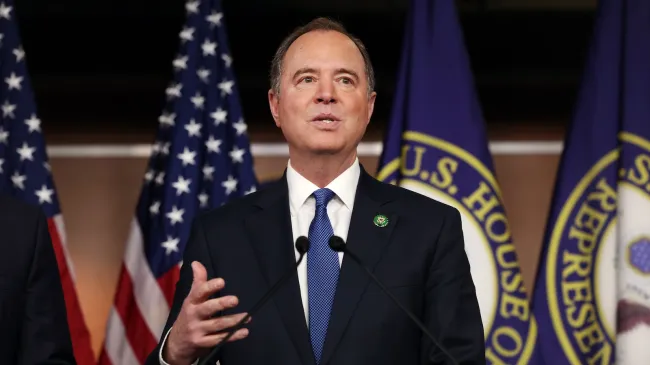
Part of why we got to this point is because it’s the culmination of years of effort and work from the labor unions, studios, independents, film commissioners, small businesses, and lawmakers who actually listened to the concerns at hand. So if there are no real surprises in what this bill offers or does not offer based on what has been expected, it’s because everyone is truly on the same page and swimming in the right direction to get this passed. It can’t be said enough how wild it is that a bill sponsored by Adam Schiff actually has the backing of President Trump, and that’s a credit to Jon Voight bending the president’s ear in all the right ways, backing him down from his initial call for a 100 percent tariff on the film industry.
The bill has specifically been drafted to incentivize compensation and creating jobs. Other states offer credits for being green or other perks, but this bill is strictly about jobs jobs jobs. It’s also designed to think about all 50 states, not just the ones where filming is most prevalent. Mike Lebia, the CEO of production finance platform Greenslate, says the bill seems especially well designed to be an uplift for other state programs and will be very impactful for independent productions shooting all over the country. For instance, in states like New Mexico where an above-the-line credit isn’t offered, getting a federal one on top of that could make shooting there much more viable. For states like South Carolina (Republican Senator Tim Scott is a sponsor of the bill) that have minor credits and relatively small filming hubs, the addition of the federal incentive could make production viable there as well and raise all boats.
“Because this is a national bill, it allows the creative decisions to drive where productions are going to go. Oftentimes incentives are really the primary factor; this will shift the power back to creative,” Lebia said. “I’m hoping that will be a big factor in getting this bill across the finish line. It seems to have really strong support…and it’s getting support across the spectrum and is designed to support the entire country.”
Local leaders even know how much a film shoot can impact shopping on Main Street or the lumber yard that can hire extra people because of the added work required. With sponsors of the bill from Texas, Georgia, South Carolina joining ones from California, it’s clear this isn’t just a bill for the coasts, even if convincing the rest of Congress of that is a hurdle that will still have to be cleared.
What really moves the needle in getting this bill passed is that it will have an immediate impact, even if other incentives sometimes take years to manifest. California saw a surge of applications when it changed its production credit allowance, and it will be clear almost immediately that Hollywood will green light movies to shoot in the U.S. specifically because they can now qualify.
One question and concern Broussard raises is whether other countries will sit idly by or if there will be an arms race now to keep the production they already have. Could the UK or Ireland raise their own aggressive incentives even more in an effort to keep up with America? That will be an interesting development should it happen.
But the next step is getting this bill passed, and this Congress quite literally has not passed anything. If the bill does not pass prior to the next Congress being sworn in at the top of the year, it will have to be reintroduced again and start from scratch. Congress is out of session until the midterms, but there’s optimism this could get passed in the lame duck period and could even be dated to take effect as early as January 1, 2027. Step one was getting it introduced, and now the work truly begins.
“The average American does not fully grasp the severity of the moment and the importance of getting a bill done,” said Cameron Woodward, the co-founder of Wrapbook. “This allows us the capacity to maintain the industry that we’ve invented. Filmmakers want to film in America. I’ve spoken with people making a movie about America, but they are unable to make that project here because the math simply does not work. This allows us to preserve film infrastructure that we’ve been building for over 100 years, and if we lose it, it will be gone forever.”
>

Unscripted television producers, long used to playing second fiddle to the feature film business and scripted TV world, are “ecstatic” that their trade is also being covered by the federal film and TV incentive that was introduced by lawmakers this morning.
This was not an accident; Deadline understands that a group of unscripted producers and associations spent a large part of the summer lobbying for inclusion to stem the wave of big-budget competition shows and reality series that were moving out of the United States.
Deadline spoke to around half a dozen unscripted producers, who were elated about the possibility of shooting more of their shows in the United States, rather than abroad.
Yes, Zach Cregger’s Resident Evil was shot in the Czech Republic and Ridley Scott took Jacob Elordi to Italy rather than Colorado for The Dog Stars, but the large proportion of unscripted productions that have decamped to Australia, Canada, Ireland and Portugal over the last few years has been staggering.
Netflix’s Wonka’s The Golden Ticket was shot in Australia and its upcoming take on Monopoly was filmed in the UK; ABC’s upcoming Parker Posey-fronted mystery series The Mob was filmed in Italy, while Fox produces the likes of MasterChef and Fear Factor in Canada and Don’t Forget The Lyrics and Next Level Chef in Ireland.
Jay Pharoah, host of Fox game show The Quiz with Balls, told Deadline recently that his show has been shot in Australia and Belgium and he wasn’t a particular fan of the food in the latter.
“Trump got into office and there was a lot of different shifts with shooting. My understanding is that it’s easier and cheaper to shoot out of America now, which is ridiculous, but that’s how it is,” he said.
Similarly, Rob Lowe said the fact that it’s cheaper to bring 100 people to Ireland to shoot The Floor than film in LA was “criminal”.
Unfortunately for Pharoah and Lowe, there are some exclusions including for gameshows so the pair are likely to keep traveling to Europe for their paychecks.
Unscripted producers have long battled generous incentives in Europe, not helped by Ireland’s introduction of the first tax credit specifically for unscripted shows, and cheaper crews abroad.
If the Motion Picture, Television, and Entertainment Revitalization Act, which was sponsored by Tim Scott and Adam Schiff in the Senate and a number of House members, passes through Congress as is, it will include unscripted series that consist of at least four episodes with a budget of over $1M where at least 75% of the production is in the States.
Deadline understands that NPACT, formed in 2017 through the merger of the Nonfiction Producers Association (NPA) and PactUS, and its general manager Michelle Van Kempen, were integral to the process through conversations with the Motion Picture Association (MPA), Film USA and offices of Congressional Representatives and Senators such as South Carolina’s Scott and California’s Schiff.
The association, which represents producers such as Bunim-Murray, Kinetic Content, Lionsgate Alternative TV and Studio Lambert, provided economic data to highlight the nature of the challenge.
“This is fantastic for unscripted employment,” one source told Deadline.
Shawn Moffat, who runs Media Content Services and Ghost Adventures producer My Entertainment, was also a key figure in these conversations. Moffat had conversations with NPACT and also brought together a group of unscripted producers including Fulwell Entertainment, which merged with LeBron James’ SpringHill Entertainment, Peyton Manning’s Omaha Productions and Mark Wahlberg’s Unrealistic Ideas to navigate the process.
It’s also not only a bill to help Hollywood, but for film and TV workers across the whole country and the bill includes a 5% uplift for shooting in rural areas.
“Whether you’re in South Carolina or California or New Orleans, if you can be in your in your market and go home to your bed every night and still make good TV, that’s what this should be for,” added another source.
It’s unclear why gameshows are excluded, alongside news, interview and talk shows, awards programming and live sporting events.
Networks and streamers, from Netflix to CBS, would like to shoot more unscripted shows in the States, and a federal incentive will likely make it easier to make that argument. Allison Wallach, Head of Unscripted Programming at Fox Entertainment Studios recently told Deadline the company is “absolutely leaning into filming here, if we can.”
All of this comes as individual states are fighting to nab productions such as Georgia becoming the new home of American Idol and potentially America’s Got Talent, while New Jersey is now home to The Masked Singer, while California finally opened the door for tax credits for unscripted by including competition shows in AB1138 (although it seems only one show – Mark Rober’s Jimmy Kimmel-produced Netflix show Schooled! – has succeeded so far).
That is a separate conversation that is heating up alongside the federal incentive, all moves that should help an embattled sector feel somewhat optimistic about the next few years.
>
Rob Pelinka on LeBron James leaving Lakers for 76ers: 'It was a great era'

Jena Malone, Dermot Mulroney, Vannessa Vasquez Land ‘Moon People’
Braves place Martín Pérez on injured list 6 days before postseason
-

 movies4 months ago
Search For Canadian TV Actor Stewart McLean Now Homicide Investigation
-

 Fashion9 years ago
These ’90s fashion trends are making a comeback in 2017
-
Fashion9 years ago
According to Dior Couture, this taboo fashion accessory is back
-
Fashion9 years ago
Model Jocelyn Chew’s Instagram is the best vacation you’ve ever had
-
Fashion9 years ago
Emily Ratajkowski channels back-to-school style
-
Fashion9 years ago
9 Celebrities who have spoken out about being photoshopped
-

 Anime4 months ago
Rurouni Kenshin: Hokkaido Arc Manga Takes 1-Issue Break – News
-

 Anime3 months ago
HIDIVE to Stream English Dubs for The World Is Dancing, The Forsaken Saintess and Her Foodie Roadtrip in Another World, The Dangers in My Heart: The Movie Anime – News