
Politics
Politics Home | Muslim Voter Group Holding Hustings For Major Parties Ahead Of Local Elections


3 min read
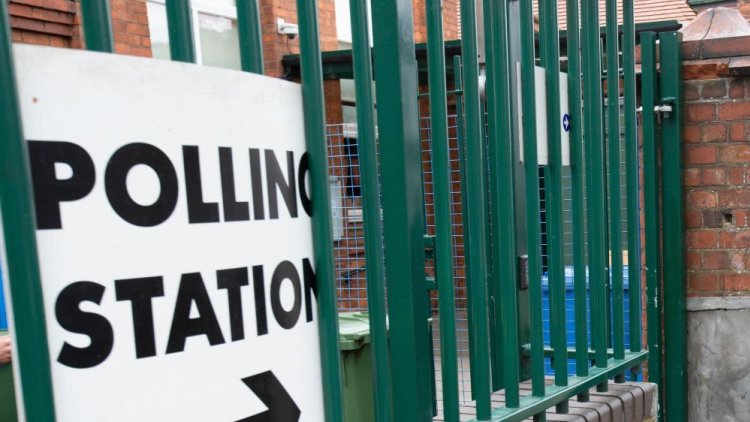
A pressure group focused on who Muslims should support at the ballot box has held hustings events in Scotland and Wales ahead of nationwide elections on 7 May.
The Muslim Vote, set up in late 2023, endorsed four independent candidates who were elected at the 2024 general election on campaigns centred on the war in Gaza. They were Shockat Adam, Adnan Hussain, Ayoub Khan and Iqbal Mohammed.
The group, which encourages people to vote on religious lines, endorsed the successful Green candidate Hannah Spencer in the Gorton and Denton by-election in February, and is planning to declare support for a host of candidates in the run-up to next month’s elections.
At the time of the writing, the Muslim Vote had held several hustings in Scotland and Wales, which members of the Conservatives, Greens, Liberal Democrats, Plaid Cymru, Scottish National Party and George Galloway’s Workers Party have all attended. Labour and Reform UK have so far not participated, PoliticsHome understands.
“Our broad strategy is to push the needle on the Labour Party and try to get people to vote against them,” the Muslim Vote’s Abubakr Nanabawa Nanabawa told PoliticsHome.
“I really see this as an opportunity to send a message to Labour Party, to reaffirm that message, that they’re not just losing votes to Reform, that they are losing votes to the left and the historic base of ethnic minority voters.”
The group is in the process of compiling a list of specific candidates to endorse across the local elections and devolved parliaments, which will be released in the coming days.
PoliticsHome understands that the majority of endorsements will be for Zack Polanski’s Greens, as well as a host of independent candidates, particularly in east London.
Activists are confident that independent candidates backed by Muslim Vote will win council seats in London areas with significant Muslim populations like Redbridge, where Health Secretary Wes Streeting’s parliamentary constituency is located, and Newham.
At the same time, the Greens, which have surged in the opinion polls since Polanski became leader in September, are expected to make significant gains in the capital at next month’s elections, largely at the expense of Keir Starmer’s Labour.
Next month’s elections, which take place in Scotland, Wales and council areas across England, will be a test of the Muslim Vote group’s ability to organise on a national scale as it prepares for the next general election.
Away from London, cities like Birmingham, Leicester and Bradford are seen as places where independent candidates with campaigns focused on Gaza pose a particular threat to Labour.
Nanabawa said that many Muslim voters have still not forgiven Labour over its response to the war in Gaza, describing the issue as “the straw that broke the camel’s back”.
He told PoliticsHome: “You have to remember that working-class Brits across the whole country have abandoned Labour en masse, not just Muslims. And what you’ll see is predominantly in the areas where the Labour Party have suffered most from disaffected Muslim voters is in these working-class Muslim communities.
“Unlike a lot of the working class communities, which have moved towards Reform, Muslim communities have found their voices within the Green Party or independent movements. They’re just looking for alternatives.”
>
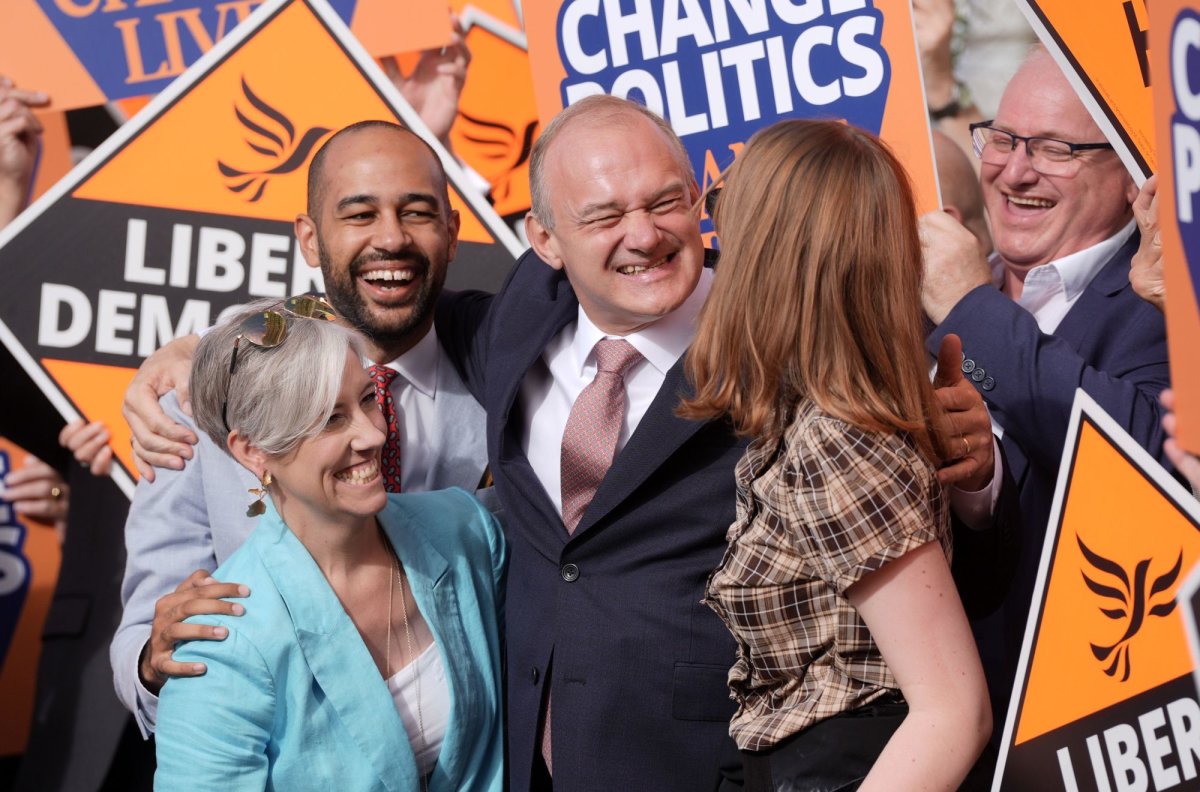
Lib Dem leader Ed Davey with party president Josh Babarinde and deputy leader Daisy Cooper at the party conference in Brighton (Alamy)
11 min read
Questions about the Liberal Democrats’ strategy, message and identity dominated the party’s conference in Brighton.
As Lib Dem parliamentarians and activists arrived on the south coast at the weekend, they were encouraged to write on a board why they support the party.
“I want to live in a country where every voice and every vote matters.” “Fairness and equality of opportunity.” “I didn’t want to stand by and see our country overtaken by malign actors.” “Honesty, decency, integrity and progressivism.” “Because it doesn’t need to be this shit.”
The range of answers reflected a growing debate within the Lib Dems that was the biggest talking point in Brighton: what, and who, are they for?
The question was putting pressure on leader Ed Davey in the weeks, even months, leading up to the weekend.
On the eve of conference, South Cotswolds MP Roz Savage said publicly what many Lib Dems had been complaining about in private: that their party is “struggling for relevance”. In an essay shared exclusively with PoliticsHome, Savage argued that liberals must “rediscover” their “insurgent spirit”, rather than being “the polite custodians of a system that leaves people feeling powerless”.
Indeed, as Lib Dem direction comes under growing scrutiny, senior party figures told PoliticsHome they had noticed more media attention than they would normally expect at this stage of a Parliament.
Davey has made no secret of his desire to see the Liberal Democrats enter government after the next general election, telling The House in a recent interview that he would be “the most experienced leader” in the event of a hung parliament.
Faced with criticism, he has pointed to the party’s electoral gains at local level as evidence of success. “We’re winning where it matters: at the ballot box,” he declared in Brighton.
Having won a record 72 MPs in the 2024 general election, the Lib Dems transformed their presence in Westminster. However, in recent months, multiple party figures have expressed frustration with what they describe as failure to capitalise on this success and stagnant polling, and fear that the Lib Dems are failing to cut through in a fragmented political climate.
Speaking to PoliticsHome at conference, one MP blamed “growing pains”: a Lib Dem central operation that had taken time to catch up with the size of the parliamentary party.
Another MP described this year’s conference as “edgier” than previous years, adding that restlessness with Davey’s leadership was leading to conversations about possible successors: “This one feels edgier about the leadership… The three who would go for it are Lisa Smart, Daisy Cooper and Max Wilkinson. Whether they’d do any better, I don’t know.”
Cooper, the party’s deputy leader, is generally seen as the most obvious potential successor to Davey. She was once widely seen as the natural heir, although that assumption has faded somewhat over the past two years as 2024-intake MPs like Wilkinson, Calum Miller and Josh Babarinde have risen through the ranks.
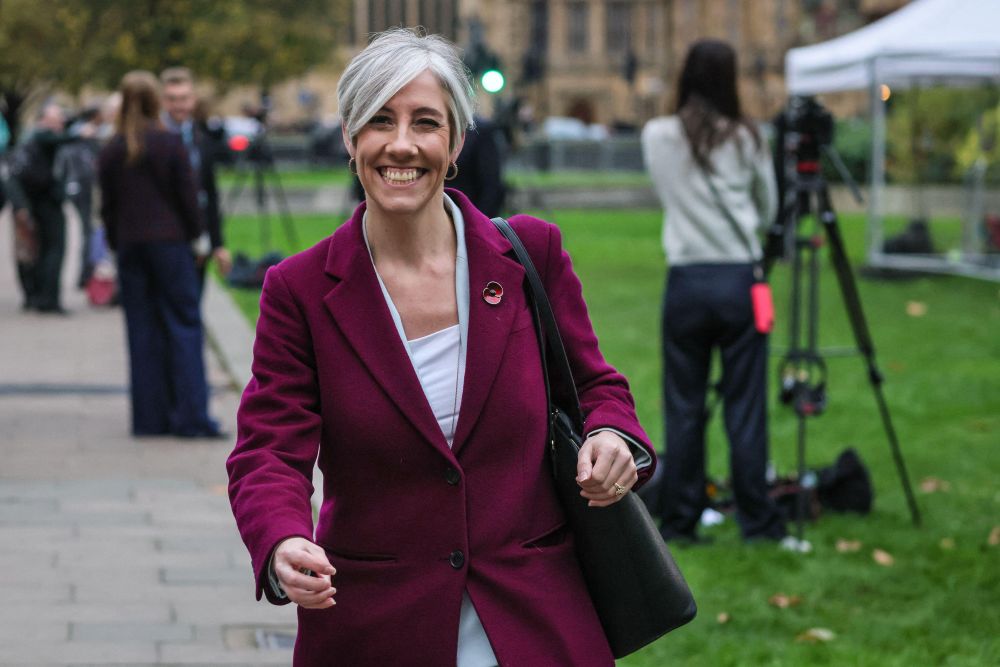
Babarinde has recently taken on the presidency of the Liberal Democrats for a three-year term, and the expectation among colleagues is that he will see that role through before considering a leadership bid – following a path similar to that taken by former leader Tim Farron.
Smart, who is a close ally of Davey, is seen as a potential continuity candidate, while Miller and Wilkinson are widely viewed as highly competent spokespeople for the party. However, MPs worry that if a leadership change were to happen now, any potential successor would struggle to achieve the same name recognition with the public that Davey has earned through years of campaigning and media stunts.
Furthermore, while there was chat about Davey’s successor in Brighton, few party figures believe a change in leadership anytime soon is a serious possibility.
While some Lib Dem MPs privately acknowledge frustrations with the party’s progress since the election, many remain relatively comfortable when looking at polling in their own constituencies, which are largely based in former-Conservative voting parts of southern England. An MRP poll carried out by Electoral Calculus in June this year shows the Lib Dems holding steady with 72 seats.
“It’s just not that deep,” one Lib Dem MP joked, arguing that some of the Lib Dem MPs most critical of Davey also “do not have an alternative” to offer.
there is an absence of underlying understanding publicly as to what the party’s purpose is
For now, the party is attempting to project unity and purpose rather than succession politics. Victoria Collins, the MP for Harrow West, described the mood of conference as one of preparation for government.
“The general tone is that we are ambitious, we are going for government, whatever that looks like, and we’re preparing for it,” she said.
That said, while Davey’s position is still regarded as secure, he is undoubtedly under pressure to clarify the party’s message beyond the so-called “blue wall” seats won at the last election.
In his conference speech on Tuesday, he made a moral case for the Lib Dems, telling the party that it is in a fight for the country’s future against the modern-day far right.
At a panel organised by the Social Liberal Forum (SLF), the SLF chair John Shreeve argued that the Liberal Democrats had become effective campaigners in areas where they already possessed capacity, but struggled to expand that model elsewhere.
“The conclusion that we reach is that there is an absence of underlying understanding publicly as to what the party’s purpose is,” he said.
“So, are we the best administrators? Well, that’s not going to exactly put us in power. It’s the scale of our delivery which is inadequate. We’re very good at delivering where we have the capacity to do so, but we are very poor at being able to stimulate and lead and inspire.”
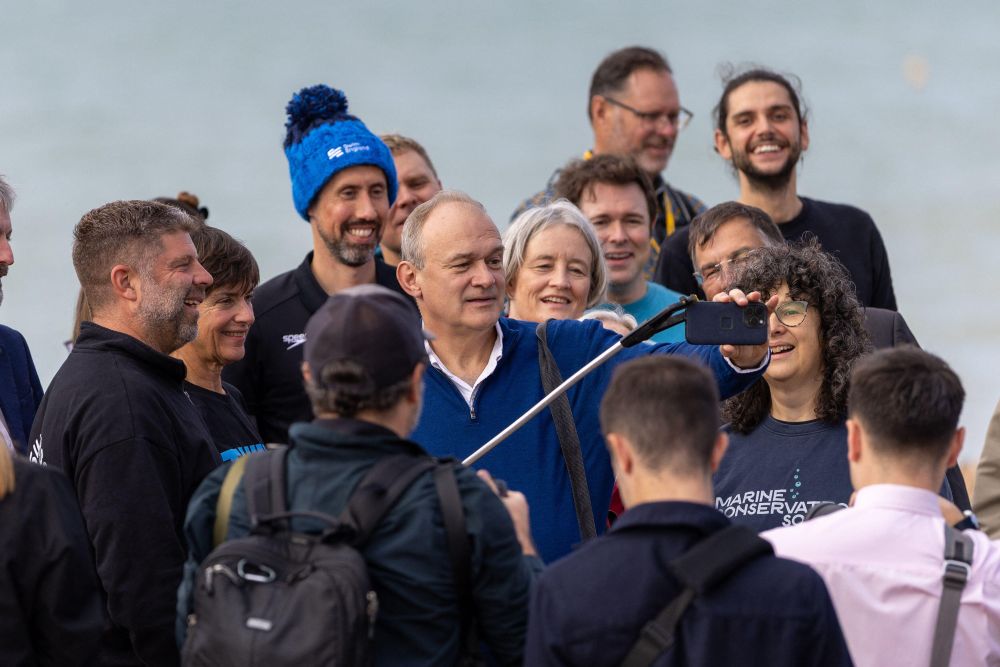
Graham Neale, chair of the Green Liberals, agreed.
“We end up, unfortunately, being sort of just populist bureaucrats,” he said at the panel event.
“‘We can get more for your council tax than this group can, or we would spend it better than that group can…’ We just end up competing to see who can be the best bureaucrats. We’ve really got a series of disconnected ideas here.”
He accused the party of being “timid” on environmental policy, taxation, and its international stance, especially around Gaza.
“We didn’t reap any benefit from our international stance in the way that the Green Party did in Southwark and other places in London.”
Other urban Lib Dems continue to feel that the party remains disproportionately focused on former Conservative territory rather than trying to make progress in some of England’s biggest cities.
Northern Lib Dems in particular are dissatisfied that the party has not done enough to address what they see as a north-south imbalance. One Manchester councillor told PoliticsHome that they had recently invited Davey to an event in the city, but that the leader declined to attend: “He doesn’t care about Manchester.”
The acknowledgement that the lack of cut-through was an issue was probably the most significant first step
Other groups have gripes with the party’s approach. Young Liberals chair Will Tennison argued that the party’s focus on the European Union was misplaced when it comes to winning over younger voters.
“They’re bored of it,” he said. “It went on too long. We’re ready to move on… The job market almost always comes out on top.”
Tennison, who sits on the party’s federal board, said the party is “aware that the messaging is not up to scratch”.
“I don’t think they’ve come up with a solution to how to fix it, but I do think it’s really good that we’ve seen an increase in the number of people at HQ that are working in the digital space. So we’ve got more social media admins, we’ve got more people doing influencer stuff. Politics isn’t won on the BBC News anymore, and in the not too distant future, it might very well be won on TikTok.”
One MP said that the party’s problem lies less in the core policies themselves – fixing the social care system, repairing the UK’s relationship with Europe and electoral reform – but more in the communication of how they would actually directly improve people’s lives.
Earlier this year, PoliticsHome reported on a “strategy rethink” inside the party, amid frustration from some MPs about the lack of progress since the general election in breaking into new ground.
The party has responded to criticisms by overhauling its communications operation, including the appointment of James Holt as political director. Holt previously served as the Liberal Democrats’ director of communications more than 10 years ago, and has returned to the UK in the last few months after working for Prince Harry and Meghan in the US.
“The acknowledgement that the lack of cut-through was an issue was probably the most significant first step,” one MP said.
“Now we’ve got people in place who should be able to help communicate and structure our vision. They won’t be able to do it overnight, but a year ago, there wasn’t even anyone working on it.”
The party has also hired content creators, reflecting a recognition that political communication is increasingly taking place away from traditional media.
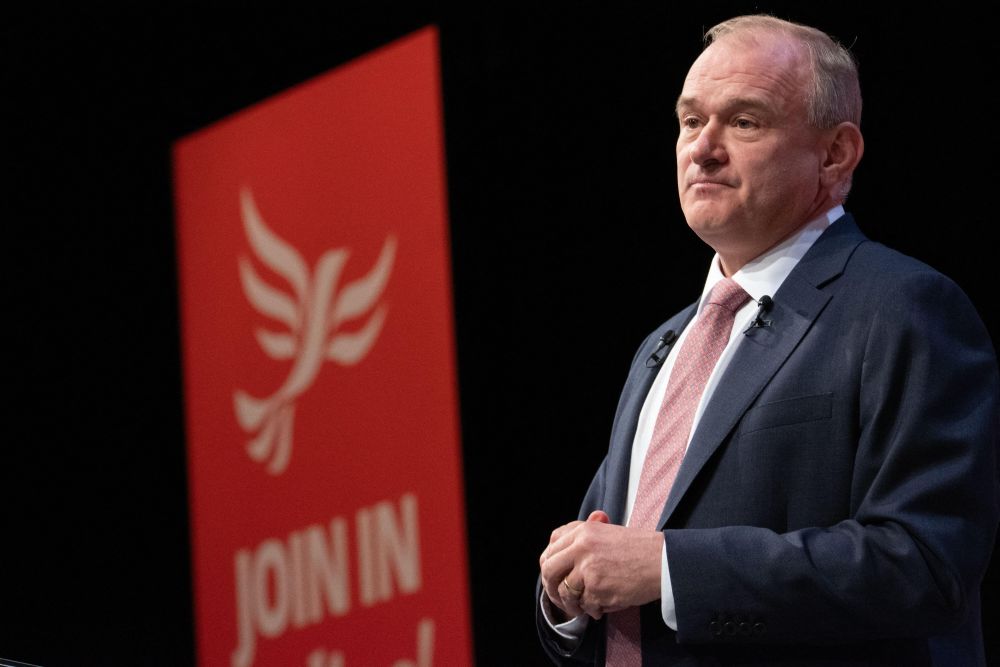
There is also a new effort to develop the intellectual infrastructure behind the party.
The Britain Project, a new think tank aiming to “convene and catalyse liberal thinking”, was launched at the conference. Davey welcomed its arrival, arguing that liberalism had lacked a dedicated Westminster think tank for too long.
“There’s been a gap in the market. There hasn’t been a liberal think tank for a long time,” he said.
“You look around Westminster and Whitehall, and there are lots of think tanks there that are supplying ideas for Labour, ideas for the Conservatives, ideas that they try to promote so that they can get policies for government. The fact that we haven’t had a think tank focused on liberalism, sharing our values, has been a real gap.”
But Davey also insisted that the organisation should not simply become a policy arm of the party.
“While we share those values, we need you to come up with ideas that I occasionally disagree with, because we need you to challenge not just me, but challenge the whole party.
“When you do come up with ideas – whether we agree with them or not – the fact that we can add them to our debate, that they can challenge us, challenge the party, is a really good thing, because that challenge, as we know, as liberals, makes those ideas better.”
If you are as close to power as we may be, you need to be serious about it
The think tank’s policy director, Lib Dem peer Lord Leunig, went further, saying his ambition was to become unpopular within his own party if that was what was required to improve its policymaking.
“My ambition is to be the least popular person in our party,” he said.
“But to be a good minister you actually have to have policies that work, and I can tell you that our party, just like all other parties… can be guilty of ‘convenientism’ – believing that what can be convenient is true – and I tell you that is not always the case.”
He later added: “We are not soft people. This is serious stuff. Because you know what? If you are as close to power as we may be, you need to be serious about it.”
Davey has hinted at a willingness to work with Labour. He has refused to completely rule out a coalition with the Conservatives, but suggested that a coalition with the Tory party in its current form under the leadership of Kemi Badenoch would be highly unlikely. One senior Lib Dem told PoliticsHome the party would never consider joining a government that wanted to leave the European Convention on Human Rights.
The MP suggested that, if coalition negotiations did eventually arise, the party should publicly identify three issues on which it would refuse to compromise: energy policy, Europe and electoral reform.
The Lib Dems feel confident that they will be a significant player come the next general election – whether it happens at the expected time or if Burnham calls an election early.
However, their own activists and MPs are still embroiled in debates about what the party’s broader purpose should be, who it should speak to, and how it can translate a collection of familiar liberal causes into a proposition that voters across the country can understand.
The SLF panellists were asked to sum up what the Lib Dems were for in just a few words. Chris Bowers, coordinator of the Yorkists group, was the only panellist to offer an answer, which placed the Lib Dems in contrast with the other political parties on the ballot box.
“We’re better than this.”
>
Politics
Politics Home | Lib Dems In “Fight Of Our lives” Against “Well-Funded Far Right”, Warns Ed Davey


(Gary Roberts Photography / Alamy)

3 min read
Ed Davey has warned Liberal Democrats that they are part of a fight for the country’s future against an “extremely well-funded” modern-day “far-right”.
Addressing Lib Dem conference in Brighton on Tuesday, Davey said the party faces “the fight of our lives” against a “far-right movement that is given oxygen, and heat, and fuel by politicians and parties who claim to be serious contenders to lead our country”.
Davey’s speech came amid growing pressure from within his party to give the Lib Dems a more distinct political offering to voters – and to make clear what they stand for. In an essay published days before the conference, one of his MPs, Roz Savage, claimed the party was “struggling for relevance” and failing to paint a “coherent picture of the country we are trying to create”.
In a new policy announcement, Davey pledged that a future Lib Dem government would take hundreds of thousands of people out of the higher rate (40p) tax band by raising the threshold to £56,000.
He also announced that the party would raise the tax-free personal allowance from £12,570 to £15,000, saying this would take more than 2m of the lowest-paid workers out of income tax completely.
Davey said he would fund these tax cuts using the economic growth achieved through his policy of rejoining the European Union’s Single Market and Customs Union.
Amid growing concern about AI models going rogue and posing a potential threat to humanity, Davey called for “a global treaty to press pause on super-intelligent AI now, before it’s too late”.
He compared the risks posed to civilisation by increasingly sophisticated AI models to climate change and nuclear weapons, telling the conference that the human species was “not just the fight of our lives” but engaged in a “fight for life itself”.
Throughout his speech, Davey sought to frame the Lib Dems as an opposing force to Reform UK, and repeatedly contrasted his party’s “community politics” with what he described as the divisive politics of Nigel Farage’s party.
“When that person you disagree with stops being just another little box on your social media feed, and becomes a human being with a face, a home and a life – that’s when we make progress,” he told the conference.
“With liberal community politics, we can answer people’s hopelessness and powerlessness. Not with a slogan, not with a scapegoat, but with hard work.”
One Lib Dem MP seated behind Davey during the speech told PoliticsHome it was “probably his best to date”, as he “articulated what liberalism means” alongside a “bold policy announcement”.
But another MP said that while the proposed tax cuts were welcome: “There’s just so much more we have to say. What people are looking for is not a cautious step-by-step approach to the next election, and the manifesto, but a sense of what it might be like to live in this future Britain, not just what we might have in our pockets.”
>
Politics
Politics Home Article | Appoint Homelessness Tsar To Help Eradicate Rough Sleeping, PM Told

5 min read
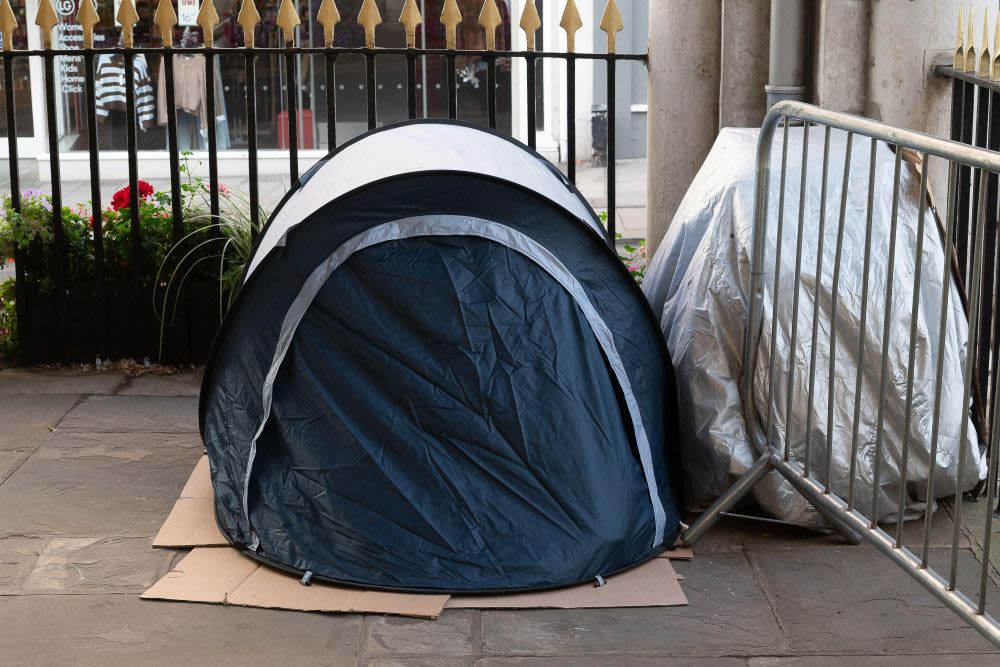
Andy Burnham should appoint a homelessness tsar to help with his pledge to end rough sleeping, according to the head of a leading homelessness charity.
Matt Downie, chief executive of Crisis, told PoliticsHome that the Prime Minister needs someone who “knocks heads together” across Whitehall and improves coordination inside and outside government when it comes to tackling homelessness.
Burnham pledged to end rough sleeping in the UK when he first entered No 10 after replacing Keir Starmer in July.
Last month, he announced that emergency accommodation will be made available to ensure that all rough sleepers have somewhere safe to live by Christmas.
“We did it in the pandemic. We can do it again. But it needs all of us,” the PM said.
“Government will put the money in. But I’m asking leaders in communities and sectors across society to play their part locally too. Let’s get people out the cold. And let’s bring back hope.”
Rough sleeping hit record highs at the start of 2026, with 4,793 people recorded as sleeping rough on a single night in autumn in 2025, according to government figures.
Speaking to PoliticsHome ahead of Labour conference getting underway in Liverpool later this week, Downie described the Prime Minister’s pledge to eradicate homelessness as “the biggest moment” for his sector in decades and “properly special”.
“I can tell you that, having tried for many years to get people in the very heart of government, particularly in No 10, to care about this issue, it’s amazing to see large numbers of people now doing everything they can,” he said.
However, he added that the Labour government could take additional steps to boost its chances of success, including appointing a “tsar or commissioner”.
“Someone that knocks heads together across government, that says: ‘By the way, NHS, you’re discharging people onto the streets from A&Es. Stop it’,” said Downie.
“[Someone] who bangs heads together, gets organisations in our sector, in local government, housing associations to do the right thing. That costs nothing, and they can just do it today.”
The charity head said that the issue of people falling into homelessness when discharged from hospitals and prisons is “outrageous”, but ultimately “solvable”.
But he stressed that it’s “not just possible” to achieve the PM’s pledge without more housing, particularly housing specifically earmarked for people who are already homeless.
It’s not about spending more money, but “organising ourselves better”, Downie said, explaining that homeless people should be guaranteed a “good chunk” of properties built as part of the government’s £38bn Social and Affordable Homes Programme.
Crisis is also calling for Burnham and Chancellor John Healey to unfreeze the Local Housing Allowance (LHA) at the Budget next month, describing it as “the number one thing the government could do right now to send the numbers in the right direction”.
LHA limits how much Universal Credit is paid to private renters. It is meant to cover the cheapest 30 per cent of private sector rents in each area, with claimants whose rent is higher paying the shortfall themselves. However, a two-year freeze to its cash value by the Labour government has led to a real-terms cut because actual rents have risen in that time.
As a result, the support is now worth less than the 10th percentile of local rents in some areas, with many councils warning that the freeze is making rent increasingly unaffordable and pushing people into homelessness.
Some Tory-run councils support ending the freeze, despite party leader Kemi Badenoch’s pledge to further reduce LHA.
Downie also wants to see the PM act on his past support for Housing First: “the single most exciting thing he said on homelessness”.
The scheme works on seven core principles, including the right to a home; giving individuals control over the type and location of their housing; and a focus on harm reduction, with pilots in Manchester, Birmingham and Liverpool widely seen as successful.
Labour considered including the nationwide roll-out of Housing First in its 2024 election manifesto, but did not go ahead with it. Burnham previously told PoliticsHome that the scheme had been key to his success in reducing rough sleeping numbers in Manchester.
A Housing, Communities and Local Government spokesperson told PoliticsHome: “We welcome the vital work that Crisis do to support people experiencing homelessness. The PM has made clear his determination to end rough sleeping at the earliest opportunity and to make sure the whole of government and society works together to fix this problem.
“This is backed by a National Plan to End Homelessness – which sets out how public services must work together to tackle this complex issue, alongside a record investment of over £4bn to help thousands of people leave the streets behind, move into secure homes and get the support they need to rebuild their lives.”
>

Lili Reinhart Says Hollywood Is “Afraid To Make” Her Lesbian Vampire Film
Minnesota Twins, assistant GM Daniel Adler mutually part ways: Sources

Richard S. Reisberg Dead: TV Executive At Viacom, MGM/UA & Lionsgate Was 86
-

 movies4 months ago
Search For Canadian TV Actor Stewart McLean Now Homicide Investigation
-

 Fashion9 years ago
These ’90s fashion trends are making a comeback in 2017
-
Fashion9 years ago
According to Dior Couture, this taboo fashion accessory is back
-
Fashion9 years ago
Model Jocelyn Chew’s Instagram is the best vacation you’ve ever had
-
Fashion9 years ago
Emily Ratajkowski channels back-to-school style
-
Fashion9 years ago
9 Celebrities who have spoken out about being photoshopped
-

 Anime4 months ago
Rurouni Kenshin: Hokkaido Arc Manga Takes 1-Issue Break – News
-

 Anime3 months ago
HIDIVE to Stream English Dubs for The World Is Dancing, The Forsaken Saintess and Her Foodie Roadtrip in Another World, The Dangers in My Heart: The Movie Anime – News