
Entertainment
‘The Heroic Trio’ Is an Essential 1993 Cult Film with Michelle Yeoh


On Friday nights, IndieWire After Dark honors fringe cinema in the streaming age with midnight movies from any moment in film history.
First, the BAIT: a weird genre pick, and why we’re exploring its specific niche right now. Then, the BITE: a spoiler-filled answer to the all-important question, “Is this old cult film actually worth recommending?”
The Bait: Cure Superhero Fatigue with Wind Machines, 18 Babies, and a Flying Trash Can
If you have not yet had the pleasure of discovering Hong Kong filmmaker Johnnie To, uh… you know, I think you can find “Election” online somewhere? “Election” rules. “Exiled” rules. “Vengeance” is interesting. If you can find “PTU,” that’s a great one, especially for those of us in the Lam Suet hive (there are dozens of us! Dozens!).


There are something close to 50 of To’s movies to choose from, and all of them have a wonderful visual liveliness — plus a compelling, svelte sense of place that lives at a particularly fun intersection between the worlds of Akira Kurosawa and Jean-Pierre Melville. When To has his druthers, as he did for most of the 2000s, he delves deep into the inescapable temptation, suffering, and pride of triads and the police who (sometimes) chase them. It’s lots of crime and honor and masculinity, sweaty foreheads and rolled shirtsleeves with suspenders and sexy cigarette smoke.
None of which describes “The Heroic Trio,” which is a film that I almost can’t describe to you, anyway. It’s part of the Criterion Collection, somehow. Probably because the titular trio is played by Maggie Cheung, Anita Mui, and Michelle Yeoh. To is really just jobbing an unhinged Hong Kong wuxia film assignment, made in 1993 before his real auteur breakout with “The Mission” and certainly before Milkyway Image, his production company, allowed him to pursue subjects presumably closer to his heart.

But the reason I have brought “The Heroic Trio” here to IndieWire After Dark is that, while it is very different from many of Johnnie To’s films, it also rules. It might be one of the most creative action-adventure films to come out of HK cinema in the ’90s. It’s a superhero film, kind of? There’s a demon in a sewer/nether dimension, probably? Newborn infants keep getting stolen out of the most brutalist, industrial hospital film set that I have ever seen, for sure.
Watching it again this week, “The Heroic Trio” is 88 minutes of hijinks that are kind of perfect for this moment of daily dissociation from reality. If something doesn’t make sense, don’t worry about that. Just wait eight minutes, and it won’t make sense in a different way, but really rad chicks will still be flying through the air beating up bikers and/or cops and/or stop-motion skeletons.

And that starts right from the jump with Tung (Mui), by day the mild-mannered wife of a policeman (Damian Lau) who leaps out of a window, rides vines like he’s Tarzan down a house to catch the criminal trying to steal his car, and then hands him his own handcuffs. That’s the baseline for the — I want to stress this — forgettable side character who’s going to get rings run around him by the actual protagonists of the film. Tung, despite her lovely, flouncy ’80s housewife hair, goes by Wonder Woman as she nobly protects the city by night, so it’s certainly not where we end.
Tung shares a tragic backstory with Thief Catcher (Cheung) and Invisible Girl (Yeoh). All three, as one might imagine, have incredible agility, combat skills, tensile strength that would make Alex Honnold jealous, and magic and/or sci-fi powers. Life has taken them down very different roads since their childhood — with Cheung basically becoming Faye Valentine before “Cowboy Bebop” and Yeoh having the least fun as the tortured but conflicted servant of the Evil Master (Shi-Kwan Yen) until, of course, she has a change of heart. The Master is a demon who wants to bring back the Emperors of China by stealing lots of babies, and you know that because he has horns.
One thinks of that great font of wisdom, Garth Marenghi: “I know writers who use subtext, and they’re all cowards.” Johnnie To is no coward.
In the past, I’ve described “The Heroic Trio” as what might have happened if Martin Scorsese, already in his cocaine phase, made a low-budget Marvel before he did “Mean Streets.” But that’s not quite right. It’s more melodramatic than that, and much more handmade. The streets here are neither mean nor realistic. They are very clearly sets, and the industrial wind fans are very clearly blowing just out of frame. But the sense of artifice, of play, of how ungodly fast they must have been cranking this movie out, when combined with the comic book aesthetic and a film that builds to our three female leads becoming stronger together? It’s so much fun. Generative AI could never. —SS
The Bite: What Would Wonder Woman Do?
My knowledge of Hong Kong cinema is not “extensive,” by any means. In fact, I came to this week’s After Dark pick so underqualified that, prior to watching “The Heroic Trio,” my best reference for a ’90s kung fu movie was probably Mike Judge’s “Office Space.” (“HEY, PETER, MAN! TURN ON CHANNEL 5! IT’S THE LADY WITH THE BREAST EXA—”)
Now, thanks to the wonderful Sarah Shachat, who never misses with her cult recommendations, I’m looking back on Johnnie To’s beguiling, baffling fantasyland as a newly minted expert. Not in this endlessly fascinating and no doubt overwhelming corner of Asian cinema. But in the dramatic potential of both flying, would-be dictatorial babies, and the visual appeal of Chinese cannibals somehow ripped from the surreal belly of Tarsem’s much later “The Cell.”
Watching “The Heroic Trio” didn’t end for me when the credits rolled (somewhat abruptly, I might add?). Instead, this campy and melodramatic action flick from 1993 mutated into an immersive research experience for me that was firmly anchored in the global pop culture of the time. It didn’t take more than a few Wikipedia entries for me to fall down a rabbit hole that was delightful one minute and devastating the next, for an emotional journey weirdly in sync with To’s film.

The first thing that struck me was how much this release actually worked. Not in a critical “this holds up beyond any conceivable complaint” kind of way. (It, uh, doesn’t!) But at least in the sense that audiences showed up for these badass ladies, and 33 years later, it’s easy to want to do the same. Magnetically strange, and yet obvious big screen heavyweights “The Heroic Trio” had their one and only sequel, “Executioners,” arrive the same year. Set not long after the original movie, in the ruins of a nuclear attack, a city faces collapse as a deformed tyrant hoards the last clean water — forcing the titular triad to stop a looming military coup.
There’s something so satisfying in knowing this maximalist ode to femme chaos merited a shooting star franchise. But then, I learned about the untimely passing of Anita Mui: the intensely popular Chinese entertainer, who dazzled as silver mask-wearing Wonder Woman but died just ten years after To’s duology came out. Mui lost a battle with cervical cancer in 2003, three years after her sister, Ann Mui (also a singer and actress) passed from the same disease.
That’s the sort of hindsight fact that can reframe the story you just watched without changing the contents of it. If anything, Mui’s legacy sharpens “The Heroic Trio” as an artifact of her grounding starpower. There’s a steadiness to Tung/Wonder Woman that stands out for its quiet authority in a frequently goofy landscape peppered with poisonous robes and finger-eating minions. Even as the plot spins into total delirium (I’m sorry, but were those little boys peeing on each other after they escaped their birdcages?!), Mui never lets the team feel unmoored.
Paired with Yeoh’s steely Invisible Girl and Cheung’s punch Thief Catcher, Wonder Woman isn’t just about Mui’s presence but also her control. The way the actress moves through space physically gives even the most frenetic sequences an athletic, almost ethereal sense of direction, and Tung’s reserved ferocity doesn’t so much add to the spectacle as justify it. Mui was a famously disciplined performer, and according to various film scholars and critics of her time, the actress brought a dancer’s precision and a pop singer’s command of rhythm to her screen work.

You can feel that friction in nearly every beat here, and the explosive friction of that methodical push and pull ended up mirrored in my screening notes exactly. One second I’m laughing and jotting down that, “Yes, 18 babies is indeed a lot of babies!” The next, I’m realizing the 19th baby has died after getting his head impaled on a nail (!!). That whiplash shouldn’t work, but thanks to Mui’s heroics, it mostly does.
A lot of that comes down to just how seriously To, Mui, and everyone involved in bringing this wacky vision to life treated Sandy Shaw’s surprisingly challenging script. The set pieces are massive, and the color and lighting are lush in a way that feels almost operatic. The dripping, crimson blood isn’t just shocking but painterly, and ridiculous lines (to wit, “I know that eunuch can’t make you kill me!”) are delivered with full conviction, miraculously making the bonkers plot land progressively harder.
“The Heroic Trio” doesn’t resolve every one of its contradictions, but even stacking sincerity and camp, To hones a striking emotional core that’s crystallized in the bond between these three women and thespians. We’re lucky to still have Cheung and Yeoh working today, but learning more about Mui’s music career, her philanthropy, and the work she did to support protesters fleeing China after the massacre at Tiananmen Square in 1989, adds more weight to her already-key performance.
I’m writing this while listening to one of Mui’s albums, which sounds appropriately sad and sweet. Known as the “Queen of Cantopop,” Mui was a record-breaking performer, whose 1985 album “Bad Girl” became one of Hong Kong’s best-selling releases. She built a career in film across more than 40 movies, winning several major awards. When she died in 2003 at just 40, thousands of fans filled the streets for her funeral. Among the celebrity mourners, Yeoh and Cheung were both reportedly in attendance. —AF
“The Heroic Trio” (1993) is currently streaming on HBO Max.
Read more installments of After Dark, IndieWire’s midnight movie club:
>
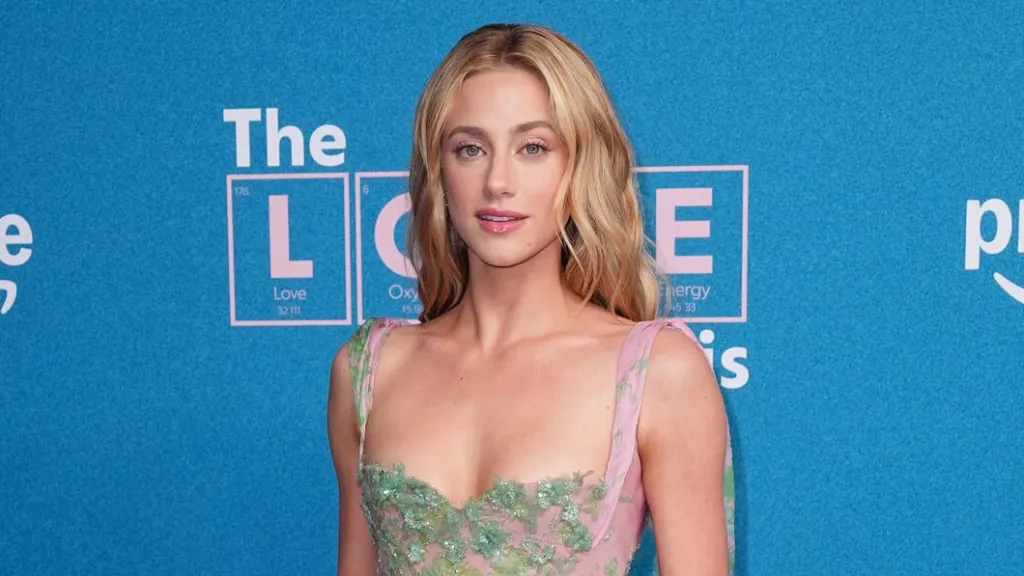
As Lili Reinhart celebrates her role in The Love Hypothesis, she’s ready to sink her teeth into another romantic book adaptation.
Without revealing the title, the actress recently teased that she’s trying to adapt a novella “about lesbian vampires” but is having trouble finding a studio that’s willing to take on the source material.
“People are too afraid to make that,” Reinhart told Hits Radio. “So, if you work at a studio and are watching this video, I don’t know why you wouldn’t make that in this day and age. That’s what I’m trying to do.”

Although Reinhart didn’t reveal which novella she’s trying to adapt, some are speculating it to be Irish author Joseph Sheridan Le Fanu’s Carmilla (1872), about a young Austrian woman who is pursued by the eponymous vampire.
The project comes as Reinhert promotes Prime Video’s adaptation of Ali Hazelwood’s The Love Hypothesis, in which professor Dr. Carlsen (Tom Bateman) and PhD student Olive (Reinhart) start a fake relationship to test their theories about love.
Reinhart also serves as an executive producer on the Claire Scanlon-helmed adaptation, which is penned by Sarah Rothschild. She has previously been an EP on her films Chemical Hearts (2020), Look Both Ways (2022) and American Sweatshop (2025).
>
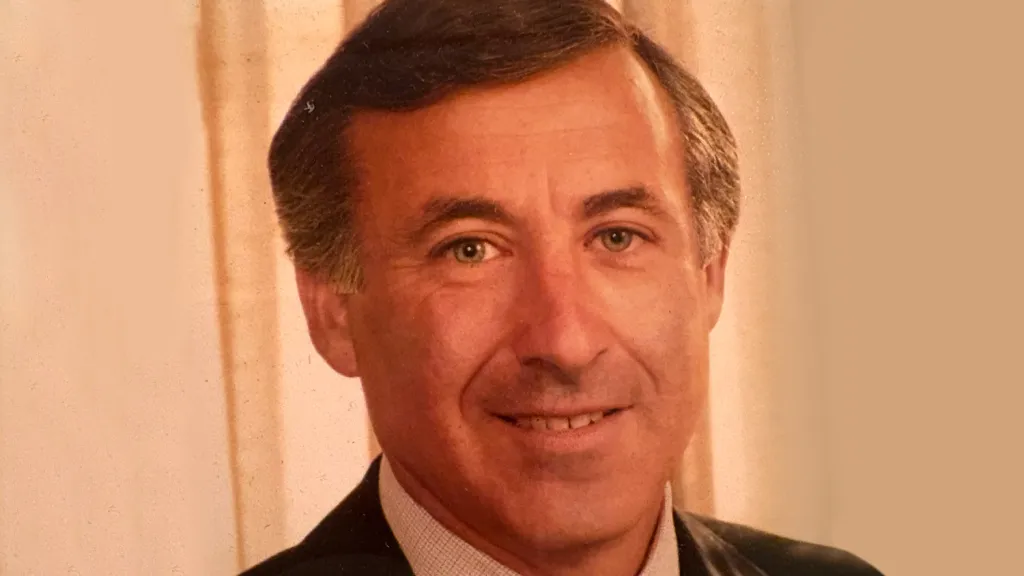
Richard S. Reisberg, who held senior roles at Viacom Productions, UA TV, MGM/UA TV Productions and Lionsgate TV, passed away on September 23, 2026. His family confirmed the news to Deadline. He was 85.
After earning his law degree, Reisberg worked early on in business affairs at ABC, CBS and NBC and then Viacom International, where he rose to become Senior Vice President. In 1972, he was made President of Viacom Productions.
After Viacom, Reisberg held a string of senior roles: President of United Artists Television, President of MGM/UA Television Productions and President and Chief Operating Officer of Reeves Entertainment. His final industry position was President of Lionsgate Television.
He later became a mediator at JAMS and taught mediation at Pepperdine School of Law.
Reisberg is survived by his wife of almost 56 years, Judy; his daughters, Jennifer Benson and Stephanie Silvera; his son-in-law, Justin Silvera; and his grandchildren, Oliver and Tyler Benson and Ella and Layla Silvera. His son-inlaw, David Benson, predeceased him.
Donations in his memory may be made to Alzheimer’s Los Angeles.
DEADLINE RELATED VIDEO:
>
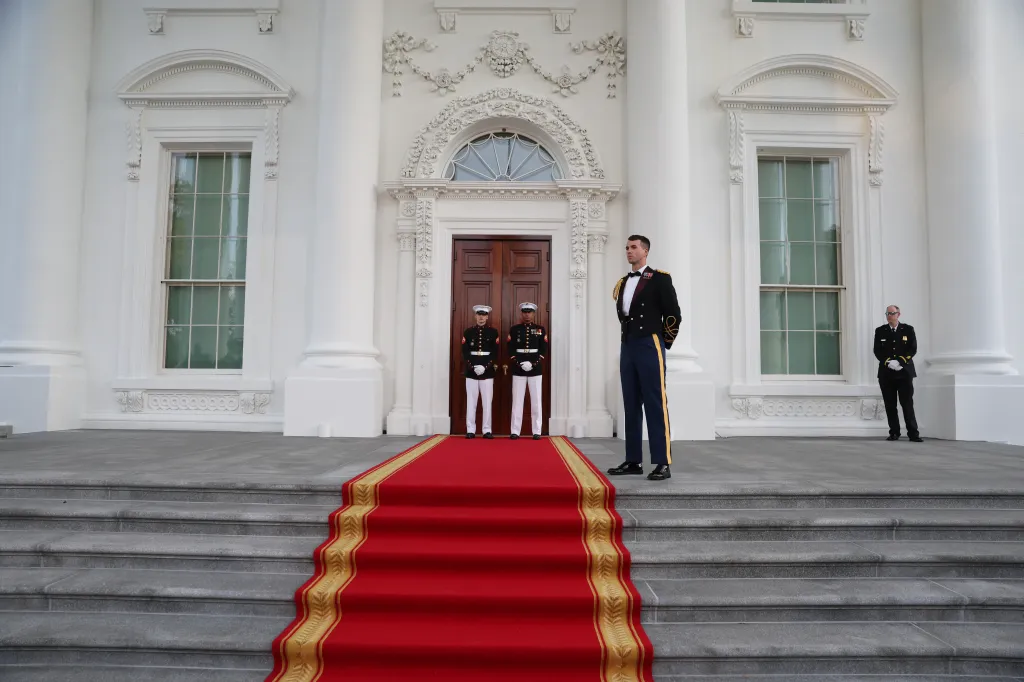
CNN said that it was denied access to cover the arrivals at the White House State Dinner for Chinese President Xi Jinping, just hours after a federal judge ordered the network to restore hard passes to the network journalists and those of MS NOW and Politico.
The coverage at the North Portico was scheduled to be open to pre-credentialed media, a wider scope of reporters and photographers than the White House press pool.
CNN White House correspondent Kristen Holmes said that they were told that their credential to cover the event was only for a camera and audio, not an editorial presence. She had requested that she and her producer attend.
“Again, no editorial presence, just a camera and audio, which certainly seems like a reaction to President Trump saying that he wanted the CNN coverage of the event,” Holmes said.
U.S. District Judge Timothy Kelly ordered that credentials for CNN, Politico and MS NOW be restored, ending Trump’s five-day ban of the outlets from the White House grounds. They returned to the White House around noon, and hours later, Trump event complained that CNN and MS NOW were not covering the state visit.
Trump claimed that the networks “refused to cover one of the Biggest and Most Beautiful Events to take place in many years, the arrival at the White House of the Highly Respected President of China, Xi Jinping, and his beautiful wife, Madam Peng. The event was magnificent — Actually made for Television but, because they’re Fake News, and because they knew how good it would be, they didn’t want credit to be given to ‘TRUMP,’ they refused to be there. That’s why they have such poor Ratings. Tonight’s State Dinner at the White House, for President Xi, will be spectacular!”
In fact, network correspondents said that they were not able to get access to the White House on Thursday morning. And after the White House pulled CNN from the TV pool on Monday, the other four networks in the pool declined to replace them in the rotation. That has meant a dearth of video images from the White House, as TV pool coverage has yet to resume.
>
For calloused Cubs, challenges mount with Bregman, Gausman concerns and travel drama

Lili Reinhart Says Hollywood Is “Afraid To Make” Her Lesbian Vampire Film
Minnesota Twins, assistant GM Daniel Adler mutually part ways: Sources
-

 movies4 months ago
Search For Canadian TV Actor Stewart McLean Now Homicide Investigation
-

 Fashion9 years ago
These ’90s fashion trends are making a comeback in 2017
-
Fashion9 years ago
According to Dior Couture, this taboo fashion accessory is back
-
Fashion9 years ago
Model Jocelyn Chew’s Instagram is the best vacation you’ve ever had
-
Fashion9 years ago
Emily Ratajkowski channels back-to-school style
-
Fashion9 years ago
9 Celebrities who have spoken out about being photoshopped
-

 Anime4 months ago
Rurouni Kenshin: Hokkaido Arc Manga Takes 1-Issue Break – News
-

 Anime3 months ago
HIDIVE to Stream English Dubs for The World Is Dancing, The Forsaken Saintess and Her Foodie Roadtrip in Another World, The Dangers in My Heart: The Movie Anime – News